← On the Bus with Troy Vollhoffer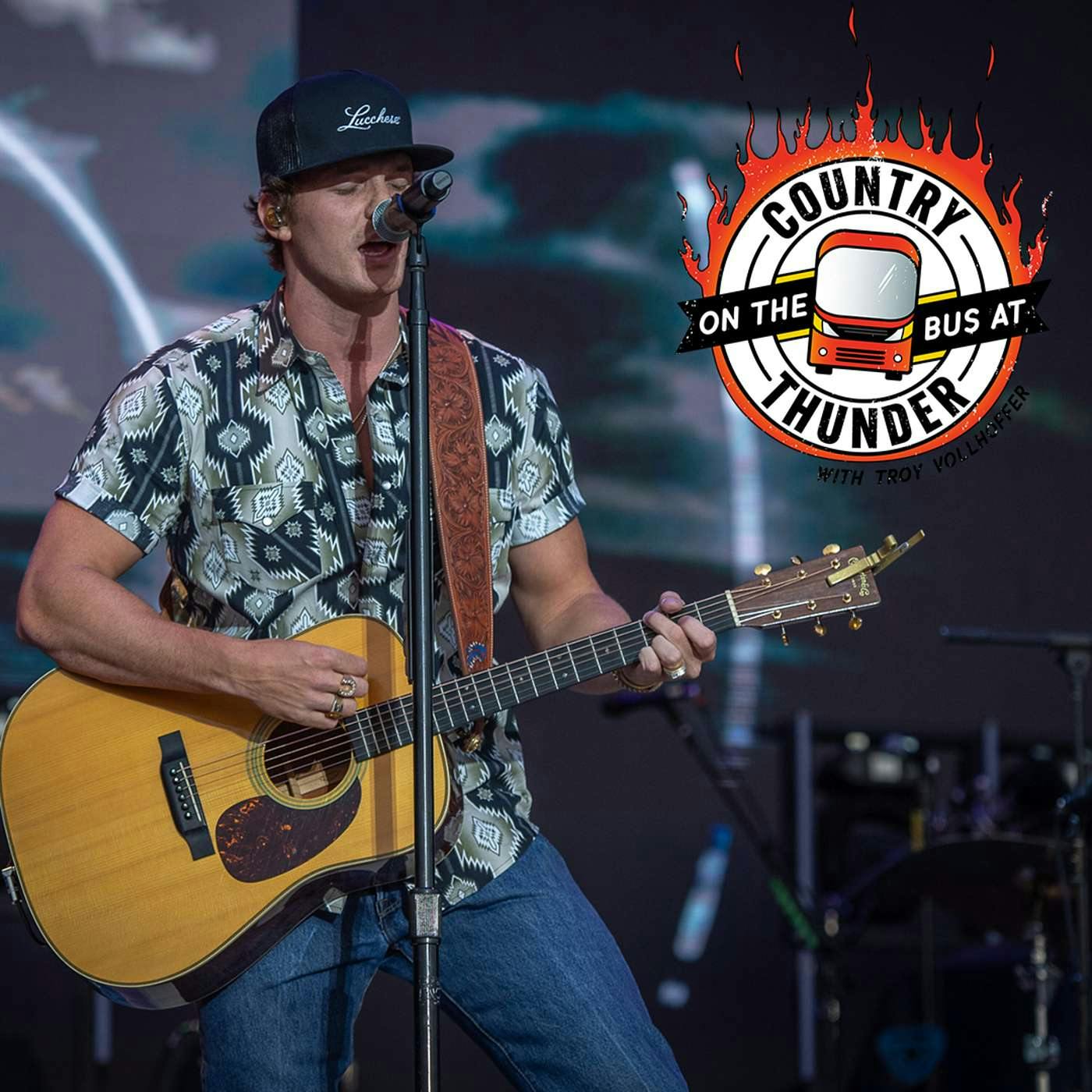
On the Bus with Troy Vollhoffer
Parker McCollum
00:27:12
Troy sits down with Parker McCollum to talk about his Texas-roots, love of George Strait, and writing songs in fast food drive-thrus.
Loading summary
Transcript83 lines
- [00:01]
Troy Walhoffer
You need on the go convenience Novex Smart Hub delivers Pay your electric bills, view your energy use, report an outage, and receive alerts regarding your account with SmartHub. Use your credit card with no processing fees. Level out your monthly electric bills by enrolling in budget billing through SmartHub. Easily access it through Novec's mobile app or at novec.com you're on the go. Novec Smart Hub goes with you. Welcome back. I'm Troy Walhoffer and you're on the bus at Country Thunder. We're coming at you with backstage stories from the six annual Country Thunder music festivals held across North America. Get ready for real talk about the state of the music industry with thoughts, insights and stories from some of the biggest stars, executives, and professionals in the music business. On this episode, Parker McCullum. Parker, how are you?
- [01:06]
Parker McCullum
I'm good, man. Thank you for having me.
- [01:08]
Troy Walhoffer
It's good to see you, man. It's been a couple of years.
- [01:10]
Parker McCullum
It has been a couple years. And I was trying to tell somebody, I think I've played this Arizona one before.
- [01:16]
Troy Walhoffer
I believe so. I think probably in 19 or 19.
- [01:19]
Parker McCullum
Or 20, something like that. I remember when we were walking past the cow pins just now, I was like, I think I've been here.
- [01:25]
Troy Walhoffer
I believe you have. And I think the last time you and I were able to hang out was in Iowa, one of the first shows back out of the Pandemic. That was fantastic. So let's talk about, you know, born and raised in Texas. Tell me about your upbringing. Tell me how it all started.
- [01:40]
Parker McCullum
And, man, it was. It was pretty normal. I feel like, especially now when I look back on it, I'm pretty grateful that it was pretty normal. Just kind of look at it through a different lens nowadays. But I grew up in a town called Conroe, Texas. It's about 40 miles north of Houston. My dad sold cars. My mom's family had a concrete company and had been in that. They'd been that town 100 years. And Granddad was a judge long before I was ever around and, you know, just well known around the area and, and, you know, so it kind of made for a, for a cool upbringing in Conroe. And, and when I was, I think it's seventh or eighth grade, my mom, everybody in my family went to Connor High School on my mom's side and my dad's side of the family. And then about right before high school, my mom wanted me to go to a better high school, so she moved me about six miles down the road to the Woodlands. And I went to high school there, and it's only six miles away. It was a different world. It was kind of a culture shock for me. Didn't know anybody, didn't have any friends. And that's really when, you know, I started playing guitar and writing songs, and I kind of gave me something to do, and I was bored all the time, and I played football and baseball and basketball and everything. But it probably took me a good, you know, half a school year, full year to really fall in with the right kids and make some good friends there. But looking back now is like, you know, one of the best things she ever did for me. And, you know, I spent every summer growing up cowboy for my granddaddy. Had two big ranches. One's in East Texas and one's in Central Texas outside of Waco. And I kind of split time between being a normal kid and going to school and playing ball and, you know, out of mom's watch, hanging out with granddad all summer. Working hard or hardly working? Probably both at the same time. And it was great, man. My. My childhood and high school years and everything were. Were awesome.
- [03:22]
Troy Walhoffer
So when you made the move to the. To the high school, is that. That's when you started playing guitar or.
- [03:25]
Parker McCullum
That's when I really fell into it more. I'd kind of been dead. My older brother wrote songs and played guitar and. And did his thing, and, you know, he could have been ice skating, and I've probably been ice skating these days. I just wanted to do what older brother was doing. But it just so happened he played guitar and wrote songs, and I kind of was trying to do it a little bit, you know, when I was 11, 12. Wrote a couple little, you know, songs here or whatever and could kind of sing a little bit. But it was when I moved. When my mom moved me schools, and I kind of, you know, had a lot of afternoons. I didn't really have any buddies there. You know, I kind of. I spent a lot of time just hanging out, and that's really kind of when the guitar fell in and became kind of a serious thing.
- [04:00]
Troy Walhoffer
Well, that's super cool. So. So being from Texas, obviously, this whole format is basically Texans. I mean, and historically Texans in most cases. Who was the Texan artist that inspired you more than anybody? Saying that's the path of that gentleman's career that I would like to follow.
- [04:21]
Parker McCullum
Oh, that's easy.
- [04:22]
Troy Walhoffer
Let me guess.
- [04:23]
Parker McCullum
George Straight. George Straight all day, every day. Yeah, you know, it's. His career has been great, but, you Know, the way he's carried himself in his personal life, you know, and kind of stays out of the spotlight. And I pay attention to a lot of that stuff, and I have since I was a little kid and try to always kind of emulate a lot of the things that he does and the ways he. Ways he carries himself. And, you know, he's a family man and seems like a very laid back, quiet individual, which a lot of times, you know, you get around big superstars, or not necessarily that way. I always respected that about him. And I don't know, man. Obviously, his catalog speaks for itself. I mean, hit after hit after hit is as many as anybody's ever had. So that's all. That's all a plus, too. But it's really, you know, the way he's branded himself and carried himself and. And stayed the same person and, you know, the same old George for, you know, 50 years. It's pretty impressive.
- [05:13]
Troy Walhoffer
You know, it was funny. I have my own George story. 19. I was a kid in 1988, and when I own the festival now up in Saskatchewan, it's the oldest. One of the oldest country music festivals in North America. It's called Country Thunder Saskatchewan. But then it was called the Big Valley Jamboree. In 1988, George played there. It was torrential downpour. It was raining so hard that, I mean, it was the worst brainstorm they had seen. And, you know, it was one of those century rainstorms. And he played his whole set, and he got on his bus and he opened the door and all the water flew in. And he went in there, and the festival was ran by a priest and a nun. And he invited them over to have drinks with them. And my last recollection was an old eagle. He had a blue eagle. And they were pulling it out with a big tractor to get the bus out, because it was up to the axles. And George Strait. When I took over and became the owner of the Country Thunder, we had George Strait in 2010, and that was the first guy ever paid a million dollars. And so I'm thinking, you know. Exactly. The king, right? He is the king. There's no doubt about it.
- [06:19]
Parker McCullum
No question. Undisputed.
- [06:20]
Troy Walhoffer
And he comes and asks our team, is it all right if we sleep over at the site tonight? We're like, yeah, of course. You know, I mean, it's George Strait, but so humbled and so. Just what you said. I mean, Parker, it's so cool that we kind of share that same, you know, feeling towards George Strait, which is pretty Damn Cool. But let's talk about playing violin in high school. Tell me a little about that.
- [06:41]
Parker McCullum
Yeah, no, that. Man, that was long.
- [06:42]
Troy Walhoffer
Was that fiddle or was that violin?
- [06:44]
Parker McCullum
It was violin. It's like classical violin. I was just in the orchestra when I was in. In school, and some kids. It was before we were in the grades where you didn't have sports in school. You played sports out of school then it was like fifth and sixth grade, I think. And I liked strings. I guess I kind of knew that. Probably a little foreshadowing for myself, but everybody went and got in the band and I was just kind of that kid that always wanted to do something different. So I went and did the orchestra and. And I was in it for two years and I played it well. I mean, I. I really did enjoy it and. And I can remember, you know, really taking to it and actually putting time into practice it when I was home and stuff. But, you know, once I got to seventh grade, I wasn't cool anymore. So I picked up a football and. And started playing football a lot more. And then, you know, once I was playing in at the new schools, I was, you know, started playing guitar and. And never even thought about fiddle again, but. Or violin. But it's. It's one of my favorite instruments. I've never had one in my band. Just to try to differentiate myself a little bit and stand out. You know, it's. Almost every country band in the world has a fiddle. And it's. Sometimes it all kind of runs together and people start to sound the same. And that's one of my biggest fears is, you know, kind of getting away from my original sound. So I've got some of it on there. It's trickled in there throughout the. Throughout my records here and there, but nothing permanent yet. But it's. It was. It was kind of the start of. Of anything musical for me.
- [08:11]
Troy Walhoffer
And you play the harp, too?
- [08:12]
Parker McCullum
I do a little bit. I'm a. I'm a sh. Shamelessly. Extremely shamelessly average harmonica player.
- [08:20]
Troy Walhoffer
That's a great instrument.
- [08:21]
Parker McCullum
Yeah, that's awesome.
- [08:23]
Troy Walhoffer
So let's talk about. You released your first two records on your own label. I mean, that's. That's an amazing feat for a young gentleman.
- [08:30]
Parker McCullum
Oh, thank you.
- [08:31]
Troy Walhoffer
And how did that come about? And where was your head at that time period in your life, man?
- [08:35]
Parker McCullum
After I graduated high school, 10 days after I graduated, I moved to Austin. I enrolled in a community college there just so my. My mom and dad would kind of think I was going there and doing something I was supposed to be doing, but I never even went to class or anything and. And was really just trying to kind of bumming around town, you know, trying to play places like the Saxon Pub or I wanted to play Pooties Roadhouse out in Spicewood and. But I didn't know, you know, play the Broken Spoke. I didn't know how to get into any of those places. I wasn't even old enough to get into them. So I had a fake id and I'd go into them and. And kind of sit around and watch bands like Walt Wilkins and Slade Cleaves and a lot of these Texas guys that were playing their own weeknights. And you know, Ryan Bingham was one of my. Still Ryan Bingham and the Dead Horse is one of my favorite bands of all time. And. And really kind of was a turning point for me when I discovered him when I was early in high school. But I was at the Saxon Pub one night and Corby Shaub, who, who was an original Dead Horse with Ryan bingham for like 10 years, was in there one night. He was playing some. Some side stuff with Walt Wilkins and somehow or another we ended up smoking cigarettes on the back patio together. And then, you know, we ended up at somebody's house afterwards real late, and he was recording some songs and he asked me to play a couple songs and I just written two brand new songs that were on that first record and I played them and he. He started laughing. And then I know this guy is right. He's tar player for one of my favorite bands of all time.
- [09:58]
Troy Walhoffer
And it's kind of a mentor, kind of.
- [10:01]
Parker McCullum
He had no idea who I was. We'd never even met you hanging out the first time. And he kind of started laughing after I played the songs and he's like, man, I'd love to cut a record on you. And I didn't even know what it really meant to go to record. I'd never been in a studio. I'd never sang really into a microphone, hardly at all. And. But we did. And I didn't have any money to make a record, so I went and took a loan out, had my granddad co sign on a loan for me from a bank in Conroe for like, I think five grand. And I went and recorded four songs. It was about a thousand dollars a song and a thousand dollars to use the studio for two days. And you know, the plan was kind of to cut those first four songs and then once I had some more money together, we'd go in and cut another Four, and it'd be an album. And it happened pretty quickly after those four songs and ended up cutting the first record. And that's what the Limestone kid was. And that song, Meet yout in the Middle came out. You know that I won a songwriter competition in Stephenville, Texas, called the Larry Judd Taylor Songwriter Competition. Somebody entered me in and went up there. I didn't. Didn't even win the first round, but they pick a wild card winner from every round to go on to the finals. Ended up winning the whole thing. And big radio station 95. 9, the ranch in Fort Worth, started playing that song, meet you in the Middle, and she'd been doing it ever since now. McCarthy thunder in Arizona, the path to success.
- [11:19]
Troy Walhoffer
And so in 19, you. You signed your big deal, right, with the university.
- [11:23]
Parker McCullum
So 18 or 19, something like that.
- [11:25]
Troy Walhoffer
So how did that come about? And how did you feel about it when, you know, all of a sudden, now you're gonna sign with a major label?
- [11:31]
Parker McCullum
Yeah, that was. That was the goal all along for me. I knew, you know, I was really aware of kind of the Texas thing, the national thing, the rift there between the two when I was really young, back in the Pat McGreen and Corey Morrow days, and. And I was always really aware of it, but I just never really. I never really cared about it. I knew I wanted to go play on the biggest of the big times and. And sign a major record deal and. And have massive budgets to cut records and tour buses, and I wanted all of that, and I wanted gold records on. I. I didn't know how to. You know, I had all those goals. I didn't even know how to say them out loud. And it was actually Randy Rogers from the Randy Rogers Band. I opened for him one time in Corpus about a year after that first record came out. And that night, he offered. He took me on his tour bus. I'd never been on a tour bus before. I said, man, I think you got it going on. I think you could be a superstar. He's like, I'd like to help you get there and. And kind of avoid some of the mistakes I made along the way. And I'd been a Randy Rogers super van since I was probably 11 or 12 years old. And it just. You know, it was. I thought I'd made it right then and there. And. And he was the one that, you know, after about six or eight months, he was like, man, if you want to do what we talk about you doing, you got to go to Nashville and you got to go get a Get a record deal. And he, he took time out of his. He still tours year round. Family man, wife and kids, and would come up there on his weekdays between touring and going to these offices, these major record labels, and we got offer from every major label on our first round going in. He went in and lied to every single one of them right in the face and said, you pass on this kid, you're passing on the next. George straight and just lying straight to him. I'm like, dude, you like? That was like my first taste of the music business. I'm like, man, somebody just selling it.
- [13:14]
Troy Walhoffer
I don't think he was lying about it. I think he actually believed in you.
- [13:16]
Parker McCullum
Because, you know, I mean, maybe, maybe he did. Randy probably did. He's got such a good heart and he's such a good dude. But you know, he knew what he was doing in there. He had to sell these people and get them to think differently. I have a million people walk in their office every day trying to get a record deal. So he had, he had to set something apart. And bless his heart, I'll let him down forever. I'll never live up to that. But yeah, he was, he was really the one that, that was like, man, you, you got to go get a record deal. And, and we walked into Universal MCA one day and they got this big old poster of George in there right on the wall. I mean, massive. You can't miss it. It's 15ft tall. And I was like, this is where I want to be.
- [13:52]
Troy Walhoffer
So, like, to our listeners and aspiring artists, you know, did you realize the feat that you just accomplished when you got that deal? Because as we know now, did you know then how hard it was going to be to actually get that break and make that thing happen? Which is a task in itself.
- [14:10]
Parker McCullum
I mean, yeah, it's not to discourage.
- [14:12]
Troy Walhoffer
Any of our listeners who are aspiring artists, but you got to really put your head down. I mean, you got to be committed 110% and you got to go for it. And there's certain breaks that you get and that you realized after the fact.
- [14:22]
Parker McCullum
Yeah. And you got to kind of have your blinders on. I mean, you know, there's so much going against you. You're kind of going against the grain. From the moment you pick up a guitar until you get to any kind of, you know, reach any sort of milestone or, you know, accomplish any, or receive any kind of accolade. It's, it's really going against the grain. And, and you got to almost be arrogant in a way. You know, for lack of a better term, just kind of ignoring, you know, all the naysayers. And there's. There's a million things telling you you can't do it. A million things happen that make you feel like you can't do it. But, you know, when you're a young kid and you're naive and you're hungry and you're hustling, it's really hard. Nobody can tell you. No, you think you know it all and. And you really don't even understand the repercussions of not making it. You know, you're like, man, if I don't have a college degree, if I don't make any country music, what the hell am I going to do? And never even crossed my mind. I just said, well, I'm gonna make it, so I don't have a choice.
- [15:17]
Troy Walhoffer
You know, it's pretty funny because you think about that and, you know, you hear the stories of, you know, we went to every label and went. Turned down twice, and finally we got a deal, you know, and, you know, you hear that about so many artists, you know, and Taylor Swift's one of them. And, you know, Florida Georgia Line, we're one of those artists that went around town a few times and didn't get. Didn't get a deal, but kept at it and look at that. And here we are. But I got one. I got this question that's been bothering me all day that I need to ask you. So you wrote a song. Hell of a year now. What shitty Whataburger was it that took you so long to get your burger to write a song?
- [15:49]
Parker McCullum
No.
- [15:50]
Troy Walhoffer
You know, sitting there in the drive.
- [15:51]
Parker McCullum
Through, Whataburger's notorious for. That's. That's how, you know it's good because it takes so long to get through the drive through. But, man, I was. I was pretty hell bent in my early and mid-20s, you know, on, you know, my brother turned me on the towns and. And Guy and Rodney Crowell and Steve Earl, and from a really, really young age when I was in junior high.
- [16:11]
Troy Walhoffer
Yeah.
- [16:12]
Parker McCullum
And studied him a lot in high school. And, you know, their whole mantra was, you got to live the songs you write. Willie was the same way. Whalen was the same way. And they had a lot of hardships and. And probably made a lot of bad decisions, had a lot of hard times. They wrote songs, and I had a great childhood. I didn't really have any hardships to write about, so I kind of was hell bent on, you know, kind of crashing and Burning a couple times, trying to go to a dark place to write songs and, and, you know, probably making some bad decisions, but it was a lot of fun, certainly, but probably some bad decisions in there. And, and, but I was, I was intentionally, you know, trying to go write songs like those guys and, and, and be honest and authentic about it by, you know, living the songs that I was writing. So I was really kind of writing a lot of songs in that vein at the time. And I was in the drive through at Whataburger about 2:00 in the morning. One nights on William Cannon in 35, right there in South Austin and eating there a million times. And a song off my first record, All Day. It's called All Day was. It came on the radio station like 2:00 in the morning and it just jazzed me up. I was like, you know, damn, hell yes. The great greatest feeling. And I just kind of took out some paper on my center console and scribbled down the chorus and the first verse and, or the course and first verse a hell of a year. And I put it, you know, back in the center console. And the next morning I woke up and I was humming the tune kind of like in my head. I'm like, man, what melody is that? I can remember writing the song the night before and, and so I kind of sitting there singing it and all of a sudden I started singing Hell of a Year and I'm like, wait a minute. I went and got the paper out of my truck and I was like, that's got it. We were about to cut that record and I was just probably wrong was the name of that album. And I was like, man, I, I very, very rarely do I write songs. Probably only two or three times that I've, I've known right away that I was going to cut it and probably sing it for a long time. And that was, that was one of them.
- [18:01]
Troy Walhoffer
That's fantastic. Back to back number one singles. Congratulations.
- [18:05]
Parker McCullum
Thank you.
- [18:05]
Troy Walhoffer
It's a big task, man.
- [18:07]
Parker McCullum
It is, it's, it's, it's. We're batting a thousand right now, so try to keep it going.
- [18:11]
Troy Walhoffer
And two times platinum. Jesus.
- [18:14]
Parker McCullum
Yes, it's, it's quite. You know, I mentioned that earlier. I remember watching MTV Cribs when I was a kid and, you know, all these big superstars would have gold and platinum records on their walls whenever they'd toy their houses. And I thought about it for a long time and I remember I didn't know that any of my songs were even closer I didn't even know how that went or who told you that it. How do you got a plaque? Who decided if you got a plaque? I had no idea. And Pretty Heart was the first one that went, and it went gold. And I got a. Actually got a duplicate made of the plaque and gave it to my dad on his 60th birthday. It was pretty cool. He's been one of my biggest supporters and would not be where I am without him, so that was pretty cool. But then it went platinum and got a plaque for that, and then it went double platinum. And then, you know, now I got four or five of them that have gone gold and platinum. And Lee Miller is a good buddy of mine, is a great songwriter in Nashville. And I remember I'd gotten that. That first gold one for Pretty Heart. I was so excited about it. I was telling him about it, and he just could have cared less. He looked at me, said, I don't judge a songwriter by how many plaques he's got on the wall. I judge a songwriter by how many plaques he's got on the ground.
- [19:19]
Troy Walhoffer
Wow.
- [19:19]
Parker McCullum
And I was like, damn, that's heavy. So I never. I took about two years before I hung any of them up. I just left them on the ground. I never had plenty of wall space. I didn't have that many. But now. And I still. And luckily now, it's funny that I'm telling that story because I still think about it often, and my wall at home is actually full. I've got. I've got about five or six on the ground now.
- [19:38]
Troy Walhoffer
So that's. That's. That's such a great story. But dating back to, like, when you were in your, you know, formation of. Of where you were going and charting out your career, you know, there's always been that stigma, you know, Texas artists versus Nashville artists. Did you ever have the thought of, like, man, I need to stay in Texas to be a Texas artist, or I want to be a. I want to go to Nashville, and I want to be an international star, which you. Which you've accomplished already today.
- [20:04]
Parker McCullum
You know what. Through any of that, it was certainly on my mind. I remember I was probably, you know, in fifth or sixth grade when Pat. Junior high maybe, when Pat kind of went through all of that, and they gave him such a hard time about it, but I just. I never. Never cared. I just remembered, you know, and. And I was. I was really lucky. You know, I always failed to mention that I was selling a lot of tickets and. And I was on my own tour bus And I'd put out two of my own albums, and, you know, I had my own band on salary before I ever even went to Nashville to get a record deal. So the ball was really in my court, and I had a. You know, basically it was just saying, if you guys want a piece of the pie, you know, I. My number one thing was I want a creative control. I was like, I want to be able to write the songs I want to write, cut the songs I want to cut. You know what I want to do it, how I want to do it. And then credit to Universal, they've kept their word 100, because the day I shook their hand and they told me that's how it was going to be, and I signed that paperwork, I'm like, you know, I really hope that this is not going to be some nightmare record deal story. And they deserve so much credit because they have kept their word a thousand percent. And they'll make suggestions every now and then, you know, be like, hey, listen to this or check this out. And. But never one time have. Have they, you know, been combative towards me saying no to something or not wanting to do something. And. And I think that's the. The ultimate probably in any business in the world, right, is. Is to be in control of your own destiny and. And have your career in your own hands. And I know a lot of artists aren't that fortunate. I got friends. They tell me stories all the time. You know, their record labels have a lot of control over their career. And. And. But I was so aware of it, you know, from such a young age that the Texas thing never bothered me. I just said, man, no. 1. I didn't even announce that I'd signed a record deal, right? I just signed it and then went and cut a record on a major record deal. The songwriting stayed the same, the process stayed the same. And. And I said, man, I don't think that if the music doesn't change, not. Not a whole lot of heads are going to rear over that.
- [21:56]
Troy Walhoffer
So just to. To go back a little bit, you know, just to explain to our listeners, like, in Texas, you can have a band in Texas, and if you have success in Texas, you don't have to leave Texas because you can make a great living just playing in Texas. And that's what my question was more directed. And. And you answered it perfectly. And that's. That's a really neat thing because there was a time when it was like a. A stigma if you left Texas in Nashville, and it still kind of is.
- [22:19]
Parker McCullum
People I see stuff about it online sometimes, but, you know, Cody really paid. Cody Johnson really paved the way, helped pave the way for it a lot. You know, he signed a deal not long before I did, and. Same kind of thing. Man, his songs are so great. He's unbelievably talented. He wasn't going to go up there and start cutting beer songs and dirt road songs and pickup truck songs. You know, he was going up there and sing real country music and. And Nashville needed that, and luckily now they're embracing it a lot more. And I think he really probably is. Is, you know, deserves a lot of credit for that being that way.
- [22:53]
Troy Walhoffer
I mean, that's a whole different vein. I mean, it's interesting. I mean, I don't know if you agree with this, but I'm going to pose that question. Like, it seems like country music is splintered in a bunch of different places.
- [23:03]
Parker McCullum
Right now, and it's all over the place.
- [23:04]
Troy Walhoffer
All over the place. And it's kind of interesting because when you have a. You know, when you're doing festivals, where do you go and what are we doing? Right? So. But there's so much good new stuff out there right now that is so exciting and great artists, so writing songs. So do you write with other writers?
- [23:22]
Parker McCullum
I do a lot now. My first two records, I wrote primarily on my own, but Randy again, Randy Rogers was, you know, before we got a record deal, he got me a publishing deal with Warner Chapel, which they're the biggest and the baddest and been a great. Been a great home for me. Yeah. Ben Vaughn, you know, took a chance on me and. And really believed in me early on. He's one of the first people in Nashville to kind of hear my stuff and want to be a part of it. And it was kind of had to go through the trenches. I started in the absolute bottom of the barrel writing songs, really, with just lunch pail writers, guys who just. They didn't care about writing real songs. They just wanted hits. To write a hit, to write a hit, and never been my thing. I've never ever one time sat down to write a song and thought about writing a hit and. But I. I did, and I embraced it, and I hustled that as well, just like I did the road. And I went hard at it, and I didn't like it. I really still don't love it. But it has made me a better songwriter. It's made me a lot more productive songwriter, you know, and all three of my number ones were me and someone else writing A song or a hook or a melody I'd had in my head that I just said, three number ones don't go number one for about another week. Please don't let me jinx it. But I think it's going to.
- [24:33]
Troy Walhoffer
It's gonna go number one. Absolutely.
- [24:35]
Parker McCullum
But it's. But they all are that way. They're just me and a buddy of mine sitting down writing a song. So co writing has been good to me, but, you know, I was. My producer, John Randall was out on the road with us for the first two shows this weekend. And after the first or after the second night, last night, came on the bus and he said, I told him I wanted to go do a six song acoustic record, just me and my guitar and harmonica. Jimmy Buffett studio down in Key west, sometime this year, next year. And just raw, stripped down. I've never done anything like it. And. And he came off the or, he sat at front of house and watched the show and came. Came to the bus afterwards and he said, man, the songs that they scream every single word to more than any other ones are all the songs you wrote by yourself. He's like, you need to write that acoustic record by yourself. Record it by yourself. He's like, that's just. He's like, that's what you do best. So I'm lucky that both ways of going about writing songs have been really good to me.
- [25:30]
Troy Walhoffer
That's great. And I got to congratulate you. Heard you got married last year.
- [25:34]
Parker McCullum
I did, yes.
- [25:35]
Troy Walhoffer
That's fantastic.
- [25:36]
Parker McCullum
I've been married for a year now. I know it all.
- [25:39]
Troy Walhoffer
That's awesome. So do you. Do you ski?
- [25:42]
Parker McCullum
Snowboard?
- [25:43]
Troy Walhoffer
Snowboard? Yeah.
- [25:44]
Parker McCullum
I was snowboarding in Switzerland in January.
- [25:47]
Troy Walhoffer
I. I heard a rumor that you were spotted in Jackson Hole.
- [25:50]
Parker McCullum
I was. I did not snowboard. I've got this. This deal going on my knee. I did not snowboard that time, but I did ride Snowmobiles and went 90 miles through the mountain pass on snowmobiles for about eight hours one day.
- [26:00]
Troy Walhoffer
That's awesome. I think you ran into my daughter at a bar.
- [26:02]
Parker McCullum
Yeah, I saw her. Your son looks just like. They look just like. Yeah. Okay. When I saw him, I'm like, ali, if he told me he was her, I might believe him. Yeah. At the Million Dollar Cowboy Bar.
- [26:13]
Troy Walhoffer
She told me she was, man, it's cool. You know, everyone has a lot of respect for what you've done. I mean, the songwriting, your commitment to what you're doing, your career, your family, in life. I congratulate you on all that. And it's been a real pleasure to have you. It's a busy day for you. I know that you have radio stuff to do, and thanks for taking this time out, listeners. Any market you see Parker mcclellan playing, please go out and check him out. He's gonna be a country thunder in Wisconsin and up in Canada at the big valley jamboree. Please check him out. It's gonna be fantastic. I can't wait till tonight to see your show.
- [26:44]
Parker McCullum
Oh, yeah, we're gonna swinging.
- [26:45]
Troy Walhoffer
I'm excited, man.
- [26:46]
Parker McCullum
Thank you.
- [26:46]
Troy Walhoffer
All right. Thank you. Thank you very much.
- [26:48]
Parker McCullum
Yes, sir. Thank you, bro.
- [26:50]
Troy Walhoffer
Thank you. To our guests on this episode, don't forget to, like, subscribe and leave a review whenever you listen. Until next time, I'm Troy ballhofford, and you're on the bus of country thunder.