← Unemployable with Jeff Dudan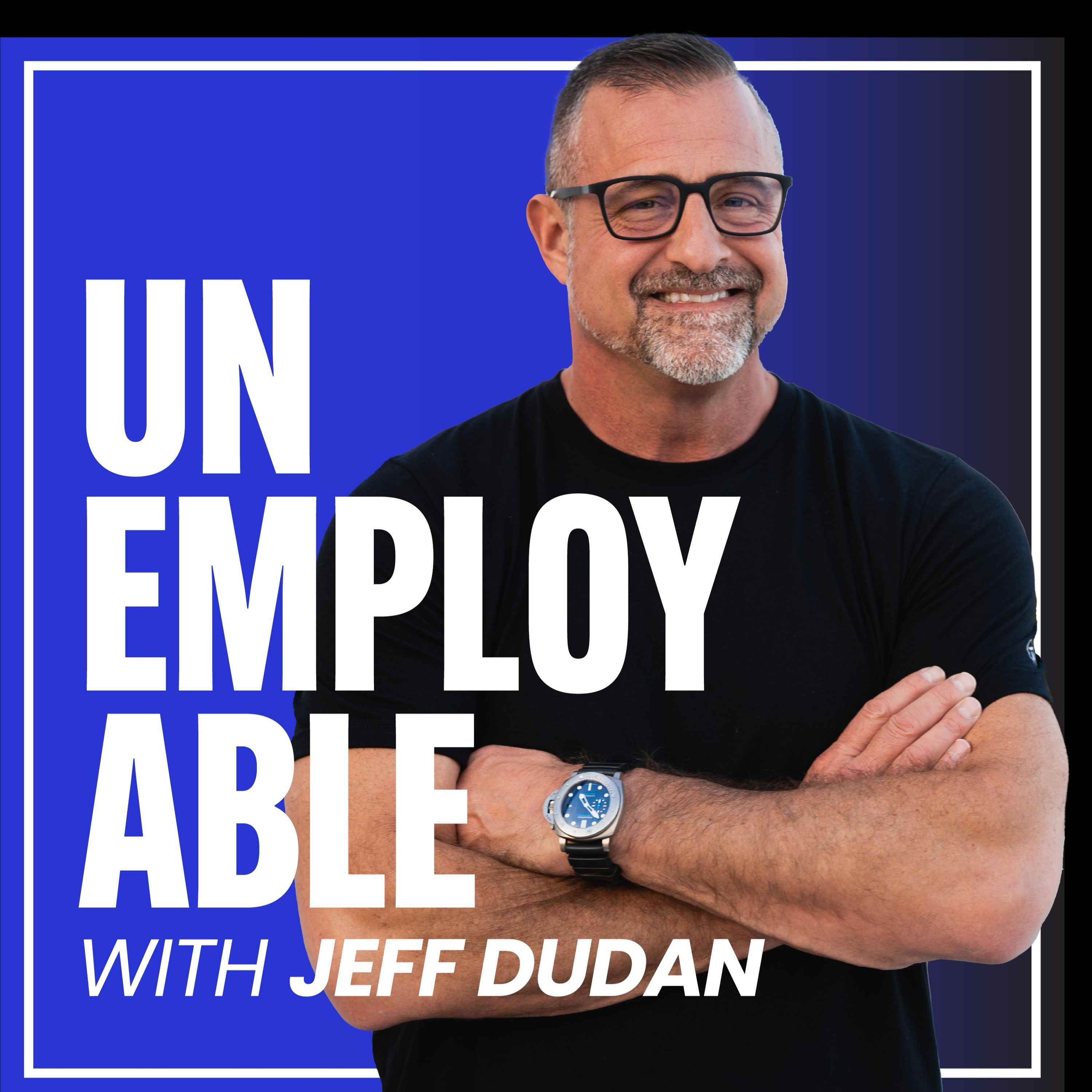
Unemployable with Jeff Dudan
Tired of Price Shoppers? Build Customers Who Come Back With Brittany Hodak #247
01:13:25
Loading summary
Transcript127 lines
- [00:00]
A
Hey, everybody. Welcome to the unemployable podcast. I'm Jeff Duden. If you were obsessed with fandom from the age of four for peanuts cartoons, NASA, Dr. Pepper and the Texas Rangers, leveraged your fanaticism into the coolest teenage gig ever, hanging out backstage with the hottest big label music bands and sharing those stories on the Britney Jones diary. And your career in the music industry led you to start Zine Pack, where you worked with people like Taylor Swift, Kiss, Katy Perry to create deluxe super fan packages, collectibles, memorabilia selling tens of millions of dollars. And today is the world's leading authority on creating super fans. Your name could only be Brittany Hodak. Welcome, Brittany.
- [00:46]
B
Wow. Thank you for that amazing intro, Jeff. It's so great to be here.
- [00:56]
A
No, I'm so glad to have you here. We have a raving fan in our office who saw you at the Consumer Experience conference in the franchise industry in Atlanta. She brought me her book. I have it right here. And she said we have to get Britney on the unemployable podcast.
- [01:12]
B
Well, I love that. Thank you. Thanks for advocating.
- [01:15]
A
Yep. Gabrielle wouldn't. Wouldn't take no for an answer. So she is a you created one super fan just on you alone. So here's my opener for you can even boring grudge by everyday brands develop.
- [01:28]
B
Superfans a hundred percent. And those boring brands are the ones who need to embrace this more than all the others, because those are the ones that are so often in a race to the bottom on things like pricing, on themes like response time. And what creating superfans does is tells people we are not just a commodity provider. We are in a category all our own.
- [01:51]
A
What is a superfan?
- [01:53]
B
So I define a super fan as a customer or stakeholder who is so delighted by the experience they have with a brand, product, or service that they become an enthusiastic advocate. And I know that's a lot of words. That's a long definition. There's three main parts. We can break it down if you want to. But in short, superfans are people who are creating more customers for you.
- [02:14]
A
So this is referrals, but it sounds like it's more than referrals. It sounds like it's advocacy. There must be a story element to it because people are tribal and we all of our information travels on stories and we repeat the stories that are remarkable or engaging to us.
- [02:31]
B
Absolutely. One of the things that I say over and over again in the book is super fans are created at the intersection of your story and theirs. You've got to make the thing that you do relevant to their life in a way that they're going to experience it, but also remember it. And, you know, there's some really cool studies that are happening right now where neuroscientists are looking at the impacts of storytelling on the brain. Because like you said, we're tribal, we love stories. This has been part of our DNA for forever. Right? Like since long before written history, there was oral history and storytelling. And what neuroscientists are finding right now is that the way your brain reacts when you hear a story is very similar to the way your brain reacts when you experience something. So the way we store those memories is physiologically different than when we read, like stats or facts or figures. And so being able to create a narrative driven story about your brand isn't just like a, you know, soft, nice marketing thing to have. It's literally how you make people remember you, how you hard code what you do into their memories so that they're more likely not just to call you again, but also to give your name to someone else who's looking for what it is that you do in learning.
- [03:43]
A
About you growing up and reading the stories about writing letters to all of the Texas Ranger baseball players and at five years old trying to learn Russian to. So because you knew you were going to be in NASA and you were going to be going to the, the. The space station and you're going to have to interact with these Russian cosmonauts, you're an enthusiastic sort of person from the very beginning. What is it when you were in your teens and you got exposed to the music industry? Walk us through that. And how did that set the foundation for you understanding really what a superfan is and then how to get them?
- [04:20]
B
Yeah, well, I. A couple of things were sort of happening simultaneously. One was I. I went to a radio station and I said, please give me any job. I'll do anything at all. And said, well, you look like you're about the right size to be our mascot. Like, would you be Sting the Bee? And I said, of course I would be Sting the Bee. And I had what I thought was the coolest shop in the world. I got to dress up in this costume, go to all these live events that were happening in the community. And I saw not just the love that people had for the bands that we played, we were a pop station. So it was like, you know, third eye blind and matchbox 20 and all that amazing music from that era. The Goo Goo Dolls, Alanis Morissette, and also I Saw the love that people had for our brand, like the station itself. And I thought it was so cool because as the mascot, I was the, you know, physical manifestation of that. And then I saw that people were obsessed with our DJs and I thought, this is so weird. These are like regular people who just happen to talk on the radio for a few hours a day. Like, why do people care? Why are they so excited to come meet them at events? And, and that's what really sort of sparked this interest and this question that I would then study for the next. I mean, well, I was gonna say next 15 years. Honestly, I've never stopped and it's been 25 years. Why do we love the things that we love? What draws us to some of those things? What makes us feel a sense of connection? And then on the flip side of it, like looking at it from the brand side, why do some brands go viral and others go away? Why do some music artists become the biggest sensations in the world and others just sort of like become one hit wonders or fail to launch and never do anything? And so those were the things that I was trying to understand. That's what led me down this path of looking not just at the marketing side, but the psychology side, the engagement retention, referral side, and trying to package this up into a system that anyone, but especially an entrepreneur or small business owner can say, okay, this is how I'm going to tap into this to create a sense of something bigger around my brand.
- [06:23]
A
It's interesting as, as you unpack, that emotion comes to mind. So what, what elicits a response that makes you feel a certain way? And then there's also this social proof aspect to it. So think about the DJ, right? They're, they're just guys, DJs by the way. And there were some famous ones out of Charlotte here, John Boy and Billy, and they syndicated and they had hundreds and hundreds and they did very well. But I think generally the DJs on the other station, I mean, they weren't celebrities, they weren't particularly well paid. I mean, they would, you know, the shifts that they had to operate, but people would still want to get social proof from coming to meet them and getting something signed or getting a picture with them. So it's, it's interesting, like why people choose who they become fans of. And what is it about somebody who's well known to other people that makes you want to be known to them and then it makes you feel good. I mean, I, I don't really understand the transfer. I've got this thing with my wife, you know, about. I was a football player in college, and, you know, people wear other people's jerseys all the time, right? And I said, well, I just don't. I feel weird about putting another man's name on my back, to be honest with you. It's not, you know, but I mean, people will do the craziest things to be affiliated with somebody that they admire, that they look up to. And, you know, I just. I just find it very, very interesting. So.
- [07:47]
B
Yeah, well. And I think from a psychological standpoint, like you said, we are tribal. We want to belong. We want to feel like we're a part of something, right? And I'm sure, you know, people in your life who are superstitious to the point of not just, like, wanting to wear the jersey, but thinking what they do maybe in a totally different state, impacts, right? Like, no, I can't move from this spot on the couch because the last time I got up there was a fumble. And, you know, oh, I've got to wear this pair of socks because the team is, you know, nine and one when I'm wearing these socks. And they believe it. Like, they don't just say it because it's fun. They. They believe that they are a part of it. To that point, those stories are so intertwined, their lives and the lives of the team or whatever it is that they're supporting. And. And it's so fascinating, right? It's so interesting because it speaks not just to who we are as a species in the way that we've evolved, but who we aspire to be and the connections that we have. And that, to me is the part that's really interesting is, you know, you look at brands where people have tattoos or they've redecorated their, you know, homes or their cars, like, all of these things to say not just to the world, this is who I am, but to say to ourselves, this is who I am. Yeah.
- [09:02]
A
And you can see it when it's an athlete or who's super talented and they're one of very few in the world, or it's a recording artist or Taylor Swift, and they just do. They're just incredible. And now that they're good at what they do, now they're wealthy and they're. And they're in your face in social media. So it's. It's just. I understand that. How do you translate that to a brand that installs fences or a brand that installs kitchens? An everyday thing, it almost seems impossible to do but you've got a model for it.
- [09:36]
B
I do. I have.
- [09:37]
A
It's the supermodel.
- [09:38]
B
It's the supermodel. And we'll get into it. I want to give you just a few examples and then we'll get into. So super is an acronym. It's a five part framework. We'll walk through all of that. But just as kind of examples from my own life, right? Like, I had no real opinion about plumbers, right. I've got two little boys we were talking about before we were recorded. They're 5 and 8 now. So over the past few years, we've been through several rounds of like, something was flushed down the toilet, right? Like, sometimes we know what it is, sometimes we don't know what it is. Was it a Hot Wheels car? Was it a hot dog? Like, nobody really knows. So we've been through a few rounds of that and for a while it was just like, okay, I'm gonna go through the home warranty company call, you know, whoever, like, comes up first in the Google search, whatever, right? Like, not a. This is our plumber. When we got to the point of this is our plumber and his name is Joe. Thankfully, he hasn't had to come out in a couple years. My boys are a little bit older now, but the way Joe earned that coveted spot of like putting the magnet on the refrigerator so that we had his information when we needed him, he came to our house and he could tell. I think at the time my boys were like four and one and running around. And he said, okay, so are we working on potty training with either of them right now? And I said, yes, we're set with the older one, the younger, younger one, like we've just started. And he said, so do you know about the little targets? And I said, no, what are the little targets? And he pulled out a stack of these like poker chip sized printed pieces of toilet paper or tissue paper with dinosaurs on them. And he said, it's a targeting game. This is how you teach boys, A, that the toilet is just for going to the bathroom, and B, how to aim. You drop one of these in the water and you make it a game. Like you get to, if you like, you know, pee on the dinosaur, the dinosaur disappears because, you know, the ink like dissipates or whatever. And my kids love, loved that so much, right? So it wasn't just the fact that he, you know, got, I think that time it was a Thomas the Train toy, whatever. It was like out of the toilet for us. It was that he went above and beyond. So, absolutely. These, quote unquote, boring services can turn customers into super fans. But the really interesting thing is it's often not about the thing that you're there for, because being great at the job is like, the floor, not the ceiling. That's the point of entry.
- [11:58]
A
And it's expected, right?
- [11:59]
B
It's expected. Like, you have to be great. That's literally your job. Like, that is what I am paying for. You have to do it. And it's the things beyond that that actually create that sense of connection. Like, we. Everybody in my neighborhood got new roofs this year because there was a crazy hail storm. Everybody had tons of damage to their roofs, tons of damage to the vehicles. And, you know, roofing companies were literally knocking on our door. I was getting calls every single day for months of people saying, like, oh, we're in the Arab area doing this, blah, blah, blah, whatever. The roofing company my husband hired, I don't know, Like, I guess they did a good job. I don't really know about shingles. Right. I like the roof looks good. It was brown. Now it's gray. They. They asked me to make several decisions that I felt unqualified to make. At one point, they were. I think it's called flashing something. They were like, somebody knocked on the door and said, what color do you want to use? And I said, for a billion dollars, I could not tell you what color it is on my house right now. I probably couldn't point it out. So just, like, make the right decision, please. I trust you. You know what I remember most, Jeff, from that roof getting replaced?
- [13:03]
A
What's that?
- [13:04]
B
The fact that for weeks afterwards, we were finding nails and staples in the yard, and we've got two little boys, so my boys couldn't go outside barefoot, which, you know, it's like, you always tell them to wear shoes. They never want to wear shoes. For weeks, we were pulling up nails and stap and Trish and Mark, our neighbors two doors down who have little ones just a tiny bit younger than ours. They're like one grade below both of our kiddos. When the company that they hired replaced their roof, they had a magnet thing and they swept the yard for nails. And then they came back three days later after it rained, to sweep the yard again. Because they said, after it rains, like, a bunch of them are going to come up. And so who do you think I'm going to recommend the next time somebody says to me, who should do our roof? Is it going to be mine or is it going to Be Trish's, obviously Trish's. Because in my mind, like, yeah, fine. Both our. Our roofs look identical. Like, I could not tell you the difference between our roofs, but I could tell you the company that I feel like cares about, the kids that live on this block and the company that feels like they don't.
- [14:11]
A
Right. I. We had those. I was in an industry. We did tons of roofs. We had those all the time that we had those magnets. And I was thinking to myself as, like, didn't I have the magnet? But that's really the intersection of the customer's with your story as a company. So it's. It's like, anytime. Who would want. And by the way, the worst thing about it for me is we have a neighbor that's building a house, and somehow I have three nails in my tires in the last six months. Okay, so is it like, am I. Am I all of a sudden, you know, randomly getting these out on the roads of North Carolina somewhere? Or are they falling off the truck because their driveway, like, intersects our driveway at the end? Are they just. Am I getting them right there? And maybe, maybe not, but. But no, I mean, safety. You. You think about roofing, you don't care about the color of the flashing. You care about your kids being safe.
- [15:07]
B
Yeah, exactly. And, you know, the. So we. Mark showed my husband, Jeff the thing, and he's like, yeah, you just, like, get one on Amazon. So we ordered it. So we have this magnet thing that was, I don't know, 15 bucks. And. And it's been months, and still when we're outside with the boys, we'll just, like, sweep. We. We got some landscaping work done. And I was like, oh, I wonder if there's any that we didn't find in the flower bed now that the. The shrubs are different and found, you know, 10 more or whatever. Um, yeah. So there is a good chance that for those of you listening right now, your customers do not understand the ins and outs of your trade or your specialty. What they do understand is how they feel about all of the interactions they have with you as a human, because that's the part they understand. Did you make my life better or worse? Did you make things easier or harder? Was it a neutral, negative, or positive experience? That's the part they understand, and that's what you've got to focus on to become, as I like to say, easier to refer than you are to forget.
- [16:10]
A
Right. Hey, tetanus shots go a long way. You mentioned your husband, Jeff, and I was listening to one of your keynotes, and you told a great story about his fandom for the University of Michigan. Would you care to share that?
- [16:24]
B
Yeah. Oh, we're recording this on. What is it? December 15th. It's been a wild few days for the Michigan football fandom.
- [16:34]
A
Yeah, that's right. Well, that's fine. You know, lots of things are getting revealed.
- [16:39]
B
Lots of things. Lots of things. So my husband, Jeff. So we just celebrated our 17th anniversary, or 17th wedding anniversary yesterday. And so from the time we got together, all I heard about was, like, michigan football. Michigan football. Michigan's the greatest. Michigan's the best. And for anybody who follows Michigan football at all, we got together right before Rich Rodriguez was named the head football coach, and that didn't go so well. And then there was a guy named Brady Hoch who came in also, like, didn't go super hot. And so a handful of years into our relationship, we were about to get, like, the third new football coach, and there were rumors swirling that it would be this guy named Jim Harbaugh. And for people like my husband, this was the biggest deal ever, because he was like, the, you know, the. The. The hometown hero son of Michigan returning. This was somebody whose dad coached at the school, who was a star quarterback at the school. He had gone on to have, like, huge success in the NFL and college, like, coaching other teams, and he was going to maybe come coach at Michigan. It was this huge deal. And he did. He. He. And my husband was so excited, just like all of the other Michigan fans. And we went to a ton of games. Like, all the years we were together, we were living in New York, but we were flying back and forth to Ann Arbor five, six times a season. Like, it was bananas. And I was. I. You know, I had, like, a good attitude about it. Like, I was a good sport, but it was never my team. I was just, like, the plus one who was at the tailgates and the pep rallies. And then when we found out we were expecting our first son, my husband was obviously thrilled that we were expecting, but super bummed that the birthday was going to be in September. He was like, what? That's conference season. We might not be able to go to as many games this year. And I was like, yeah, we're probably not going to any. And he was so bummed.
- [18:38]
A
I don't think the reality of. Of parenting had fully set upon him by that comment.
- [18:44]
B
No, he was literally like, I'm gonna have to, like, go to games without you. And I was like, that's adorable that you think that is how it's gonna go down. That's probably not how it's gonna go down, but that is what he thought. And then. So this was 2017. So Jim had been the coach for. I don't know. Like, I think that was gonna be. It would be going into his third season as head coach. And at the time in 2017, gender reveals were still, like, a really big deal. And so people kept asking us what we were gonna do, and I had a terrible attitude about it. I was like. Like, I am growing a person, and that should be enough. Like, why are you expecting me to do more unsubscribe? I want nothing to do with any of this nonsense. And my husband was like, no, let's get, like, somebody really cool to do the gender reveal. And he suggested maybe we could send a letter to Jim Harbaugh and have Jim do it. And I was like, great. Now I'm gonna have to deal with my husband getting his heart broken when his childhood hero and, you know, adult hero doesn't respond to him. Because you. He's a busy guy, right? He's. And we have no ties to him at all. But my husband said, well, let's just write, like, a letter of intent from the baby, which is, you know, what you write when you're committing to the school. So we put together this little letter of intent, sent that envelope, said, you know, basically, if I'm a boy, I want to play football for you, and if I'm a girl, you know, maybe I can be a kicker or I'll find something else to do. Whatever. Just like a cute little, you know, and can you let my mom and dad know what's going on? I fully expected to hear nothing. Got a duplicate copy of the. The. Whatever sonogram picture thing from the. From the nurse, and plan to just open it in a couple of weeks and say, like, yay, we don't have to do a gender reveal. Instead, we got a letter in the mail from Coach Harbaugh, this amazing note confirming that we were expecting a little baby boy and offering him a scholarship to play on the team for the class of 2039, I think, which was amazing, right? Like, this is somebody who had no connection to us, had a bajillion, you know, more important things to do, but took the time out of his day, out of his life to do this thing just to be a nice guy. And when I got that, I googled and saw that he's done so many incredible things for so many random fans. And, like, in that moment, I Got it. At that moment I was like, I feel like I'm a part of this fandom now. I now care. Like, I called the Alumni association and said, hey, could I join? Even though I technically didn't go to the University of Michigan. Like, my husband went and my son is going to go. And they were like, okay, weirdo, this is way too much information. You can just write us a check. Anybody can join, which is weird, right? And then anybody can join the Alumni association if you pay enough money. But that's the way it works. But anyway, in that moment, I went from somebody sort of standing on the periphery, like the outer edge of it, to like, I get what this is about. Now. I feel like I'm a part of this fantasy.
- [21:44]
A
Them. That is such a great story. And so, by the Rich Rodriguez timing, did you guys meet in and around 2007?
- [21:53]
B
We did, yeah.
- [21:55]
A
So you missed, you really missed out on one of the highlights of Michigan's history as a football program and I think as an Overall State is September 1, 2007, Appalachian State rolled into Ann Arbor and I think Michigan was ranked number five, had the number one defense in the country. And it was the first day of the Big Ten ten network. So the Big Ten network was launching that day. It was Ohio State, it was Michigan. How was it going to end up? What's the drama that's going to happen? All of that. And in all of the shape of three and a half hours that afternoon, all of that crumbled. The Lloyd Carr era was officially declared over. And my alma mater, Appalachian State, was a very proud, proud group of people that day. So I'm glad you missed that.
- [22:46]
B
Trust me, I've heard, I've heard much about it many times. Yes.
- [22:50]
A
Yeah. I'm sorry we spoiled, but we built a 50 million dollar stadium renovation off of that, off of that game.
- [22:56]
B
I mean, for you guys.
- [22:58]
A
Well, isn't it, isn't it crazy, though? I mean, it's. You talk about fandom, that that win was on the back of several one double A or playoff champion series, whatever people call it now, national championships that was won by Appalach people. You know, everyone's thinking, you know, one of the rules in North Carolina, if you're a school, a Division 1 school at a time, was you don't schedule us because we would, you know, we'd go and beat Wake Forest or whatever. And. But that, that when it, the fan base, the donations, it really drove the economics for us to move out of one Double A up to Division one. I mean, that one, that one incident so galvanized that fan base that it just changed the trajectory of the program almost overnight. And so. Sorry. But it was, but it was, but it was really, it was exciting time for us. It's the fourth greatest day of my life after the birth of my three kids.
- [24:02]
B
Wait, what about your wedding? Shouldn't it minimally be like number five?
- [24:06]
A
Well, there you have me there. There you have it. I have not. Well, I, I, honestly, she's not that big of a fan of me, so I haven't been able to. Maybe, maybe I, I've gotta, I've gotta use the method.
- [24:22]
B
There's not a $50 million windfall after the wedding.
- [24:27]
A
No, no, it didn't happen. No, but it's good. No, I, okay, I'll give you that one. Fifth, fifth greatest day.
- [24:33]
B
But I mean, go like a solid top five. We don't have to rank them, right? Just, just, it's top five.
- [24:39]
A
That's right.
- [24:39]
B
Fluctuate a little bit based on, you know, what's going on with the kids.
- [24:42]
A
Yeah, yeah. I, I, we actually, I, so I, I have a lot of friends down here that are big Michigan fans and somebody offered me 10 seats to that game. And we decided we're, our kids were young at the time. We decided to take them to the beach. So we take them down to the beach for Labor Day weekends. And I, the game's going to be on, so I go, I find it at this bar somewhere. And I'm, I'm rolling around from bar to bar in Myrtle Beach, North Carolina, trying to find the somebody that' the right satellite channel to have that game on. And I finally find it and I go into this huge bar that's got like 75 televisions and it's got all the Ohio State people, all the people there for their, their teams. And there's one yahoo with an Appalachian hat down at the end of the bar. So I run down, he's like waves me over, you know, and so I sit down next to my new best friend and we start watching the game. By the end of the game, every television in that bar was on the game. I mean, it just one by one, they would start turning. The scuttlebutt was going because it was all the Big Ten teams and everybody want, everybody wanted to see that upset except, you know, the dozen Michigan people that were over in the corner by the big screen. But yeah, it was, it was good not to overdo it. I mean, I've, we've probably lost some people. We've probably lost some listeners right now. But, you know, know, they'll get over it. They'll get over it anyway. But that's a great story. And so. But he didn't, didn't do the reveal. They didn't invite you to a game.
- [26:14]
B
He sent the handwritten note and offered the scholarship, which was amazing. Yeah, that was. That was incredible.
- [26:19]
A
Yeah. Is that going to catch? You think that'll cash some?
- [26:22]
B
It's funny enough. My, My best friend is a liar. So she was like the first one I texted after. And because he wrote on behalf of the University of Michigan and she was like, you've got a pretty compelling case. And minimally, he's gonna have a really great, like, letter that he can write for the admissions essay to be able to say, you know, hey, here's this. This was sort of predetermined for me, but here's the really cool thing. So after that happened, we shared it on social media, told everybody. The president of the alumni association at my alma mater at the time, his name was Jesse. He got the president of which was also D1A or whatever they call it now. School, the University of Central Arkansas, where Scotty Pippen went and they sent a beautiful package with like all kinds of baby stuff and like decked out like teddy bears and onesies and bibs and sip cups and all the things with a really nice note that was like, hey, baby Hodak, don't commit to Michigan just yet. It's really, really cold there in the winters. We know your mom had an amazing time in Conway. We think you would too. So we are also offering you a scholarship. And we aren't going to make you play a sport to get your tuition here. So don't count us out. We want to be in the mix too. Which was again, a lovely gesture. And I laughed at the time. I was like, oh, yeah, they. They remember me. They know there is at least a little bit of genetic doubt to the fact that I could produce like a D1 athlete. It was like, I was like, I feel like this is very. They're like, in case you get more of your mom's genes than your dad's, maybe come to this school.
- [28:02]
A
I don't know. It seems like you're doing fine there. Your kids are 5 and 8. What's it looking like you got. Is there a chance?
- [28:09]
B
There is a chance, actually. So my 8 year old is very. He's like very into basketball right now and he's very tall. So, you know, they do the projected. My dad was 6, 4 and when they do the projected height thing, they're saying he's like, I don't know, six, three. I think that's what they said when he was a baby. He's always at the hundred percentile. Like, I didn't know it got above 99, but he jumped from 99th to 100th percentile on his height, so we'll see.
- [28:34]
A
Hey, basketball players make great receivers for football, right?
- [28:37]
B
Or, I don't know. I'm, you know, I'm a mom, so I'm still like, be a kicker. That would be the best position because I don't want him to get tackled. So Dominic Zavata is the Michigan kicker right now, and he's such a great kid. And we've gotten to meet Dominic a couple times after games and at, like, a signing day thing that my husband and son went to. And so he's got his pictures with. I mean, he's got him with everybody, with Bryce Underwood, with, you know, all. All the. All the guys. But the one with Dominic is the one that I've got, like, printed biggest in his room. And I'm like, yeah, you could be a kicker like Dominic. Look, you and Dominic have the same build. You're both really tall. Like, that's, you know, that's what I'm hoping for is a.
- [29:14]
A
Is a kicker. Push him into soccer. That's a path, you know, a lot of. A lot of great kickers that start in soccer.
- [29:23]
B
All right, we've gotten way off track here, Jeff.
- [29:25]
A
No, no, no, not at all. We're doing good. But I did have a subject. So you were in the music industry. You graduated, you got into the music industry, and then you had this idea about, you know, hey, you know, we could create merch, and we. We can. We can create. We can create fans by connecting the artist with the merchandise and led you to leave and start a company called Zynepac, which you actually pitched on Shark Tank. What was that like?
- [29:50]
B
I did, you know, it was so much fun. I was invited to go on Shark Tank. A producer called one day and invited us to go on the show. And I was, you know, flattered, loved the show and thought it would be a blast. And so it was. And the company was really the product of me being told as an intern, as a college rep and then as an employee that the music industry was over. Like, the physical business was over, and everybody that was young enough should, you know, go to a different career path. Like, everybody was like, go, you know, work in Hollywood or go work in sports. Marketing or do anything other than music. And my, my thought was, well, if you want people to buy physical music, why don't you just make physical music better than digital music? Like, if it's literally just a cd, why would anybody want to buy that? There's no tangible benefit compared to the digital version. But if you create merch around it, if you, you know, either have like a really cool colored vinyl or you've got like collectible patches or stickers, or like a coffee table book with exclusive interviews and photos, like, if we can make, make the physical part of this album match the love and intentionality and effort that goes into the music part, then people are going to want to own it because it's adding physical value to their lives. And so anyway, that was the idea that I had. That was the company that I started. That was what led me to be on Shark Tank, which was a really fun and exciting experience at the time. We had the highest, I think highest ever, one of the highest, if not the actual highest ever valuation for a female founded company. We got offers from four of the five sharks. We ended up, we did it on the show, we agreed to a deal, but then we didn't actually end up doing it in real life. Once we got into the due diligence, it was clear it wasn't like the, the right thing to do for the business at that point because we are, we were already doing tens of millions of dollars a year in revenue at, at Walmart and a few of our other partners. But Walmart was like the big retail partnership that we had. But yeah, that was a lot of fun and it gave me a lot of insight into the like, entrepreneur in the spotlight thing that, you know, because when I, when we were growing up, entrepreneurs weren't, that wasn't like a sexy thing to do, right? Like to say to somebody like, I'm gonna start a business that at least in where I grew up, that wasn't not, it's not just that it wasn't celebrated. It wasn't like talked about. Like, I didn't know that was like a viable career path to be an entrepreneur. You know, I thought it was like, if you want, wanted to do big things, you went and worked at a big company and like worked your way up. And so that was a really interesting, fun learning experience for me.
- [32:38]
A
Is that because you grew up in a small town and just didn't have exposure to a lot of entrepreneurs?
- [32:45]
B
I think that's part of it, but I also think it's that, you know, before kind of like the dot com era, this idea of like celebrity CEOs was bigger than like celebrity founders. You know, it was like people could tell you the names of the CEOs of like the Fortune Hundred, but most of those Fortune Hundred at the time were legacy brands that had been around for generations. So it wasn't like the founder in the spotlight. And so, yeah, I just, I just didn't see it. So I think it was, you know, like a combination of issues.
- [33:22]
A
Yeah. And then finally you were pitching the idea and they said, this is a great idea. You should go do it.
- [33:28]
B
Yeah. So it was actually a buyer at Walmart at somebody I'll be forever grateful to. Her name is Jenny Radio. And Jenny was the music buyer at Walmart. And I had been talking to her about this idea as an employee, first at Sony and then at an entertainment ad agency. And I had said, you know, all right, I can't get. This is the second time I've like, tried and struck out trying to get my bosses to understand what a great idea this is. I'm going to go try to get a job at Universal Music Group and see if they'll listen. And she was like, don't do that. Start a company. And I said, what do you mean? And she said, I'll give you a vendor number. I believe in you. I trust you. This is your idea. If you can get labels to. If you can't get labels to do it from the inside out, like, do it from the outside in. And then that way you're in the driver's seat. This is your brand, your product, your company, and they're paying you to partner with them rather than you being an employee. And I googled how start a business and thought, like, I can probably figure this out. And with the help and support of Jenny and some other. Some other great people. There's a guy named Norman Hurd. He was an amazing early champion and partner for me. Yeah, I launched the company and was off to the races.
- [34:41]
A
And then how long did you have the business?
- [34:44]
B
It was about 10 years before I sold my equity. So I had never planned to start speaking. That was. Was it had started kind of before Shark Tank, where I was getting requests because I was on some like 30 under 30 and 40 under 40 list, all those types of things where we started getting requests of like, can Britney come be on this panel? Can Britney come do this? Q A? Can Britney come do this? Fireside Chat. And then I started getting requests to keynote. And then after Shark Tank, I started getting requests to keynote where people were saying things like, what's her keynote fee? And the first couple times I got them, I was like, do they want me to pay to come be at this event? What are they talking about? And then once I realized people actually make money to speak, I thought, oh, so this is a real career. Which means if I focus on this, if I concentrate and work hard at it, I could be really good at it and like make it my job. And so I started keynote speaking and in 2018 got to the point to where I was making about as much from speaking as I was taking out of the business. While running a business with like 10, 10. We might have had as many as 12 employees at that point. And my, our first son was born. And it got to the point where I was like, this is too much to juggle to have a son, to be traveling and to be running this business with so many employees. And I had left New York and moved to Nashville and so it made sense for me to exit the business. So I sold the majority of my equity to a couple of one of my founding partners and then another of our early employees. And then there was an outside investor as well. And so that became, you know, my path to speaking and writing full time. Which has been amazing because it's given me even more of an insight into like non entertainment brands and this idea of what it means to create superfans. If you are an exterminator, if you are a painter, if you are a mechanic and being able to really like dive into some of these verticals and industries.
- [36:50]
A
I do some business occasionally and pitch some deals with a multi billionaire guy, was a young guy, was in the insurance space. He will, it will go all the way down looking at a deal and then he'll look at me and he'll say, yeah, but is this the easiest dollar we can make? And I that is just such a mouthful of truth. And I have translated that into so many areas of my life because I see all these areas where I can make money, but is it the easiest dollar you can make? Is it the most sure dollars that you can make? And the speaking, did the speaking come naturally to you? Was it something like you feared or was it something that you were excited about in anticipation and you really knew that once you did it a couple times you wanted to expand it?
- [37:34]
B
The latter, I was really excited about it. The thing for me that's interesting about speaking is I don't mind being on stage at all. Like I love being on stage, I love speaking, but I don't love. Love talking about myself. I don't love being the center of attention. And so for me, I. I talk so much about other brands, other people, other stories, that one of the hardest parts for me was people saying, like, no, we want to hear more about you, like, your experiences. And I get it, right? As an audience member, it lends to the credibility it lends to the.
- [38:11]
A
You.
- [38:11]
B
Know, experience that this is the person that. That is up there on stage. But that is the part that doesn't come supernatural to me. Like, this is like, we're having a conversation. I'm like, oh, my God, Why? Like, I'm talking. I feel uncomfortable talking about myself and my own experiences because I would rather talk about other brands, other people, their experiences. So that's kind of the. Like. So I told you yesterday was my wedding anniversary, and I was talking to a girlfriend, and she didn't know we had eloped. And I said, yeah, you know, we got married in Vegas. And part of the reason we got married in Vegas was I just. I hate the idea of. Of being the center of attention. Like, I don't want it to be about me. I don't love birthday parties. Like, I don't. Like, I would so much rather be supporting somebody else or celebrating somebody else than being, like, the center of attention. And she was like, that seems so much at odds with what your job is. Like, those seem to be, you know, very opposite. And that's ironic. And I said, you know, but there's something about, like, it's not like, when I'm on stage, I know for a fact it's not about me. Like, I am just the messenger. It's about the success of the people in the audience. It's about what I can help people see and believe and understand so that they make more money. Like, even though I'm the one on stage, it's not about me. I'm just the one up there delivering the message. And so that's the part about it that is like, something that I'm always sort of working on is like, okay, I can talk a little bit more about myself. I've got, you know, 60 minutes on stage. I can tell a couple personal stories or I can can, you know, talk about myself a little bit, because that's helpful, too, for people to understand the experiences.
- [39:51]
A
I lifted a quote from your book that I really loved. It says, great stories happen to those who can tell them. And part of our role, as if we're going to be influential people that help other people get better and connect Dots and do all the things, as the kids say, do all the things that, that, you know, that we're here to do, then we have to be able to tell great stories. Sometimes ours, sometimes other people's. But, you know, it's okay. I mean, some of the greatest books are compilations. I mean, the. The Tim Ferriss book, the 400 Great, you know, compilations of other in from his interviews. Right. These are just, you know, but somebody has to go out and has to compile the material that people need and be able to deliver it in a way that can help them.
- [40:34]
B
Yeah, they're.
- [40:36]
A
There is a role for that in this world, and it doesn't mean that it had to happen to you, but if you can articulate it and deliver to the people where they are when they need it, then there's certainly a role inside of that. But the storytelling is, in my opinion, and with whatever success I've had, always been at the core of it. And I really didn't organize around storytelling until probably the last five years of my career. But I really, as I'm listening, listening to all of the people that influenced me and understanding, why have I heard this Tony Robbins story about the Thanksgiving turkey dinner where his dad slammed the guy's gorn? Why have I heard that 25 times in 25 different formats? It's because that's part of his origin story. So when I do my training, I talk about or, you know, you. I tell our franchise owners. When you introduce yourself to the market, you have to create your origin story, and then you have to connect it with the brand that you're bringing to the marketplace. And they have to overlap in such a way that these people, why they want to jump into your story today, where it is, and be part of your story going forward. And if you can, if people can understand where they're leaping into your story and now you're putting them on the bus and you're bringing them along, and this is what it's going to be like when we're working together. Then you've got it. And they don't care that your gate latch is $3.58 cheaper than the other guy. Nobody cares. Nobody cares about those little details. Right? They want to know who you are, and based on your history and what you've shared with me, what can I expect going forward? And then here I am going through your book, and you're going deeply into origin stories, being memorable, remarkable and evoking emotion. So I. I just really resonated with your work, and I'd Love. I know that we've been going on here for a little bit, so I. Maybe we should dive into the, the model that you've so carefully and skillfully put together in creating super fans. For anybody on YouTube here or any of the other places where we show video. I've got the book right here. Creating super friends, Creating super fans. How to turn your customers long advocates. It's all right there, laid out in black and white.
- [42:43]
B
Well, thank you. Black, white and blue, yellow and pink. Yeah, it's. It's funny, I. In writing the book for anybody who, who looks at the hardcover, I was so very intentional about trying to put together a book that felt different to prove the point that you can make something like your competitors or you can make something totally unlike your competitors. So for my book, most business books are 6 inches by 9 inches, minus 6 by 8. So it feels a better in your hands. The margins are about 15 to 20% more on every side. There's a little bit extra room between the lines to read it. The paper is brighter white paper than most business books. It's also a little bit thicker. So all of these things that you might not notice individually or even collectively, but instead you. The. The experience is like, oh, this is a great book to read. I enjoy reading this. There are other decisions like using the colored ink, like making every chapter title and one heading a song title. So it would either like evoke a memory from somebody or spark some curiosity. So trying to do all of those things to not just tell but show that you can make an experience standard or you can make an experience super. And super is that framework. So what do you think, Jeff? Should we. Should we dig in?
- [44:05]
A
We should. And just to your point, I really didn't connect all those dots, but the book feels like quality in your hand. It really does. And it's, it's, it's. For all the reasons. It's. It's got good weight to it. It's solid. It's a nice hardcover, it's very attractive and it. I didn't really realize that about the margins until you just mentioned it, so.
- [44:26]
B
And nor should you. Right. And that's to everybody out there looking or, or listening that's.
- [44:33]
A
It's like you should consider a career in marketing. You really should consider a career in marketing. Marketing.
- [44:39]
B
Well, thank you. I, I have a master's in marketing and, and worked in marketing for, for quite some time. So my mother in law, like everything she cooks tastes delicious and so I've started like buying the same brands of frozen vegetables as her. And like the rolls and like all the things. And I'm like, why could I not ever make it taste as good as it tastes? At my mother in law's house, it's like the same brands, the same everything, but for some reason and I'm like, is it my other oven? But that doesn't make sense because sometimes it's like microwave. And so I was over there once and just happened to be in the kitchen when it was doing it. And you know what I realized, Jeff?
- [45:18]
A
She doesn't tell you everything. She doesn't.
- [45:20]
B
She puts a whole lot of butter and she puts a whole lot of salt and all those things that make it amazing. Like, I didn't know that's what was in it because I wasn't consciously thinking like, oh man, there's like a pound of butter in these green beans and that's what's making them taste so good. I'm just like looking at the, the lab and thinking I'm doing the same thing. And so with the book, and more importantly, with all of the touch points that you as the listener have with your customers, they may not be able to exactly put their fingers on it. They may not be able to articulate to their neighbor, to their cousin, to their friend, why your best, but they can feel it. And they're going to share it and they're going to say, you know, trust me, like, I don't know what it is, but like, this is the company that you need to call to paint your house. I don't know what it is, but like this is the people that you really need to have come to your fence or your gardening or your backyard or whatever it is. Like they, they can't quite put their finger on it, but they know what they feel. And that is where I think so many brands go sideways. They're like, well, but nobody mentioned this one particular thing in any of our online reviews. And it cost us 17 extra cents, so we're going to stop doing it to like save the 17 cents. And then they wonder why their cost of customer acquisition goes through the roof. And it's because all of a sudden they, their retention is down. They're not getting any, any referrals happening. Like you've able to pinpoint or you've got to be able to, to come to terms with the fact that even if your customers can't pinpoint that exact thing, they know what they feel like. You told me, I really like the way this book looks and feels. You didn't say to me. Thank you for spending the 11 extra cents for the extra pages. Because the book was, like, so many pages longer because of the, you know, margin between the lines being bigger and the margin on the sides being bigger, wider. Like, you didn't know that, but you could, like, feel that something was different and better.
- [47:14]
A
Yeah. And how many. How many. How many extra cents do you think five guys spends on those bag fries? I mean, they. You. You go to five guys and they. No matter what size fry you order, it is. There's two extra orders in the bottom of the bag, and you just like, I just walked out. I just ripped these people off, man. Somebody knew the first time. I'm like, did they really mean to put that many extra fries in the bag? Now just paid, you know, 20 bucks for a burger and fries. But I feel like I got a good value because I've got all these extra fries in the bag and it cost them 25 cents, probably.
- [47:51]
B
Yeah. And it. What's really interesting to me and something that I'm. I'm sort of thinking about right now because of a. Of a content piece that I'm working on. But, like, if you think about all the people who were the first, like, somebody had to be the first Mexican restaurant to say, we're going to do chips and salsa. And then you could not be a Mexican restaurant and not do that. Somebody had to be the first to say, we're going to give away fortune cookies at our Chinese restaurant. And then, like, now try to exist as a Chinese restaurant without that. Right. Try to be an Italian restaurant without bread. Like, there are things that we do that just instantly people love it so much that every competitor copies it. So all of a sudden, like, what was your differentiator is now just considered standard fare. And you've got to try even harder and do even more to differentiate yourself, because that first thing has been copied by all of your competitors. And it may not be something copied as ubiquitous. I was going to say ubiquitously. Can you make an advert out of ubiquitous? Sure, why not? It's our podcast, right? Like, yes. Our conversation. It. It's.
- [48:53]
A
So I went to public.
- [48:54]
B
Ubiquitously copied that. It's. It's like not a differentiator anymore.
- [48:59]
A
Yeah, it's. And it's what you expect.
- [49:04]
B
And it's exactly. It's like in those. And the thing about customer expectations is that they're getting higher all the time because your customers are not just comparing you to the experiences they have with your direct competitors. They're comparing you to the Experiences they have everywhere. I told the story a few weeks ago at an event, My little one, my five year old Jones, he, I overheard him firing Alexa like a few weeks ago. And um, I was like walking by his room and he was like almost yelling to his Alexa device. And he's like, alexa, you're fired. I don't even want you anymore. And I walked in and I was like, buddy, what's going on? And he was like, Alexa is the worst. All she can do is tell me the time and the weather and I don't care what time it is and I know it's hot outside. I want her to do everything ChatGPT can do. He's like, I want to chat GPT in my room. I don't want Alexa. And this was after just a couple of times of me letting him play with the chat mode on chat GPT on my phone where he could have a real conversation. And it's so funny looking at the transcripts after because you know how five year olds are, they have a bazillion questions and every question leads them down a different road, right? Like they start asking about a dinosaur and then they've got 57, 000 more hypothetical questions about which dinosaur would win in a matchup or what would happen with this or that. And the chat mode on GPT is so realistic and so advanced and that he's in his mind talking to like a very smart, very patient adult who can do anything he wants and then he goes to his Alexa device and he's like, you're useless, you can't do anything. Even with the Generation 2Amazon Alexa device. And so, you know, a few lessons there. One, I still cannot believe how much Amazon dropped the ball on AI like voice AI. They had a decade head start with devices and hundreds of millions of homes and they still badly, badly fumbled that. Number two, your customer expectations are getting higher all the time. And that's certainly going to be the case with Gen Z, Gen Alpha customers who grew up being able to have literally anything that they want at their fingertips right now. And number three, you have to constantly be innovating. You've got to constantly be doing things better. Because what was good enough even a year ago in your business is definitely not good enough today. And what you're doing today isn't going to be good enough a year now, a year from now. Because it's not just your existing competitors, editors, it's new entrance to the marketplace and it's technology changing the rules all the time. Like if you do not have transparent pricing on your website right now, I hate to break it to you, you are gonna stop getting leads because now Google is allowing AI to check prices, to make calls, to give recommendations to your leads and your customers. Like the, the rules of the game are changing all the time and you have to be paying attention or you will lose. Because last year's game plan will not win next year's game.
- [52:04]
A
Yeah. And I often wonder, we've had a bunch of AI people on and is it just going to reach a new normal or is it just going to, is it going to be constant change every year going forward? I had the Sean Clark, the CEO of GoHighLevel, which is one of the largest, fastest growing CRMs. And he was incredible. And he says, you know, for us, AI is a utility that allows us to evolve our product and give our customers more things to, for free. And so using AI, not to say now we can charge you for this or now we can charge you for that, but just use it to give them all of the things that, you know, that you might have to buy separately. And if that's the case, then, you know, you hope that, I mean, there's this big, huge blow up of AI companies and AI tools and now you can do this, now you can do that. But really at the end of the day, the big companies already have the customers, they already have the super fans. So they should be able to large, largely use these tools to just enhance their service and retain their customers. And there'll be a few winners in the AI space. You know, and there already has been, and they'll be. And by a few, it could be hundreds or it could be thousands. But at the end of the day, you know, as humans, we don't want to. This rate of adoption that we are going through right now is uncomfortable and probably unsustainable.
- [53:19]
B
Yeah. And you know, I think one of the things in the age of AI that's so important to understand is it's getting, it's already hard to tell reality from non reality. Right, Right. With images, with text, with videos. And that's going to continue. And so what can we trust? What do we rely on? Word of mouth. Right. The oldest channel of marketing in the beginning, like ever. Right. Like the, the most important thing thing for every sustainable business for millennia, which is happy customers who come back and tell their friends becomes even more important in an age where it's hard to trust the things that we read and see online. Because maybe those reviews are real, maybe they're Fake. Maybe that recommendation is organic. Maybe it was paid for. Maybe this company is fantastic. Maybe they just had AI build them a really slick website. Like it's hard to, to, you know, we used to be able to say like, see it to believe it, but now you see it and you can't believe it. But when someone you trust tells you that something is great, you believe it. And here's something that's really cool. When somebody discovers your business because they were referred, they're about four times as likely to refer somebody else. So those referred customers are literally creating more customers at a rate that's not just more sustainable, but easier than trying to like win customers through advertising dollars or algorithm eyeballs, because those are still going to people who just like found you rather than people who heard about you and then wanted to tell somebody else.
- [55:07]
A
I've heard you say that a purpose, a purpose of a business is to create customers that create more customers.
- [55:14]
B
Yeah, that's a, that's a quote from a gentleman named Shimmer Singh, Peter Drucker, going all the way back like old school organizational management thinker. He said, the purpose of a business is to create a customer. Shiv Singh, I saw, who's been the CMO of several huge organizations. He shared that quote probably 15 years ago. And that really shaped the way I thought about the business that I was running at the time. That the purpose of a business is to create a customer that creates customers or who creates customers. And if you operate from that mindset of is what I'm doing going to create a customer who creates more customers? Or as Walt Disney said, a customer who wants to come back and bring their friends. And if you use that as your North Star, if that's what you use for the decision making in your business, you're going to be, you're going to be in a pretty good position.
- [56:04]
A
Can superfans be bought or do they have to be earned?
- [56:07]
B
They 100% have to be earned. It's like love. Nobody just feel like, can I buy love? You can maybe buy something that feels like a proxy for love. Right. If you have enough money, you can perhaps buy something that's going to be plausibly passable to many outside observers. But it's not true love, because we know love can't be bought. And super fandom is the same way. Nobody ever became a super fan of a company because they were put in the right marketing funnel, because they were served the right offer, because they were served the right ad or given the right discount. Those things might have Led to a trial, but it's up to the business to earn the loyalty that comes from that one to time offer.
- [56:51]
A
So let's go into the acronym Super. What does it stand for?
- [56:55]
B
C E R. Start with your story. Everything that we've been talking about, the storytelling, the differentiation, franchisees and franchisors partnering to say like, okay, what is every franchisor story that we're telling and why does that matter and how does it fit into the bigger part of the brand? People will not be your super fan until they know why they should care. You have got to show them why they should care about you. Why you are truly a category of one and not just a commodity provider. So that's the S. Start with your story. The U is understand their story. So oftentimes this means understand your customer story. It could mean, you know, understanding an employee story or potential employee story. But really, you know, what is it that they need? What do you truly need to do to not just meet but exceed the needs that they have? I say in the book that super fans are created at the intersection of your story and theirs. If you think about it like a Venn diagram or those things overlap, that is where superfans are created. You've got to connect your story to theirs in a way that they can feel and a way that they want to experience again.
- [58:03]
A
Is that a need or is that also a moment in time?
- [58:08]
B
It's both. It's absolutely both. It's a series of touch points where you show up showing that you understand what they need. Because what they need in that moment is tied to the bigger picture. So it's sort of like the tone 10,000 foot view and the on the ground view of what I need. You know, like the roof story that I told at the beginning, like what I needed in that moment was to not have nails in my yard. Because what I need overall is to trust that anyone that's doing something for my home is doing the right thing for me and my family. And that's not just the shingles. It's like, is my kid gonna get a nail or a staple on their foot? So it's, it's both. It's what do I need now and how it's. Is that emblematic of what I need? Big picture.
- [58:58]
A
Dean Jackson's a great marketer. He talks about the before module, the during module, and the after module. And consumers need different things in those different phases. And you know, because in, in the beginning, they're, they're exploring, they're getting educated, they're trying to figure out what, what is the need? What do I really need? Are you gonna do, I know what I need now. You're, or are you gonna, are you gonna educate me and tell me that I need something, something else? Like what Steve Jobs was like, customers can't tell me what they need because they can't see it. You know, and then during there, there's an expectation of Six Sigma. It's going to be on time, it's going to be as expected, it's going to be delivered with excellence, just like I need it. But then after. Right. What is the, what is the service after? And to close it out or to continue the service, whatever it is. And he had very specific things in his work around the before, during and after. So I think there's an opportunity, opportunity to create super fans in each of these different segments of time.
- [59:58]
B
Absolutely. And you know, I think when people look back at this moment in time, at the way organizations structure their teams, one of the things that they'll sort of like scratch their heads at. Why did anybody ever think that was a good idea or let that go on so long was the, to use a very scientific term, over silo. Ification of all the department. So like your sales, your ops, your marketing, your accounting, your this, your that. Because we tend to organize our teams based on internal needs rather than external needs. And no customer ever called a business and was like, oh you're. That was a different department's problem. Like, my bad. Okay, I'm sorry. Like they just see the company and they just want resolution. And so having people who only understand the little part of it that they touch, becoming very, very hyper specialized instead of generally being able to help is a flaw that' lot of companies have now. Do you need specialists? Absolutely. But it is everyone's job to understand the entirety of everything before, during and after, so that they are primed to help the customer and also understand what the customer is asking for. And so that's something that I think a lot of businesses get wrong. And so understanding the story of the customer means very different things at very different moments. And it's incredibly frustrating as a customer if you have to get past to like three different people over a series of. However long it is, whether it's a 10 minute phone call or like a 10 month project, because not one person has complete visibility or understanding to what you're seeing. Like, that's a very infuriating experience as a customer.
- [61:38]
A
What does the P stand for?
- [61:40]
B
P stands for personalize. That's where I talk about all the high tech and high touch ways that you can create the highest impact by making essentially every customer feel like the most important one. Like how do you make them feel like you're not asking them to bend to your process, but but you're making your process work for what they need. And then the E stands for exceed expectations. All of these build on each other. They're kind of like rungs on a ladder or steps in a pyramid. E stands for exceed expectations. That's the most nuts and bolts customer experience. When people think about customer experience, I like to call it intentional experience design. But I also talk about that idea of like before, during, and after. What do we need? What do we do? And then finally R is the last step. That stands for repeat. I like to say that repetition isn't boring. It's branding. It's the things that we do again and again and again that teach people who we are, that give them the confidence to come back, but also the confidence to recommend and refer us to their friends. And that's the supermodel. S U P E R. What's the.
- [62:42]
A
Opposite of a super fan? Is it somebody that's apathetic and, you know, indifferent?
- [62:50]
B
It is. It absolutely is. And I talk about apathy a lot in the book and what a huge threat that it is because apathy is not like a KPI that most people have on their dashboards. It's not very easy to track because apathy can be invisible. People don't tell you that they're leaving because you're just okay. They just don't call you back. Like, when's the last time you took the time to fill out a survey or leave a review and give three stars? We just don't do it. So as a business, you hear about the people who are super happy. You hear about the people who are super unhappy. But there's this oftentimes huge group in the middle that are just again, it's like easier to forget you than it is to remember you or to refer you. And the next time I need that service you have, it's just as simple for me to type a Google search and see who comes up. As it is to remember your name, Save your information in my phone. One of the things I always say is I don't care how many contacts you have in your database. I care how many people have you in theirs. Like, how many people have saved you to their phones so that they can share your contact with their neighbors, with their friends, with their colleagues, and like call you again, when they need you again, that is when you know you've won.
- [63:55]
A
So at Homefront Brands, we do home and property services, and we certainly don't want to be the lowest price to create super fans. We don't want to compete with every. Every uninsured, you know, Chuck in a truck contractor out there. We want to, you know, we want to get a fair price that's in exchange for the value that we're bringing there. But then I think about somebody like Costco, and why do I go to Costco and brave the crowds? Is it because the carts are three times the size of the normal carts? Because I can buy satellite television as I walk in, but it's. It's really there. It's about the price and maybe availability. What, what is the super, super fan Costco? What, what, what? Why are. Why are so many people just enthralled with going to Costco?
- [64:36]
B
It's funny. One of the stories that I tell my book is about when I tried to go join Costco to find out, and I had such a terrible experience trying to join that I was like, you know what? This isn't worth it. And went across the street and got a Sam's card. And it's been nine years, and I've spent tens of thousands of dollars at Sam's. I've never been back to Costco. I've, you know, I've gotten more emails and social media feedback from people about that Costco story than anything else in my book. People fiercely defending Costco, saying, like, no, I love their Kirkland brand. I love this, I love that, I love whatever. But also from other people who've said, like, hey, thank you for telling that. I felt like the outlier because so many people in my life love Costco, but I just don't get it. And so in the book, I talk about how I went into Costco for the very first time and said I'd like to, like, look around and get a membership. And was told very gruffly at the door, we don't allow window shopping. You've got to sign up for a membership if you want to shop here. So I went. I waited for a very long time at customer service to try to get a card. And then there was such a sales process of the person trying to convince me to get that membership that by the end of it, I was like, I don't even want it anymore. Like, I. I went to pay. She was trying to upsell me on all these things. Like, we can sell you tires for your Cars. We can sell you Disneyland pass. We can do this, we can do that. You know, should get the deluxe membership. But I was like, I've never even been in this store. Like, I just want to buy a card so that I can go buy, you know, paper towels and masks or whatever people do here. And it finally got to the point where she was like, you have to pay with a Visa card. I think it was Visa. Maybe it was MasterCard. Whatever it was, she was like, that's the only thing we accept. Which I thought was weird. And I looked, and thankfully, my debit card that I had with me was whatever the one was. And so I went to give it to her, and she said, well, you know, if you apply for our Costco, Visa, Master whatever it was, if you apply for that now, you'll never have to worry about not having that again. And that's the point where I was like, you know what? I'm done. That was. That was the final straw. You've asked me 19 times if I want to, like, upgrade to something without me even being able to, like, test drive the base. Like, if I can't even test drive the entry level, why are you trying to tell me that site unseen? I need to buy the whatever? So I was like, you know what? I do not want this membership. I do not care about your. All of the things. Thank you for you very much. Have a nice life. And like I said, walked across the street, drove across the street, and now I'm loyal to Sam's, and, like, maybe Costco is better. I don't know. But what I know is that when people have a bad experience with you, it comes to represent the entire brand. And, you know, like, was that just a couple of employees who maybe were brand new and should have handled things differently, or was that their process that they're taught to follow? Not only do I not know the answer, I don't really care, because I found a solution that solved those same needs. And the easier it is for your customers to, like, find somebody else who can do their windows or do their roof or do their fence, the easier it is for them to be like, oh, and, like, forget that you ever existed as an option in their mind.
- [67:42]
A
Yeah, for in the home service industry, man, just answer the phone and show up. I mean it. That it starts right there. Because that is such a little low bar for so many companies out there. And then, you know, don't explain what you're doing. Don't price it outrageously and make it easy for people to buy and, and feel good that you have safe people working around. I mean, it's just, it's a small, it's a small list of things that you need to do to be successful at home services. And there's, and there is a lot of competition in all of these things and so much variation inside of it. Well, very exciting. Excited to work with this model and to continue to bring it to all of our brand teams and all of our franchise owners out there. So really appreciate you being on today. I'd love to hear just a little bit about your business right now, your speaking business, any consulting that you do or who's a good customer for you. Who are you looking to work with?
- [68:36]
B
Well, thank you for asking. I speak as my main part of my business. I do about 60 in person events every single year. Occasionally have little consultative projects I do, but to be honest, like, not nearly as much as, as the speaking because it keeps me pretty busy. The other opportunities that people have to engage with my content and work with me include something called my six Weeks to Superfans masterclass. So for anybody who wants to really dive into the pillars of the supermodel and understand how to train your team to be super, I have that available both for individual and team licenses. And then of course, the book Creating Superfans is available as well.
- [69:19]
A
Everywhere books are sold and what are those websites or any other way you want people to get in touch with you.
- [69:25]
B
So you can find out more about the masterclass at six weeks to superfans.com it's also available on my website where you'll find everything else, which is brittanyhodak.com.
- [69:36]
A
And that is spelled H O D A K. Yes.
- [69:40]
B
And I'm guessing it's in the show notes as well.
- [69:42]
A
It will be in the show notes.
- [69:42]
B
If anyone wants to scroll and click on it instantly.
- [69:45]
A
Yes. We will have it all there for you. All right, it's time to tug this. Tug this horse towards the barn a little bit and start heading that way. I've got a curveball and a fast ball for you if you're interested in playing.
- [69:58]
B
Let's do it.
- [69:59]
A
All right, here we go. Batter up. Here's the curveball. Gun to your head. People's. Your face is supposed to fall. Usually I say that and people like what? Okay. Gun.
- [70:11]
B
Very good.
- [70:12]
A
Face falls. Gun to your head. Oh, my gosh. You have to start a business in the next 30 days. It can't be something that you're currently active in. Where do you see the opportunity in the market? If you were absolutely forced to start a business in the next 30 days.
- [70:30]
B
It would be helping teach small and mid sized businesses how to change in the era of AI. Like what to do a lot of that around making their information more available, accessible. All the things that you should have doing for the past 20 years for Google that you now have to do as search is moving away from Google and into AI.
- [70:53]
A
Yeah, there's a lot there, There's a lot to do and you can't be passive.
- [70:59]
B
Yeah. So that's what I would do.
- [71:00]
A
So much around authority. Well, people like you, maybe people like us here that have invested a lot of time in podcasting and social media and things like that, we have a head start and we have a lot of content out there so we can have some authority and build some authority. But you, but you have to do things with it. And we're actually doing it. Owners only tomorrow night with all of our owners talking about how they can build personal authority for their brands in their hometown. So we are, we're, we're working on it. You never say you've got it, but like we're, we're at least aware of it and we're taking steps. So I think that would be a great business because people don't know. And if you were, if you were, think I'm just going to hire an agency to get SEO leads and all of the, all the of of those things. It's not going to get it done because they don't know either and they can't be you.
- [71:48]
B
Amen.
- [71:49]
A
Yeah, great idea. Okay, fastball straight down the middle. You have one sentence to make an impact in somebody's life. What would that be?
- [72:01]
B
Try to live your life and make every decision in a way that would make everyone who crosses your path want to be a serious super fan of you.
- [72:12]
A
Perfectly said.
- [72:14]
B
And on brand. I love the story at the back of the book that I'll tell it super quickly. My oldest son, who was like three and a half when I was working on the book and I was writing one day and he asked me, what's the book about? And I, you know, kind of took a breath and tried to explain to him this concept of creating superfans and what it meant and why it was important. And I could see his, you know, attention trailing after like 30 seconds. And I said, what do you think? Fully expecting him to say something like that is dumb. You should write about Batman. But instead he looked me right in the eyes and he said, I think you should tell the people to be nice and listen. And then he, like, ran out of the room, and I was like, damn, Boom. My kid just wrote my book in four words. Maybe better than I'm gonna do it in 60,000. So, Kato J. Hodak, be. Be nice and listen.
- [73:07]
A
Nice and listen.
- [73:08]
B
That's his quote. That's his fastball answer.
- [73:10]
A
Awesome. Brittany, thanks for being on.
- [73:12]
B
Thanks for having me, Jeff. This was so much fun. And thanks to you for listening.
- [73:16]
A
Oh, it's been great. I'm Jeff Duden. We have been here with the incredible Brittany Hodak on the unemployable podcast. Thanks for listening.