← On the Media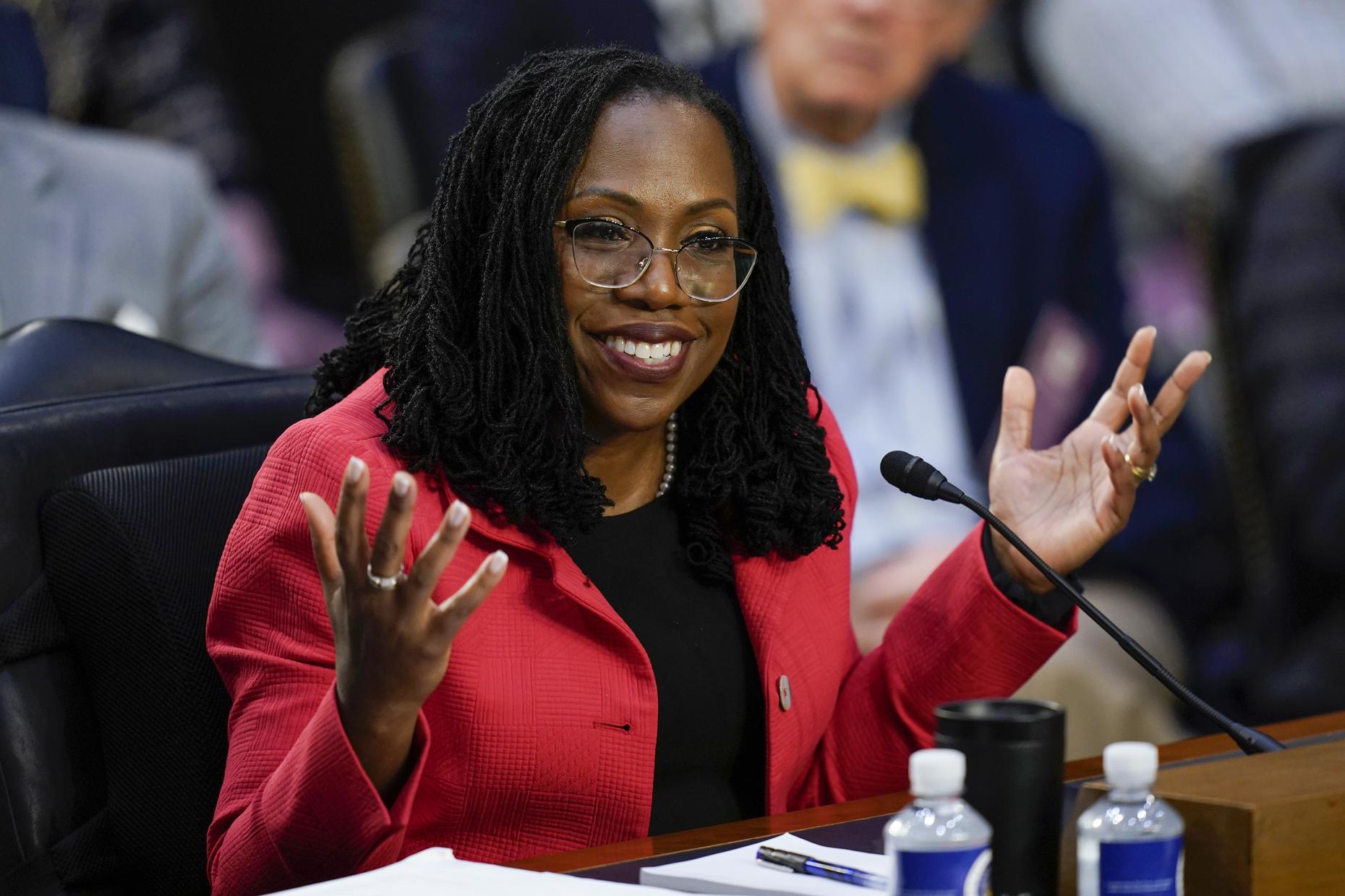
On the Media
A Handy Guide to How the Supreme Court Works
00:15:57
With the expertise of seasoned SCOTUS reporters, we've put together a handy guide for the discerning news consumer to make sense of the court, its decisions, and its coverage.
Loading summary
Transcript65 lines
- [00:00]
Ira Flatow
On the Media is brought to you by Progressive Insurance.
- [00:03]
Nina Totenberg
You chose to hit play on this podcast today. Smart Choice. Make another smart choice with Auto Quote Explorer to compare rates for multiple car.
- [00:12]
Brooke Gladstone
Insurance companies all at once.
- [00:14]
Nina Totenberg
Try it@progressive.com Progressive Casualty Insurance Company and affiliates not available in all states or situations. Prices vary based on how you buy.
- [00:23]
Brooke Gladstone
This is OnTheMedia's midweek podcast. I'm Brooke Gladstone. This week, the Senate held confirmation hearings for Ketanji Brown Jackson's nomination to the Supreme Court. Her ascension to the highest court in the land is all but guaranteed, with the Democrats holding a slim majority in the Senate. And once she gets there, her rulings, her dissenting opinions, her silences, her words will all become fodder for the media who cover the court. Given that, we thought it would be a good moment to review our Breaking News Consumers Handbook SCOTUS Edition the pitfalls of covering the court, though few, are deep and hazardous because the court basically does one of two things. It either decides to hear a case and issue a big decision that happens over 80 times a year, or it decides not to hear a case that happens upwards of 7,000 times a year. And simple as that may seem, news organizations often confuse the two.
- [01:23]
Ira Flatow
Frequently you'll hear something along the lines of the Supreme Court affirmed or the Supreme Court upheld, when in fact it did nothing of the sort.
- [01:31]
Brooke Gladstone
That's Amy Howe of SCOTUS blog, the gold standard source for breaking court news.
- [01:36]
Ira Flatow
It just left the lower court decision in place and it doesn't have effect nationwide, right?
- [01:42]
Brooke Gladstone
Other appeals courts can take it up exactly.
- [01:44]
Ira Flatow
The decision usually comes from a federal appeals court, and so it will be good law in that region of the country. But it doesn't have any effect in other parts of the country unless and until those lower courts weigh in.
- [01:56]
Brooke Gladstone
New York Times court reporter Adam Liptak says that in some cases, letting a decision stand can be very meaningful, as.
- [02:04]
Adam Liptak
In when the court let stand a bunch of rulings allowing same sex marriage to expand across the country. But there are many routine cases where it's not clear to me that you need to send out a news alert.
- [02:15]
Brooke Gladstone
Often a headline will suggest that the court decided on the constitutionality of an issue, when in fact it didn't. Usually the court weighs in when lower courts disagree over the interpretation of offences, not its constitutionality.
- [02:30]
Adam Liptak
And the difference is important. When the court decides a constitutional case, it's game over. The court has the last word on the meaning of the Constitution when the court decides a statutory case, saying this is what we think Congress meant. Congress is free to come back and say, no, wrong. What we actually meant was something else. So the two kinds of cases are very different and the distinction matters.
- [02:53]
Brooke Gladstone
So consider skipping newspaper headlines or on TV or radio intros. They're often written or changed by people who don't quite get it. NPR's legal affairs correspondent Nina Totenberg.
- [03:07]
Dahlia Lithwick
It's usually something fairly subtle that you've struggled with and struggled with to try to get it right, but at the same time, understandable. And you may have fallen 10% short. And the anchor or the editor or the headline writer decides, oh, I can fix that. Uh huh.
- [03:25]
Adam Liptak
We're mostly talking about, shall we say, editors who are not at the court and don't follow its daily diet, but see something cross the wires and overemphasize its importance.
- [03:39]
Brooke Gladstone
Far from offering a shortcut, headlines may in fact send you in the wrong direction. And they're just the first distraction. Facts are another. Yep, facts, characters, the whole narrative behind the lawsuit. Fun facts are to court reporters what.
- [03:56]
Nina Totenberg
Squirrels are to dogs, because so many cases are really boring.
- [04:00]
Brooke Gladstone
Slate's Dalia Lithwick.
- [04:01]
Nina Totenberg
We'll get very, very excited if we have a factual scenario that looks really weird or interesting. The school was looking for a drug ring that was full of ibuprofen instead of. There's this incredibly important search question under the Constitution.
- [04:17]
Brooke Gladstone
Both Lithwick and Liptak cite one particular case decided in 2009, Ashcroft v. Iqbal.
- [04:25]
Adam Liptak
About whether Attorney General Ashcroft could be sued by people who'd been rounded up after 911 and held in harsh conditions in immigration detention facilities. And the facts of that case are very compelling. I basically wrote a story all about how the detainees lost.
- [04:39]
Brooke Gladstone
But beware stories that focus mainly on winners or losers, because high court rulings mean so much more. In this case, it ruled that top government officials could not be sued for the unlawful discriminatory actions of underlings unless the presiding judge believes that the plaintiff can prove the boss was behind it. Cited in over 85,000 lower court decisions since the ruling, dismissals have soared.
- [05:08]
Nina Totenberg
Really, it was a year out before we read the opinion and said, holy cow, this was a sea change. We were just so interested in Mr. Iqbal's life.
- [05:17]
Brooke Gladstone
But to be fair, often the impact of a decision is not really known for years until it has time to play out in countless courts across the country. That's why the Supreme Court will sometimes revisit its own decisions. Even the justices may be unaware of the full implications of what they've done. The next big danger zone in high court coverage involves oral arguments, namely, giving them too much significance.
- [05:45]
Ira Flatow
The reading Justice Roberts line of questioning yesterday? I don't think so. I think that the government will lose.
- [05:50]
Brooke Gladstone
Or too little significance.
- [05:52]
Adam Liptak
Can you just can't read how the justices are going to vote based on oral arguments, because a lot of times they will ask their own side the toughest question.
- [06:00]
Brooke Gladstone
Oral arguments are essentially theater, but they're also crucial, though not for the reason you think. Occasionally an attorney can lose a case by botching an oral argument. But mostly the justices already have made up their minds based on the briefs. What they don't know is where their fellow justices stand. Dahlia Lithwick this is their first chance.
- [06:22]
Nina Totenberg
To suss out, huh, do I have five votes? Do I have four? Do I have four? And a third. And then trying to figure out, huh, Kennedy's in play. What could I do to make him be more in play? Sometimes the advocates are in a very strange situation where they can tell that they're just a potted plant and that the justices are in fact talking over their heads. But I also think when you have a court that is as polarized as this court is, it's very, very interesting to see someone like Justice Kennedy who always tries to come in looking as though I'm struggling with something, help me out here. It gives the other justices a chance to say, here, let me frame it this way for you, and try to.
- [06:59]
Ira Flatow
Bring along particularly Justice Elena Kagan is one that's interesting to watch.
- [07:03]
Brooke Gladstone
Here's where things get fascinatingly arcane. SCOTUS Blog's Amy Howe explains that after.
- [07:10]
Ira Flatow
The oral arguments, when the justices actually meet to vote on a case, they go around the room in order of seniority. They start with the Chief justice, then they move on to Justice Scalia, Justice Kennedy, Justice Thomas, and so on. And Justice Kagan is the last one to vote. Frequently, by the time it gets to her, the case has already been decided. And so she will often be using the oral argument as a way to figure out what the other justices concerns are and try to get the lawyers to address those because she knows that she may not have a chance to make these arguments in the justices private conference until it's too late.
- [07:44]
Brooke Gladstone
One more thing to consider, how much consideration to give to the President who appointed a particular Justice.
- [07:52]
Adam Liptak
Justice Scalia, who was appointed by President Reagan.
- [07:54]
Brooke Gladstone
Justice Ginsburg, who was appointed by President Clinton Clinton in 1993.
- [07:58]
Adam Liptak
Justice Stephen Breyer, appointed by President Clinton.
- [08:01]
Nina Totenberg
Justice appointed by President George W. Bush. Chief Justice John Roberts. I think the Justices would be the first to say that they absolutely hate the reporter shorthand of saying appointed by George W. Bush, appointed by Clinton, because it says too much. And the justices say, you know, when we put on our robes, we stop being our ideology. And of course, we know that's not entirely true, but do you think there.
- [08:25]
Brooke Gladstone
Are more litmus tests now for Supreme Court judges than there used to be?
- [08:30]
Nina Totenberg
Oh, absolutely. The confirmation process is vastly more politicized. Right. These confirmations used to happen in a couple of hours on paper. It wasn't until really the last century that the nominee even bothered showing up for their own confirmation. But I think it's also important to point out that the court has become unbelievably politicized and that we have a right wing of the court that is quite a bit farther to the right than any court we've seen since the FDR court. The whole system, I think, has done what the rest of the country has done, which is absolutely ideologically run to the two polls with very, very little sort of in that center. So when a term ends the way it did last year with the death penalty and gay marriage and Obamacare and they're all fractious and shouting at each other and very, very polarized and also close votes, that's what the American public sees.
- [09:21]
Brooke Gladstone
And yet they care enormously that their prestige be maintained and they fear losing the public trust.
- [09:31]
Nina Totenberg
Well, that's why we have the black robes. That's why we have a court that's built to look like a Greek temple. I mean, the whole theater of what they're doing is to say, as John Roberts so famously said, we're just umpires. This is just balls and strikes. This is not politics. This is something transcendent and almost oracular. And that's the message they have to give out. And it's important, I think, to understand that some of the time that's true, but a lot of the time it's not true. And one of the things that's really difficult, both for reporters covering the court and for the public that's trying to consume news of the court, is holding these two ideas in your head at the same time, that this is an incredibly political institution that's doing something sometimes effectively and sometimes not, that tries to transcend politics.
- [10:20]
Brooke Gladstone
The final point in this SCOTUS edition of our breaking news consumer handbook should actually be the parting shot in all.
- [10:27]
Dahlia Lithwick
Of our handbooks, really, to rely on certain news sources that you have found to be reliable and writers who you find readable and Reliable.
- [10:38]
Brooke Gladstone
Nina Totenberg.
- [10:40]
Dahlia Lithwick
You can look at Adam Liptak at the New York Times at Dahlia. Dahlia doesn't pretend to be unbiased. You know, she writes a column, the most entertaining writing under the sun. And I have never seen a mistake in it, a mistake of law, a mistake of fact or SCOTUS blog, which has developed a system which is so reliable right on deadline that we use it. There's Bob Barnes at the Washington Post, David Savage at the Los Angeles Times. You know, you just have to develop people who have not let you down.
- [11:14]
Brooke Gladstone
The fact is, like business reporting or science and health reporting, court reporting is complex and sometimes esoteric, requiring hide degrees of expertise. Of course, some famous bloopers occur because reporters in a hurry just didn't read far enough into the decision.
- [11:31]
Adam Liptak
Breaking news here on the FOX News Channel. Good morning.
- [11:35]
Nina Totenberg
We have just gotten the opinion. I'm just getting a first look at it. It is authored by the chief justice, John Roberts. He says the individual mandate cannot be sustained under Congress's power to regulate commerce. That means the mandate is gone.
- [11:46]
Adam Liptak
Megan, you're seeing something now.
- [11:48]
Ira Flatow
We're getting conflicting information. If you follow scotusblog.com, they say that despite what Shannon just read, that the individual mandate is surviving as a tax. This is according to SCOTUS blog, which.
- [12:00]
Brooke Gladstone
Also has the opinion that's memorably embarrassing. Cnn, by the way, was far worse. But it's rare. Mostly reporters make mistakes because they think they understand what's going on when they don't. So when seeking Supreme Court news, choose a wonk, wonks rule. Of course, a lot of the interpretation reporters have to do would be moot if there were cameras in the courtroom. But the justices have historically been pretty divided on that issue. Former OTM producer Jesse Brennaman paid special tribute to that debate in song, Television in court.
- [12:43]
Adam Liptak
I was for it when I first joined the court and switched and remained on that side of it. I do not believe the purpose would be to educate the American people. It will alter the way in which we hear our cases, the way in which we talk to counsel, the way in which we use that precious power. Please don't introduce into the dynamic the temptation, the insidious temptation to think that one of my colleagues is trying to get a soundbite for the television. We don't want that. Please, Senator. We don't want that. Please don't introduce the temptation, the insidious temptation. Television in the court. The way in which we use that precious, precious hour television in the Court, we'll have to talk together. We don't want that television in the court.
- [13:34]
Brooke Gladstone
I think it would be a terrific thing.
- [13:36]
Adam Liptak
Please don't introduce the insidious temptation. Try and try and try. And you get a sound bite for the television. Could you argue the opposite position? I could make a lot of points about educating the public. If the American people watched our proceedings gavel to gavel, they would never again ask Jessica Lee, why do you have to be a lawyer to be on the Supreme Court?
- [13:56]
Brooke Gladstone
When you see what happens, it's an inspiring sight. All nine justices, so prepared, so smart, so thorough, really seeing government at work.
- [14:06]
Adam Liptak
A million people could have seen that oral argument. That would be wonderful. I have had positive experiences with cameras. It seems somewhat perverse to exclude the television.
- [14:17]
Dahlia Lithwick
I don't see any problem with having proceedings televised.
- [14:20]
Brooke Gladstone
So it sounds like you all changed your minds today.
- [14:24]
Adam Liptak
You see a camera coming into our courtroom, it's going to roll over my dead body. Regular appearances on TV would mean significant changes in the way my colleagues could conduct their lives. My anonymity is already gone. Most of the American people would see 15 second takeouts and those takeouts would not be characteristic of what we do. They would be uncharacteristic. Yeah, no, but what we see is an article in a newspaper that's out of context. That's fine. People read that and they say, well, it's an article in the newspaper, but somehow when you see it live, see it live, an excerpt live, it has a much greater impact. Television in my dead body. Do it for the public television in the court. That would be wonderful. We don't want that television in the court. My anonymity is already gone.
- [15:19]
Brooke Gladstone
It means I'd have to get my hair done more often. Senator Specter.
- [15:23]
Adam Liptak
Oh, let me commend you on that last comment.
- [15:41]
Brooke Gladstone
Thanks for listening to our midweek podcast. If you want a handout of the breaking news Consumers Handbook or any of our breaking news consumer handbooks, go to our website@onthemedia.org and while you're there, sign up for our newsletter. It's pure gold. See you later in the week for the big show. I'm Brooke Gladstone.
- [16:20]
Adam Liptak
I'm Ira Flato, host of Science Friday. For over 30 years, our team has been reporting high quality news about science, technology and medicine. News you won't get anywhere else. And now that political news is 24 7, our audience is turning to us to know about the really important stuff in their lives. Cancer, climate change, genetic engineering, childhood diseases. Our sponsors know the value of science and health news. For more sponsorship information, visit sponsorship.wnyc.org.