← On the Media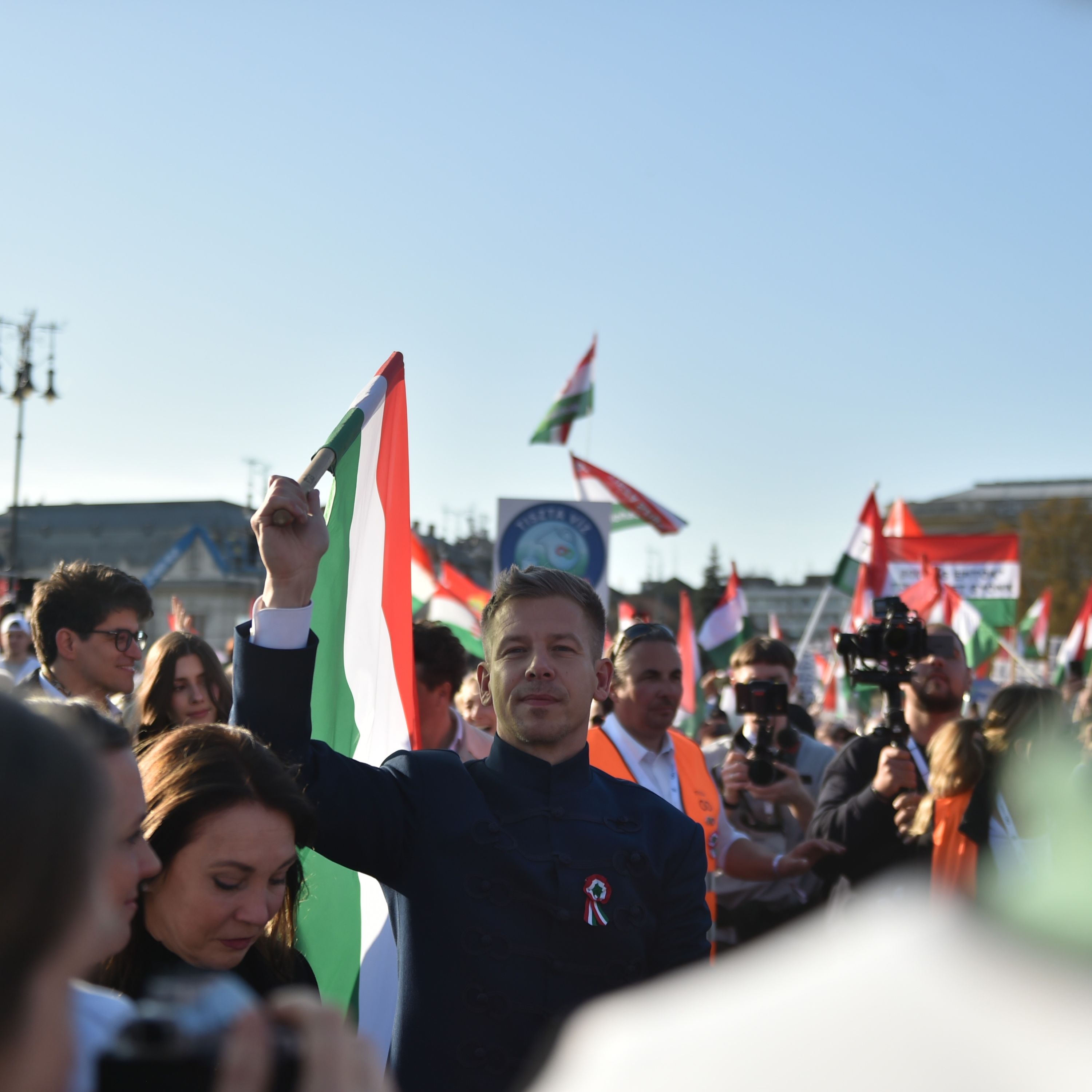
On the Media
A New Day for the Press in Hungary?
00:22:00
What might follow this weekend's national election.
Loading summary
Transcript40 lines
- [00:01]
A
This is on the media's midweek podcast. I'm Brooke Gladstone. This weekend, Hungary holds its national election, and Vice President J.D. vance flew there in advance to help boost the chances of incumbent Prime Minister Viktor Orban, an autocrat close to our president's heart.
- [00:18]
B
The bureaucrats in Brussels have tried to destroy the economy of Hungary. They have tried to make Hungary less energy, independent. They have tried to drive up costs for Hungarian consumers. And they've done it all because they hate this guy. I'm here to help him in this. In this campaign cycle.
- [00:38]
A
For the past 16 years, Orban has systematically brought the institutions of Hungary under state control, from the courts to the education system to the press, gutting the democratic checks to his power. So Vance's visit to Hungary is no surprise. Orban's model of democratic illiberalism, dubbed the Hungarian model, has served as a kind of instruction manual for President Trump and the Maga. Right. Last spring, we talked about it with Martin Gugliesz, a founder and lead anchor of Hungary's most influential independent media outlet, a YouTube channel called Partizan. Turns out Partizan played a vital role in the rise of Peter Magyar, the opposition candidate now beating Orban in the polls.
- [01:27]
C
So this guy appeared in our channel for the first time in Hungary. He was absolutely unknown for the wider public. It was funny because we even have to label him as the ex husband of the justice minister, because the justice Minister was well known for the public
- [01:42]
A
before appearing on Partisan, one of the very few outlets in Hungary where opposition voices can be heard. Peter Magyar was not a politician.
- [01:50]
C
He was a kind of whistleblower. So he said that he's fed up with the style of the government. He's fed up with the misconduct of the public, public funds, and the level of corruption and the concentration of power. In Orban's hand. He was a textbook definition of a whistleblower, coming from within the system and telling the audience what kind of scandals he witnessed within the circle.
- [02:14]
B
Hungary's president at the time, Katalin Nowak, pardoned someone who was convicted for helping the head of a foster home cover up child abuse. Basically, it brought about the downfall of Catalin Nowak, and it brought about the rise of Peter Magyar.
- [02:30]
A
Ivan Naghi is a reporter for the Columbia Journalism Review from Hungary. He's kept a close eye on his country's press in the run up to this weekend's crucial vote. He says that the erosion in Orban's seemingly invulnerable power base began with this single BombShell story. In February 2024, a scandal involving Hungary's then president. The presidency in Hungary is a largely
- [02:57]
B
ceremonial post, and President Novak, before she was appointed the President of Hungary, was the Minister of Family affairs for Orban. It was a huge position created solely for her and for her successors because one of Orban's main political platforms is being a pro family government, offering all sorts of tax breaks and financial advances to families who have multiple children. It's what he uses to try to sugarcoat his very anti LGBTQ stance in social life. And to find out that your president pardoned someone who helped cover up a crime, that is huge.
- [03:37]
A
You know, it feels so kind of quaint that Hungarians still care about outrageous hypocrisy, because we've been seeing a lot of it.
- [03:49]
B
I mean, we long thought that the threshold for something to be noticed by Hungarians was somewhere up where the the Artemis Project is up now. From day one, investigative work has kept an eye on this regime. But over time, it's become virtually impossible to break through the noise and especially to have a story that penetrated beyond a certain bubble of society that could access free information. Because one of the building blocks of this regime is the complete isolation of huge populations from verified objective news. Many, many people are still dependent on government propaganda on freely accessible public media channels, which are 247 echoing the government's talking points.
- [04:39]
A
Back to the interview that Magyar did, the one that went viral. You say it kicked off some of the first real backlash that Orban has seen during his regime. What were these stories that no one paid attention to? Some of those bombshell stories you referred
- [05:00]
B
to prior to the child abuse story, for instance. One of these stories is that in the 2010s, public money from Hungary central bank was funneled into non governmental organizations on paper charities, all led and run by people who are related to either the son of the head of the national bank or his business circles. And what ended up happening is that, and I've done the maths for this, around $1.5 billion worth of Hungarian foreigns were embezzled and lost in this whole business. This is something that journalists have covered for years, that the business circles of the central bank leader's son have gotten so rich that they actually purchased Skyline apartments condos in Manhattan's fifth Avenue. And these are the kind of things that never really reached broader society. It's mostly corruption related. Hungary's richest man was once the pipe fitter, the gas man of Viktor Orban, a childhood friend and now virtually in every industry in Hungary. He owns a majority stake. These kinds of things journalists have covered for long. But one of the many reasons that didn't resonate with people is that people doing relatively well off in Hungary. Orban paid a lot of attention to making sure that the amount of money that people see in their bank accounts or in their wallets is just always slightly, a little more than the month before or the year before.
- [06:29]
A
All people, Ivan, or just the elite?
- [06:32]
B
It's a very good question. Obviously, Orban's business circles were the biggest beneficiaries of his governance. As I said, it's really hard to explain how absurd it is that someone like a pipe fitter from Orban's home village becomes the richest man of Hungary in the span of like, 5 years. But what Orban has done to guarantee his success is to make the most vulnerable parts of society feel like they are better off. Wages have actually risen consistently from 2010 until 2022. People felt like they had more money on their bank accounts. Now, the problem was, what we understood as journalists and what we tried to report on, is that at the same time, Hungary has the highest value added tax in the world, 27% on every purchase Hungary has had after Covid and the war In Ukraine, a 25% inflation rate, all sorts of other economic measures that Orban imposed on businesses, all trickled down to the consumer level.
- [07:35]
A
So surely the electorate would have noticed
- [07:37]
B
that, except they did not, because on the surface, it did look like they had more money in their bank accounts. And that was kind of the magic of Orban. And this is. This is why his regime started to crumble only in the past four years, because of all the economic crises, because of COVID because of the war in Ukraine, because this illusion can no longer be kept up. And Orban always knew that this kind of financial aspect was crucial to his power. A lot of times before elections, we had seen all sorts of cash advances and tax breaks and many, many ways in which people would see a large amount of money reach their bank accounts before election day. His regime started to crumble only in the past four years because of all the economic crises, because of COVID because of the war in Ukraine. They're connecting the dots. And here's Peter Magyar, someone who's been in front of the public eye for two years and telling them that you're struggling to pay your rent. I'm pointing to the guy who's responsible for it. It's because of him. Look at his cronies on their yachts. Look at his family getting rich. While you're getting poorer.
- [08:40]
A
See, we've often looked at Hungary as an example of democratic backsliding, where the press seemed to have less and less influence. What is it like working on the ground there right now? What have you heard?
- [08:56]
B
So, having been an independent journalist in Hungary for five years, I only left a year and a half ago. Hostility was the kind of baseline emotion that you were feeling when you were out reporting, especially if you're reporting on rallies. Conn to Orban, it became a kind of rite of passage to receive your first death threat through email. What has changed over the past couple of years, and especially in the past couple of months running up to this election, has been that Orban, for the first time really acts like someone who's in danger. Orban has taken independent journalists as their enemies. As part of all the forces that are in his mythology coming to get Hungarians if Orban is not protecting them, has really been showing on the street the enemy within. Precisely. And you see young female reporters trying to do interviews on the street, being shoved off or even forcibly removed from buildings by politicians. That's never been seen before. There's no like life threatening assault. But it's definitely impossible to do your job if you consider your job to be going to an event, reporting from it, or asking questions and going home untouched.
- [10:11]
A
Especially female reporters. Not so much male reporters.
- [10:15]
B
It has happened to female reporters multiple times in his campaign. It does happen to male reporters as well. Like I remember years ago being kind of touched or lightly shoved and you're kind of taught not to respond to it, but when you see it happen on camera, that does feel like crossing the line. And it is crossing the line.
- [10:35]
A
You've noted that a half dozen whistleblowers have given tell all interviews about how the regime operates.
- [10:41]
B
Yeah.
- [10:42]
A
And that Oroban is all over the tabloids. That is part of the story of the media.
- [10:46]
B
Now, there is a saying in Hungarian which roughly translates to we've known, but we never thought. In a lot of ways, life and public life in Hungary operates in this we've known but never thought kind of way. Everyone knows that officials can be bribed across the country, but until someone gets investigated and taken down for this, people pretend like it doesn't exist. Same goes to understanding how this regime works. And now as the regime might be coming to an end, more and more people are coming out to speak up from the army. Someone came out a week ago and had a tell all interview for a press outlet called Telex about just how much it is politically controlled. Instead of professionally controlled and how much power Viktor Orban's own son has within the army to do whatever he wants. Another very explosive interview a couple weeks ago, an investigator from the Hungarian police force revealed that the government, through the secret service, have been surveilling Peter Magyar's party and tried to compromise members of Petr Madhyar's IT team to bring down the internal network of the party. We've known that Orban's been surveilling the opposition and journalists since 2019, when it turned out that his government has installed spyware on dozens of people's phones. In the independent press and NGO sphere and political spheres, we've known that Viktor Orban's son had virtually unlimited power in the army because we've had investigative reporting about it. We've known of all of these things, but we never thought of all of these things. Right. I don't know if it makes sense, but the point is, if you have a regime which is in many ways held together by fear, people deciding, being fully aware of the potential consequences, to still talk to the media kind of shows how much of this imaginary power you have left.
- [12:39]
A
You quoted journalist Noemi Martini saying that, quote, if someone lit up a match, the place would explode.
- [12:47]
B
She was referring to just how much tensions have overboiled in this election campaign. And even from an ocean away, I feel it on my skin. It's been such a high pressure, non stop sort of campaign where bombshell after bombshell comes in the media, where you have explosive revelations about the government every other day. Viktor Orban and his government coming up with new narratives every other day, all sorts of smear campaigns after one another. You have sex scandals, you have pedophilia scandals, you have corruption scandals, you have foreign policy scandals, you have sex spy games. And this is another thing that Noemi told me when we talked for this piece. People want this to end because if it doesn't end soon, it's going to end dirty. It's just a very, very tense environment. Hungary is deciding its fate on Sunday. Is there not a bigger moment for a country?
- [13:47]
A
So let's say Orban still manages to win the election. What happens?
- [13:53]
B
It's not at all improbable. If anything, it's a toss up. If Orban wins, there will be a crackdown in Hungary, not just for the press, but for everyone who's spoken up. And this is why I said that the whistleblowers are really taking a massive risk here. Orban, on the campaign trail this year, said, don't worry Everything will be noted, nothing will be forgotten. Now, for the press, there are a couple of very clear consequences that can happen. Last year his government drafted a legislation which very closely mimicked Russia's foreign Asian law, which is basically designating any news outlet or NGO that has received foreign funding, even if it's through an EU program that counts as foreign interference. They never actually tabled this for a vote, but it is ready. Then that would pretty much mean the end of the independent press in Hungary. But also, Hungary has had a sovereignty protection office, which is a government organization, which for some reason has the same power, power as the judiciary in many ways, but does not have any of the oversight or due process at all. And they can just kind of determine anyone to be a threat to Hungary's sovereignty.
- [15:01]
A
Was this an office set up by Orban?
- [15:04]
B
Yes, a few years ago it was. And they just placed some think tank slash government media, political commentator as the chief of it. And it just has a lot of authority, without any sort of oversight, to investigate and look into the finances of, of Hungarian NGOs and Hungarian news outlets on the premise that they're threatening Hungary's sovereignty.
- [15:27]
A
So if Magyar wins, what have we got? A paradise of press freedom.
- [15:33]
B
I wish any politician could promise a paradise of press freedom. So Peter Magyar, here's the thing about him. You're being compared to Viktor Orban. You can only be great for the press. And Peter Magyar is a super professional politician. He has a very detailed political platform, a program, has a whole section on how he would restructure public media. That is something that Hungarians want, that is something that Hungarians need. And as I've mentioned, he's already much more open. Like he gives interviews to independent outlets.
- [16:04]
A
And you say that Magyar has a toxic habit, a very thin skin. Evidently.
- [16:12]
B
Peter Magyar is very active on social media, which means Facebook in Hungary. And every time one of the larger independent outlets writes about him critically, whether that's about his platform or investigating his past, whatever, he shows up in the comment section and launches a tirade against the news outlet, accusing them of being funded by the government or just putting laughing and crying emojis. And because he has built a cult following, because, let's face it, people believe in him. Many people believe in him as the Messiah. Many of his followers follow him in the act. You see mass unsubscriptions from outlets. If they write something critical about Modyar, you see people sending texts and threats like, why are you in the way of the change of the regime? And here's the problem, because Orban has built a friendly press that inevitably puts the independent press on the other side of this equation. And even though the press has been very much scrutinizing whatever opposition figures that come around, the press is still being characterized in the larger society, on all sides of the political spectrum, as being anti Orban. So if the independent press does something anti Magyar, which you can label as anti Magyar, just any kind of investigation or analysis, they are immediately called out, like, wait a minute, you're supposed to be on our side. And this is why I believe that if Magyar wins, there has to be a very steep learning curve in Hungary for media literacy, because people will need to understand that these same people who had been scrutinizing Viktor Orban, mind you, because he had unrestricted power for 16 years. Who else would you be looking at? The opposition who has no political power? No, obviously the press was scrutinizing the one man and his regime that's defined this era of Hungarian history. And people will need to learn that the press is not there to bash Orban. The press is always there to scrutinize the one in power.
- [18:07]
A
We recently had Vox's Zach Beauchamp on to talk about how countries display democratic resilience. He referenced Brazil, South Korea, Poland. Poland in particular, though, is showing signs of potentially waffling back toward the right wing, given the mixed messages from Magyar. How sustainable is this current and fragile?
- [18:38]
B
Perhaps resilience, democratic resilience, is a very touchy subject in Central and Eastern Europe. In all of the countries that once used to be part of the Soviet sphere of influence, they've only had really three decades of experience with democracy. That's not enough to build resilience. That's enough to build a basic understanding as long as everyone plays along. And in these countries, you mentioned Poland, but you can also mention the Czech Republic, you can also mention Slovakia. People have not been playing along. Figures like Viktor Orban have not been playing along. Or figures like Robert Fico in Slovakia have not been playing along. The reason they have not is that they understood that these democratic foundations in the society are not strong enough to actually withstand the pressure of an autocrat. And this was all for a political power grab. And we've seen this in many countries, as I mentioned. So talking about resilience in countries which barely understand democracy in the first place, societies that have barely had an experience with democracy in the first place, and then 15 or 20 years in, we're subjected to an autocrat. It's kind of starting again. And it's something that, you know, educated, glasses wearing, blue shirt wearing, welcomed individuals like myself from large cities can actually delve into and talk about. But it's not an issue that concerns these societies. These societies are concerned with having enough money in the bank to buy enough food, to pay for rent, to be able to buy a new refrigerator if the old one breaks. That is the focus of life for the overwhelming majority of society. So to answer your question, ultimately nobody knows if any bounce back in terms of democracy would last in Hungary just as much as we don't know anywhere else in the region. And obviously we're getting more and more skeptical of just how resilient democracies are in the US or in the UK or across the European Union countries. But what is certain is that it fluctuates and if Peter Magyar would come to government, that he would be here to establish a democracy, partly because he is a democrat. While he resembles, in many ways resembles an old version of Viktor Orban, who's very charismatic, who has this central right Christian kind of approach to governance that is very popular in Hungary society, he is at heart a democrat. He's a democratic politician. And not only that, he will have a lot of pressure on him. One of the things that keeps coming back in reports when people go to his rallies in the countryside, I myself have followed him for an entire day on a campaign trail last summer, and I'll be doing it this weekend as well, is just how much faith people put in him, just how much people expect of him. He can't let the country down. So if he wins, he's going to have a lot of expectations. So that alone should guarantee some sort of democratic fortune for Hungary in the coming years. But in the long run is going to be years and years and years and decades of consistent pro democratic politics just to establish some baseline democratic resilience.
- [21:42]
A
Ivan, thank you so much.
- [21:44]
B
Thank you for having me.
- [21:45]
A
Ivan Naghi is a reporter for the Columbia Journalism Review from Hungary. Thanks so much for listening to our midweek podcast. Be sure to catch the big show on Friday, which comes out around dinner time. Whether it's news from around the world or the latest from your neighborhood, New Yorkers engage with WNYC studios for the information and connection they can only get from our programming. Be a part of that conversation through your business support. Learn more@sporship.wnyc.org.