← On the Media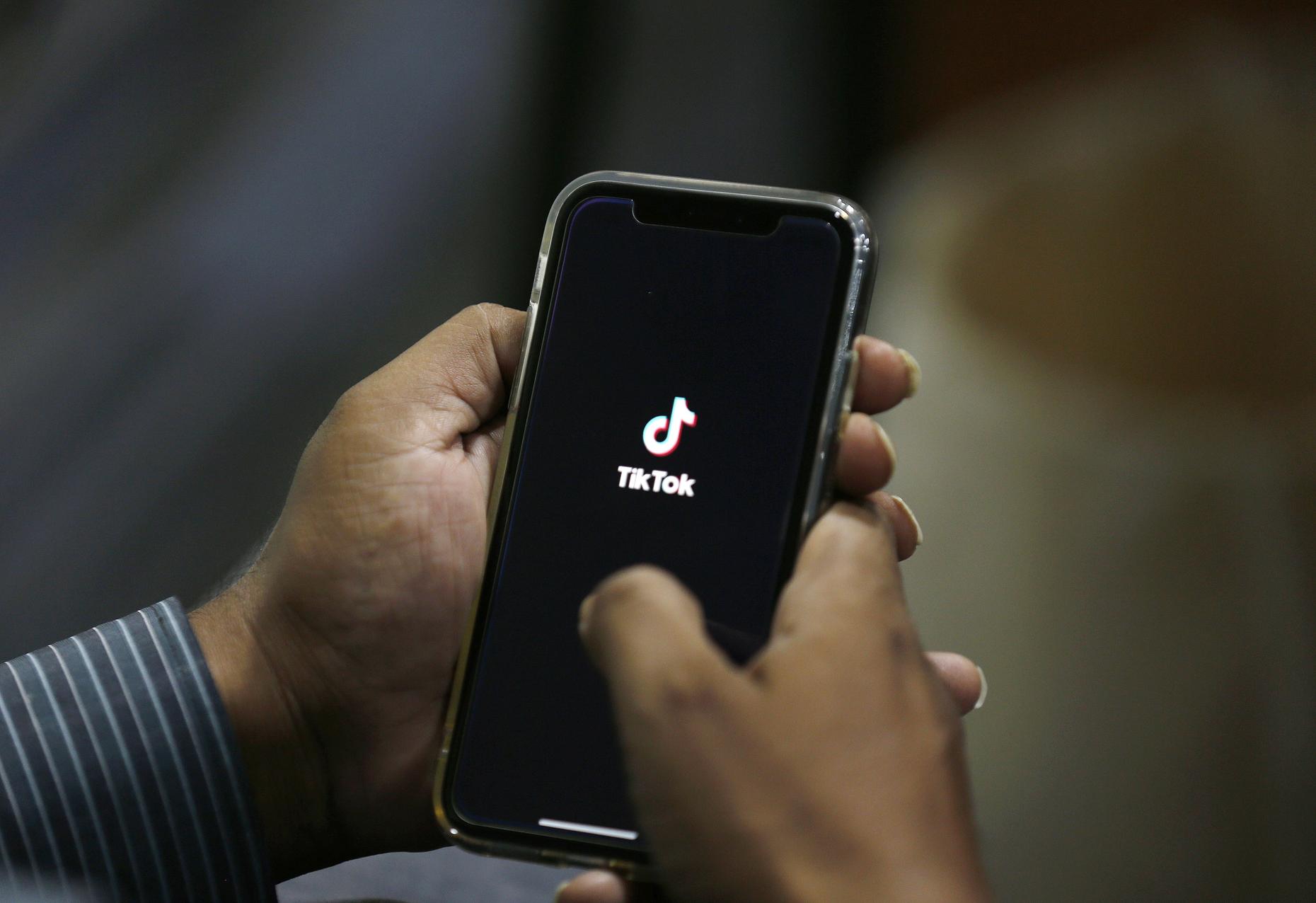
On the Media
A Taxonomy of TikTok Panics
00:21:59
The alarmist news coverage of TikTok challenges and its misleading influence on panicked parents
Loading summary
Transcript126 lines
- [00:00]
Progressive Insurance Ad
On the media is brought to you by Progressive Insurance. Do you ever find yourself playing the budgeting game? Well, with the name your price tool from Progressive you can find options that fit your budget and potentially lower your bills. Try it@progressive.com Progressive Casualty Insurance Company and affiliates Price and coverage match limited by state law not available in all states.
- [00:23]
Lowe's Ad
This Father's Day at Lowe's Score free gifts for the greatest dad Right now get a free Blackstone 8 piece accessory kit when you buy a Blackstone 28 inch griddle. Plus get two free select Craftsman V20 tools when you buy an RP brushless drill and impact driver combo kit. Shop these deals and more this Father's Day at Lowe's we help you Save valid through 615 wall supplies last selection Mirrors by location.
- [00:54]
Nicole Byer
We interrupt this program to bring you an important Wayfarer message Wayfair's got style tips for every home. This is Nicole Byer helping you make those rooms flyer. Today's style Tip when it comes to making a statement, treat bold patterns like neutrals. Go wild like an untamed animal. Print area rug under a rustic farmhouse table. From wayfair.com Ooh fierce. This has been your Wayfair style tip to keep those interiors superior.
- [01:21]
Progressive Insurance Ad
Wayfair Every style, every home.
- [01:25]
Michael Ohinger
You're listening to the on the Media podcast Extra. I'm Michael Ohinger. Happy New Year. In the final weeks of 2022, Congress passed a new law aimed at America's favorite Chinese website.
- [01:38]
Nicole Byer
Republicans and Democrats uniting on something interesting opposition to TikTok. Congress is moving forward with a bill to ban TikTok on government devices amid concerns over China collecting users data.
- [01:50]
Michael Ohinger
Of course, the privacy concerns underlying the bill were accompanied some predictably panicked discourse. GOP Rep. Mike Gallagher is calling the app Digital Fentanyl. Gallagher is calling for more to be done. He wants the app banned from the US Entirely.
- [02:07]
Nicole Byer
The comparison is apt for at least two reasons. One, it's highly addictive and destructive. And we're seeing troubling data about the corrosive impact of constant social media use, particularly on young men and women here in America.
- [02:22]
Michael Ohinger
Ever since the app became a hit, evening news here and abroad have confronted us with a never ending stream of evidence showing how its users are having their minds hijacked.
- [02:34]
Nicole Byer
I mean, the number of hits on TikTok in the billions.
- [02:40]
Michael Ohinger
If you need evidence that people have.
- [02:42]
Nicole Byer
Truly lost their minds, there's a new TikTok phenomena called the pee your pants challenge.
- [02:48]
Michael Ohinger
The social media challenge is called national.
- [02:50]
Nicole Byer
Shoot up your school day and encourages students to make threats of violence against their school. Remember when social media influencer Ava, who I talked to, recently asked her followers.
- [03:03]
Ryan Broderick
To lick toilet seats for a coronavirus challenge?
- [03:09]
Nicole Byer
New details now about a new TikTok challenge that starts tomorrow. It calls for for students to smack their teachers.
- [03:18]
Michael Ohinger
There are so many breathless reports of TikTok challenges, we could spend a lifetime trying to catalog all of them. They run from very dumb to very serious, from real to overblown to completely made up. This week, we are rerunning my piece about the media's often misinformed obsession with the app. When we first aired it in May, I presented my reporting to our guest host, Brandy Zadrozny.
- [03:46]
Brandy Zadrozny
Hey, Micah.
- [03:47]
Michael Ohinger
Hey, Brandy.
- [03:48]
Brandy Zadrozny
So what do you got for us?
- [03:50]
Michael Ohinger
Okay, so I've been putting together what I'm calling a taxonomy of TikTok panics. I'm going to take you through a bunch of examples of reporting, some based on true things. Others are made up or overblown. And I've gotten a lot of help from reporters and researchers who cover TikTok much more closely than I do. So first, I want to tell you about my conversation with Taylor Lorenz, who who, as you know, is a reporter for the Washington Post.
- [04:13]
Taylor Lorenz
For years, I've reported on the false nature of a lot of these teen trends and how they emerge with new technologies.
- [04:20]
Nicole Byer
Videos of teenagers snorting condoms and then pulling them out through their mouths. Yes, that's right. This is a thing.
- [04:28]
Taylor Lorenz
Back in 2017, I wrote about how teens are actually not snorting condoms or eating Tide Pods or whatever people were saying YouTube was making kids do.
- [04:38]
Michael Ohinger
Let's pause on the Tide Pods example for a second, which I think we can learn a lot from.
- [04:42]
Brandy Zadrozny
It was everywhere. I mean, there were, like, school letters sent home to my home. Like it was a thing.
- [04:49]
Nicole Byer
They're popping detergent pods into their mouths and then posting the videos online.
- [04:54]
Michael Ohinger
Much of the early hubbub was based on Internet jokes and bizarre tweets. Though there were a small number of YouTube videos that got a lot of.
- [05:01]
Taylor Lorenz
Attention, the local news coverage actually brings them into the consciousness. You saw people eating Tide Pods, ironically, because of the panic about it.
- [05:11]
Michael Ohinger
Even accounting for that feedback loop, the Tide Pod story was totally overblown. Calls to the American association of Poison Control Centers concerning laundry detergent cases were trending down in 2017 when the story started. And as the coverage spilled over into 2018, the number dropped to the lowest record since the Tide Pods were released in 2012. And the vast majority of these poison calls were related to children under 5, not teenagers.
- [05:39]
Brandy Zadrozny
A reminder that the amount of coverage doesn't always correlate with the size of the actual problem.
- [05:46]
Michael Ohinger
So that's what we saw in the YouTube era of moral panics, which sets us up for what we're seeing with TikTok now.
- [05:52]
Taylor Lorenz
So you started to see pretty much the same thing that happened to YouTube, happened to TikTok, where it's like, look at what TikTok is making your children do.
- [06:00]
Michael Ohinger
Which brings us to the first in my taxonomy of TikTok panics, what I'm calling the coordinated panic. It all started with an infamous trend called Devious Licks.
- [06:11]
Nicole Byer
A whole new destructive TikTok craze has teens stealing and damaging property at schools.
- [06:16]
Abby Richards
We called Devious Licks, and students have been recording themselves vandalizing and stealing school property.
- [06:22]
Nicole Byer
The result is thousands of dollars in damage to schools across the Bay Area and the country, all documented for likes on TikTok.
- [06:30]
Taylor Lorenz
It's true that kids were vandalizing their schools as kids have always done, but a lot of it was attributed to TikTok when it really shouldn't have been.
- [06:38]
Michael Ohinger
The Devious Licks trend wasn't as well known until it was deliberately pushed to local outlets across the country by Facebook's parent company, Meta, which Taylor Lorenz revealed in a bombshell scoop earlier this year.
- [06:51]
Taylor Lorenz
What myself and my colleague Drew Harwell revealed was that Meta had actually hired Targeted Victory, a well known Republican consulting firm, to help plant Negative stories about TikTok across the country in local news markets.
- [07:05]
Michael Ohinger
Basically, Meta was tired of being the subject of constant public scrutiny and wanted to convince parents and public officials across the country that TikTok was the real menace. But here's a sort of funny twist. Rumors about Devious Licks had actually started on Facebook, not TikTok. Of course, the coordinated campaign to get local media to cover this didn't mention.
- [07:26]
Taylor Lorenz
That a bunch of state attorney generals have announced an investigation into TikTok and its harm on children.
- [07:31]
Nicole Byer
California Attorney General Rob Bonta announced an investigation to find out if TikTok uses special techniques to lure young users causing.
- [07:39]
Taylor Lorenz
Harm to them and so Targeted Victory and Meta were very interested in pushing these negative local news stories in those specific markets in hopes of pressuring state attorney generals to take action against TikTok.
- [07:52]
Michael Ohinger
Targeted victory and Meta also pressured local outlets to cover the so called Slap a teacher Challenge. Educators beware.
- [08:00]
Nicole Byer
That's the warning from the California Teachers association letting them know about a potential TikTok trend. So there is a list already written out. It goes Month by month, telling kids what to do and film it, then put it on TikTok.
- [08:15]
Michael Ohinger
The challenge for the month of October, Slap a teacher. Slap a teacher hadn't started yet, but the idea was that there was a nationwide plan among teenagers to slap their teachers starting at the beginning of the month. And this fake list of so called future challenges had once again originated on Facebook, where it circulated in teacher and police groups. But you wouldn't know that from the coverage.
- [08:42]
Taylor Lorenz
There's not even a single example in these stories of a slap a teacher video. If a reporter just says it trended, where's the evidence? How much did it trend? Where did it trend? What made it trend?
- [08:53]
Brandy Zadrozny
Yeah, it feels like the words trend and viral can be a bit of a cheat code for journalists because they don't require much proof. And it really does help punch up a story to feel more urgent.
- [09:05]
Michael Ohinger
Yes, exactly. I think that's a really important point, and it's one that I heard from other reporters on this beat, like Ryan Broderick, who writes the garbage day newsletter.
- [09:14]
Ryan Broderick
I think the scale of TikTok makes it very hard to judge whether something's important on the app. The views are so high on the content that people assume that it must matter. You know, a trend of, like, four people doing something can feel like this massive movement, when in fact, it doesn't matter at all.
- [09:32]
Michael Ohinger
Okay, so I want to move on from the coordinated panic stories to what I'm calling the rumor mill panic. Brandi, did you hear about last year's national rape Day?
- [09:45]
Brandy Zadrozny
I can't believe I've missed some of these, but no, I missed that one as well.
- [09:49]
Abby Richards
This one is triggering for me. It really is part of what kind of pushed me into doing TikTok misinformation research in the first place.
- [09:57]
Michael Ohinger
I called up Abby Richards, who has written a lot about how conspiracy theories spread on the platform.
- [10:02]
Abby Richards
It's unclear exactly where this started, this idea that a big group of men were gonna just go out and rape women, which is a gross misunderstanding of how sexual violence is perpetrated, because most sexual assault is committed by somebody that the victim knows and often trusts.
- [10:26]
Michael Ohinger
Like slap a teacher day. It was unclear in the moment what the source of the concern was, but there was a rumor, and that is what set the app on fire.
- [10:36]
Abby Richards
We really awareness videoed it into existence. All of the videos surrounding it were about, like, oh, I don't know if this is true, but if it is, be careful. I don't know how many guys are going to be participating in this, But Be extra careful. So get your mace, get your tasers, don't go anywhere.
- [10:55]
Dr. Amy Orban
I don't know whether it's a sick, twisted joke or if it's a call to action. So I want to remind everybody to be prepared to save your own life.
- [11:05]
Abby Richards
And then the news coverage about it was not critical at all.
- [11:10]
Nicole Byer
It's hard to believe this is actually a thing, and I'm reporting on this to tell you about it this morning. A group of men on the popular social media app called TikTok have declared April 24 as national rape Day. That's right, you heard me.
- [11:25]
Michael Ohinger
But when April 24 rolled around, nothing happened. And a very similar phenomenon occurred later in 2021 with National School Shooting Day on December 17th.
- [11:36]
Abby Richards
It seems you've started because there was some reported video to a school administrator, and then once the school posted about it on Facebook and the local law enforcement to post about it on Facebook, it became this game of telephone of just be careful. You should know.
- [11:55]
Taylor Lorenz
The TikTok challenge encourages students to make threats against their school, and it's supposed to happen today.
- [12:01]
Michael Ohinger
Ultimately, some reports noted that the Department of Homeland Security and local police believed these threats were totally unfounded. But by the time December 17th rolled around, the panic had spread too far.
- [12:13]
Nicole Byer
Schools are canceled in California, Texas, Missouri, and Minnesota. I've seen a dozen kids come into.
- [12:20]
Michael Ohinger
The front office here at this particular school location today, feared for their lives. It's a little scary.
- [12:26]
Taylor Lorenz
I don't really want to go to school tomorrow, though.
- [12:29]
Brandy Zadrozny
It seems like one of the themes here is that news reports claiming that teens are gonna do something on a certain day nationwide probably isn't gonna come to fruition.
- [12:39]
Michael Ohinger
And another theme in the coverage that I've noticed is a reliance on police sources. Which brings us to the third in my taxonomy of TikTok panics. What I'm calling the local crime panic.
- [12:51]
Brandy Zadrozny
I call it copaganda.
- [12:53]
Nicole Byer
A new TikTok challenge has Massillon residents understandably upset.
- [12:57]
Michael Ohinger
Hey, koolaid.
- [12:59]
Nicole Byer
Oh y. By old Kool Aid commercials being reported across the country. Massillon police posted this warning on Facebook about young people busting through fences, causing thousands of dollars in damages.
- [13:14]
Michael Ohinger
Brandi There were reports like this in New York, Idaho, and Ohio. Palmer Hosh, a reporter for Insider, reached out to TikTok, and the company told her there was no evidence that videos of this so called Kool Aid man challenge ever existed on the app. My best guess is that local police, who, by the way, are not experts in youth culture, were basing this idea off of videos of drunken adult men busting through drywall, which have been circulating online for years.
- [13:45]
Abby Richards
Oh no.
- [13:46]
Michael Ohinger
Oh no. Oh yeah. And by the way, I found tons of news reports about the same form of vandalism that predate TikTok by years. Here's one from 2011.
- [14:01]
Nicole Byer
James Tidwell has had it with the female fence crashers. With the help of police, he installed some hidden cameras. And look what those cameras caught at midnight Sunday. It shows two teens body slamming the vinyl fence, taking several sections down.
- [14:18]
Michael Ohinger
Oh my God.
- [14:20]
Nicole Byer
This hidden camera actually caught another teenage urinating in the neighbor's driveway, then struggling to get her pants back on before making a mad dash for the fence.
- [14:31]
Brandy Zadrozny
And then now she's peeing.
- [14:32]
Michael Ohinger
How is this the news?
- [14:36]
Brandy Zadrozny
I'm sorry, it's too much.
- [14:38]
Michael Ohinger
I think it's fair to say TikTok did not create this problem.
- [14:42]
Brandy Zadrozny
Another thing that I'm picking up on from these examples is that TikTok, because it's the hot platform, it sort of allows journalists to put a fresh coat of paint on an old trend. Intentionally or not.
- [14:53]
Michael Ohinger
Yes, exactly. Which brings me to the last category in my taxonomy, what I'm calling the PSA Panic. It follows a common format. First, there's a frightening anecdote which is linked to what's described as an Internet trend. Followed by an expert saying this is dangerous. Don't let your kids do this. And a conclusion that you should have a conversation with your kids about what they're doing and seeing online. Like the so called dry scooping challenge, meaning eating pre workout supplements without dissolving them in water.
- [15:25]
Nicole Byer
A Tennessee woman experiences the dangerous consequences of this whole new social media TikTok challenge.
- [15:32]
Abby Richards
Alright guys, so I had a heart attack.
- [15:34]
Brandy Zadrozny
As most of you guys know from.
- [15:36]
Abby Richards
Taking this, Redcon won total war.
- [15:38]
Michael Ohinger
This was a Fad. Prior to TikTok. I've been able to find YouTube videos and posts on fitness websites dating back to 2019. But none of the recent reports that I've seen really spell that out or tell us how common this is. Much like my last example, what's known as the Blackout challenge.
- [15:57]
Nicole Byer
A 12 year old boy is on life support after his parents say he may have tried a social media challenge. There's a new TikTok challenge putting teenagers at risk. So we want to talk about it. It's called the Blackout Challenge. The Blackout challenge. This is where you hold your breath until you pass out.
- [16:14]
Michael Ohinger
I saved this example for last because it's the most disturbing and sensitive and I want to be clear that even just one child Committing this type of self harm is too many. But much of the recent TV coverage I've seen on this tends to focus on like a couple anecdotes without really addressing the context, which is that the choking game, as it's sometimes called, has been around since as early as the 1930s. The CDC found that about 82 kids have died from this between 1995 and 2007. And it's definitely possible social media has supercharged those numbers since. But without good investigative journalism or more academic research, we can only speculate, which is one of my main points in this taxonomy. As journalists, we need to be clear about the scale of a given harm or threat. And if we don't know, we need to make that clear too. But more often than not, these reports just leave so much open to the imagination.
- [17:14]
Brandy Zadrozny
I agree, Micah, but we shouldn't go easy on TikTok either. Conspiracy theories, extremist content, and misinformation. They travel extraordinarily fast on that app. And TikTok hasn't made it clear that they have a great handle on tamping it down.
- [17:29]
Ryan Broderick
It's the most aggressive algorithm I've ever seen when it comes to recommendations. Ryan Broderick it's the most remixable platform I've ever seen. It's the fastest, most mobile platform I've ever seen. And so the damage that you can do with it is on a different level.
- [17:42]
Michael Ohinger
And I imagine TikTok and academics are like, studying these phenomena. And perhaps as the National Attorney's general investigation into the platform ramps up, there will be, you know, lots more discussion about the particular harms of TikTok. But as a news consumer, I think it's really important that we all kind of take a deep breath and recognize that we've been here before.
- [18:07]
Dr. Amy Orban
It's this cycle that seems to repeat all over again, from the printing press to the radio, to video games to smartphones and social media.
- [18:17]
Michael Ohinger
Dr. Amy Orban leads the digital mental health program at the University of Cambridge. She studied how throughout history, adults have routinely blamed new tech for undesirable behavior in kids.
- [18:30]
Dr. Amy Orban
I actually came across one paper by a researcher called Mary Preston, who in the 1940s published a piece around the children's reactions to the radio, which was just kind of really increasing in popularity in American society. And she noted that over half of the children she studied were becoming addicted to the radio, and that was having an impact on their body and their health. And they were using this addiction as an alcoholic does drink.
- [18:59]
Michael Ohinger
WNYC's archivist, Andy Lancet was kind enough to dust off this incredible broadcast from 1947.
- [19:05]
Brandy Zadrozny
Oh, this is so cool.
- [19:07]
Abby Richards
Are you telling me, Mrs. Bibarian, the children from the ages of 8 through 12 stay up to listen to the radio after 9:30, especially during the school week? Shocking as this may seem, Mrs. Cosmodes, the unfortunate fact is that there are many parents who, to the detriment of the health and well being of their children, do permit them to do just that.
- [19:29]
Michael Ohinger
After the moral panic around radio, there was one about comic books in the 1950s, which was powered by some pretty familiar sensational news reports. Well, what about the effect of these.
- [19:39]
Nicole Byer
Comic books on the children?
- [19:42]
Michael Ohinger
All of our testimony from psychiatrists and children themselves show that it's very upsetting, that it has a bad moral effect, and that it is directly responsible for a substantial amount of juvenile delinquency and child crime.
- [19:57]
Brandy Zadrozny
That's amazing.
- [19:58]
Michael Ohinger
There are even Senate hearings featuring psychiatrist Friedrich Wertham, whose research isn't exactly held in high esteem nowadays.
- [20:07]
Dr. Amy Orban
I hate to say that, Senator, but.
- [20:09]
Michael Ohinger
I think Hitler was a beginner compared to the comic book industry. They get the children much younger.
- [20:18]
Dr. Amy Orban
They teach them, raise hatred at the age of four before they can read.
- [20:23]
Brandy Zadrozny
Whoa.
- [20:27]
Michael Ohinger
Sorry. I shouldn't laugh at that.
- [20:28]
Brandy Zadrozny
No, it's wild.
- [20:30]
Dr. Amy Orban
So Friedrich Wertham wrote about comic books that the issue is, and I quote, chronic stimulation, temptation and seduction are contributing factors to many children's maladjustments. And then only a couple of years later, you have the television and certain movies like Superman being seen as exactly the same thing. We see people using a whole new technology and we see something else we really care about. And then we link the two, whether that's social media and mental health or video games and aggression.
- [21:03]
Michael Ohinger
And one big problem with this cycle, says Amy Orban, is that the technological development and public discourse tend to move way faster than the scientific community.
- [21:15]
Dr. Amy Orban
Because scientific evidence is so slow to accumulate. We never really get to any real concrete policy outcomes until the next technology comes around that people are more concerned about and they just forget the previous technology.
- [21:31]
Michael Ohinger
And as she points out, a new technology is always going to be the easiest scapegoat. You know, if we put aside social media for a second. Nowadays, there are so many ways of explaining why young people may be behaving in a certain way. You know, root causes, any number of socioeconomic factors. Maybe their parents aren't around because they're working multiple jobs. Maybe they're stressed out about school shootings and, you know, having spent two plus years of remote learning. I mean, Brandi, you're a parent. Fill in the rest of the list.
- [22:03]
Brandy Zadrozny
Why kids behave the way they do.
- [22:05]
Michael Ohinger
Yeah.
- [22:06]
Brandy Zadrozny
Oh, God, I don't know. I just have the kids. I don't understand them. None of us do. But I think that's your point, right? To look at any technology and say there's the reason. That's a wild thing to do.
- [22:18]
Michael Ohinger
Yeah, exactly.
- [22:20]
Brandy Zadrozny
So, okay, let's distill it down. When listeners encounter stories about dangerous trends on TikTok, what should they look out for?
- [22:28]
Michael Ohinger
One, are these reports giving you actual examples of the so called trend? Two, do the journalists offer some kind of data about how big of a Trend this is? 3, if the story says young people are being harmed by this, is there evidence this is happening beyond just a couple anecdotes? And four, is this so called trend really new? If you give it a quick Google, you'll probably find out like in five minutes.
- [22:55]
Brandy Zadrozny
Micah, thank you very much.
- [22:57]
Michael Ohinger
Thank you. And that's it for this week's Podcast extra. Tune in on Friday for the big show. And again, Happy New Year. 2023 is going to be a pretty sweet year for OTM. We have some cool projects in the hopper that we can't wait to share with you.
- [23:22]
Progressive Insurance Ad
NYC now delivers breaking news, top headlines and in depth coverage from WNYC and Gothamist every midday and evening. By sponsoring our programming, you'll reach a community of passionate listeners in an uncluttered audio experience. Visit sponsorship.wnyc.org to learn more.