← On the Media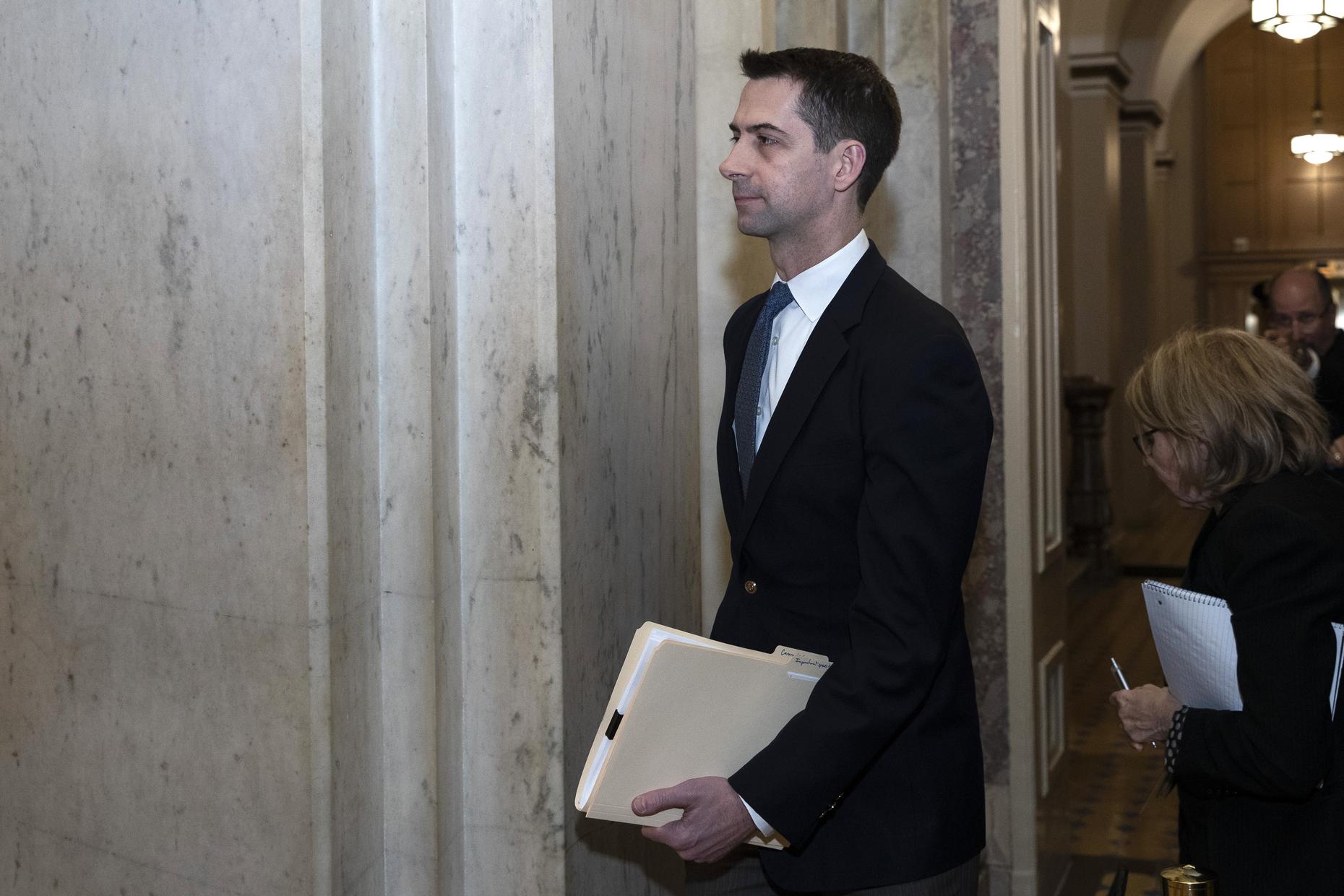
On the Media
All The Opinion That's Fit To Print?
00:17:01
Editors at The New York Times have insisted that the opinion page is a space where all views all welcome. Where does that leave our values?
Loading summary
Transcript33 lines
- [00:00]
David Roberts
On the media is brought to you by Progressive Insurance. Do you ever find yourself playing the budgeting game? Well, with the name your price tool from Progressive, you can find options that fit your budget and potentially lower your bills. Try it@progressive.com Progressive Casualty Insurance Company and affiliates Price and coverage match limited by state law not available in all states.
- [00:26]
Bob Garfield
It was Wednesday of last week and there was footage from cities across the country showing violent police, police officers shoving, beating and otherwise assaulting peaceful protesters. Just two days earlier, President Trump had threatened to deploy active duty troops to combat the protest. The Secretary of Defense, Mark Esper, had said he didn't think using the military was the correct action.
- [00:52]
David Roberts
The option to use active duty forces.
- [00:53]
Bob Garfield
In a law enforcement role should only.
- [00:55]
David Roberts
Be used as a matter of last resort and only in the most urgent and dire of situations. We are not in one of those situations now.
- [01:04]
Bob Garfield
And meanwhile, in the New York Times opinion section, the United States Senator was given a platform to call for, quote, an overwhelming show of force to quash the protests. The outcry over Tom Cotton's opinion piece was sharp and swift, not only from readers, but from the newspaper's own employees. The paper's opinion editor, James Bennett, at first defended the piece, writing that it would, quote, undermine the integrity and independence of the Times if we only published views that editors like me agreed with. Then it came out later in the week that Bennett hadn't even read the piece before publishing it. He resigned over the weekend. David Roberts writes for Vox, and in a piece this week, he argued that the New York Times has a responsibility to uphold, hold, not undermine fundamental democratic values. And also, by the way, not to publish misinformation.
- [02:02]
David Roberts
If you just read the column, you would have thought that there were squadrons of radical antifa domestic terrorists hovering around all these demonstrations and protests, and there just wasn't. There's been multiple investigations now and there's just no evidence turned up that that's true at all. So he just exaggerated the level of violence. He exaggerated who's responsible for the violence. And I thought on a very basic level is inaccurate about what would make the violence stop. Everywhere where heavily armed police and law enforcement were sent to manage things, violence started like over and over again. This is what we saw is that the police were gassing and shooting with rubber bullets and beating peaceful protesters. You know, there's like dozens and dozens of videos floating around now. So this notion that if you bring in American soldiers who are trained to fight wars overseas, that that would reduce violence, it's just crazy. It just shows the mindset at work, which is always about violence, always about control, and, you know, the sort of punitive mindset that is part of what the protests are about in the first place.
- [03:18]
Bob Garfield
Well, we will return to Cotton Gate in a minute, but I want first to turn to the underlying editorial problem that you believe precipitated this whole brouaha. Since 1970, I think the op ed page at the Times has existed, at least nominally, to offer a diversity of viewpoints, never mind what has till very recently constituted diversity. But at least in theory, it was a noble mission. You have no issue with the sentiment behind diversity of opinion in post war America?
- [04:00]
David Roberts
There were a lot of very strong assumptions that kind of went unstated, that fed into that model of the op ed page. And I think one of the assumptions, and I tried to get at this in my column, is that we are resting on a foundation of common agreement about certain basic principles, about certain forms of government being preferable over others, about the value of freedom and open speech. We share all these assumptions. And so within the playing field defined by those assumptions, let's hear people argue it out. The question is, what should an op ed page look like without those bedrock assumptions in place? Because if you continue operating it on its original spirit, if you demand that people share those assumptions, then in practice, you're gonna exclude a large chunk of today's conservative movement, because those bedrock assumptions no longer hold sway in today's gop. And that's precisely the kind of problem that everyone's wrestling with in the media, not just the op ed people, not just the editorial people, but also on the news side.
- [05:09]
Bob Garfield
So you think that James Bennett, the now departed op editor, was his mission was mission impossible. And you said as much back in 2018 with the piece headlined the Real Problem with the New York Times op Ed Page. It's not honest about us Conservatism.
- [05:28]
David Roberts
Right. I would say it's still possible to run an op ed page with a robust diversity of opinion. But what you can't do is what James Bennett wanted to do, which is expose his readers to the modern day. Right. In a way that conformed to the standards of the Times op Ed page. Right. Because the Times op Ed page assumes these basic foundational values. And what Trumpism has become is we are going to hold on to power. We, being white, rural and suburban people, are declining in power. We're no longer as central to the society as we were. We hate it. We want that power back. We want to stay at the center. So we, whatever you might say about that movement, there's not really an argument for it.
- [06:19]
Bob Garfield
No intellectual underpinnings, no ideological foundation.
- [06:24]
David Roberts
It's kind of the oldest political impulse in the book, but it's not reason, it's will to power. Like, we want to be in charge and we want you out of the way. That's all there is.
- [06:34]
Bob Garfield
So unable to find someone to articulate ideas and mount arguments in a vacuum of ideas and arguments, Bennett wound up filling his pages with who?
- [06:48]
David Roberts
Well, this was the interesting thing. He wanted to expose his readers to conservatives. He couldn't find any Trumpist conservatives that were up to the standards of the job. So he ends up running material by conservatives like Bret Stephens or Bari Weiss or David Brooks, who are all these never Trump old school fashion themselves as center right, you know, kind of a dying breed in American politics. Which, sure, it's an opinion that the liberal audience, I guess, can benefit from seeing, but it's not an opinion that has any sway in the current Republican Party like the David Brooks's and Bret Stephens are not representative of the sort of motive force of the current U.S. right. So actually in getting this Tom Cotton op ed, the New York Times was attempting to do what I was talking about in that piece, which is let's hear from actual Trumpists. Like, let's hear that. Let's hear what they're actually saying on the right. Let's hear the real stuff. And what they found was you just can't do that and also obey the Times bedrock standards of accuracy and decency. The two are incommensurate. And that is the dilemma that James Bennett could never wrap his head around.
- [08:07]
Bob Garfield
Try to put yourself in Bennett's shoes, at least his shoes as of last week. Can you think of any voice that can articulate a relevant modern conservative point of view and still cleave to the Times standards of argument and factual basis and some general acceptance of the Constitution and the rule of law is such a beast out there.
- [08:41]
David Roberts
You can be a principled conservative, but I do not think it is possible to be a principled supporter of Donald Trump because Donald Trump's behavior and actions are not principled in any way. There is no set of principles that you can reverse engineer to make what he's doing look coherent or justified. So the only justification for supporting Trump is powerful. He's our people. He's in power. So this makes it possible for us to do what we want to do. And I want to be in power. So, you know, support that if you want power, but let's you Me, them, Bennett. Let's all of us drop the pretense that there's any principle involved here.
- [09:24]
Bob Garfield
One of the upshots of the Cotton affair is that a precedent was established. It was determined that Cotten's views, or at least widely argued that Cotton's views were so noxious, so offensive to the Constitution, to morality and to the truth itself, that it just simply had no place in the New York Times. That the Times has the responsibility to be a gatekeeper of its platform.
- [09:52]
David Roberts
That's the reasoning that people are somewhat imposing on it. But if you actually read the editor's note that is now attached to Cotton's op ed it says the reason this shouldn't have been published is, one, the inaccuracies. And then two, they don't say, like, offensive to the Constitution or gross or any of the things that you just said, which I think are totally accurate. They just say it was unduly harsh in places. If you think the moral perspective is just repugnant, say that. But unduly harsh. That's not gonna make anybody happy. That's not gonna sound plausible to anyone.
- [10:32]
Bob Garfield
I take your point, but I wanna pursue mine. Because once again, there were many arguments proffered that it was just simply beyond the pale. That it was beneath the dignity of the Times to be passing along and validating this sort of worldview. And what struck me, and what makes me wonder if some sort of Rubicon has been crossed was that the voices who wished to suppress the noxious speech. Well, you know, were very similar to the voices who throughout the 60s and 70s and 80s and 90s were complaining about the monopolistic media who suppressed diverse voices.
- [11:16]
David Roberts
Right.
- [11:16]
Bob Garfield
I wonder, now that the Overton window has been slammed shut on Tom Cotton whether this will become a new reality of sort of received understanding of what is acceptable content for a serious news organization.
- [11:37]
David Roberts
I wish that that was the outcome. I would hope that that would be. I mean, part of what I was trying to say in my piece is that the New York Times has taken this notion of objectivity and neutrality to its sort of illogical conclusion. Like there are some things about which journalists should not and cannot be neutral because these values we're talking about make journalism possible. You can't have journalism unless you have at least a presumption that people ought to tell the truth and that they will feel abashed if they are caught not telling the truth like that alone. You just need that in place to have a coherent democracy at all. So it would be great if this was viewed as The New York Times standing up for those basic principles. I fear what's going to happen is seemingly what happens to every news event these days, which is just everybody is going to conclude that their priors were right. After all, you know, the right is going to conclude that politically correct lefties want to shut down speech they don't like. And like Bennett type people are going to conclude that the left has abandoned its commitment to free speech. And that's why I wanted the New York Times in its editor's note to proclaim the principles you're defending instead of this mealy mouthed, too harsh business. Right. I mean, what it ought to say is we believe in equality under law. Right now, black people are not equal under law. They're not treated equally under law. And we are not open to people arguing that black people should be further discriminated against and further beat down by police. We don't think that's on the acceptable range or spectrum of opinions. Like I wish they had taken a stand because then that would have conveyed the message you're talking about a little more clearly.
- [13:33]
Bob Garfield
If the op ed pages do what you are asking, they will cease to be op ed pages. They will just be different voices articulating the editorial and democratic philosophy of the publication. Doesn't that obliterate the whole raison d' etre for op ed sections in the first place?
- [13:56]
David Roberts
Well, I don't think so, no. Because I think within the frame or the playing field defined by those basic values, there's still plenty of room for disagreement and diversity of opinion. Like those are not particularly prescriptive values. You know, like treat everyone the same under law, respect the value of accuracy and evidence. Like that's not particularly restrictive. There are still a wide range of political opinions and cultural opinions possible within that. The problem is that we have an explicitly anti democratic movement building in the US that is trying to due to our democracy. What happened to Turkey and Russia? Like this list of Hungary, right?
- [14:47]
Bob Garfield
Philippines. It is long list.
- [14:50]
David Roberts
And one of the things they do is cloud the information environment with nonsense. They gin up a bunch of domestic enemies to try to make people feel scared. So they'll want more law enforcement and they'll want a strongman. I mean, it's just a script that plays out almost the same way in every country where this happens. A demographic that used to be in control is losing control and it's freaking out and panicking and it's throwing its commitment to democracy overboard and attempting to entrench an autocracy that keeps it in power.
- [15:24]
Bob Garfield
You seem to have described a Gordian knot of political impossibility. How do you untangle that knot?
- [15:33]
David Roberts
I was just reading a paper from a political scientist about this yesterday, is that this is not a unique problem to the US Is we? Anytime there's democratization in a country that's not just the founding of the U.S. but also if you imagine that in the 1930s, this radical expansion of the federal government and federal powers and federal equality, sort of, that was a democratization. Anytime a democratization happens, the forces that fought against democratization, the forces that were benefiting pre democratization, still exist and still have power and are still around in your democracy and are still opposed to your democracy. So how tolerant do you have to be to political forces that are not tolerant of you and your democracy? It's a very difficult dilemma. So this is important to keep in mind too, a lot of what looked like good faith debate in our halcyon past, back when we thought there was more common agreement, a lot of that common agreement and what looked like good faith was built by excluding marginalized voices. So we don't want narrowing down to just sort of orthodox liberal opinion. That's the last thing I'm saying. But excluding racist authoritarianism still leaves you with a pretty big playing field.
- [16:46]
Bob Garfield
David, thank you very much.
- [16:48]
David Roberts
It's been a pleasure, Bob, thanks.
- [16:50]
Bob Garfield
David Roberts writes for Vox this week. His piece was titled the Tom Cotton Op Ed Affair Shows why the Media Must Defend America's Values. Hey, if you haven't signed up for our newsletter yet, I really urge you to do so because basically it's the best thing we do. Just go into onthemedia.org to subscribe and tune in this weekend when we will be parsing the call to defund the police. We'll also be asking why Hollywood is so in love with cops. That's it. Stay strong, everyone. Talk to you Friday.
- [17:23]
Ira Flatow
This is Ira Flato, host of Science Friday. For over 30 years, the science Friday team has been reporting high quality science and technology news, making science fun for curious people by covering everything from the outer reaches of space to the rapidly changing world of AI to the tiniest microbes in our bodies. Audiences trust our show because they know we're driven by a mission to inform and serve listeners first and foremost with important news they won't get anywhere else. And our sponsors benefit from that halo effect. For more information on becoming a sponsor, visit sponsorship.wnyc.org.