← On the Media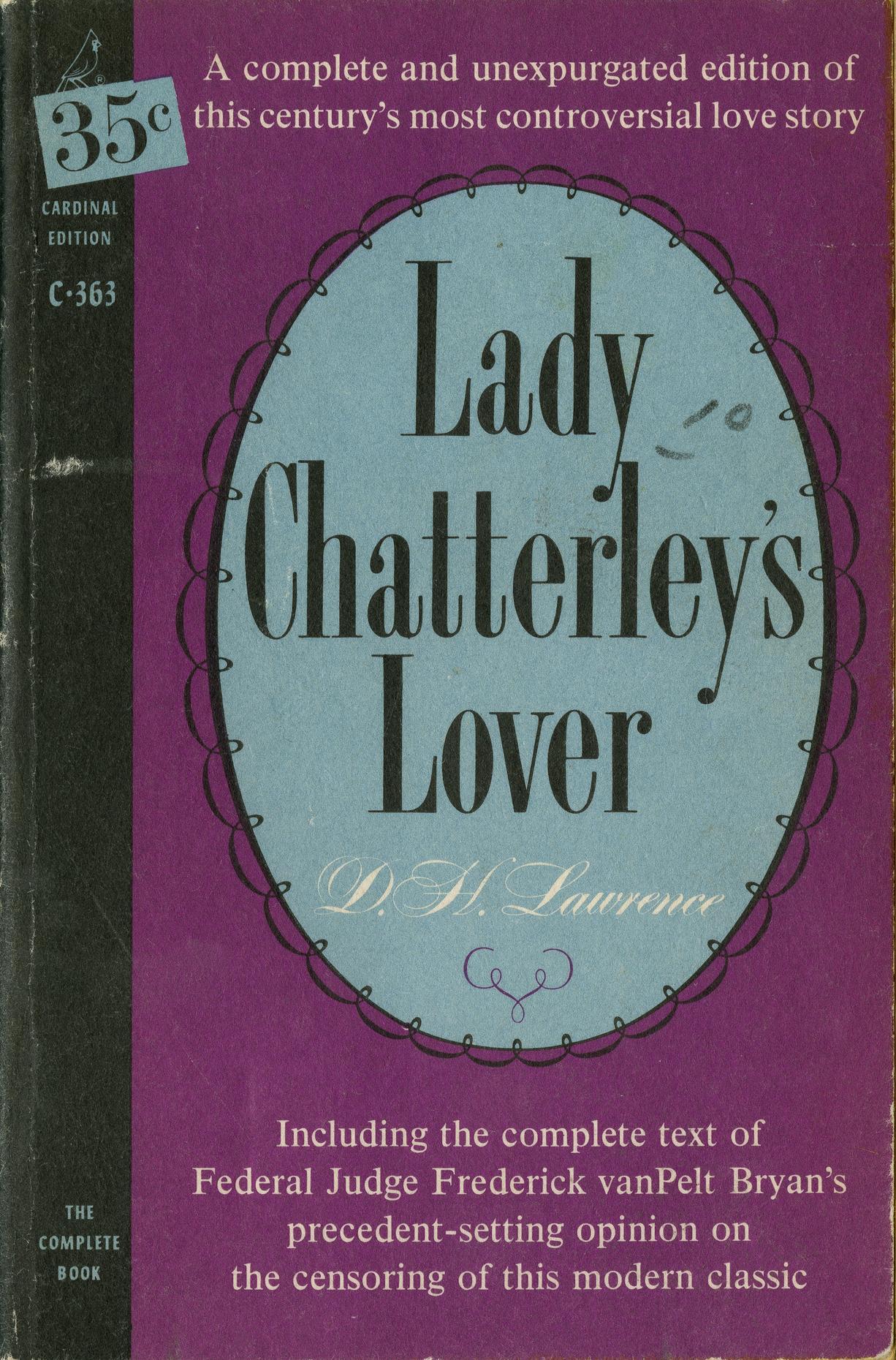
On the Media
Barney Rosset Never Backed Down
00:13:09
The publishing of Tropic of Cancer and Lady Chatterley's Lover was challenged in the courts. Barney Rosset fought for them and won.
Loading summary
Transcript38 lines
- [00:05]
Host
This week, we're all pondering the decision by the Tennessee school board to remove the acclaimed nonfiction comic book Mouse from its curriculum. The book recounts the experience of author Art Spiegelman's father in the Holocaust and recasts various nationalities as animals. For instance, Germans are cats, Americans, dogs, church. In 1992, Maus became the first and so far only graphic novel to win the Pulitzer. On Friday, we're going to devote much of the big show to the squelching of books circa 2022. But we thought we'd use this opportunity to remind listeners to the podcast of some of the history of American book banning and one man who seems to have had a whole lot of fun doing battle with it. In 1951, Grove Press was a tiny, almost defunct independent publisher with just three titles in its catalog, including Herman Melville's the Confidence Man. But then Barney Rossett took over and with a few choice books, helped push America past its puritanical roots into the sexual revolution. Rossett was a native Chicagoan who settled in New York after returning from the war. He began publishing such authors as Jack Kerouac and explicit works of erotica like the Story of O. It wasn't long before Rossett and Grove Press found themselves defending the First Amendment in the courts. This is Barney from the documentary about him called obscene.
- [01:37]
Barney Rossett
When we published Lady Chatterley's Lover, it was denounced as a wicked, perverse, terrible, degrading work, et cetera, et cetera. Then when we published Tropic of Cancer, we were told that Lady Chatterley's Lover was a fine book of creative merit and. But that with Tropic of Cancer we had gone beyond the bounds of decency, that it was a corrupt, perverse mess. And now with Naked Lunch, we go to court and are told that Tropic of Cancer is a brilliant work of great merit, a modern classic, et cetera, et cetera. It is only Naked Lunch that is a bad book. Somehow I imagine the day when Naked Lunch will be the modern classic and it will be yet something else which will be beyond the bounds of decency.
- [02:22]
Host
If Tropic of Cancer proved to be Grove Press's most hard won battle, it was one that Barney Rossett was itching to fight. The book heard here in a reading by Henry Miller himself, was his favorite.
- [02:35]
Henry Miller
This, then this is not a book. This is libel, slander, defamation of character. This is not a book in the ordinary sense of the word. No, this is a prolonged insult. A gob of spit in the face of art, a kick in the pants to God, man, destiny, time, love, beauty, what you will.
- [02:58]
Host
Ross had died in 2012, but he championed the works of Miller and other ostensibly lewd writers for more than 50 years, earning him a lifetime achievement award from the National Book Foundation. When I spoke to him in 2008, he. He talked about some of the first titles he acquired for Grove Press.
- [03:19]
Barney Rossett
One of the first and the most important book we were ever to publish was Waiting for Godot of Samuel Beckett.
- [03:28]
Interviewer
What was it that intrigued you about Beckett?
- [03:31]
Barney Rossett
That he was a great writer. I was absolutely astounded and taken over by his work. Financially, it was hardly a big thing. We paid $200 advance for waiting for Godot. We had also taken on Jean Genet, I think, a very important writer and playwright. And soon thereafter, Ionesco was added, making a third. So you could say that the first group of writers contained a disproportionate percentage of playwrights, but that was not on purpose.
- [04:07]
Interviewer
The first book that you chose to fight in the courts to publish was Lady Chatterley's Lover by D.H. lawrence. Why did you want to publish it?
- [04:15]
Barney Rossett
The book I was going to publish, and did eventually, was Henry Miller's Tropic of Cancer. I had read that at Swarthmore College in 1940, freshman English course. I liked it very much. And so when I found myself publishing books, first thing I thought of was Tropic of Cancer. But I knew enough by then to know that it would be censored or it would be stopped. And I decided to very carefully prepare a campaign to protect it. Lady Chatterley's Lover was probably the most famous so called obscene book. And it was by a famous English author very much looked up to in the literary world. So I decided to publish Lady Chatterley's Lover in its entirety. And if any troubles came along, which they most certainly did, we would fight those through. And when we won them, we would then follow up with Tropic of Cancer.
- [05:22]
Interviewer
This was part, I guess, of a long strategy. The postal service actually confiscated copies of Lady Chatterley's Lover that were sent through the mail service that they were coming. Right. And then you sued the New York City postmaster.
- [05:36]
Barney Rossett
That's right. I had somebody who'd worked as an intern for me here in New York and who now lived in Paris, send copies of the book very comically, really. They didn't stop them, they kept coming through. I had to tell them, hey, you're letting something illegal through. Finally, they did seized a book, and then we formed a case to get the charges dropped.
- [06:04]
Interviewer
And ultimately you did win that case you were allowed to bring out Lady Chatterley's Lover. And that set the stage for Tropic of Cancer, right?
- [06:12]
Barney Rossett
That's right. And it took quite a while.
- [06:14]
Interviewer
Tell me what it was that you loved about Tropic of Cancer.
- [06:19]
Barney Rossett
It was a very cynical, tough book about the United States. Henry was living in France until he was forced to leave by World War II. And he had a very strong, sometimes contemptuous stance towards this country. He felt that people had very little originality here. There was very little real feeling. Also something that was very important in it. And also in Beckett, there was a lost love. Miller had a long ongoing love affair with a girl who left him. And he had to make a way to live, to go on living. And he did. And there's a similar incident in Beckett. Crapslash tape. And I had the same not unusual experience. And it was a matter of how do you continue living? And through both of them, I thought I got strength.
- [07:26]
Interviewer
What can you tell me about the court battle over Tropic of Cancer?
- [07:31]
Barney Rossett
The court battles were certainly beyond what we imagined. They started immediately upon our publishing the book. We have a feeling and pretty good proof that a whole group of police got together, picked on one page, so happened to be page five of the book, to use as an example for other police to seize copies of the book, read page five, and arrest the book salespeople. And that happened all over the United States, one city to another to another to another. And we had to go and fight in each place, dozens and dozens of places. It took a number of years really, as we gradually worked our way up the American jurisprudence system to get to the Supreme Court. But we made it.
- [08:29]
Interviewer
Of course, you didn't just publish so called obscene books. You also took on material that was controversial in the racially charged atmosphere of the 60s. How did you come to publish the autobiography of Malcolm X?
- [08:43]
Barney Rossett
Well, the autobiography of Malcolm X sort of fell upon us. When he was assassinated, there was a statement that the publisher here was not going to go ahead with publishing the book because it would be a danger to his employees that they might be physically attacked. I didn't feel that way and I bought the rights to the book.
- [09:08]
Interviewer
We saw the documentary that recently came out about you called obscene. What did you think about it?
- [09:15]
Barney Rossett
I think a good idea of the difference between my viewpoint and the viewpoint of the producer of the film was that he chose to call it obscene. And my autobiography, which I've been writing for quite a while and which parallels that film I call the subject is left Handed. Slight difference, sir.
- [09:39]
Interviewer
What does that mean? The subject is left handed.
- [09:43]
Barney Rossett
The FBI, CIA and others did many, many reports on me, which I was able to get from the Freedom of Information Act. Thousands of documents. And the heading was used a number of times. The subject is left handed. And I sympathize with them.
- [10:03]
Interviewer
You just don't think you gave them enough material to go on, huh?
- [10:07]
Barney Rossett
They had an enormous amount of material, but it added up to the subject as left handed.
- [10:14]
Interviewer
Did it bother you, all this attention on Grove Press as publishers of mere smut when you believed you were publishing also very important works of literature? Or maybe these works of smut were in fact important works of literature.
- [10:29]
Barney Rossett
Yeah, it did bother me. It did bother me. But what was I going to do about it?
- [10:35]
Interviewer
You took on challenge after challenge with so much gusto, it does seem that you were on a First Amendment crusade. You were trying to break barriers. How does it seem to you?
- [10:48]
Barney Rossett
I mean, to me, I was just doing what I would be doing. It's what came naturally. I read Tropic of Cancer when I was a freshman in college. It was not a great decision to publish it for me. It was how to do it and when, not whether. I mean, Samuel Beckett showed more concern about being censored than Miller ever did. Miller showed no interest. Sam wrote me right after we signed the first contract that he wanted me to know that he wouldn't stand for any censorship of his material. Which was censored. Godot was censored in England.
- [11:30]
Interviewer
Why was it censored in England?
- [11:32]
Barney Rossett
I remember one little sequence where one of the two says to the other, if one of us hangs himself, what.
- [11:41]
Samuel Beckett
Do we do now? Wait. Yes, but while waiting.
- [11:46]
Barney Rossett
How about hanging ourselves?
- [11:49]
Samuel Beckett
It might give us an erection. An erection with all that follows. Where it falls, mandrakes grow. That's where they shriek when you pull them up. Did you not know that?
- [11:59]
Barney Rossett
Let's hang ourselves immediately. I didn't seriously listen to anybody who said books were smut or this or that. It didn't mean much to me. I mean, come on. I'm an anti fascist. I'm a communist. I'm not bothered by smut peddling accusations. I said, I'm a communist. I'm not. I was. I was a member of the Communist Party. The Communist Party was more against sex and books than any other group I've ever met. When that fact fully sunk in on me, which took quite a while, I quit.
- [12:34]
Host
Barney Rossett died in 2012 at the age of 89. His memoir was not titled the subject is left handed, but rather my life in publishing and how I fought censorship. Thanks for listening to the Midweek podcast. Check out the Big Show. It usually posts around dinner time on Friday, where we'll talk more about the battles over books.
- [13:09]
Ira Flatow
I'm Ira Flato, host of Science Friday. For over 30 years, our team has been reporting high quality news about science, technology and medicine. News you won't get anywhere else. And now that political news is 24 7, our audience is turning to us to know about the really important stuff in their lives. Cancer, climate change, Genetic engineering, childhood diseases. Our sponsors know the value of science and health news. For more sponsorship information, visit sponsorship.wnyc.org.