← On the Media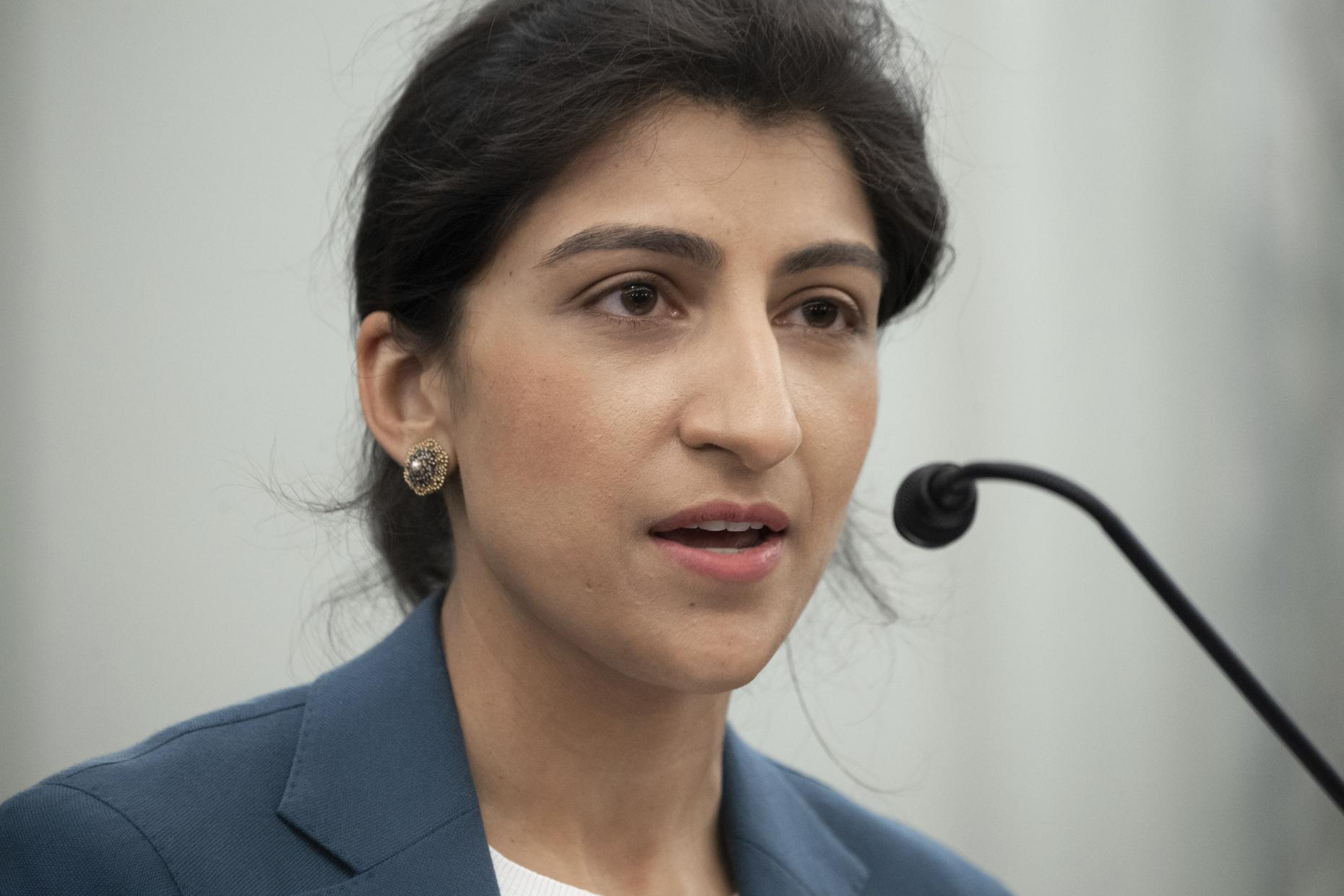
On the Media
How Lina Khan Became Antitrust Critics' Favorite Target
00:26:36
A growing anti-antitrust movement is emerging in Washington and Khan has become its main target.
Loading summary
Transcript61 lines
- [00:00]
Ira Flato
On the Media is brought to you by Progressive Insurance. You chose to hit play on this podcast today. Smart choice. Make another smart choice with Auto Quote Explorer to compare rates for multiple car insurance companies all at once. Try it@progressive.com Progressive Casualty Insurance Company and affiliates not available in all states or situations. Prices vary based on how you buy.
- [00:22]
Michael Olinger
Hey, I'm Michael Olinger. You're listening to the on the Media podcast extra. Back in March 2021, when President Joe Biden announced the nomination of Lina Khan to the Federal Trade Commission, the decision was met with a rare kind of excitement for the otherwise sleepy agency.
- [00:41]
Ira Flato
She is a noted and vocal critic.
- [00:43]
Michael Olinger
Of Big Tech, also one of the leading academics on antitrust.
- [00:47]
Ira Flato
By the way, she's only 32 years old and she's leading one of the top federal agencies in terms of the business community, the ftc.
- [00:53]
Michael Olinger
Even some Republicans were jazzed about her appointment, including Ted Cruz.
- [00:58]
Ira Flato
Ms. Khan, congratulations on your nomination. As you know, I have deep concerns.
- [01:03]
Michael Olinger
About Big Tech and I believe the.
- [01:06]
Ira Flato
FTC should be doing much more to rein in the anti competitive abuses of Big Tech. I look forward to working with you on them.
- [01:13]
Michael Olinger
Thank you. Since then, the tone around Khan has changed dramatically as Republican commissioners at the agency have pushed back against what they see as a radical agenda. Emily Birnbaum is a technology and lobbying reporter for Bloomberg. In a recent piece, Birnbaum identified a growing anti antitrust movement emerging in the press and in Washington. Emily, welcome to the show.
- [01:39]
Ira Flato
Cool. Thank you.
- [01:40]
Michael Olinger
Can you tell me a little bit about Khan and why she was chosen as chairperson by the Biden administration?
- [01:46]
Ira Flato
Yeah. Lina Khan rose to prominence in a really unorthodox way, at least for Washington. It was a really popular article, the Amazon's Antitrust Paradox that really catapulted her into academic stardom. Basically in this article, she laid out the case for breaking up Amazon. It kind of broke open a new way of thinking about antitrust, using these centuries old and decades old statutes to take on the big tech companies that dominate our economy today. So Lina Khan was a well known progressive thinker and academic, but it really came as a surprise, even to a lot of the people who had voted to confirm her, that she ended up being the chair of the ftc. It essentially was almost an olive branch by President Joe Biden to progressives who really wanted to see reinvigorated antitrust enforcement under his administration. And, and Lina Khan was going to be one of a trio of advocates in the administration who would do that.
- [02:50]
Michael Olinger
What are some other reasons why it was as you said surprising that Biden chose Lina Khan to run the ftc.
- [02:58]
Ira Flato
She is the youngest ever chairwoman of the agency. She is 34 years old now and was 32 when she was confirmed. And overall, I think there was this push by activists to install Lina Khan, but no one ever thought in their wildest dreams it would actually happen. And then the President also brought on Tim Wu to be a White House advisor. He's another person in the same ideological camp as Lina Khan. They worked together at Columbia University. And he also brought on Jonathan Kantor to be the head of the Justice Department's antitrust division. Jonathan Cantor has made his career off of opposing the big tech companies in lawsuits. And he is another ideologically aligned figure in the administration.
- [03:49]
Michael Olinger
You wrote that there was this, let's call it brief moment of sort of bipartisan optimism about what Lina Khan as commissioner might mean, and that goodwill seems to have dried up. When she was first brought in, 21 Republican senators voted for her. But on February 28, the Chamber of Commerce sent an open letter to representatives asking them to rein in the agency's rules on non compete agreements. There's now fear of Congress cutting off funding to the FTC. And the last time that happened was in the 1970s. So tell me what happened in the 70s for Congress to cut off funding?
- [04:26]
Ira Flato
So the FTC is really unique in that it has a super broad purview over the U.S. economy. Basically, it has authority over consumer protection efforts like deceptive advertising, and it also has jurisdiction over competition in the economy. So that's antitrust issues. So the agency was created during a time when the administration was trying to crack down on the big oil companies, the railroads, sort of like the golden age of trust busting. And then over the decades, you know, the US has changed a lot in its orientation towards those kind of populist principles. And so in the 1970s, the atmosphere was souring on that kind of big regulatory power. So the agency was called the nation's nanny. At a certain point, a lot of this anxiety came to a head over this investigation they were doing into advertising towards children. It's interesting, we're having a lot of these debates again today, just in the digital world, but this is broadcast. And lawmakers were so, so frustrated with the agency. They felt you are overstepping your bounds. What gives you the right to basically what they were trying to do, ban advertising towards children. And it became so bad that Congress withheld funding from the agency for a Day in 1980 after years of this anxiety brewing. And ultimately they came to an agreement that, fine, we'll fund your agency to be at lower levels, you're going to have less authorities, and we're even going to create this really unorthodox thing, which is we're going to allow Congress to pursue a veto whenever they don't agree with what you're doing. Ultimately, that's not the situation we have today. Courts overruled that as unconstitutional. But it really just goes to show that the FTC can often become the target of deregulatory powers in Washington.
- [06:27]
Michael Olinger
Coming back to the present, you said that tech and business groups, as well as some funded by Charles Koch, are homing in on Khan as one of the primary symbols of what they see as wrong with Biden's agenda. Khan has been mentioned in 43 op eds, editorials and letters to the editor in the Wall street journal since 2021. Meanwhile, Jonathan Kantor, who heads the Department of Justice's antitrust efforts, only appears in 5. What does the pushback against Khan look like? What are people saying?
- [06:59]
Ira Flato
One thing that really stands out about it is how personal it's become. It's not just about an agency overstepping its authority. It's also about this woman in particular and how her leadership at the agency is polarizing. It's divisive, and it needs to be reined in. And we saw how personal these attacks can be when the Republican FTC commissioner, Christine Wilson, a couple of weeks ago announced she was resigning. In a Wall Street Journal op ed, she said, I'm always okay with disagreeing on policy, but I really disagree with how Lina Khan and her allies are leading the agency, how they're breaking with norms, how they're bucking the establishment. It wasn't just about, oh, I don't like this agenda. It was also about Lina Khan herself and how she is the embodiment of government overreach.
- [07:56]
Michael Olinger
You've said that Lina Khan is a useful political foil, and the way she's discussed kind of mirrors that obsessive conservative ire that we've seen previously deployed at Elizabeth Warren and Alexandria Ocasio Cortez. And you heard about this amazing moment when Jim Cramer of CNBC started badmouthing a policy he thought was pushed by Lina Khan, only to learn that he was actually talking about a lawsuit waged by the Department of Justice.
- [08:25]
Ira Flato
Obviously, the one we've been talking about here, where the DOJ is trying to come after Google in terms of its ad business. He worked there at Alphabet. You're saying, oh my God, I can't believe she's doing this, and it does not. Well, it's the doj. It's not her, actually. No. Okay.
- [08:36]
Michael Olinger
I can't be.
- [08:37]
Ira Flato
Jonathan Kanner is a much more rigorous thinker than Lina Khan, the head of the Antitrust division. Much more rigorous. I was so grateful to see that on screen, actually, because that is the tone and tenor of a lot of the conversation around Lina Khan and part of the reason why it's so personal. Jonathan Kantor is somewhat of an insider. He's a known quantity. People have worked with him across Washington. He has worked for some of the top law firms. You know, he does oppose the big tech companies in lawsuits, but he's very much enmeshed with the Washington establishment, whereas Lina Khan is more of a quote, unquote, outsider. And so the way Jim Cramer was talking about, you know, Khan versus Cantor is very indicative of how she's seen as uninformed, not very rigorous, whereas Jonathan Cantor is seen as, oh, well, you know, he's actually got some good points.
- [09:34]
Michael Olinger
You spoke to one lobbyist for your piece who effectively said that they were looking to the AOC playbook and how they were talking about and attacking Lina Khan.
- [09:45]
Ira Flato
Yes. This lobbyist said that she's become the target of the conservative ire that has previously been reserved for populist women who are out there saying, you know, let's take on the man, or at least that's how they capture their arguments. So Elizabeth Warren and Alexandria Ocasio Cortez and Lina Khan actually are not necessarily fully aligned in their vision and how they do politics, but they are all women in leadership positions with radical ideas. And so the anger and the frustration that pours out on them often feels, at least to their allies, like it's sexist. And with Lina Khan, you know, racist as well as potentially ageist, you know, there is so much anger at her as a young woman in power.
- [10:33]
Michael Olinger
Then there are the TV ads. The Taxpayers Protection alliance, which receives money from Charles Koch, Google, Amazon, as well as the Competitive Enterprise Institute, a right wing think tank that has close ties to the oil and gas and tech industries, have put ads like this on tv going after Khan.
- [10:51]
Ira Flato
Record inflation, rising food, energy and housing prices. In these uncertain times, unelected bureaucrats at the Federal Trade Commission are overreaching their authority with a power grab, crushing innovation with a lack of transparency, and by abandoning time tested legal principles, threatening consumption. People at the free market groups and people who are part of the business lobby who are going after her say, this isn't personal, this isn't about Lina Khan as leader, as a political figure. This is more about our concerns about an agency run amok. But then you watch these ads and it's very clear her face and her Persona are being put up there for people to see, for people to become concerned about. It's very clear she's become a useful foil and punching bag for those free market pro business types.
- [11:42]
Michael Olinger
It's true that the FTC hasn't really enforced a lot of the laws that have been on the books for quite a while when it comes comes to corporate consolidation. Right. But this is something within the purview of the ftc. It just hasn't really been the MO of the agency for a while. So is she stepping out of line? Are these complaints about norms and behavior, do they have anything to it?
- [12:08]
Ira Flato
Yeah, I mean, the last couple of decades of antitrust enforcement, critics say, have been really lacking. You know, that regulators have been asleep at the wheel, that they haven't been using their full breadth of authorities, especially the judiciary, has become much more conservative in their approach to antitrust. So there's this concept called the consumer welfare standard, which says basically that you can only bring antitrust cases against companies when their actions will harm consumers, particularly by increasing prices. So we know that that is not exactly how the biggest companies of our time work. Google, Facebook, they're free. Basically, they make money off of information about us, off of our data. And Lina Khan and her allies are trying to envision something much broader than just the consumer welfare standard, which is a break with a couple of decades of precedent. But that's exactly what she's trying to do. She's trying to break out of this mold, trying to better adapt to, to how big corporations operate in the US Right now. And she is taking a couple of actions that might face serious headwinds from the conservative judiciary. So, for instance, a lot of the anger from the business lobby is coalescing around this effort by the FTC to ban non competes. So non competes are contracts that basically lock in employees and say, you can't go work at any of our competitors. And they're really popular across industries. They're popular in fast food, popular in salons, popular in journalism even. And the FTC is trying to ban non competes altogether. And it's definitely an open question whether that ban could withstand legal challenges that are definitely coming.
- [14:03]
Michael Olinger
Some businesses say, you know, these contracts help us keep people working for us and they help us protect our, you know, trade secrets. But the FTC has said, well, they're withholding something like $300 billion a year from people's wages. Without non competes, everyone would be making more money.
- [14:22]
Ira Flato
Yeah, non competes are not popular. One in five Americans are affected by non competes. They do tend to keep workers in exploitative conditions. So the widespread opposition to the non compete ban might be politically popular or interesting, but the lawsuits against it might also have legs.
- [14:47]
Michael Olinger
What specifically stands in this proposal's way?
- [14:50]
Ira Flato
It's so broad and sweeping. It touches so much of the economy. There are some who say, you know, maybe the FTC started out really broad and right now they're in the public comment period, but, but they're going to target it a little bit more. Maybe they're just going to go after certain kinds of industries, certain kinds of workers who maybe don't have access to such sensitive information. But this is a new use of the agency's authority over competition in the economy that hasn't really been tested and definitely hasn't been tested for a couple of decades.
- [15:26]
Michael Olinger
So this would probably benefit a lot of regular people in our country, but the very fact that it would be a big corporate shakeup is just threatening to people. And therefore it's in the best interest of these lobbying groups to portray Khan as unfit for her office and, you know, misusing her power.
- [15:45]
Ira Flato
And it also is important to think of the non compete ban as sort of their first ambitious step in a broader effort to reshape the economy. So after this, the FTC alongside doj is expected to release guidelines for how the government looks at mergers and acquisitions. Basically going to make it a lot harder for companies to merge and acquire potential competitors. One really good example that actually counts as one of Lina Khan's recent losses is Meta platforms. The parent company of Facebook recently announced that it was acquiring within, which is a virtual reality company that makes a popular fitness virtual reality app. The FTC tried to block that acquisition, saying, you know, okay, maybe Meta doesn't have a virtual reality fitness app right now, but they could. So it's about potential effects on competition in the future in emerging markets like artificial intelligence and virtual reality.
- [16:53]
Michael Olinger
Basically alleging that buying the company was anti competitive. Like you can make your own fitness app to compete with this. Why do you just need to buy them out?
- [17:01]
Ira Flato
Yes, exactly. You know, trying to cut off these kinds of anti competitive practices that have made the tech companies so big. So we can think about Facebook's acquisition of Instagram and WhatsApp, you know, making it one of the most important communications platforms in the world. And a federal judge looked at the FTC's efforts to block that acquisition and said, you know, I don't think that this is a good legal argument. They could have challenged it further. They didn't. So Meta is acquiring within, but a lot of the guidelines that are coming out are going to really focus on this exact kind of acquisition. So acquisitions happening in emerging markets, so cutting off potential anti competitive conduct before markets even come to fruition. And that could really, you know, according to Lina Khan and her allies, create competition from the outset. But it also is a very controversial legal position.
- [18:04]
Michael Olinger
Let's talk about the crackdown on tech companies collecting personal info. What is the agency doing to sort of stymie or regulate this practice?
- [18:13]
Ira Flato
This is a rule they announced late last year. It's currently in the public comment period. But this is the FTC trying to do one of the missions it's actually tasked with, which is protecting user privacy. Congress for a really long time has tried to come up with a federal privacy standard. They keep hitting the same roadblocks over and over. It's been years of this gridlock in Congress. So the FTC is maybe going to step in and say, okay, you guys aren't able to create new laws, but maybe we can come up with protections for consumers using what we have at our disposal.
- [18:50]
Michael Olinger
You'd think that Republican members of Congress would be into this given their stated frustrations with big tech, right?
- [18:57]
Ira Flato
I think that this comes down to the kind of war for the soul of the Republican Party and its relationship with business. I know that sounds absurd, but it's about, are we the libertarians? Are we the Koch network? Are we the party for the free market or are we populists? Are we against big companies? Do we think the government has a role to play here? And I think that Lina Khan's bipartisan confirmation was a win for the populist wing. You know, Ted Cruz was out there saying, I'm so excited to work with you. And there seemed to be this tentative alignment, at least on the issue of big tech. But as we've watched this alignment kind of crumble, especially over the last couple of months, it's seeming like the Republican Party, when push comes to shove, is still very much in that libertarian, hands off, anti regulatory position. So I think Jim Jordan is a really good encapsulation of this. Jim Jordan is the chair of the House Judiciary Committee. He has made a name for himself as a populist who thinks the big tech companies are censoring conservatives and it's time to crack down on them. But actually he is going to be spending a lot of his time over the next couple of months conducting oversight of Lina Khan.
- [20:15]
Michael Olinger
There isn't great evidence that social media companies are censoring conservatives. There's lots of evidence that they hoover up our data with little scrutiny. So, I mean, how do you square that circle?
- [20:28]
Ira Flato
If you ask Jim Jordan or any of the Republicans who are aligned with him, they say, yeah, it's time to take on big tech. For sure. Antitrust just isn't the way. Big government isn't the way to do that. You know, let's go through regular process in Congress or maybe let's just let some of these lawsuits play out against the big tech companies. But taking big policy related actions at agencies is not the way.
- [20:55]
Michael Olinger
So basically my big government, but not your big government.
- [20:59]
Ira Flato
Exactly. And ultimately the winners from this kind of breakdown in partisanship is the big tech companies. You know, they benefit a lot from all of this anger towards Lina Khan right now. And obviously they're funding a lot of it too.
- [21:15]
Michael Olinger
Let's talk about another big shakeup that Lina Khan's FTC has contributed to. Last week we got this major story.
- [21:24]
Ira Flato
Drugmaker Eli Lilly says it will cap out of pocket costs for insulin. At $35 a month more drug companies are facing pressure to drastically reduce the price of insulin.
- [21:34]
Michael Olinger
This was an enormous win for the roughly 7 million people in the US who require daily insulin. And it comes at a time when, you know, According to a 2022 analysis, Americans pay five times more than the next most expensive country for insulin, Chile. So why is it that prices have been expensive and why are we now seeing this about face?
- [21:57]
Ira Flato
There has been some unity among Democrats and Republicans over the issue of pharmaceutical middlemen.
- [22:06]
Michael Olinger
These are the pharmacy benefit managers who help set the price of drugs as they show up on shelves. And there's been a bizarre and one might say kind of corrupt system where drug companies basically have to offer these middle managers to big benefits in return for putting their drugs out there.
- [22:28]
Ira Flato
Right. And the FTC announced last year that it was launching an inquiry into the prescription drug middleman industry. So they required the six largest PBMs to provide information and records regarding their business practices. And that kind of pressure alone has been shown to really change business practices. And, and not to mention, there's also, you know, bipartisan support for taking on these pharmaceutical middlemen in Congress. And all that pressure together is an area where you're seeing some alignment between the parties to drive down prices for consumers.
- [23:06]
Michael Olinger
Speaking of pressure from multiple sources, there was that journalist, Sean Morrow, a journalist and activist at More Perfect Union pulled this incredible stunt where he pretended to be Eli Lilly on Twitter. He was able to impersonate the company and use a blue check mark under the Twitter blue program and tweeted pretending to be Eli Lilly. We are excited to announce Insulin is free now.
- [23:33]
Ira Flato
Yeah, I saw him tweeting about Eli Lilly's recent announcement saying, you know, I understand there was pressure coming from the government as well, but I'd like to think I played a role in that.
- [23:46]
Michael Olinger
And how much can we attribute this change to the ftc?
- [23:49]
Ira Flato
I think that it's one of a couple of government inquiries that really mattered. The FTC's authority to look at something that is driving up prices and relates to competition in the economy. Because it was a lot about, you know, the integration among these companies. There's a good case for their authority on that kind of issue. And so they were definitely facing serious pressure from the agency.
- [24:16]
Michael Olinger
Given how much hype there was about Lina Khan taking the helm at the ftc, do you think that she's lived up to it? Do you think that she has delivered what progressives were hoping to see, or has she just kind of run up against the wall of corporate lobbying and the libertarian strain of the Republican Party?
- [24:37]
Ira Flato
I think that it's too soon to say. We can say that she has faced a string of losses, as has the Justice Department as they're facing legal challenges. So, you know, the FTC's effort to block Meta's acquisition of within failed in court. The FTC's efforts to block gene sequencing company Illumina's acquisition of Grail, a company that sells blood screening tests, was knocked down by the FTC's internal judge. And I think her most ambitious agenda items have not really gotten off the ground yet. So right now, a lot of the rulemaking, so we can think about the commercial surveillance rulemaking or the non compete rulemaking, those are still in the public comment period. We don't actually even know what those are going to look like. The guidelines for mergers and acquisitions have not yet been released. So I don't think we can make any definitive conclusions about how successful she has been just yet. When you talk to progressives, they say she's actually already won. So even just her being at an agency, changing procedural things within the agency to give more power to their agenda, those are wins in and of themselves. Even if they lose in court, even if they're facing this wall of corporate lobbying, they are shifting norms and if you will, the Overton window around what we imagine the FTC can do. And that is very important as well. You know, the agency that was once very sleepy is definitely awake now, and that is a win in itself.
- [26:13]
Michael Olinger
Emily Birnbaum is a technology and lobbying reporter for Bloomberg. Thanks so much.
- [26:19]
Ira Flato
Thanks so much for having me. It was really fun.
- [26:23]
Michael Olinger
Thanks for listening to this week's midweek Podcast Extra. Tune into the big show this weekend to hear our latest series, the Divided Dial, an investigation into how one side of the political spectrum is came to dominate talk radio. And while I have you here, a quick reminder. Sign up for our newsletter. We've got some new writers this year who are bringing in some takes about the media stuff we can't fit in the show. It's a really fun read. Check it out. See ya.
- [26:59]
Ira Flato
I'm Ira Flato, host of Science Friday. For over 30 years, our team has been reporting high quality news about science, technology and medicine. News you won't get anywhere else. And now that political news is 24 7, our audience is turning to us to know about the really important stuff in their lives. Cancer, climate change, Genetic engineering, childhood diseases. Our sponsors know the value of science and health news. For more sponsorship information, visit sponsorship.wnyc.org.