← On the Media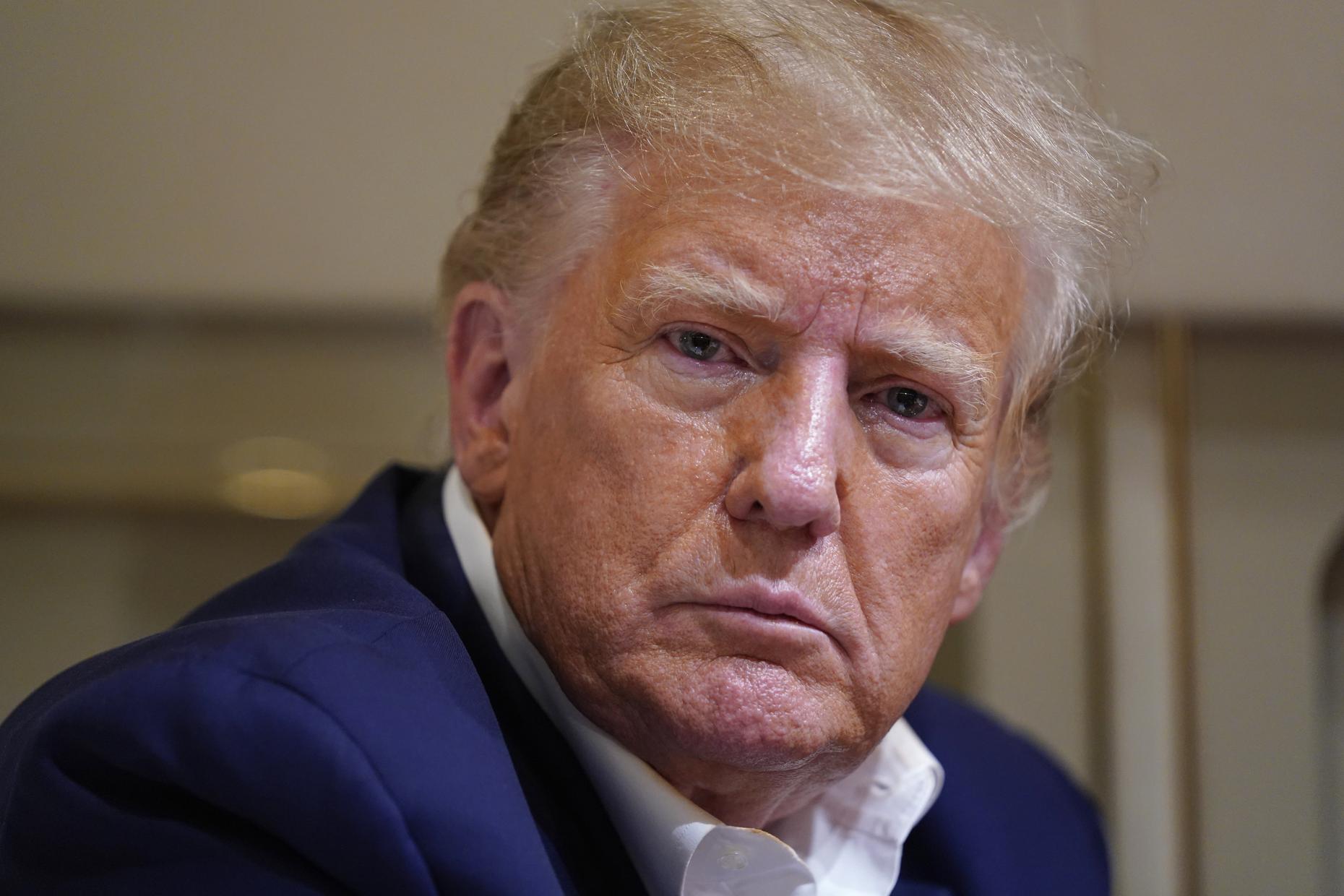
On the Media
Indicted
00:50:55
Political leaders in hot water; charting the anti-BDS movement; the tenuous connection between social media and mental health.
Loading summary
Transcript151 lines
- [00:01]
Ilya Maritz
The headline on Thursday evening was two words, all caps. Trump indicted. A grand jury here in New York City has just handed up an indictment against former President Donald Trump, making him the first former president in US History to face criminal charges. From WNYC in New York, this is ON THE media. I'm Ilya Maritz. This week in Israel, strikes, demonstrations, blocked roads, grounded planes and a prime minister with his back against the wall.
- [00:28]
Yael Friedzin
Netanyahu passed a bill that they wouldn't be able to remove him from office, saying to the attorney general, I don't care what you say, I'm taking control.
- [00:40]
Ilya Maritz
And a new law in Utah is supposed to protect teens using social media. It's been called an invasion of privacy and paternalistic.
- [00:48]
Avi Asher Shapiro
But we don't let kids drink before a certain age. We don't let kids walk into a movie theater and see an R rated movie. But when it comes to the Internet, like all bets are off.
- [00:56]
Ilya Maritz
It's all coming up after.
- [01:00]
N/A
On the media. Supported by Progressive Insurance, you chose to hit play on this podcast today. Smart Choice. Make another smart choice with Auto Quote Explorer to compare rates from multiple car insurance companies all at once. Try it@progressive.com Progressive Casualty Insurance Company and affiliates not available in all states or situations. Prices vary based on how you buy.
- [01:26]
Mary Harris
The election has come and gone. Now we're in a new era. It can be easy to get discouraged, frustrated, but you can't afford not to pay attention. You need trustworthy independent journalism to cut through the noise and hold power to account. I'm Mary Harris, host of what next from slate.com. we are a daily news podcast with a kind of transparent, smart, yet tongue in cheek analysis you can only find at Slate. Follow and listen to what Next wherever.
- [01:53]
Ilya Maritz
You get your podcasts from WNYC in New York, this is ON THE media. I'm Ilya Maritz in for Brooke Gladstone. When I hosted the show about six months ago, we asked this big question about how countries around the world deal with leaders who may have committed crimes. Since then, there's been movement.
- [02:14]
Avi Asher Shapiro
We have major breaking news, indeed historic breaking news right now.
- [02:18]
Ilya Maritz
A grand jury here in New York City has just handed up an indictment against former President Donald Trump, making him the first former president in US History to face criminal charges. This, of course, is unprecedented. No doubt a spectacle awaits us. Meanwhile, elsewhere in the world, the International.
- [02:36]
Yael Friedzin
Criminal Court has issued an arrest warrant for Russia's leader Vladimir Putin in connection with war crimes.
- [02:42]
Ilya Maritz
Boris Johnson was questioned in the UK House of Commons about the scandal they call Partygate.
- [02:47]
Julia Basha
It is about the truth. And that is why this inquiry goes to the heart of the trust on which our system of accountability depends.
- [02:56]
Ilya Maritz
Someone else whose alleged criminality we discussed back in September was the then former, now current Israeli Prime Minister, Benjamin Netanyahu. Netanyahu is still on trial for corruption. He was reelected last November and proposed an overhaul to the judicial system. Critics said it would end the independence of Israel's Supreme Court and limit the power of judges. And the country flipped out.
- [03:19]
N/A
A political crisis and now a potential security crisis on the streets of Israel as the country was brought to a standstill by the largest general strike in Israeli history.
- [03:29]
Ilya Maritz
Yael Friedzin is legal correspondent for the Israeli newspaper Haaretz. Welcome back to the show.
- [03:35]
Yael Friedzin
Thanks for having me again, Ilya.
- [03:38]
Ilya Maritz
So when we last spoke six months ago, you had been sitting in on Benjamin Netanyahu's corruption trial. He was at the time a former prime minister. And your big concern was that if Netanyahu won the next election, he would fire his own prosecutor, Israel's Attorney General, and, and do pretty significant harm to the justice system by trying to save his own neck. Netanyahu did become prime minister again. How did the rest of your prediction turn out?
- [04:05]
Yael Friedzin
I expected him to try to influence his trial, but I thought it would be to fire the attorney General. I didn't expect him to go in this widespread reform that would influence the whole judicial system in Israel.
- [04:22]
Ilya Maritz
You're a reporter. You go into courtrooms, you go onto the streets. What has your last week been like and felt like? Where have you actually physically been for most of the past week?
- [04:32]
Yael Friedzin
I cover Jerusalem, so any protest that is going on in Jerusalem, I'm the one who's covering it. I think the most dramatic day was at the night where Netanyahu announced he's firing the Minister of Defense, Yoav Gallant, who declared that he won't vote in favor of judicial. It was around 9 o' clock at night when it was on the news, and for, I would say, 15, 20 minutes, you just literally could feel the shock in the air. And I started to get messages on WhatsApp groups in Israel. WhatsApp is one of the major applications that almost everyone has. That's the way to get to the most Israelis. So I started receiving messages of people just saying, okay, we're meeting out side of Netanyahu's home, just come there. And in the beginning there were, I don't know, 300, 400 people. And in such a short time, there were thousands of people surrounding Netanyahu's personal residence. These are nonviolent protesters. But just the fact that they were able to come so close was surprising, I think, to both sides. They didn't expect to come that close and the police didn't expect them to come that near.
- [05:53]
Ilya Maritz
Is it pre existing groups that are kind of organizing the protests? Is it like more kind of like new ad hoc coalitions? What does the organization of the protests tell us about who's getting involved and what they're trying to do?
- [06:08]
Yael Friedzin
So going back two months, every Saturday night there are huge protests all around Israel, especially in Tel Aviv. And in the beginning it started from mostly left wing organizations, but slowly there were more and more professional kind of gatherings. One of the major groups is the high tech protestors that decided they had it. And this was very surprising because at least in Israel, most of the high tech companies and their employees are very well off. And you don't see them being really active about any kind of political issue. You know, usually being political about something isn't good for your business. But also you can see organizations of doctors, of psychologists, of social workers, and another key group that actually influenced the week's events are reservists and military pilots. They declared that they won't come to service if these laws pass.
- [07:16]
Ilya Maritz
It's a big deal when the military speaks in a political way.
- [07:22]
Yael Friedzin
This is one of the aspects of this reform, because threats of being sued in the Hague court is an issue because of the occupation and so far because of the good reputation of the judicial court as being independent. If any soldier had done some kind of crime, it will be investigated, and if he's found guilty, he would be also prosecuted. And many soldiers are afraid that if this judicial overhaul would pass, they personally would be under threat of the international law. So this is one of the motives for them to threaten that they won't be part of the army. They would resign if it will pass.
- [08:12]
Ilya Maritz
So tell me where we are today. A lot has happened this week, including Prime Minister Netanyahu saying he's going to pause plans. I know there have been enormous strikes, enormous protests. Is all of that off? What happens now?
- [08:29]
Yael Friedzin
Netanyahu did announce somewhat of a pause on some of these laws, and negotiations have started. President Yitzhak Herzog moderating these negotiations. And some of the protests did stop. It's not as extreme as it was, but the protesters against this judicial overhaul are very concerned of repeating what happened in Poland in 2017.
- [08:58]
Ilya Maritz
Remind us what happened in Poland in 2017.
- [09:01]
Yael Friedzin
The government wanted to influence the way that they appoint judges. And there were widespread all around the country protest. And after a while the government announced that their they're backing off. They're also going to do some kinds of negotiations. And 2019, slowly they started to pass different laws that brought them to the same point. And they switched their judges and replaced them with more political judges. And you see the change towards abortions. And many people would say that Poland is not a democracy anymore. So so many of the Israelis are afraid something similar will happen here, that holding back the protests would let the government just change tactics and make the public sort of go back to sleep.
- [09:59]
Ilya Maritz
It seems like a lot of Israelis really thought that this could be the end of democracy. So why do they see it that way?
- [10:06]
Yael Friedzin
First of all, it has to do with the fact that in Israel we have no constitution. There's only one parliament house, okay? We don't have Congress and a Senate. So besides the Supreme Court, there isn't any other institute that could block a powerful government to do whatever they want.
- [10:26]
Ilya Maritz
To me, it seems crazy that a country that was founded in the 20th century doesn't have a written constitution.
- [10:33]
Yael Friedzin
So one of the reasons that they couldn't agree in the past on a constitution is because the ultra Orthodox parties wouldn't accept equal rights for everyone because their community communities are segregated. Men and women are separated in the educational system, public transportation in workplaces. In Israel, it is mandatory to be drafted to the army. Everyone except of the ultra Orthodox. There was a draft bill that was supposed to force ultra Orthodox men to be drafted to the army. And that led to elections at least two times in the last three years. So this is one of the most major issues in Israeli politics, politics today.
- [11:20]
Ilya Maritz
You're saying that a lot of Israelis do want to have a written constitution. So what could that conversation do to politics in Israel if. If this idea really catches on even now?
- [11:33]
Yael Friedzin
This whole protest and campaign is very cautious about their image and are trying to portray themselves that this is not just left wing struggles. There's also right wing voters and they're also cautious about referring to the Palestinians. And that's also one of the reasons that Palestinians are not part of this campaign and this protest. In a way, they're looking at this as this is an internal Jewish conflict because we anyway don't have our equal rights. We anyway aren't part of this democracy. I would say that there is again a very small group of protesters that they are talking about the occupation. They are reminding that when we're talking about democracy, we're talking about democratic rights for everyone who lives from the Jordan river to the Sea.
- [12:29]
Ilya Maritz
You know, I cover Trump legal stuff for npr and I've spent a lot of the past two weeks kind of on indictment watch here in New York. And, you know, the last time we spoke, I think you said that a plea deal probably would have been a good thing for Israel because it would have just resolved this process, even if it were resolved imperfectly. Do you still feel that way? Do you have new lessons for America?
- [12:54]
Yael Friedzin
Yeah, I think that a plea deal would save us all from a judicial overhaul. Some people would say even, you know, maybe they shouldn't have even indicted him. The police shouldn't even open an investigation just in order not to get to the same situation where we're now, where we have a prime minister that you can trust that his decisions for the sake of the nation and not for his own personal sake. And that's very scary.
- [13:27]
Ilya Maritz
Where am I reaching you, Yael? Where are you today?
- [13:30]
Yael Friedzin
Well, I'm just about to enter an indie music festival and I'm in the car.
- [13:36]
Ilya Maritz
So life as usual goes on to some extent in Israel.
- [13:40]
Yael Friedzin
Yeah. And I mean, we're a few days before Passover, which is one of the the Jewish major holidays. This whole judicial overhaul is creating lots of personal conflicts, family conflicts, people who are in two sides. People are actually a bit nervous about the upcoming holidays. Like how is everyone going to sit around a table and have family meal without ending up yelling at each other?
- [14:09]
Ilya Maritz
Yo, thank you.
- [14:10]
Yael Friedzin
Thank you.
- [14:11]
Ilya Maritz
Yael Friedsson is the legal correspondent for the Israeli newspaper Haaretz. Coming up, Israel's campaign to stifle free speech inside the United States. This is on the media.
- [14:30]
N/A
On the Media is supported by Progressive Insurance. Do you ever think about switching insurance companies to see if you could save some cash? Progressive makes it easy to see if you could save when you bundle your home and auto policies. Try it@progressive.com Progressive Casualty Insurance Company and affiliates. Potential savings will vary. Not available in all states.
- [14:52]
Mary Harris
The election has come and gone. Now we're in a new era. It can be easy to get discouraged, frustrated, but you can't afford not to pay attention. You need trustworthy, independent journalism to cut through the noise and hold power to account. I'm Mary Harris, host of what next from slate.com. we are a Daily news podcast with a kind of transparent, smart, yet tongue in cheek analysis you can only find at Slate. Follow and listen to what Next.
- [15:19]
Ilya Maritz
Wherever you get your podcasts, this is ON THE media. I'm Ilya Maritz in for Brooke Gladstone. The United States is one of Israel's strongest allies. Which is why when a Boycott Israel movement threatened the country's image internationally, Israel's government responded. Story starts back in 2005.
- [15:40]
N/A
The original movement for boycott started by Palestinian civil society, and it was inspired by the anti apartheid movement against South Africa.
- [15:51]
Ilya Maritz
Julia Basha is the director of the documentary film Boycott and the creative director at Just Vision. It's a nonprofit media organization that creates content about Israel and Palestine.
- [16:02]
N/A
And in around 2011, Israel introduced an anti boycott bill that made it really hard for Israelis to call for a boycott of Israeli companies that were operating in the West Bank.
- [16:18]
Ilya Maritz
The film explores how Israel created an entire department, the Ministry of Strategic affairs, to fight the boycott movement around the world.
- [16:27]
Yael Friedzin
Any anti Israel policy is an anti Texas policy. The state of Georgia will no longer do business with companies boycotting Israel. The law signed by Governor Kemp today applies to situations where a boycott would affect any goods or services available in the state.
- [16:46]
Ilya Maritz
The American laws require public employees and contractors to sign pledges that they will not boycott Israel. And there are versions of this in 34 states across the US including OTM's home state of New York.
- [16:59]
N/A
Today I'm going to sign an executive order that says very clearly we are against the BDS movement and it's very simple. If you boycott against Israel, New York will boycott you.
- [17:13]
Ilya Maritz
Basha's film, first released in 2021, charts three suits challenging these laws, one brought by a Palestinian American citizen speech pathologist in Texas.
- [17:22]
N/A
My name is Bahia Maoui. I am representing myself and I'm against this bill.
- [17:27]
Ilya Maritz
What you're really hoping the state will do is completely repeal it, repeal the anti BDS statute, repeal anything that has.
- [17:36]
N/A
To violate my right to freedom of speech, my right to boycott, and to choose a political view of my own.
- [17:43]
Ilya Maritz
Another by a lawyer in Arizona. I was just opening my annual contract from the state of Arizona and I was rather shocked to see this. After my trip to the west bank and seeing what I had seen, I was incensed enough that I said I couldn't sign this and I had to file suit. And Alan Leverett, a publisher who runs the Arkansas Times, he was told he needed to sign a pledge to not boycott Israel if he wanted to keep the government as a paying advertiser. And these ads are actually a pretty big source of funding for the Arkansas Times.
- [18:17]
Julia Basha
I just object to government saying, we got a big old wad of money over here and we'll give it to.
- [18:24]
Ilya Maritz
You, we'll advertise with you. But here's the political position you need to take regarding foreign policy For God's sake.
- [18:32]
Yael Friedzin
And we're in Arkansas.
- [18:34]
Ilya Maritz
One of the organizations you investigate in this film is the American Legislative Exchange Council, or alec. Do you want to explain what ALEC is and their role in kind of spreading these laws?
- [18:46]
N/A
ALEC is an organization that brings together state legislatures, conservative leaders, right wing organizers, and big money, big corporations. They meet once a year in a big gathering. It's a closed door meeting, so press is not allowed. And in that meeting they discuss potential model bills, laws that they discuss whether they would like to bring back to their respective states. Most of the legislatures in attendance are Republicans. There are many bills that are about undoing environmental regulations. And the goal of those bills are all to pass consistent pro business legislation so that corporations can work across state lines with very little friction. Now, most people don't know that ALEC is originally an evangelical organization. It was founded in 1973 by Paul Weyrick. And the goal at the time was to fight back against the social progress that had been made in women's rights. Desegregation was a big threat to the conservative movement at the time, and they felt that they needed to work at the state level to undo that progress that was happening in the 50s and in the 60s. They were going bankrupt in the 80s and that's when the big business corporations came in and made them financially viable. And now you have these two interests, the business interests and the evangelical interests that are producing all of these bills. And the anti boycott bill was brought to ALEC by an evangelical organization called the American center for Law and justice that was found by the televangelist Pat Robertson.
- [20:44]
Ilya Maritz
Right. And there's quite a tangled web in this film. There is this intriguing dark money story. And in the doc you talk with an Israeli investigative reporter named Itamar Benzikin, who was basically able to piece together a chain of money linking the Israeli Ministry of Strategic affairs to ALEC and other religious and political groups in the United States who support Israel. What does that money trail tell us?
- [21:12]
N/A
The Ministry of Strategic affairs in Israel was created with the open intent of fighting the Boycott, Divestment and sanctions movement. And that ministry was initially put under the same kind of secrecy as the Defense Ministry, which means that Israeli journalists like Itamar, who were seeking to understand what in the world that ministry was doing to combat bds, came back empty handed because their FOIA requests were denied. Now what was fascinating was that. But over the course of the three years that it took to make the film, by the end of production, Itamar finally was able to get the documents he was seeking. And he was able to do that because under the many, numerous elections that Israel has gone through over the past few years, at one point, Netanyahu wasn't elected. And so there was a new government. And that new government actually decided to close the Ministry of Strategic Affairs. And as part of its effort to kind of sabotage the way that the Ministry had been working, this is all internal politics of the Israeli government, they handed over the documents to Itamar.
- [22:37]
Ilya Maritz
Okay, so there's a breakthrough due to changing political control of the country. Yes.
- [22:42]
N/A
And so Itamar now learns that the Ministry of Strategic affairs, as part of its effort to combat the boycott, divestment and sanctions movement, has been trying to fund American organizations. Now, there's a law in the United States, it's called fara, it's the Foreign Agents Registration act that says that if you are an American organization lobbying domestically and receiving money from a foreign government, you need to register in the United States as a foreign agent. A lot of the organizations in the U.S. wHO the Ministry of Strategic affairs engaged and offered to fund didn't want to receive that money directly from the government because otherwise they would have to register as a foreign agent. So the Ministry of Strategic affairs created an organization called Concert to basically channel the money and make it look like the funding was not coming from the Israeli government. And Concert gave money to a lot of the organizations like Christians United for Israel, the Israel Allies foundation, that did all the political lobbying at the state level to pass the anti boycott bills.
- [24:00]
Ilya Maritz
So you ended up learning in the process of making this film that the anti boycott bills in the United States were not simply inspired by similar bills in Israel. They were actually written by an Israeli think tank called Qohelet.
- [24:14]
N/A
It's been really interesting with the protests now against judicial overhaul in Israel, how they brought to the public eye the Kohelet Policy Forum, which is a Jerusalem based think tank that has received at least partial funding from Israeli American businessmen. Because Qohelet has been very much behind the scenes on a lot of right wings policies, not only in Israel, but also in the United States. And I think there probably are audiences and publics who up until now, if they hear about the anti boycott law and they don't really understand about the consequences, they would think, oh, maybe, you know, that's a good thing for Israel. But now that they see the other policies that Kohelet are pushing for internally in Israel, they might begin to see the similarities in the sort of authoritarian nature of a lot of these bills.
- [25:14]
Ilya Maritz
One of the things I appreciate about your film is drawing some parallels and some comparisons with earlier boycott efforts. There was the anti apartheid movement in the 80s, and then there's the black American civil rights struggle in the 1950s and 60s.
- [25:28]
N/A
There's one specific case that is very relevant to the dynamics playing out in courts today as they relate to the anti boycott bills. The African American community in Port Gibson, Mississippi called for a boycott of the white merchants in Port Gibson. And they did that as a last resort. They very clearly say, we feel like we've tried dialogue, we've tried communicating, but segregation has continued and now we need to take this action. And the white merchants responded by suing the naacp, which was the main organizer for all commercial damages that they had faced over the course of that boycott. The state Supreme Court in Mississippi ruled against the NAACP and that case eventually makes its way 15 years later to the Supreme Court.
- [26:29]
Ilya Maritz
Was the boycott still going on at that point?
- [26:31]
N/A
The boycott itself wasn't at that level. Right? I mean, boycotts have obviously come and gone over the course of the civil rights era, but at that point, when the case ends up in the Supreme Court, it's an interesting moment because there's always been this tradition in the US of boycotts. They go back to the actual origins of America, when Americans decided to boycott British tea as a way of affirming their independence from colonial Britain. But this is the first time now in 1982 that the Supreme Court is asked to look at the question of whether boycotts are protected under the First Amendment. They unanimously rule that boycott is a form of speech protected under the First Amendment. Since then, we have never had a challenge until now.
- [27:25]
Ilya Maritz
So as you show in this film, dozens of states enacted anti boycott laws in the late 2000 and tens, right up till 2020, focused on the Israel issue specifically. And you follow three people who challenged those laws in their states in Texas, Arizona and Arkansas. Where do these laws stand today?
- [27:44]
N/A
The laws today, by and large still exist in 34 states. The big difference now in many of these states is that because of the lawsuits that Americans from different political backgrounds have been bringing now over the past five years, the bills have changed because most of the lawsuits were ruled in favor of the plaintiffs. So for example, Bahia Maoui, a Palestinian American, she's a childhood speech pathologist. So she has a public contract and she was presented with the anti boycott law. She was told, either you signed this or you're fired. And she said, I can't sign away my ability to protest Israeli actions. So she was fired from her job and took Texas to court, and she won in court. Similarly, Mick Jordal, who's an Arizona lawyer, also took Arizona to court, and he won. In Georgia, there was also a case of a journalist, and she won in Georgia as well. In Kansas, there was a math teacher, and she won as well. So across the country, when these cases are being brought to the courts, the courts are saying this is unconstitutional. The one exception to that case is Allen Leverett. And Alan is the newspaper publisher in Arkansas whose case has made its way through the courts over the past few years. The 8th Circuit Court of Appeals eventually ruled against Allen, and the ACLU asked the Supreme Court to take up the case and review it. And we learned actually just a few weeks ago, the Supreme Court didn't really say why. It just passed on taking it on at this point. So now we are in a bit of a bizarre situation in America where if you are one of the seven states that live under the 8th Circuit Court of Appeals, you are not protected by the First Amendment if you decide to engage in a boycott campaign. The ruling in the 8th Circuit is not limited to people who are boycotting Israel. The ruling basically says boycotts are not protected, period. So environmental groups that want to call for a boycott of the fossil fuels industries, not protected groups who are calling for accountability of the firearms industry. If they called for a boycott of any company related to the weapons industry, they are not protected.
- [30:22]
Ilya Maritz
Not protected if you have state contracts, if you make money from the state, if you're a state employee. What was the 8th Circuit's reasoning?
- [30:31]
N/A
The 8th Circuit reasoning was separating the act of not purchasing something with the speech of why you are not purchasing it. So in their logic, you can call for a boycott, you can explain why you boycott, but you can't actually boycott.
- [31:02]
Ilya Maritz
I can more easily imagine the reverse situation where, for instance, the Palestinian American woman in your film might not want to purchase Israeli products. That would be pretty understandable given her background, but she just might not talk about it. Would that. I mean. I mean, we're getting into, like, some extremely, like, murky and bizarre and potentially very intrusive territory. If the state were to get involved.
- [31:29]
N/A
There, that's exactly the territory that we could be going into. Because the only way to monitor whether someone is boycotting or not is by monitoring their speech, monitoring their social media, monitoring whether they're joining protests for Palestinian rights, by seeing what membership they have in organizations. So there could be whole investigations and then trials where people are deciding if someone is engaging in a boycott or not. And that's a pretty scary future.
- [32:04]
Ilya Maritz
I know you've lived and worked in and around the Middle east for many years. This film is really so much about America and how we as Americans understand our Constitution and our system of self government. Are you sort of surprised that you ended up here?
- [32:21]
N/A
It was an interesting process for our entire team at Just Vision. It was really shocking to us that the anti boycott bills were able to pass with so little public scrutiny. The vast majority of Americans still to this day have no idea that these bills exist in the books and we really wanted to make sure that people understood that. I think there's often a sort of reluctance to want to get engaged in Israel and Palestine for a variety of reasons, but that reluctance will end up coming back to bite you.
- [32:59]
Ilya Maritz
Julia Basha is the director of the documentary film Boycott. Thank you so much Julia.
- [33:03]
N/A
Thank you for having me. Ilya.
- [33:06]
Ilya Maritz
Coming up. Are the kids all right? This is on the Media.
- [33:14]
N/A
On the Media is supported by Progressive Insurance. Do you ever think about switching insurance companies to see if you could save some cash? Progressive makes it easy to see if you could save when you bundle your home and auto policies. Try it@progressive.com, progressive Casualty Insurance Company and affiliates. Potential savings will vary. Not available in all states.
- [33:36]
Mary Harris
The election has come and gone. Now we're in a new era. It can be easy to get discouraged, frustrated, but you can't afford not to pay attention. You need trustworthy, independent journalism to cut through the noise and hold power to account. I'm Mary Harris, host of What Next from Slate.com we are a daily news podcast with a kind of transparent, smart, yet tongue in cheek analysis you can only find at Slate. Follow and listen to what Next.
- [34:03]
Ilya Maritz
Wherever you get your podcasts, this is on the Media. I'm Ilya Maritz, in for Brooke Gladstone. Last week, TikTok's CEO Shozi Chu became the latest tech executive to have his come to congress moment.
- [34:17]
Julia Basha
Mr. Chu, you are here because the.
- [34:20]
Yael Friedzin
American people need the truth about the threat TikTok poses to our national and personal security.
- [34:27]
Ilya Maritz
She was grilled for over five hours by a House committee about TikTok's relationship with the Chinese Communist Party.
- [34:34]
Yael Friedzin
You damn well know that you cannot.
- [34:36]
N/A
Protect the data and security of this.
- [34:39]
Ilya Maritz
Committee or the 150 million users of.
- [34:42]
Yael Friedzin
Your app because it is an extension of the CC.
- [34:45]
Ilya Maritz
TikTok source code is riddled with backdoors.
- [34:49]
N/A
And CCP censorship devices.
- [34:52]
Ilya Maritz
The hearing was ostensibly about national security, but many of the questions ended up being about how TikTok also targets our children.
- [35:01]
Avi Asher Shapiro
TikTok's addictive algorithms recommend videos to teens that create and exacerbate feelings of emotional.
- [35:07]
Ilya Maritz
Distress, including videos promoting suicide, self harm and eating disorders. And then on the same day as the TikTok hearings, Utah has become the first state to sign legislation limiting access.
- [35:19]
Yael Friedzin
To social media apps by teens.
- [35:21]
Ilya Maritz
The law requires anyone under the age of 18 to get parental consent to join social media platforms. It forces those platforms to give parents access to the children's posts and messages. And it sets a social media curfew for minors. It's scheduled to go into a effect next year in Utah. We're done waiting for someone else to solve this problem. Utah Governor Spencer Cox to the social media companies who have been reckless in protecting our youth, Utah parents are putting you on notice. Utah's law made headlines because it's the first of its kind. But other states are also taking action. Both sides of the California State house have passed a new bill to protect children online called the California Age Appropriate Design Code Act.
- [36:05]
Avi Asher Shapiro
Most people call it the kids Bill.
- [36:06]
Yael Friedzin
Same thing happening in New Jersey.
- [36:08]
Ilya Maritz
Just this fear that maybe social media has gotten a bit out of control.
- [36:12]
Avi Asher Shapiro
We already know the Minnesota Republican state representative who's going to drop her version of the bill come January.
- [36:17]
N/A
Seattle schools are suing tech giants over social media harm.
- [36:23]
Ilya Maritz
Arkansas, Texas, Connecticut and Louisiana also have bills in the works. With its curfews and restrictions, Utah's law in particular has a distinct whiff of paternalism.
- [36:35]
Avi Asher Shapiro
If we think about the way that we legislate around issues with children, it's kind of inherently paternalistic, right?
- [36:41]
Ilya Maritz
Avi Asher Shapiro is a tech reporter at the Thomson Reuters Foundation.
- [36:46]
Avi Asher Shapiro
We don't let kids drink before a certain age. We don't let kids walk into a movie theater and see an R rated movie. You know, I've done a lot of reporting around how parents feel about social media and I feel like there's a general frustration that a lot of parents have where they look around and they see all the ways that they're allowed to exercise some degree of control over their kids activities in the real world. But when it comes to the Internet, like all bets are off. So on the one hand, yes, quite paternalistic. And if you think about parents who might be oppressive towards their children and parents who have gay children who don't approve or this sort of thing, you can imagine all sorts of terrible ways that overbearing parents given more and more power to control their children's online activity, how this could have terrible outcomes. But you can also sort of to some degree sympathize with the parents out there who just want to be able to carve out some safe zone for their kids online. Right.
- [37:38]
Ilya Maritz
There's a second piece of the Utah legislation as well. And this part requires social media to not be addictive to children. It has to do with the hocus pocus that we always call algorithms and recommendations. And this seems like it would require pretty significant design changes on the part of the platforms.
- [37:57]
Avi Asher Shapiro
Yeah, I mean, this strikes me as similar to sort of what happened in California, I think, last year, where there was the Age Appropriate Design act, but then there was also this other twin piece of legislation, the social media Platform's Duty to Children act, which failed, actually, in the face of very strong lobbying from the social media industry, which had been designed to sort of raise the bar of liability on platforms. If they couldn't demonstrate that they were taking steps to limit the addictive nature of their platforms towards children, they would basically be open to fines and lawsuits. Utah took the same tact, this twin legislation, one trying to impose some affirmative obligations on the platforms and another to try to open up avenues for private rights of action for people to sue the platforms if they didn't meet a certain bar of reducing the addictive nature of their products. But. But we are in very new territory here. What does it mean for a platform to reduce its addictive qualities? We're beginning to see legislatures and the courts wade in to see if they could sort of untangle that.
- [39:01]
Ilya Maritz
I would imagine these laws might also be open to legal challenge by some of the social media companies.
- [39:07]
Avi Asher Shapiro
Over the next year, we're gonna see a number of major legal challenges to these kinds of regulatory approaches. The California Age Appropriate Design act is already being challenged in the courts. These age verification stuff, honestly, I wish I knew how it would play out. Right. There's all sorts of very strange things that could end up happening. Like Louisiana passed this Act 440, which require residents submit, like, a driver's license for age verification to access adult websites, whatever that means, adult websites. And so this question is, where is this age verification services going to happen? If we're getting into the point where digital services are going to require to know exactly who is on their platforms all the time, and if they aren't certain of that, they could be open up to some sort of legal liability. I think there are reasonable concerns about really incentivizing websites to even do more tracking of us online.
- [39:56]
Ilya Maritz
In February, you published an article about how some parents are suing tech companies, trying to hold them liable for their children's mental health problems. And some of these cases are very, very sad. The parents argument, as you write, can be seen as similar to earlier lawsuits against tobacco companies where the plaintiffs basically, we're trying to show that cigarette makers knew their products were addictive and they knew that they were bad for people's health. So tell me about the social Media Victims Law center, which is a firm co founded by veteran trial lawyer Matt Bergman.
- [40:30]
Avi Asher Shapiro
Yeah, so this was, I thought, a fascinating encapsulation of American life here where we have trial lawyers all over the country, many of whom cut their teeth suing the asbestos makers, the tobacco companies. I've started to notice in the last couple years that social media companies may be vulnerable to the same sort of attack in our legal system. Using product liability law and very robust tools within the American legal system to hold companies responsible for injuries that their products cause.
- [40:59]
Ilya Maritz
How many parents at this point do they have involved?
- [41:02]
Avi Asher Shapiro
They had signed up over 1200 clients, hundreds of cases that were being built. 70 cases involving child suicide, over 600 cases that involved eating disorders. And this is just one firm. There is a bunch of firms doing this now. And there's actually consolidated litigation in California where 80 similar federal lawsuits from over 35 different jurisdictions are being considered because they raise a bunch of similar legal questions.
- [41:32]
Ilya Maritz
One extremely sad example that stood out to me from your article was one in which a young person killed themselves.
- [41:41]
Avi Asher Shapiro
After the Roberts family's daughter died, they were able to get into her phone and find that on Instagram she had been served up content kind of glorifying suicide and that she in fact, the method that she committed suicide, which was quite a kind of unusual method, that there was a video on Instagram that sort of demonstrated how to do that. And you know, of course we have section 230 in this country which says that a platform cannot be held responsible directly for third party content. So Instagram did not create this video, they just hosted it. But the argument of these lawsuits is that certain design decisions that these platforms made in promoting this material and allowing it to thrive should open them up to liability. Even though they didn't make the video themselves, they are responsible for driving so much attention to the video and allowing it to stay up for so long and reach such vulnerable children.
- [42:38]
Ilya Maritz
From what I've read, there's a different Chinese version of TikTok that's also part of the Bite Dance family Douyin and it actually has more restrictions than we do here for children under 14. There's a 40 minute usage limit, there's a curfew somewhat similar to what the Utah law calls for where they can't use it at night. Are they having a similar conversation over there?
- [42:59]
Avi Asher Shapiro
They had a big 60 minute segment on this one. In their version of TikTok, they show you science experiments you can do at home, museum exhibits, patriotism videos and educational videos. So it's almost like they recognize that technology is influencing kids development and they make their domestic version, a spinach version of TikTok, while they've shipped the opium version to the rest of the world. I talked to some parents who saw it and seeing these battles they're having with their kids here, concerns they have about their kids and then hearing like.
- [43:30]
Ilya Maritz
Oh, in China, they protect children in China.
- [43:32]
Avi Asher Shapiro
Yeah, obviously that could be extremely frustrating. But the reason why the Chinese can do something like that is an expression of a very different political system. Chinese state is an authoritarian state. They don't have to have these arguments that we're going to be having in the wake of the Utah bill where we are going to weigh the First Amendment concerns and we are going to have the courts hear it out because we have a system of checks and balances and we can have it out in Utah.
- [43:55]
Ilya Maritz
There is this political will to do something right now. I'm wondering how much you think this is simply performative or is the will going to be there a year out, two years out, five years out to actually craft good solutions based on what we are learning?
- [44:13]
Avi Asher Shapiro
This is a really, really weird moment and it's creating a lot of weird incentives and strange coalitions. Right. You have a lot of popular anger at the tech industry, which is traditionally allied with the Democratic Party, which is leading to some regulatory proposals to rein in with big government. The power of the tech industry by Republicans who are typically very skeptical of heavy handed regulation, but are perhaps being seduced by the sirens call of populist politics. So you have a bunch of strange bedfellows. And I think, yeah, in the absence of any national privacy legislation or really any capacity in Congress to pass any laws of substance on these issues, you're going to have policy entrepreneurs, populist entrepreneurs all across the country coming up with ways to get their hands in this issue. And it creates a lot of strange alliances.
- [45:02]
Ilya Maritz
Avi Asher Shapiro is a tech reporter at the Thomson Reuters Foundation. Thanks for talking with us, Avi.
- [45:07]
Avi Asher Shapiro
Thanks for having me.
- [45:11]
Ilya Maritz
So what happens if the laws go into effect big if and if the algorithms change so that social media becomes less sticky and works more like early Internet chat rooms?
- [45:22]
Julia Basha
I think there would probably be pros and cons, to be honest.
- [45:26]
Ilya Maritz
Jacqueline Nisi is assistant professor of psychiatry and human behavior at Brown University. She studies the impact of social media on teens.
- [45:35]
Julia Basha
There would certainly be pros in terms of removing or reducing some of the risk factors that we see on social media. Things like overuse that interferes with sleep, things like exposure to some of these really problematic types of content, bullying, and other sort of negative interactions that happen online. There are risks too. I think that social media also provides in many cases, an important opportunity for teens, particularly those who are marginalized in different ways in their offline lives. It presents with an opportunity to get connect and to discover interests and to find others who are similar to them. And I do think that some of those benefits would be taken away, she told me.
- [46:20]
Ilya Maritz
There's a ton we don't know about teens, mental health and the apps. Most studies only show correlation, not causation. One paper she found more compelling was a 2022 quasi experimental study. That's the technical term published in the American Economic Review.
- [46:36]
Julia Basha
The study looks at the introduction of Facebook on college campuses around the US and because Facebook was introduced at different times, somewhat randomly, you can look at the timing of its introduction and then you can look at mental health concerns in combination with that. So the idea is that at college campuses where Facebook was introduced, they did see a decrease in mental health immediately following the introduction of Facebook.
- [47:06]
Ilya Maritz
There could be other things going on as well.
- [47:08]
Julia Basha
I suppose there could be other things going on. Certainly it's less likely in a quasi experimental study like that than it is in a correlational study where you just measure social media use and you measure mental health and then you look at associations between them. It's less of an issue in this quasi experimental study because the timing that Facebook was introduced was kind of random across colleges. So it would be unlikely that at all of those schools there was the same factor that was also playing a role in the increase in mental health concerns. At the same time as the introduction of Facebook.
- [47:45]
Ilya Maritz
Another area that has correctly garnered a lot of attention is suicide rates. What do we know about these kinds of tragedies in a social media world?
- [47:55]
Julia Basha
We know that rates of suicide in general have increased among adolescents in recent years, and that's obviously hugely problematic and something that we want to understand better and get to the bottom of. There's some evidence that rates have increased the fastest, so they've increased among pretty much everyone, but they've increased the fastest among early adolescent girls. So girls in the 10 to 14 age range. I certainly think that that May be true. I also think that there is one piece to consider, which is that the rates among girls in that age group, 10 to 14, were also the lowest to start with. We would actually expect that those rates would increase the most in some cases just because they started out very low. Obviously, any suicide in a young person is too many. But I do think we have to be careful when we're talking about, you know, percentage increases in the rates of a behavior that's actually so uncommon.
- [48:56]
Ilya Maritz
So now tell me about the data that makes you hesitate to draw a connection between social media and declining mental health among young people.
- [49:04]
Julia Basha
The thing that gives me some pause is the fact that the effect sizes are somewhat small. So on the one hand, there's the argument that these effect sizes are meaningful even if they're small. But on the other side, there is a question of are there other factors that are just more important when we think about teens mental health? The other thing I would say is that just in general, when I think about this topic, I think there's a bigger question about how definitive we need to be on the evidence before we do something about it. And I think that's sort of a bigger, maybe policy question than it is a research question.
- [49:41]
Ilya Maritz
Have there been any surprising conclusions that you've come to in this research? Any specifics you wish that more people outside of the academy would know about?
- [49:51]
Julia Basha
I think one of the things that's actually surprised me in this research is we would expect that teens who are more vulnerable in different ways, so whether that's teens who have existing mental health concerns or teens who are struggling socially in their offline lives, then have a harder time on social media as well. So running into more of the risks online. And we do find that. But we also find that those same teens who are more vulnerable are also encountering more of the benefits online. So they're really taking advantage of social media, connecting with others, and, you know, discovering their interests and exploring identities. I just think that's really interesting that it's these more vulnerable youth that are both encountering more risks, but also taking advantage of more benefits.
- [50:39]
Ilya Maritz
How optimistic are you that we will be able to really learn something so that five years from now, 10 years from now, we can definitively say this is what social media does to young and developing brains? This is how we should configure it.
- [50:56]
Julia Basha
The field of social media research in particular, is still somewhat early in terms of the typical trajectory of fields of science. Social media has not actually been around that long. So I do think that we're somewhat early, particularly in terms of studies that are able to establish causality, it's going to be difficult to ever reach a point where we can say 100% for sure. These are exactly the ways that social media is causing problem for teens and these are exactly the ways that we should fix them to make it better. So I think that there is a certain amount of needing to decide sort of when do we get to the point where we feel the evidence is strong enough to make some changes?
- [51:40]
Ilya Maritz
There's a question that we ask a lot on this show in different forms and I think it applies really strongly here, which is what advice would you give to news consumers trying to make sense of this issue, especially for parents, but not only parents. How do you make sense of teens, young people on social media when there's a lot of studies but a lot of the conversation lacks precision and it lacks conclusive evidence? What's your advice for news consumers?
- [52:04]
Julia Basha
I really feel for parents of adolescents right now because it is really hard to track what's accurate and what's not coming out of the headlines related to this issue. There's a lot of panicked headlines out there, a lot of very negative headlines. So I think the advice that I would give would be to dig a little bit deeper when people do come across straightforward and negative statement about social media having a causal effect on teens mental health. So see where that data comes from, you know, see if it's trustworthy. The other thing I would say just for parents, sort of outside of consuming the news on this topic, is that some of it just comes down to, you know, what do we ultimately think is best for our kid.
- [52:54]
Ilya Maritz
Excellent, Jacqueline. Thank you very much.
- [52:57]
Julia Basha
Thanks so much for having me.
- [52:58]
Ilya Maritz
Jacqueline is Assistant professor of Psychiatry and Human Behavior Behavior at Brown University. That's it for this week's show on the Media is produced by Micah Loewinger, Eloise Blondio, Molly Schwartz, Rebecca Clark Callender, Candace Wong and Suzanne Gaber with help from Tammy George. Our technical director is Jennifer Munson. Our engineers this week were Andrew Nerviano and Shyam Sundra. Katja Rogers is our executive producer. On the Media is a production of WNY NYC Studios. Brooke Gladstone will be back next week. I'm Ilya Maritz.
- [53:33]
Mary Harris
NYC now delivers the most up to date local news from WNYC and Gothamist every morning, midday and evening with three updates a day. Listeners get breaking news, top headlines and in depth coverage from across New York City. By sponsoring programming like NYC now, you'll reach our community of dedicated listeners with premium messaging and an uncluttered audio experience. Visit sponsorship.wnyc.org to get in touch and find out more.