Loading summary
Transcript43 lines
- [00:01]
Ilya Maritz
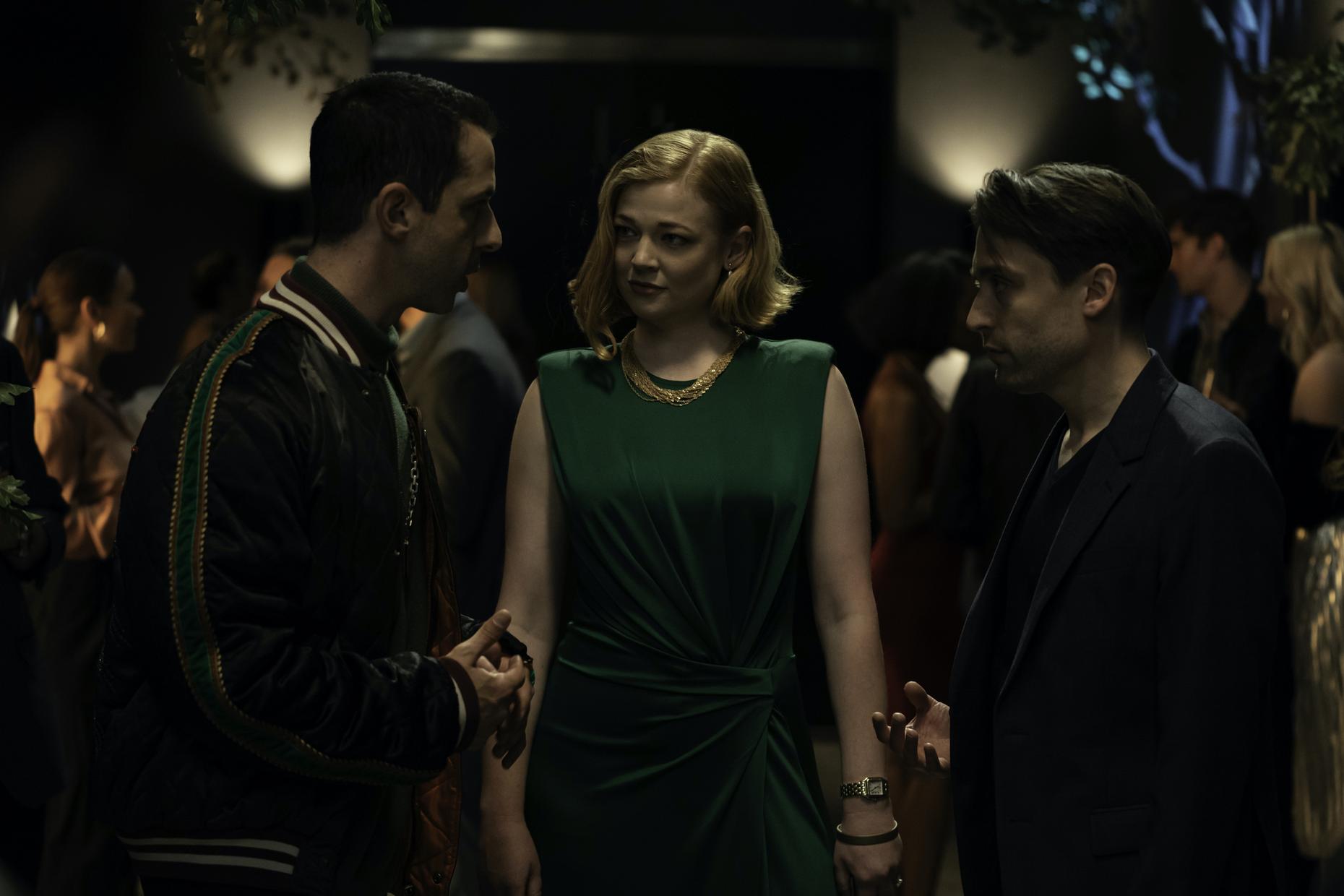
This is the on the Media Midweek podcast. I'm Ilya Maritz. I'm a reporter and co host of the series Will Be Wild, and I occasionally sit in for Brooke Gladstone. We've got some good stuff cooking up for the big show this weekend, including a conversation with an Israeli journalist on the protests in her country. And we'll examine a new law in Utah banning children from social media without parental consent. But in the meantime, let's re listen to an interview I did last year. It's newly relevant in light of this. Last weekend was the first episode of season four of Succession, a huge hit for hbo, which is no stranger to success. Take White Lotus. That show picked up nearly 40 Emmy Awards in 2022, a year that also happened to be HBO's 50th birthday. In those five decades, the network has changed hands between a variety of corporate owners, from the publisher Time Inc. To AOL and later AT&T and most recently Discovery. Along the way, HBO never had a singular leader, its own Walt Disney. Instead, the network was propelled by generations of risk embracing tastemakers. And from the start, they promised to give audiences a good time with what was then a novel business model. You pay for content, you get no ads and you get live boxing matches.
- [01:21]
John Coblin
Ali lashes out with a light left.
- [01:23]
Ilya Maritz
Comedy specials piped in from the theater.
- [01:26]
John Coblin
Yes, you are. You're all going to die.
- [01:29]
Ilya Maritz
Didn't mean to remind you of it.
- [01:30]
John Coblin
But it is on your schedule.
- [01:31]
Ilya Maritz
Feature films in your living room just.
- [01:33]
John Coblin
Now that every man I kill, the farther away from home I feel.
- [01:36]
Ilya Maritz
And let us not neglect sex on screen.
- [01:39]
John Coblin
I got a big old pocket full of Viagra Vi Ed.
- [01:46]
Ilya Maritz
That'S not Viagra. HBO pledged to transcend the television format, giving them their tagline it's not tv, it's hbo. John Coblin is a reporter for the New York Times covering the television industry. He is the co author with Bloomberg's Felix Gillette, of the book it's not the Spectacular Rise, Revolution and Future of hbo. When I spoke to Copland last winter, I asked him to explain how it was that HBO saw itself explicitly as targeting an audience that that nobody else was men.
- [02:22]
John Coblin
It was one of the most surprising things while reporting out the book, and I feel a little foolish or naive to even say that because it's just hiding in plain sight. Beginning in the late 1970s and then especially into the 1980s, executives at HBO looked at the broadcast television landscape and they said this feels like it's mostly slanted toward women. And then research executives at the Network started to say things like, a man controls the remote control and. And a woman will watch what he watches. When HBO was dabbling in episodic television, there was a show that debuted in 1990 called Dream On. And the producers of that show would get notes back from the network saying, it needs more of that cable edge. And Cable edge was just explicitly code for we need more breaths. And then they proudly advertised it that way. It's a strange part of HBO's history, but it also really did influence HBO's programming for decades to come.
- [03:20]
Ilya Maritz
You write about HBO's close relationship with journalism and media criticism, which is not really visible to the casual HBO viewer. But you write that programmers really read reviews of their work. They tried to make shows that critics would cheer for. And they also drew a lot on journalism and nonfiction generally in making fictional shows. One of the ones that you write about that I did not know was a program called Tanner 88, which is a political mockumentary, and I guess it is still seen as influential. What made it so groundbreaking?
- [03:53]
John Coblin
It was about a guy who was running for president in the 1988 election. And how many times has the 1988 election, like, influence great nonfiction or great fictional works? And while teen Tanner toasts a promising future, the press curses a doubtful one.
- [04:08]
Ilya Maritz
Now, the networks have already announced major cutbacks in the election unit.
- [04:13]
John Coblin
Yeah, like who? You Dukakis? And it was sort of a breakthrough because then it was the first time where you got the attention of Washington, you got the attention of New York. And that's something that HBO has always been uniquely good at. All the Hollywood studios and TV networks were obsessed with the Hollywood trade, Press, variety, the Hollywood reporter. HBO figured out really early on, well, there's a whole press corps in New York. There's a whole press corps in D.C. what if we tried to schmooze with those people? By the 1990s, HBO executives referred to it as the permanent campaign. Permanent campaign, like in politics? Exactly. Because HBO, even 20 years into its run, have said, you know, if people are going to keep their HBO subscription, we effectively have to be elected every month. I mean, HBO would throw these, like, really glitzy premiere parties, and they used to call them halo events, because if you have Maureen Dowd or you have Frank Rich in the room, if they're not gonna write about HBO right now, maybe when you have Angels in America ready to premiere, Frank Rich is gonna be ready to dedicate his entire Sunday column to this. And by the way, by 2007, HBO just started explicitly collecting journalists Frank Rich among them. He signed a consulting contract in 2008. And here we are 14 years later. Frank Rich is no longer a columnist at the New York Times. He's exclusively an HBO producer. And his credits include Veep and Succession. I want a broadcast network. I want to see what other news operations we can sweep up. Local tv.
- [05:46]
Ilya Maritz
Dad, nobody watches tv.
- [05:48]
John Coblin
Why shouldn't we do all the news? Well, Kim Jong, Pop, because that's not.
- [05:53]
Ilya Maritz
How things work in this country. Let's talk about a totally different show that also had its origins in journalism, and that's Sex and the City.
- [06:01]
John Coblin
What do you do for work?
- [06:02]
Ilya Maritz
I'm sort of a sexual anthropologist. I write a column called Sex and City.
- [06:09]
John Coblin
You can tell a man, I hate.
- [06:10]
Ilya Maritz
You, you have the best sex of your life.
- [06:12]
John Coblin
But tell him, I love you, you'll probably never see him again.
- [06:16]
Ilya Maritz
It was inspired by the reportage of Candace Bushnell. She wrote a column for the New York observer, and she met the eventual creator of Sex and the City, Darren Starr, when she was assigned by Vogue to write a profile of him. Darren Starr at the time was known for 90210 and Melrose plays and was kind of a phenom. So how did Sex and the City, the show, get born out of that profile?
- [06:39]
John Coblin
Melrose place, Beverly Hills, 90210. Those are shows that both took place on the west side of Los Angeles, which is where Darren Starr lived. And then by time 1995 came around, La was reeling from the O.J. simpson trial and from the riots in 1992. He just felt like something was about to happen in New York. And as Candace was traveling around with him, he just looked at her and was like, you're a show. Your columns are a show. So he decided to take it out. And there were two really interested parties, ABC and hbo. And the logical choice would be to go to abc. But as Candace Bushnell remembered it, Darren was really annoyed with network TV and was just like, am I even going to be able to call that show Sex in the City over there? I bet they'll make us change the title. Hbo. Let's just take a flyer on them and let's see what happens. Sarah Jessica Parker has received 10 Emmy nominations for her work on Sex and the City as an actress and a producer. This is her first win in this category. And there's even an interesting origin story to how HBO became interested in Sex and the City.
- [07:47]
Ilya Maritz
Well, now you have me curious. So tell me.
- [07:49]
John Coblin
So we were talking about how HBO is a network program to mention in 1995, 1996. Demi Moore, who was then at the height of her celebrity, had sort of this passion project that she was producing about abortion.
- [08:04]
Ilya Maritz
It's illegal to terminate a pregnancy, but you don't understand. I really need to get this done.
- [08:10]
John Coblin
And it was originally commissioned by Turner Broadcasting. That's the home of TNT and tbs. But then, just like the broadcast networks before them, they started to get skittish. They were like, ugh, can we really do an abortion movie? And one that is unflinchingly pro choice. The advertisers might balk. So TNT quietly walked away from the project. HBO jumped in only because they're like, it's Demi Moore. There was no assumption that its mostly male viewers would be turning on HBO to watch a movie about abortion. And then it premiered, and it was the biggest ratings HBO had ever seen. So at a woefully late date in 1996, HBO executives were like, oh, maybe there are women viewers out there. Maybe we should find more stories about the female experience. And it was only 10 weeks after the premiere of if these Walls Could Talk, the name of Demi Moore's project, that they went ahead and bought the rights to Sex in the City.
- [09:08]
Ilya Maritz
As all of that was unfolding, where were women in the company? Especially, like, in positions of power, were there women making these programming decisions?
- [09:18]
John Coblin
They've always had a group of very influential, very powerful women executives. You can look to Sheila Nevins, who ran the documentary department. HBO's programming department had scores of women like Carolyn Strauss. Carolyn Strauss is the one who was sitting in the room with David Chase when he was pitching the Sopranos. She was the one listening to Darren Starr when he was pitching Sex in the City. She's the one who went to Alan Ball and said, I want you to do a show that takes place in a funeral home. It was her idea. But the thing about all these women executives, the closer they got to the top, it seemed like their careers would just stall out. Either they'd be stuck, or they would be shown the door. Carolyn Strauss is among them. Despite coming up with hit after hit For HBO in 2008, she was shown the door. In her telling, it was because she passed on one show, which. Which was Mad Men. And as a result, months later, she was fired. And on the way out, she's like, there's one show I'm developing that I want to keep my hands on. It's the Dragon Show. And they're like, you want that? Sure, I'm sure. We'll make that. And they did. And Carolyn Strauss is a top producer of HBO's most successful drama of all time, Game of Thrones. So even after she left, she was supplying HBO with its biggest shows ever.
- [10:40]
Ilya Maritz
There are so many examples of shows inspired by journalism, and I'm not gonna go through all of them. But I do wanna talk with you about the Wire, because this is a show that was pitched by a former Baltimore sun reporter, David Simon, and media criticism was actually baked into his pitch to the network.
- [10:58]
John Coblin
You write completely. By 2002, HBO was already on a roll. Sex and the City had debuted and become a hit. The Sopranos had debuted and become a hit. So David Simon, direct, came around and said, there's one genre that HBO has not put its sort of vicious HBO spin on, and that's a cop show. You follow drugs, you get drug addicts and drug dealers, but you start to follow the money, and you don't know where the it's going to take you.
- [11:27]
Ilya Maritz
I want to read to you a clip from David Simon's pitch for the Wire. Here goes. You will not be stealing market share from the networks only by venturing worlds where they can't. You will be stealing it by taking their world and transforming them with honesty and wit and a darker, cynical, and more piercing viewpoint than they would undertake. That, to me, seems to evoke why HBO has been able to survive. They have been unusually perceptive about what other networks don't have, and they have found a way to offer exactly that.
- [12:01]
John Coblin
I mean, consider a few years earlier, before David Simon wrote that letter, David Chase, he had an idea about a mobster who is going to therapy. And he pitched that to each of the four broadcast networks. CBS said, I don't mind this violent mobster, but does he have to be on Prozac? Does he have to be in therapy? It makes him look weak. All Americans, all they're doing is crying and confession. And now I'm one of them, A patient. Your parents made it impossible for you to experience joy. Yeah, see, there you go again, Fox. Initially, they were totally into it until they realized, oh, God, we can't show a violent mobster. The advertisers will revolt. And it wasn't until David Chase met with HBO executives and they said to him, oh, we love this mobster in therapy angle. If anything, lean into it harder. And then they actually did get a focus group for it, and they hated it. And then HBO executives looked around at themselves and are like, no, we believe in this. Let's give it a full season.
- [13:00]
Ilya Maritz
It seems like so much of HBO's history was defined by the constraints that it was working under as a no ad premium cable network, when that was a really unusual thing, and that enabled them to zig when others were zagging. And now there's just this kind of convergence. Everybody is streaming, Everybody's doing the same game. And moreover, it seems like everybody's taken a page from HBO at this point. Is the network as distinctive, as unusual, as groundbreaking? Can it be as it historically has been?
- [13:35]
John Coblin
There's so much competition with that said hbo. They just cleaned up at this past year's Emmys, and they did it on the backs of shows like Succession and the White Lotus. Even to this point, if you put your serum in the arm of a random Hollywood producer and say, where do you want to take your project first? The answer does remain hbo. One thing that Netflix famously said is we have to become HBO faster than they become us, which means we. We have to get really good at quality storytelling faster than they can become a streaming company. But Netflix, they are fundamentally a data, science and technology company. They knew everything about their viewers. They knew that if you liked House of Cards, you might go to a documentary next, and then you might watch a baking competition show. After that, they started to look at their algorithm and made programming decisions based on that. And the results, the decade later for Netflix, they're relatively mixed on the programming front. Over the last year, especially as Netflix's share price has taken a nosedive and they've lost subscribers for the first time in a decade, there have been real open questions about the quality of Netflix's programming slate. And though they spend way more money than hbo, HBO continues to have a better batting average because they stick with that same programming philosophy, which is fundamentally trust the artist.
- [14:57]
Ilya Maritz
Maybe tastemakers really matter more than raw data in TV. At least, you know, HBO is 50 this year, and reading the book is kind of like reading a kind of, you know, biography or midlife appraisal. And I found myself feeling kind of protective of HBO in a way that I didn't expect. Like, here they are, they're making all these, like, groundbreaking shows that need to exist. A lot of them I personally feel really devoted to. But the whole time, it feels like this experiment that has got to crash into reality sooner or later.
- [15:33]
John Coblin
I mean, what's surprising is HBO has survived nearly every fatal blow that has been directed at the network. This goes back to the rise of VCRs. This goes to various corporate takeovers, the rise of DVDs. HBO has survived each and every time, even to the point where when Felix and I decided we were going to write this book, it was the spring of 2019 and by that point at and T, the Dallas based big telephone company, they had purchased HBO's parent company. And in those early months, scores of senior HBO executives, people who had been there for decades, left the network. And all of a sudden it was, it felt like this inflection point, like is HBO going to survive? But even to present day, HBO's new corporate owners Discovery. Those are the folks who make unscripted television shows like My Feet are Killing Me or Naked and Afraid or Dr. Pimple Popper. They took over the company from AT&T earlier this year. And once again we are at one of those inflection points where we are going to see how HBO manages to handle that transition. Discovery they have a debt load of around $50 billion. Will they come around and start to muck with HBO's programming? The jury is very much still out.
- [16:57]
Ilya Maritz
Thank you John.
- [16:58]
John Coblin
Thanks for having me.
- [17:01]
Ilya Maritz
John Coblin covers the business of TV for the New York Times. He is the co author with Felix Gillette of the book it's not the Spectacular Rise, Revolution and Future of hbo. Thanks for listening to this midweek podcast. I'll be in the host chair this weekend, so see you then. I'm Ilya Maritz. NYC now delivers breaking news, top headlines and in depth coverage from WNYC and Gothamist every morning, midday and evening. By sponsoring our programming, you'll reach a community of passionate listeners in an uncluttered audio experience. Visit sponsorship.wnyc.org to learn more.