← On the Media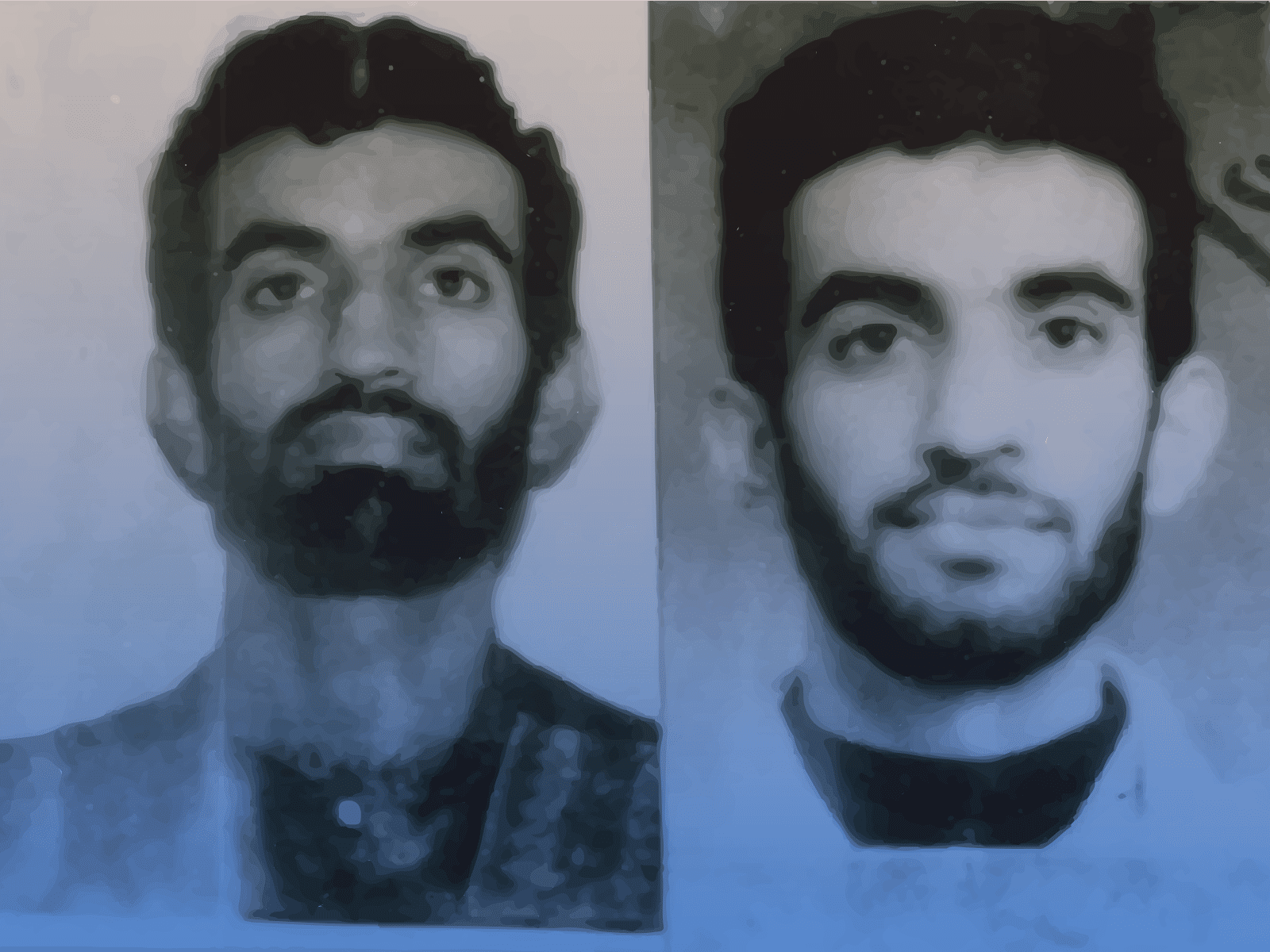
On the Media
OTM presents - Blindspot Ep. 5: The Idea
00:54:52
This week, another episode of WNYC Studio's "Blindspot: the road to 9/11." In this episode, police investigating a house fire in Manila uncover a plot to blow up a dozen airplanes.
Loading summary
Transcript224 lines
- [00:00]
Michael Ohringer
Hey, OTM listeners, this is Michael Ohringer, reporter and producer with on the Media. Of course. Did you happen to hear my piece on the show last week about Zello, the walkie talkie app used by militia groups for recruitment and organizing? If you haven't heard it, you should probably cancel your plans for the evening and just go ahead and cue that right on up. But for real, that piece took us so long to make. It was 20 minutes on the air and on the podcast, but it took 100 hours at least. I was deep in the militia world, researching. I was on and off the phone with WNYC lawyers trying to figure out how to use the most precise language possible. I was talking with sources, tons of interviews. I listened to God knows how much militia chatter on Zello. It was an enormous undertaking. But the reason we made the story is that we felt that it was important for people to understand how some of these groups are coming together around the election and, you know, what can be done to kind of mitigate the violence that so many of us are afraid of seeing on the news come November. Here's where I ask you for support. It takes so much work. It takes so many resources. It takes so much manpower. And without your support, it's just not possible. So I want to ask you for support and I want to ask you for help. But actually there is a pretty sweet incentive on the other end for you. We are serving up on the media branded masks. That's right. Stay healthy and stay fresh. We with the latest hot public radio fashion from OTM. For $8 a month you get one mask, but for $10 a month you get two. And I'm not good at math, but something tells me that's a deal. To support the show and snag a mask, all you have to do is just text OTM to 70101. You'll get a text back with a link where you can make a quick donation to or visit onthemedia.org and click donate. Thanks so much. This is Bob Garfield and for this week's Pod Extra, we're featuring another episode from the podcast the road to 9 11. It's a CO production of WNYC Studios and History. The host is Jim O' Grady. Episodes 1 through 4 tell the story of America's support in the 1980s for Arab fighters taking part in the Afghan war against the then Soviet Union and how some of those fighters became radicalized by an emergent movement breaching violent jihad. Among them was Osama bin Laden. He helped finance cells of Jihadists in New York in the 1990s. Members of those cells then carried out attacks against the US including the 1993 World Trade center bombing. Episode 5 begins with the Twin Towers still standing, but with a group of extremists more determined than ever to take them down.
- [03:28]
Bob Garfield
It was a very, very important building to me.
- [03:32]
Jim O'Grady
That's Matthew Bashir talking about the Twin Towers, once the tallest structures in the world. No sooner has one New York skyscraper risen above its neighbors than another is on its way to reach a little higher.
- [03:46]
Bob Garfield
Both of them were very important to me.
- [03:47]
Jim O'Grady
Matthew Beshear is a former detective with the Port Authority of New York and New Jersey, the government agency whose job is to build the big things that keep New York a global city. Bridges, tunnels, airports, and beginning in the 1960s, the Twin Towers. The purpose of the World Trade center is to increase the flow of international trade.
- [04:11]
Bob Garfield
As I was growing up, I watched them build the Trade Center. I would jump onto RR Local from where I lived in Bay Ridge and I would travel into Manhattan and I would actually go down to the site and I'd watch them digging the holes and dynamiting. And it was quite astonishing.
- [04:31]
Jim O'Grady
To those of you not familiar with the New York subway system and the now defunct Double R Local, that was a long trip, at least an hour each way. Which tells you Matthew Beshear really loved that construction site and the buildings themselves when they opened in 1973. It brings together 130,000 people each day. People of business and government involved in processing international commerce.
- [04:57]
Bob Garfield
I developed a certain affinity for the buildings because they stood out against the sky.
- [05:02]
Jim O'Grady
In 1975, Matthew Beshear joined the Port Authority Police Force.
- [05:06]
Bob Garfield
I was a uniformed police officer.
- [05:09]
Jim O'Grady
One of his early posts was the Twin Towers. He rode the elevators a lot, responding to fire alarms, nothing major, and just keeping his eye on things.
- [05:19]
Bob Garfield
Walked down the hallway shaking doors and checking to make sure everything was locked and everything was secure.
- [05:24]
Jim O'Grady
His beat included the view from 110 stories up, a quarter mile in the sky.
- [05:30]
Bob Garfield
I spent many days patrolling the roof, the observation deck of the World Trade Center.
- [05:36]
Jim O'Grady
Tourists flocked to the roof for its 45 mile views of this mega metropolis and a harbor that seemed to spill past the curve of the earth. And some came for other reasons.
- [05:49]
Bob Garfield
We had many people who felt that they wanted to parachute off the Trade Center.
- [05:54]
Jim O'Grady
The towers invited stunts. There was something about them, their fame and that they were as bland as blank canvases. It inspired publicity seekers and performance artists to project their visions onto them. Remember Philippe Petit? Okay, I Look up and I see this fella on a wire between the towers. I couldn't believe it. The Frenchman who strolled on a tightrope from one roof to the other, no net between him and the pavement far below. The daredevil who entranced the world by dancing above the void. Yeah, well, Matthew Bashir arrested him.
- [06:31]
Bob Garfield
Police took a humorless view of the act. And even though he was arrested by us when he completed his walk, we did have him sign the side of the building. And when you were on the observation deck, if you went into that particular corner and you looked down, there was his signature in black Magic marker.
- [06:48]
Jim O'Grady
Philippe Petit autographed the South Tower with a Sharpie because even Matthew Bashir thought the building would be improved by a little graffiti. It's an open secret not everyone loved the aesthetics of the Twin Towers or their purpose. They were the brainchild of David Rockefeller, a lord of finance intent on erecting a double stuffed hub of global profiteering. To some, the buildings were skyline hogs that threw deep shadows, chilling the plazas at their feet. To me as a New Yorker, they seemed out of scale, as if the weight of them might tip Lower Manhattan below the waterline, see, sawing Upper Manhattan into the air. Other times, they looked all right, probably through sheer familiarity. But to New York Times reporter James Glantz, who co authored an essential book about the towers, they were brash and magnificent.
- [07:44]
Michael Ohringer
They were two gigantic office buildings.
- [07:47]
Bob Garfield
But there was something about the way they dominated Lower Manhattan.
- [07:51]
Michael Ohringer
You know, they became something that mattered to you.
- [07:54]
Jim O'Grady
And, of course, they mattered deeply to Matthew Bashir.
- [07:57]
Bob Garfield
There was nothing more beautiful than seeing the sun blazing upon the side of those buildings. So many people proposed to their wives on the roof of the Trade Center. So many people had pictures taken there.
- [08:08]
Jim O'Grady
Including El Said Nuser. He posed with his young family in front of the towers several years before he joined a terrorist cell that would set out to knock them down.
- [08:18]
Michael Ohringer
They were, in a way, our pyramids.
- [08:20]
Bob Garfield
You know, there was something I wouldn't say wholly about them, but they had.
- [08:24]
Michael Ohringer
That role of an object that was.
- [08:28]
Bob Garfield
Supposed to symbolize the whole, the whole.
- [08:31]
Jim O'Grady
Of Western civilization with all of its technological might. But civilizations at the height of their dominance have a common problem. They breed resentment. There's this essay I keep coming back to by the French philosopher Jean Baudrillard. It's called the Spirit of Terrorism. He wrote it a year after 9 11, and it still feels pretty daring. He describes the attackers not as nihilists or madmen, but rational actors. Baudrillard says human Beings are allergic to systems that advance, like armies, conquering cultures as they go, like, for example, global capitalism. He also describes the impulse to rebel against a power that appears monopolistic, like the United States after the Cold War. And if you experience such systems as oppressive and you're fanatically inclined, you might just try to vanquish them by force. Baudrillard says a successful act of terror combines a kernel of real violence with the maximum possible echo. The echo is amplified greatly by striking a symbol. And was there ever a more potent symbol of American wealth and power than the Twin Towers? There was no greater symbol of America's material prowess and dominance than those buildings. That's Bernard Haeckel. I'm a professor of Near Eastern Studies at Princeton University and an accomplished scholar on the intersection of Islam and politics. The World Trade center in particular became an obsession for radical Islamists who believed that they could bring down the United States just as they had done the Soviets in Afghanistan. And so if you could bring the World Trade center down, you could bring down symbols of capitalism and of America.
- [10:20]
Bob Garfield
As an economic power.
- [10:22]
Jim O'Grady
But how could anyone bring them down? They were colossal and seemed anchored in the center of the earth. And they had already survived a serious bombing. The Twin Towers remained a target because.
- [10:33]
Bob Garfield
They had not been brought down.
- [10:35]
Matthew Bashir
In 1993, kind of unfinished business.
- [10:38]
Jim O'Grady
After his arrest, Philippe Petit told a reporter, if I see three oranges, I have to juggle, and if I see two towers, I have to walk. The rest of this story is about a group of men driven by a murderous version of that impulse.
- [10:54]
Bob Garfield
In that respect, I think it's entirely natural that somebody with a much more.
- [10:58]
Michael Ohringer
Evil intent would see the Towers as magnetic as well.
- [11:02]
Jim O'Grady
Of course, intent is not enough. The the men determined to bring them down needed an idea to make it happen. But what? And who could possibly conceive it? This is Blind Spot, the road to 9 11. The story of the long, strange wind up to the attack that remade the world and the chances we had to stop it. I'm Jim o' Grady.
- [11:28]
Brad Garrett
He was the face of evil.
- [11:29]
Matthew Bashir
We need to find out whether there are threats.
- [11:32]
Bob Garfield
As they went through the apartment, they concluded quickly that it was a bomb factory.
- [11:36]
Matthew Bashir
Very tough night.
- [11:37]
Jim O'Grady
Let's turn the heat up as high.
- [11:39]
Matthew Bashir
As it possibly can be.
- [11:40]
Bob Garfield
He made a break and ran.
- [11:42]
Brad Garrett
He did kind of disappear.
- [11:46]
Jim O'Grady
Episode 5 the idea, the origin story of the Twin Towers is rife with ironies. First, irony. The architect who designed the original World Trade center complex, Minoru Yamasaki, had a fear of heights. It's why he made all those windows so narrow. He thought it would be less scary for the people inside. Second irony, Yamasaki was inspired by the Great Mosque in the Muslim holy city of Mecca with its seven magnificent minarets. You've probably seen pictures of it during the Muslim pilgrimage. You know the Hajj, when hundreds of thousands of the faithful gather to pray. Now turned two of those minarets into skyscrapers and there they are, the twin towers. Yamasaki's design was largely devoid of ornament, except for the base of the buildings, which he ringed with pointed arches, a prominent feature of Islamic architecture. He told an interviewer he'd first been inspired by the Islamic or Arabian style when he designed a major airport in Saudi Arabia. The king and the principal leaders of Arabia were delighted by the fact that we had designed an Arabian looking building. Here's what architect Lori Kerr said about yamasaki in a 2001 essay from shortly after the attacks. Quote, Yamasaki clothed the World Trade Center, a monument of Western capitalism, in the raiment of Islamic spirituality. And how might that have looked to a particular Saudi who is not the king to Osama bin Laden? Kerr wrote that if bin Laden's goal was to purify Islam from commercialism, Yamasaki's implicit mosque to commerce would be anathema. The World Trade center probably struck bin Laden as a false idol. Final irony, Minoru Yamasaki died at age 73 in 1986. He was spared the spectacle of his crowning achievement, which took seven years to build, destroyed in a couple of hours. He left the world optimistic. World trade means world peace, he had said at the tower's opening ceremony. He had hoped they would become a representation of man's belief in humanity, his beliefs in the cooperation of men. Of course, cooperation is a neutral term. Just because men are cooperating doesn't mean something good is going on.
- [14:31]
Frank Pellegrino
He was arrogant, self assured. He was just very proud about what he had done.
- [14:36]
Jim O'Grady
That's FBI agent Brad Garrett describing World Trade center bomber Ramsey Yousef. When we last saw Yousef, he was staring at the towers from the Jersey City waterfront and. And he was pissed off because his truck bomb had not leveled them. Unlike the 911 hijackers, Yousef didn't come to the United States to die, to give up his life as a religious sacrifice. He came to carry out a mission and escape. His agenda was pragmatic and political.
- [15:08]
Frank Pellegrino
Every person I've interviewed that's committed some violent atrocity, particularly if it was terrorism. It was all about really our policies and treatments of Muslims. And I will tell you, this is a fairly common theme in terrorists get out of Muslim countries. US Encroachment is their justification to commit an act.
- [15:32]
Jim O'Grady
US Encroachment in the Middle east in.
- [15:35]
Frank Pellegrino
Particular, it had nothing to do with this whole thing about, you know, we spend too much money, we don't dress right. I mean, there are factions, people that think that, but that isn't the big picture that I've found.
- [15:47]
Jim O'Grady
In other words, Yousef's beef has a lot to do with American foreign policy and only a little with cultural decadence. And speaking of clothes, Yousef slipped into a designer suit to make his getaway. That's what he was wearing. In a first class lounge at JFK Airport while waiting to board a flight to Pakistan. A TV was playing and a news report came on. It said investigators had a suspect in the bombing of the World Trade center earlier that day. A group from Serbia that was part of the war in Yugoslavia. Yousef was incensed. No one was going to steal his credit. So he got up, went to a payphone and called the NYPD tip line without leaving his name. He said, no, it was me. I did it. A month later, the New York Times published a letter from Yousef. He took full credit for the bombing and explained it was in response to, quote, the American political, economical and military support to Israel and to the rest of the dictator countries in the region. He made no religious argument and didn't mention Islam even once. These were political demands reinforced by the threat of more attacks. Like FBI Special Agent Brad Garrett says.
- [17:08]
Frank Pellegrino
Ramzi Yousef believed the United States manipulates governments. They control their economy. They control who's in power. You've now overstepped yourself, and we're going to do something about it.
- [17:22]
Jim O'Grady
Reporter John Miller.
- [17:24]
Bob Garfield
You know, after the bombing of the.
- [17:25]
Jim O'Grady
World Trade center, he didn't just go on the run. He went on the run and went back to work. Thanks to Ramsey Yousef, Port Authority Officer Matthew Bashir got a promotion. He was made a detective with the Joint Terrorism Task Force and joined the international manhunt for public enemy number one.
- [17:46]
Bob Garfield
We were doggedly determined to track down and arrest Ramzi.
- [17:51]
Jim O'Grady
Yosef Bashir's partner was FBI Special Agent Frank Pellegrino.
- [17:56]
Brad Garrett
You know, at this point, he was a significant person that everybody was looking for. He was the face of evil.
- [18:02]
Jim O'Grady
Frank Pellegrino and Matthew Bashir, our second pair of buddy cops.
- [18:07]
Bob Garfield
In this podcast, Frank was the alpha on the team. Many people in the office would refer to us as Batman and Robin. And I had no problem being Robin.
- [18:16]
Brad Garrett
He was a better cop than I would ever be. He's very open, very easy. Very few people who meet him. I don't know anybody who's ever met him didn't like him.
- [18:24]
Jim O'Grady
On the other hand, Pellegrino cared not a whole lot about what people thought of him. He was a tough guy. In the hackneyed TV movie about the search for Ramzi, Youssef, an exasperated character would at some point have to sigh and say, that's just Pellegrino. Rough around the edges. Their boss was U.S. attorney Mary Jo White.
- [18:47]
Frank Pellegrino
I considered Youssef to be one of the most dangerous people on the planet. Let's turn the heat up as high.
- [18:53]
Jim O'Grady
As it possibly can be. Turned up to try to capture him.
- [18:56]
Brad Garrett
He was a smart guy when it came to how to mix it, and he wasn't afraid to do it.
- [19:01]
Jim O'Grady
Mixing the volatile chemicals for a bomb takes skill, a lot of nerve, and a bit of luck. Yousef had mishaps that had left him with facial scars and a partially severed finger, but nothing worse than that. Bashir says in the beginning, the JTTF underestimated how hard he would be to catch.
- [19:21]
Bob Garfield
I don't think anybody realized the length of time and the depth of the investigation that was going to need to be done in order to get the job done.
- [19:30]
Jim O'Grady
Frank Pellegrino says that pretty much all they knew about Yousef was he'd grown up in Kuwait, but his parents were from Pakistan and had recently moved back there.
- [19:40]
Brad Garrett
And after he left New York, we assumed that he either went home to somewhere in Baluchistan or back to Pakistan somewhere.
- [19:48]
Jim O'Grady
Baluchistan is a province in Pakistan that borders Afghanistan. So the US State Department printed up 37,000 matchbooks with Yousef's passport photo. The photo would become iconic from its use on news reports and even the TV show America's Most Wanted. It shows Yousef with thick dark hair, a hard stare and a broken nose. His chin is raised as if daring to say something that would make him take offense. The matchbooks advertised a hefty reward for information leading to his capture. Agent Pellegrino says there was some haggling within the FBI about the size of it.
- [20:27]
Brad Garrett
We ended up getting a two million dollar reward for him.
- [20:30]
Jim O'Grady
They took the matchbooks and airdropped them on Baluchistan, where $2 million bought a lot of motivation. The bounty unleashed a flood of tips, more than they could handle. All of them dead ends.
- [20:42]
Brad Garrett
It's just a big, crowded place where.
- [20:45]
Jim O'Grady
It'S easy to hide out from American agents based in New York and where the jihadist cause had sympathizers in high places.
- [20:53]
Brad Garrett
We had a bunch of meetings with authorities in Pakistan, but unfortunately nothing ever came to that. And whether it was an inability to help or a desire not to help, I'm not sure. I think maybe it was a combination of both.
- [21:10]
Jim O'Grady
Yousef was in the country, but moving around, he'd end up at a guesthouse owned by Osama bin Laden. There's no evidence that Yousef and bin Laden ever met in person, but Yousef had been associated with Al Qaeda since its founding in 1988. It was at a Bin Laden camp in Afghanistan where Yousef received his first high level training in remote controlled explosives. At the time, the US and the Jihadists were on the same side in the war against the Soviets. Yousef's early bombs deployed timing devices and plastic explosives supplied by the CIA. Think about that. The US intelligence community was now searching for a man they'd indirectly weaponized and the trail had gone cold.
- [21:58]
Brad Garrett
So you get bits and pieces, but, you know, never anything for sure. It did kind of disappear.
- [22:09]
Jim O'Grady
But then a surprise. On the night of January 6, 1995, a fire breaks out in a dingy one bedroom apartment in Manila, the Philippines. Acrid black smoke billows from the windows and rises against a moonlit sky as a fire truck pulls up. A man talking on a cell phone is seen walking away. Another man, familiar to neighbors hops in a cab and speeds off. Firefighters enter the apartment. There's no one in it and it reeks of chemicals. The police come and look around. They find a laptop computer, but without a search warrant, they can't remove it or even open it. So they leave to go get one. The scene is pretty odd, but for now the police are treating it as a routine fire. They assume that information on the laptop will help them explain it. They're right about that. The laptop will explain it and so much more. This is blind Spot the road to 9 11. The Philippines is a largely Catholic country and in 1995, Pope John Paul II is rock star popular. So a papal visit to Manila is a major event. It's also a massive security headache. Remember, the Pope has already survived an assassination attempt. In 1981, a Turkish man who had called the Pope a crusader commander shot him four times in St. Peter's Square. Now it's January 7, 1995, a week before the 74 year old Pope's visit to the Philippines. There's been a fire in an apartment overlooking the Popemobile's main route in Manila and only a few hundred yards away from where John Paul II will be staying, the cops are sifting through what's left of the charred apartment. Albert Ferro, who was with the Philippine National Police, describes what they were thinking. They were thinking that it was just.
- [24:21]
Matthew Bashir
An accident, but there's a lot of things that are suspicious, so the police conducted investigation.
- [24:29]
Jim O'Grady
Steve Simon was with the US National Security Council at the time.
- [24:33]
Bob Garfield
As they went through the apartment, they concluded quickly that it was a bomb factory.
- [24:38]
Jim O'Grady
In the kitchen, officers discover bottles of acid and a cauldron by the sink.
- [24:44]
Bob Garfield
That looked pretty suspicious.
- [24:46]
Jim O'Grady
And then in the bedroom, they saw.
- [24:49]
Bob Garfield
All this Catholic stuff, vestments, things, two.
- [24:56]
Jim O'Grady
Bibles, crucifixes, and a glossy photo of John Paul ii. Rommel Banlawi studies terrorism at a Filipino think tank. He says there were signs that more than one man had been using the apartment and of what they were up to.
- [25:11]
Matthew Bashir
They were planning to assassinate the Pope using improvised explosive device.
- [25:18]
Jim O'Grady
The plan seems to have been to dress up operatives as priests who would then plant pipe bombs at a papal location. The bomb's timers were modified Cassio watches. The detonators were made from light bulb filaments and cotton soaked in flammable liquid. Curiously, they were similar to those used in the World Trade center bombing. But these were expertly miniaturized, and investigators who examined them were horrified by their ingenuity. After the police leave the apartment to get their search warrant, a man returns to find it unguarded. He slips inside and grabs what he's come for, the laptop. But as he's leaving, the police return.
- [26:04]
Bob Garfield
When Filipino authorities responded back to the apartment, there was Hakeem Murad.
- [26:09]
Jim O'Grady
Abdul hakim Murad, Pakistani, 27 years old.
- [26:14]
Bob Garfield
In questioning him, he made a break and ran. But he tripped on the sidewalk and fell, and they quickly captured him.
- [26:20]
Jim O'Grady
Murad is arrested. What happens to him next brings up a terrible subject. Torture. Some commentators and analysts say torture gets suspects to talk. On the other side are religious leaders, human rights groups, elected officials, and intelligence officers who say it doesn't work and is immoral. And then there's the 2014 Senate Intelligence Committee report on CIA torture. It's 6,700 pages with 38,000 footnotes. I'm going to boil it down to a pair of key findings from the official summary. One, torture does not produce intelligence that can be gained in other ways. Two, torture does not stop terrorist plots or lead to the arrest of additional suspects. After 9 11, the CIA would continue torturing suspects. But in 1995, as far as we know, they did not torture Abdul Hakim Murad. That was a job for the Philippine National Police. They beat Murad and they waterboarded him. They burned his penis and testicles with cigarettes. But according to Rommel von Lowy, he didn't break.
- [27:37]
Matthew Bashir
Very tough guy. Murad was a tough guy and a true believer.
- [27:41]
Jim O'Grady
Murad told Philippine investigators that killing Americans was my best thing. I enjoy it. So the investigators are stuck. Meanwhile, the Pope has arrived. Officer Albert Ferro feels the clock ticking.
- [27:57]
Matthew Bashir
The visit of the Pope was underway and we need to find out whether there are threats. And we are facing a blank wall. Almost zero, zero information about these people.
- [28:11]
Jim O'Grady
Because according to Rommel bin Laoui, torture wasn't working.
- [28:15]
Matthew Bashir
They said. Let us turn to a young colonel at the time who was known for his great expertise in interrogating communist rebels. He was very, very good at that. Colonel Boogie Mendoza.
- [28:30]
Jim O'Grady
Colonel Rudolfo Boogie Mendoza. Round shouldered, blunt, featured. One of his colleagues described him as a hardcore expert in psychological warfare. The Philippine press called him a methodical sleuth and a bull headed strategist. So don't be fooled by the cutesy nickname.
- [28:48]
Matthew Bashir
I got the name Boogie while I was studying at the Philippine Military Academy. One of my classmates baptized me that name because it was taken from my hometown named Bugallon in 1995.
- [29:06]
Jim O'Grady
Boogie Mendoza is in a Philippine counterintelligence unit and on a task force to protect the Pope. On his visit, Mendoza has seen a report on Murad. It says abusive interrogation has yielded no useful information. None. So Mendoza says he went with a different approach.
- [29:25]
Matthew Bashir
When I met him, he was in handcuff. That handcuff must be removed immediately. He told me, thank you. As I am asking him, who are you? Why are you here? What is the content of the laptop? Because we cannot open it. He refused to talk, so I changed my tactics. I noticed, Mr. Murad, that you are hungry. Maybe you would like to eat. Yes, I'm very hungry.
- [29:54]
Jim O'Grady
Mendoza is using a tactic called rapport building. He's establishing a relationship that allows a conversation to occur and from there, a sliver of trust. The approach is not limited to sympathetic treatment. At times, Mendoza will resort to other means, like manipulation and deception.
- [30:15]
Matthew Bashir
Colonel Bongi Mendoza offered something. He offered a burger, a burger to Murad. And she said, this beef is not McDonald's. This is not American burger. This is a Philippine made burger. And that Murad was delighted that it was not an American burger.
- [30:35]
Jim O'Grady
After a while, Mendoza makes Murad an offer. If he'll name his partners in the assassination plot, Mendoza will let him speak to a humanitarian organization.
- [30:46]
Matthew Bashir
Because of my generosity, I will turn over you to the Red Cross.
- [30:52]
Jim O'Grady
To make the offer credible, Mendoza has one of his aides pretend to be a Red Cross worker and speak to Murad on the phone. The aide says he'll let Murad's family know he's alive. Murad is relieved. His hopes are raised. So when he hangs up, Mendoza asks him again, who are you working with? Murad clams up again, so Mendoza threatens him. He tells Murad what will happen if he continues to hold out.
- [31:20]
Matthew Bashir
I'll turn over you to the Mossad or FBI. It's your choice.
- [31:26]
Jim O'Grady
The Mossad is an Israeli intelligence service, and Murad did not want to fall into their hands. Mendoza's aide then starts up a truck outside the window to suggest to Murad that he can be taken at any moment.
- [31:39]
Matthew Bashir
It is a combination of sweet and sour promises. I told him, I think you would be delivered to the FBI because you were a suspected terrorist. You might be an international terrorist.
- [31:52]
Jim O'Grady
Then Mendoza goes for the jugular.
- [31:56]
Matthew Bashir
I asked him, do you want to see your children? What would be their future if you will be jailed? Then he started to grumble. He's about to cry.
- [32:08]
Jim O'Grady
Mendoza has one more question.
- [32:10]
Matthew Bashir
Are you prepared to die?
- [32:12]
Jim O'Grady
Meaning die for jihad? Murad says, no, no, no.
- [32:17]
Matthew Bashir
I love my family. I love my family. I'll tell you something. Do you know World Trade Center?
- [32:26]
Jim O'Grady
The World Trade Center? Mendoza plays dumb.
- [32:29]
Matthew Bashir
What's that? I told him the bombing there. Then he admitted the name Ramsey. Youssef.
- [32:40]
Jim O'Grady
Ramsey Yousef. Jackpot. Law enforcement now knows who they're chasing and that he was recently in Manila. It was a major break in the case. And according to Boogie Mendoza, it was not produced by torture. FBI agent Frank Pellegrino is in New York when he gets word of the revelation. He's been looking for Youssef for two years.
- [33:06]
Brad Garrett
We spent a lot of time chasing down a lot of phantom leads. In the beginning, we were completely surprised when he showed up in the Philippines.
- [33:13]
Jim O'Grady
Pellegrino and his partner Matthew Bashir, hop on a plane for Manila. But by the time they get there, Youssef has melted away again. On the bright side, with Yousef out of the picture, the Pope's visit comes off safely. And now Pellegrino and Brashear feel like at least we have a trail to follow. But there's a lot more work to do. They start by knocking on doors in the neighborhood of Manila Bay, where Youssef rented the apartment on a one month lease. The neighbors tell Bashir they hadn't taken Yusef and Murad. For devout Muslims, they were more like Western dressing party guys.
- [33:51]
Bob Garfield
They were very involved with the bar scene and with the sex trade within the Philippines. It was kind of a strange side to the investigation.
- [34:01]
Jim O'Grady
Pellegrino and Bashir head to a nearby commercial strip.
- [34:05]
Bob Garfield
We had to actually go to the bars and find the girls and ask them to please step off the bar and come speak with us.
- [34:12]
Brad Garrett
Fortunately, they all watch movies over there. The FBI is great. So when you told them you were FBI, they all got a thrill out of it.
- [34:20]
Bob Garfield
They described him as being very engaging, a lot of fun, and, you know, great guys to hang out with.
- [34:27]
Jim O'Grady
But Rommel bin Laawi says there was more to it than fun for Yousef and Murad.
- [34:32]
Matthew Bashir
They used these bargains to launder money because they requested these girls to open bank accounts.
- [34:38]
Brad Garrett
Some of the connections that from the Philippines went all the way back to bin Laden. So we quickly realized that Ramsay wasn't just hiding, that he was there planning.
- [34:48]
Jim O'Grady
And that money signaled he was up to something ambitious, something beyond assassinating a pope, which incredibly seems to have been a side project, you know, for a lot of terrorists. Killing Pope John Paul ii, that would have tied them up for the entire month. Not Ramsay. As Frank Pellegrino says, boy, he had.
- [35:09]
Brad Garrett
To be in it. He couldn't help himself. But to be involved in something new, you know, to be doing something different, to start the next project.
- [35:18]
Jim O'Grady
Yousef had money in amounts that needed to be laundered, and some of it came from Osama bin Laden. By 1995, bin Laden was known to the CIA as an extremist financier. And the State Department had put him on its watch list from having moved operations from Afghanistan to Sudan, a country the US had labeled a state sponsor of terrorism. So the urgent question was, what did Yousef plan to do with bin Laden's money? Surely the laptop held clues. Ramzi Yousef had ordered Murad to return to the apartment to retrieve it. That's how important it was.
- [35:59]
Bob Garfield
Ramsey. He never wanted to be caught with anything. He was a very sly individual.
- [36:02]
Jim O'Grady
The laptop was encrypted, but computer experts, after several tries, found a way in and cracked the files. One folder was especially alarming. It had lists of airlines, flight numbers, timer settings, and a curious word. Bojinka. B O J I N Bojinka.
- [36:24]
Brad Garrett
What does bojinka mean? And you hear all kinds of stories. It means something In Croatian. It was just a nonsense word that he made up.
- [36:31]
Jim O'Grady
Time for Boogie Mendoza to have another conversation with Youssef's former roommate, Abdul Hakim Murad.
- [36:38]
Matthew Bashir
I asked him, what is boojinka? Well, it's a code name. He told me.
- [36:44]
Jim O'Grady
What?
- [36:44]
Matthew Bashir
What codename for then he trembled. He told me, is an explosion.
- [36:52]
Jim O'Grady
Okay, but what kind of explosion? That's when Steve Simon of the National Security Council got called in.
- [36:58]
Bob Garfield
I went to Manila to talk to Philippine authorities about the plot. And it was chilling.
- [37:05]
Jim O'Grady
Boeing 747 is full of people blown out of the sky.
- [37:09]
Bob Garfield
It talked about this elaborately and intricately planned attack on as many as 12 aircraft from major American carriers crisscrossing the Pacific. And of course, when you saw the data, you were able to brush aside the dramatic implausibility of the whole thing. You realized this could work.
- [37:40]
Jim O'Grady
Not only could it work, Simon and others realized Yousef had already done a Test run.
- [37:45]
Bob Garfield
Boeing 747 made a safe emergency.
- [37:48]
Jim O'Grady
A month before the apartment fire, Philippines Airline Flight 434, en route to Tokyo, made an emergency landing after a bomb blew a two foot hole in the.
- [37:58]
Bob Garfield
Cabin floor, killing one man and injuring six others.
- [38:02]
Jim O'Grady
Yousef had mastered the extremely risky skill of creating liquid nitroglycerin, the explosive component of dynamite. He mixed it in the restroom of the plane. It took him a few minutes. And then added it to a device that was powered by batteries he'd smuggled on board in the hollowed out heels of his shoes. He returned to his seat, reached under it and wedged the bomb in with the life preserver. It stayed hidden there as Yousef left the plane at a stopover. When Yousef had attacked the World Trade center, he deployed a bomb that filled every inch of a Ford Econoline van. But Steve Simon says the components in this test bomb were small enough to fit into Youssef's carry on luggage.
- [38:45]
Bob Garfield
He'd been very busy creating a kind of tailored boutique explosive to use which would escape detection.
- [38:56]
Jim O'Grady
Officer Albert Ferro.
- [38:58]
Matthew Bashir
He used a small amount of nitroglycerin placed in a small container that cannot be suspected as a bomb.
- [39:06]
Jim O'Grady
Rommel, Ban Laue.
- [39:07]
Matthew Bashir
He pretended to be using it for his contact lenses.
- [39:12]
Jim O'Grady
That's all it took to blow a two foot wide hole in a plane to kill an innocent passenger and injure 10 others. A few ounces of nitro in a bottle of contact lens solution.
- [39:23]
Bob Garfield
I don't want to use the word panic, but the sudden chilling feeling you get that a devastating plot might well be underway and possibly Irreversible.
- [39:36]
Jim O'Grady
A plot involving 12 different planes.
- [39:39]
Bob Garfield
You're talking about the possibility of over 5,000 people being murdered. You know, it's stupefying really. And you have to rouse yourself to action.
- [39:52]
Jim O'Grady
At this point, investigators knew two things. The laptop with the Bojinka plot belonged to Ramzi Yousef. And Youssef was still out there. That meant the simultaneous destruction of a dozen planes was still on the table. Oh, and they also knew that a man had called the Associated Press in Manila to take credit for the Flight434 bombing. But he didn't leave his name. The news went straight to the White House and President Bill Clinton. Leon Panetta was chief of staff at the time, later to become director of the circumstances. The question you always ask in the intelligence business is what's the credibility? You get all kinds of threats and.
- [40:32]
Matthew Bashir
The credibility of the sources was pretty good.
- [40:34]
Jim O'Grady
Richard Clark was the President's chief counterterrorism advisor.
- [40:38]
Bob Garfield
We had to act quickly because we didn't know if the bombs had already been placed. We went in emergency mode to the FAA and said we need to ground aircraft.
- [40:51]
Jim O'Grady
For the first time in its history, the FAA grounded all flights by US owned airlines coming from the Pacific. Flights in the air were turned around.
- [41:00]
Bob Garfield
For those aircraft in the air, we need to do inspections, have the crew go and check where we think the bombs are going to be planted. It was probably the most frightening moment of those six years I was at the nsc. I mean, that put the fear of God into me.
- [41:18]
Jim O'Grady
Flights eventually resumed, but with temporary security meas no passenger could bring liquid on board and all carry on bags had to be searched by hand. The kind of intrusive rules that are second nature to us now. The Bjinka plot was foiled and in the nick of time. Except it wasn't. Not completely. There was a Bjinka Part 2. Bogum Mendoza heard about it from Abdul Hakim Murad. Murad himself a pilot, said part to involve terrorists trained to fly commercial planes.
- [41:53]
Matthew Bashir
In the US he used the word noose diving. I remembered it. Noose diving. Diving the plane into several targets. He mentioned Pentagon. He mentioned an unnamed nuclear facility.
- [42:11]
Jim O'Grady
He mentioned Langley, Langley being CIA headquarters in Virginia.
- [42:18]
Matthew Bashir
So I was shocked.
- [42:19]
Jim O'Grady
Steve Kahl, author of Ghost wars, says Yousef was already sketching out a prototype of the 911 attacks.
- [42:27]
Bob Garfield
Why did they come up with these ideas? Well, Ramzi Yousef had just tried to blow up a very big building and bring it down. He'd failed. Truck bomb in the parking garage. Didn't get it done. So you can easily imagine in the frustration, but in the freedom of exile now back overseas, hanging out in Manila, entering into conversation and saying so, well, how can we do better? And out of that comes an interest in aviation, an interest in turning airplanes into missiles.
- [42:55]
Matthew Bashir
May I add, I am not like Nostradamus who can predict future incident. But he was able to file a report.
- [43:06]
Jim O'Grady
Mendoza says his report included a description of Yousef's plan to use planes as missiles. He filed that report with Philippine authorities, he says, who then shared it with their US counterparts.
- [43:19]
Matthew Bashir
Unfortunately, something went wrong. Perhaps they did not take it seriously.
- [43:26]
Jim O'Grady
According to Mendoza, his supervisors threatened to fire him for writing this report at all. His intelligence was unwelcome.
- [43:34]
Matthew Bashir
They ignored my information. The part of the interviews they don't want to believe is the targeting structures in the.
- [43:42]
Jim O'Grady
In the U.S. targeting structures in the U.S. and now think back to those 47 boxes that police recovered from the attic of Saeed Nasser's house. Boxes with plans for attacks against, quote, tall buildings in New York. Boxes lost for years in a bureaucratic shuffle. It was NYPD Detective Louis Napoli who worked the Nasser case, who essentially said, so what? New York is full of tall buildings. You need more information than that to prevent an attack. Well, that's what FBI Special Agent Frank Pellegrino says about phase two of Bijinka.
- [44:24]
Brad Garrett
When we spoke to Murad after he was arrested and we were bringing him back on the plane, he talked about the fact that he and Ramzi Yosef had spoken about hijacking planes and flying them into buildings. This is not something that we didn't know about. Were we going to shut down the airlines? What were we going to do? Throw out every Middle Eastern guy who's taking a flight lesson in 1995? You know, what are you going to do about it? What can you do about it?
- [44:50]
Jim O'Grady
Here again is the dilemma of the novel threat, especially threats that seem both grotesque and far fetched, like training suicide pilots to fly planes into buildings. How do you find the will to confront a disaster that hasn't happened? Even the 911 Commission Report, with all of its can do spirit and 67 pages of recommendations, concedes the problem. It says historically decisive security action took place only after a disaster had occurred or a specific plot had been discovered. And yet, hindsight being 20 20, would like to raise its hand and ask some questions. Why didn't analysts take the information from Yousef's laptop and the Mendoza report and the Murad interrogation and conclude that taken all together, they're speaking to us like the chorus in a Greek tragedy. They're standing on stage and addressing us directly. This is real. We need to do something. Maybe we reinforce cockpit doors, monitor flight schools. Take a long, hard look at youcef's sponsors. The kind of analysis that might require a change in approach and resources and time. But you can probably guess what came next. Law enforcement buckled down and chased the threat. They knew Ramzi Youssef.
- [46:19]
Brad Garrett
I remember an old supervisor telling me, you're never gonna get this guy. You know, you're wasting your time. We were determined to try to see it through and to keep pursuing it. I knew that, you know, when the State department is offering $2 million and you know there is potential there for somebody to actually do the right thing.
- [46:37]
Jim O'Grady
Pellegrino was right. Eventually, the $2 million reward pulled a credible lead. It came from an operative whom Yousef had dispatched to place a bomb on a passenger flight after he left the.
- [46:49]
Brad Garrett
Ramsey tried to put some bombs on airplanes leaving from Bangkok. So, I mean, it was kind of a constant thing with this guy.
- [46:55]
Jim O'Grady
The operative gets cold feet and rings up the US Embassy in Pakistan.
- [47:00]
Frank Pellegrino
Headquarters calls me and said, we think we've located Ramzi Yousef in a guest house in Islamabad. You're cleared to go.
- [47:10]
Jim O'Grady
FBI Agent Brad Garrett.
- [47:12]
Frank Pellegrino
State Department agents met me at the airport, took me to the embassy, had another quick debrief, threw me in a vehicle. In an hour later, I'm on my way to this guest house on the.
- [47:22]
Jim O'Grady
Outskirts of the city. Former NBC reporter John Miller, he's there right now. They don't know if he's going to be there tomorrow. The tipster, slightly built and skittish, is waiting for them outside the guest house. He sees them and steps inside. Several minutes pass. He comes back out, removes his hat and runs his fingers through his hair. That's the signal. Yousef is here. So with this thrown together team of mixed bag of American federal law enforcement and a Pakistani raiding team, they hit this guest house and boom, the door. And there's Ramzi Yousef barefoot, lying on his bed.
- [48:04]
Frank Pellegrino
We come in behind them. They had taken a sheet and thrown it over him so he looked like Caspar the Ghost. And they said, we've got him in his room.
- [48:12]
Jim O'Grady
Agents find airline schedules and bomb components stuffed into children's toys. And they find a Time magazine on the bed in this room where they flip open the pages and it's a picture of the World Trade center bombing. It's the story of the hunt for Ramzi Youssef. All press is good press Even if you're notorious. The team hustles Youssef to a safe house where Agent Garrett questions him.
- [48:38]
Frank Pellegrino
I go in and they have him in a room. There's a guard on each side of him. His arms are restrained.
- [48:43]
Jim O'Grady
Garrett says, what's your name? Youssef smiles and says, well, I have many, referring to his long trail of aliases. So Garrett holds up Youssef's Most Wanted poster and asks, is Ramzi Youssef one of them? Still smiling, Youssef answers, oh, yeah, that's me.
- [49:02]
Frank Pellegrino
So we have a little bit of small talk, talked a little bit about explosives because he had, I think, part of a finger missing. He said, those were bad attempts at building bombs. I said to myself, at this point, I just might as well just drive right through the front door. And I said, well, did you blow up the World Trade Center? And he pauses and he says, no, I masterminded blowing up the World Trade Center. I said, okay, can we talk about that?
- [49:27]
Jim O'Grady
Once again, Ramzi Yousef gives no religious reason for his actions. Islam is neither his animating force nor his justification.
- [49:37]
Frank Pellegrino
He was just very proud about what he had done and knew that it needed to be done because of our involvement in Muslim countries and in particular our relationship with Israel. And those two things just have to stop. And so he decided with his group of people to take action to basically try to, quote, unquote, force us to change our policies.
- [50:02]
Jim O'Grady
At this point, Yousef knows his time as an underground globetrotting terrorist has come to an end. He's going to stand trial and he'll have to appear in public.
- [50:13]
Frank Pellegrino
He says, guarantee me one thing. And I said, what is that? That I look presentable in professional clothes in front of the media. He wanted to make a positive, I guess, impression or appearance that he was a guy who had it together.
- [50:29]
Jim O'Grady
Ramzi Yousef is loaded onto a military plane that will fly him to the US on the long flight, an agent asks about Mohamed Salameh. You remember Mohamed Salameh, Yousef's co conspirator in the World Trade center bombing? Why? The agent wants to know why did he go back to the Rider Rental in Jersey City to get the $400 deposit on the van? Yousef gives a one word answer. Stupid. When the plane lands at Stuart Air Force Base north of New York City, Agent Matthew Beshear is there to greet it.
- [51:04]
Bob Garfield
I took the Port Authority chopper from New York up to Stuart along with several individuals from the New York office, and we waited for the flight to arrive.
- [51:14]
Jim O'Grady
With him is Louis Schillero, Assistant director with the FBI's New York office.
- [51:19]
Bob Garfield
When Ramsey came off the plane, he was blindfolded and he was shackled, and.
- [51:24]
Jim O'Grady
They literally carried him up the helicopter.
- [51:26]
Bob Garfield
So the helicopter takes off and I was seated directly across from him. He did not offer any apology. He did not offer any, you know, really sorrow over what happened to me. It was just incredible that you wouldn't even have any degree of being contrite. The defining moment with Ramsay was bringing him into Lower Manhattan.
- [51:49]
Jim O'Grady
That blindfold was off. By now.
- [51:51]
Bob Garfield
There was not a cloud in the sky, and all the lights of the Trade center was just twinkling. And we looked at Ramsey and said, see, Ramsey? They're still standing. And he took the time to look every one of us in the eye on the helicopter. He just didn't blurt out the statement. He looked every one of us in the eye and he said, if we had more money, we would have brought them down.
- [52:17]
Jim O'Grady
Next time on Blind Spot.
- [52:19]
Matthew Bashir
Strange things happening. When this Zawahili came to Peshawar, of course, we knew bin Laden very well. One day we are sitting with Sheikh Abdul Azzam and saying, look, Osama bin Laden, even he's not saying hello to us.
- [52:31]
Jim O'Grady
You can't do this peacefully. It has to be done violently.
- [52:33]
Matthew Bashir
They said, we, by our experience, you, with your funds and support, we will.
- [52:38]
Bob Garfield
Build a new party.
- [52:39]
Matthew Bashir
That was the beginning of the Al Qaeda.
- [52:46]
Jim O'Grady
Blind spot. The Road to 911 is a co production of History and WNYC Studios. Our team includes Jenny Lawton, Ursula Sommer, Joe Plord, David Lewis and Michelle Harris. The music is by Isaac Jones. This podcast is based on the TV documentary Road to 9 11, produced by Left Right for History and was made possible by executive producers Ken Druckerman and Banks Tarver. Special thanks to Eli Lehrer, Jesse Katz, Jennifer Goren, Bill Moss and Celia Muller. Additional footage was from the Archives of American Art, Smithsonian Institution. I'm Jim o' Grady. Thanks for listening. Who is it? It's me.
- [53:34]
Frank Pellegrino
Can I come in?
- [53:35]
Jim O'Grady
Yeah, come on in. Yarosh.
- [53:37]
Matthew Bashir
I should play O Trio.
- [53:39]
Jim O'Grady
What is O Trio? You don't know? I don't know.
- [53:43]
Michael Ohringer
I'll show you.
- [53:44]
Jim O'Grady
Okay, look, you have to walk like this.
- [53:50]
Michael Ohringer
And this is how you run.
- [53:51]
Jim O'Grady
Like this? Like this?
- [53:54]
Michael Ohringer
Or like this?
- [53:55]
Jim O'Grady
Or like this.
- [53:56]
Michael Ohringer
Or like this.
- [53:57]
Jim O'Grady
That's okay. Yeah. No, I can't do that. I have to do this. I won. Oh, my God. But, dude, I was about to win. Ah, you're a magician. I am.
- [54:17]
Michael Ohringer
This was an on the Media podcast extra. Hey, I don't know if you've heard, but on election night we are doing an on the media livestream in Precision 2020. From 8 till 8, spend time with Brooke, me and the whole team as we see what election night holds in store. For more information about the guests and the rundown, go to the Greenspace that's G R E e n e space.org I'm Bob Garfield.
- [54:53]
Bob Garfield
I'm Ira Flato, host of Science Friday. For over 30 years, our team has been reporting high quality news about science, technology and medicine. News you won't get anywhere else. And now that political news is 24 7, our audience is turning to us to know about the really important stuff in their lives. Cancer, climate change, Genetic engineering, childhood diseases. Our sponsors know the value of science and health news. For more sponsorship information, visit sponsorship.wnyc.org.