← On the Media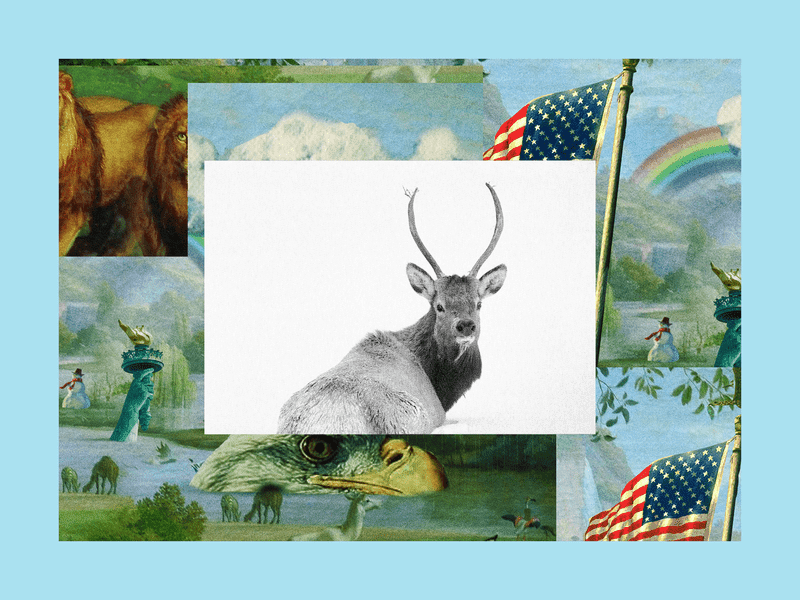
On the Media
OTM Presents - The Experiment: The Loophole
00:34:35
Deep in Yellowstone National Park, there’s a glitch in the U.S. Constitution.
Loading summary
Transcript186 lines
- [00:00]
Bob Garfield
Bob. I'm Bob Garfield and this is the on the Media midweek podcast Extra.
- [00:05]
Julia Longoria
This week we're treating you to a.
- [00:07]
Bob Garfield
Sneak peek of a brand new weekly show from our colleagues at WNYC Studios and the Atlantic.
- [00:13]
Julia Longoria
It's called the Experiment, hosted by Julia.
- [00:17]
Bob Garfield
Longoria, formerly of Radiolab and more perfect. The premiere episode is the Loophole. First voice you'll hear is Trulia's Sam.
- [00:59]
Mike Belderine
Drill Tech. This is Mike.
- [01:01]
Julia Longoria
Hi, Mike. This is Julia Longoria from the Atlantic and wnyc. How you doing?
- [01:06]
Mike Belderine
I'm doing good. How you doing?
- [01:07]
Julia Longoria
Good. We are gonna just kind of jump in. Are you ready to go back in time?
- [01:14]
Mike Belderine
Sure.
- [01:15]
Julia Longoria
Okay, cool.
- [01:16]
Mike Belderine
See what we can do.
- [01:19]
Julia Longoria
Who were you in December of 2005?
- [01:23]
Mike Belderine
I was a real rowdy guy, I guess you could say.
- [01:27]
Julia Longoria
Why do you think you were rowdy at that time?
- [01:29]
Mike Belderine
Because I beat people up.
- [01:32]
Julia Longoria
Fifteen years ago, Mike Beldurrain was a little rough around the edges.
- [01:36]
Mike Belderine
So, you know, if someone was an asshole in a bar, I'd go have a beer by you until you'd say something to me and then it'd be all bad for you.
- [01:42]
Julia Longoria
He was a bit of an asshole. There were a lot of things that pissed him off, but there was one thing that he loved completely.
- [01:51]
Mike Belderine
I mean, I lived to hunt elk. Literally, I lived to hunt elk.
- [01:58]
Julia Longoria
He lived in Montana, not far from Yellowstone national park, where elk are everywhere. And Mike had the hunt down to an art form.
- [02:08]
Mike Belderine
Elk hunting's hard, but if you could call good, you know, I'd guarantee my hunters a shot at 30 yards and closer.
- [02:16]
Julia Longoria
What does that. What does that mean? Sorry, I'm like from Miami, Florida. I live in Brooklyn. Like, I got nothing. So what does that mean?
- [02:23]
Mike Belderine
So you have a cow call. You imitate a cow call and you call them in.
- [02:28]
Julia Longoria
So you. You make the sound of a cow because like, the elk are looking for cows to. With whom to mate? Is that what it is? Okay, cool.
- [02:38]
Mike Belderine
Pretty terrible way to die.
- [02:44]
Julia Longoria
Can you. Can you do it for.
- [02:48]
Mike Belderine
No.
- [02:51]
Julia Longoria
So why, you might ask, are we talking to this self proclaimed asshole about killing elk? It's because of this one particular elk. A star crossed elk that changed the course of Mike Belderine's life and walked him right into a hole in the U.S. constitution. It started one snowy morning in December of 2005. Mike set out on horseback just outside Yellowstone National Park.
- [03:23]
Mike Belderine
Lots of mountains and lots of snow and trees, open country.
- [03:28]
Julia Longoria
Eventually he spotted a group of elk off in the distance. But he set his sights on this one particular elk that was the Biggest.
- [03:37]
Mike Belderine
Bull I'd ever seen. He was a trophy. Trophy bull that I'd been chasing my whole life.
- [03:42]
Julia Longoria
It was his white whale, his trophy bull. How did you feel at that moment?
- [03:48]
Mike Belderine
Adrenaline like you wouldn't believe. Happy and nervous together. Nervous because I knew it was illegal.
- [03:56]
Julia Longoria
Illegal because hunting season was over and he was standing inside Yellowstone national park, where you're not allowed to hunt at all. You knew if you killed the elk, you'd be breaking the law.
- [04:08]
Mike Belderine
I knew that if I got caught, I'd be in tr.
- [04:11]
Julia Longoria
But he took out his rifle anyway and aimed.
- [04:14]
Mike Belderine
I meant to shoot him in the rib cage, behind the shoulder so that he would go into the trees and die. But when I shot and I hit him in the head and he dropped. He fell right where he landed. It was the worst sick feeling I ever had in my life. I was like, oh, no, not good. Not good at all.
- [04:40]
Julia Longoria
Instantly, Mike knew he'd shot an elk while standing inside of Yellowstone National Park.
- [04:48]
Mike Belderine
I was standing in the park by 100ft.
- [04:50]
Julia Longoria
The evidence of his crime, the carcass, was laying out in the open. Anyone could see.
- [04:56]
Mike Belderine
So then it was a race to get him out of there.
- [05:00]
Julia Longoria
Did you take the whole elk into the car?
- [05:03]
Mike Belderine
No, I just took the. What did you say tummy?
- [05:08]
Julia Longoria
I said, tell me.
- [05:10]
Mike Belderine
Oh, no, not tummy. Said tummy. I'm like, yeah, I took the tummy. No, I.
- [05:16]
Julia Longoria
What'd you do with the tummy?
- [05:18]
Mike Belderine
Left it. So at that point, we took the head and the antlers from the elk, detached them, and raced out of there.
- [05:31]
Julia Longoria
Mike knew he'd just committed a crime, a serious federal crime. What he didn't know was that technically, he'd just committed the perfect crime. Because he was standing in one of the only spots in the country where the law shouldn't have been able to touch him. A place inside Yellowstone national park where you could get away with not just hunting elk, but by the letter of the law, you should be able to get away with murder. I'm Julia Longoria, and this is the Experiment, a show about our unfinished country. I've been thinking about holes in the American project after, you know, an armed insurrection took place on our nation's capital. With that and the global pandemic and everything else we've lived together this year, it sort of feels like we've all collectively stepped into this huge pothole that we didn't see coming. And the question now is, how do we fix this? How do we move forward? And how do we repair the weak spots that left us vulnerable? To all this in the first place. Those are huge questions and it's going to take a long time to answer them. So today I'm starting with something small. A tiny problem in a remote place that no one even knew about until one guy.
- [07:21]
Bob Garfield
I'm Brian Calt, uncovered it. I'm a law professor at Michigan State University.
- [07:27]
Julia Longoria
Brian Calt is obsessed with the tiniest details in the law.
- [07:32]
Bob Garfield
I was the sort of kid who if I'm coloring something and I colored a little bit outside the lines, I would have a tantrum and crumple it up and throw it away and start all over again.
- [07:40]
Julia Longoria
He looks for the mistakes, loopholes, weak.
- [07:43]
Bob Garfield
Spots, looking for potential hazards and suggesting ways to patch them up before any steps on him.
- [07:51]
Julia Longoria
Brian Cult has fashioned himself as a sort of constitutional plumber. He peers into the wonky insides of our legal system and tries to spot the holes.
- [08:00]
Bob Garfield
And there's. There's a loophole in presidential term limit. There's some dispute about the line of succession. There would be a tremendous incentive for people to kill the candidates.
- [08:10]
Julia Longoria
In any other year he might sound kind of like a prepper.
- [08:14]
Bob Garfield
Like the article that I wrote on impeaching people who've already left office. I published it in 2001. Maybe you'd use the 25th Amendment if the President is running amok.
- [08:24]
Julia Longoria
But this year, when many of his old predictions made headlines, he sounded a lot like a prophet.
- [08:31]
Bob Garfield
I wondered whether the President could pardon himself.
- [08:34]
Mike Belderine
The New York Times is reporting now that the President has been discussing pardoning himself. What can you tell us?
- [08:41]
Julia Longoria
But the loophole that Bryan is most famous for is the one in Yellowstone national park. The one that elk hunter Mike Belderrain stumbled into.
- [08:51]
Bob Garfield
I discovered a loophole where there's this 50 square mile zone in Idaho where you can commit crimes with impunity, get away with murder.
- [09:05]
Julia Longoria
Bryan found a zone of death, a place where it would be unconstitutional to. To prosecute a murderer because of a tiny mistake that Congress made. It has to do with the sixth Amendment. Number six gave us the right to a local jury. The founders were paranoid about being controlled from far away. So they wanted justice to be hyper local. They said juries are going to be very close to the scene of the crime from the same state and the same federal district. That seems simple. But in Yellowstone, Congress drew a very messy map.
- [09:45]
Bob Garfield
We had Yellowstone national park before we had the state of Wyoming, before we had the state of Idaho, before we had the state of Montana.
- [09:51]
Julia Longoria
When the states were drawn, Congress colored outside the lines. States and federal districts don't line up. All of Yellowstone is one district, the district of Wyoming. But inside that district, there are slivers of two other states, Idaho and Montana.
- [10:09]
Bob Garfield
I don't know. They could have drawn the state boundaries to follow the park boundaries, but then you wouldn't have had this sort of nice, neat Wyoming rectangle. It's really a trapezoid, but we don't need to get into that.
- [10:19]
Julia Longoria
And here's the issue. No one zero people live in the Idaho sliver, and only a few people live in the Montana sliver. Which means that if you commit a crime in one of these places, it would be very hard to find a jury there. No jury means no trial. And the Constitution guarantees a trial by jury. So that means, technically, you can't be prosecuted.
- [10:47]
Bob Garfield
One of the reasons that I went to law school in the first place was this idea that the law mattered and that if you master the law, you have an understanding of the law, that you can make things happen the right way, the way they're supposed to.
- [11:04]
Julia Longoria
This is what really upset Brian. Our Constitution is supposed to matter.
- [11:10]
Mike Belderine
It was as near a perfect document as has ever been written.
- [11:13]
Julia Longoria
But without the Constitution, we would be an entirely different country than we are today.
- [11:18]
Bob Garfield
The Constitution, this amazing fabric of our nation, is our protection.
- [11:30]
Julia Longoria
We spend a lot of time talking about this document, mythologizing it, almost. Lawyers spend careers parsing every word. Dissertations have been written just about the placement of commas in this thing. And then to realize there's a place where a major right in the Constitution just doesn't apply.
- [11:52]
Bob Garfield
I really just. I want them to fix it.
- [12:00]
Julia Longoria
Have you heard of the Sixth Amendment right to a jury of your peers?
- [12:05]
Ed Yong
Uh, I. No, I haven't. I am new to America and your many amendments.
- [12:13]
Julia Longoria
When I found out about this loophole, I called Ed Yong.
- [12:17]
Ed Yong
Yeah, I'm Ed Yong. I'm a staff science writer at the Atlantic, where I've been covering the COVID 19 pandemic for the last 9,500 years.
- [12:27]
Julia Longoria
Ed is a British journalist born in Malaysia. And okay, a British pandemic reporter may seem an unlikely choice for commenting on an American murder loophole. But Ed was one of the first journalists to warn that the US Might not be ready for a pandemic. So what he really reports on is risk our government's ability to prevent unlikely catastrophes. Things that seem like they could never happen. Not here.
- [12:59]
Ed Yong
You assume that the legal system of the greatest country in the world can't possibly have a loophole that allows people to get away with murder. Surely if that actually ever happened, like there would be some way to go. It's fine. We'll get a jury like, loophole, schmoop, hole, it'll be fine. And I think we sort of assumed that with a pandemic. I think that a lot of folks, even the ones who had warned about pandemics, have been surprised at just how badly America has dealt with the crisis this year.
- [13:32]
Julia Longoria
A question for you. I'm just curious what you think. Do you think a loophole like that, that's kind of obscure. Do you think it matters? So.
- [13:48]
Ed Yong
Does it matter? I think one way to look at this would be to think about the potential cost of fixing the loophole. Like how much effort would go into patching it. Right. Cause if it's not a lot, like if it really is just I'm gonna, you know, add another amendment. You all are very fond of your amendments here, and the problem goes away, and it's easy, then I think you could reasonably ask, like, why not do that?
- [14:20]
Julia Longoria
Why not indeed?
- [14:24]
Bob Garfield
The solution is very simple.
- [14:26]
Julia Longoria
Brian Kalt had what he thought was a very easy solution to the zone of death loophole.
- [14:32]
Bob Garfield
Dear Representative Blank, first he did what.
- [14:35]
Julia Longoria
We'Re all taught to do in school. He wrote to government officials to ask them to solve this problem.
- [14:40]
Bob Garfield
I wrote a letter to the Department of Justice.
- [14:42]
Julia Longoria
He wrote letter after letter.
- [14:44]
Bob Garfield
U.S. attorney's office in Wyoming, staff of the relevant subcommittees in the House and.
- [14:49]
Julia Longoria
Senate, they just had to pass a law to redraw the district lines.
- [14:52]
Bob Garfield
They should see this as a no brainer. They'll say, oh yeah, that's funny. Yeah, let's take care of that right away.
- [14:59]
Julia Longoria
And as he waited for responses to these letters. This is a map of Yellowstone National Park. For the most part, a funny thing happened.
- [15:07]
Bob Garfield
Brian Caul says there is a hole in the sixth Amendment big enough to run a crime spree through.
- [15:13]
Julia Longoria
It's part of Yellowstone. It's not how to get away with murder. It's where it's called the zone of death because of a loophole. Brian published an article in a legal journal about this and it got a lot of attention.
- [15:25]
Bob Garfield
I don't want to say it went viral because, I mean, it was a constitutional law article. They don't go viral.
- [15:30]
Julia Longoria
It was maybe the only time that a law journal article made it into the National Enquirer. Have you ever heard of the Yellowstone zone of death? There have even been viral tweets and tiktoks. Cause I know that you're the one who killed my dog with little skits about the zone of death.
- [15:48]
Mike Belderine
Zone of death.
- [15:50]
Julia Longoria
Even with all of that attention, Brian could not get a single elected representative to talk to him directly about this problem.
- [15:59]
Bob Garfield
Do you expect, or have you already been contacted by the screenwriter of Ocean's 27 or 20 or Law & Order, about to craft some plot that's based in the Idaho portion of Yellowstone Park? I suppose that plots of legal thrillers have turned on odder oddities than that. I haven't been contacted by anyone, and I hope I'm not.
- [16:22]
Julia Longoria
But a year after Brian's article came out, someone did contact him. Someone who'd read Brian's paper and urgently wanted to talk to him about the loophole.
- [16:32]
Bob Garfield
As soon as I read it, I knew this is my way into Yellowstone park to tell that story. And now Free Fire by C.J. box I'm C.J. box. I've written 27 novels.
- [16:51]
Julia Longoria
Wyoming's best selling novelist, C.J. box is the kind of prolific writer whose paperbacks you can buy at the airport. He sold over 10 million books worldwide and they've been translated into 30 languages and of course made into an audiobook.
- [17:08]
Bob Garfield
Part 1 A half hour after Clay McCann turned over his still warm weapons. You know, the book opens with the guy slaughtering some campers and then turning himself into the ranger station, knowing that if they try to prosecute him, he's likely not to be convicted.
- [17:28]
Julia Longoria
Do you want to call a lawyer? McCann said.
- [17:32]
Bob Garfield
You don't understand. I am a lawyer. Because he knows about this loophole. Because he's a lawyer.
- [17:39]
Julia Longoria
A lawyer. Kind of like Brian Cult. I asked Brian what he thought about the resemblance.
- [17:45]
Bob Garfield
If he had made instead of a small town lawyer, had made it a pointy headed sociopathic law professor as the protagonist. That might have. That might have hit too close to home. I don't consider myself a sociopath. Denny smiled as if sharing a joke.
- [18:09]
Julia Longoria
The whole plot is like Brian Cult's worst nightmare.
- [18:12]
Bob Garfield
The puzzle in the book is why did this lawyer, local lawyer, shoot all these campers and kill them? We'll just never fucking know.
- [18:21]
Julia Longoria
I'm afraid the plot gets very existential. There's no point, keaton said, because we're.
- [18:27]
Bob Garfield
All going to die. I don't know where we're going, but it seems like we're headed somewhere. Story of my life, joe said.
- [18:36]
Julia Longoria
Spoiler alert. Ultimately we learn the lawyer murderer was part of this big corporate conspiracy and a government cover up. He never pays for his crimes in court, but he does burn to death in a hot spring. The story is pretty dark, but that didn't stop it from having a wide appeal.
- [18:57]
Bob Garfield
Free Fire got onto the New York Times extended Bestseller list. Then all of a sudden, I got responses.
- [19:08]
Julia Longoria
One of the readers of C.J. box's book was a senator, Senator Mike Enzi from Wyoming.
- [19:16]
Bob Garfield
Well, reading is such an exciting thing. I read about 100 books a year. This one's Free Fire, which is about Yellowstone Park.
- [19:24]
Julia Longoria
What you're hearing is a recording of Enzi on a C Span show called Book TV.
- [19:30]
Bob Garfield
C.J. box writes some phenomenal stuff about Wyoming. I get advance copies of his book. Usually he actually would write little reports to me on each book. And I've done a book report on every one of them since I got out of graduate school. Like a book report. In high school, there was a zone in Wyoming, while in Yellowstone park that was actually considered to be part of Idaho, but nobody lived there, so there would be no jury of your peers. This book is about this issue and, you know, da, da, da, da. And this is what happens. And I enjoyed it. And consequently, maybe you could commit murder there. And so he asked me to make sure that wouldn't be a possibility before the book came out and encouraged me.
- [20:10]
Julia Longoria
And for a little while, it seemed like government was working the way Brian thought it should. The representative for this area was aware of the problem. Brian had presented the solution, and the Senator set out to fix it.
- [20:22]
Bob Garfield
So November 2006, I had the contact with Senator Enzi's office, and over the.
- [20:29]
Julia Longoria
Course of the next several months, and.
- [20:30]
Bob Garfield
Then In January of 2007, I followed up.
- [20:33]
Julia Longoria
Brian had back and forth with Senator Enzi's office. That seemed promising. Enzi reached out to the Department of Justice to solve the issue.
- [20:41]
Bob Garfield
In February of 2007, Enzi sent a letter to Attorney General Alberto Gonzalez asking him to look into this matter.
- [20:49]
Julia Longoria
But in the end, and then In.
- [20:50]
Bob Garfield
May of 2007, Enzi sent the letter explaining why the department wasn't going to be doing anything about it.
- [21:00]
Julia Longoria
And could you read a little bit from that letter?
- [21:03]
Mike Belderine
Sure.
- [21:04]
Bob Garfield
I have spoken with individuals at the Department of Justice and other members of the law enforcement community. They have assured me that should a crime be committed in the zone of death, they would move forward with prosecution and have suggested that the courts would allow the prosecutors to move forward. At this point in time, we will hope the problem is a hypothetical and it remains as such. However, I continue to take this matter seriously and I will be evaluating the available solutions to determine what is practical and what is possible.
- [21:35]
Julia Longoria
Did you ever hear back about what is practical and what is possible?
- [21:40]
Bob Garfield
Well, it looked like not doing anything was the only thing that proved practical.
- [21:56]
Julia Longoria
I reached out to Senator Enzi to ask him why he didn't end up closing this loophole. I got in touch last December right before he retired from his 24 years in the Senate, and he declined to be interviewed through a press secretary. I tried again in the new Year and the only response I heard back was actually through C.J. box, who told me he's not doing any post retirement interviews.
- [22:19]
Bob Garfield
I recognize that Congress has many more pressing matters, less hypothetical actual problems to deal with. Not that they're doing anything about those things either. But in a typical Congress, what gets passed is renaming post offices is approved, they find the time to rename post offices. This is not the most important thing in the world, it's not even close. But they have a system in place where if there's a good reason to rename a post office, then it happens. If they can do that, they can do this. Senate 4684, an act to designate the.
- [23:02]
Julia Longoria
Very last bill that Senator Enzi introduced in the Senate, by the way, it renamed a post office street in Thermopolis.
- [23:09]
Bob Garfield
Wyoming as the Robert L. Brown Post Office.
- [23:13]
Ed Yong
Is there objection to the consideration of the film?
- [23:18]
Julia Longoria
So after years of trying to get this loophole fixed, even after it became a viral sensation, a hit crime novel, an item on Senator Enz's agenda, Brian hit a brick wall. It was a hypothetical problem. Congress was not going to fix something that was so unlikely to happen until it did happen, sorta when there arose.
- [23:48]
Bob Garfield
An actual case when I shot and.
- [23:51]
Mike Belderine
I hit him in the head and he dropped, it was the worst sick feeling I ever had in my life. I was like, oh no, not good.
- [23:58]
Bob Garfield
I saw what that would look like.
- [24:00]
Julia Longoria
Here, the elk hunter after the break. The election has come and gone. Now we're in a new era. It can be easy to get discouraged, frustrated, but you can't afford not to pay attention. You need trustworthy, independent journalism to cut through the noise and hold power to account. I'm Mary Harris, host of What Next from Slate.com, we are a daily news podcast with a kind of transparent, smart, yet tongue in cheek analysis you can only find at Slate. Follow and listen to what Next wherever you get your podcasts. When we last left Mike Belderine, he'd poached an elk while standing inside Yellowstone, chopped off the head and left the carcass out in broad daylight.
- [25:03]
Mike Belderine
That was the biggest bull killed in Montana that year.
- [25:06]
Julia Longoria
He felt bad about it. But not that bad about it. This was the biggest kill of his career. It was his trophy bull. So he took the head to a taxidermist, got it stuffed and mounted it for everyone to see.
- [25:20]
Mike Belderine
Well, that's why I was killing him.
- [25:22]
Julia Longoria
It wasn't until a full year later that Mike was arrested and we got our first and only test of the perfect crime theory.
- [25:31]
Mike Belderine
My shooting that elk had nothing to do with that perfect crime area.
- [25:35]
Julia Longoria
Of course, Mike had never heard of Brian Cult or the Zone of Death. And even if he had, that bull.
- [25:43]
Mike Belderine
Could have been standing deep inside the park ride to pay an entry fee to get into it. I still would have killed that elk.
- [25:48]
Julia Longoria
But his lawyers tried the argument anyway. They said if Mike Beldurrain's case were to go to trial, the court, court would have a very hard time finding a jury that lived inside the little sliver of Montana, inside Yellowstone where he killed the elk. They would almost certainly violate Mike Belderrain's constitutional right to a local jury.
- [26:09]
Bob Garfield
And the judge basically said, well, that's an interesting but esoteric argument, but I can't just let him go just because the Constitution says so. And so he didn't.
- [26:22]
Julia Longoria
His lawyer tried some other tactics, made.
- [26:24]
Mike Belderine
It sound like I was a frickin hero. He brought up how I had a full ride basketball scholarship, did all these great things and donated to here, donated to there. I wanted to smack him. I was like, oh my God, sit down.
- [26:39]
Julia Longoria
Wait, you weren't mad at the lawyer for making you sound like a hero?
- [26:42]
Mike Belderine
Yeah, I was like, dude, God almighty, are you crazy? Sit down. Fact of the matter, I was there for shooting a freaking elk and I left the carcass. So I still felt like shit about it.
- [26:54]
Julia Longoria
For Mike, this was not about the constitution, it was about the principle of the thing. In a weird way, I mean, did.
- [27:02]
Mike Belderine
I deserve to get in trouble? Absolutely. I mean, what I did was the dumbest thing ever. You'll never hear me say what I did was right. No lawyer to got me out of it, nor should he have. Anyone that knows me knows I fucked up, excuse my language, knows I did wrong. I felt like shit. If someone else would have did what I did, I'd have beat him up, let's put it that way.
- [27:22]
Julia Longoria
So Mike Beldurrain took a plea. He pled guilty. And instead of the seven years he might have faced if he went to trial, he took four years.
- [27:32]
Mike Belderine
Like I said, I definitely deserve to get in trouble. But four years? No, felt like shit, you know what I mean?
- [27:40]
Julia Longoria
Had five kids and in his plea, he agreed to a condition that he would never appeal his case based on the zone of death.
- [27:51]
Bob Garfield
The fact that they put him in prison in a way that left the loophole as open as it had been, if not wider. That was the part about it that was hardest for me to swallow. Maybe it's from when I was a kid watching Schoolhouse Rock that the image of the lawmaking process that I grew up with was, I'm just a bill. Yes, I'm only a bill. And I'm sitting here on Capitol Hill, and he says, when I started, I was just an idea. Some folks back home called their local congressman and he said, you're right, there ought to be a law. And he sat down and he wrote me out, and he introduced me to Congress, and I became a bill. That's my image of it, I guess. And every step in this process was telling me that that was just not so.
- [28:42]
Ed Yong
So with the Brian Colt case, did anything change after the elk incident?
- [28:47]
Julia Longoria
No. No, nothing changed. Atlantic staff writer Ed Yong. Again. Ed has spent a lot of the last year wondering why the government was not better prepared for the pandemic, why the warnings and advice of many experts were ignored, why such a powerful country didn't live up to its image.
- [29:09]
Ed Yong
Okay, so this is the thing that concerns me now. I worry about our capacity to learn from our past mistakes. Now, obviously, like, a pandemic is not the same as this murder loophole, because in the worst case scenario, you would expect, like, maybe a few people to fall foul of the problem that Brian Colt identified. Whereas in a pandemic, almost by definition, it's a whole world that's at risk. But all of this does hinge on our ability to look at a rare but potentially catastrophic outcome and take the steps that are necessary to ward against it. And it's interesting, I think, that even though we have seen what happens when we don't prepare for that, I don't know if we are capable of mustering the collective consciousness and the political will to actually address those problems.
- [30:03]
Julia Longoria
Why do you think we have trouble fixing things as a country that aren't currently on fire?
- [30:11]
Ed Yong
I think there's a lot of different reasons to pick one that I think is relevant to the loophole story that you told me. I think America's possessed of this extreme sense of exceptionalism, and the country is famous for it, for thinking itself the greatest nation in the world. And I think if you truly internalize that message, then a lot of things flow from it. You know, it takes work and effort to be Exceptional. And if you think that you're already there, then you're probably not gonna put that effort in.
- [30:47]
Julia Longoria
Yeah. I wonder if sometimes on our good days that idealism or exceptionalism would push the country, push individuals to try to keep making the ideal true. On our good days.
- [31:03]
Ed Yong
I don't, you know, I don't know that that's true.
- [31:06]
Julia Longoria
Really?
- [31:07]
Ed Yong
Yeah, I really don't. I think that if you tell people that they are exceptional for a very long period of time, you breed complacency. You don't foster innovation. I mean, honestly, like, why try if you already believe yourselves to be great? And I worry because I think we still have a lot to do. And in some ways the vaccines that we have now and that are being rolled out, I think are more likely to tip us towards forgetfulness. If anything comes from this year, I hope that it's this understanding that there's a lot left to fix.
- [31:59]
Julia Longoria
Mike Belderine's four years in prison were rough.
- [32:02]
Mike Belderine
The guards, the people there, no one could believe I was in prison for shooting a frickin elk. It was a bad deal. It wasn't even a bad deal for me. It was a bad deal for my family. They're the ones that hurt the worst.
- [32:14]
Julia Longoria
But he's out now. He's back with his family. And at least for him personally, he says he dropped some of the pride, some of the ego that made him think that he could get away with a crime like that. He knew he messed up and he put in the work to try to fix it.
- [32:29]
Mike Belderine
Well, I mean, I did, you know, I was rowdy back in the days. I did a lot of stupid shit, you know, and never got in trouble. I don't know, just greed. Greed and fame and all that bullshit got to me. I still am a family guy. Still got horses. I still hunt. I hunt more now than I did then. I just don't, you know, I don't break no laws. My kids don't break no laws.
- [32:54]
Julia Longoria
Do you think you shed your, like, rough ways of.
- [32:59]
Mike Belderine
No, I'm still. I'm still an asshole, but I don't drink. You know what I mean? I went to aa. I did all that. And it made me a better person. I don't know how to say it. I'm really. I take pride in my work. I take pride in my crew. I love my job, I love my family.
- [33:17]
Julia Longoria
And how do you make sense of everything that happened to you now?
- [33:22]
Mike Belderine
Everything happens for a reason.
- [33:26]
Julia Longoria
What reason then did this happen for?
- [33:30]
Mike Belderine
I don't know. No idea.
- [33:48]
Julia Longoria
This episode of the Experiment was produced by Julia Longoria and Alvin Melith, with editing by Katherine Wells and sound design by David Herman. Our team also includes Matt Collette, Tracy Hunt, Natalia Ramirez, and me, Gabrielle Burbet. Music by Tasty Morsels. Special thanks to Jennifer Jarrett and Montana State University Library's Acoustic Atlas and the Yellowstone National Park Sound Library. The Experiment is a co production of the Atlantic and WNYC Studios. You've been listening to the first episode.
- [34:32]
Bob Garfield
Of the Experiment, a new weekly show from WNYC Studios and the Atlantic.
- [34:36]
Julia Longoria
You can find the show by searching.
- [34:38]
Bob Garfield
For the Experiment in your podcast app. Tune into on the Media this weekend for the big show, which dissects the.
- [34:47]
Julia Longoria
Pros and cons of deplatforming Fox News.
- [34:52]
Bob Garfield
Meantime, please subscribe to our newsletter@onthemedia.org Newsletter because it's good for us and it is really good for you. I'm Bob Garfield.