← On the Media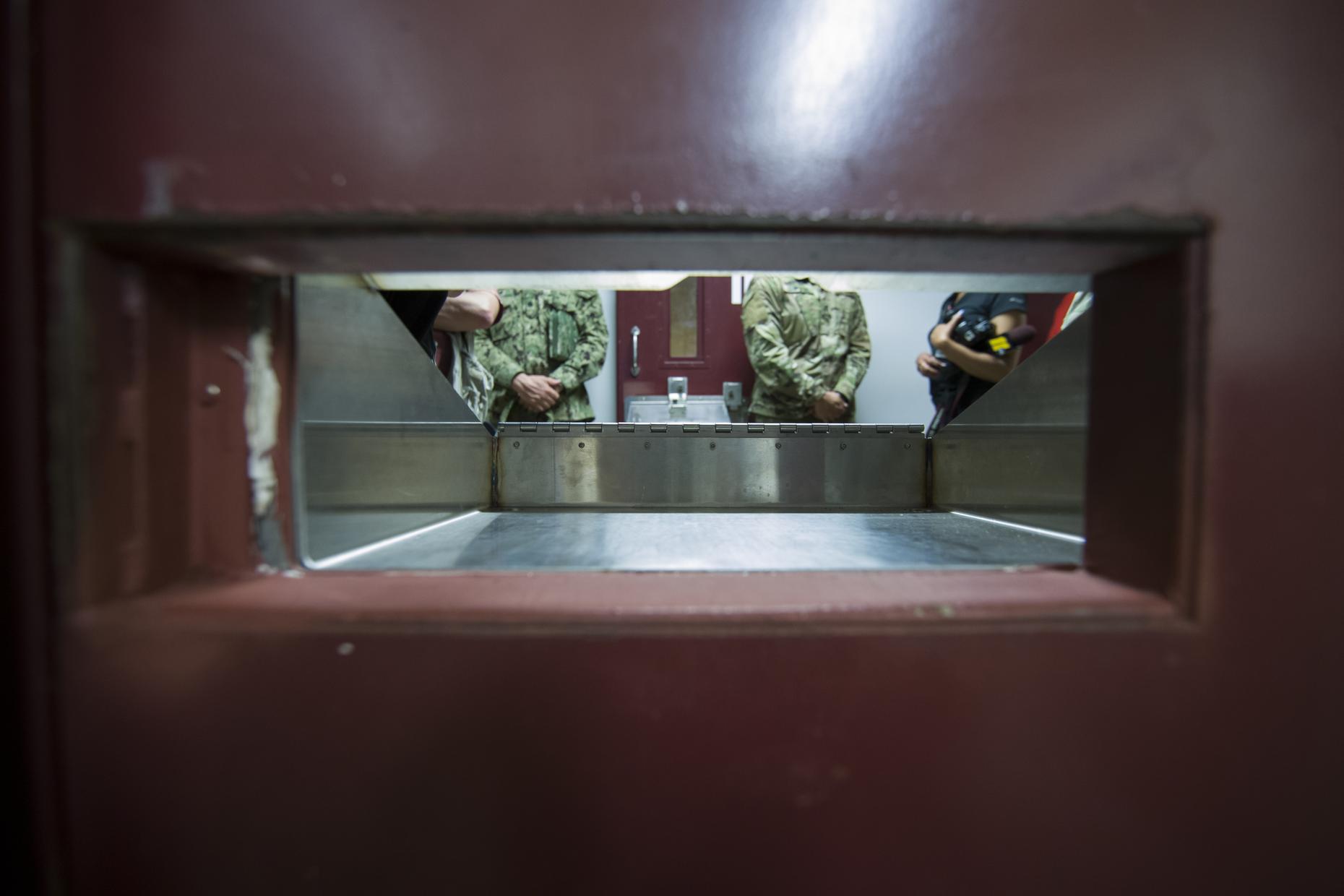
On the Media
Out of Sight
00:52:00
Health vs. social media; covering Guantanamo Bay (and its books); and the lagging ethics of documentaries.
Loading summary
Transcript180 lines
- [00:00]
Katya Rogers
Hi, guys. It's Katya, OTM's executive producer. Before we get started today, I need to talk to you. Maybe this is the first on the media podcast you've heard, but probably not. I'm guessing you've actually been listening for a while. Either way, I want to make sure that you know that listener support donations from the folks who listen to this podcast, that's you. That's how we fund the show. Contributions from listeners are what helps us pay our producers, our bandwidth costs, our recording equipment, everything. If you've never given it just takes a minute, I promise. Go to onthemedia.org and hit support or text the letters OTM to 70101. Any amount helps, and particularly those sustaining gifts giving support every month, 10, 12, 20 bucks a month. It helps me plan to know that I've got enough funds to keep this show coming to your ears for months and even years to come. And here's the good bit to sweeten this deal. We have a very special invitation for all you sustaining supporters on the Media Trivia Night. All the on the Media Sustaining members will be invited to a night of fun on Zoom with Brooke and the rest of the team. And we will play along with you for a night of trivia. There will be prizes. Okay, now, on with the show.
- [01:30]
Ira Plato
We're here today because Facebook has shown us once again that it is incapable of holding itself accountable.
- [01:38]
Sasha Pfeiffer
Anonymous whistleblowers, congressional hearings, damning revelations, and it's not over yet. From WNYC in New York, this is on the Media. Also on this week's show, the world's other favorite platform is getting out ahead of the bad news today.
- [01:53]
Jess Braven
YouTube said it was banning all anti.
- [01:55]
Ira Plato
Vaccine misinformation from its platform.
- [01:58]
Sasha Pfeiffer
But don't count on that to be the silver bullet.
- [02:00]
Brandi Zadrozny
Childhood vaccine misinformers have been so used to evading content moderation and finding new creative ways to get the messaging out, I think they'll do that again. I don't think they're gonna, you know, pack up their bags and say, well, we had a good run.
- [02:14]
Sasha Pfeiffer
Plus, journalists wrestle with how to cover Guantanamo.
- [02:17]
Ira Plato
Well, my coverage of Guantanamo slowed down because things stopped happening. I mean, the word news itself suggests that you're talking about something new.
- [02:25]
Sasha Pfeiffer
It's all coming up after this.
- [02:30]
Ben Smith
I'm Ben Smith.
- [02:31]
Max Tawney
I'm Max Tawny.
- [02:32]
Ben Smith
And we host Mixed Signals from Semaphore Media.
- [02:34]
Max Tawney
The future of media feels like a moving target. So every Friday, we pull back the curtain on the platforms, ideas and people that are shaping the new media landscape.
- [02:44]
Ben Smith
We'll tell you what really matters and try to figure out what's coming next.
- [02:47]
Max Tawney
Plus, we go behind the scenes with the most important players in media right now.
- [02:51]
Ben Smith
Whether you are yourself a media insider.
- [02:53]
Max Tawney
Or just simply curious about who or what will be all over your feed next.
- [02:57]
Ben Smith
Mixed signals from Semaphore Media is the perfect addition to your media diet. Listen wherever you get your podcasts.
- [03:05]
Sasha Pfeiffer
From WNYC in New York, this is ON THE media. I'm Sacha Pfeiffer sitting in for Brooke Gladstone. This week, it was deja vu all over again.
- [03:15]
Ira Plato
We're here today because Facebook has shown us once again that that it is incapable of holding itself accountable.
- [03:22]
Sasha Pfeiffer
This is Senator Richard Blumenthal speaking at a Senate hearing Thursday titled Protecting Kids Online, which he organized with help from an anonymous source.
- [03:32]
Ira Plato
This month, a whistleblower approached my office to provide information about Facebook and Instagram. We now have deep insight into Facebook's relentless campaign to recruit and exploit young users.
- [03:50]
Sasha Pfeiffer
The same whistleblower who met with Senator Blumenthal plans to go public later this year. That whistleblower helped trigger weeks of media scrutiny after leaking internal research that became the basis for a series of explosive stories in the Wall Street Journal.
- [04:04]
Ira Plato
The series, called the Facebook Files, is based on the Journal's review of internal company documents. We make body image issues worse for one in three teen girls is a conclusion that they drew intern and present it to management.
- [04:17]
Sasha Pfeiffer
Facebook is now hitting the brakes on an Instagram for kids as concerns grow over privacy and Instagram's effect on mental health. If any other company put a product.
- [04:28]
Patricia Aufterheide
Out there and tested it on the.
- [04:30]
Katya Rogers
Market and saw that it then hurt people and then made like, what are we, a bunch of guinea pigs?
- [04:38]
Sasha Pfeiffer
The more journalism about Facebook, the better. But we don't need secretive sources to tell us the company has done great harm, people. There's been plenty out in the open, like the countless Facebook groups that have sprung up to stoke conspiracies about the pandemic. Groups that have begun to shapeshift to reach new audiences and evade the site's ban on anti vax organizing. Ben Collins of NBC News, they changed the name of the vaccine to Dance or Hokey Pokey or Beer to make.
- [05:06]
Brandi Zadrozny
Sure that Facebook's moderation bots don't detect.
- [05:09]
Ira Plato
Them talking about vaccines.
- [05:10]
Sasha Pfeiffer
In February, after years of pressure, Facebook announced it would try to put the kibosh on all anti vax content, not just Covid misinformation. Now, nearly six months later, America's favorite video site is finally following suit.
- [05:25]
Brandi Zadrozny
YouTube already had a ban in place for COVID vaccine misinformation, and they've had that in place about as long as we've had Covid vaccines.
- [05:33]
Sasha Pfeiffer
Brandi Zadrozny, NBC reporter and former on the Media guest host, reported on the story this week.
- [05:39]
Brandi Zadrozny
But this ban expanded that scope. And so what they said was they were gonna ban from the platform all vaccine misinformation. So you think the OG vaccine misinformation, which is that vaccines cause autism, childhood vaccines cause cancer, none of it is welcome on the platform.
- [05:59]
Sasha Pfeiffer
And what's interesting is that it seems that the anti vaxxers saw Covid vaccines as an opportunity to amplify their larger message about vaccines in general, 100%.
- [06:09]
Brandi Zadrozny
So we started tracking the normal childhood vaccine misinformers, the anti vaxxers, right when Covid hit like March 2020, when most people were just like, what is Covid? Should I stay home? What am I going to do about work when people are talking about whether they should wipe down their groceries? The hardcore anti vaxxers saw this as a huge opportunity and they were rallying their base. They were gathering again in conferences and discussing how they were going to utilize Covid as an opportunity to expand their messaging to people who hadn't necessarily thought about childhood vaccinations and weren't their usual audience. And they were going to use the fear and uncertainty around Covid and around the coming vaccine to engender fear of all childhood vaccinations. You know, we want to clamp down on them and the platforms say now we're taking a stand. Well, I mean, you have to take stock of what you've grown.
- [07:06]
Sasha Pfeiffer
You recently posed a question on Twitter that I want to pose to you, which is, does this latest move by YouTube to ban these sites actually stand a chance of minimizing the influence of anti vaxxers who you described as, and here's your quote, a savvy, financially motivated, opportunistic bunch.
- [07:24]
Brandi Zadrozny
Yeah, they're really, really good at this. They're just so good at social media. And so I think the hardcore anti vaxxers who've made money off this movement, they're not going away. I mean, I subscribe to all their newsletters and so they're going to smaller outlets like Telegram and Rumble. And so they're still going to exist. The question is, how do they get their messaging out to the people who actually power the movement? You know, the moms, the wellness influencers, the so called patriots, the health freedom people. And I think what we're going to find, because they have been so used to evading bans, evading content moderation and finding new creative ways to get the messaging out. I think they'll do that again. I don't think they're going to, you know, pack up their bags and say, well, we had a good run.
- [08:12]
Sasha Pfeiffer
A Washington Post story about this YouTube ban quoted a UC Berkeley professor and misinformation researcher who said, you create this breeding ground and when you deplatform it, it doesn't go away, they just migrate.
- [08:24]
Brandi Zadrozny
Oh, they absolutely do. I mean, this is a cross platform problem. And so the answer, it seems, would be for all of the platforms to get together and talk about how they combat a cross platform problem. That's absolutely not happening. I do know that the platforms are thinking about that, so they're being sort of thoughtful. Facebook, for instance, is thinking about what kind of links get often shared. So if it's rumble links or these bitchute links or other smaller platforms, links that often share this misinformation, well then they are working on policies to quiet that noise and maybe show that less prominently in a feed. It's such a huge problem. I can't imagine a fix at all.
- [09:14]
Sasha Pfeiffer
That's kind of depressing.
- [09:15]
Brandi Zadrozny
Oh, it's the most depressing beat in the world. I mean it truly. I'm looking forward now thinking about what's gonna happen in the next month when we have the approval of COVID 19 vaccines for children.
- [09:29]
Sasha Pfeiffer
Yes. We're potentially just weeks away from the COVID vaccine being approved for young children. How are you expecting the anti vaxx movement to react to that?
- [09:37]
Brandi Zadrozny
I don't like to predict the future, but I feel really comfortable doing that here. Only because we've seen this playbook play out over a decade, actually since the 70s. And here's what it is. We're going to see a lot of very scary videos of children. The children will be shaking or the children will be in some way sick. And it will convince a lot of people not to give the COVID 19 vaccine to their children. Not because these videos are real or because they're true, but because it's so visceral seeing videos like this that you don't want to take the chance as a parent. You look at this and it's like, well, I don't want to do that. They're very convincing. And more than that, it's very hard to moderate these kind of videos because how do I fact check a video of a shaking baby and a mother saying it's because of The COVID vaccine. I don't even know what to do tell a platform to do about that. They say that they will moderate firsthand accounts like that, but it just seems very difficult to me. And with all of the people now invested in this sort of thing, one researcher described it as terrifying, and I think I absolutely share that point of view.
- [10:54]
Sasha Pfeiffer
Related to the influence that these social media platforms have. The Wall Street Journal recently published a series of articles called the Facebook Files. The overall revelation was that Facebook is quite aware of the harmful effects of its. Give us a brief overview of what those articles found.
- [11:10]
Brandi Zadrozny
So a lot of the Wall Street Journal reporting wasn't actually new or not totally new. Parts and pieces had been reported by different outlets over the past several years. But this was a really timely and dramatic packaging of all of the harms from Facebook and it was really bolstered by these internal documents and they were provided by a whistleblower. And what this did, as you said, was really, I think, cement for a big audience that Facebook causes a lot of harms. Facebook knows about those harms. And because it's a trillion dollar business, in a lot of cases it chooses not to address any of them when a response might interfere with its super priority, which has always been its number one priority. And that's growth.
- [11:52]
Sasha Pfeiffer
It's quite unflattering reporting. How is Facebook responding?
- [11:56]
Brandi Zadrozny
Oh my gosh, they are blowing up. It's been quite a week for Facebook comms, to be honest. You have communications managers fighting with journalists in the Twitter replies. In one instance, Facebook released a portion of the presentation that the Wall Street Journal was about to release to try to get in front of the story and it had annotated it itself. You can really tell by Facebook's response to all of this that it really hit a nerve. And by their response, you can tell that Facebook does seem like they are rallying the troops inside, at least in the executive suite. And it's definitely a wartime mentality.
- [12:39]
Sasha Pfeiffer
But Facebook is used to critical media coverage. Why do you think this really riled them up?
- [12:43]
Brandi Zadrozny
It's been a bad couple of weeks. You had the Wall Street Journal Facebook files and then you had another hearing where several really smart researchers who've been trying to do work on Facebook got in front of a committee and said that Facebook cut off their research and doesn't allow researchers to look at data. Basically call them dangerous for democracy. And that's coming on the tail end of all of this news about how they disrupted their crowdtangle team, which is the team that allowed journalists to take a look under the hood and researchers to take a look under the hood to get data. They do take a lot of hits, but this month has been particularly hit after hit after hitting.
- [13:23]
Sasha Pfeiffer
Brandi so much of how these companies operate is secret, their algorithms and so forth. Yet we, as we talked about Facebook, knew that its product was causing harm. So naturally, the public might want to know more about how they make decisions. What do they know about the harm of their products? But can we really expect companies to give away their private information, their proprietary data? What's the argument, that they should give it up?
- [13:45]
Brandi Zadrozny
I don't expect them to give it up because they are a private trillion dollar company. But, you know, this isn't a secret spaghetti sauce. This is a huge communication platform that controls what we see, what we buy, how we feel about ourselves, how we feel about each other, our democracy, and on and on and on. So the idea that they can operate totally outside of the public interest in a way that affects us and we can be okay with that. I just don't think that we should rely on them for research. You know, we don't rely on tobacco companies to give us research about how their products affect all of us. We know that now because we had external government agencies investigating it. And I think that that's the moment that we're seeing right now.
- [14:37]
Sasha Pfeiffer
Brandy, thanks so much for talking about this with us and for this reporting you do on this important subject.
- [14:42]
Brandi Zadrozny
Thank you. I appreciate it.
- [14:44]
Sasha Pfeiffer
Brandi Zadrozny is a senior reporter for NBC News covering misinformation, extremism, and the Internet. Coming up, wrestling with how to cover Guantanamo. This is on the media.
- [15:02]
Ben Smith
I'm Ben Smith.
- [15:03]
Max Tawney
I'm Max Tawney and we host Mixed.
- [15:05]
Ben Smith
Signals from Semaphore Media.
- [15:07]
Max Tawney
The future of media feels like a moving target. So every Friday, we pull back the curtain on the platforms, ideas, ideas and people that are shaping the new media landscape.
- [15:16]
Ben Smith
We'll tell you what really matters and try to figure out what's coming next.
- [15:19]
Max Tawney
Plus, we go behind the scenes with the most important players in media right now.
- [15:23]
Ben Smith
Whether you are yourself a media insider.
- [15:26]
Max Tawney
Or just simply curious about who or what will be all over your feed.
- [15:29]
Ben Smith
Next, Mixed signals from Semaphore Media is the perfect addition to your media diet. Listen wherever you get your podcasts.
- [15:38]
Sasha Pfeiffer
This is on the media. I'm Sascha Pfeiffer sitting in for Brooke Gladstone. September marked 20 years since 9 11, and the anniversary was commemorated by remembrances, television specials and retrospectives. But amid all the coverage, one legacy of that day went largely unmentioned.
- [15:57]
Michel Paradis
It barely merits international headlines these days.
- [16:00]
Katya Rogers
But America's Guantanamo Bay prison is still.
- [16:03]
Jess Braven
Operational.
- [16:06]
Sasha Pfeiffer
Still operational even though it's been two decades since the attacks and there's still no trial date for the accused. Today, pretrial hearings resumed against the alleged 911 mastermind.
- [16:18]
Jess Braven
Khalid Sheikh Mohammed joined four co defendants.
- [16:21]
Sasha Pfeiffer
In the pre trial hearings for the.
- [16:23]
Jess Braven
First time since the proceedings were suspended.
- [16:25]
Sasha Pfeiffer
In February of 2020. Khalid Sheikh Mohammed and his four co defendants are examples of the inconsistencies of Guantanamo. Sometimes they're headline news, sometimes we barely hear about them. For years, since January 2002, Guantanamo Gitmo has been both fiercely scrutinized and essentially ignored by the government and the public.
- [16:47]
Ira Plato
Well, my courage of Guantanamo slowed down because things stopped happening. I mean, the word news itself suggests that you're talking about something new.
- [16:55]
Sasha Pfeiffer
Jess Braven is the Wall Street Journal's Supreme Court reporter and he keeps tabs on Guantanamo, which he first covered in 2002.
- [17:02]
Ira Plato
When you have this kind of Groundhog Day situation where it's always the same, there is no movement about the overall future of the facility. There's no legal movement about the progress of these cases. If those things are not happening, then there's really nothing to say. Just sort of, you know, the sun rose yesterday.
- [17:21]
Sasha Pfeiffer
I also cover Guantanamo. I've made three trips there and I debated whether I should go back for the 20th anniversary of 9 11. But when I weighed what I thought I'd learn there with the cumbersome process of getting to Gitmo and everything that entails, government charter flights from Air Force bases, bus trips, ferry rides, the Defense Department permissions required, the COVID precautions. I decided it wasn't worth it. And I believe I made the right decision because little to nothing newsworthy ended up happening at those hearings. I'm not the only reporter making those calculations because Gitmo is not a typical newsbeat. There's a political story, there's a legal story, there's a prison with some prisoners awaiting trial and others being held for years without being charged. But Guantanamo's legal cases are difficult to cover because years have passed with barely any progress being made. And that can make for a monotonous copy or no copy.
- [18:17]
Ira Plato
Incremental reporting is important. And in a trial that has a clear idea of when the beginning and the end date is, you can do it. I mean, one of the trials going on these days is that of Elizabeth Holmes, the Theranos executive. People following it every day. What's the latest development here? Though when the increments are so tiny and their significance is so unclear, it becomes almost an impossible task to justify someone spending time reading about it, or in our case, writing about it.
- [18:47]
Sasha Pfeiffer
Then there's the problem of the war on terror being two decades old, a war we now know was plagued by poor planning, bad intelligence, and state sanctioned torture. For a while, that made front page news and congressional uproar. Not anymore.
- [19:02]
Ira Plato
I think from the perspective of policymakers in Washington, everyone moved on. There was not much interest in the war in Afghanistan, as we know, until its rather dysfunctional end. And there was even less interest in this backwater residue of the Afghan conflict where a handful of prisoners were still detained. President Biden's on record as wanting to see this closed, but it's not a top priority for him. He has his hands full with various domestic issues and foreign issues. It's an even lower priority for the Congress, which has actually stood in the way of Presidents closing Guantanamo if they wanted to. Congress, when it had a Democratic majority enacted obstacles to President Obama closing Guantanamo Bay, the Republican majority had no interest in closing it when it was in charge. So it's just there. I mean, you can think of it as sort of like an orphaned enterprise.
- [19:56]
Sasha Pfeiffer
One reason the military court's legal agenda is so stagnant is that GTMO was given a completely different set of rules to run by. And as Jess Braven explains, that meant nothing would be simple.
- [20:07]
Ira Plato
It turns out that it is very difficult to create a court system and a legal system from scratch, because the one that the United States already has, the one that evolved out of the British colonial system into the current federal and state systems we have now, it has spent two centuries answering legal questions that arise how to deal with various things that occur occur in a criminal trial, how to deal with evidence, how to deal with conduct of attorneys, how to procedurally address different issues and questions that arise here. This new system was essentially devised as a makeshift replacement for something very different that President Bush envisioned. In November of 2001, soon after the War on terror began, I authorized a system of military commissions to try foreign terrorists accused of war crimes. Military commissions have been used by presidents from George Washington to Franklin Roosevelt to prosecute war criminals, because the rules for trying enemy combatants in a time of conflict must be different from those for trying common criminals or members of our own military. What he envisioned then was essentially a near summary proceeding that could have a trial and move to execution within months because it was explicitly based on a singular event that took place during World War II. Under FDR's administration.
- [21:27]
Sasha Pfeiffer
When you say execution, are you referring to executing people?
- [21:30]
Ira Plato
Yes, I'm referring to executing people because that's what occurred in the German saboteurs case in the 1940s. In that case, you had eight men who were arrested in the United States and tried in secret by a military commission that was housed in the Department of Justice, and six of them were executed by the electric chair within a couple months. That was the specific model that was on the mind of the Bush administration when they authorized military. But what we have now is something that is nothing like that.
- [22:03]
Michel Paradis
That's right. You're dealing with a man who are middle aged and older and increasingly of failing health that we are holding at $15 million a year. And if we were doing that in Charleston, South Carolina, or anywhere else in the United States, I think we could have a rational conversation about it. But Guantanamo is this brand for the war on terror, and that has lots of implications to it.
- [22:21]
Sasha Pfeiffer
Michel Paradis is a senior attorney for the Department of Defense who has represented defendants at Guantanamo since the final years of the Bush administration. Gitmo's court and prison were established in Cuba to be beyond the reach of usual US Law. But Paradis says Gitmo's jury rigged legal system is collapsing from its own lack of structure.
- [22:41]
Michel Paradis
If there's been one truth about the Guantanamo hearings, particularly the 911 case, it's that there are two steps back for every step forward and arguments that become about arguments and then arguments about the arguments we're going to have about arguments. And so with any one hearing, with rare exceptions where, for example, witnesses might be called, like in the torture hearings that were taking place right before the hearings were suspended for the COVID pandemic for another year and a half, I would have had a lot of trouble saying that anything particularly interesting or newsworthy is likely to happen at a hearing other than lawyers. Again, just talking about what kind of trial, what kind of hearing we might ultimately have if and when we ever have a trial.
- [23:18]
Sasha Pfeiffer
In the 911 case, Paradis calls the court at Guantanamo a, quote, Kafkaesque bureaucratic nightmare, one that even journalists who cover Gitmo regularly can find difficult to navigate and that inexperienced reporters may have no.
- [23:31]
Michel Paradis
Hope of following, I would actually have a lot of sympathy for reporters going down to watch these hearings because something very consequential might be being debated, something that gets to the core of whether or not the Constitution applies or whether or not the CIA has to answer for its use of torture. During the early years of the War on terrorism. These are incredibly consequential issues, but they end up getting debated in this highly abstruse language that only really the lawyers involved understand because of levels of euphemism and bureaucracy. And the classification system will often require people to use specific jargon in order to not run afoul of the classification rules. And so it's almost as if people are speaking an entirely different language that really does conceal the real stakes of often what is going down.
- [24:21]
Sasha Pfeiffer
I've sat in that military court and witnessed that dense legal jargon that is barely comprehensible that you're talking about. I mean, debates about the law of war, what is war? When is a war over? Which may be interesting discussions, but why is that happening 20 years after the 911 attacks when you're still not able to bring it to trial? You walk out of that court after having been there hours, feeling that you have nothing to report. Yet the fact that you have nothing to report helps explain why this trial has still not happened 20 years later.
- [24:51]
Michel Paradis
That's exactly right. There has been a refusal to answer the basic questions and military commission judges, who, and I don't mean this in any derogatory way because, you know, they're all professional military officers and judge advocates and probably quite good military lawyers, but when it comes to presiding over complex international terrorism cases, they're complete amateurs. These are not cases that are typically brought ever in the military. These cases are normally brought in places like the Southern District of New York or the Eastern District of Virginia. And so the military judges will often find themselves completely outmatched and overwhelmed by the complexity of the issues in front of them. And their instinct invariably is going to be to punt the ball down the field and so that difficult questions don't get answered. And regrettably, I think there has been a tendency by the US Courts to do the same, to look for ways to not answer the hard questions that could be seen as politically controversial. Because they relate to Guantanamo. Because Guantanamo makes everything a little more tense. It makes everything a little more sensitive and seemingly politicized, even when it leads to this kind of almost pathological dysfunctionality in the actual criminal justice process, where you need certainty, right? That's the one thing lawyers need to know. They need to know what the rules are so they can try a case. And so almost every actor, responsible actor in the military commission system has a vested interest in avoiding the hard questions. And that leads to incredible delays and uncertainty, which in turn leads to more incredible delays and uncertainty.
- [26:24]
Sasha Pfeiffer
For all these reasons, covering Guantanamo is a major reporting challenge. But there is one reporter who has essentially devoted her life to covering Gitmo and who spent more time there than any other journalist.
- [26:36]
Michel Paradis
Unless I actually make the trip myself to Guantanamo to watch a hearing, I'm relying almost entirely on the tweets of Carol Rosenberg from the New York Times, because that is how almost everyone who follows these cases learns what's going on in the hearing rooms on a day to day basis. Because the government refuses to have cameras in the courtroom. There are very limited access. There are remote viewing sites in the national capital regions, but the access to those is very limited. And so the lack of press coverage just makes it hard even for insiders like myself, to know what's going on unless Carol Rosenberg is following it.
- [27:08]
Sasha Pfeiffer
Paradis said even some lawyers with security clearances depend on Carol Rosenberg for updates. And he said reporters with less experience often end up falling into a Gitmo marketing trap of sorts.
- [27:19]
Michel Paradis
Reporters will go down, typically for the very first time, to this essentially movie set.
- [27:25]
Sasha Pfeiffer
Why do you call it a movie set?
- [27:26]
Michel Paradis
Because Guantanamo is one of the most secure, well established naval bases in the entire world. There are Starbucks, there's a Subway, there's a Kentucky Fried chicken, there's a McDonald's, there's an ice cream parlor, there's bowling and tennis courts and golf course. It's a place like any other military base around the world. It's, you know, a small town. Yet there's this little corner where they have set up tents that are largely empty or at least underused, where it's designed, in essence, to look like we're operating in the foothills of Afghanistan in order to make people think this is part of this war on terrorism. And I think that betrays the very boring and almost depressing reality of it being this place with really fundamental breaks from the American tradition of the rule of law and human rights, with a certain kind of just bureaucratic dysfunctionality, massive waste, fraud and abuse by government contractors and government agents alike, so that it costs hundreds of millions of dollars to maintain this process. But it's always sold. A lot of money is spent to package it as this place that is the tip of the spear in the war on terrorism.
- [28:38]
Sasha Pfeiffer
Paradis describes it as self defeating legal theater. And it didn't have to be this way.
- [28:43]
Ira Plato
The contrast between this and, say, the Nuremberg trials after World War II is so astounding that it's hard to, you know, even think about them in the same breath.
- [28:52]
Sasha Pfeiffer
Jess Braven.
- [28:53]
Ira Plato
I mean, there were criticisms of the Nuremberg trials, but if we Think about the way the Allied powers approached them. They were public, they had newsreels, and there were newsreel cameras in the courtroom. The old palace of justice at Nuremberg stages what is without doubt the greatest trial in the annals of the human race. In the dock today are the men who. Who for 12 years swaggered across the continent of Europe ordering mass murder, slavery and robbery on a scale which staggers a sane imagination. The International Military Tribunal sentences you to death by hanging. Very soon after the last sentence had.
- [29:31]
Katya Rogers
Been read, the people of Nuremberg were.
- [29:33]
Ira Plato
Rushing to learn their former leader's fate. Perhaps as they read, they remembered the.
- [29:37]
Katya Rogers
Appalling cost of the Second World War.
- [29:40]
Ira Plato
It was actually staged in a way to make it understandable and to allow the world to watch these proceedings because the Allies wanted to say, a, we were fighting a terribly evil enemy, and B, we are treating them properly in accord with the rule of law. Those are the lessons we want the world to take away and over time. Although there were, of course, criticisms in the 40s, that's really been the takeaway from the Nuremberg proceedings, and they also happened extremely quickly. Within months of the end of World War II, the surviving Nazi leadership was put on trial. And here, 20 years after 9 11, trial hasn't even started, even though these defendants tried to plead guilty more than 10 years ago.
- [30:25]
Sasha Pfeiffer
So what is the best way for reporters to cover the grinding, expensive, dysfunctional legal process happening at gtmo, a place where the government's rules for media access are frequently changing? How should journalists maintain public interest in this important story when there's very little new to report on a monthly or even yearly basis? Jess Bravin and I and other reporters who cover Guantanamo constantly wrestle with that question.
- [30:49]
Ira Plato
I don't think we can afford to ignore it. I think that when reporters ignore things or don't have the bandwidth to follow things they could, that's when mischief tends to occur. So I think that we have to continue watching it and we have to look for things that might be an opportunity to make this story resonate and be compelling.
- [31:10]
Sasha Pfeiffer
Jess Brabin now covers a Supreme Court for the Wall Street Journal and continues to monitor Guantanamo. Thanks for talking about this.
- [31:17]
Ira Plato
You bet. See you in 20 years.
- [31:23]
Sasha Pfeiffer
As we just heard, all the information flowing into and out of Guantanamo is tightly controlled by the US Military. There's virtually no public access to the prisoners held there, which is why University of Pennsylvania doctoral candidate Mira McCammon became fascinated with the library at GIDMO. Here was a glimpse into the media diet of a cohort of Men who we otherwise know very little about. She wanted to know what books were available and which ones were banned. She gleaned as much information as she could from archives, researchers, and other journalists, but realized she could only get answers to many of her questions in person. So in 2017, she secured herself a visit to the naval base and went to Gitmo's library.
- [32:03]
Jess Braven
The library is within a mobile unit that looked a lot like one of those outdoor mobile units people sometimes take classes in. It's not even a full building. It's a single mobile unit. It's not the kind of library that people imprisoned at Gitmo are allowed to step foot in.
- [32:23]
Sasha Pfeiffer
Do you know how many books there are? What kinds of materials? Is it newspapers and music as well?
- [32:29]
Brandi Zadrozny
Sure.
- [32:30]
Jess Braven
So the number has evolved over the years, but at the time when I was there in 2017, it was around 35,000 books, magazines, games and DVDs. You know, these books are historically coming from three different sources. You have books that are being donated by the International Committee of the Red Cross. You have books and other materials that lawyers have attempted to donate over the years. And then for a while, the Joint Task Force of Guantanamo, which is the body that runs the detention facilities, actually had a budget for books. But I think it was around 2016, when journalists heard from the army captain in charge of the Detainee Diversion Program, that the Joint Task Force, the staff, no longer had a budget for new book acquisitions.
- [33:19]
Sasha Pfeiffer
Any idea what the most popular titles are? What books are most requested by the prisoners?
- [33:24]
Jess Braven
One of the books that was very popular for an extended period of time was the Harry Potter series. Lawyers substantiated that claim. In a movie called Camp X Ray, Kristen Stewart portrays a guard who bonds with someone who's being held there. And part of your narrative is that the person being imprisoned there's just wants to read the last book in the Harry Potter series.
- [33:50]
Sasha Pfeiffer
More noteworthy than the books that are most requested is the books that are banned.
- [33:55]
Jess Braven
The Department of Defense had a. What's called a standard operating procedure, so sort of a guide to how the detention facilities were meant to be run. And they included in that document 11 categories of content that service members were instructed to not circulate. And, you know, these included things that were deemed to be anti Semitic, you know, books that are about anti American topics. And that's not my phrasing. That's coming from the standard operating procedures. Harriet Beecher Stowe's Uncle Tom's Cabin, the African American Slave by Frederick Douglass, were unavailable. And, you know, I Think that it's worth noting that there were prisoner of war libraries that were made available to German prisoners of war who were held during World War II in the United States. There was also an effort to create and subsequently censor content that was in Japanese American internment camps in the United States. So this history of censorship and this attempt to control the information that people have access to is part of a very long legacy of the US Military.
- [35:08]
Sasha Pfeiffer
There is almost a genre now of memoirs by former Guantanamo prisoners. I wonder if you know whether these books are allowed in the library at Guantanamo.
- [35:18]
Jess Braven
I think it's a good time to promote one of the new books that's out by Mansoor Adaifi. One of his memoirs has recently been published. And then, of course, there's Mohammadu ult Slahi's book, which was recently made into the film the Mauritanian. As for whether this content is available in the detainee library, I think at the moment it isn't. I think there's been a pretty steady policy of not allowing content by people who've been detained at Gitmo in the actual library, and this would be in keeping with the policies that censor what is identified as anti American content.
- [35:57]
Sasha Pfeiffer
I've read a lot of what you've written about the library and your research into the library, and in the end, I couldn't tell if you felt like you learned a larger truth or if you felt like it offered some insight.
- [36:09]
Jess Braven
I thought, Sasha, that, you know, if I could just get my hands on a list of all the books that had been made available to people held at Guantanamo, that I could walk away with some great truth or great understanding about what their condition was or what their beliefs were. And my profound takeaway, if you will, is that in focusing on the library, you know, all of this time that I spent trying to get lists of the types of media that were available, I didn't spend that time talking to people who had been held at Guantanamo. And I think that it is very easy to focus on a structure, and it is much harder to truly reckon with the hundreds upon hundreds of people that the US Government has held harmed, traumatized, and ultimately silenced.
- [37:04]
Sasha Pfeiffer
Well, but I think that that aspect of Guantanamo gets covered quite extensively. Even if some people find the library an interesting footnote to it.
- [37:12]
Jess Braven
I think that there are a lot of newsrooms that are still directing their attention very aggressively towards what is happening at Guantanamo. And that's important. But the problem is in the way that newsrooms are constructed. It's national security reporters who are sent to Guantanamo to cover Guantanamo, it's the immigration reporters who are sent to ICE detention facilities to try to understand what is happening within them. But both of these types of beats are trying to ask some of the same questions. And what I would like to see is more of a common thread being drawn between some of these spaces, because it is often presented that Guantanamo is this very special, very exceptional, very unreachable detention facility. And while it is all of those things, there are other structures that the US Government maintains that are similar to Guantanamo.
- [38:15]
Sasha Pfeiffer
I'm trying to decide if I agree with you, because I do think there are some things about Guantanamo you can't compare to anything else. I mean, we chose to put it in another country. We chose to have none of the laws of this country apply there. So I do think it's unique and distinct in many ways.
- [38:28]
Brandi Zadrozny
Sure.
- [38:29]
Jess Braven
But what I'm saying is that I think that the journalists who have been covering the ICE detention facilities, for example, have encountered a similar system of informational control and some of these same debates of what can be really understood by going inside a detention facility. What type of information can you get from the government? Of course, these are very different types of detention facilities, but they do have some similarities in their structure.
- [39:02]
Sasha Pfeiffer
Mira McCannon is a PhD candidate at the Annenberg School for Communication at the University of Pennsylvania. Thanks for talking with us.
- [39:09]
Jess Braven
Thank you so much for having me, Sasha.
- [39:13]
Sasha Pfeiffer
Coming up, ethical breaches are par for the course in the gold rush era of documentary filmmaking. This is on the.
- [39:27]
Ben Smith
I'm Ben Smith.
- [39:28]
Max Tawney
I'm Max Tawny, and we host Mixed.
- [39:29]
Ben Smith
Signals from Semaphore Media.
- [39:31]
Max Tawney
The future of media feels like a moving target, so every Friday we pull back the curtain on the platforms, ideas and people that are shaping the new media landscape.
- [39:40]
Ben Smith
We'll tell you what really matters and try to figure out what's coming next.
- [39:44]
Max Tawney
Plus, we go behind the scenes with the most important players in media right now.
- [39:48]
Ben Smith
Whether you are yourself a media insider.
- [39:50]
Max Tawney
Or just simply curious about who or what will be all over your feed.
- [39:54]
Ben Smith
Next, Mixed Signals from Semaphore Media is the perfect addition to your media diet. Listen wherever you get your podcasts.
- [40:02]
Sasha Pfeiffer
This is ON the media. I'm Sacha Pfeiffer, sitting in for Brooke Gladstone. Have you seen that new HBO Max documentary series about the charismatic leader of a Christian weight loss program? What about the new Netflix doc about Bob Ross and his happy little treatment? Or Amazon's Val about, yep, Val Kilmer? If it feels like you're inundated with alerts about new documentaries, it's because there have never been more of them than there are right now. The number of annual documentary theatrical releases has more than tripled in the last 20 years, and last year, documentaries were the fastest growing genre on streaming platforms. But as the market has been flooded with with new titles, some of the filmmaking practices that were the hallmark of documentary production have been swept aside.
- [40:49]
Patricia Aufterheide
As it's become more lucrative, it's also acquired different names like unscripted, nonfiction and factual.
- [40:59]
Sasha Pfeiffer
Patricia Aufterheide is university professor of communication studies at American University in Washington, D.C. amid the rise of reality television, Alterheide says documentary filmmakers just starting out have often learned production practices on reality shows, like interviewees being told what to say on camera, productions neglecting fact checking, editors told to cut to suit the brand rather than you know, the truth. And yet viewers place a staggering degree of trust in documentaries. A Pew study found more than half of Americans expressed confidence in the accuracy of scientific information in documentary films and nonfiction TV programs. That percentage drops to 28% when the source of information is a news outlet. In September, with her co author Marissa Woods, Alf Der Haida published a report called the State of Journalism on the documentary filmmaking scene. I asked her why viewers are so much less critical of the documentary format than they are of newspapers.
- [41:59]
Patricia Aufterheide
That field of documentary until 20 years ago was not that lucrative. It was for a long time the preserve of the educational, the rather earnest people with a cause. And I think there was an association with rather dull and staid but reliable kinds of documentary for a long time. And in 20 years, as you pointed out, the commercial prospects for documentary have grown every single year.
- [42:30]
Sasha Pfeiffer
You write in your study that ethical standards for documentaries have lagged far behind that growth.
- [42:35]
Patricia Aufterheide
There are good standards and practices in news divisions of media companies, but if you're producing through an entertainment division, the entire culture of those places is designed to maximize the viewership for entertainment. They don't have those standards. There is an exception. It's it's public broadcasting, which applies very rigorous standards throughout all of its programming.
- [43:02]
Sasha Pfeiffer
One device that is used often in documentary filmmaking is reenactment for cases in which cameras weren't able to capture an original moment. But reenactment has really been taken to new levels in this current boom of documentaries.
- [43:18]
Patricia Aufterheide
Reenactment is sometimes used in films in ways that it's not clear to people that it is reenactment. And if it's not clear to people which part was reenactment and which part is documentary, that's Widely regarded as an ethical violation. A really recent example of that is the film that Morgan Neville made about Anthony Bourdain.
- [43:44]
Sasha Pfeiffer
I wanted to ask you about this one. This is the one called Roadrunner, and it was controversial because the director used artificial intelligence to recreate Bourdain's voice. Reading emails he wrote. And this is what that sounded like.
- [43:57]
Michel Paradis
You were successful, and I am successful. And I'm wondering, are you happy?
- [44:02]
Sasha Pfeiffer
Morgan Neville, the director, told the New Yorker, quote, if you watch the film, other than that line, you probably don't know what the other lines are that were spoken by the AI artificial intelligence, and you're not going to know. That seems awfully nonchalant about something. That seems a legitimate ethical question.
- [44:20]
Patricia Aufterheide
Yes, exactly. And when he said that, a lot of consumers and viewers and other filmmakers went crazy, which is kind of a sea change. And what they said is, I feel taken advantage of. I feel surprised. I might even feel betrayed. Whether he's in good faith or not, in itself, it's a betrayal of his relationship with the viewer. He's a really good filmmaker, but could you also have bad actors create really convincing material with AI right now? Yes, you can.
- [44:56]
Sasha Pfeiffer
We've been talking about the role of filmmakers and directors in being honest and transparent and ethical in making documentaries, but the funding of films has often gone unscrutinized. Would you give us some examples of how the funders could potentially be problematic?
- [45:13]
Patricia Aufterheide
Oh, there's so many ways a funder could be problematic. What you'd like to know is that the people who are taking you on this journey into their interpretation of reality, what you want to be comfortable believing is that their interpretation has not been bought by somebody without your knowing that.
- [45:34]
Sasha Pfeiffer
In your study mentioned cases where the Bill and Melinda Gates foundation or Verizon fund documentaries. And again, questions about the motivation. What were the requirements? Were there strings attached to the money?
- [45:47]
Patricia Aufterheide
The Verizon case is interesting. Rory Kennedy, another really great filmmaker, made a film about the digital divide.
- [45:55]
Jess Braven
Not having Internet has been difficult because most everything is Internet based. So there's a lot more stress on the students to find a way to actually do their homework.
- [46:06]
Patricia Aufterheide
And it was fully funded by Verizon, and that was not hidden at all. Verizon's name is at the beginning, at the end, and this is a film that was shown in film festivals. And of course, it is a poignant and terrible story about the very poor distribution of broadband in this country. But the reality is that there's funding given out by the FCC for patching those holes. In the net of coverage. And telecommunications companies of all kinds vie for that money. And there's a reason why Verizon wants to portray the problem in a particular way, a way that would position Verizon to help solve. Was clear to me watching that film, that there are various interpretations of why we have a digital divide. And this film really helps Verizon's case.
- [47:02]
Sasha Pfeiffer
Then there are the documentaries about that scam music event, the Fyre Festival by Hulu and Netflix.
- [47:08]
Patricia Aufterheide
The two films were different. The Hulu documentary Fire Fraud, they paid the Central character, Billy McFarland, who was the scam artist who conducted this bogus festival and spent all that money.
- [47:21]
Ira Plato
I think it's really easy to play Monday morning quarterback for myself right now, looking back, saying, I should have done this, I should have done that, and I certainly made a lot of mistakes, and there's no question about that.
- [47:31]
Brandi Zadrozny
But.
- [47:33]
Ira Plato
Before we had the worst luck, I think we had the best luck. And like, it sounds crazy, but so many things had to go right to make it this big of a failure.
- [47:43]
Sasha Pfeiffer
So he's the bad guy, yet he made money from the filmmakers.
- [47:46]
Patricia Aufterheide
He was in prison, and we're not sure what they were paying for, but they did pay him. So that's the ethical problem with that film, with the other film, the Netflix film. One of the executive producers was the PR firm that was part of the debacle itself. And the portrayal of how they behaved, of course, was pretty light. It was an uncritical view of how they did.
- [48:13]
Sasha Pfeiffer
The streaming companies, the big ones, as you mentioned, Netflix, Amazon, Hulu, everybody who wants more and more and more content, they could enforce clearer ethical standards on filmmakers, or they could better define what documentary means and let their audiences know that. But that seems unlikely because in your study, you cite this quote by Netflix co CEO and co founder Reed Hastings. Well, we're not in the news business. We're not trying to do truth to power.
- [48:38]
Katya Rogers
We're trying to entertain.
- [48:40]
Sasha Pfeiffer
If there's little chance that the streaming companies that are behind this proliferation of documentaries or documentary like films will change, then what hope is there for the industry?
- [48:48]
Patricia Aufterheide
Oh, I think there's a lot of hope for the industry. I also think Netflix, they really don't have a reason to care right now because they're not paying a price. And the reason they're not paying a price is that there are no articulated standards to violate. And they're making a lot of money doing this. This is a situation which journalism has previously addressed. This problem wasn't solved so much by Media lawyers or journalism companies, as by journalists themselves, who in their own professional associations established standards. The field of documentary film is actually more decentralized than journalism is. But I think there are national organizations and there are rising labor organizations within this field that are positioned to be able to better articulate standards that they regard as best practices. So now it's very exciting to me that this week PBS has launched a website that articulates their standards and also gives filmmakers a chance to try out case studies and see how they would react to potential ethical problems.
- [50:05]
Sasha Pfeiffer
In your study section about PBS, there's a line that says that PBS's standards are, quote, widely regarded by filmmakers as unduly onerous and restrictive.
- [50:16]
Patricia Aufterheide
Until these standards were public, people didn't have any way to know, why are you asking me to do this Now? PBS has finally said, look, there's a whole context here. Public broadcasting is not creating arbitrary, old fashioned reasons to make your life as a filmmaker more difficult, but is actually creating a scaffold on which you can do honorable work.
- [50:43]
Sasha Pfeiffer
One of your proposed strategies for promoting more ethical documentary filmmaking is better journalism. So more media criticism of documentaries, but more than just tell me what the documentary was about, but really scrutinize its making, its funding, its messaging, its devices, its technological manipulation, all of that.
- [51:00]
Patricia Aufterheide
There is still today a real tendency in both criticism and other journalism to simply focus on what the movie's about and fail to say, how is this constructed? This is an interpretation. What is the nature of that interpretation and what are the implications of that?
- [51:22]
Sasha Pfeiffer
Even if there were more media scrutiny and public scrutiny of the ethics of documentaries, I'm not sure that critical uproar would make that much of a difference. I'm thinking, for example, about the Bourdain documentaries. A lot of controversy over the artificial intelligence, but it was still pretty much a big commercial success.
- [51:40]
Patricia Aufterheide
I think in the past, what's happened is a story emerges briefly and it actually doesn't circulate through the whole ecology of information. It's a blip. And it doesn't make any difference to the producers in the documentary world because it's not going to affect their business because there are no standards there. As we get that conversation growing, I also think that there's more space in journalism for different kinds of outlets to find it interesting and to echo those stories and carry them forward and do more work, because that's what really keeps the story alive and makes it visible to people.
- [52:19]
Sasha Pfeiffer
Thank you very much for talking with us.
- [52:21]
Patricia Aufterheide
Thank you.
- [52:22]
Sasha Pfeiffer
Patricia Aufterheide is university professor of Communication Studies at American University in Washington, DC. You can find PBS's documentary Ethics Standards, which she told us about at PBS.org standards. That's it for this week's show on the Media is produced by Leah Feder, Micah Lowenger, Eloise Blondio, Rebecca Clark Callender and Molly Schwartz. Xander Ellen writes our newsletter. Our technical director is Jennifer Munson. Our engineer this week was Adrian Lilly. Katja Rogers is our executive producer. On the Media is a production of WNYC Studios. It's been a total delight guest hosting this past month. Brooke Gladstone will be back next week. I'm Sascha Pfeiffer.
- [53:16]
Katya Rogers
Hey, it's me again, Kat. Just reminding you that support from listeners like you is what funds our show. And when you make a monthly contribution right now, you'll be invited to a night of Virtual Trivia with me and the rest of the on the Media team. There will be prizes to win. Head to onthemedia.org or text the letters OTM to 70101 to make a donation and get your invite to the OnTheMedia trivia night. Thank you for support of our show. It means a lot.
- [53:45]
Ira Plato
I'm Ira Plato, host of Science Friday. For over 30 years, our team has been reporting high quality news about science, technology and medicine. News you won't get anywhere else. And now that political news is 24 7, our audience is turning to us to know about the really important stuff in their lives. Cancer, climate change, genetic engineering, childhood diseases. Our sponsors know the value of of science and health news. For more sponsorship information, visit sponsorship.wnyc.org.