← On the Media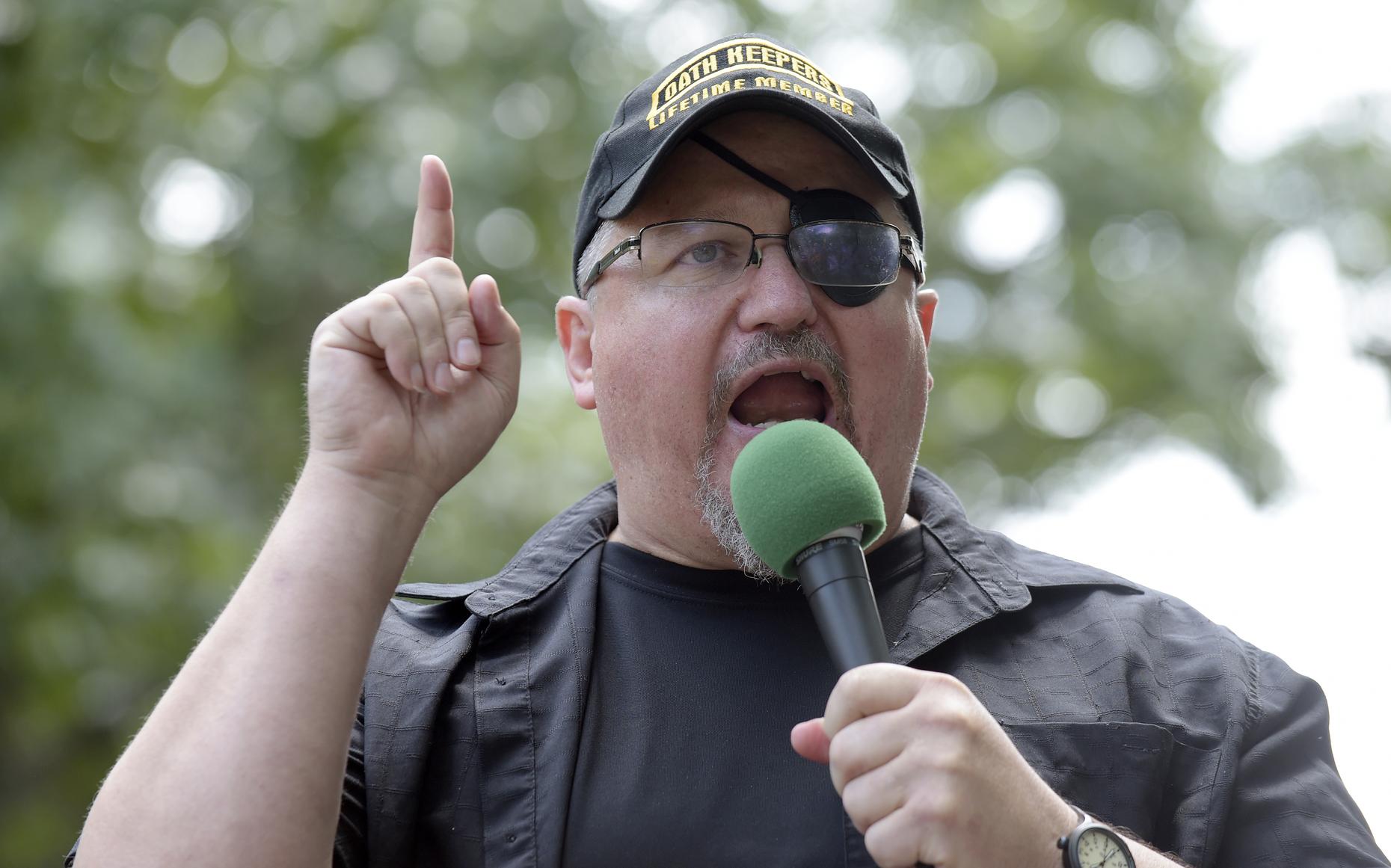
On the Media
Seditious Conspiracy
00:52:17
When reporting becomes federal evidence; a history of journalists being called to testify; escaping the far right and an abusive marriage.
Loading summary
Transcript244 lines
- [00:00]
Michael Loewinger
Hey, Michael Lowinger here. As you'll hear in a minute, this week's episode of on the Media is the culmination of three and a half years of reporting, reporting that made a difference, reporting that our listeners have helped support with their donations. Thank you to every single one of you that has contributed to our show. If you're listening now and you know that you haven't chipped in, now is a great time to do it. Go to onthemedia.org to donate or text OTM to 70101. It's really just that easy. Over the next hour, you'll hear reporting that is the hallmark of public radio. Careful and thorough and asking questions you want answers to. And if you're wondering how we spend your money, let me reassure you that this is a bare bones operation over here. No first class travel or accommodations. No fancy dinners on expense accounts, no frills of any kind. We're just seconds away from the show. So let me remind you of the details of how you can go from OTM listener to OTM supporter. Go to onthemedia.org and hit donate or text OTM270101 thank you so much. Okay, on with the show. On January 6, 2021, I recorded the secret communications of the Oath Keepers.
- [01:24]
Unknown
We have a good group.
- [01:25]
We got about 30, 40 of us. We're sticking together and sticking to the plan.
- [01:29]
Michael Loewinger
Two years later, that audio was a key piece of evidence that sounded sent a militia leader to prison. From WNYC in New York, this is ON THE media. I'm Michael Loenger. On this week's show, I explore what happens when journalists are compelled to testify in court.
- [01:46]
Unknown
You're in an awful situation because you're at the top of your career and all of a sudden they're saying something that could get you killed.
- [01:54]
Michael Loewinger
Plus, I spoke to Tasha Adams, the ex wife of Stewart Rhodes who was just sentenced to 18 years in prison this week, about her life with the founder of a far right militia group.
- [02:05]
Unknown
I helped start this. I helped start this. It turned into that and people died that day. Would this have happened had I not supported Stewart?
- [02:13]
Michael Loewinger
It's all coming up after this. How many discounts does USAA auto insurance offer? Too many to say here. Multi vehicle discount, Safe driver discount, new vehicle discount, storage discount, legacy.
- [02:27]
Anna Sale
How many discounts will you stack up?
- [02:28]
Unknown
Tap the banner or visit USAA restrictions apply.
- [02:34]
Preet Bharara
Since Donald Trump reassumed office, over 200 lawsuits have been filed against his administration. Firings, tariffs, immigration, climate policy. It's hard to keep track of and even harder to understand. I'm former U.S. attorney Preet Bharara, and on my podcast, Stay Tuned with Preet, I'm joined by experts to break down complex legal stories and cut through the noise of this administration. It may feel tempting to tune out, but now more than ever, we need to stay engaged, search and follow. Stay Tuned with Preet wherever you listen.
- [03:03]
Brooke Gladstone
From WNYC in New York, this is ON THE media. I'm Brooke Gladstone. Our show this week is the final chapter of an investigation that started back in 2019, an investigation that contributed to the first big January 6 sentences announced this week.
- [03:21]
Michael Loewinger
The founder of the far right Oath Keepers Militia, Stuart Rhodes, was was sentenced to 18 years in prison for seditious conspiracy. That's the stiffest penalty yet. In the January 6th investigation, Jessica Watkins was sentenced to eight and a half years behind bars.
- [03:36]
Brooke Gladstone
That last name, Jessica Watkins, you might recognize from our show. OTM correspondent Michael Lowinger was monitoring a walkie talkie app called Zello during the insurrection and recorded her real time chatter with other Oath Keepers.
- [03:52]
Unknown
We have a good group.
- [03:52]
We got about 30, 40 of us. Or sticking together and sticking to the plan.
- [03:57]
Brooke Gladstone
Because of his reporting, part of a long collaboration with researcher and journalist Hampton Stahl of Militia Watch, Michael was sucked into the Oath Keepers federal investigation and criminal trial. It's quite rare for a reporter to be called as a federal witness or to have his journalism scrutinized in a criminal trial, let alone such a high profile one. So he asked Micah to document his experience.
- [04:24]
Unknown
The story will continue in a moment.
- [04:26]
Michael Loewinger
In April 2021, a few months after the insurrection, I was on 60 Minutes.
- [04:32]
Anna Sale
On January 6th, Micah Oinger found an open stop the steal conversation going on among 100 people on Zillow and started recording.
- [04:40]
Michael Loewinger
It wasn't until a couple days later that I started to A few months later, an assistant United States attorney, one of the prosecutors spearheading the Oath Keeper's criminal cases at the time, reached to me to tell me he had seen me on TV and he wanted to talk on the phone about the Zillow tape. I thought maybe if I got this guy on the phone, I might be able to glean some useful information about the investigation that would help my own reporting, maybe even a juicy scoop. I wasn't interested in giving him the Zello tape. I don't believe journalists should work with law enforcement in any capacity. When I responded, saying I could make time for a chat, he replied, saying that he had forgotten to mention that the lead FBI agent was also Interested in speaking with me, I got lightheaded reading this. The FBI. My fear was that they would come up with a reason to take my phone and computer, you know, use the Zello stuff as a pretense to get access to all my interviews and notes related to the insurrection. I had done my job, I thought, and now it was time for the FBI to do their job without me. I consulted with some colleagues at wnyc, and we decided to just put the full, unedited Zello recording online. That way, anyone, including investigators, could access the material without me having to act as, like, a middleman. I uploaded the two hours of Zello audio to SoundCloud and a video screencap of the app to, just as I had seen it, to YouTube. I didn't talk with the prosecutor, but I sent him a link to the now public audio, and I thought that would be the end of it.
- [06:26]
Brooke Gladstone
Hi, Micah.
- [06:27]
Michael Loewinger
Hey, Brooke. What's going on?
- [06:28]
Brooke Gladstone
Nothing much.
- [06:29]
Michael Loewinger
Do you have a quick second? Sure. Okay, so I think I was just subpoenaed.
- [06:35]
Brooke Gladstone
Call me back in five.
- [06:36]
Michael Loewinger
Okay, sounds good. Bye. This is a call from August 15, 2022. Over a year and a half after I first heard from the feds. It turns out just having access to the audio wasn't enough for the Justice Department to play the tape for the jury as evidence in the Oath Keepers criminal trial. The government needed somebody to take the stand and verify its authenticity. As the person who made the recording, I was the only one who could do it. When the DOJ asked if I would testify voluntarily, my lawyer declined on my behalf, pointing to the importance of journalistic independence, hence the subpoena.
- [07:16]
Brooke Gladstone
The value of your testimony is limited. They're asking you for a little bit about your process of recording it, but you're not giving them any information beyond what any of our listeners heard.
- [07:31]
Michael Loewinger
My concerns are still. Like all of the coverage around the January 6th stuff has been so heated, particularly when it comes to the defendants, the people in prison.
- [07:42]
Brooke Gladstone
So you stuck yourself into something heated. Right? You're a reporter. You uncovered stuff that other people hadn't talked about. I mean, that's good.
- [07:55]
Michael Loewinger
Brooke felt I should stop worrying and just enjoy the attention I was getting from my work. But. But it was the attention that was making me worry. In the words of another reporter on this beat, if you testify in this case, no right wing sources are gonna talk to you ever again. They're gonna think you're a fed. In fact, this exact suspicion started before I even testified.
- [08:17]
Unknown
We need a lot more answers about how many FBI agents not just were.
- [08:21]
Michael Loewinger
Involved that day, but months beforehand, including.
- [08:24]
Unknown
The infiltration in these alleged militia groups.
- [08:27]
Michael Loewinger
This is one of the far right reporters who claims the events of January 6th were set in motion by the government. She wrote an article suggesting that I had been tipped off by undercover agents so that the feds could entrap well meaning patriots. Needless to say, that's a dumb conspiracy theory. I didn't want my participation in the trial to help any other conspiracy theories take hold, but I didn't see a clear alternative. If I didn't comply with the subpoena, I might face the same consequences that, say, Judith Miller did in 2005 after she refused to testify before a grand jury.
- [09:03]
Anna Sale
Judith Miller, a Pulitzer Prize winning reporter for the New York Times, was sent.
- [09:08]
Brooke Gladstone
To jail yesterday after she refused to.
- [09:10]
Michael Loewinger
Identify a confidential source. My situation was very different. I had no source to protect. I really had nothing to hide. So going to jail would be a pointless stunt. I spoke with someone intimately involved in the Judith Miller case who told me that trying to fight these kinds of subpoenas in court often wastes a lot of time and resources. I decided to just testify and get it over with begrudgingly.
- [09:34]
Anna Sale
What I hear you saying is it doesn't seem like a good look to be a government witness when you are an independent investigative journalist.
- [09:40]
Michael Loewinger
This is Anna Sale, host of the podcast Death, Sex and Money, which is produced by the same shop as otm. Anna and I reported a piece together about the Oath Keepers that you'll hear later in this episode.
- [09:52]
Anna Sale
Federal trials usually don't let cameras or even audio recordings of their proceedings. So I want you to help us, like, set the scene.
- [10:00]
Michael Loewinger
I showed up to court. They assigned an FBI agent to me to kind of walk me around so that they can make sure you don't talk to any other witnesses. Your testimony can, in theory, be influenced by watching the trial and by speaking to people involved in the trial. So they put me in a witness waiting room for like three or four hours. They gave me like a fidget toy, like a finger trap with a marble in it. And so I just like nervously played with that for like three hours. By the time I showed up to testify at the Federal Courthouse in October 2020, I had met with the lead prosecutor, Assistant U.S. attorney Jeff Nestler, and an FBI agent who sat to the side quietly scribbling on a notepad. As I recounted my experience of January 6th, they asked me about some records they'd gotten from Zello, the company. It was the back end of my years Using the app, they had a list of users I had messaged on the app, a list of the exact moments to the minute I had Zello open on my ph the days leading up to January 6th. Maybe I should know better, but I was shocked to see just how easy it was for the government to access some of the personal data related to my reporting.
- [11:13]
Anna Sale
What'd you wear?
- [11:15]
Michael Loewinger
I wore. I wore, like, a. Like a kind of standard suit.
- [11:20]
Anna Sale
Wait, why does that make you laugh?
- [11:23]
Michael Loewinger
I don't know. I kind of. Just. Because I. I'm not a super serious person. I have a serious side to me, but I felt like I was like this kind of man child who had been dropped into a very serious situation.
- [11:38]
Anna Sale
Where did you focus your eyes when you were answering questions?
- [11:41]
Michael Loewinger
I looked mostly at the prosecutor because it's a kind of Q and A format, you know. Mr. Loenger, is it true that you work at on the media? Yes. At one point, the prosecutor was like, and, Mr. Loenger, did you win an award for this reporting? And before I could answer yes, the defense was like, objection. Like, standing up. They asked me about getting banned from this group and rejoining it under a different name. And, you know, the prosecutor said, like, why were you banned? And I said, because it's my job as an investigative reporter to listen in on conversations that people don't want me to hear.
- [12:19]
Anna Sale
Who was sitting at the criminal defendant's table? How many criminal defendants were in the room?
- [12:25]
Michael Loewinger
The only one that I recognized was Stuart Rhodes, the founder and leader of the Oath Keepers, who was a defendant himself. I recognized him because he wears an eyepatch. When the prosecutor asked me, like, have you been banned from these channels in the past? And I said, yes. I heard him kind of snicker to himself quite loudly. And when he later took the stand, he didn't say anything about me. He did say that he was under the impression that journalists were trying to infiltrate the Oath Keepers at all times. And so perhaps I confirmed some of his paranoia and that's why he laughed.
- [13:03]
Roger Parloff
You sounded uncomfortable in a good way. You know, like you were walking a line because you're a journalist, and you don't want to sound like you're in there for the government.
- [13:17]
Michael Loewinger
This is Roger Parloff, senior editor for Lawfare. He watched my testimony, Jessica Watkins testimony, and testimony from an FBI agent who took the stand to play the Zello audio for the jury.
- [13:30]
Unknown
We have a good group. We got about 30, 40 of us.
- [13:32]
Roger Parloff
What you hear on that tape, we're.
- [13:34]
Unknown
Sticking together and sticking to the plan.
- [13:37]
Roger Parloff
Is unambiguous in terms of a plan to invade the Capitol. So it was a very powerful piece of evidence.
- [13:47]
Michael Loewinger
If it was so powerful, then why did Jessica get off easier than Kelly Meigs and Stuart Rhodes? They were charged with seditious conspiracy. And she was not correct.
- [14:01]
Roger Parloff
Now, she was convicted of two other conspiracies, of course. Conspiracy to prevent federal officers from discharging their duties. That refers to both congressmen and police officers and the substantive count of obstructing an official proceeding. But as far as the seditious conspiracy, they apparently didn't feel there was proof beyond a reasonable doubt. You know, she did testify, as you said, and there were aspects of her biography that were sympathetic.
- [14:35]
Michael Loewinger
What about it stuck out to you?
- [14:38]
Roger Parloff
Well, you know, she's a transgender woman, and her parents had disavowed her. And when she, you know, was in the military and she was beginning to have these thoughts about who she was, another soldier confronted her, you know, called her crude names. She was afraid for her life. She went to awol. She was discharged. She did turn to the transgender community, but it wasn't her either. You know, the transgender community to her was very touchy feely. It was usually left of center. And here she is, you know, she wants her own militia. So she really didn't fit in anywhere. And. And then Covid hits. She ran a bar, and so the bar had to close and she was in hard straits. So I think the jury could have felt for her as a, as leading a very, very difficult life.
- [15:44]
Michael Loewinger
It was my impression that she was less involved in a lot of the higher level planning, you know, as opposed to Meg's and Rhodes.
- [15:54]
Roger Parloff
Regardless of what role she played in the planning, she was one of the most violent because she led her group toward the Senate side once she got inside and really led them in a violent push against a group of riot police.
- [16:12]
Michael Loewinger
After the jury handed down its verdict, the government prepared a 183 page recommendation for the judge making its case for 18 years of jail time for Jessica Watkins. The Zello tape was referenced four times in the section where the DOJ outlines the sentencing point system, converting testimony and evidence into units of time behind bars.
- [16:35]
Roger Parloff
They treat her as a leader the same as Rhodes and Meigs, so they each get a four point enhancement. As far as terrorism. They give her a three point enhancement, which is slightly less than Meg's at four and a good bit less than Rhodes at six.
- [16:54]
Michael Loewinger
Seeing my reporting factored into this cold, hard math has left me with complex feelings. I believe there should be consequences for the illegal and anti democratic violence that took place on January 6th. But I also think our criminal justice system is deeply flawed. It's often racist and cruel and often fails to rehabilitate people. I'm really proud my work had an impact and that I could help show America what the militia movement really represents. But I didn't get into this line of work to play such an active role in locking people up. I realize now that I was kind of naive. I wanted to believe that the end game of journalism is truth, but sometimes it's prison.
- [17:43]
Brooke Gladstone
Coming up, when the FBI tried to turn a reporter into a spy, he took them all the way to the Supreme Court. This is ON the media.
- [17:54]
Michael Loewinger
On the media. Supported by Progressive Insurance, you chose to hit play on this podcast today. Smart choice. Make another smart choice with Auto Quote Explorer to compare rates from multiple car insurance companies all at once. Try it@progressive.com Progressive Casualty Insurance Company and affiliates. Not available in all states or situations. Prices vary based on how you buy.
- [18:19]
Preet Bharara
Since Donald Trump reassumed office, over 200 lawsuits have been filed against his administration. Firings, tariffs, immigration, climate policy. It's hard to keep track of and even harder to understand. I'm former U.S. attorney Preet Bharara, and on my podcast, Stay Tuned with Preet, I'm joined by experts to break down complex legal stories and cut through the noise of this administration. It may feel tempting to tune out, but now more than ever, we need to stay engaged. Search and follow. Stay tuned with Preet. Wherever you listen.
- [18:49]
Brooke Gladstone
This is ON the media. I'm Brooke Gladstone. Shortly after the subpoena landed in Micah's email inbox, he began looking for examples of other reporters who'd navigated similar experiences, which is how he stumbled upon the story of one remarkable journalist.
- [19:06]
Unknown
We're interviewing Earl Caldwell this afternoon. I'll be inspiring Earl to speak on various issues connected with his career.
- [19:15]
Michael Loewinger
This is a 2001 oral history done by the Maynard Institute for Journalism Education. Thank you very much to the Institute for giving me permission to use it extensively in this piece. Earl and I spoke many, many times over the phone, but he never agreed to speak with me on the record. He's writing a book about his life and he stopped doing press.
- [19:35]
Unknown
How long was that? It's two hours plus a few minutes.
- [19:39]
Michael Loewinger
Phew.
- [19:41]
Unknown
Once I start to rub my mouth, it's all easy.
- [19:43]
Michael Loewinger
The story begins when Earl Caldwell, then a reporter in his early 30s, joined the new York Times.
- [19:50]
Unknown
There was only one other black reporter on the staff when I got there. And what was approaching was the summer of 67, which was to be like no other summer in the history of the Republic. The worst race riots since those two years ago in the Watts section of Los Angeles rocked New Jersey's largest city, Newark, for five consecutive days and nights. Law and order have broken down in Detroit, Michigan. Pillage, looting, murder and arson have nothing to do with civil rights.
- [20:24]
Michael Loewinger
The paper flew Earl all around the country to get cover, the riots and the civil rights movement. And in April 1968, the Times sent him down to Memphis, Tennessee to interview Dr. Martin Luther King, Jr. Earl checked in at the Lorraine Motel, where Dr. King was also staying.
- [20:41]
Unknown
And Dr. King gave me an interview. While we're standing on the balcony talking, he begins to ask me about my personal life, how I got into the newspaper, what was like being reported to the New York Times. He said, we'll talk again tomorrow because we never chance to go through everything. And nobody told me. There was going to be a big rally that night, which turned out to be a very historical moment, for that's where King made his mountaintop speech. We've got some difficult days ahead.
- [21:11]
Michael Loewinger
But.
- [21:11]
Unknown
It really doesn't matter with me now because I've been to the mountaintop.
- [21:17]
Michael Loewinger
Earl only learned about this beach later because he was back at the motel.
- [21:22]
Unknown
And it was this fierce storm. Like it was lightning and thundering. The shadows were rattling and everything. And I've seen the promised land. I may not get there with you, but I want you to know the night that we as a people will get to the promised land.
- [21:44]
Michael Loewinger
The next morning, Earl heard about the morbid premonitions in King's speech. And the way Earl describes this day sounds like a bad dream. You know, that kind of dread when you're rushing somewhere, but you feel like you're treading water.
- [21:58]
Unknown
I'm trying to get to King right away and I can't get to him. And the day is getting away from us and I was missing my deadline.
- [22:06]
Michael Loewinger
I imagine him pacing around his motel room, chain smoking cigarettes, trying to figure out what to do when he heard a loud noise outside.
- [22:14]
Unknown
I heard what I thought was a bomb blast and I run out my shorts. What happened? What happened? And then I ran up to the balcony and I saw Dr. King could see his horrible wounds. Huge, bigger than your fist and his jaw and neck. Dr. King was standing on the balcony of a second floor hotel room tonight when, according to a companion, a shot.
- [22:35]
Lee Levine
Was fired from across the street.
- [22:37]
Unknown
In the friend's words, the bullet exploded in his face.
- [22:41]
Michael Loewinger
You can see Earl in some of the earliest flights, Photos of the assassination in the scrum hovering over MLK on the balcony. He was the only reporter on the scene and the first to break the story.
- [22:54]
Unknown
So that was indeed the biggest story ever had.
- [22:59]
Michael Loewinger
But it was actually the next big reporting project. That's the focus of my story.
- [23:04]
Unknown
The New York Times sent me out to California to look into this group that had been rising in California and was coming to some national prominence called the Black Panther Party.
- [23:16]
Michael Loewinger
Within a matter of months, Earl had developed deep access within the group.
- [23:21]
Lee Levine
So it wasn't easy, even for a black reporter like Earl, to gain the trust of the Panthers.
- [23:26]
Michael Loewinger
Lee Levine is a media law expert. He's writing a book about Earl Caldwell.
- [23:31]
Lee Levine
The way he did it was providing what the Panthers considered to be fair coverage. You know, he was not misrepresenting who they were and what they were doing.
- [23:41]
Unknown
I got so on the inside that I saw the Panthers moving a large cache of weapons from San Francisco to Oakland, where Huey Newton, the leader of the Panthers, was on trial for murder of a police officer. 3,000 Black Panthers turned out for the start of the trial. Spokesman say that if Newton is found guilty and given the death penalty, the sentence will have to be carried out over their dead bodies. I put the story in the paper, and when that story came out, the FBI came to the New York Times and demanded that I give them additional information about these weapons and how I knew it, where they were, all this stuff. And I said, you know what I know about this? I put it in the paper, and they're saying, well, look, you're there all the time. We want an inside report. We want you to tell us everything that you're getting, everything you know. I said, not only could I not do it, I can't even have this conversation with you. They began to call every day.
- [24:52]
Lee Levine
We now know that, in fact, the FBI had informants among reporters who they could plant stories with. There are multiple examples of what is called cointelpro, which is its counterintelligence program directed at a variety of what the FBI deemed to be subversive groups, which included the Panthers.
- [25:12]
Michael Loewinger
Forty years later, Earl was shocked to learn that his friend Ernest Withers, a prominent civil rights photojournalist, had been an informant much of his career.
- [25:22]
Unknown
So finally one day, they called Mrs. Brackett. They said, you tell Earl Caldwell we're not playing games with him. And they got a subpoena for me to be the star witness against the Black Panthers before a federal grand jury.
- [25:34]
Lee Levine
He had two strains running through his Head one was, as a journalist, I'm not going to be a snitch for the FBI. And then, not inconsistent with that, as a black person, I am not going to let the FBI use me to advance their goals against other black people.
- [25:56]
Michael Loewinger
To make matters worse, the government also wanted his reporting materials, including the unpublished stuff.
- [26:03]
Lee Levine
Earl had a boatload of documents and tapes, a lot of recorded interviews with the Panthers, and they were all in a storage room at the Times bureau.
- [26:16]
Michael Loewinger
Earl discussed his archive with a lawyer at a fancy San Francisco law firm that the Times had hired to deal with the subpoena.
- [26:25]
Unknown
And the guy says to me, look, we have a tremendous problem with law and order out here.
- [26:29]
Lee Levine
And went on, according to Earl, to talk about the problem with black militant violence, where the guy told him to bring in his notes and stuff so that he could go through them and told Earl that, I think there's probably stuff that you have that the government's entitled to. And that totally freaked Earl out.
- [26:50]
Unknown
I'm sitting there thinking, like.
- [26:53]
Michael Loewinger
You'Re in.
- [26:54]
Unknown
An awful situation because you're at the top of your career, and all of a sudden they're saying something that could get you killed. It wasn't then somebody would say, go shoot Caldwell. It was that in this environment, somebody would say, if he came out here and told us he's a reporter and got all his access and he's a spy for the FBI now, he shouldn't live.
- [27:15]
Michael Loewinger
Earl learned that the feds were going to come to the San Francisco bureau to serve the subpoena.
- [27:21]
Unknown
So we didn't know what to do and had all these documents. So we just said, we'll destroy it. Let's just shred everything. Let's dig these tapes apart, cut them up and everything. We had two of these real high garbage cans. We filled them up.
- [27:36]
Michael Loewinger
And ultimately he decided to fight the subpoena in court. Because of his frustrations with the paper's legal team, Earl hired Anthony Amsterdam, a white lawyer recommended by the NAACP Legal Defense Fund. Amsterdam was confident that Earl could beat the subpoena. Lee Levine.
- [27:54]
Lee Levine
My feeling is that in reality, the reason the subpoena was issued was because Earl, among a few other reporters, was giving a view of the Panthers that was contrary to the government and specifically the FBI's preferred narrative to drive a wedge between Earl and the Panthers. They didn't need documents. They just needed to call him before a grand jury and, you know, have him testify behind closed doors, which is what happens in a grand jury.
- [28:24]
Michael Loewinger
The Panthers wouldn't know what he said. Or if he said anything correct, even.
- [28:31]
Lee Levine
If all he did in the grand jury room was assert his privilege not to answer substantive questions. I think the Panthers, justifiably, given what the FBI was up to, would have been nervous and would have cut off access to him.
- [28:47]
Michael Loewinger
And actually, this became a big part of Anthony Amsterdam's defense for Earl. They rooted this idea of reporter's privilege in the First Amendment.
- [28:56]
Lee Levine
Everybody understands that the First Amendment prohibits the government from preventing publication in advance. That's called a prior restraint. That's the Pentagon Papers. Everybody also understands that the government can't penalize you after the fact for publishing information that relates to a matter of public concern, especially if it's true. What Earl was arguing is something different, but I think equally important, which is that even actions that government takes that don't directly prohibit or penalize the dissemination of information can have the effect in operation of depriving the public of important information about matters of public concern, and that that has an impact on the free flow of information that is analogous a law that penalizes a reporter for publishing information after the fact.
- [29:50]
Michael Loewinger
This is essentially what I was concerned about when I got my subpoena. If people come to suspect that all reporters are just secretly working on behalf of the government, the social contract propping up journalism pretty much just falls apart.
- [30:05]
Lee Levine
Do you want me to go on and talk about what happened next?
- [30:07]
Michael Loewinger
What happened next was that the court was sympathetic to the argument, but still ruled that Earl should go before a grand jury to authenticate his reporting. The the Times thought this was a fair ruling, and Earl was happy to say that what he'd written was true, just not behind closed doors.
- [30:23]
Lee Levine
So Earl decided to appeal, and the Times, I think it's fair to say, was not happy about that.
- [30:29]
Michael Loewinger
Earl wanted to talk about appealing the decision, so he went to speak with the top in house New York Times lawyer, chief counsel James Goodale.
- [30:38]
Unknown
Goodale's shaking his finger in my face saying, you keep pushing this, and what's going to happen is you're going to get some bad law written, and reporters will be suffering for a lot of years under this. And I said, I'm not pushing anything. It's the Justice Department that's pushing it. But he tried to put it on me.
- [30:53]
Michael Loewinger
This conversation turned out to be prescient at first. Everything seemed to be going well for Earl and his legal team.
- [31:00]
Lee Levine
Lo and behold, the Court of appeals agreed with Earl and ruled that he didn't even have to appear before the grand jury.
- [31:10]
Michael Loewinger
And this was a unanimous decision, right?
- [31:12]
Lee Levine
Yes. Unanimous decision.
- [31:14]
Michael Loewinger
And so the government appeals.
- [31:16]
Lee Levine
Yes, the government seeks review in the Supreme Court. And at the same time, there are these other cases wending their way through the courts. Paul Pappas, television reporter in Massachusetts, had.
- [31:30]
Michael Loewinger
Also tried to fight a subpoena related to his reporting on the Black Panthers. Then there was Paul Brandsberg, a reporter reporter in Kentucky who refused to appear before a grand jury to discuss two sources he had witnessed making marijuana products.
- [31:45]
Lee Levine
And all three of those cases were ultimately taken to the Supreme Court for review.
- [31:52]
Michael Loewinger
They were all rolled up into a single case known today as Bransburg v. Hayes, since the case that comes up first alphabetically in the group often becomes the shorthand name. But United States v. Caldwell was considered the most significant of the three. Earl thought that the mostly liberal court at that time would deliver them a 54 win.
- [32:13]
Lee Levine
Unluckily for Earl and the other reporters, there was a dramatic change in the Court's composition.
- [32:20]
Unknown
The White House announced this evening that Justice Hugo L. Black, the oldest member of the Supreme Court, has retired from the bench. Associate Justice John Martin Marshall Harlan turned in his resignation today. Just six days after the resignation of.
- [32:33]
Michael Loewinger
Justice Hugo Black, allowing President Richard NIXON to appoint two new justices to the.
- [32:39]
Unknown
Bench, the U.S. supreme Court today took on the kind of conservative weight sought so long by Mr. Nixon. It did so by reaching its full complement of nine members, with the swearing in of Justices Lewis Powell, Jr. And William Rehnquist.
- [32:52]
Lee Levine
Justice Rehnquist came to the Court from the Justice Department. And while in the Justice Department, one of his jobs as head of the Office of Legal Counsel was to formulate the administration's position with respect to this very issue.
- [33:06]
Unknown
So everybody just assumed he would recuse himself, and he did. He was sitting right there.
- [33:11]
Michael Loewinger
Why didn't he recuse himself?
- [33:14]
Lee Levine
I don't know. I suppose he wanted to rule on the case and didn't think he had a conflict. Just like today with uproars over Justice Thomas ruling on cases that some people think he shouldn't, there's really nothing that can be done about it.
- [33:30]
Michael Loewinger
On June 29, 1972, the court voted 54 against the reporters, with Justice Rehnquist casting one of the deciding votes.
- [33:40]
Lee Levine
Justice White, who wrote for the majority, wrote that this whole concept of indirect restraints was bogus. And then Justice Powell, newly on the Court, wrote an opinion concurring in Justice White's opinion, but adding a few words of his own. His opinion has been characterized over the years as enigmatic because it seems to suggest, although not entirely clearly, that there are circumstances in which on A case by case basis, a reporter would be able to successfully refuse to answer questions posed by a grand jury.
- [34:21]
Michael Loewinger
This enigmatic opinion by Justice Powell would turn out to have a long afterlife, which we'll get to in a minute.
- [34:27]
Lee Levine
After the Supreme Court's decision, Earl never heard another word from the government, so he was never called to testify. There's an argument that the government accomplished what it wanted to accomplish, which is that it had established a precedent that would make sources in the future reluctant to talk to journalists.
- [34:46]
Unknown
But the Supreme Court said that, yes, the government can force you to be a spy, and that if, if you resist, you go to jail.
- [34:53]
Michael Loewinger
Here's Earl speaking with CBS in 1973.
- [34:57]
Unknown
I honestly don't believe that it's possible to do effective journalism in America now.
- [35:03]
Lee Levine
Well, let me say this. In the immediate aftermath of the decision, there were, you know, the kinds of editorials you would expect in newspapers all over the country.
- [35:10]
Michael Loewinger
Yeah, there was like a kind of a freakout.
- [35:12]
Lee Levine
Yeah.
- [35:12]
Unknown
Editors at the New York Times are worried about the effects of the Supreme Court's decision. National editor Gene Roberts says his staff reporters are already jittery.
- [35:22]
Michael Loewinger
After the trial, Earl testified before Congress, advocating for a federal shield law.
- [35:27]
Unknown
Only when we can operate in an atmosphere free of the intimidation of government can we assure the public that we are vigorously investigating all phases of corruption and political chicanery.
- [35:40]
Michael Loewinger
And lawmakers from both parties were listening. They discussed two kinds of bills. Laws that would provide absolute immunity, no revealing of anonymous sources, no testifying before grand juries, period. Or a qualified immunity, which would only require outing sources if three criteria are met.
- [36:01]
Unknown
One would be that the information sought from the reporters relevant to an alleged crime. Second, that there's an overriding national interest involved. And third, and this is really the kicker in it, that it can be obtained that information from the reporter and no other source.
- [36:17]
Michael Loewinger
The issue is that news outlets were split on the question of qualified versus absolute immunity. They just couldn't agree. And as a result, the federal shield law died on the vine.
- [36:27]
Lee Levine
The one constructive thing that came out of it was that Jim Goodale, the.
- [36:32]
Michael Loewinger
New York Times general counsel, who allegedly wagged his finger at Earl, to his.
- [36:36]
Lee Levine
Great and everlasting credit, decided that he should take Justice Powell's admittedly enigmatic language and pour meaning into it. And over the next several decades, Jim kind of took the lead and was instrumental in having virtually every federal court of appeals and virtually every state supreme court hold that, in fact, there is the kind of qualified First Amendment based reporter's privilege and that it operates in every kind of legal proceeding with the one exception of grand juries.
- [37:14]
Michael Loewinger
In other words, Goodale and his fellow media lawyers successfully pointed to the Caldwell Brandsburg ruling to shield reporters from the judicial system. Despite this, several writers over the years have been forced to choose prison over revealing sources to a grand jury. Judith Miller was jailed for 85 days.
- [37:34]
Unknown
Vanessa Leggett was jailed for refusing to give up her materials to the government. Josh Wolfe, the longest jail journalist for.
- [37:40]
Michael Loewinger
Protecting a source in US History. Toward the end of my conversation with Lee Levine, he told me he was pretty sure I could have gotten out of participating in the January 6th case, that I could have fought the subpoena in court and won, which honestly came as a shock. And I think he could tell let.
- [37:57]
Lee Levine
Me say this and it'll make you feel better. Just a few years before this, during the first phase of the civil rights movement in the south, where reporters were witnessing the Klan engaging in violence and doing all other sorts of despicable things, many reporters were more than happy to share what they knew and saw and heard with the FBI. Nobody thought anything about it.
- [38:24]
Michael Loewinger
This past October, Attorney General Merrick Garland announced a new written policy at the DOJ that the department would limit the circumstances in which prosecutors can subpoena journalists for their reporting materials. Of course, a policy, unlike a law, can be easily undone by the next administration or the next Congress needs to pass a federal shield law like the Protect Reporters from excessive State Suppression, AKA the Press act, which Representative Jamie Raskin discussed on the House floor last September. I'm very hopeful that this is the.
- [38:58]
Roger Parloff
Congress in which we can get it done.
- [39:00]
Michael Loewinger
It wasn't the House bill passed, but the Senate bill never left the Judiciary Committee. Representative Raskin told me he intends to reintroduce the Press act this summer. This is a basic protection for journalism. We should have codified it 50 years ago, and we need to pass it now.
- [39:21]
Brooke Gladstone
Coming up, Micah goes to Montana to investigate the origins of the Oath Keepers. This is on the media.
- [39:30]
Michael Loewinger
OnTheMedia is supported by Progressive Insurance. Do you ever find yourself playing the budgeting game? Well, with the name your price tool from Progressive, you can find options that fit your budget and potentially lower your bills. Try it@progressive.com Progressive Casualty Insurance Company and affiliates Price and coverage match limited by state law not available in all states.
- [39:54]
Preet Bharara
Since Donald Trump reassumed office, over 200 lawsuits have been filed against his administration. Firings, tariffs, immigration, climate policy. It's hard to keep track of and even harder to understand. I'm former US Attorney Preet Bharara. And on my podcast, Stay Tuned with Preet, I'm joined by experts to break down complex legal stories and cut through the noise of this administration. It may feel tempting to tune out, but now more than ever, we need to stay engaged, Search and follow. Stay Tuned with Preet. Wherever you listen, this is on the media.
- [40:25]
Brooke Gladstone
I'm Brooke Gladstone.
- [40:26]
Michael Loewinger
And I'm Michael Loewinger with the final story in the final chapter of a reporting project I started over three years ago. A time when I sat for hours alone just listening.
- [40:38]
Unknown
What interested you in the 3% movement.
- [40:41]
Michael Loewinger
To far right fever swamp chat rooms and recruitment interviews on Zello.
- [40:45]
Unknown
Do all of you have the backing of your family? Do they know that you're on an interview tonight? I'm the man in the house, so.
- [40:51]
Michael Loewinger
You know if I need to go.
- [40:52]
Lee Levine
Somewhere or do something, that's going to happen.
- [40:55]
Michael Loewinger
I wondered what it was like to share a home with someone who had been radicalized like this. Which is why when I ran into Anna Sale, my colleague at wnyc at our company holiday party last winter, I pitched the collaboration for the piece you're about to hear. Anna is the host of Death, Sex and Money, a show about difficult personal conversations.
- [41:18]
Anna Sale
It's beautiful.
- [41:21]
Michael Loewinger
Beautiful and kind of scary because the roads are very icy. Anna and I drove to a remote town in Montana near the Canadian border to interview Tasha Adams, the ex wife of Stuart Rhodes. Tasha had witnessed the long buildup to January 6th and could tell us about the private origins of this public extremism.
- [41:45]
Anna Sale
So we're going to do this interview together and in some parts of it, Micah's going to lead. In some parts of it, I'm going to lead. Micah, do you want to just sort of start?
- [41:54]
Michael Loewinger
Yeah, it's really nice for me to meet you. I don't know. Do you remember who I am?
- [41:59]
Unknown
Yeah, I do. I remember we talked a little bit not long after J6.
- [42:01]
Michael Loewinger
That's right. Can I ask about January 6th? Yep. And what were you doing January 6th?
- [42:10]
Unknown
Glued to my laptop.
- [42:12]
Michael Loewinger
The Oath Keepers, a far right paramilitary group, are also here. They're organized, staging their military style equipment neatly on the ground. And later they put on body armor, talk on radios and chat with their.
- [42:26]
Lee Levine
Supporters on a walkie talkie app called Zello.
- [42:29]
Michael Loewinger
When did you start hearing from reporters?
- [42:31]
Unknown
I had talked with some journalists even from like 2018 on. Unofficially, basically. If there was a piece on Stewart. Yeah, I did all the background on it. After J6, I felt a lot more comfortable kind of coming out and talking publicly. Even Listening to my original interviews, it's almost like a really different perspective. If you read the LA Times article, it's really clear. I'm telling this man it's all my fault. And he's just writing down, it's all her fault.
- [43:01]
Michael Loewinger
What was all your fault?
- [43:02]
Unknown
All of it. Oath keepers, Stuart.
- [43:05]
Anna Sale
Because you hadn't prevented it.
- [43:07]
Unknown
You know, the first words out of my mouth were, I helped start this. I helped start this. It turned into that. And people died that day. And would this have happened had I not supported Stuart? It's still really hard for me to talk about J6 in particular, as I still feel like. I feel like I do own a piece of that, for sure.
- [43:28]
Michael Loewinger
Tasha and Stuart Rhodes have six kids and were together for 27 years. They first met in 1991, when Tasha was 18 years old. She was working at a dance studio in Las Vegas where Stuart was taking classes.
- [43:42]
Unknown
And he just seemed so worldly. He lived everywhere, and he'd been in the military. And he was also very, very intelligent. And that was obvious right away. He'd read the Rise and Fall of the Roman Empire at 13, and he was always reading something. So I like those things about him.
- [43:59]
Michael Loewinger
A few months in, she started to see how controlling he could be, how he started to demand all of her free time. Nowadays, she believes he's a sociopath, but at the time, she only had a rough sense that something was off.
- [44:12]
Unknown
I was really on the fence, and I was really thinking, maybe I need to break this off. And then I get a call. There's been a terrible accident. He's accidentally shot himself in the eye. And this completely changed everything in my relationship. I was taking care of him. I was cleaning out his MDI socket. I was just, like, being pulled out in a tidal wave. All of a sudden, I'm just in it.
- [44:35]
Michael Loewinger
And also kind of ironic, because a lot of the militia guys preach this, like, gun safety thing and how they're, like, well trained and they don't slip up and, you know.
- [44:46]
Unknown
And then, yes, during our divorce hearing, it came up where he talked about how safe he was at handling weapons. And honestly, I had been so conditioned for so many years to never bring it up, and I just let him sit there with an eye patch on and tell the judge how safe he is with firearms. I just didn't say a thing.
- [45:05]
Anna Sale
Conditioned, because if you ever brought it up during the course of your marriage, it's so humiliating and embarrassing to him that it would be dangerous for you to.
- [45:13]
Unknown
Yeah, he would shut it down. And so you Just couldn't even hint at it.
- [45:17]
Anna Sale
And when you married, had that period of doubting changed into something else?
- [45:21]
Unknown
Yes, it changed into, I have to fix this.
- [45:28]
Anna Sale
Fix what?
- [45:28]
Unknown
Fix him. During his recovery, he became more open about the kind of abuse he experienced as a kid, that his mom had not been mentally stable. I felt so bad, and I felt so guilty for my own upbringing. You know, I'd had this board game, Family life with loving people. Whenever there was something I didn't like about his behavior, he would remind me of this horrible childhood he'd had and how difficult he'd had it. And, you know, not everyone has this perfect life. And he was, you know, very intelligent, and he was very good at manipulating me.
- [46:04]
Michael Loewinger
In 1997, they had their first kid. Dakota Stewart convinced Tasha to start stripping to help pay his way through college. She was raising their child, bringing home the money, and she told me sometimes she even did his homework. In 2001, he got into Yale Law School. The prestigious degree helped Stewart land jobs, but he had trouble keeping them. Like the time he moved the family without explanation. After his clerkship abruptly ended, there was a huge argument.
- [46:34]
Unknown
He was yelling at the judge, had no idea was fired, just said, oh, we're moving. Okay, here we go again.
- [46:41]
Michael Loewinger
It sounds like he had a really hard time working for people and with people. Was the Oath Keepers a kind of way for him to be the leader, to have the autonomy that he wasn't finding in his life up until that point?
- [46:55]
Unknown
Honestly, in some ways, that's what I was hoping for. When he said he wanted to start an org is, I thought, wow, then he could just talk for a living, right? And then he can't get fired and maybe we can pay the rent. He talked about it for a while, and we were at a Ron Paul event. This when he was doing some legal work for the ron Paul Campaign, 2008. By then, I have a million kids, so I'm just entertaining kids. That's all I'm doing at these things. He comes back in with a notebook with some names written down. And one of the names on it was Oath Keepers. And I said, we'll just stop right there. That's the name. That is the name. That name is so marketable. It's just a good name. I could see it on jackets, you know, sell T shirts. People are going to love it.
- [47:38]
Michael Loewinger
Can I ask you just a really basic question? What was the oath?
- [47:43]
Unknown
So Oath Keepers is. The oath is based on the idea that everybody in the military, even post office workers, even lawyers, police officers, have all had to swear an oath by law, have to swear an oath to the Constitution before they can go into office. And so the idea is that sometimes these guys swear an oath to protect and defend the Constitution, and they're not doing it. And so his original pitch, which is how he pitched it to me, was very much this idea of what if police in particular had a support group who they could go to if they saw corruption and that they could say, hey, you know, things are going crazy in my. My department. They're not acting right, and I don't know what to do. And they would offer legal counsel.
- [48:32]
Michael Loewinger
At the time, Tasha didn't see anything dangerous about this type of militia organizing, though others saw it for what it was like when Stewart was interviewed by Chris Matthews on MSNBC in 2009.
- [48:45]
Unknown
And Chris Matthews said, I think you won a war.
- [48:48]
You know, what I think you're up to is creating a mindset. You want to have people in a militant environment where they think militant, with this sense of perhaps taking steps at some point against the government, of taking not taking orders or in some way rebelling.
- [49:03]
I don't think Stewart's ever been called out so accurately so early. Yeah, so early. Part of me was like, am I mad because there's some truth to this? I was afraid there might be truth to it, and I really, really didn't want there to be truth to it.
- [49:17]
Michael Loewinger
Meanwhile, life at home was becoming more and more difficult. She recently tweeted out a picture of scars on her arm. We sent a list of questions to Stuart and his lawyers for this piece. He declined to comment.
- [49:29]
Unknown
If he were to ask me, and in fact, I was asked three years ago, was Stuart physically abusive? I would have said no, and did say no many times. So he would never outright punch you, but he would do other things to hurt you. Most commonly, he would want to do martial arts with you, and then you would just get beat to really, you know, with sticks or whatever. You know, it's just, oh, sorry about that. Oh, sorry about that. But how often and how hard you got hurt correlated directly to how upset he was with you over something. I was physically afraid of him. I was afraid he was going to kill us all.
- [50:06]
Michael Loewinger
She and the kids had started talking about trying to escape, but they were so isolated, he had moved them to a remote part of Montana. She told me she didn't have reliable access to a car or even cell service. It was around this time she began following the custody battle of Infowars host and far right conspiracy peddler Alex Jones.
- [50:28]
Lee Levine
His ex wife Kelly, is seeking sole or joint custody of the children who are aged 9, 12 and 14, who currently live full time with their father. Her claim he's, quote, not a stable person and part of her evidence is his media Persona.
- [50:43]
Unknown
I was watching that very closely and that played a huge part in like, whoa, you know, I could lose my. I really could lose my kids. I knew she was someone that would understand that. I had texted her very briefly and I said, I'm a few months away from doing the same.
- [50:58]
Michael Loewinger
Tasha and her kids left Stewart in 2018 for five and a half years. The divorce was tied up in family court until this past Tuesday. Live.
- [51:09]
Unknown
Doing it live, live from Libby, Montana.
- [51:13]
Michael Loewinger
Tasha and her son Dakota posted this video on Twitter.
- [51:16]
Unknown
I'm divorced and my case has been unsealed.
- [51:20]
Michael Loewinger
Records unsealed.
- [51:21]
Unknown
Records are unsealed.
- [51:22]
Lee Levine
Is no contact, no contact with the kids.
- [51:24]
Michael Loewinger
And then on Thursday, just a couple days later, we have breaking news for you.
- [51:29]
Anna Sale
Oath Keepers founder Stewart Rhodes has been sentenced to 18 years in prison.
- [51:34]
Lee Levine
This is the longest sentence in any.
- [51:35]
Michael Loewinger
U.S. capitol riot prosecution.
- [51:37]
Lee Levine
Eighteen years will keep Stewart Rose in.
- [51:40]
Michael Loewinger
Prison up to the2040s. Wow. Big, big day for you. Big week. Big week for you.
- [51:46]
Unknown
I mean, this is great.
- [51:47]
Michael Loewinger
How did it feel to see that number 18 years?
- [51:51]
Unknown
I mean, I, Even as the judge started talking, I thought, well, this could even be more.
- [51:56]
Michael Loewinger
Judge Amit Mehta called Stewart Rhodes a quote, peril to our democracy. After Stewart Rhodes had gone on a conspiratorial rant in the courtroom, he basically.
- [52:06]
Unknown
Called for violence right there on Stan while he's in the middle of sentencing. In his mind, his strategy is, I hope they hear me. I hope I'm speaking loud enough and outrageous enough that the conservative news circles like Fox pick it up.
- [52:19]
Michael Loewinger
So you think he put on a show so that he'll be quoted as a martyr in some of the conservative press.
- [52:24]
Unknown
Yeah. And then that will be enough that maybe an incoming. Whoever might be the next presidential candidate will hear that. And, oh, I'm hearing this name Stuart Rhodes a lot. He must be important. We'll throw that out there.
- [52:39]
Michael Loewinger
When I called you up, knowing how much this sentence meant to you, I was expecting you to be kind of celebrating at the 18 years. And what I'm hearing is more you're. Because of the potential for a pardon. You're seeing this as more of a. I mean, 2024 is only, you know, a year away.
- [53:00]
Unknown
So, yeah, it looms. It for sure will loom. But I'm super happy for the next few years. I'd like to get out. I'd like to see the world a little bit, or at least more of the country. Maybe at least a city, you know, with more than 2000 people. Go to a place where there's more than one McDonald's or more than one Costco or something crazy like that.
- [53:29]
Michael Loewinger
Tasha told me she thinks this sentence will have a chilling effect on the militia movement, that Stewart Rhodes had more of an influence on this form of extremism than people realize. That may be so, but I think we're far from out of the woods. The deep revisionist history related to January 6th, the election denialism and the man with a gun vigilantism will persist because the paranoia and reactionary rage that he tapped into is running for president in 2024. For on the Media, I'm Michael Olinger. Subscribe to Anna Sale's podcast Death, Sex and Money to listen to a version of this interview that delves even deeper into Tasha Adams backstory. It's produced by produced by Zoe Azaleh and it's a really great listen.
- [54:26]
Brooke Gladstone
On the Media is produced by Eloise Blondio, Molly Schwartz, Rebecca Clark Callender, Candice Wong and Suzanne Gabber. Our technical director is Jennifer Munson. Our engineer this week was Andrew Nerviano. Katya Rogers is our executive producer. On the Media is a production of WNYC Studios. I'm brooke Gladstone.
- [54:50]
Anna Sale
Since WNYC's first broadcast in 1924, we've been dedicated to creating the kind of content we know the world needs. Since then, New York Public Radio's rigorous journalism has gone on to win a Peabody award and a DuPont Columbia Award, among others. In addition to this award winning reporting, your sponsorship also supports inspiration, inspiring storytelling and extraordinary music that is free and accessible to all. To get in touch and find out more, visit Sponsorship wnyc. Org.