← On the Media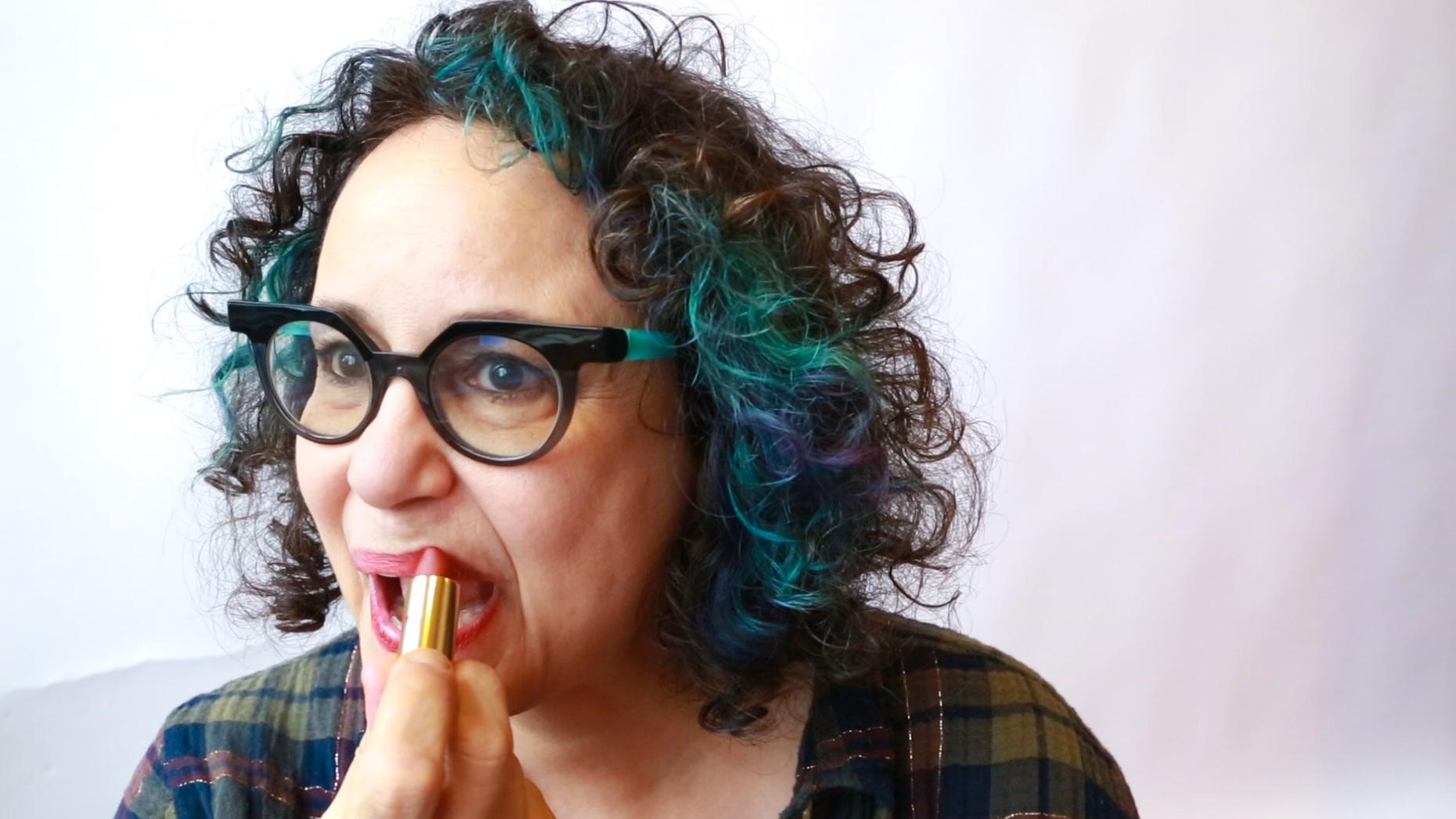
On the Media
SPECIAL OFFER! ONLY 50 LEFT!!!
00:12:03
Lipstick designer Poppy King is a devoted OTM listener. In collaboration with our own Brooke Gladstone, she designed a lipstick called Well Red. There are only 50 left. GET YOURS NOW!
Loading summary
Transcript46 lines
- [00:00]
A
On the media is brought to you by Progressive Insurance. Do you ever find yourself playing the budgeting game? Well, with the name your price tool from Progressive, you can find options that fit your budget and potentially lower your bills. Try it@progressive.com Progressive Casualty Insurance Company and affiliates Price and coverage match limited by state law. Not available in all states.
- [00:22]
B
Oh, hey there. It's me, Katya, OGM's executive producer. I have some great news. We were cleaning out our tote bag closet. Yes, every public radio station has one. And we found a box of our exclusive lipsticks that I want to offer to you guys as a special gift. Right now, there are only 50 left, so don't sleep on it. Go to onthemedia.org Become a member and get one of these things before they're all gone for good. Here's Brooke with the lipstick origin story.
- [00:51]
C
It was Poppy King's idea, lipstick designer extraordinaire. Last year, Elle Australia listed her Frog Prince lipstick as one of the most iconic shades of all time. She's a devoted listener, too, so she designed, in collaboration with the show, a special lipstick offered entirely free of charge to us that is not to you. Stay tuned till the end of this interview for instructions on how to get your hands on one of these lipsticks. Anyway, a while back, I asked Poppy about her unified theory of lipstick.
- [01:28]
D
My theory is that unlike other makeup, you know, mascara blush, which conceals, corrects, or enhances, lipstick is very much about who you are on the inside.
- [01:41]
C
And what if you're coral on the inside, but burgundy is what suits you?
- [01:49]
D
The best way I can describe it, as Meg Ryan and. And Scarlett Johansson. Okay. If you picture both of those ladies, they have very similar coloring, but they're totally different Personas. And your Persona is a combination of nature and nurture. Lipstick is much more about the gateway to who you are and the messages that you're giving yourself, most importantly. And then the message that you want to give the outside world.
- [02:15]
C
For you, a creator. It isn't just what you want to tell about yourself to the outside world. It's how you interpret the outside world in your creations. As you've told us.
- [02:28]
D
Yes.
- [02:29]
C
You look at the world through a lipstick lens.
- [02:32]
D
I do indeed. I was not really a girly girl. I was a very. How do I put it? Female versus girly. Yeah, exactly. And so I started getting fascinated with the female experience because I was very aware that I wasn't or I didn't feel feminine because I have frizzy hair, I have a large nose, I have A, you know, I'm not. I had the physicality that was more associated when I was little to a witch than to the princess, you know, anyway. And so I think it was when I started to think about, well, you know, I want to embrace the female experience. What type of female am I going to be? Because all my conservative friends, mothers, seem to wear pink lipstick. All my mother's friends seem to wear dark lipstick. And I started to sort of see a tribal element to it. So I saw, I guess, the language of it before I saw the lens. And I guess the lens is really when I realized that lipstick was so related in my mind anyway to ultimately geopolitical factors. But I didn't think that at 7.
- [03:36]
C
Well, what did you think when your father died?
- [03:40]
D
My father was a Freudian psychiatrist about the plot thickening. So, you know, I mean, I wonder what he would make of such a phallic thing, you know. But my father got diagnosed with skin cancer when he was only 38 and I was 5. So he died at 40. That was the exact time that I went into a sort of fantasy world that for me was about glamour. And I've often thought in the last 10 years about the relationship between glamour and trauma. And I think the classic example is Marilyn Monroe and I think dealing with mortality at such a young age. You know, the darker my world got, the more I just wanted to be a superhero. And boys have their superhero capes and Superman. To me, a female superhero was glamour. It was an armor, you know, it wasn't beauty. I didn't actually feel capable of participating in beauty. I felt very, very awkward about my looks, but I felt like glamour. There was a sort of a democracy to it, that it's about your spirit, which takes me back. The type of lipstick that you're going to like wearing and enjoy wearing is one that relates to your spirit, the spirit you have or the spirit you want. But it's about the spirit. Once I snuck off with one of my mother's lipsticks just right in the time when my father was really dying, that was the first time that I really tried one on, on my own. And suddenly I just felt capable of dealing with things. When I put on that dark blood red lip suit that my mother used to wear, it felt like. I mean. I mean, I would have looked very strange. I was about 7. But, you know, it felt like it connected me to an inner source of power. What it did to me on the outside was really so much less interesting to me than what it did to me on the Inside.
- [05:27]
C
So now take me to your work.
- [05:30]
D
Yes.
- [05:31]
C
And politics. And when you started using the latter.
- [05:38]
D
To inspire the former, when it really solidified was when I realized, you know, I went through my sort of teenage years awkward enough, let alone being a teenager in the 80s. You're going through your awkward period in a very awkward fashion. And I was looking for lipsticks like the one that I tried on when I was seven, these sort of blood red, old fashioned style lipsticks, given relative to the 80s style lipsticks at the time. That's when I realized that I felt my least awkward when I emulated the 1940s. You know, I totally see that. Yes. Because I stopped trying to fit in with the beauty look of the day.
- [06:17]
C
It was a time of power for women.
- [06:19]
D
Yes.
- [06:19]
C
It was the war years.
- [06:20]
D
It was the war.
- [06:21]
C
Women were taking over the home front in huge numbers.
- [06:26]
D
Exactly. I mean, of course, I didn't know about things like Rosie the Riveter there and all that kind of stuff, but I really identify with the idea of, for want of a better word, the femme fatale who is not pretty, but who is powerful and strong. But also, to me, the best femme fatales had a big heart.
- [06:45]
C
And how old were you?
- [06:46]
D
I was 17.
- [06:48]
C
And it was two years later, you started your own company. Yes.
- [06:51]
D
It was called Poppy. It was about my story, but also what I love is the poppy flower, which was both beautiful and dangerous.
- [06:58]
C
Mm. So tell me about how you drilled down in creating your lipsticks.
- [07:09]
D
So many of the lipsticks I've created in the last 15 years, since I've been in America and living in New York, really were triggered by either something that I heard on public radio or something that I read in the New Yorker.
- [07:24]
C
Give me an example.
- [07:25]
D
A while ago, I think it was Radiolab. It must have been about 10 years ago, did a big thing about the recreation of the Big Bang Theory. And at the time, I was under a lot of pressure to make a lip gloss. Terrible, terrible, terrible pressure. Terrible pressure. Basically, I was under pressure, as I always find myself, to try and be more commercial, which I really don't enjoy. And I remember listening to this thing all about the Big Bang Theory and particles and everything sort of expanding out. And I ended up doing a lip gloss called the Big Bang Theory. It was my theory that you could make your lips look bigger and more convex by having a sort of shine not dissimilar to the Milky Way. So that's a very obvious one. Another one that I would love to do is I would really love to do one around 1913. Cause I heard a fabulous.
- [08:23]
C
Sarah Fischo.
- [08:24]
D
Yes.
- [08:25]
C
Sarah Fishko is a cultural reporter here at wnyc.
- [08:29]
D
So you get the general gist. Public radio for me is pretty much where my best lipstick ideas come from.
- [08:35]
C
So how is it, Poppy, that I have the delight of hosting you in the studio? How did you get here?
- [08:43]
D
Well, chutzpah. How I've got anywhere. No, I mean, I'm tearing up because you say delight. I mean, this is just really is a dream. I've always been a big fan of on the media, always loved listening to on the media. And I recently upgraded my membership amount and wnyc, being the responsible station that it is, they got back to me to say, you know, we noticed that you've upgraded your whatever. We just want to make sure it wasn't a mistake, humble people that you are. So I struck up a dialogue with your membership services people saying, oh, I'm such a fan and I have a lipstick company. A lot of my lipstick ideas come from, you know, and so I didn't really have any sort of broader agenda. It's just I was so excited when somebody reached out to me from WNYC anyway. And then about three weeks later, I got a wonderful pamphlet, wonderful little book to thank me for going to that other different level of membership.
- [09:42]
C
It's the post election essay that I wrote for people who felt particular anguish at the result. More than the kind of anguish that you would feel if somebody was elected that you didn't like.
- [09:59]
D
Yes.
- [10:00]
C
This seemed to go deeper. And I was asked to examine what is the source of that primal scream emanating from the coasts and other large.
- [10:12]
D
Cities in the U.S. see, primal scream, that's a color that I'm definitely gonna have. It's on my list to do one day, primal scream. So I went off to have breakfast and I took it with me. And I must. Yeah, I'm one of those people that was in. Not so much in shock about who got elected or who won, but more in shock that we got here, you know. So yours was the first thing that was really just about what's the underlying things that are going on here and what can we learn. And so when I started reading your book, I really wasn't thinking of anything to do with lipstick at that point. I'm just sitting, you know, having my eggs, reading it. You know, I remember asking the waitress, excuse me, can I get a pen? And started sort of underlining things. And then when I came to, you know, when real reality is personal, look, it's got stars all around that. And then that quote, reality is that which when you stop believing in it doesn't go away. And I started to sort of like really feel, my God, this is like the experience of lipstick for me. You know, like fake realities will create fake humor, you know, And I could once. And once that genie was out of the bottle, I couldn't stop seeing. Then I got to the section about, how do you say it?
- [11:17]
C
The, um welt.
- [11:18]
D
The um welt.
- [11:19]
C
That's the world we create for ourselves.
- [11:21]
D
Exactly. I mean, and that is so much for me, the experience of lipstick. What I feel is that there is something about the act of wearing lipstick that is a very powerful act of being present for yourself in the world. And so then it just occurred to me to get back in touch with the membership lady about whether or not one madam Brooke Gladstone would be interested in actually collaborating with me on a lipstick. And that's how we found each other to be sitting here.
- [11:53]
C
We're offering these lipsticks designed by Poppy King in collaboration with me for a donation of $12 a month. That's $144 for a year's support of this show. So go to onthemedia.org donate or text lipstick to 70101 lipstick to 70101 and thanks.
- [12:25]
A
NYC now delivers the most up to date local news from WNYC and Gothamist every morning, midday and evening with three updates a day. Listeners get breaking news, top headlines and in depth coverage from across New York City by sponsoring programming like NYC Now. You'll reach our community of dedicated listeners with premium messaging and an uncluttered audio experience. Visit sponsorship wnyc. Org to get in touch and find out more.