← On the Media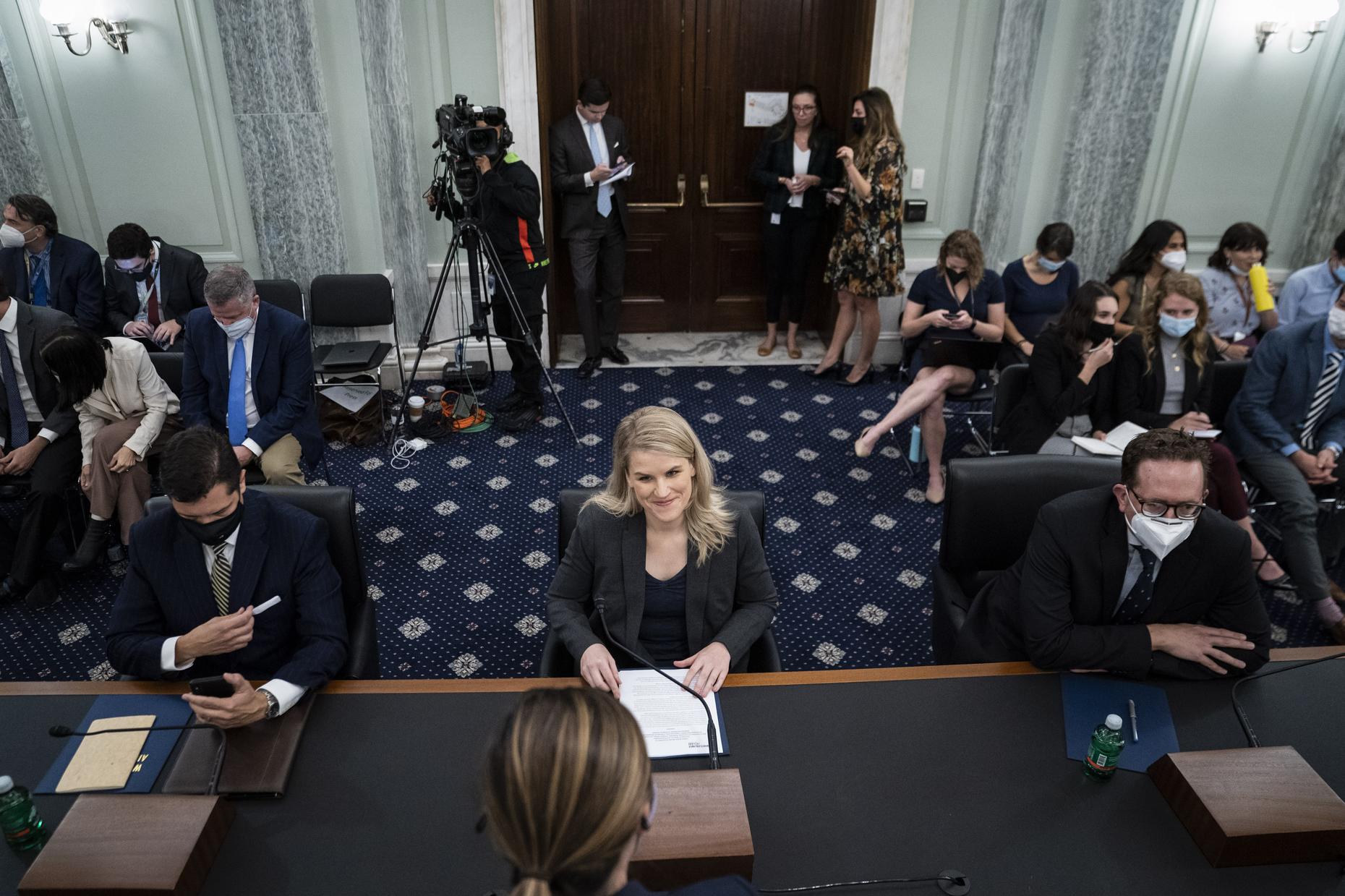
On the Media
The Big Reveal
00:50:23
Facebook on the defensive; the Pandora Papers; and new links between law enforcement and far-right militias.
Loading summary
Transcript214 lines
- [00:02]
Brooke Gladstone
From WNYC in New York, this is ON THE media. I'm Brooke Gladstone.
- [00:06]
Frances Haugen
I'm here today because I believe Facebook's.
- [00:09]
Kevin Roose
Products harm children, stoke division and weaken our democracy.
- [00:13]
Brooke Gladstone
Between a Senate whistleblower hearing and a six hour service outage, the PR disasters keep mounting for Facebook. Also on this week's show, what ails the tech giant so much that when its own researchers tell it it's doing wrong, it it just goes on doing it.
- [00:30]
Kevin Roose
What really keeps them up at night is this idea that no one wants to use their products anymore, or at least no one that they care about.
- [00:36]
Brooke Gladstone
Plus how an enormous information leak reveals a shadowy offshore economy that isn't always so offshore.
- [00:45]
Jared Ryle
What we're seeing with the Pandora papers is that the US Itself has become one of the biggest, if not the biggest, tax haven in the world.
- [00:52]
Brooke Gladstone
It's all coming up after this.
- [01:00]
Kevin Roose
USAA knows dynamic duos can save the day like superheroes and sidekicks or auto and home insurance. With usaa, you can bundle your auto and home and save up to 10%. Tap the banner to learn more and get a'@usaa.com bundle restrictions apply.
- [01:16]
Mary Harris
The election has come and gone. Now we're in a new era. It can be easy to get discouraged, frustrated, but you can't afford not to pay attention. You need trustworthy, independent journalism to cut through the noise and hold Mary I'm Mary Harris, host of What Next from Slate.com we are a daily news podcast with a kind of transparent, smart yet tongue in cheek analysis you can only find at Slate. Follow and listen to what Next wherever you get your podcasts.
- [01:47]
Brooke Gladstone
From WNYC in New York, this is ON THE media. I'm Brooke Gladstone. To say that this week was a rough one for Facebook would be a bit of an understatement.
- [01:57]
Kevin Roose
Massive and mysterious, a global outage taking.
- [02:01]
Brooke Gladstone
Down Facebook around the world along with Instagram and WhatsApp, which Facebook owns. And then there was the whistleblower.
- [02:08]
Kevin Roose
Her name is Frances Haugen.
- [02:10]
Brooke Gladstone
That is a fact that Facebook has.
- [02:12]
Kevin Roose
Been anxious to know since last month.
- [02:15]
Michael Loewinger
When an anonymous former employee filed complaints.
- [02:18]
Kevin Roose
With federal law enforcement.
- [02:20]
Brooke Gladstone
A former product manager at the social network telling 60 Minutes when she joined the company she wanted to focus on combating misinformation. But after a little more than a.
- [02:29]
Kevin Roose
Year, she says she became so disillusioned she filed an anonymous complaint with and provided thousands of pages of internal company.
- [02:38]
Brooke Gladstone
Research, accusing after revealing her identity Sunday. Haugen testified before Congress on Tuesday and she didn't mince her words there either.
- [02:46]
Kevin Roose
I joined Facebook because I think Facebook.
- [02:49]
Frances Haugen
Has the potential to bring out the best in us. But I'm here today because I believe.
- [02:54]
Kevin Roose
Facebook's products harm children, stoke division and weaken our democracy.
- [02:59]
Frances Haugen
The company's leadership won't make the necessary.
- [03:01]
Kevin Roose
Changes because they have put their astronomical profits before people.
- [03:06]
Brooke Gladstone
Hakins testimony came on the heels of last week's hearing where senators questioned Facebook safety chief Antigone Davis. These hearings have allowed for a nuanced, in depth conversation about social media in Congress, marking just how far politicians have come in their understanding since 2006, when Alaska Senator Ted Stevens referred to the Internet as it's a series of tubes. In the years since, the senators haven't exactly been known for their keen technological understanding, as evidenced in the occasional viral sound bite.
- [03:41]
Jared Ryle
Let's say I'm emailing about Black Panther within WhatsApp.
- [03:45]
Kevin Roose
Do I get a WhatsApp?
- [03:46]
Jared Ryle
Do I get a Black Panther banner ad?
- [03:49]
Kevin Roose
Okay, first of all, you don't email in WhatsApp.
- [03:53]
Michael Loewinger
That's like saying, I'll DM you from my fax machine.
- [03:56]
Brooke Gladstone
At this point, it's become something of a trope. Congressional tech hearings led by tech backward politicians with no hope of ever meaningfully regulating the industry. The futility is baked in. So when Senator Blumenthal, one of the politicians leading last week's hearing, made a flub of his own, it ricocheted around right on cue. Here he is questioning Antigone Davis.
- [04:20]
Kevin Roose
Will you commit to ending finsta?
- [04:23]
Brooke Gladstone
Senator, again, let me explain. We don't actually, we don't actually do finsta. What finsta refers to is young people setting up accounts where they want, may want to have more privacy. An account where they can interact just with their. With a smaller group of.
- [04:40]
Kevin Roose
Friendsta's one of your products or services. We're not talking about Google or Apple. It's Facebook. Correct.
- [04:52]
Brooke Gladstone
It's funny, right? Blumenthal doesn't understand what a finsta is.
- [04:56]
Kevin Roose
But beware of senators trying to understand technology. He did the best he could, but still, there was a little bit of a fail in him. Just ask your kids.
- [05:03]
Frances Haugen
Just ask your kids.
- [05:05]
Brooke Gladstone
Except that before his decontextualized flub, Blumenthal actually offered a pretty good description.
- [05:12]
Kevin Roose
Finstas are fake Instagram accounts. Vintas are kids secret. Second accounts, finstas often are intended to avoid parents oversight. Facebook depends on teens for growth. Facebook knows that teens often are the most tech savvy in the household. But Facebook also knows that nearly every teen in the United States has an Instagram account. It can only add more users as fast as they There are new 13.
- [05:48]
Frances Haugen
Year olds for the most part. When you look at moments like what Blumenthal said, will you commit to ending finsta? It comes on the heels of really poorly worded questions and answers about technology dating all the way back to the 90s.
- [06:01]
Brooke Gladstone
McKenna Kelly is a policy reporter for the Verge who wrote that focusing on flubs doesn't reflect today's Congress, at least not entirely, and could have the unintended consequence of working against needed regulation of.
- [06:16]
Frances Haugen
Social now the recent the FINSA thing that we saw last week went viral was because it was believable with this vast history behind it. So I don't like to shame people getting upset with a Congress that has a difficult time passing infrastructure legislation doing things like that, but it does at the same time undermine this Congress's ability to actually regulate platforms like Facebook. How when you look at the question that he asked in the context that it came in, he was really identifying a serious problem. When kids use these secondary private accounts, they can sometimes get caught up in really toxic communities, issues like pro anorexia content. You can start interacting with that content and then your Discover page becomes not pictures of your friends and family, not just recipes. It gets hyper focused on this really harmful behavior.
- [07:04]
Brooke Gladstone
You're saying that fun with flubs that the media have is a distraction with real world consequences.
- [07:12]
Frances Haugen
When something like the Finsta flop happens like it did last week, it becomes a Twitter moment. People are retweeting it, they're quote tweeting it, they're dunking on this senator. And that paints the portrait that these lawmakers are totally out of their depth. And it builds this narrative that Facebook shouldn't be governed by these types of people and that they shouldn't be on the receiving end of regulation because these are the wrong people to do it. And that's the narrative that gets built. Which really wasn't the true story behind what happened on Thursday.
- [07:41]
Brooke Gladstone
You said that this was one of the better hearings that you've heard overall, and there were informed questions from other senators and informed conclusions. For instance, Senator Ed Markey concluded that if Facebook has taught us anything, it's that self regulation isn't an option.
- [07:59]
Frances Haugen
Over the last couple days we have seen lawmakers reintroducing legislation, crafting new legislation, and even threatening to subpoena Mark Zuckerberg to provide more testimony at a later date. So there is action happening not just behind the scenes, but in front of us when we watch these hearings.
- [08:16]
Brooke Gladstone
Markey and Blumenthal reintroduced the Kids act which would place new limits on the types of content for apps targeted to kids under the age of 16. Josh Hawley introduced a bill that would allow parents to sue if they can prove that something on the Internet caused bodily or mental injuries to children.
- [08:39]
Frances Haugen
That's exactly what happened. In the aftermath, we have seen a slew of new legislation introduced. And of course, legislation is only one thing. You can put bills out on the docket and send them to lawmakers. But until those Democratic bills get Republican co sponsors, and until those Republican bills get Democratic co sponsors and start moving through the committee process and actually look like they're viable, that's when I think we'll really get to the point where it seems like something will happen.
- [09:06]
Brooke Gladstone
And also, in terms of this hearing, you were hearing a lot more about algorithms than you did before, how dopamine is leveraged for more clicks, which creates a more rageful online environment and so forth. Stuff that any of us who have covered this would have known for years. But it was fairly new to hear this discussion on the Hill.
- [09:29]
Frances Haugen
That's exactly right. And when you look at the hearings before it, the one where Mark Zuckerberg came in for the first time and had to explain how the company makes.
- [09:38]
Kevin Roose
Its money, Senator, we run ads.
- [09:40]
Frances Haugen
I see this hearing really marked a moment. They have come an extremely long way. And I think we do need to recognize that instead of goofing on them all the time, even though that is.
- [09:51]
Brooke Gladstone
A lot of fun, can we expect that. That these efforts at legislation will actually make a difference? Because they're not law yet.
- [10:00]
Frances Haugen
You know, when I talked to Amy Klobuchar last week, who was at the hearing, who also is doing a really big antitrust investigation, it seems like lawmakers are focused on some kind of multifaceted approach, looking at content, algorithms, but also power and competition and antitrust. And when you're trying to tag an issue as big as one of the most valuable and innovative companies in the world, it gets really, really difficult to craft these rules and think of things in the long term.
- [10:28]
Brooke Gladstone
The Facebook people were on the Hill first to defend themselves against the whistleblower's documents. And then the whistleblower came.
- [10:38]
Kevin Roose
I'd like to thank our witness, Frances Haugen.
- [10:42]
Frances Haugen
The thing about the hearings that we've seen over the past couple years has been we've either brought in some executive from Facebook who is there to deflect questions and describe how good Facebook is, and then we also have other hearings, right, where they bring people in from civic society and experts, people from Georgetown law to kind of describe, well, you know, this is how we really need to get things done, and this is how regulation should happen. And at both of those hearings, people just end up yelling at each other and they get upset. And what I thought was really interesting about the Facebook whistleblower hearing on Tuesday with Frances Haugen was that she embodied both of those types of hearings in one person, an expert from the inside who has internal knowledge about Facebook and its structure, and also someone who knows the issues front and back.
- [11:31]
Kevin Roose
Until the incentives change, Facebook will not change.
- [11:35]
Frances Haugen
Who has prescriptions and ideas of how to fix the company. And then when she faces hard questions from lawmakers, unlike Mark Zuckerberg or Monica Bickert or whoever else Facebook puts on TV to defend the company, she will answer the question, straightforward rather than done. And I thought that was a significant step forward for any congressional investigation that's happened so far.
- [11:55]
Brooke Gladstone
Did both sides of the aisle trust her?
- [11:58]
Frances Haugen
That was my read. It seemed like everyone was very excited to have her there. We're very excited to follow up with her later. Throughout the course of the hearing, John Thune, a Republican, Jerry Moran a Republican, a couple of Democrats were telling her and each other, well, it's time for us to get to work.
- [12:14]
Brooke Gladstone
Thank you very much.
- [12:15]
Frances Haugen
Of course, no always happy.
- [12:17]
Brooke Gladstone
McKenna Kelly is a policy reporter for the Verge. Coming up, is Facebook a digital colossus or an ailing Goliath scrambling for relevance? How about both? This is on the Media.
- [12:40]
Kevin Roose
USAA knows dynamic duos can save the day, like superheroes and sidekicks or auto and home insurance. With USAA, you can bundle your auto save up to 10%. Tap the banner to learn more and get a'@usaa.com bundle restrictions apply.
- [12:56]
Mary Harris
The election has come and gone. Now we're in a new era. It can be easy to get discouraged, frustrated. But you can't afford not to pay attention. You need trustworthy, independent journalism to cut through the noise and hold power to account. I'm Mary Harris, host of What Next from Slate.com we are a daily news podcast with a kind of transparent, smart yet tongue in cheek analysis you can only find at Slate. Follow and listen to what Next. Wherever you get your podcasts.
- [13:28]
Brooke Gladstone
This is ON THE Media. I'm Brooke Gladstone. The internal records Frances Haugen has revealed over the past couple of weeks exposed Facebook's full awareness of its own turpitude and its chronic lack of repentance, which has come as a surprise to absolutely no one. But what to do? Despite the damning evidence, much of the Coverage seemed to focus on the company's almighty power and reach, as if Facebook were the ubermensch of companies rising above common morality to create and impose its own values. After all, if users were citizens, Facebook would be the largest nation on the planet. And yet, there may be another way to look at the Facebook file.
- [14:13]
Kevin Roose
Yeah, this is one of the most sort of counterintuitive things that I took away from the Facebook files, which, you know, is all about how Facebook is abusing its power, researching its own flaws and not doing anything about them. But buried in there, if you kind of look at it as a business story, what you see is that Facebook is really desperate.
- [14:33]
Brooke Gladstone
Kevin Roose is a technology columnist for the New York Times.
- [14:36]
Kevin Roose
It is losing users in this young user age cohort that it so covets. For example, there was a story about Facebook's attempts to win over preteen and teenage users, including figuring out how to quote leverage play dates, a sentence that a lot of people took note of and mocked. But buried in there was a very interesting statistic, which was that Facebook's own researchers were predicting that teenagers in the US their daily use of Facebook was going to decline 45% by 2020. And it also revealed that Instagram, which for many years was sort of the young person's Facebook, they're losing market share to TikTok and other apps, and younger users aren't posting as much as they used to. And so this is really a different story about Facebook, which is that the moves that it's making that are very controversial, such as going after preteen users, they're really rooted in desperation. They need young people or else it's just going to keep becoming older and older and less and less culturally relevant, and eventually it's. It will die.
- [15:43]
Brooke Gladstone
You've suggested that if Facebook hadn't purchased Instagram, then it might have gone the way of MySpace.
- [15:51]
Kevin Roose
Social networks don't live forever. Friendster was really popular, and then Friendster died. MySpace was really popular and then MySpace died. Facebook is really an anomaly in how long it's lasted. Most tech products that were started 15 or 20 years ago are not still popular today. Facebook has been able to buck that trend in part because of its acquisition of Instagram, which sort of gave it another few years of relevance with young people. But we're seeing now they're more interested in things like TikTok and Snapchat. And that's an existential problem for Facebook.
- [16:25]
Brooke Gladstone
You've suggested that a good way to think about Facebook's problems is that they Come in two primary flavors. One is having too many users, and the other is having too few of the kinds of users that it wants.
- [16:42]
Kevin Roose
This is something that I think a lot of people misunderstand about Facebook. How could Facebook be scared about irrelevance? They're huge all over the world, and I would say that's true. Facebook has billions of users. More than 90% of them are outside the United States. And a lot of its reputational problems come from not being able to adequately protect those users from harms in other parts of the world where it doesn't have thousands of employees or people who speak the languages. So that is a too many users problem. But then there are these other problems, which are that they're really grasping for relevance among young, culturally influential people here in the states. I think those problems often get conflated, but they're really quite different. In one of them, Facebook is struggling to catch up to the growth that it has already achieved. And in another area, it is desperately scrambling to grow faster.
- [17:37]
Brooke Gladstone
The Facebook files offered evidence of both problems. One is the company's botched attempts to stop criminal activity and human rights abuses.
- [17:48]
Kevin Roose
Yeah, so that's the part of the Facebook files that has to do with human trafficking and drug cartels and, you know, horrible ethnic violence in parts of the world where Facebook barely has anyone who can effectively manage the platform. Facebook expanded really, really quickly around the world, and some would argue too quickly to actually act responsibly in those places. But importantly, if you just look at this as a business story, those users are not nearly as valuable as the young US Users that many advertisers are trying to reach. Facebook makes a lot more money per user in the United States and North America than it does in what it calls the rest of the world.
- [18:30]
Brooke Gladstone
Can it get those users back?
- [18:33]
Kevin Roose
It has 10,000 people working on augmented and virtual reality products now, and it's really betting that that's going to be the next big thing. But it's still very much a hypothesis. They don't know whether those things will work. And so far, the numbers are moving in the wrong direction.
- [18:51]
Brooke Gladstone
Let's say you're right. We still have the narrative. And Facebook is rarely discussed by anyone, whether in congress or in the media. As a company in decline, do you think that being seen as the 900 pound gorilla, the inevitable overdog, is good for Facebook or not?
- [19:12]
Kevin Roose
It's strange, right? Because these two things are simultaneously true. That Facebook is powerful, it is huge. And its decisions about its algorithms and its products resonate around the world. And it is also true that Facebook may be past its prime. It's having a hard time recruiting and retaining talent because, you know, nobody wants to work for a company that's being compared to tobacco companies. And they're having a lot of trouble getting new products off the ground now because of all this regulatory scrutiny. So it is true that they are big and established and dominant, and it is also true that they are in many ways in decline.
- [19:52]
Brooke Gladstone
I wonder, is what Facebook does much worse than what goes on elsewhere? I mean, I'm thinking of TikTok, which may not have to leverage play dates, but it's certainly set up to be addicting. You know, infinite content tailored with frightening accuracy to a user's preference. I assume that all of these sites leverage dopamine.
- [20:15]
Kevin Roose
Well, I think what makes Facebook different is that they have these teams of hundreds of PhDs and social scientists and data scientists who they've asked to look into these issues, to find the skeletons in their closets in a way that a lot of other social networks have not done and maybe would not do. And then once those researchers learn what the problems of the platform are and present those findings to executives, often the response is silence. And so I think their inaction is what separates them. It's not necessarily that they're the only platform where bad things happen. That's not true. We know that. But they do have an uncommonly clear picture of what's happening on their platforms. And what they've chosen to do with that so far is not much.
- [21:00]
Brooke Gladstone
You gotta wonder why they do the research if it just makes them look bad.
- [21:05]
Kevin Roose
Well, I think they genuinely think that the research will vindicate them and that actually, if you just look at the data and do the research, that you'll find that actually Facebook is producing all kinds of good effects in the world. Like, I think they genuinely felt. Executives there genuinely felt like this research would shed light on the fact that they were doing more good than harm. That's maybe the original mistake that the executives made when they commissioned the research is they didn't really know what they were looking into. They didn't know how many skeletons were in the closet.
- [21:34]
Brooke Gladstone
What about Congress? Do you sense a change in the wind? Are we still stuck in the vortex of Zuck comes and says he's sorry and doesn't do anything, and Congress just moves on to other things. You think Congress is going to regulate Facebook?
- [21:52]
Kevin Roose
Boy, I don't know. I probably covered a dozen of these hearings. Now it feels like, at least. And each time I tell myself this is the time. This is the time that Congress is ultimately gonna get its act together and come up with some regulation for these media companies. And every time it ends up not happening. So I do think this is different. I think Frances Haugen, the whistleblower, is a compelling and knowledgeable source that Congress can lean on. I think there are a number of other advantages they have right now with this internal research, but ultimately, you know, I'm just not that confident that this is the time that is going to be different.
- [22:29]
Brooke Gladstone
Well, there are certainly a lot of proposals around to protect kids and to protect people privacy. Haven't you suggested that maybe the best way to go would be to empower a social network that would behave responsibly or just increase the ability for other companies to compete?
- [22:49]
Kevin Roose
Absolutely. I mean, I think that the best thing that Congress could do if its goal is to just reduce the influence of Facebook, make Facebook less destructive. What it should be looking at is ways that it can help other companies compete with Facebook, because ultimately that is the biggest risk the company faces. It's this risk of abandonment. I mean, it really is the thing that keeps their executives up at night. It's not some new privacy bill. It's not some new regulation. They have all the money in the world to deal with that. What really keeps them up at night is this idea that no one wants to use their products anymore, or at least no one that they care about wants to use these products.
- [23:27]
Brooke Gladstone
You drew a fascinating analogy between Facebook and MySpace. MySpace, once a very popular social media platform, died of, I guess you'd call them natural causes. Lagging popularity, not aggressive regulation. But it was a slow and painful death. What should we be wary of as news consumers of a Facebook in decline?
- [23:53]
Kevin Roose
I don't think that if you are a person who is critical of Facebook, the fact that it's in decline should necessarily make you optimistic. Because what we know from looking at MySpace and Friendster and other declined social media networks is that they can often do a lot of damage on the way down. So MySpace just became seedier and seedier as it became a ghost town, like an abandoned alleyway at a certain point where you would only go if you were trying to scam someone or do something illegal. The company resorted to a lot of different tactics to keep people hooked on the platform even as they were migrating elsewhere. And so I think the same thing could happen at Facebook. We could see it becoming a place where only scammers and hyper partisan people and people who are unscrupulous want to Go. And we could also see the company resorting to more desperate and desperate attempts to keep people on the platform in ways that are really harmful for society.
- [24:50]
Brooke Gladstone
Like.
- [24:51]
Kevin Roose
Well, like this change that they made in, in 2018, this meaningful social interactions algorithm change, where they emphasized posts from family and friends that were sort of emotional, that inspired a lot of engagement. Hear more from your friends and family and less from these random media brands. But what ended up happening was that it supercharged outrage. Content that made people very angry was also the content that garnered a lot of engagement. And so they ended up boosting the prevalence of angry and outrageous content on the platform. And that's the kind of thing that we could see more of. If they do start to get more.
- [25:29]
Brooke Gladstone
Desperate, do you think they knew that that would happen?
- [25:34]
Kevin Roose
I don't think that. There's probably a memo hiding somewhere that says, you know, let's, let's dial up the outrage and it'll really retain users.
- [25:42]
Brooke Gladstone
That way they know that engagement is supercharged by anger.
- [25:48]
Kevin Roose
I mean, what we do know is that their researchers were telling them, hey, this meaningful social interactions change, this algorithm change, it's actually making people angrier. And it's not only making people angrier, it's making political parties angrier and more divisive because they've learned that in order for their content to perform well on Facebook, they need to take increasingly extreme positions. And so their researchers were telling them this loudly and clearly, and they still saw the numbers going in a direction that indicated that they liked this change, and so they stuck with it.
- [26:26]
Brooke Gladstone
Qed, Kevin.
- [26:29]
Kevin Roose
Qed.
- [26:31]
Brooke Gladstone
Thank you very much.
- [26:33]
Kevin Roose
Thanks so much for having me.
- [26:35]
Brooke Gladstone
Kevin Roos writes about technology for the New York Times. His column this week was Facebook was weaker than we knew. Coming up, history's biggest tax leak reveals a system of law breaking and hypocrisy enabled by the rich in rich nations, ours included. This is on the media.
- [27:05]
Michael Loewinger
How many discounts does USAA auto insurance offer? Too many to say here. Multi vehicle discount, Safe driver discount, new vehicle discount, storage discount.
- [27:14]
Frances Haugen
How many discounts will you stack up? Tap the banner or visit usaa.com autodiscounts restrictions apply.
- [27:21]
Mary Harris
The election has come and gone. Now we're in a new era. It can be easy to get discouraged, frustrated. But you can't afford not to pay attention. You need trustworthy, independent journalism to cut through the noise and hold power to account. Mary I'm Mary Harris, host of What Next from Slate.com we are a daily news podcast with a kind of transparent, smart, yet tongue in Cheek analysis you can only find at Slate. Follow and listen to what next. Wherever you get your podcasts.
- [27:53]
Brooke Gladstone
This is on the Media. I'm Brooke Gladstone. The Facebook whistleblower is one person who handed over documents about one company. But earlier this week, news outlets around the world began publishing findings from another leak, an enormous one, one that exposes an entire shadow economy.
- [28:13]
Kevin Roose
It's a bombshell report based on the biggest leak of offshore banking data in history.
- [28:17]
Jared Ryle
The Pandora Papers.
- [28:19]
Brooke Gladstone
A massive investigation of millions of leaked documents from offshore bank accounts detailing how some of the world's wealthy, from world leaders to celebrities, hide their assets from authorities and tax collectors.
- [28:29]
Kevin Roose
Kings, presidents, prime ministers, former prime ministers.
- [28:32]
Brooke Gladstone
The names of hundreds of public figures have been disclosed, with more names to come from 91 countries. Cultural figures, fugitives, con artists, murderers. 35 past and present world leaders. Over 600 journalists are working together to sift through them. The documents were first obtained by the International Consortium of Investigators Journalists. They include nearly 12 million financial records related to more than 29,000 offshore accounts. Jared Ryle is the director of the ICIJ. Welcome back to the show.
- [29:07]
Jared Ryle
Thank you. Thank you for having me.
- [29:09]
Brooke Gladstone
Well, five years ago, we spoke about the last huge global reporting project that you directed, the Panama papers. This week, ICIJ launched the Pandora Papers in partnership with what, around 150 media partners worldwide. And both of these projects involved an unprecedented collaboration among journalists. And both revealed how massive amounts of money are secretly moved through offshore accounts. So can you compare this project, Pandora, to the Panama Papers?
- [29:44]
Jared Ryle
Well, the Panama Papers was based on one offshore service provider in Panama called Mossac Fonseca. This is much more global. It actually involves 14 service providers. So 14 different law firms in multiple jurisdictions around the world. And the names are bigger. 35 current and former world leaders. More than 330 politicians are elected officials. And we're being very conservative in the numbers that we are publishing. We're pretty confident that you've almost got twice as many politicians that we're coming out with.
- [30:17]
Brooke Gladstone
Well, stick with the Panama Papers for a moment longer. Did it affect legal changes that reflected how shady a lot of these financial dealings were? I mean, were you satisfied that the Panama Papers made a big enough impact?
- [30:36]
Jared Ryle
Well, the impact was massive. I mean, you had the resignation of three world leaders. In the end, I think there were 79 different inquiries and 79 different countries. Afterwards. There were multiple changes to the law. Governments around the world recovered $1.4 billion in taxes. But what's interesting is that five years later, we're now finding that a lot of those changes that we were promised haven't had any real impact in what is really an artificial construct, this offshore world where people can go and play by different rules. The biggest revelation here is the hypocrisy that we're seeing from these world leaders. But you're also seeing the hypocrisy of the us. The US has acted as a sheriff in the world on this. They've required the Swiss bank accounts to be closed. They've required American citizens to declare all of their offshore holdings. It has pushed other countries to implement new laws to stop this happening. But what we're seeing with the Pandora papers is that the US itself has become one of the biggest, if not the biggest, tax haven in the world. And in particular places like South Dakota, where bad actors, people that have had misconduct charges against him, you know, sometimes politicians from other countries are now using trusts in South Dakota to hide their money.
- [31:53]
Brooke Gladstone
The ICIJ observed in its story on the Pandora papers that in the popular imagination, we think of the system as a far flung cluster of palm shaded islands. But the offshore money machine operates in every corner of the planet. And the key players involve elite institutions, multinational banks, law firms, and accounting practices headquartered in the US And Europe. You mentioned South Dakota. We have places like Delaware where secrecy in finances seems to be its byword. What sort of banks and law firms and accounting firms are key players in this?
- [32:36]
Jared Ryle
Every household name that you can think of, every bank on the high street, every major accounting firm that comes to mind is involved in this. We have revealed the secrets of 14 of these offshore law firms. But they are really the small players. They're the middlemen because the clients are coming from London, they're coming from Russia. We're looking at the looting of Africa. I mean, it's really very global. You know, one of the biggest findings here is that the people that could be doing something about this and the countries like the U.S. that could be doing something about this, are actually benefiting from it. So it probably goes some way to explaining why after five years, after the Panama Papers happened, we're really just seeing another level of sophistication. We're not actually seeing any real change.
- [33:22]
Brooke Gladstone
You've said that investigative reporting is all about finding patterns, not about finding something once, but over and over again. You were dealing with nearly 12 million confidential files, hundreds of reporters. How did people know what to look for, what to find, what to share?
- [33:43]
Jared Ryle
We basically have a system that allows us to ingest millions of documents and make those documents available, all of the documents available to all of the reporters who are on the project so they can go into our system, it's all password protected, and then they can search. Most reporters would start typing in the leaders of their country. We in fact did find some leaders like Donald Trump. There were a lot of documents to do with the Trump Corporation because one of the firms that we had was a Panamanian firm and it was the law firm that the Trump Corporation used in Panama. Obviously we were quite excited about that at the beginning, but there really wasn't anything in there. It was quite dull material. But again, it's by way of example. You start off looking for what you want to find and then you realize you've got to let the, the documents talk to you. You've got to follow what the documents have, not what you went in there hoping to find.
- [34:38]
Brooke Gladstone
It's like dropping somebody on a planet and saying, just let the planet show you where to go. I mean, it was planet sized quantities of documents. I can understand throwing spaghetti at the wall. You plug in a world leader's name into the search engine and hope that that person pops up. But how do you let the documents talk to you?
- [35:01]
Jared Ryle
By collaborating. We have invented almost this new way of working as investigative reporters. Traditionally, we are lone wolves and we don't share information. When you're trying to tackle 12 million documents, and to give you a sense of that, like we only counted one document, whereas in fact, some of the documents ran to thousands of pages. So again, you're talking about nearly 100 million actual reports, more than 100 million actual pages. You could never possibly read them all and understand them. You had to collaborate with your fellow reporters. And that's what we do at icij. We bring teams of reporters from around the world together.
- [35:38]
Brooke Gladstone
You know, as far as you're concerned, we just don't need offshore accounts. They don't serve any purpose except to provide secrecy and tax evasion.
- [35:49]
Jared Ryle
There is simply one product for sale here, and that is secrecy. Because we've now been doing these stories for almost a decade, we can see no real reason for any of this world to exist. We're seeing very clearly in the Pandora papers that the people that could be fixing this are the ones that are benefiting. So there's been no incentive for them to do it.
- [36:08]
Brooke Gladstone
Ah, yes, you've observed that the minute reporters come and question practices, the practices are merely changed, but the corruption that they support remains.
- [36:23]
Jared Ryle
Look, I learned this a long time ago as a reporter when I was investigating police corruption. And every time you reveal something new, we found Basically that the corruption just became more sophisticated. That's what we're observing again in the offshore world. Every time we reveal something like this, the next time we come back to it, they've just got more careful. And in fact, there were some really hilarious moments for the reporters investigating this, because we were able to see what these firms were doing after we'd published the Panama Papers. We saw the clients moving to new firms. We saw the clients asking, whatever you do, please, you've got to keep my identity secret. We don't want another Panama Papers to happen. And of course, you know, to be able to read that was quite amusing.
- [37:07]
Brooke Gladstone
You've been doing this for nine years. What drives you to keep going?
- [37:12]
Jared Ryle
Well, I think the best journalism has to be relentless journalism. People in power have got an opportunity to fix this, and until you constantly embarrass them, they're just going to pretend they're fixing it a little bit. Like what happened after Panama Papers. They all said, oh, this is all fixed now. Clearly it isn't. Clearly, here's the evidence that it's still broken.
- [37:33]
Brooke Gladstone
Jared Ryle is the director of the International Consortium of Investigation Investigative Journalists. Thank you very much.
- [37:41]
Jared Ryle
You're very welcome. Thank you for having me. I really appreciate it.
- [37:49]
Brooke Gladstone
We owe the new wave of scrutiny surrounding tax havens and Facebook to whistleblowers and leakers who've supplied journalists with truckloads of valuable records. And even as we speak, reporters and researchers are unearthed revelations about far right groups whose secrets were recently dredged up in what's known as the Epic hack. Fallout continues after a hacking group named Anonymous took responsibility for a massive data breach of Epic, an Internet company that registers website domains.
- [38:21]
Jared Ryle
Let me list you a few of these domains. InfoWare Wars 1. American News, Arkansas15.com, the Proud Boys, the Oath Keepers Patriots win, Bitchute8chan, Gab, Parler and others.
- [38:34]
Kevin Roose
The data that's been released is enormous.
- [38:37]
Brooke Gladstone
It includes tons of personally identifying information.
- [38:40]
Kevin Roose
Such as usernames, passwords, financials, including current credit card numbers. All these pieces that researchers say can.
- [38:48]
Frances Haugen
Really help fill out the puzzle on.
- [38:50]
Kevin Roose
Who'S involved in far right movements, how they're connected to each other, and where.
- [38:55]
Brooke Gladstone
The money's coming from. That leak was just one in a string of 2021 hacks into right wing websites like Parler, Gab, and GiveSendGo, the crowdfunding site used for the defense of Kenosha shooter Kyle Rittenhouse. And the hacks have had consequences. A police officer is fired after reportedly donating to the defense Fund of a teen charged with killing two people in a protest against police brutality. At the heart of all this coverage is a transparency nonprofit called Distributed Denial of Secrets, or DDoS, which doesn't do the hacks themselves, but does make the information available to journalists and researchers. One of their latest releases caught the eye of AMN Media correspondent Micah Lowinger, who's been tracking far right military groups like the ones that that stormed the Capitol on January 6th. He dove into the militia data looking for clues about the relationship these groups have with law enforcement.
- [39:58]
Michael Loewinger
Last week when I saw DDoS secrets had uploaded this new batch of militia records, I booted up a Tor browser and downloaded the files from the dark web. And there it was. Five gigabytes of emails, instant messages and membership logs allegedly belonging to the Oath Keepers. Yeah, those guys.
- [40:16]
Kevin Roose
The far right extremist group the Oath.
- [40:19]
Frances Haugen
Keepers appeared in federal court. They faced charges of conspiracy and breaching.
- [40:23]
Kevin Roose
The capitol during the January 6th insurrection.
- [40:26]
Michael Loewinger
Oath keepers have said many of their members were active police and military government employees in an anti government militia. But journalists and researchers haven't been able to verify the group's claims until this data showed up. I started digging into this alleged membership list featuring thousands of people who paid membership dues dating back to 2011.
- [40:47]
George Joseph
There's a lot of names, A lot of people are going to be doing this. We need to start working really quickly.
- [40:52]
Michael Loewinger
This is George Joseph, a WNYC reporter who covers the nypd.
- [40:56]
George Joseph
I'm a local reporter, so normally I'm covering things that are happening in our courts and just in the streets of New York.
- [41:02]
Michael Loewinger
George suggested we look up every name in the list with a New York address using Google and a database of public employees, which we did one by one by one, all 350 plus names.
- [41:15]
George Joseph
And we found a good number of people who were currently or formerly involved in police departments, corrections officers groups, court officers groups, people who had appeared to have signed up for the Oath Keepers from New York, all over the state.
- [41:31]
Sam Jackson
I think that information is alarming, but not at all surprising.
- [41:35]
Michael Loewinger
Sam Jackson is a professor at the University of Albany. He's also the author of the book book Patriotism and the Edge of Violence in a right wing anti government group.
- [41:43]
Sam Jackson
It specifically tried to target current and former members of law enforcement and the military to join the group. The idea being military and law enforcement have sworn an oath to support and defend the Constitution against all enemies, foreign and domestic. And Oath Keepers has a very particular and I would say unconventional understanding of what that oath means.
- [42:06]
Michael Loewinger
Jackson says the Oath Keepers and other so called patriot groups can mislead the press, the public, and even their own members by hiding their far right beliefs in innocuous language. Take a listen to this interview with the Arizona Oath keepers chapter on 60 Minutes in April.
- [42:21]
Frances Haugen
Do you all think that we are.
- [42:23]
Kevin Roose
In the middle of a civil war?
- [42:25]
Brooke Gladstone
I think that we are. You've got good versus evil right now going on in our country.
- [42:31]
Kevin Roose
Who do you view as evil?
- [42:34]
Brooke Gladstone
Anybody that doesn't support our Constitution and follow it. They're trying to change it.
- [42:39]
Michael Loewinger
Of course. The Constitution is a living document, as they say. Even the Second Amendment was a change. And by defending a staunchly conservative interpretation of the Constitution, the Oath Keepers have put themselves in some dicey situations.
- [42:53]
Sam Jackson
In some cases, they situate themselves in explicit opposition to law enforcement. A really concrete and concise example of that was Kim Davis, who refused to issue same sex marriage licenses in the aftermath of the Supreme Court decision finding that LGBTQ Americans have a constitutional right to not be discriminated against in terms of legal marriage.
- [43:15]
Brooke Gladstone
I can't put my name on a.
- [43:17]
Kevin Roose
License that doesn't represent what God ordained marriage to be.
- [43:21]
Sam Jackson
She was found in contempt of court. And in response to that, Oath Keepers said, we think this is judicial tyranny. We are publicly offering armed security for Kim Davis and we will protect her from any U.S. marshals that try to enforce such a illegal and unjust court order. That's a really big problem.
- [43:39]
Michael Loewinger
This was the sort of conflict of interest that we had in mind when George and I started reaching out to the names on the hacked Oath Keepers list, like this guy, Thomas Schmidt, the GOP candidate for Queensborough president.
- [43:51]
Brooke Gladstone
Who's calling?
- [43:52]
Michael Loewinger
Hey, my name is Michael o' Nger. I'm a reporter with wnyc. I'm working on a story about Oath Keepers in the New York area.
- [43:59]
Brooke Gladstone
Right.
- [43:59]
Michael Loewinger
Are you a member of the Oath.
- [44:00]
Kevin Roose
Keepers as of right now?
- [44:03]
Jared Ryle
No.
- [44:04]
Michael Loewinger
When did you stop your membership?
- [44:06]
Brooke Gladstone
Three years ago.
- [44:06]
Michael Loewinger
Yeah, three years ago. And why did you stop?
- [44:09]
Brooke Gladstone
The chapter dissolved.
- [44:12]
Michael Loewinger
And how do you feel about the fact that Oath Keepers have been indicted for storming the Capitol on January 6th?
- [44:19]
Brooke Gladstone
Yeah, that's a damn shame, really. It's just, you know, it's a PR problem right there because I don't believe anybody who was, you know, me personally, people I know, they were all good people, as far as I'm concerned, that were in the Oath Keepers and people like that did what they did. They made their own decision. You know, that was their own prerogative what they did.
- [44:41]
Michael Loewinger
Another name in the membership Logs, Ed Keyroos, chief of staff for the New York Guard, George Joseph, explains.
- [44:49]
George Joseph
We found one guy, Ed Keyrus, who admitted to us that he had signed up for the Oath Keepers, claimed that he was no longer affiliated with them. But in the membership logs associated with his name, the logs refer to his ability to recruit people who are in the New York Guard, military defense volunteer, and military forces. The Air Guard, the Army, the Coast Guard.
- [45:17]
Michael Loewinger
In an email, Keyroo said he only paid membership dues for one year after signing up online several years ago. He said he was never active in the group. And I have no way of verifying that claim because the logs appear to only show when someone signed up. Anyway, this is what happened when we reached out to two active NYPD officers whose names also showed up in the records.
- [45:42]
Frances Haugen
Hello?
- [45:43]
Michael Loewinger
Hi, is this officer?
- [45:45]
Kevin Roose
Who's calling?
- [45:46]
Michael Loewinger
Hi, my name is Michael o' Nger. I'm a reporter with wnyc. I have my recorder running. I'm working on a story about Oath Keepers and nypd. Are you a member of the Oath Keepers?
- [45:58]
Kevin Roose
How did you get my number?
- [45:59]
Michael Loewinger
I obtained a membership log of Oath Keepers which had your name and contact information.
- [46:07]
Frances Haugen
Yeah.
- [46:07]
Kevin Roose
No, I don't.
- [46:08]
Brooke Gladstone
Call me again. Appreciate it.
- [46:10]
Michael Loewinger
Are you a member of the Oath Keepers?
- [46:13]
George Joseph
Another of the officers whose name matched that of a person in the Oath Keepers membership logs was one who was in the Strategic Response Group, which is a unit that the NYPD has deployed over the years to quell protests. It has been very controversial. They wear sort of specialized gear and they've been accused of brutality in many instances. So it was interesting to find that someone who is part of this sort of alleged anti government right wing organization potentially was involved in that kind of work on the force.
- [46:47]
Michael Loewinger
But when I called up the person in question, I got the same response. No comment.
- [46:51]
Jared Ryle
Click.
- [46:52]
Michael Loewinger
And that's to be expected, I guess. New York cops are trained not to talk to the press. And since we couldn't confirm they were members of the Oath Keepers, we chose not to name those two NYPD officers. But before publishing our findings in Gothamis, WNYC's partner publication, we reached out to the mayor's office for comment, which led to this.
- [47:10]
Brooke Gladstone
New York City Mayor Bill de Blasio has launched an investigation into the nypd.
- [47:17]
Mary Harris
Mayor Bill de Blasio says any ties to Oath Keepers will disqualify the officers.
- [47:22]
Brooke Gladstone
From serving the city.
- [47:23]
Jared Ryle
Your office has launched an investigation you.
- [47:26]
Brooke Gladstone
Confirmed, but could you tell us more about the scope of that investigation?
- [47:30]
Michael Loewinger
This is WNYC host Brian Lehrer. Interviewing Mayor de Blasio last Friday.
- [47:35]
Brooke Gladstone
Will it be limited to just the two officers the story mentions, or will it involve going into the data and looking for more possible names?
- [47:45]
Kevin Roose
If we confirm that any police officer has pledged allegiance to Oath Keepers and to those values, then they'll be due process. Of course they deserve a trial, but we're not going to go through all the ranks. NYPD looking for what people's political values are. That smacks of McCarthyism to me. And I said yesterday my parents went through the McCarthy era and were victims of the McCarthy era. I'm not going to start a new progressive vision of the same thing.
- [48:10]
Michael Loewinger
After we broke this story, a flood of reports began uncovering other potential law enforcement ties across the country. An editor at a major Utah newspaper messaged me asking for advice for how to do this type of reporting in his state. BuzzFeed News found names matching officers in Washington state and Louisiana who are being sued for civil rights violations. And USA Today wrote about ties between the group and a sheriff in Southern California.
- [48:36]
Sam Jackson
Riverside County Sheriff Chad Bianco is one of hundreds of law enforcement officials caught.
- [48:40]
Kevin Roose
On a list of leaked membership records.
- [48:43]
Sam Jackson
For the Oath Keepers.
- [48:44]
Kevin Roose
He says he did pay for a one year membership to the group back in 2014, but while he's distancing himself from the Oath Keepers, he doesn't disavow them either, saying what happened on January 6th by a few people should have nothing to do with something I did in 2014 with an organization that supports the Constitution.
- [49:04]
Sam Jackson
I am not particularly optimistic that a leaked membership log will spur law enforcement around the country to think about this issue.
- [49:12]
Michael Loewinger
Sam Jackson There is a long history.
- [49:15]
Sam Jackson
Of law enforcement agencies and individual members around the country being involved in extremism. This isn't new by any means, and this particular form of extremism is one that is politically contentious. There is not agreement that Oath Keepers, for example, are extremists the same way that there is agreement that ISIS is a terrorist.
- [49:37]
Michael Loewinger
Okay, so it's completely futile.
- [49:40]
Sam Jackson
It's not completely futile. I can certainly imagine that New York City takes action regarding this sort of thing in a way that, let's say a county sheriff's office in upstate New York doesn't take action. Right. The politics of the context are just different. I think that systemic change in law enforcement will only happen when we have systemic change in American political culture.
- [50:09]
Michael Loewinger
I also wasn't surprised by the notion that cops might be members of the Oath Keepers. But I'm going to share something that might make me sound kind of naive. As we dug into the names on that hacked list, it was the broader picture picture that gave me pause. Programmers, nurses, doctors, lawyers, security guards, investment bankers, carpenters, CEOs, blue collar, white collar, rural and urban. There's a guy in the list who lives on my street in Brooklyn. Oath Keepers shown to undermine the rule of law in the name of a distorted, diminished constitution. It turns out we don't live in a bubble after all, even in broken Brooklyn. Well, I'm glad I know. I guess for on the Media, I'm Michael Olinger.
- [51:00]
Brooke Gladstone
Actually, the theme of the whole show turned on the vital news that whistleblowers and hackers provided us to enable us to catch a glimpse of the faces some of us keep hidden from those who would judge us or confront us or arrest us. The Oath Keepers who resist the rule of law in the name of law. But also Facebook, which knew very well what harm it was causing the world leaders and the politicians, movie stars, mob figures, lawyers and bankers who hid taxable income that could have materially improved the lives of fellow citizens. In essence, it's about the debt we owe to each other and the lengths that some of us will go to ignore it. That's it for this week's show on the Media is produced by Leah Feder, Michael Loewinger, Eloise Blondio, Rebecca Clark Callender and Molly Schwartz, with help from Jewaria Wright. Zandra Ellen writes our newsletter and our show is edited by Katya and me. Our technical director is Jennifer Munson. Katya Rogers is our executive producer. On the Media is a production of WNYC Studios. I'm Brooke Gladstone and after summer off, I'm glad to be back.
- [52:40]
Michael Loewinger
This is Ira Flato, host of Science Friday. For over 30 years, the science Friday team has been reporting high quality science and technology news, making science fun for curious people by covering everything from the outer reaches of space to the rapidly changing world of AI to the tiniest microbes in our bodies. Audiences trust our show because they know we're driven by a mission to inform and serve listeners first and foremost with important news they won't get anywhere else. And our sponsors benefit from that halo effect. For more information on becoming a sponsor, visit sponsorship.wnyc.org.