← On the Media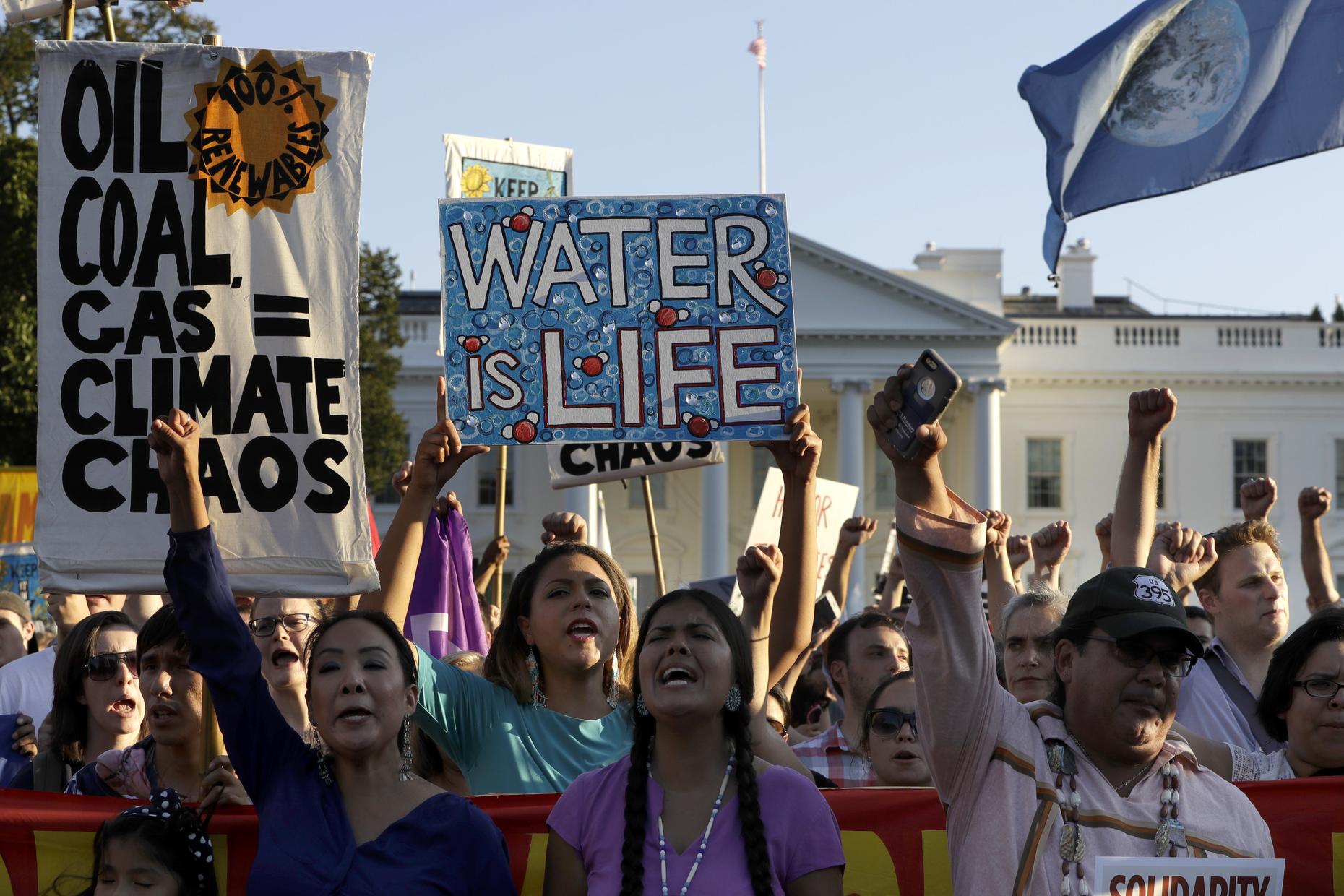
Loading summary
Transcript55 lines
- [00:02]
A
Monday was Indigenous Peoples Day, renamed from Columbus Day to honor the lives and histories lost to centuries of colonization. Often the stories shared about the first people here are those of loss, like the Trail of Tears and the massacre at Wounded Knee. In this midweek podcast, David Troyer, an Ojibwe professor of literature at the University of Southern California, offers a counter narrative to this tragic account of Indian life in his book the Heartbeat of Wounded Native America from 1890 to the present. This conversation originally aired in 2018.
- [00:44]
B
It was a pretty vanilla vision. He basically said, we have to get along with white people. You have to work hard. You can't cheat or steal or drink. If we do all these things well, then we will be reunited with our loved ones and our ancestors in the afterworld. It was almost Protestant in its insistence on a kind of work ethic as it spread and grew, and other tribes interpreted it differently. Some people thought if they did the dances in the right way and wore the right shirts and did all the right things, that they would be among the chosen and the saved and everyone else would be wiped away in a massive flood or some kind of catastrophe.
- [01:20]
A
Meaning all the white people?
- [01:21]
B
Meaning all the white people and all the native people who didn't do this stuff. So the Ghost Dance was a religion that was growing around the Pine Ridge Agency. And there was a troop buildup out of fear that this religion would lead once again to open armed conflict with the government. It was never going to go there, but the increased presence of troops put people on edge. Around the same time, Sitting Bull was murdered when they tried to apprehend him. That scared most of the native folk at Pine Ridge. And so everyone was kind of running for cover. A contingent of the reconstituted 7th Cavalry stopped spotted Elk's Band, Sioux, as well as some other allied bands, and surrounded them. The next day, they moved to disarm them. It's not really known what caused the shooting in the first place, but almost immediately, the government opened fire with Hotchkiss cannons on largely unarmed men, women and children.
- [02:14]
A
The descriptions of the massacre are horrifying. You quoted a reporter from the deadwoods South Dakota Times, who wrote, why should we spare even a semblance of an Indian? And then you have L. Frank Baum, author of the Wonderful wizard of Oz, writing for the South Dakota Saturday Pioneer. He said, having wronged them for centuries, we had better, in order to protect our civilization, follow it up with one more wrong and wipe these untamed and untamable creatures from the face of the.
- [02:50]
B
Earth by virtue of Being wronged, we're now a threat. Almost immediately after the massacre, it came to contain and symbolize all of the preceding 400 years of interactions between colonists and indigenous people in the New World. This was basically the end, and it stood in for everything that had come before.
- [03:11]
A
Now, what most Americans know about the massacre they learned from Bury My Heart at Wounded Knee and the HBO film adaptation in 2007. Tell me about the importance of this book, Mo.
- [03:25]
B
Yeah. Dee Brown's 1970 classic, Bury My Heart at Wounded Knee is the most widely read book about American Indian history ever published in 17 languages, never out of print, it sold over 4 million copies. I read that book when I was in college. I was thrilled to be introduced to a book about me. And in the very first pages of the book, he says something like, this book is about the Indians plains wars from 1850 to 1890. I start at the beginning of the wars, and I end at the massacre at Wounded Knee, where the culture and civilization of the American Indian was finally destroyed. If you ever happen to travel through modern Indian reservation and you notice the poverty and the hopelessness and the squalor, I hope by reading my book you will understand why I can't tell you sort of how frustrating and how humiliating it was to be praised and held up on one hand and then silenced and done away with on the other.
- [04:22]
A
One reason why you found Bury My Heart at Wounded Knee doubly dismaying, you put it, is because your reservation, the Leech Lake Reservation in northern Minnesota, was a nowhere place where nothing happened and good ideas went to die.
- [04:41]
B
It took a great amount of effort to try and see myself, the place I was from, and my people as more than simply a collection of eternal sufferers. You know, American Indians are once great peoples with a great future behind them. That's it. I was in search of a different story, not just different facts, not just a story of hope to stamp on the other side of the coin of despair. I thought that Dee Brown, despite his passion on the behalf of Native people, which I appreciate, missed the point. Wounded Knee was a low point. We had withstood constant assaults on our sovereignty, our cultures, on our religion, on our families. So by 1890, we were very low, but we were not done. And since that point, we've been doing so many amazing things with such energy and intelligence to live fully realized and satisfying lives on our own terms. Toni Morrison once said that if there's a book you want to read and it doesn't exist, well, then you have to write it. And that's exactly what I've tried to do.
- [05:53]
A
The occupation of Alcatraz, that was the year before Dee Brown's book came out. Describe what happened there.
- [06:00]
B
Yeah, Alcatraz suddenly thrust Indians into the national spotlight. They declared it Indian land and they camped out there and they had a bunch of demands they hoped would be met. And they really weren't met. We wish to be fair and honorable in our dealings with the Caucasian inhabitants of this land and hereby offer the following treaty. We will purchase set Alcatraz island for $24 in glass beads and red cloth, a precedent set by the white man's purchase of a similar island about 300 years ago. I think it was kind of doomed from the start. There was a lot of chaos that occurred on Alcatraz. And that kind of tolerance for dissent, for drama and even violence came along with subsequent activist movements in the 70s. Just as we got down there, the whole courtyard was covered with FBI agents with rifles. They all had rifles and shotguns and they searched me. I don't think it was meant to achieve a direct end, but to raise the consciousness of most Americans to not only our plight, but our continued existence and also direct people's attention toward the responsibility of the government, toward the first people of this country. And it did definitely do that.
- [07:09]
A
In 72. You were a baby when a few hundred Indians led a caravan to Washington. Dubbed the Trail of Broken Treaties, the.
- [07:19]
B
Caravan was the brainchild of both the American Indian Movement and tribal leaders from places like Standing Rock. My own personal view is that the takeover of the Bureau of Indian affairs which ensued was in many ways skewed by the kind of unhealthy self promotion of people like Russell Means, who was a Lakota activist, who was one of the founders of AIM and who thought a great deal of himself.
- [07:46]
A
Was it really an effort to get a meeting with President Nixon?
- [07:51]
B
Yes. I mean, they'd hammered out sort of a bill of rights, if you will, that they were going to present to the government. They wanted the Bureau of Indian affairs to be revamped from top to bottom because it had done a dismal job. It was paternalistic and it was shortsighted. And it lost billions of dollars of Native money that it was holding in trust that were the result of grazing and timber and mineral leases, among other things. The government still hadn't copped to the fact that it was ignoring its basic treaty oblig and this takeover was supposed to draw attention to it. But then the people who were in the BIA trashed the place and did something like $6 million of damage to the building itself. And the whole occupation ended when these sort of dark agents of government, like.
- [08:30]
A
Frank Carlucci, one of Nixon's guys, a.
- [08:33]
B
Bag man, even then, agreed to pay them something like $66,000 to get them to leave, which they took. None of that $66,000, or at least not that I can tell, made its way into the rank and file and the very poor Indians who put themselves on the line to join that caravan.
- [08:49]
A
And then there was another dramatic act of protest, and this time it was at the symbol of Indian suffering and injustice.
- [08:59]
B
That's right. In 73, there was the takeover and the siege of Wounded Knee.
- [09:04]
A
Well, I believe that the time has come that we have to commit violence in order to be heard. I don't want to see anybody killed or anything. The time's gonna come when violence might have to be committed.
- [09:19]
B
There'd been a number of very high profile murders of Native people in the years leading up to 1973 in and around Pine Ridge and in other places in South Dakota, Custer, South Dakota, to speak of another symbolic place. And people were frustrated with tribal government, the federal government. They felt that there was no justice because these white guys who were murdering Indians were getting charged with things like second degree manslaughter or misdemeanors at best. It was. It was truly, truly awful.
- [09:49]
A
And so for 71 days in 1973, Wounded Knee was under siege. If I declared Wounded Knee an independent country, any spy from the United States of America is found within our borders to be shot before a fundraised spot. You say you have very complicated feelings about it.
- [10:13]
B
I did. AIM activists showed up at Pine Ridge at the behest of a lot of community members to help them solve this rash of murders of Native people. The tribal government at Pine Ridge was very against this. Dick Wilson, the chairman of Pine Ridge, was interested mostly in staying in power, and he was working closely with the federal and state government to sort of bring in more and more law enforcement. So there's again, another military buildup. Everything kind of boiled over, and AIM activists took over the Wounded Knee trading post and subsequently took over the entire village of Wounded Knee, at first holding village residents, some of whom were not Native, hostage. And then later, the hostages said, we were free to go at any time. We just didn't want to go because we figured if we did go, the government would kill all the Indians. So they were actually very sympathetic.
- [10:57]
A
And Wilson was the head of the reservation.
- [11:00]
B
He was the tribal chairman.
- [11:02]
A
Sounds like you didn't Have a huge amount of respect for him either.
- [11:05]
B
No, he was a strong arm guy. Tribal government was one of the few ways in those days an uneducated person could bilk the tribe and the government for a few years before they get voted out. But then they got a nest egg. It's totally cynical. Inside Wounded Knee, all sorts of dark and awful things were happening. Some law enforcement people were shot and some Native people were shot and killed. An African American activist by the name of Ray Robinson showed up and disappeared within a week. And it later turned out that he was killed by an AIM security detail and buried someplace in the hills and no one knows where. This was a kind of violence that dogged the American Indian movement for years to come. Defined it in some ways also on a local level. Nothing really changed at Pine Ridge. There was still violence being done to Native people by white people, and they're getting away with it. There was still violence being done by Dick Wilson's government to other Native people, and no one was doing anything about it. And AIM didn't make it any better. But once again, what they did do was keep the issue of Native life and Native lives in the national consciousness.
- [12:05]
A
Because that did have an impact.
- [12:06]
B
It did.
- [12:06]
A
There was some substantial legislation.
- [12:10]
B
Yeah, there was amazing legislation finally passed in the 1970s that improved American Indian education. I remember going to school. This was in the 70s and 80s, but I did not have an American Indian teacher until graduate school. By the time my younger brother and sister, who were eight years younger, went to school, they had Native teachers. They had teachers who were like them. And this meant a great deal to them.
- [12:32]
A
And this was due to the Indian Education act of 1972.
- [12:36]
B
A lot to do with that. And in 1978, I believe Carter signed into law the American Indian Religious freedom Act. Until 1978, it was illegal for Native American people to practice their religion. We weren't being prosecuted by the government if we practiced our religions in the 1970s. But for Carter to finally grant Native American people religious freedom had an incredible effect. No longer if you were a traditional Native person, were you suspect, were you dismissed out of hand or pushed to the side? So, yes, a lot of good things happened in the 70s, and many of those good things happened because of bringing our case onto people's television sets.
- [13:17]
A
We're speaking ahead of Indigenous Peoples Day, October 8th. The movement to change the name of the holiday really began in the early 90s.
- [13:28]
B
Right. So 1992 was the 500th anniversary of Columbus's arrival in the New World. 1992 was also the cresting of the multicultural wave, especially in academia. People in African American studies, people, you know, Latino people, Asian American people were saying, no, no, no, no, no. In fact, the progress of human thinking and the evolution of human civilizations has never been the simply the progress of white people. And people were not content to simply celebrate Columbus. People were much more interested in interrogating the legacy of colonialism, which was still being felt in populations around North America. And so not only Native Americans were protesting that very special Columbus Day, but Latinos were protesting and African Americans were protesting. And we all were finding common cause as we looked back at 500 years of colonialism and what it had done to us and how it had made the country. And so when the Spanish government decided, in conjunction with the American government, that they were going to send some replicas of the Nina Pinto and Santa Maria across the ocean, then around the United States, it's pretty tone deaf on the part of the Spanish government, if you don't mind me saying. Like, let's send these ships to the places where they introduced slavery to native populations, to modern populations descended from the slaves that were owned by Columbus and his brother, for instance. They were rebuffed. It just fizzled.
- [14:51]
A
In the meantime, our government was planning a quincentenary Jubilee to kick off 1992 with its own replicas of the three boats sailing under the Golden Gate Bridge. But corporate sponsors retreated. Right. The Jubilee never happened, exactly.
- [15:12]
B
Because American Indian activists and American Indian people just said, enough with this Columbus crap. We are not going to sit by and let you do this. And by 1992, we'd had generations of Native people completing high school and going to college and serving in the army and serving in World War I and World War II, in Korea, in Vietnam. By 1992, we'd had native veterans coming back from the first Gulf War. For that matter, enough with this.
- [15:40]
A
So now the states of Alaska and Hawaii, Oregon, South Dakota and Vermont recognize Columbus Day. There are cities Austin, Texas, Salt Lake City, Los Angeles, Minneapolis, Seattle. They celebrate Indigenous Peoples Day.
- [15:57]
B
It has a ways to go, but we've come a long ways.
- [16:00]
A
So why don't we jump ahead to Standing Rock?
- [16:03]
B
Okay.
- [16:03]
A
You take issue with a popular narrative that was used by the former chairman of the Standing Rock Sioux Tribe and the author of a New York Times op ed who compared the treatment of Indian protesters and the Bundy Brothers, the protesters who seized the Malheur National Wildlife Refuge in Oregon. He wrote on the same day that the armed Malheur militants were acquitted. I watched as riot Police with military grade weapons rounded up hundreds of peaceful water protectors in North Dakota protesting an oil pipeline. The juxtaposition of these two events, one system of justice for self styled white cowboys and another for Indians, was stunning.
- [16:49]
B
I don't buy it. There's a crucial difference that Chairman Archambeau was missing here. The white supremacists, whatever you might call them, at the Mallure Refuge, they were occupying federal land. The water protectors at Standing Rock were being arrested for trespassing on private land. The issue wasn't that white people were being treated differently than Indians. And I think to maintain that kind of us, them, Indian, white cowboys and Indians discourse is to miss the larger point that the federal government privileges private property above almost everything else. That's the problem.
- [17:26]
A
But weren't the protesters at Standing Rock trying to protect white? What would ultimately be damage to their own land?
- [17:34]
B
Well, of course, but the problem was that 90% of the pipeline was routed through private land. There were ways to reroute it away from you. You could meet with the pipeline and meet with the Army Corps of Engineers, as many tribes on the pipeline's route did. And subsequently, the pipeline was rerouted around those communities. But Standing Rock missed meeting after meeting, negotiation after negotiation, deadline after deadline, until the government finally, without their input, approved the pipeline under the lake and very close to Standing Rock.
- [18:06]
A
What you're saying is that this us versus them mentality was a huge missed opportunity.
- [18:13]
B
The original sin is that the government broke its treaty obligations and promises to the Standing Rock and other Lakota tribes, which resulted in opening up Lakota lands to private non native ownership. That's what allowed the. The pipeline to go through. Because our government will bend over backwards for private enterprise. To me, this is a story of local communities against capitalism, not cowboys versus Indians. Like, I'm sorry, but we already know that story. We already know what happens to Indians. We're sort of. We're sealing our own fate. Let's face it. You know, part of the problem at Standing Rock was that their government didn't show up for meetings. You know, I think it's really important that our activists put their bodies on the line. But I think it's also important that our elected tribal officials should put their bodies in chairs and show up for meetings. Don't get me wrong, Standing Rock was amazing and important and powerful. What was amazing about that protest was that they eschewed figureheads and I would say chauvinist, sexist, violent leadership like we saw in past iterations of Indian activism at Wounded Knee. We had a collection of the Diaspora that was coming to the defense of Standing Rock. It was powerful and important, and the legacy of that protest will live on. Immediately after the protest was over at Standing Rock, the question of pipelines came up on my reservation. My reservation council had previously approved pipelines through the reservation after Standing Rock. There is no way they could possibly hope to be reelected if they approved more pipeline leases. So it had immediate effects around the country. And this was the result of healthy, positive kind of activism the likes of which we had not seen before.
- [19:54]
A
So what is the narrative you want Native American, Native peoples to hold in their minds?
- [20:02]
B
I want to once and for all destroy sort of the narrative of Indians starting out in God's garden of the New World. Enter serpent in 1492, expelled from the garden to wander the earth in shame and poverty. Right.
- [20:17]
A
The Jews have that one already, so.
- [20:19]
B
Right. We've heard that story too. You know, so often we think of Indian life as lives that are defined by having everything stolen from us. Indian lives are lives of loss. That's how our lives are most often understood. And I think a better narrative is to think of our lives as full of plenty. Plenty of injustice, but plenty of passion and ability to right those wrongs. Plenty of poverty, but also plenty of creativity and hustle in order to sort of overcome it. Plenty of crime, but also plenty of laws, plenty of exclusions and traumas, but also a surplus of grit and ability and intelligence and creativity to overcome them and to do better. So in my mind, it's a story of surplus. That's the story I want to tell.
- [21:14]
A
David, thank you so much.
- [21:15]
B
Thank you so much. I'm really geeking out to be on the show.
- [21:18]
A
David Troyer is an Ojibwe from the Leech Lake Reservation in Minnesota. He's a professor of literature at the University of Southern California, a novelist and author of the forthcoming book the Heartbeat of Wounded Knee. Native America from 1890 to the present thanks for listening to the Midweek Podcast. You can check out the Big show on Friday. It usually posts in the Eastern time zone around dinner time. NYC now delivers breaking news, top headlines, and in depth coverage from WNYC and Gothamist every morning, midday and evening. By sponsoring our programming, you'll reach a community of passionate listeners in an uncluttered audio experience. Visit sponsorship wnyc.org to learn more.