← On the Media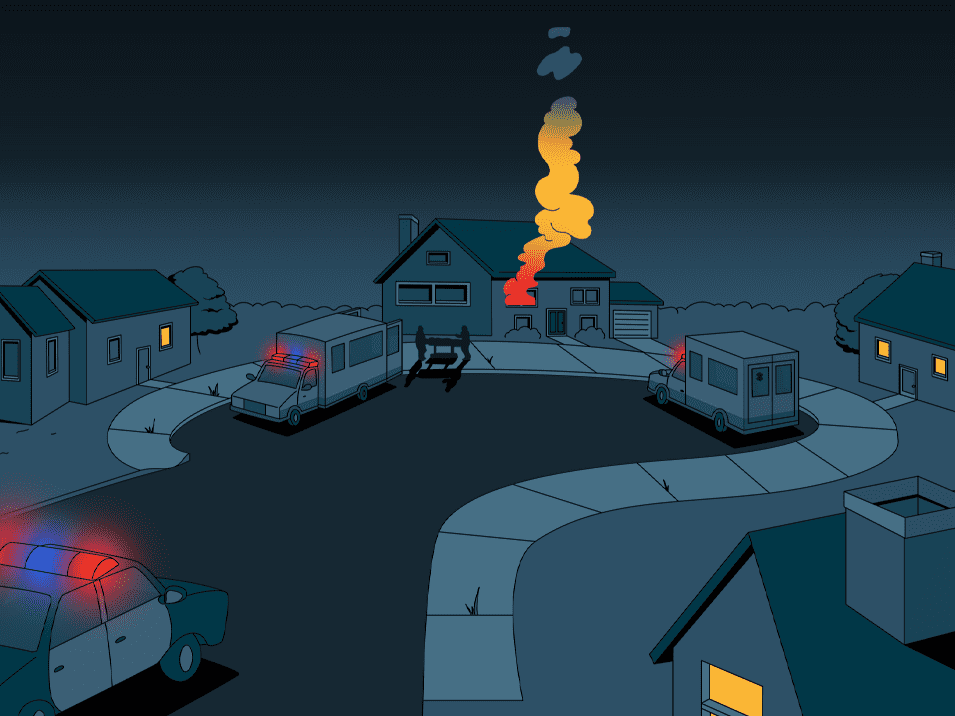
On the Media
Why Reporter Nancy Solomon Chose True Crime
00:16:41
Behind the curtain of the "New Jersey Political Murder Mystery."
Loading summary
Transcript42 lines
- [00:01]
Brooke Gladstone
Earlier this year, the New Jersey Attorney General opened up an investigation into the killings of John and Joyce Sheridan, a well known couple with personal ties to three governors. In 2014, they were found stabbed to death and their home set on fire.
- [00:18]
Nancy Solomon
This morning, the mystery deepens over the death of John and Joyce Sheridan, a prominent New Jersey couple with powerful connections and close friends of Governor Chris Christie.
- [00:29]
Brooke Gladstone
The first responders who came into the.
- [00:31]
Nancy Solomon
Door of the Sheridan home early, early.
- [00:32]
Brooke Gladstone
The morning of September 28 found what could only be described as a house of horror. Local police thought that John Sheridan murdered his wife and then killed himself. That was eight years ago. So why is the Attorney General revisiting the case now? Well, this year our WNYC colleague Nancy Solomon released an investigation into their brutal deaths and found damning evidence of corruption at the highest levels in the Garden State. The series is called Dead End, a New Jersey Political Murder Mystery. On the big show out on Friday, you'll hear an hour of that spellbinding coverage. But in this midweek podcast, I wanted to HEAR why after 20 years of reporting on New Jersey politics, Nancy made the show it all. The idea first occurred to her in 2019. She was working on a project with ProPublica and she found that a tax break was being exploited by a powerful family in Camden, New Jersey. During that reporting, she realized there was more to the Sheridan killings than the public had been told. But that thought didn't make it into that story. Instead, she focused on the political corruption.
- [01:48]
Nancy Solomon
I'd spent a whole year working on that reporting and it never really broke through. It never had, you know, what we call legs. It didn't feel like it went anywhere and that it got the kind of attention that I had hoped it would get. Those are hard stories to tell because they're very document driven and us radio people, we love good tape. And I didn't have a lot of good tape. And so those stories were just a bit dry and long and complicated. And so it just left me kind of a little frustrated. By the end of the year, you.
- [02:21]
Brooke Gladstone
Said it was a year long project and you were looking into many party bosses, but you ended up focusing on the Norcross brothers, right?
- [02:30]
Nancy Solomon
Yes.
- [02:30]
Brooke Gladstone
George Norcross was often described by the press as, quote, one of the most powerful Democrats in New Jersey. Is that phrase straightforward or is that code for something?
- [02:42]
Nancy Solomon
I don't think it's code necessarily. I think it's true, but it doesn't really tell you anything. And I think for many years I wondered what exactly that meant. You know, okay, so he's powerful. I get that. But how? What kind of power does he have? What levers of power is he able to pull on? And how did he get to be so powerful?
- [03:07]
Brooke Gladstone
Okay, so that started out as a story of outrageous conflict of interest and corruption and a tax break program in the poorest city in America. Somehow you found yourself staring down an old double murder case. And that is what Dead End is about. And in order to tell the old story and the murder story together, you landed on a new format, true crime. And that was a conscious decision making, because you love true crime.
- [03:46]
Nancy Solomon
That's right. I guess my very first experience with detective stories was Nancy Drew, who I adored when I was a kid, especially since my name is Nancy.
- [03:58]
Brooke Gladstone
That sort of thing matters a lot.
- [04:00]
Nancy Solomon
I thought those books were written for me. And in more recent years, I'm just a complete Scandinavian noir nerd. And I like in a true crime podcast. So all that was rumbling around in my mind in terms of what I actually consume as a reader and a watcher and a listener. So I realized that if I could hook an audience with a compelling murder mystery, then maybe they would stay along for the ride to understand the political corruption at work behind and connected in some ways to the murder mystery. You know, this spring, as we geared up and got ready to launch the podcast, I would lie awake in bed in the middle of the night, like, worrying that the audience was gonna drop off as soon as we left the murder mystery and tried to, you know, explain the political machine and the real estate deal and the tax breaks. I thought, people are not just gonna not listen, but they're gonna be mad at me. That's what I was afraid of.
- [05:08]
Brooke Gladstone
But you made those inextricably intertwined.
- [05:11]
Nancy Solomon
To me, they are inextricably intertwined. And that was one of the mind blowing pieces of new information that no one had ever reported related to the Sheridan case.
- [05:23]
Brooke Gladstone
So you had all this. You had the somewhat arcane story of taxes intertwined with a, let's face it, addictive mystery about terrible murder. Did this strategy of yours to apply the true crime format to a story you'd visited before, did it work?
- [05:43]
Nancy Solomon
Yeah, absolutely. I think it's. I mean, we're thrilled with the audience numbers that we're seeing.
- [05:48]
Brooke Gladstone
How many listeners do you know that you've gotten?
- [05:51]
Nancy Solomon
As far as I know, we're up over 3 million in two months. You know, when I do a story that runs on the air, even if it runs on NPR on the national network, I'm excited. If I hear from one or two people like, oh, I heard your story. It was so good. Blah, blah, blah. This has just been unreal.
- [06:09]
Brooke Gladstone
But here's the big question. This is a somewhat fraught genre. The gory details are what draw people in. But true crime can easily tilt closer to exploitation than justice. Also, the plot twists that keep people tuned in can feel manipulative and confusing. But, hey, that's the price of admission, right? As long as it doesn't mislead.
- [06:36]
Nancy Solomon
I was really concerned about the Sheridan family and how they would feel about it and what it would be like for them. And so I was really super happy to hear from multiple members of that family about how pleased they were with the podcast after it came out. You know, and one of the other issues is, you know, we thought long and hard about whether we would insert the usual narrative tool that many mysteries engage in, which is, you know, the red herring.
- [07:08]
Brooke Gladstone
Right.
- [07:08]
Nancy Solomon
They present a solution to the crime that's starting to look like, oh, that must be it. You get really drawn in like, that's the guy who did it, and it's looking like it's going that way. And, oh, I'm so smart because I'm figuring this out ahead of what they're telling me. And then, of course, it turns out not to be true, and that person, whatever, has an alibi or didn't do it, and you move on to the next red herring. And I really did want it to unfold like a murder mystery, but I just couldn't. As a journalist, I couldn't put information into the podcast that I knew was not true. I just couldn't live with that. So there were. There were limits to how far we were willing to go.
- [07:52]
Brooke Gladstone
When our producer asked you if there was anything about Dead End that you didn't want to give away in this conversation, you mentioned feeling a little conflicted about that.
- [08:02]
Nancy Solomon
Yeah. You know, this is not the way that most journalists talk about their stories. I mean, it's a very weird thing to feel like you want the element of suspense and surprise for listeners to stick through to the very end. At the same time, I'm doing interviews and being asked about it, and it's weird for me to hold back information. I'm used to just laying out, like, here's the story, and even doing it in what us reporters call an inverted pyramid, giving people the most important stuff first.
- [08:38]
Brooke Gladstone
You noted in one episode of Dead End that you've covered a lot of bad guys in your career, but you never tried to actually solve a murder. You said that, quote, this Story's like a Russian doll. Every question I ask leads to another. But you actually did think you could crack this one, right?
- [08:57]
Nancy Solomon
Yeah, I guess, you know, I do maybe watch a little too much tv. But I just thought if somebody really spent the time to look at everything and dig into it, maybe I would be able to crack it open.
- [09:12]
Brooke Gladstone
Yet another amateur sleuth, so to speak.
- [09:15]
Nancy Solomon
Yes, exactly. But when you read those amateur sleuth stories or watch the series, you never see the brick walls that they come up against. Like the fact that they don't have subpoena power, that they can't get the investigative files from the detectives. These are things that, you know, don't come up when you're watching those shows. But I certainly came up against them and at a certain point realized that there was only so much I could do. What ultimately happened was is that I became increasingly frustrated with the fact that the Attorney General's office, which does have subpoena power, wasn't doing these things. Like, I started to realize, like, wait a minute, why am I trying to solve this murder? They should be trying to solve this murder.
- [10:04]
Brooke Gladstone
So you did uncover a web of corruption connected to the killings. You say, quote, my North Star is not just about individuals, the good ones or the bad ones. It's the systems and the laws that got us here that we pay attention to. What did the Sheridan's deaths signify for you?
- [10:23]
Nancy Solomon
A real collapse in the function of the state that is so critical, which is to investigate and get to the bottom of the suspicious behavior and activity that appears to be riddled with, at the very least, conflicts of interest, if not fraud and extortion. I mean, I love being a reporter in New Jersey because it is so kind of crazy and wild and there is so much corruption. But you gotta wonder at a certain point, like, why. Why does New Jersey have more problems than other places? And to me, this was a big answer to that question that we, the state of New Jersey had a Division of Criminal justice at the Attorney General's office which had been set up to take on the biggest and most important cases. Whether that was a, you know, murder of a prominent citizen that was quite suspicious or whether that's a fraud case or whether that's, you know, mob activity or extortion, whatever it is. The big, big problems in the state are supposed to be taken on by the Division of Criminal Justice. And it isn't doing that job that a prominent, politically connected family in New Jersey couldn't get the Attorney General's office to intervene and Investigate a case that was clearly mishandled by the local detectives. That was like a huge red flag, like, what is going on here? And during the Republican administration of a governor, Chris Christie, a leading Republican is murdered and the Attorney General's office doesn't intervene. That, to me is just a gaping hole and a big question that needed to be answered.
- [12:18]
Brooke Gladstone
So even though you shrink from saying it, I will say that it certainly seems clear that your investigation did prompt the the state Attorney general to take over the case and open an investigation. So now, given your experience with dead end and the fact that your theory that the true crime format could get more people to care about political corruption really does work, has your approach to reporting changed at all?
- [12:50]
Nancy Solomon
I was working with two masters of the craft, Karen Frillman and Emily Bottin, and I feel like I really did learn a lot how to craft a stronger narrative. You know, I've been a news person my entire career, and that's sort of like short and sweet and get to the point and deals with the facts generally. Whereas I think with something long form like this, the place where I was sort of coming up against my habits and my skills was that I would tend not to ask people how they felt about something. You know, I ask, what happened? What do you know? Where were you? When did this happen? But I didn't ever say, and how did you feel about that? Which makes me feel like I'm a therapist or something whenever I ask that question.
- [13:42]
Brooke Gladstone
And maybe it just makes you feel like you're intruding.
- [13:45]
Nancy Solomon
Yeah, that too. You know, that was one of the big lessons was to dig in a little more with people and push them to bear their souls a little more. So, you know, there was a lot more of sort of putting me into the story that I'm comfortable with. I think it really paid off. I think people really liked it.
- [14:05]
Brooke Gladstone
But, you know, one reason why they really liked it, Nancy, I think they really liked it because a listener, I mean, myself as a listener, could tell that you didn't love that part, that you did not want to make this about you, that you're fundamentally kind of shy and. And I have to say that when there's somebody leading you through a radio piece, you don't want them to be this big character. There was nothing in your demeanor that suggested you wanted anything but to get to the truth of the situation. And I think how you are, how you were, made it so much more compelling.
- [14:48]
Nancy Solomon
Well, thank you. That's nice to hear. I mean, here I am in the sort of waning years of my career. And it was a huge lesson. I'm never comfortable calling attention to myself in that way. And I think I see now that it really helped tell the story. It really helped listeners attach to me as their narrator. And it's interesting because as you and I know, there is a real generational divide around putting yourself into the story and having a perspective and letting the audience know your perspective. And I'm quite steeped in the old school, and this was a real, you know, a real leap for me into this newer kind of journalism. And so you can teach an old dog new tricks, it turns out.
- [15:45]
Brooke Gladstone
Nancy, thank you so much.
- [15:47]
Nancy Solomon
Thanks Brooke.
- [15:48]
Brooke Gladstone
Nancy Solomon is a reporter at WNYC and host of the podcast Dead A New Jersey Political Murder Mystery. Coming up on Friday, you will hear a one hour condensed version of Dead End, a multi part series. It is really worth hearing all of. But in the meantime, thanks for listening to this midweek podcast. And Nancy, thanks again.
- [16:16]
Nancy Solomon
Oh, I'm super happy to be here. Thank you. NYC now delivers breaking news, top headlines and in depth coverage from WNYC and Gothamist every morning, midday and evening. By sponsoring our programming, you'll reach a community of passionate listeners in an uncluttered audio experience. Visit sponsorship wnyc.org to learn more.