Loading summary
Transcript354 lines
- [00:01]
Podcast Advertiser/Host
This episode is brought to you by Progressive Insurance. Most of you listening right now are probably multitasking. Yep, while you're listening to me talk, you're probably also driving, cleaning, exercising, maybe even grocery shopping. But if you're not currently operating some kind of moving vehicle, there's something else you could be doing right now that's easy and could save you money right from your phone. Getting an auto quote from Progressive Insurance Drivers who save by switching to Progressive save nearly $750 on average. Plus, auto customers qualify for an average of 7 discounts. There are discounts for having multiple vehicles on your policy, being a homeowner and more. And just like your favorite podcast, Progressive will be with you 24, 7, 365 days a year. So you're protected no matter what. So multitask right now. Quote your car insurance@progressive.com to to join over 28 million drivers who trust Progressive, Progressive Casualty Insurance Company and affiliates. National average 12 month savings of $744 by new customers surveyed who saved with Progressive between June 2022 and May 2023. Potential savings will vary. Discounts not available in all states and situations. Hey, it's Brooklyn Adams and I'm partnering with Abercrombie to tell you about the newest drop from their active brand. Your personal best. YPB leggings are made with buttery soft fabrics that hug you in all the right places. And come in Abercrombie's viral curve love fit, designed to eliminate waist gap. Paired with sports bras and super soft sweatshirts, it's activewear that supports every part of my busy lifestyle and gives me my best butt ever. Head into the new year feeling your personal best. Shop Active by Abercrombie in the app, online and in stores.
- [01:46]
Brian Lucci
Hey, heads up and be ready because in this episode we're gonna be talking about a really tough subject. Death by suicide. I'm Brian Lucci and this is the official one Chicago podcast.
- [02:14]
Amy Morton
Action.
- [02:18]
Brian Lucci
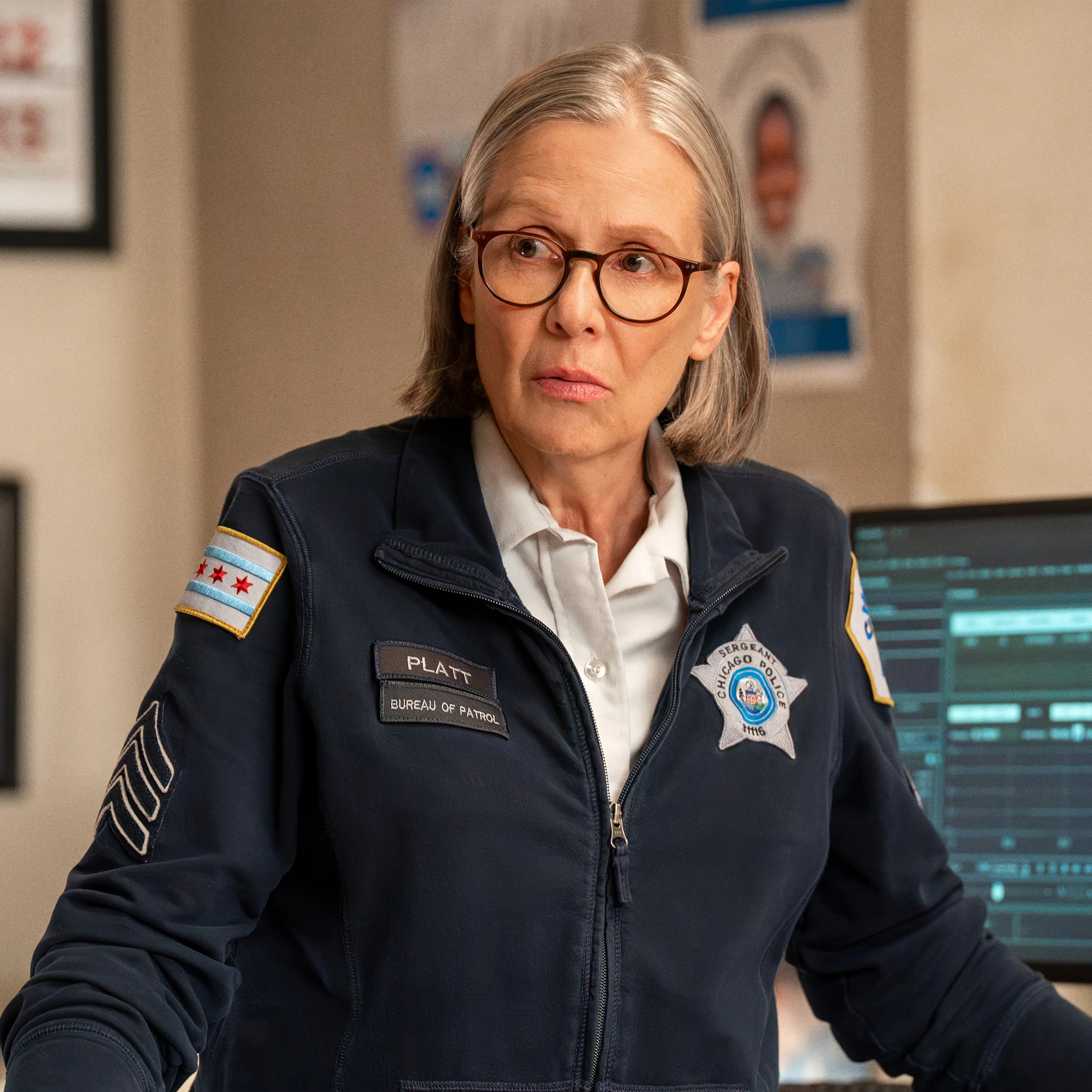
If you spent any time around the 21st district, well, then you know that there's a wise veteran sergeant who's tougher than a two headed rattlesnake. No, I'm not talking about Hunk Voight. Although we love that handsome man and gravelly voice. I'm talking about the woman who runs the front desk, keeps the coppers in line and trains the best of the best. The legendary revered badass herself, Sergeant Trudy Platt.
- [02:47]
Amy Morton
Sergeant Platt, how can I help you?
- [02:49]
Brian Lucci
We're here to see Sergeant Voight in intelligence.
- [02:52]
Amy Morton
Regarding. We have some information to share with him. Regarding?
- [02:56]
Brian Lucci
We're detectives from nypd. Sergeant Voight is expecting us.
- [02:59]
Amy Morton
Oh, my God. You should have said you were from New York City. I'm mortified. Why don't you park it over there?
- [03:06]
Brian Lucci
The other day, I hung out with my good friend, the acting legend Amy Morton, to talk about what makes Sergeant Platt tick.
- [03:15]
Amy Morton
I think she. She is not afraid to be empathetic about somebody's situation. It never lasts real long.
- [03:23]
Brian Lucci
We also got deep into last night's episode of Chicago PD because for the first time in a long time, it was all about Trudy Platt. The episode's called Heroes, and it's special for me because it dealt with the most painful way that you could lose a fellow officer, a partner, a friend. So I'm truly grateful that Amy gave Platt everything she's got.
- [03:49]
Amy Morton
She got this wrong. From the very beginning, she got this wrong, and I don't think that's happened to her, at least for a very long time.
- [04:00]
Brian Lucci
We go to some pretty deep, important places, but we also talk about how much fun it is to play Sergeant Platt. All of that coming up after this quick break. So don't go anywhere.
- [04:17]
Podcast Advertiser/Host
What if I told you that 2026 is the year you launch your business? Maybe you've got an idea you just can't shake. Or that hobby that everyone in your life is telling you to sell. Taking that first step and finally taking action can feel impossible. But with Shopify, all you need to turn your dreams into your new future is at your fingertips. Make 2026 the year you transform into the entrepreneur, founder, and boss you were meant to be. And the one powerful move to make it all happen is starting your business with Shopify. Shopify gives you everything you need to sell online and in person, giving you all the tools to easily build your dream store. Choose from hundreds of beautiful templates that you can customize to match your brand and you can set up quickly with Shopify's built in AI tools that will help you write product descriptions and headlines as well as edit product photos. Millions of entrepreneurs have already made this leap. From household names like Gymshark and Mattel to first time business owners just getting started. Marketing is built in too. You can create email and social campaigns within Shopify to reach customers wherever they are. And as you grow, Shopify grows with you. The same dashboard that you start with will evolve as your business does to handle more orders and expand to new markets. In 2026, stop waiting and start selling with Shopify. Sign up for your $1 per month trial and start selling today at shopify.com realm. Go to shopify.com realm. That's shopify.com realm. Hear your first this new year with Shopify by your side.
- [06:00]
Brian Lucci
Hi, I'm Brian Lucci and this is the official One Chicago podcast. I'm honored to be sitting here with the absolute Chicago legend, our amazingly talented lady who holds down the 21st District X with venomous sarcasm. She's a black belt and verbal judo. Could smell the bologna a mile away. She has a lightning fast draw with her snub nose and her wit. Yep. She's old school, wickedly loyal, brave to the bone, and doesn't take any lip. She's our boss, she's our friend, and she's a woman that you want on your side. So without further ado, I'd like to welcome the one and only Amy Morton, or as we all know her, Sergeant Trudy Platt.
- [06:38]
Amy Morton
That is such a great intro. Thank you.
- [06:41]
Brian Lucci
First of all, getting this going, me and Amy have been working together for, I think it's 14 years. This is 13 seasons. But we were doing stuff ahead of time.
- [06:50]
Amy Morton
Yeah, a little bit ahead of time. Yeah, yeah, yeah.
- [06:52]
Brian Lucci
So we're going on over 250 episodes. Yes. And what we're here today is to talk about season 13, episode nine, which is an all in Amy Morton.
- [07:04]
Amy Morton
It's crazy. Yeah, it's crazy. That hasn't happened in a long time.
- [07:08]
Brian Lucci
All right, here we go. Amy, you have been one of the OG since the very beginning of Chicago PD. Can you take me all the way back 13 years on how the heck you landed this role?
- [07:20]
Amy Morton
I had auditioned for, I think, a different role, and Claire Simon, the casting director, had sent in the tape. It's when those were still on tape and they said, oh, actually, let's see her for Sergeant Platt. So I happened to be way up in Wisconsin, six hours north, and I knew I couldn't drive in in time for this. So she said, put it on your phone. So we have a cottage way up there that's been in my husband's family, like Hayward, Rhinelander, North Rhinelander, near Eagle River. Like, when we take our walks, we walk into the UP. It's been in my husband's family for about 105 years. It's really wild. Anyway, we're up there and it's a pretty rustic cottage. And so we had to bring all the lamps that we had into one room so that I could be lit. And my husband read with me and our friend shot me on my iPhone. And I did my audition there and sent it in and got the job. I mean, I was shocked that I got this job. I was like, there's no way they're gonna. Whatever. Okay, I'll do it. And I got the damn job.
- [08:32]
Brian Lucci
Who called you? Was it, like, Matt Olmsted? Derek Haas? Michael Branham?
- [08:35]
Amy Morton
Somebody called my agent. My agent called and said, you got the job. And I said, what? So, you know, I think Mark Tinker might have had a lot to do with it. Cause he had seen me in a play on who's Afraid of Virginia Woolf?
- [08:51]
Brian Lucci
Oh, wow.
- [08:51]
Amy Morton
And I. Because I had done an episode of what was the spinoff of Grey's Anatomy.
- [08:57]
Brian Lucci
Private Practice.
- [08:58]
Amy Morton
Yeah. I had done an episode of Private Practice that Tinker had directed. So I had worked with him. And then he happened to be in New York when I was doing who's Afraid of Virginia Woolf? And he saw that. So I think Tinker was instrumental in getting me in the door.
- [09:13]
Brian Lucci
Yeah. Mark Tinker was our executive directing producer back in the day, I think the first four or five years. Wonderful man. Back in the day. For those people that really watch Chicago PD that are lifelong fans, we had a patrol, which was Burgess and Atwater at the time, and you at the front desk, and they would handle, like, in service calls or a domestic or the hoarder or this or that. And there was an ongoing running battle with you and those two kids.
- [09:41]
Amy Morton
Yep.
- [09:42]
Brian Lucci
Which I. I know that I missed. There was so much fun. It was so much fun.
- [09:47]
Amy Morton
It was such ridiculous fun. Yeah. Yeah. I made their lives living hell.
- [09:51]
Brian Lucci
Yeah. You handed them their ass all the time. From their vehicles to their radios to this. But there was always a learning lesson. I know when I was lucky, when Matt Olmstead was the original executive producer of the show, one of the creators with Derek Cosmico Brand, he would call me up and he said, luch, can you look at this? Some of the first plat stuff. And then I would send my notes, and then I would be on set, and the shit that I put out there, like, he used it. He made it. Of course, he made it sound better, but he used some of the sarcasm. And I'd be like, w. That this may be the greatest job in the world. And I know that every time that we do a scene like, you know, we're in a bullpen, we're here. But the crew and, you know, the cast, they look forward when they see, oh, Sergeant Platts in this one. She's coming up. What is she going to give us?
- [10:37]
Amy Morton
Cool.
- [10:37]
Brian Lucci
I think it's been so long. And I, I, I hate to sound crazy, but it's been so. We're on 250 plus episodes. And I was going through YouTubes over the last day and I was like, blown away. I forgot. You know, I forgot about when your dad got killed.
- [10:51]
Amy Morton
Uh huh.
- [10:51]
Brian Lucci
You know, you just, they just leave you. But there's some that you, you will never forget. And I, I just watched the YouTube where Tracy Sparadacidus Upton came up to you and told you how her father was pistol whipped during a robbery and that you were the detective.
- [11:09]
Amy Morton
Oh, right.
- [11:09]
Brian Lucci
That was on scene.
- [11:12]
Amy Morton
I try my best, but I can't remember every copper that comes through here. Don't take it personally, detective.
- [11:17]
Podcast Advertiser/Host
February 9, 2003, you answered a call at Nico's Diner on Adams. This guy came in with a.357 pistol whipped the owner when he was closing.
- [11:27]
Amy Morton
Up, almost killed him.
- [11:28]
Podcast Advertiser/Host
All for $272.57 in Greek Town.
- [11:33]
Amy Morton
Well, yeah, I was working robbery homicide.
- [11:38]
Podcast Advertiser/Host
Sergeant, I've never met you as a cop, but I did meet you as a little girl.
- [11:43]
Amy Morton
The owner was your father and you were with him.
- [11:47]
Podcast Advertiser/Host
I used to work the register after school. The offender broke my father's eye socket, gave him 96 stitches, and then stuck a gun in my face and stole the night's receipts.
- [11:57]
Amy Morton
Yeah, I remember this.
- [12:01]
Podcast Advertiser/Host
I spent the whole night at your.
- [12:02]
Brian Lucci
Desk until you caught the guy.
- [12:05]
Podcast Advertiser/Host
I was so scared through all that, worried if my dad was gonna make it.
- [12:09]
Amy Morton
Worried.
- [12:10]
Podcast Advertiser/Host
But you made me feel safe. I became a cop because of you.
- [12:16]
Brian Lucci
And it was one of those scenes like you didn't have much to say, but your face.
- [12:20]
Amy Morton
Oh, cool.
- [12:21]
Brian Lucci
And your mannerisms and you seen that, like your knees buckled and like I teared up a little bit and I was like, oh my God. You know, like the good old days, you know, like this is when it was. And you've grown so much in a character, but one thing that has never been deviated from, one thing that has never, is the relationship between you and Sergeant Voight and you and Atwater as a caring like type mother. You know, a boss that's revered and loved, that takes no shit. So we stay stagnant, but we keep growing. You know what I mean? I love it about your character.
- [12:55]
Amy Morton
Yeah, I do too, quite frankly.
- [12:58]
Brian Lucci
Was there anyone who ever broke your character down to you and told you this is what we want Platt to be? Or do you feel like it was more like they wrote to Amy because they knew who plaqued me?
- [13:08]
Amy Morton
Yeah, I think when I got the Job. I think I was originally hired as sort of not too ridiculous comic relief a little bit. Hey, I have to head out, but.
- [13:22]
Podcast Advertiser/Host
If anyone asks, I'm on official business.
- [13:24]
Amy Morton
Wait, sorry, can you repeat that? Yes, I have to go. But it's official business. Just in case anyone.
- [13:29]
Podcast Advertiser/Host
Hold on.
- [13:30]
Amy Morton
I gotta write this down or I'm gonna forget it. Okay, Officer Burgess has to go, but in case anyone asks. Oh, that's right. Nobody cares. She can be funny and sort of lighten up because the show was very different back then.
- [13:44]
Brian Lucci
Yeah, it was very different.
- [13:45]
Amy Morton
The B stories were always a little bit lighter. And then when Eric Lasalle took over, the show became much more serious. And so I think at first it was like, so what do we do with Amy? They could have so easily just written me out. And they didn't. They just made me more serious, which I was like, great, okay, I'll do that for a while. So now the pendulum has swung more towards the middle again, where I'm not quite so serious all the time. And that really funny stuff from the first three years is not so funny. So it's kind of hit this happy medium where they're throwing in a little bit more. Oh, there's that smart ass we like to see, but at the same time, very serious.
- [14:33]
Brian Lucci
I call it kidding on the square. Like I tell you something, you know? Oh, I'm just kidding. But there was a lesson in there, you know what I mean? So listen up, you know? So I remember back when Eric Lasalle came too, and we lost the B stories and Burgess got promoted up to intelligence. You're right. Atwater got brought upstairs and Eric Lasalle, who was our executive directing producer at the time. I heard it the opposite way. How do we get Amy in the movie? How do we get Sergeant Platt more involved? But sometimes it feels contrived, you know what I mean? Like, if there isn't. And still to this day, when I go to la, in the beginning of the year, you're out there for about a week and it's all broken down. And one of the missions is because they. You're great. You know what I mean? Like, how do we get her in this luch. What would be the natural thing? Why the sergeant from patrol would be part of this? And I mean, they have their all their own ways, right? And what's cool is about what we're going to talk about later is 1309. 1309 has been a dream for. I think I told you like two years ago that they wanted to do an episode a Very serious episode, which is what we took on of a suicide cop, you know, in 1309. And for two years that's been on their. On the radar from the very beginning to now. Has there been a certain approach to how you play your character? Meaning the things that Platt would or would not do?
- [15:54]
Amy Morton
Yeah, I mean, there is a natural sort of inclination or desire to sort of lean into the smartassery. But I always have to remind myself, you have to have a reason why you're being a smartass. And so I double think a lot about you better have a good reason for why you're doing this.
- [16:16]
Brian Lucci
They want you to have the sarcasm. But where is there sarcasm embedded in here? Why would I bust this person's job?
- [16:22]
Amy Morton
And I mean, there are certain directors that aren't as familiar with the. And this happened more in the past, but would say, you know, would try and have me be either more motherly or something, and I'd have to go, you know what? I'm not a mama bear. I'm not here to like, coddle them. So, you know, we all know our characters better than most of the directors.
- [16:44]
Brian Lucci
1,000%.
- [16:45]
Amy Morton
Yeah. So, yeah, there were times where I thought, you gotta ease up on that direction because it's not gonna help the show.
- [16:52]
Brian Lucci
Right, Right. You know, I know times where you like, whistle me in and I'll come over and there'll be. Not just like you'll do any line, you'll say, luch, I'll make anything work. But like, I'm getting progned here and this isn't me, you know, it doesn't feel right. And you run that front desk.
- [17:07]
Amy Morton
Yeah, well, I lean on you a lot. I lean on you a shit ton. Look, I know nothing about cops. I knew nothing about cops. I still don't know a lot about cops. And absolutely I lean on you for procedural. But you're also real good at telling me where I can emotionally connect and where. Hey, cry later. You got a job to do.
- [17:33]
Brian Lucci
Yes, ma'. Am.
- [17:34]
Amy Morton
You know what I mean? And that stuff is really, really helpful. Like knowing that how fricking hard this job is. Not the. Not the acting, being a cop and how you have to keep your shit together and how hard that is and how, particularly now, it's nigh unto impossible. I don't know how anybody is a cop now. I don't. It's. There's so much batshit crazy out there that I don't know how anybody does it. So you keep me incredibly grounded and in the job.
- [18:09]
Brian Lucci
Yeah. Thank you. Very much. And the reason why is because we have the conversations. You know what I mean? Like I said, we're not just showing up. We did. I forgot the episode. But there's an episode with Atwater, with the Experience explosion downtown.
- [18:20]
Amy Morton
Someone shut down the damn L train. Commander Deadlin, we've got bomb squad on route. You'll need to designate a command post and set a location for triage. Commander Devlin. We should notify the first deputy, sir.
- [18:38]
Brian Lucci
Okay, let's set the perimeter back. And you had Bill Murray's brother, who's the commander, who's showing up on the scene, and the guy's just like, oh, my God, what just happened? He's. He's basically like, lost, pooping on himself.
- [18:52]
Amy Morton
Yeah.
- [18:52]
Brian Lucci
And me and you talked, and I said, listen, you're the highest ranking person here right now, with the most common sense. You're the sergeant who showed up on the scene. This is yours. These people are counting on you. And like you said, you could go home and shake later. Right now you stand strong in those boots. Right? And there's times like that even you asked me, which I thought was one of the greatest compliments I've had from you in a long time, was. Luch, can you come with me? When we did the crossover, sometimes you feel like a. A guest, you're a special guest because we're all one family. But like, over there, when you asked me to come, I was, like, glowing inside. I'm like, we're going. You know, and you actually were just getting shot. But there was times where you were holding your pistol.
- [19:32]
Amy Morton
Yeah, I don't like holding my pistol unless you're on the set because I. I feel like a doofus.
- [19:37]
Brian Lucci
Yeah, we got you.
- [19:38]
Amy Morton
You know, look at this old lady holding a gun. I mean, I just feel like such a.
- [19:42]
Brian Lucci
You shouldn't remember in the backyard how badass you were.
- [19:44]
Amy Morton
Oh, yeah. Well, whatever. You thought I was going to get.
- [19:48]
Brian Lucci
Into that one, too. When we jump into 1309, there's a lot to talk about. It's an episode that I've been looking forward to for too long of a time where it's an all Amy Morton, and we kind of rocked the world there, so. Yeah. Thank you very much.
- [20:01]
Amy Morton
You're welcome.
- [20:02]
Brian Lucci
Do you have a favorite episode or a scene or a moment in all the years that you believe defines Sergeant Platt?
- [20:10]
Amy Morton
You know, it's really little. It's a really little scene. I think it was when Ruzaks. And it's before they were married. This was a few years ago. And it's when she first adopted her daughter.
- [20:24]
Brian Lucci
Michaela.
- [20:25]
Amy Morton
Michaela. And she got kidnapped, but she wasn't there, and Burgess was flipped out, and she lived in an apartment building. So I show up, and she's in the lobby, and I just look at her because she's surrounded by other cops, and she's talking, and I just look at her. We look at each other, and I just walk up to her, and I just really quietly grab her hand and say, come on, come on, let's go.
- [20:53]
Brian Lucci
Two Mass defenders, both were armed, shot our babysitter. Gabby. Looks like she tried to stop him. She's dead upstairs. Mikayla. She's gone. Bolo's out on a blue Chevy van. Stolen plates, silver tinder, back windows. Come on.
- [21:15]
Amy Morton
That moment was sort of that relationship in a nutshell. It was, oh, here comes the badass. But I wasn't being a badass. And I knew she had to get out of that moment and go upstairs and collect herself.
- [21:29]
Brian Lucci
Oh, that's beautiful.
- [21:30]
Amy Morton
And so it was. That's one of my favorite moments I think I've ever done.
- [21:33]
Brian Lucci
I'll tell you one. I don't know if you remember, but one of the defining things I thought was one of the most beautiful. And you had to go to Jason Beghe after Olensky died in jail, and people thought he was responsible for it. And you went to his house, and he was dressed up in all of his blues. I'm ready to tear up now. And you had to tell him that.
- [21:53]
Amy Morton
His wife didn't want him to come to the funeral.
- [21:57]
Podcast Advertiser/Host
Right.
- [21:57]
Brian Lucci
You remember this?
- [21:58]
Amy Morton
Yeah. Yeah. And the look on Jason's face, Begay's face, just. It was. It crushed me.
- [22:05]
Brian Lucci
The diner, Remember when you went with Ruzik to go eat? You made him go to dinner with you at his date?
- [22:12]
Amy Morton
No, it was a fancy restaurant with my father. I was introducing my father to my, quote, date because he always threatened to cut me off unless I had a boyfriend or something. So I conned Ruszek into coming with me.
- [22:25]
Brian Lucci
You gotta tell me what's going on here.
- [22:27]
Amy Morton
I'm accustomed to living in a nice house in Lincoln Park, a house I can't afford on my CPD salary.
- [22:33]
Brian Lucci
Okay.
- [22:34]
Amy Morton
My dad is very wealthy. Investment banker wealthy.
- [22:38]
Brian Lucci
Really?
- [22:39]
Amy Morton
I'm his older single daughter who's never been married. We do this dance every year where I bring my new fiance to dinner and tell him I'm sure this is the one. He then writes me a check and tells me he's proud of me.
- [22:49]
Podcast Advertiser/Host
Hmm.
- [22:49]
Amy Morton
We're both just going through the motions at this point. But he's old fashioned. And I don't want to think about what would happen if I don't play the game.
- [22:57]
Brian Lucci
All right, say no more. I get it.
- [22:59]
Amy Morton
I do.
- [22:59]
Brian Lucci
It's just I. You think he's gonna buy this?
- [23:03]
Amy Morton
Why wouldn't he?
- [23:04]
Brian Lucci
Well, the age difference.
- [23:10]
Amy Morton
Exactly how old do you think I am?
- [23:12]
Brian Lucci
So there's one little tiny part of it where he touches your face and you look like you threw up in your mouth. And I'm like, okay, this is her. She tricked the kid to come in here. She wants her money.
- [23:23]
Amy Morton
I laugh. That was so much fun. That was such a ridiculous episode. I loved every minute of it.
- [23:30]
Brian Lucci
That was insane. Platt's a beloved character, but we don't always get to see what the days are really like for her. Were you as excited as I when you heard that Platt was gonna have an all Platt episode?
- [23:43]
Amy Morton
I was floored. Cause I don't think that happened in like 10 years. I think the last time that happened was like eight or ten years ago.
- [23:50]
Brian Lucci
Yeah. And it might have been. It wasn't with the father.
- [23:53]
Amy Morton
Yeah. It was when he died.
- [23:54]
Brian Lucci
It was when he died. When it was an all Platt episode.
- [23:56]
Amy Morton
Yeah.
- [23:56]
Brian Lucci
Wow. 10 seasons.
- [23:58]
Amy Morton
Something like that.
- [23:59]
Brian Lucci
Oh, my God.
- [24:00]
Amy Morton
So I was floored and then I started memorizing and I was scared.
- [24:08]
Brian Lucci
You're in every scene?
- [24:10]
Amy Morton
Yeah, almost every scene. Yeah. I mean, it was a blast. It was exhausting. I haven't done that in such a long time. And I have to say I grew enormous respect. Even more respect for the crew and cast that have to be there. Every do dad day. Yeah, every do that day for 14 hours.
- [24:30]
Brian Lucci
For the people listening. Just to break it down, nobody realizes this. You know, there's. We're on a 12 hour shooting schedule after 14 hours. In the business, we call it pumpkining. You get a pumpkin, you become a pumpkin. And you have to go home for legal reasons because they don't want you to fall asleep behind the wheel. Typically, we're doing 13 and a half. Yeah. You know, we start our week out at 7:00 in the morning. We're going to work till 8:30 on a Monday. Well, then that turnaround turns into a 9 o' clock on Tuesday till late and then a 10 o' clock on Wednesday. So we're working days and afternoons. By Friday, we're working what's known as a Friday.
- [25:04]
Amy Morton
Yeah.
- [25:05]
Brian Lucci
So to put this in perspective, it's more than 40 hours. Do the math.
- [25:08]
Amy Morton
It's ridiculous.
- [25:09]
Brian Lucci
It's ridiculous. And Then you got the crew that are there before and after, but you got the actors that are in every fricking scene, like you had to. So you're studying two hours before you got a call. That's an hour and a half. There's no sleep. You're sleeping three, four hours, right?
- [25:24]
Amy Morton
Yeah. You're hardly ever sleeping. And the time of year on the show is supposed to be spring, but it's freezing outside, and you're in nothing. You know what I mean? So there's all this weird, weird stuff that you gotta go through to do a TV show. But, you know, I've had this cushy, cushy, cushy, cushy, cushy schedule where I usually work two to three days an episode, if that. And everybody looks at me with enormous jealousy because of my scheduling. And now they were all like, see?
- [25:59]
Brian Lucci
See how you like it. All right, I know I've been waiting a long time for this. And here we go. Okay, we're gonna speak about the 1309. So for you guys out there listening, season 13, episode nine is an all plat episode that we have been waiting for for a long time. And there's some questions that are gonna get kind of deep, but I hope you stick around. You listen for him. So here we go. Did you learn or discover anything new about Platt as a character from shooting this episode?
- [26:26]
Amy Morton
Um, yeah. She was so wrong.
- [26:30]
Brian Lucci
Oh, yeah, yeah, yeah.
- [26:31]
Amy Morton
She got this wrong. From the very beginning. She got this wrong, and I don't think that's happened to her, at least for a very long time, that she could be this wrong about what happened and goes off on a quest that leads her to nowhere but the truth. And I think that's earth shattering for her. She thought she knew him. She really felt in her gut, there's no way this guy did himself in. There's just no way.
- [27:04]
Brian Lucci
Yeah. And I know when we started filming this, I shared the story with you about a friend of mine who was a policeman who committed suicide. And I told you, and I told one of the actresses that the wife. I said, listen, like, cops are the best liars in the world. And the only better liars are who?
- [27:23]
Amy Morton
Their wives.
- [27:24]
Brian Lucci
Their wives. You hit it on the head. And she was playing the wife. I said, you know, they have to act like everything's okay when they see a man who's been through hell come home, and they know something isn't right, and they sit in this darkness. And this episode is about that. This episode is. Is one where we have to get it right.
- [27:44]
Amy Morton
Yeah.
- [27:45]
Brian Lucci
Just to get back what you said, you. You had it wrong. I had it wrong, too. You know, I told everyone there's no way that this officer took his life. I was just talking to him. You guys are out of your minds. You know, he's great. And then shortly thereafter, a couple months later, another officer that I know that was very, very well known from the south side, he took his life, too. And he has a whole family. Everyone was in shock because we're the greatest liars in the world.
- [28:10]
Amy Morton
Yeah.
- [28:11]
Brian Lucci
And I think the wife, at that time, there was a scene where she's coming out of the house and she's going with the kids, and she's acting like everything's great. And you're like, hey, but I seen that. You seen something like you. You picked it up as she was getting in the car. There was a line to the little girl where you said, oh, she's just like me. You know, it was nice. And you were just going in there with your buddy, and it was, like, setting up this whole episode. And I know I'm talking a lot, but the last call that I made, which, like, floored me, had to make me sit down, was to a man who I greatly respect, and you know him, Superintendent Phil Klein, the ex superintendent of police. And he does the Chicago Police Memorial. And there was questions in the script when they were building it. What does the city do for an officer who took his life? Because there was a scene where you said, you're giving him the police escort.
- [28:57]
Amy Morton
Right.
- [28:58]
Brian Lucci
And there was an argument with the detective saying, trudy, we can't. You know, and you were like, the hell we can't. But Phil Klein basically sat me down and told me, like, luch, this is what the city does, and this is what the city doesn't do. And when you take your own life with your benefits and everything else, they go out the window, and the family's left alone. But the Chicago Police Memorial has money to bury, to help, to probably pay for the college of the student. I know exactly. I can't say everything, but I know what they do for these families, and it's amazing that they're there. And you would think that suicide was, like, part of the job. The reason why he killed himself was because of what you carry.
- [29:38]
Amy Morton
Right.
- [29:40]
Brian Lucci
And the biggest part of this episode, and I think that we all had to talk about, is, like, somebody sitting on a couch watching the show. Who's lost somebody.
- [29:48]
Amy Morton
Yeah.
- [29:48]
Brian Lucci
And it doesn't matter. They could be in the army. They could be in, you know, like one of the services in the armed forces. And then there's cops that feel the pressure. So we had to get it right. There was no not getting it right.
- [30:01]
Amy Morton
Right, right, exactly.
- [30:02]
Brian Lucci
So, I mean, that's the heaviness of it. But I'll get into another question.
- [30:05]
Amy Morton
I'm sorry. No, it's good. I mean, it's an amazing episode and it tells a really, really important story. And as you said, the suicide rate of Chicago cops is really high.
- [30:16]
Brian Lucci
Highest in the nation.
- [30:18]
Amy Morton
And that's not good. And it just. That floored me knowing that statistic when.
- [30:26]
Brian Lucci
You did the scene, I couldn't even be there for it. Where you had to go into that house and you had to make that discovery. Like, that does not go away. That'll stay with you forever. And then shooting out of order is even harder.
- [30:38]
Amy Morton
Yeah. That's the thing that I think bugged me the most, is with an episode like that that isn't so much about get the bad guy as we're telling the story of a cop that killed himself. The shooting out of order. I was like, damn, man, this sucks.
- [30:52]
Brian Lucci
Because you want to live in it. You know, if we did it in chronological order, I'm not saying it would have been easy, but it was. I think it would have been a little different.
- [31:00]
Amy Morton
Yeah.
- [31:00]
Brian Lucci
You know what I mean?
- [31:01]
Amy Morton
Yeah.
- [31:02]
Brian Lucci
It was so hard. And the crazy thing is we had these conversations about each and every scene.
- [31:08]
Amy Morton
Yeah.
- [31:08]
Brian Lucci
Was there any certain actor in the whole movie that you really enjoyed being with out of everyone?
- [31:15]
Amy Morton
All of them. I really liked working with Matt Blum. He was lovely. Matt Blum was the officer who.
- [31:23]
Brian Lucci
Oh, he was the detective.
- [31:25]
Amy Morton
He was the detective who killed himself. He was lovely.
- [31:28]
Brian Lucci
Oh, wow.
- [31:29]
Amy Morton
And he had no characters.
- [31:31]
Brian Lucci
I only know their real character names. Like, I never know them.
- [31:33]
Amy Morton
He played Robert McKay and he. It was not easy. I mean, he had to, like, he had to do that scene where he's talking into the phone, saying his goodbye to his wife. So it can't have been EAs. And he was just lovely, lovely, lovely. I really loved him.
- [31:49]
Brian Lucci
I know Burgess, and you had some amazing scenes where she was trying to. She was so much. Didn't want to break your heart. She was patient. She was trying to tell you, like, these are the facts, you know?
- [32:01]
Amy Morton
I mean, Burgess was so patient. And unfortunately, it was like the first day of shooting was the last scene.
- [32:08]
Brian Lucci
Oh, Jesus.
- [32:10]
Amy Morton
With me and Burgess outside. And I lose my mind. Cause I realize I was wrong. Anyway. She was so gentle and patient. And I always love working with Marina, you know, And I think it's because we started out as each other's scene partner way back when so often that she's one of my favorite people to work with.
- [32:31]
Brian Lucci
Yeah. She would come up and. Are we missing anything?
- [32:34]
Amy Morton
Yeah.
- [32:34]
Brian Lucci
And I'm like, I'm so happy that you're asking this question because this is the one we really. We can't miss anything. You know what I mean? Like, this is the one where we have to tell this story. And hopefully we did it. We did it. All right. And there were. There was. It got into a conversation about, like, she's not okay. You know, Platt's not okay. And then I. Sometimes in life you have to be. It's okay that you're not okay.
- [32:56]
Amy Morton
Yeah.
- [32:56]
Brian Lucci
Like, you have to let her live in that. You know what I mean? Like.
- [32:58]
Amy Morton
Yeah.
- [32:59]
Brian Lucci
And at the end of this movie, you guys made a really hard decision, and it was one of the lines that were in there that I loved was a solution for a policeman is always strapped on his side. Yeah, that was the line. And it, like, hit me. Holy cow. Yeah. The answer is right here on your side. And yeah, that was like one where you're like, oh, my God. This is. We are telling this right, you know?
- [33:25]
Amy Morton
Yeah.
- [33:28]
Brian Lucci
I know. We got into some heavy stuff, so please take care of yourself. And if you or someone you know are in crisis, please call, text, or chat with the suicide and Crisis LifeLine at 988 or contact the Crisis Text Line by texting T A L K to this number, 741741. And now we're going to take a quick break, but when we come back, Amy and I are going to take you behind the scenes of last night's episode and the best parts of playing the great character that is Trudy Platt.
- [34:14]
Amy Morton
From the darkest corners of our imagination comes a game show that's more ridiculous than terrifying. Welcome to Tickled to Death. I'm your host, Roz Hernandez, and I'll be guiding guests through the creepy questions.
- [34:32]
Brian Lucci
And chaotic games, all to win the.
- [34:35]
Amy Morton
Ultimate title of horror movie champion. Listen to Tickled to Death wherever you get your podcasts and hit follow. Unless you want the show to follow you.
- [34:49]
Podcast Advertiser/Host
From the parents behind Law and Order comes a mystery the whole family can enjoy.
- [34:54]
Amy Morton
Patrick Picklebottom. Everyday mysteries.
- [34:57]
Podcast Advertiser/Host
Step into the whimsical world of Patrick Picklebottom, a precocious 11 year old with a love for reading and an uncanny.
- [35:04]
Amy Morton
Ability to solve mysteries.
- [35:06]
Podcast Advertiser/Host
Inspired by the beloved children's book of the same name, this podcast vividly brings Patrick's tales of deduction and everyday adventures to life as he unravels baffling enigmas and solves clever cases. Patrick picklebottom Everyday Mysteries is perfect for.
- [35:22]
Amy Morton
Kids and is just as entertaining for.
- [35:24]
Podcast Advertiser/Host
Grownups who love a good mystery.
- [35:27]
Amy Morton
The whole family can listen now, wherever.
- [35:29]
Podcast Advertiser/Host
You get your podcasts.
- [35:34]
Brian Lucci
The war is over and both sides lost. Kingdoms were reduced to cinders and armies scattered like bones in the dust. Now the survivors claw to what's left of a broken world, praying the darkness chooses someone else tonight. But in the shadow dark, the darkness always wins. This is old school adventuring at its most cruel. Your torch ticks down in real time, and when that flame dies, something else.
- [36:04]
Amy Morton
Rises to finish the job.
- [36:05]
Brian Lucci
This is a brutal rules light nightmare with a story that emerges organically based.
- [36:11]
Amy Morton
On the decisions that the characters make.
- [36:12]
Brian Lucci
This is what it felt like to play RPGs and the 80s and man, it is so good to be back. Join the Glass Cannon podcast as we.
- [36:19]
Amy Morton
Plunge into the shadow dark every Thursday.
- [36:21]
Brian Lucci
Night at 8pm Eastern on YouTube.com theglasscannon.
- [36:25]
Amy Morton
With the podcast version dropping the next day.
- [36:28]
Brian Lucci
See what everybody's talking about and join us in the dark. We're back talking with Chicago PD's Amy Morton, aka Sergeant Trudy Platt, about the standout scenes of last night's episode. Is there a favorite moment in the episode that, that we shot or a favorite scene? Is there one that you really, really love to do?
- [36:59]
Amy Morton
I really liked telling the detective, I bark once. What was it?
- [37:07]
Brian Lucci
I bark. I bark once and then I bite. And then I bite.
- [37:10]
Amy Morton
Yeah, that was fun.
- [37:11]
Brian Lucci
You were standing at the curb of the street with the cop and you said it. And then he like, oh, yeah, he was the guy investigating the. He was like, all the facts are here. This is what it is. You know, he's got the gunshot residues on his hands, the projectile, this and that. Yeah, it just got worse and worse.
- [37:27]
Amy Morton
I loved doing all the scenes. I really did. I just, I had so much fun doing it.
- [37:33]
Brian Lucci
Here's the scene that killed me, that I thought you were absolutely spectacular. I know you hate when you give you compliments, but I gotta give you this one. When you were sitting on the phone, you were talking to the wife on the phone by the swing set.
- [37:44]
Amy Morton
Oh, yeah.
- [37:45]
Brian Lucci
And you walked outside to the curb and that's where you had that line. But there was a moment where you looked at all the officers that were lined up that worked with him in narcotics and everybody, well, they loaded this man who is dead, you know What? I mean, it's his end of watch. And it got into, like, the politics of it, like, could we take him or not? And you just stood there like, no, we're doing it. He will have a police escort. We will have an officer down detail. I mean, don't get me wrong, the whole movie was fabulous, but those are the ones that got me.
- [38:17]
Amy Morton
You know, it just helps so much to. There were a lot of cops there.
- [38:21]
Brian Lucci
Oh, God.
- [38:22]
Amy Morton
You don't have to do that much work. When the scene is set up so beautifully for you, where you get off the phone and you look and there's all these cops and then there's this one dude who's saying, we're not gonna do it, that we're not giving him an escort. This is a suicide. And that scene was not hard to do.
- [38:40]
Brian Lucci
Yeah, we've never really done it in the movie because it takes too much. But I've been part of the officer down detail, or an officer who was critically shot. He's fighting for his life, or he's loaded into a squad car and the city shuts down. And it's like a blue wave. They leapfrog cars and they're shutting down intersections. They'll shut down a whole highway to get a copper. They go faster.
- [39:00]
Amy Morton
He did that for Farina.
- [39:02]
Brian Lucci
Yeah.
- [39:02]
Amy Morton
At his funeral. They shut down everywhere.
- [39:05]
Brian Lucci
Dennis, did you work with Dennis Farina?
- [39:07]
Amy Morton
Quite a few times.
- [39:08]
Brian Lucci
Wow.
- [39:08]
Amy Morton
So.
- [39:09]
Brian Lucci
So Apatha loved him. It's funny that you bring him up.
- [39:11]
Amy Morton
Farina was, first of all great. He was really good. He was a great actor.
- [39:16]
Brian Lucci
Dennis Farina we talk about as an ex Chicago cop who was a legend in the city. And I didn't know he was such a great. I gotta go back and watch some of this stuff because everyone tells him, but he's a legend, like, in my.
- [39:25]
Amy Morton
Heart, you know that he's a legend in two completely different arenas. A cop and the actor's world. And, you know, I did plays with him and a couple of episodes of. What was the first show?
- [39:40]
Brian Lucci
Crime Stories.
- [39:41]
Amy Morton
Crime Story, yeah. Oh, my God, that's the 80s.
- [39:44]
Brian Lucci
Anyway, I shaved my head. I was in it as a paperboy. I told that story. Yeah, for 10 minutes.
- [39:49]
Amy Morton
Anyway, I remember they shut down the Kennedy for his funeral.
- [39:53]
Brian Lucci
He was a very, very well loved Chicago guy.
- [39:55]
Amy Morton
He was something, man.
- [39:56]
Brian Lucci
What was the trickiest part or what challenged you the most shooting this episode?
- [40:02]
Amy Morton
You know, I have to say that that first day was so fricking challenging. Doing that last scene.
- [40:07]
Brian Lucci
The first day. That's it. That's good note.
- [40:09]
Amy Morton
That was really, really hard. And I had wished more than anything that that scene wasn't shot on the first day. And if I watch the episode, I have a feeling I'm gonna still wish the same thing.
- [40:21]
Brian Lucci
Me and you haven't seen it. I like watching it. Like, when I get home and I sit down, I'm in my space, and you go, holy cow. You know what I mean? Like, this is. I'm so looking forward to it. I know you're nervous. I'm nervous. Right. We're both kind of nervous about it.
- [40:35]
Amy Morton
Really nervous about it.
- [40:36]
Brian Lucci
What is the production element that impressed you from last night's episode?
- [40:41]
Amy Morton
Look, I'm always amazed at the production elements. I don't know how these guys do their jobs. I don't like the druggie flophouse that we had to go find evidence in. That was really gross.
- [40:53]
Brian Lucci
That's a good spot.
- [40:53]
Amy Morton
And it was really, really well decorated there.
- [40:56]
Brian Lucci
I'll tell you, a cool spot was the gas station. Like, kudos to locations. We needed a place for semi tractor trailer trucks or box trucks to be able to come up to the pump.
- [41:05]
Amy Morton
Right.
- [41:05]
Brian Lucci
We had at least seven cars or eight cars that were part of narcotics guys and us to converge on this location. You guys went through the back of the gas station, found the guy at the counter.
- [41:16]
Amy Morton
Yeah.
- [41:17]
Brian Lucci
You were a lady on fire at that time.
- [41:19]
Amy Morton
Yeah.
- [41:19]
Brian Lucci
Remember those notes when you were like.
- [41:21]
Amy Morton
You were so helpful, you think you.
- [41:23]
Brian Lucci
Could kill a cop, and then you dialed it in and then you walked away. That was a great moment.
- [41:29]
Amy Morton
That's you, man. You know, I am rarely called on to do anything, like, physical, like, you.
- [41:36]
Brian Lucci
Know, action, gun in the hand, police command.
- [41:38]
Amy Morton
So I always feel like I might look like a complete nerd. And I never want to look like I'm not a cop. So anyway, you go into these stereotypes of, like, should I be pushing them up against the wall and doing all this fricking shit that usually dudes do? Right. But I was like, if I do that, then I'm really gonna look like a jackass. So I remember doing it once, and he called, cut. And you could tell I was not real happy. And you said, it's actually heartbreaking. She's heartbroken. And that helped me enormously that I was, like, good. I don't have to, like, get, quote unquote, physical with a guy that's, like, way bigger than me. And I can just feel really bad about the fact that my friend is dead and this guy might be responsible. So that was so much more helpful. Than trying to concentrate on being tough.
- [42:39]
Brian Lucci
Your words cut right through them. You know what I mean? Like, you finally got eyes on the person who we believe killed a policeman. For what?
- [42:47]
Amy Morton
Yeah.
- [42:48]
Brian Lucci
And we know that this guy threatened. He was at a soccer game. We know that he went after a different cop. So we talked about that. You know, remember, Remember when he showed up at the soccer game? Remember he's been chasing this guy. This guy's selling dope. Like, this is the thing that we said. When you get hands on him, it ain't about cuffing him.
- [43:04]
Amy Morton
Yeah.
- [43:05]
Brian Lucci
You know, it's about looking him in eyes. And you gave it to him. Like, there was almost spit coming out of your mouth. Like, how dare you? You think you could. You know what I mean? That was my friend. Somebody that you love, someone that you mentored. So I don't think it was the physicality of it. It was just. It was a beautiful conversation that we had that led to the tone of screw this guy, like you said. And when you walked away with him with such disgust, we knew you had him. You know what I mean? Hart School cop. Yeah, that was cool. All right, we're ready to go a little deeper into this role. You ready? All right.
- [43:35]
Amy Morton
Yeah.
- [43:35]
Brian Lucci
We heard from Gwen Segan and other castmates that season 13 centers around the theme of roots. What does this mean for Trudy Platt?
- [43:43]
Amy Morton
Wow. Huh? Well, the fact that this episode is about a former recruit.
- [43:51]
Brian Lucci
Yeah, there you go.
- [43:52]
Amy Morton
And it being about my roots with him and his roots in the department. I also think it's. You're seeing Trudi do outside police work, which were her roots. This is.
- [44:03]
Brian Lucci
Yeah, yeah, she was.
- [44:03]
Amy Morton
This was her deal.
- [44:04]
Brian Lucci
She was badass. She got shot in the ass. And that's the only reason why you're behind the desk.
- [44:08]
Amy Morton
And I was like, God, they had to say it was the ass. Anyway, so these are her roots, and she was a beat cop, and she was. You know what I mean? She was out in the world before she was behind a desk.
- [44:21]
Brian Lucci
I love that because it does go back to the type of copper you were, because it spoke, you know, to like, with Burgess, with this. This cop that you loved, like you trained him. You're right. That is where the roots are. Fans online have said that Trudy feels like a mother figure to those in intelligence. She comforts them, but at the same time, she'll shoot em straight and call it how it is. Do you feel this defines Platt, or is there even a deeper something that lives in her?
- [44:50]
Amy Morton
Look, there's always going to be Something that I bristle a little bit on. Mother figure. Because if it was a man doing this job exactly the same way I do, I don't think anybody would say father figure. They would just say, he's doing his job. Right.
- [45:05]
Brian Lucci
There you go. Right, right, right.
- [45:06]
Amy Morton
So there's something about her that is just. And I know you know these cops, and you were one of these cops. You've seen it all.
- [45:14]
Brian Lucci
Yeah.
- [45:14]
Amy Morton
You know what I mean? And there's something about her that knows what's important. And I think that's one of the main things that Trudy contributes, is making sure that everybody stays on the same page as to what's important in that moment.
- [45:32]
Brian Lucci
Oh, that's beautiful. Yeah, I hear you. It doesn't matter. Male, female. Like, why even call it out? She's Sergeant Platt. Right. She cares about you. Just like some men don't show their feelings as much, but the ones that do, they're the ones that are really loved.
- [45:45]
Amy Morton
Yeah.
- [45:45]
Brian Lucci
You know what I mean?
- [45:46]
Amy Morton
Yeah. Because this is something that has been. Label's too strong a word, but this is something that has been said about women in the workforce for ages and ages is, oh, she's the mother hen of the group. You know, stuff like that. That I just go, well, actually, no, you're just sort of attributing that to her because she's nice or whatever.
- [46:10]
Brian Lucci
Right. What word would you use that it comforts for? Comforts for, like, a woman, Sergeant. Like, what word would you use that would define that even better?
- [46:20]
Amy Morton
Empathy.
- [46:21]
Brian Lucci
Empathy.
- [46:22]
Amy Morton
I think she is not afraid to be empathetic about somebody's situation. It never lasts real long, which I think is important.
- [46:34]
Brian Lucci
Right. Get over it.
- [46:35]
Amy Morton
Yeah. She's empathetic to a point, because we all know we have this really hard, impossible job to do. So, okay, I'm feeling for you, but now let's move on. And so I think. And like you said before, that's with anybody. Empathy is the thing you remember the most. Right. Especially when you're on the opposite side going through something.
- [47:02]
Brian Lucci
And dignity. Both empathy and dignity. Erica Sow taught me that.
- [47:06]
Amy Morton
And men have it just as much as women. It's just that sometimes they don't show it as much.
- [47:11]
Brian Lucci
Right, right. And then you get to, oh, the matriarch, this, that. Yeah, I hear you. Where it shouldn't even be. You have always been this amazing leader that people want to go to you because they want to be shot straight. You know what I mean? Like, she ain't gonna take no shit. She's gonna tell you to strap on a set and get back out there. I hear you. Like you said, I think that defines it the best. Oh, that's cool. Which of Trudy's many relationships on the show have resonated with you the most?
- [47:38]
Amy Morton
Burgess for sure. Burgess.
- [47:39]
Brian Lucci
Burgess. Yeah.
- [47:40]
Amy Morton
I mean, my relationship with Floyd is really interesting because it's not like we are hangout friends. We don't do that. But we've known each other for fricking ever. Like, you know, we were in the police academy together and all that stuff. So we have seen everything. And so actually, what I do like a lot about my relationship with Freud is that we don't hang out.
- [48:03]
Brian Lucci
Oh, you like that? Yeah. You know about him. Yeah.
- [48:05]
Amy Morton
You know, we've seen Buddy Cops. Like, there's a million of those.
- [48:09]
Brian Lucci
Yeah.
- [48:10]
Amy Morton
The fact that it's. That it's a work relationship, and there is definitely. You can tell there is caring there on both sides. And we leave it at that.
- [48:22]
Brian Lucci
He knows you got him. He knows you're gonna call him on his shit.
- [48:24]
Amy Morton
Yeah.
- [48:25]
Brian Lucci
You know what I mean? That's what I love. You're at the front desk. Sometimes he won't even look at you. Cause he could feel you. Okay, we gotta talk about Plouch. Cause we're actually gonna talk to Kristen Stoltes over Chicago Fire. Who plays your husband on the show? Mouch. What's something nice that you wanna say about him? Behind his back, of course.
- [48:44]
Amy Morton
Look, Chris Stolte is probably one of the funniest people in the world. He is. He makes me laugh so hard. And I just love working with him. And we've known each other for so long. I was so glad that they married us on the shows. I mean, we've done plays and I've known him forever. So the fact that he's my husband just thrills me to no end. And he's so funny. And he doesn't. He doesn't take the trappings of being on a TV show seriously at all.
- [49:16]
Podcast Advertiser/Host
Oh, really?
- [49:17]
Amy Morton
Yeah. He's like, I'm grateful to be here. This is all great. He's really down to earth and wonderful. I just love the guy.
- [49:26]
Brian Lucci
You are the Chicago couple, you two. Plouch, isn't it? Think about it. You're the real Chicago people we talk about.
- [49:32]
Amy Morton
The spinoff will be he and I run a detective agency called Plouch Detective Agency.
- [49:37]
Brian Lucci
I love it. What's he best at as an actor?
- [49:42]
Amy Morton
He's just such a damn good actor. And he is facile. And these are the best People to work with. He can easily go from being, like, being really serious to all of a sudden, he just lightens up, really. So he's bendy that way.
- [50:03]
Brian Lucci
Okay, Amy, it's time for what we call rapid fire. But on this show, I'm not going to call it rapid fire. I'm going to call it rapid pd. I'm going to ask you a series of questions, and you need to answer quickly as best as you can. Are you ready?
- [50:16]
Amy Morton
Yeah.
- [50:17]
Brian Lucci
Amy, if you could bring any character from any wolf entertainment show, Law and order, svu, FBI, any other Chicago show on the Chicago pd, who would you choose and why?
- [50:28]
Amy Morton
You know what? I would say a paitha. I would say Epatha Murgison because, you know, she's from Chicago Med, mainly because I've always wanted to have a really juicy, big ass scene with Ipatha.
- [50:40]
Brian Lucci
Oh, that's good. I'm telling my writers.
- [50:42]
Amy Morton
Yeah.
- [50:42]
Brian Lucci
Amy, which Petey character would you want to be at your side or holding your six as you bust down a door into a bad guy's house?
- [50:50]
Amy Morton
Well, I need two, because I need Attwater's strength.
- [50:54]
Brian Lucci
There you go. We're give it to you.
- [50:55]
Amy Morton
And I need Burgess. It would be Atwater and Burgess.
- [51:00]
Brian Lucci
There you go.
- [51:01]
Amy Morton
And, well, I want Ruzik, too, because he's also really smart about where he can find the criminal. He always finds him really well.
- [51:08]
Brian Lucci
He moves probably better than any man. Sweet daddy ruse. All right, Amy, if you could pick one castmate to throw into an interrogation room, sweat him a little bit, and ask them the burning question you always wanted to know to answer, who would you pick, and what would the burning question be?
- [51:24]
Amy Morton
Oh, Jesus.
- [51:25]
Brian Lucci
You could do any wolf show. Let's just take it out of our case. Pick anyone.
- [51:28]
Amy Morton
Mariska Hargitay.
- [51:30]
Brian Lucci
Oh, that's a good one.
- [51:31]
Amy Morton
Hey, Mariska. Hey, Mariska. Hey, Mariska. What does your character do for fun? Does her character ever have any fun?
- [51:41]
Brian Lucci
Oh, I don't know. Yeah, they've been on for how many years?
- [51:44]
Amy Morton
83.
- [51:45]
Brian Lucci
Yeah, something like that. So here we are, two fortunate people sitting together doing this podcast. Amy Morton is the bomb. And don't think we don't work hard. It's an honor, and it's a dream to be able to do this. So I just want to say thank you so, so much.
- [52:00]
Amy Morton
Thank you, Luch. Yeah, no, thank you for everything you do.
- [52:02]
Brian Lucci
We're gonna keep going. We're gonna rock it.
- [52:04]
Amy Morton
Yeah, baby.
- [52:05]
Brian Lucci
Thank you very much. Signing out.
- [52:06]
Amy Morton
Love you.
- [52:09]
Brian Lucci
What'd I tell you? One of the most incredible actors that I get to work with every week. Amy Morton. She holds down the Ford as Trudy Platt every Wednesday night on Chicago PD. And check out all the One Chicago shows. You don't want to miss a thing. One Chicago airs on Wednesday night at 8, 7 Central on NBC and you can stream it on Peacock. The One Chicago podcast is a production of Wolf Entertainment and USG audience. The series is hosted by me, Brian Lucci. It's executive produced by Dick Wolf, Elliot Wolf and Steven Michael at Wolf Entertainment, Josh Block at USG Audio and John Yale Kastner at Spoke Media. Our showrunner is Derek John, our producer is Maggie Dubrizzi and our audio producer is Jason Mark. Video production by Bo Delmore. Coordinating production by Tess Ryan. Our production assistant is Montserrat Rodriguez with engineering and mix by Evan Arnett and original music by John o'. Hara. This series is produced by Spoke Media and distributed by Realm. Production support for USG Audio by Josh Lalonghi I'm Brian Luch. Thanks for listening and we'll see you all.
- [53:34]
Podcast Advertiser/Host
Cut. For eight years, we've been asking the.
- [53:39]
Amy Morton
Same question over and over again.
- [53:42]
Podcast Advertiser/Host
How did this happen? My name's Mandy. And I'm Melissa. And we're the hosts of Moms and Mysteries, the true crime podcast. With over 55 million downloads, we're two Florida moms who are obsessed with mysteries.
- [53:54]
Amy Morton
Each week we do deep dives into.
- [53:55]
Podcast Advertiser/Host
Fascinating true crime stories. We cover everything from infamous cases like Casey Anthony to the bizarre and complex crimes right here in our home state, like the shocking murder of FSU professor Dan Markel. We bring you the facts, but with warmth and width you'd only get from two friends who have been hooked on mysteries since childhood. Join us for new episodes of Moms and Mysteries. Every Tuesday and Thursday, listen to Moms and Mysteries on Apple Podcasts, Spotify or wherever you get your podcast.
- [54:23]
Brian Lucci
Look, we all know there are a lot of celebrity interview podcasts out there.
- [54:27]
Amy Morton
But there's only one. Happy, Sad, Confused. I'm Josh Horowitz.
- [54:30]
Brian Lucci
And yeah, I'm the host of the.
- [54:31]
Amy Morton
Show, so I'm a little biased, but truly happy Sad Confused is the place for nerdy and intimate conversations with all.
- [54:38]
Brian Lucci
Your favorite actors and filmmakers, from Andrew Garfield and Scarlett Johansson to Christopher Nolan and Quentin Tarantino.
- [54:45]
Amy Morton
For over 10 years and over 700.
- [54:48]
Brian Lucci
Episodes, Happy, Sad Confused has broken movie and TV news every single week.
- [54:54]
Amy Morton
That's because I ask all the questions.
- [54:56]
Brian Lucci
I want to know. And more importantly, you want to know.
- [54:59]
Amy Morton
Casting, what ifs, backstage stories, acting, pet peeves, and much more. So, whether you're into superheroes, prestige tv.
- [55:06]
Brian Lucci
Or just the coolest actors and directors alive, you're going to learn something in every episode. Listen to Happy, Sad, Confused on Apple.
- [55:15]
Amy Morton
Podcasts, Spotify, or wherever you get your podcasts.