Loading summary
Transcript163 lines
- [00:01]
Commercial Narrator
When it comes to gifting, everyone on your list deserves something special. Luckily, Marshall's buyers travel far and wide, hustling for great deals and amazing gifts so you don't have to. That means your mom gets that cashmere sweater, your best friend, that Italian leather bag, your co workers unwrap their favorite beauty brands, and your nephews the coolest new toys. Go ahead. A price is this good, you can grab something for yourself too. Marshalls, we get the deals, you gift the good stuff. Shop now@marshalls.com or find a store near you.
- [00:30]
Greg Van Horn (Merlin)
Coca Cola for the big, for the.
- [00:34]
Commercial Narrator
Small, the short and the tall. Peacemakers, risk takers for the optimists, pessimists for long distance love. For introverts and extroverts, the thinkers and the doers for old friends and new.
- [00:54]
Greg Van Horn (Merlin)
Coca Cola for everyone.
- [00:57]
Commercial Narrator
Pick up some Coca Cola at a store near you.
- [01:07]
Brian Lucci
Hey, I'm Brian Lucci and this is the official One Chicago podcast.
- [01:23]
The shows may be on break from television, but we're not. The whole One Chicago crew is out there working hard, fighting through the cold, the snow, and that Chicago wind, shooting the next batch of episodes for you. So guess what? I thought, why not give you a wicked special behind the scenes tour?
- [01:45]
So I grabbed my guy, Merlin, whose real name is Greg Van Horn. He's our production designer on Chicago. Chicago pd. Yeah, that's right. I call him Merlin because he performs magic just like a wizard. From a criminal's drug lab to a copper's apartment, from a homeless camp to the 21st district. Merlin and his team create all the sets and fill them with meticulous spot on details to make everything look and feel so real.
- [02:15]
Greg Van Horn (Merlin)
Things that people are never gonna see. They're never gonna see it on camera, but the actor knows it's there. And then they have a motivation and it's all, you know, really. It's about mot.
- [02:24]
Brian Lucci
Sometimes when Merlin is so deep into it, he gets himself some funny looks.
- [02:29]
Greg Van Horn (Merlin)
Sometimes when you're on the phone and you're a public place and I'm like, so can that body fit in a 55 gallon drum? I'm not sure, we might need a 75 gallon. And people are just looking at you like that guy. Why? What is he talking like?
- [02:43]
Brian Lucci
So stick around cause we're gonna go places that no fan has gone before. Brace yourself cause that's all coming up.
- [03:01]
Commercial Narrator
If you've shopped online, it's extremely likely that you've bought from a business powered by Shopify. You know that purple shop pay button you See at checkout, the one that makes the process from I think I'm ready to buy to I can't wait till it gets here. So incredibly easy. That's Shopify. And there's a reason so many businesses sell with it. Because Shopify makes it easy to start and run your business. Shopify is the commerce platform behind 10% of all e commerce in the US from household names like Mattel and Gymshark to brands just getting started. It gives you a leg up from the very beginning with hundreds of beautiful ready to go templates to express your brand style so you don't have to spend time coding a website. Shopify allows you to tackle all the important tasks in one place, from inventory to payments to analytics and more. Plus, they have built in marketing and email tools to help find and keep new customers so you can easily spread your brand's word. And did I mention that iconic purple shop pay button that's used by millions of businesses around the world? It's the reason why Shopify has the best converting checkout on the planet. Your customers already know it, love it, and actually use it. If you want to see less carts being abandoned, it's time for you to head over to Shopify. Sign up for your $1 per month trial and start selling today at shopify.com realm. Go to shopify.com realm shopify.com realm.
- [04:38]
Brian Lucci
So when you come out here, there's the main gate to center space to come in. This is like our Chicago wood, but like you gotta get the Willy Wonka pass to come in here. And all the trailers are out here. It turns into the circus. Yeah, but it's. How fabulous is it?
- [04:53]
Greg Van Horn (Merlin)
It's fantastic.
- [04:53]
Brian Lucci
It is.
- [04:54]
Greg Van Horn (Merlin)
Especially when. When all. When all three shows are going at once. It's kind of crazy.
- [04:57]
Brian Lucci
Right this way.
- [04:59]
Greg Van Horn (Merlin)
So this is the breezeway and this used to be. So this used to be Ryerson steel mill back in the day. And they. This Greek.
- [05:07]
Brian Lucci
The other day I met up with production designer Greg Van Horn at our home away from home. It's a giant complex on Chicago's southwest side called Cinespace. Remember, I like to call Greg Merlin. Well, Merlin is going to walk us through some of the iconic sets on Chicago PD and explain how the magic happens when he waves his little wand. But first I had to find out what makes this guy tick. So I asked him, was he building this kind of stuff back when he was a kid?
- [05:39]
Greg Van Horn (Merlin)
Oh, yeah. Now we. I had tree house. I had like a crazy little secret society in the basement of my tract Home in Jersey. My good friend Jeff King and I, who became an architect, we would draw like houses and maps of crazy cities and fantasy castles and all kinds of stuff. I mean, we drew every day when I was a kid.
- [06:02]
Brian Lucci
Is that what got your smarty pants self to go over to Princeton?
- [06:06]
I'm a guy with a GED and I gotta talk with this smart guy. I ask him words all the time and he explains it to him. So he's a graduate of Princeton.
- [06:12]
Greg Van Horn (Merlin)
Graduate of Princeton. I studied architecture and I worked for architects every summer. And I realized I didn't want to be an architect. And architects are amazing. I had worked for this architect and he was basically, ironically enough, renovating courtrooms, courthouse in Brooklyn. And I was in charge of the bathrooms. And I was like, this is. I don't want to do that. That, you know. So my roommate from college wanted to be a music producer. He bought us one way tickets to la and I started working in film and television. Pretty soon, like within a few years.
- [06:43]
Brian Lucci
One way tickets, you just grabbed everything.
- [06:45]
Greg Van Horn (Merlin)
And went, yeah, two big red duffel bags. And that was it. And we got an apartment on Hollywood Boulevard. I started working in theme park design and then called up a friend who was a producer. And it's like, I think I can design. I was a. I was like, I can design sets.
- [07:00]
Brian Lucci
Merlin, how did you first get the job? Like, who hired you?
- [07:03]
Greg Van Horn (Merlin)
I had worked with Mark Tinker on a show called Private Practice. That was a spinoff of Grey's Anatomy. And actually that was my first production design job in television. He took a big chance when I got the job. He said, don't fuck it up. But then when that show finished, I got a call from my agent, like, tinker wants you on pd met with Peter Jankowski. And I had longer hair at the time. And Mark is like, don't let the long hair fool you. You can design the shit out of it. There you. That was. That was enough for Peter. So that was fantastic.
- [07:38]
Brian Lucci
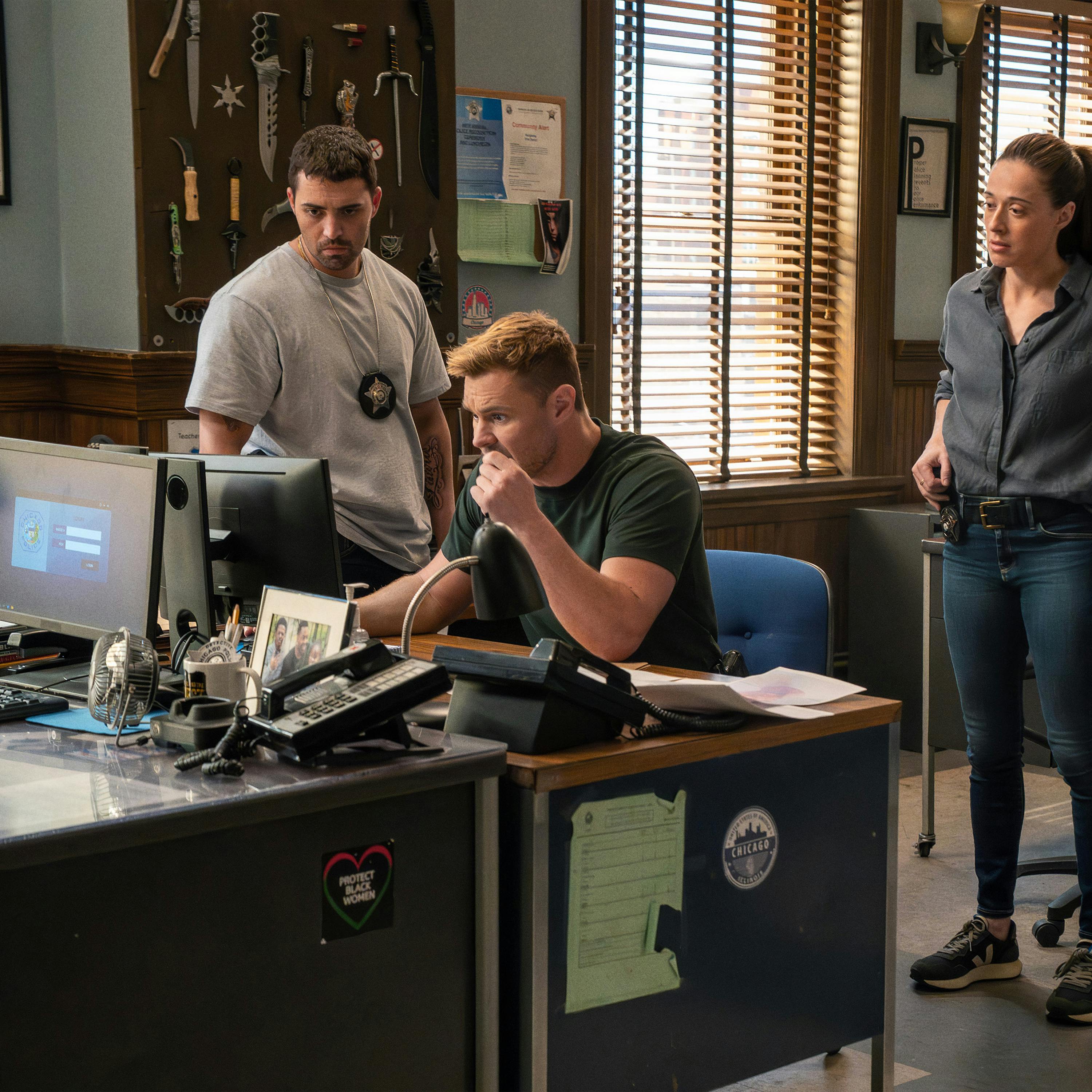
Okay, now that you know a little bit about that, Merlin, let's slide over to some of the sets that play a pivotal role on Chicago pd. And we're starting in a bullpen, checking out all those little things that make it special. That tunnel there leads to the front desk, which is phenomenal. It looks like an old police station. We'll show it to you. But when you come up here, you're on sacred ground. This is Chicago pd. This is the bullpen scenes. This is where eight to ten of our characters are grouped together, like breaking a case. And this was inspired from Maxwell street station, right?
- [08:15]
Greg Van Horn (Merlin)
14 districts.
- [08:16]
Brian Lucci
So Merlin did his homework, and we went to some police stations throughout the city of Chicago. Guys, I knew friends that I have all these trinkets or trophies that are up here. Each and every one of, like, Melaverde is a patriot. Sainted dope dealers. These are, like, real. This is what's really out there. Cops aren't supposed to take them. I'm not saying that they did, but somehow they ended up here, and somehow they ended up in stations. You don't see that anymore. It's kind of an old school way. What's really neat in here, too, is one of the ideas Dick had, he wanted a knife board. So at first we put a bunch of knives up there that were contraband from the jail. Got, you know, bad guys, had him on the street, whatever, but he wanted that. And last season, we get disbanded. Olensky's hat, which hangs on the wall where his desk used to be, was laying on the floor. And one of the characters that we had as IED stepped on it, and I cringed. And I asked our executive producer, Chad, are we really, like, I was hot. Are we really doing this? And he said, if I got underneath your skin, I'm gonna get everyone. Underneath everyone's skin. They took down.
- [09:19]
Greg Van Horn (Merlin)
Very traumatic. We knew it's a show. Obviously, we work on it, but. But when you came in here and saw this place completely gutted, your heart kind of sank.
- [09:26]
Brian Lucci
It's broken everything that's in here. Like, if you see stickers and stuff, there's a story behind it. Nothing's here. Not purposeful.
- [09:33]
Greg Van Horn (Merlin)
There's no accidents in this space.
- [09:35]
Brian Lucci
There's a boar's head or a pig's head that's up on that wall with a pig's hat on it. There's a bar at 1133 West Madison that's closed now. It was a bar called Ira's. It was a cop bar. You'd be playing cards all night. The joint never closed. They had that pig in there.
- [09:50]
Greg Van Horn (Merlin)
You know, the interactions with the actors and the space is kind of magical here. That's. I mean, you know, we have Voight's office, which is kind of a sanctuary within the sanctuary, and it's purposely in the corner for him to look at the whole place. And then the break room, which is kind of tucked in there. Then you go down the hallway at the end is the wire room, and then to the left is the locker room and then the two interview rooms. So it's all really here. We Aren't cutting between sets on different.
- [10:18]
Brian Lucci
Stages, but Voight's office in and of itself. All the conversations that are said there and not said there. There's a picture up on the wall that I asked is Brian Strauss, who's a real Chicago policeman, who was my class commander. A great guy. He was a huge Cubs fan. He was an ex marine. This picture that hangs on this wall has been here since Merlin hung it. Every once in a while, you'll see it. He's a real Chicago copman, really. Killed in the line of duty. He's got all the law books that we brought in. There's pictures of his son and Olensky here. There's the badge, his computer. There's books back here.
- [10:55]
Greg Van Horn (Merlin)
It's almost neurotic the way we do it. And it does. It drives us crazy sometimes because we're like. When they write a script and they're like, okay, we need 20 case files, and we want to spread them out on the table, and we need them like the next two days. Then we're like, we're scrambling. But it's great stuff. You know, we make sure it's there because God forbid, somebody holds up a piece of paper and they do an insert, and it's like a medical record or something that makes no sense. Then we, you know, we don't want to be there.
- [11:23]
Brian Lucci
We should walk down by the interrogation room, which is kind of cool. When you walk this to the left here is. Is the locker room. When a copper is having a really bad day or. Or did a really horrible case. A lot of times we end up sitting on one of these wooden benches. They seem like just regular thin wooden benches, but they're not.
- [11:44]
Here's the police Chicago police shirt. When you open up a locker, it's like real. You know, sometimes guys like to hats go disappearing when you see a Chicago police hat. And then the next time, you know, one of the crew member got it on in two weeks when he thinks it's safe. When you walk through here, we got the printer, machine, these guns. There are gun cases on the wall. When the batteries are in, they actually work where you put your gun. And you're not allowed to have your firearm when you go into the interrogation room.
- [12:14]
So we're now in the interrogation room. In this interrogation room, anybody who's ever been a person of interest, an offender, a rapist, a killer, they ultimately end up in here. And they got to sit across what I call the porcelain and have a conversation with a copy of Behind. There's a steel Bench. And that steel bench is bolted to the ground. And there's a bar on the wall like in real police stations. When I worked in a bureau of organized crime in Holman Square, you would bring guys in to interrogate them. And it was very similar to this. There was a bench and you'd secure the prisoner to the wall. If he's combative. Sometimes you do both hands for his safety and for yours. But this room has seen so many magical moments. So these walls, what do you. These walls all go up and down, right?
- [12:58]
Greg Van Horn (Merlin)
They all fly. So fly walls, Fly walls. So there are several types of walls on a movie set. They're usually called wild walls. You easily take them out or they hinge like this one does. But this wall, actually, the wall with the. With the mirror on into the observation room actually flies up. You can pull it out and it goes up into the ceiling. There might be various reasons you want. So this is a pretty relatively small room to actually shoot in. You might want to try to get a lens way back and get a really long lens shot of your actor. You might be doing a dolly shot that you need that space to come around because it gets tight. You know, the cameras are small, but they're not that small. And you might make that decision like that Morning. Just depends on who the director is. What's interesting about this room is that it's very nondescript. You can't have anything in here that you could potentially use as a weapon. The lights in here are tamper proof. But if you notice over here. And people will see this when they watch on the back wall. We sat there and like, all this is hand done. You know, this is not molded in here. We sit there and we scratch things that way. What would a guy in here do? Would he, you know, if he's not cuffed? Because sometimes they're just in here by themselves. So they're, you know, people pick up the wall. There's not a lot of writing because you aren't allowed to have a pen or a pencil or anything. But yeah, you know, you can see that.
- [14:19]
Brian Lucci
We left a pop can in here one time, and the pop cam ended up. The guy committed suicide. He slid his wrist with it. A paperclip somebody could kill themselves with. So this room's supposed to be sterile. You will never see a gun in this room ever. I'll fight with him. Hey, what are you doing with a gun on? Like, we don't do that. Like to keep it real Sometimes what we'll do is we'll Purposely keep a file in here and let the bad guy stew in it. Let the room suck in on him a little bit. And he sees all the pictures of all the dead people. And we work with his mind like little tricks. When you walk into just a regular police station, you ever notice that you got to look up at the copper behind the desk? It's purposeful. It's for authority. When you go in there and you walk in, no matter what, platts always a little bit higher than you, and you're a little intimidated. You know what I mean? So the way that that's built is purposeful. The way this is built is purposeful. Even the tiles up on the roof alone, like, some of them are yellow and disgusting, and they're like, oh, my God, where do those come from? Somebody has to actually manufacture these things and put them in. Who's the artist that makes them look white and yellow and aged and brand new and old?
- [15:23]
Greg Van Horn (Merlin)
The film business, there's departments for everything. And we have a wonderful paint department. They'll take this, and they probably do a tea stain on this, which is similar to nicotine. They actually take. They brew some tea and they'll brush it on and splatter it a little bit. We do various layering processes. We'll paint a wall. Then we will dust stage it with a big dust with a big air spray gun. And then we'll dust it harder in a corner because, you know, the dirt is. Gravity goes down. Then we might do a weather splatter over it. If it's an exterior wall, that's what's called a Hudson sprayer, something you might use in your garden. You spray that, you spray droplets on it, and it gets another patina to it. Then we might tag it. So we have guys that are amazing taggers. Real spray cane, spray it up. Then we'll age it again because nobody wants a fresh tag on their wall. So we can go up to 6, 7 processes for dealing with an aging process. We're not in Hollywood. We have to fend for ourselves here. There's no prop shops, there's no greens departments. That's, you know, for grass or shrubs or whatever you need. Everything we do here kind of has to be our own thing. If we have to bring in something from la, you know, we gotta make sure it's because we have neat days to get it here. So we've got thousands of feet of mostly shitty old furniture.
- [16:38]
Brian Lucci
It's awesome.
- [16:45]
When we come back, Merlin's gonna take US to the 21st District front desk that he built. And then later he'll reveal some of his all time favorite builds for the show. You don't want to miss it, so stick around. We'll be right back.
- [17:07]
Commercial Narrator
Every holiday shopper's got a list. But Ross shoppers, you've got a mission.
- [17:11]
Greg Van Horn (Merlin)
Like a gift run that turns into.
- [17:12]
Commercial Narrator
A disco snow globe, throw pillows and PJs for the whole family. Dog included. At Ross holiday magic isn't about spending more. It's about giving more for less. Ross, work your magic.
- [17:23]
Greg Van Horn (Merlin)
This episode is brought to you by Jack Daniels. Jack Daniels and music are made for each other. They share a rhythm and the craft of making something timeless while being a.
- [17:32]
Brian Lucci
Part of legendary nights.
- [17:34]
Greg Van Horn (Merlin)
From backyard jams to sold out arenas, there's a song in every toast. Please drink responsibly. Responsibility.org Jack Daniels and Old no. 7 are registered trademarks. Tennessee Whiskey, 40% alcohol by volume. Jack Daniel Distillery, Lynchburg, Tennessee.
- [17:48]
Brian Lucci
Limu Emu and Doug. Here we have the Limu Emu in its natural habitat, helping people customize their car insurance and save hundreds with Liberty Mutual. Fascinating. It's accompanied by his natural ally, Doug. Uh, Limu is that guy with the binoculars watching us. Cut the camera.
- [18:09]
Greg Van Horn (Merlin)
They see us. Only pay for what you need@libertymutual.com Liberty Liberty. Liberty. Liberty Savings Ferry unwritten by Liberty Mutual Insurance Company and affiliates.
- [18:17]
Brian Lucci
Excludes Massachusetts.
- [18:31]
We're back with Chicago PD's production designer, Greg Van Horn, aka Merlin. And our tour continues with Merlin's masterpiece, the 21st District's front desk.
- [18:47]
You walk and you're in this grand room. And there's the emblem of the Chicago Police Department, incorporated the 4th of March of 1837. And when you stand in the middle of this set, it is elevated. On the other side there's a platform. You look right and there's the stairs that go upstairs. There's keypads where you have to put your hand and your badge number in to go in. They have to do it each and every time. Don't screw that up. If you come around the desk, everything in here is purposeful. Underneath here are inventory logs that the front desk sergeant would do. The telephone, when you call 911 or 21st district desk, how could I help you? There's a whole board where keys are hung. Those keys are for all the squads for the district. 2110, 2116, 2114. All the coppers come in, they got to pick up their keys and they got to take out a radio. They don't get to take these radios and keys Home. So there's a log here because you want.
- [19:40]
Greg Van Horn (Merlin)
You want to have action. You want to have people busy back here. You want kinetic movement. When this. This place was envisioned, it was visioned as, like a ballet, as a dance. The people were going to. Were going to move from one place to another. So you can move diagonally across. You can come here and get your. Get your radio, get your keys, go out that way, get a file that you need for the case, come to the front desk, get razzed by Platt. Sergeant Platt, how can I help you? We're here to see Sergeant Boyd in intelligence. Regarding. We have some information to share with him. Regarding.
- [20:12]
Brian Lucci
We're detectives from nypd. Sergeant Voight is expecting us.
- [20:15]
Greg Van Horn (Merlin)
Oh, my God. You should have said you were from New York City. I'm mortified. Why don't you park it over there? Go up, put your thing in, go upstairs. You're at the bullpen.
- [20:25]
Brian Lucci
So things end up in here and they become part of it. Olensky's hat, it hangs on the wall. So we'll always remember, like, everything becomes a little bit sacred.
- [20:35]
Greg Van Horn (Merlin)
It's interesting because this. This map of Chicago, which is very, like, turn of the century as well, 19th century to 20th, I should say, we felt was like. Has been there since the place opened. And, you know, we've. Even to the point where we aged it down, dusted it, because it's a focal point. It's up above. And if you're sitting here and you're looking up at Platt, that's going to be your background. You know, we have actual DCFS posters. Anything that is sort of looks real in here, that's copyrighted is real. Like, a lot of times. You know, we've got watch calendars. We've got FBI most wanted. We're actual FBI most wanted people. Officer of the month, neighborhood maps, accommodations for the district cameras, because we do have camera. You know, you have surveillance, a payphone, because there is actually a payphone in the district stations, so. And we're not taking it down.
- [21:28]
So, Luch, when you first came in, you know, walked onto this set, what was it like, you being a former cop?
- [21:35]
Brian Lucci
I was blown away because when I first walked in this door as a surprise, like they were waiting for me, that door didn't swing all the way open my heart. I, like, I got the chills. I was like, oh, my God. Like, we.
- [21:47]
Greg Van Horn (Merlin)
We got.
- [21:48]
Brian Lucci
He got this right. He did all the work. He did all the. I mean, you look down at the floor, you look at the desk. I could see the cops coming around the back, and we got the flags and the Fraternal Order of Police and the sergeant exams coming up. And. And you look at the desk and you look at the wood. The wood has been beat up. Like it's. Everything's beat up. And it. There's a reason the tile is discolored and ugly. It's cracked, it's broken. There's ashtrays still in here. You know what I mean? Like, there things that we had to, like, rethink a couple, but we love them.
- [22:18]
Greg Van Horn (Merlin)
Why.
- [22:19]
Brian Lucci
Why move them? You know, Keep them as a garbage can. I walked in and I was like, oh, my God, this is. This is tremendous. You know, this is. This is it. I thought he got me in the bullpen. I was like, wow. Like, this is. This is so cool. The trinkets, the desk, the stickers. There's this, there's that. But when you come in here, you're in a police station. Now you're in a police station. Like, come on, man. Like, it's like walking into the ER if you were a doctor.
- [22:45]
As we leave the 21st District front desk, we walk through a maze of narrow hallways. We turn a corner, and guess where we end up? Dead smack in the middle of Atwater's apartment. He didn't even invite us. So what did we do? Well, we just let ourselves in and we got all comfy. Then I asked Merlin about a set that he built that was so good that even a hardcore super fan thought it was a real location.
- [23:14]
Greg Van Horn (Merlin)
He did send a picture to Patrick of this bar, and he's like, I don't know where this bar is. I mean, I've been at almost every bar in Chicago. Where is this? And Patrick's like, that's on stage, dude. So that was good.
- [23:25]
Brian Lucci
Just so the folks know, there's a gentleman by the name of Patrick Muldoon. He's the individual that goes out and picks all the places or presents all the places to Merlin to where we're gonna film. So they'll say, we wanna be in the Gold Coast. So he'll send his team out or himself, and he'll pick four beautiful homes. Million dollar homes, he's the guy. We need a farm. It needs to be 40 acres. We need a bank, we need a Chinese restaurant. He's our guy who goes and does it. So that's Patrick. He's part of the family.
- [23:51]
Greg Van Horn (Merlin)
Sometimes people ask me what I do and I say, I'm a highly paid tourist in Chicago because 70% of the show is filmed on location. We've shot every part of Chicago. It's amazing what the location team can find. The location scout. It's insane.
- [24:06]
Brian Lucci
The places we get we can go.
- [24:07]
Greg Van Horn (Merlin)
To that no one else could, that no one else can get.
- [24:11]
Crazy. And it just makes the show. And part of my deal is to make. Once we get that location is to make it something super special. Which takes me to an episode that took place in a church. And we found this beautiful relic church, sort of. I don't know, it's like West Loop. So we built on stage this gorgeous chapel that we then completely shit up and graffitied. And we had beautiful stained glass, and we lit the thing, and it did look. I have to say, look gorgeous.
- [24:41]
Brian Lucci
Think I became a cop so that I could kill people, man. Especially not my own people. We talk about Ronnie. Ronnie's from the same place I'm from.
- [24:50]
Come on, man. I think about that boy damn near every day. One of the last faces I see when I shut my eyes at night.
- [24:57]
Greg Van Horn (Merlin)
They were cutting it. And Arthur Fournet called and was like, where is that chapel? Like, you know, how'd you find that? And he's like, that was on stage. And Arthur was like, I don't believe it. So that. And he's in. You know, that's a compliment.
- [25:10]
Brian Lucci
So for those people that don't know, Arthur Forney was our head editor. I called him Arthur Scissorhands. Other people called him the Butcher of Burbank. And this man was a legend. He's a legend in the wolf world. He was so good. So, like, you're saying a guy who's probably done a few thousand episodes of television who's been with Dick Wolf since the beginning, you fooled him. Like, that's something. I remember that set. I remember being on the ground of that set, and I remember seeing the stained glass going, you gotta be kidding me. It was beautiful. The lights coming through.
- [25:43]
Greg Van Horn (Merlin)
That was a. That was. I almost got divorced over that one, so. Because it was a process, too. I'm joking, but. So usually you just print on plexi. I'm gonna get in the weeds for a minute. But the light coming through, just printing on plexi. It didn't look like stained glass. And also, I wanted it to look like, you know, stained glass has leading. It's the opaque part. Couldn't figure that out. So I said, we're gonna print the leading as one layer and print the glass itself as a separate layer that's on an acetate and sandwich the thing. I should patent that process. It Looked gorgeous.
- [26:17]
Brian Lucci
Don't worry about being in the weeds on this one. This entire podcast is about, like, making a sausage. Our family sausage. All the love that goes into it, our secret recipes. Like, I would never know that. How you did that. We're sitting there, I'm telling you how beautiful the light is, and I didn't know that you actually did it. I thought we went to a store and bought some.
- [26:34]
Greg Van Horn (Merlin)
No, no, we printed that, and we made the artwork. Like, that was our art. You know that it's crazy.
- [26:41]
Brian Lucci
What kind of design seems simple but is actually incredibly difficult to pull off? And how do you tackle that?
- [26:48]
Greg Van Horn (Merlin)
The simpler the set needs to be, the more challenging it can be, because you always want the set to have some kind of presence. The wall, that's all got the scratch marks on it, all that kind of stuff. You spent a lot of time. Again, especially the more time we spend on set, the more challenging it is. There was one with Jesse chained in a basement type space. When they write basement, I'm like, I don't want to just do a basement. Can this be a sewage basement with drains and, like, an air shaft that goes up to a screen or something so we can get some light coming right down on something. I want some pipes over here.
- [27:23]
Brian Lucci
What was that call about?
- [27:26]
My friend has their drugs. He's gonna bring them to them, and they're gonna let us go.
- [27:32]
Commercial Narrator
Okay, but how did your people know.
- [27:35]
Greg Van Horn (Merlin)
Where to find the dope or.
- [27:37]
Brian Lucci
Carlos, don't worry about it.
- [27:38]
Greg Van Horn (Merlin)
Points just to get the hell out of here.
- [27:40]
Brian Lucci
Okay. Focus on that.
- [27:41]
Greg Van Horn (Merlin)
Nothing else.
- [27:42]
Brian Lucci
Okay, we're getting out of here.
- [27:45]
Greg Van Horn (Merlin)
Most of the brick on a stage on a set is fake, but it always. You know, sometimes it just looks too fake. So I come in, and we do a plaster layer on top so it makes it just. You know, there's a little movement in it, but not too crazy. Supposed to be dead of winter. We need lots of trees. We got trees. We got some trees, but it wasn't enough. I called a guy that, you know, cut down a tree at my house. I said, do you have any tree? You mean cutting down trees? I got cutting down trees every day. What do you want? So I brought in two truckloads of trees, and it's about three times as big as this room. But then it looked great.
- [28:17]
Brian Lucci
It was.
- [28:18]
Greg Van Horn (Merlin)
It looked fantastic.
- [28:19]
Brian Lucci
You got to be kidding me.
- [28:20]
Greg Van Horn (Merlin)
Yeah.
- [28:20]
Brian Lucci
You gotta be kidding. The well. So there was an episode where there was a well where we were out in the woods. I was out in the woods. We had to build One out in the woods that you, like, stepped into, but then it cut to on stage, and it could have been just simple bricks going down in a circular formation.
- [28:35]
Greg Van Horn (Merlin)
But no, we don't. Wait.
- [28:36]
Brian Lucci
Tell them what you did with the stuff.
- [28:39]
Greg Van Horn (Merlin)
Yeah, we did a transition between brick and. Then we had stone and moss, and we were spending pages in that well, and we had Burgess down there with a kid, and there's a perpetrator's trying to shoot this kid.
- [28:52]
Commercial Narrator
Are you hurt?
- [28:53]
Brian Lucci
You are okay?
- [28:56]
Greg Van Horn (Merlin)
Can you move your legs? Yes.
- [28:58]
Brian Lucci
Yes. Okay.
- [29:02]
Greg Van Horn (Merlin)
I'm gonna help you climb up. Cause we have to get out of this water.
- [29:05]
Commercial Narrator
All right.
- [29:06]
Greg Van Horn (Merlin)
Come.
- [29:11]
Brian Lucci
On.
- [29:12]
Greg Van Horn (Merlin)
The bottom had to be bigger. So it was like, almost, you know, like a little water cavern. And we had all this crazy rock, you know, that had to be waterproofed. We needed camera ports because we needed to see her coming down. So half of the well top opened up so we could get the camera following her down into the bottom of this well.
- [29:30]
Brian Lucci
And it had to hold water.
- [29:31]
Greg Van Horn (Merlin)
And it had to hold water.
- [29:33]
Brian Lucci
I believe you built. Maybe I'm wrong. All the tunnels for the crossover, when fire crawled through there too.
- [29:39]
Greg Van Horn (Merlin)
Yes.
- [29:39]
Brian Lucci
Reports and stuff.
- [29:40]
Greg Van Horn (Merlin)
Yeah.
- [29:41]
Brian Lucci
Can you tell us a little bit about.
- [29:42]
Greg Van Horn (Merlin)
Oh, yeah. That was fun. So in the. The crossover episode, a lot of it takes place in the subway, which is amazing. We had two rail cars, debris falling down, concrete, blah, blah, blah. You got you.
- [29:54]
Brian Lucci
We're coming for you.
- [29:54]
Greg Van Horn (Merlin)
That is awesome.
- [29:56]
Brian Lucci
I can't remember.
- [30:05]
Greg Van Horn (Merlin)
But to do the rescue, our team, which was basically the fire team.
- [30:10]
Brian Lucci
Yeah.
- [30:11]
Greg Van Horn (Merlin)
Which I don't usually work with, had to find Al Capone's tunnel, the secret tunnel that took him to the subway.
- [30:18]
Brian Lucci
The fire people that had all their bunker gear on had to crawl through these tunnels to get to where Rusik was trapped with Stella.
- [30:25]
Greg Van Horn (Merlin)
We really wanted to make this work in a very dramatic way. So I said, chad, I don't think it should be a tall tunnel. I think it needs to be, like, 4ft. If it's too tall, they're just gonna walk through. Who gives a shit? And he's like, oh, absolutely. I was like, thank you. And I said, I don't think it should be straight. I think it needs to be crooked. And I also think it needs to go up and down. I think they gotta work for it.
- [30:50]
Brian Lucci
Mouch and Herman, two of the main fire guys, were crawling through there with the one doctor. They had to slide down a portion of it.
- [30:58]
Greg Van Horn (Merlin)
Yeah. There was a huge. It was like a kiddie slide. It was like 15ft, 45 degrees angle. Mouch, do you want. Do you want your stunt? He's like, no, I gotta do it. And they had a blast.
- [31:08]
Brian Lucci
Yeah, they had a blast. So they're sliding down these magical caves that you made with Halligan bars, which is a breaching tool. Tunnel secure. First 50ft. I want personnel deployed 20ft in stove baskets, backboards at the ready. Electra ambo standing by right now.
- [31:25]
Greg Van Horn (Merlin)
25.
- [31:26]
Brian Lucci
Copy that. Oxygen level 19%. Damn. Oxygen saturation levels are down to 19. Fire up the smoke ejectors and start pumping air down here right now. Equipment and personnel are being deployed.
- [31:44]
Okay, this is it. Start digging here. By the time they made their third turn, and then they came out into the real world back. Like, they busted through.
- [31:54]
Greg Van Horn (Merlin)
They were.
- [31:55]
Brian Lucci
They were like, oh, please don't make us do that again. But the camera was able to capture it. I mean, that was something where they. Where she had an idea. You built it, and we're all like, okay, now I'm in all. You know, I mean, this is. This is cool.
- [32:08]
Greg Van Horn (Merlin)
No, it's. It's great stuff. It's fun. I mean, there was. Remember, we did the. The root cellar with the mushrooms growing. We're on this, like, 100 acres of land. We find this root cellar, and then we cut to stage. We go down these stairs, and we built on a platform. This is just basically a dirt sandbox. But to visually show that there was a body there, we got mushrooms. And they didn't grow over the body because the body had secreted something. And it's really hard to find fake mushrooms. We went on Amazon. We're like, oh, these look great. We got them, and they looked. They sucked. And we were, like, one day away from shooting. So I went, have you ever been to H Mart? It's a Korean grocery store. And went to three H Marts all around Chicago and bought every single mushroom because they have these giant fat ones.
- [32:55]
Brian Lucci
Yeah, yeah.
- [32:56]
Greg Van Horn (Merlin)
And we brought them to set, and they looked fantastic.
- [33:04]
Brian Lucci
I remember that there was a body that was allegedly buried by Voight alongside the river. There was a hole.
- [33:11]
Greg Van Horn (Merlin)
Yes.
- [33:12]
Brian Lucci
And somebody said, oh, we'll have the hole there. He said, well, there's a bunch of plants on there. And you said, well, there's nutrients. When a body dies, that's how the plants grow over that. And it was just like, one little layer of, like, realism where you're like, how does Merlin know that he got bodies in the backyard?
- [33:30]
Greg Van Horn (Merlin)
Yeah. Sometimes when you're on the phone and you're a public place, and I'm like, so can that Body fit in a 55 gallon drum. I'm not sure. We might need a 75 gallon. And people are just looking at you like, oh shit, that guy, right? What is he talking like.
- [33:45]
Brian Lucci
That tees up this thing. You want things to be accurate, but also you're an artist who wants to make things look good on screen. How do you balance that?
- [33:55]
Greg Van Horn (Merlin)
Well, first, I think the first thing is always, what is the purpose of this set? What is it for? What are we trying to achieve? Once we've got that locked in? Then I'll do a few things that maybe you wouldn't see. The diner, for instance. God, I love the diner. Theoretically, it should have been a little sparser, but the reality is you want it to feel you. You want to give it that homespun feel. You want all these. We had lots of crazy pictures on the wall, like little details, things that people are never going to see. They're never going to see it on camera, but the actor knows it's there. And then they have a motivation and it's all, you know, really, it's about motivation.
- [34:40]
Brian Lucci
We talked a lot about Merlin's amazing creations, but one of the most magical things about Chicago PD is Chicago. And since Merlin is a trained architect, I asked him how he uses our beautiful city as an inspiration for the show.
- [34:57]
Greg Van Horn (Merlin)
Chicago is an architectural powerhouse. It's the birth of the skyscraper. Louis Sullivan, you've had Frank Lloyd Wright, you have Mies van der Rohe who came here mid century, beautiful international style. The textures and the spaces that have been designed, you go to both wings of the Art Institute, the traditional and the modern just blow you away. The architectural exhibits at the Art Institute are some of the best in the. And it's a very, it's a pretty small space, but I can go there and pick up 15 details within 5. I take pictures all the time. I'm going to use that, I'm going to use that. Certain L stations are just amazing. Union Station, phenomenal. Just, you know, the plazas, you know, downtown City Hall, Daley Plaza. Gorgeous spaces that you can just sit in there when you go out and scout that, even the middle of winter, I'm just, I just need to take it in. To me, that really defines all those things. Define. I mean, Chicago is amazing city. You know, I had friends from la, very cosmopolitan, who would come to Chicago and they're like, God, this is a fucking great city. I'm like, yeah, I know, why don't you come visit more often? But you know the Loop at the L Loop and you can look in, you know, you can look into like, people's apartments, like that, that distance. I just was on it the other day. I'm like, that's fantastic. There's not a lot of that anywhere else in the world.
- [36:20]
Brian Lucci
And there you have it. You just got a VIP tour of the Chicago PD sets. And a huge thanks goes out to to Greg Van Horn, AKA Merlin, and to the army of folks who worked so hard to make the One Chicago shows come to life.
- [36:38]
Now me and everyone on the pod are going to take a few weeks off to spend time with loved ones and to recharge our batteries. But right after the new year, we'll be back with more stars, more writers, and more behind the scenes stories from the One Chicago world. So from our family to yours, have a happy and safe holiday season and we'll see you real soon.
- [37:07]
One Chicago airs on Wednesday night at 8, 7 Central on NBC and you can stream it on Peacock. The One Chicago podcast is a production of Wolf Entertainment and USG Audio. The series is hosted by me, Brian Lucci. It's executive produced by Dick Wolf, Elliot Wolf and Steven Michael at Wolf Entertainment, Josh Block at USG Audio and John Yell Kastner at Spoke Media. Our showrunner is Derek John, our producer is Maggie Dubrizi and our audio producer is Jason Mark. Video production by Bo Delmore. Coordinating production by Tess Ryan. Our production assistant is Montserrat Rodriguez. With engineering and mix by Evan Arnett and original music by John o'. Hara. This series is produced by Spoke Media and distributed by Realm. Production support for USG Audio by Josh Lalongi. I'm Brian Luch. Thanks for listening and we'll see you all.
- [38:15]
Greg Van Horn (Merlin)
Come on.
- [38:16]
Commercial Narrator
Hi, I'm here to pick up my son, Milo.
- [38:18]
Greg Van Horn (Merlin)
There's no Milo here who picked up my son from school.
- [38:22]
Brian Lucci
Streaming only on Peacock.
- [38:26]
Greg Van Horn (Merlin)
I'm gonna need the name of everyone that could have a connection. You don't understand. It was just the five of us.
- [38:31]
Brian Lucci
So this was all planned? What are you gonna do?
- [38:34]
Greg Van Horn (Merlin)
I will do whatever it takes to.
- [38:36]
Brian Lucci
Get my son back. I honestly didn't see this coming.
- [38:38]
Greg Van Horn (Merlin)
These nice people killing each other.
- [38:41]
Brian Lucci
All her fault. A new series streaming now only on Peacock.
- [38:45]
Greg Van Horn (Merlin)
Goodbye, Kyle.
- [38:47]
Brian Lucci
Did the sound of those words call to you like Pavlov's dog? Then you might enjoy our podcast, Turtle Time.
- [38:53]
Greg Van Horn (Merlin)
Every week you can join me, Riley Hamilton and my co host, Amy Scarlatta as we cover the most pressing Bravo news and dig into the new episodes to answer important questions like who the hell is Adrian Maloof in this world.
- [39:05]
Brian Lucci
Listen to Turtle Time on Apple Podcasts, Spotify or wherever you get your podcasts. New episodes every Wednesday, Wednesday and Friday.