Loading summary
Transcript255 lines
- [00:02]
A
We all love a legendary comeback. And Degree Original. Cool Rush is back and better than ever. Cool Rush isn't just a scent.
- [00:09]
B
It's a movement, a fan favorite that.
- [00:11]
A
Delivers bold, fresh vibes and all day sweat protection.
- [00:15]
B
Whether you have a man that spends.
- [00:17]
A
Hours in the gym, heads into the office early, or is just trying to stay fresh on a long day, Cool.
- [00:22]
B
Rush has their back.
- [00:23]
A
Head to your local Walmart or Target and grab Degree Cool Rush, the fan.
- [00:27]
B
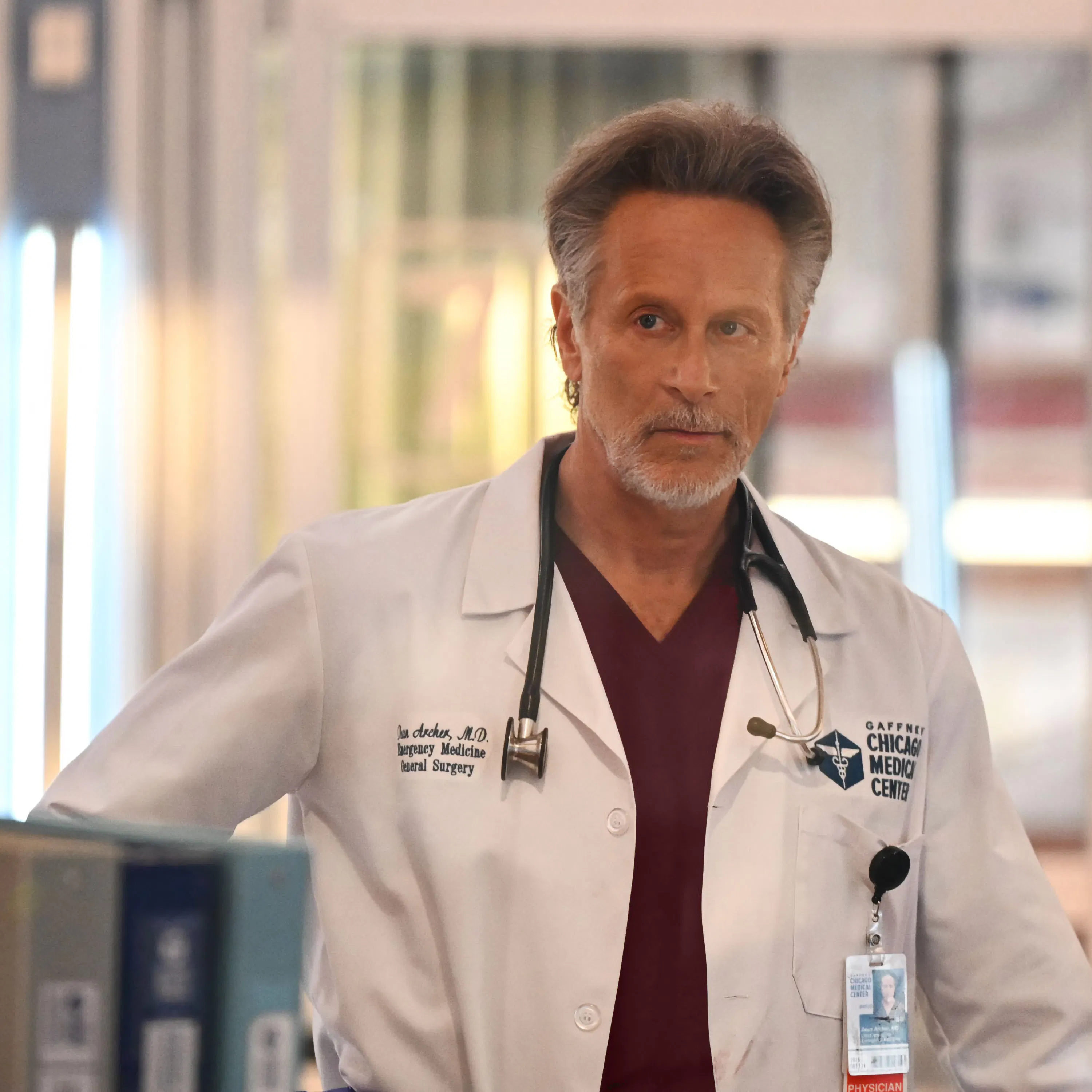
Favorite scent from the world's number one antiperspirant brand. Hey, I'm Brian Lucci, and this is the official One Chicago podcast. We've got a lot of complicated characters in the One Chicago universe, and a bunch of them have compelling story arcs over time. But I don't think there's any character that fans have changed their minds about more than Dr. Dean Archer.
- [01:07]
A
Any day now.
- [01:08]
B
Right? Okay.
- [01:09]
A
He's desaturating. Okay. You think maybe you want to get this done before he suffocates?
- [01:14]
B
First we love to hate him. Then we understood him, and now we love to love him. But either way, there's no denying he's one of our favorites. I think a lot of that was earned by the hard work and the talented acting chop of the guy who plays him, Mr. Stephen Webber.
- [01:36]
A
I should have tried harder. Instead, I just got angry, you know, and I tried to just push it all away, and I ended up pushing you, my own son, away. I wasn't there.
- [01:48]
B
This season, the writers gave Stephen a lot to work with. Like Archer becoming a new father in his 60s, changing his relationship with Dr. Asher at dealing with all the hard parts of co parenting. Will that change them for the better? We'll see.
- [02:05]
A
That's been an interesting road to go on too, especially the way it's been written. They're approaching it in a very unique way. There's something else at play, and it's still developing.
- [02:15]
B
We get into that and so much more with Stephen Weber right after this break. So don't go anywhere.
- [02:31]
A
Do you guys hear that? Oh, that's our podcast Ruin, brought to you by me, your host, intrepid horror movie freak, Hallie Kiefer, and me, your resident scaredy cat, Allison Leiby. Join us each week as Hallie forces me to listen to the twisted plot of yet another bone chilling horror movie. From classics like the Exorcist and the Thing to the latest releases to the most disgusting films on streaming, we ruin em all every Tuesday, wherever you get your podcasts.
- [02:55]
B
So come join us.
- [02:56]
A
And until then, we beg you, please keep it spooky.
- [03:03]
B
Welcome to the One Chicago Podcast. I'm Brian Lucci, and today I'm honored to be talking to an actor, a writer, a producer, a director, a singer, an audio booker, if that's what it's called. From the theater to television to film, from comedy to tragedy, every aspect of the entertainment industry. He is kind, he is funny, he is brilliant, he's incredibly talented. And let's not forget, he's fit and strikingly handsome. For over 40 years, he has ought us, amused us, filled us with pride, sorrow, and happiness. He is the one and only Stephen Weber.
- [03:35]
A
And I'm drunk. You left that out.
- [03:37]
B
And he's.
- [03:38]
A
And he's drunk, drunk.
- [03:39]
B
And for us lucky ones in the One Chicago family, he's a no BS trauma doc who runs the ED Like a battlefield. There's no sugar coating with this man.
- [03:48]
A
He.
- [03:48]
B
He calls it like it is. Without further ado, Dr. Dean Archer of Chicago Med. Welcome, my friend. How are you?
- [03:55]
A
I'm good.
- [03:56]
B
Okay, let's start on the top. You grew up in a very creative family. How did it influence you getting into acting?
- [04:02]
A
Ah, creative family. Well, just to illustrate more about what that was, my mom had been a nightclub singer in the fifties in New York City, you know, in the heyday, and had actually appeared on, you know, Arthur Godfrey's Talent Scouts and Chance of a Lifetime. And these were things like the Voice. These were things like, you know, the talent shows that have become so popular today. So she was a singer, and then my father was an agent and manager of comedians and singers in the Borscht Belt and in Las Vegas, Atlantic City, New York City. So that was the atmosphere that I grew up in. But it wasn't necessarily what you would describe as a creative environment. It was a very blue collar environment. You know, it was. My father was very kind of linear. He was a Korean War veteran. So it wasn't like the house was full of mirth and creativity and everybody was painting and we were bohemian. No, it was very, like I say, blue collar. My father would have beers at dinner and martinis and all that stuff. And my mother. Yeah, it was sort of cool in a way, a dark, masculine way that you embody so beautifully. But I just more or less found myself acting in school productions and went to the high school performing arts. And mostly was it influenced me because I guess I just wanted to express myself. I wanted people to notice me and like me. So that was the kind of genesis of that.
- [05:28]
B
Do you remember where or where you were when you got your call to do the role for Matt.
- [05:33]
A
Oh my gosh. I mean, I was probably in Los Angeles and worrying whether I would get another job or not, which is something that every actor has, even actors who have amazing careers. I'm friends with Don Cheadle. I remember even after he was doing the Marvel stuff and all his award winning performances in films, he was worried about the next job. I thought, oh God, this never ends. So I was in LA and I got the call. I didn't even have to audition for it, which is good most of the time. Sometimes it's not. To be on a four or five episode arc of Chicago Med, that's how it started. And the character of Dean Archer was a guy who was a, a naval surgeon, who'd been to Afghanistan, had been wounded, had ptsd and in fact at the end of this arc was going to do some self harm. He was not good up here. He was suffering and had untreated trauma. And at the end of this guy's story, he was not going to make it. So I was kind of excited about that character that was dark and interesting and I was going to apply some things that I'd known. I was going to do some research and do what I thought was gonna be just a good, nice little gig. But halfway through, I think they decided that this character had more depth and appeal and possibilities beyond where they were gonna take him. And so after that they decided not to end the character and they brought me back the next season for a number of shows and then from there it sort of got longer and longer.
- [07:10]
B
Yeah, you've been on five years.
- [07:12]
A
This is my fifth season.
- [07:12]
B
Yeah, yeah, fifth season. And you start out, you're, you were a little bit of a cranky guy with no heart, a little bit edgy.
- [07:18]
A
I mean, it wasn't even so much cranky. I mean, bordered on sociopath. He was doing a couple of things that now basically the, in the canon of the show we've sort of conveniently forgot about. I mean, at one point I think I took out some guy's kidney without his, his approval. You know, like I, I, I sedated him, pulled it out. It was really dark. And that's why he was going to.
- [07:40]
B
Kind of end where you got me when I was looking at him. There is an episode and don't take this the wrong way, but the scene that I like the most, you didn't talk. Yeah, it was amazing what you did with your eyes. And Oliver Platt, who was sitting right next to you.
- [07:53]
A
Oh, I know what you're talking about.
- [07:54]
B
A Young boy.
- [07:55]
A
That's right. It was so good talking about how that he had a heart transplant.
- [07:59]
B
Yes.
- [08:00]
A
And how he felt that the person who he got it transplanted from didn't want him to have the heart.
- [08:04]
B
A young girl.
- [08:05]
A
So it's just a coincidence that Milo's cardiac episode occurred in a pool and his donor drowned?
- [08:12]
B
Probably.
- [08:14]
A
Who really knows? I feel like I just witnessed something that can't totally be explained. Welcome to my world. I don't think it was a coincidence. Very open minded. Abudino. He was carrying a lot of guilt though. And guilt can be a powerful emotion and absolution can be a very powerful remedy.
- [08:37]
B
Right, right.
- [08:41]
A
Very moving writing. And it was about us listening.
- [08:44]
B
Cried.
- [08:44]
A
I tell you, man, show is good.
- [08:46]
B
So first of all, you're in there and you don't believe none of it.
- [08:48]
A
Right.
- [08:49]
B
And Oliver Plattsick and they talk about that. No, there's this thing that happened. So they tee it up. Then all of a sudden you're both are in the room, your mouths are down and they say because the girl drowned.
- [08:58]
A
That's right.
- [08:59]
B
And you knocked on the door and got the mom. Yeah, dude. It was so beautiful.
- [09:03]
A
Good.
- [09:03]
B
And I sat there and Jason McGay always says it. The best movie is a silent movie for an actor. And I don't know what it is to be an actor, but when you tell the whole story with your eyes with no words, the camera comes over and you see you two guys, you can actually see the chills.
- [09:22]
A
I was in the pool swimming for the first time. That's when my heart started pounding out of control.
- [09:30]
B
I couldn't breathe.
- [09:33]
A
Maybe she was scared of the water. That's wonderful for you to say. Thanks. Well, it all begins with the writing. And in many ways, as great as Med has been over the course of 200 shows, the writing was always wonderful. And then it got kicked into a different kind of gear under Alan McDonald. It's just grittier, it's a little more personal. And they've allowed us to do things like listen, not just always leap into action. In many ways, I think that's a hallmark of all the wolf shows. There's plenty of action, there's plenty of story to involve people. But these characters are human. Right. They're not invincible. They're heroic because of their vulnerability. In a lot of ways, our cop.
- [10:29]
B
Show, you know, it's never about the crime. It's what the copper went through.
- [10:32]
A
Right.
- [10:32]
B
To solve that crime or not solve that crime, how it affects the character. I get it. If you watch Fire. It's not about the fire. You know, it's about how it. Sure.
- [10:39]
A
Well, another one great thing about all the shows, including all the Wolf New York shows, is that they employ a whole spectrum of actors who. Who aren't necessarily really pretty. Okay. They're realistic people who've led real lives who just happen to be actors. And so they bring a lot of that personal experience and texture to the roles. So a guy like Sean, I can see, would do incredibly well on pd, you know, and look to your point earlier about that particular scene in Chicago Med, so much had to do with the young actor playing this kid who's able to relate that story. Amy Acker played the woman who was the mother of the young girl who died in a drowning accident and had the kid's heart transplanted into this young boy. So all we had to do was listen.
- [11:32]
B
But it seems like everything that I was like, let me check out this Weber guy. And everyone was all comedian. He did this. He was funny in Wings. I'll be honest with you. What you've done on this show, it's when you're serious, I appreciate it. You know, what was the. The lsd. The lsd.
- [11:51]
A
That's right.
- [11:51]
B
Wheels. Wheels, that's right.
- [11:54]
A
You actually watch this? Yeah, I watch all of it. Yeah. So my character is. Is dosed with lsd. He has a sticker put on him by a raver. So I had a chance to at least not be my character's usual uptight self. And the joke was that all I did was just be nice, and people thought that was hilarious, but really I was just being pleasant. Right.
- [12:16]
B
You wrote people pleasing.
- [12:17]
A
It was funny.
- [12:18]
B
It was funny.
- [12:19]
A
I didn't act like I was tripping. I was just nice. People thought, ah, that's a riot.
- [12:23]
B
You said something. I felt, oh, the words are a ribbon or something.
- [12:27]
A
Yeah. That I came up with. They're on screen.
- [12:29]
B
That was your line.
- [12:30]
A
Yes, yes, yes.
- [12:31]
B
Oh, my.
- [12:33]
A
What's going on? That is an LSD sticker on. You're on acidine. Oh, that's unfortunate. Ah, that word came out like a ribbon. Since my character was tripping, I was using a couple of early experiences I actually had, and they allowed me to improvise this line about how I just said something and then I said, oh, it looked like it's just ribbon coming out of me or something.
- [13:03]
B
Like, the words are ribbon.
- [13:04]
A
That's right. And they liked it. And sort of, obviously it fit the context of the scene. And I knew enough to say it quickly so that it Had a chance of making the cut, and it did.
- [13:16]
B
Acting on the line.
- [13:17]
A
Yeah, I liked on the line.
- [13:21]
B
So when you came to med in season six, when the train was already at full speed ahead, what was that like to hop on?
- [13:28]
A
I mean, it's hard to jump onto a show when it's moving. The train metaphor is very apt. I think. I've been doing it. Like I said, I've been doing it for over 40 years. So I knew what I had to do. I had to basically concentrate, not try to pal around with everybody. Everybody was doing their jobs, and so it wouldn't have been good, I think, for me or the show if I was gonna take too much time and draw too much attention from this machine that was already in motion. Again, I liked the character. I had spoken to the writers and the showrunners beforehand, so I knew what I had to do. I knew what was expected of me, and I just more or less did that. And again, decades of experience told me to just hit my mark.
- [14:11]
B
Yeah.
- [14:12]
A
Learn my lines, be pleasant, show up on time, and that's what I sort of did.
- [14:17]
B
Are you doing it right? Ipatha said something Beautiful about Alan McDonald. She said, you know, she's been on 600 episodes of, like, Dick Wolf stuff.
- [14:25]
A
Yeah.
- [14:26]
B
All together. And out of all that time, nothing against anybody else, but she felt like two people have really wrote to her and listened to her voice and knew her voice. And she said that about Alan.
- [14:38]
A
Yeah, that's true. I have to echo that. You know, the thing is that I believe that an actor is a piece of the puzzle. You have to do your part. It's gravy if the writers want to pick your brain or collaborate with you creatively. Again, TV is a machine, and I love being a part of that machine. So there's only so much of that you can do.
- [15:01]
B
Right.
- [15:02]
A
They tell me to stand there. I'm going to stand there. Unless it's completely ridiculous. It rarely, if ever, is completely ridiculous. But Alan has given us a bit of that luxury. He studied the show and saw the evolution of a lot of these characters. And also, like you, I mean, he's watched them, and he enjoys the individual actors in PD and in Fire and Med. And so he's kind of taken advantage of the. The experiences that a lot of the actors have, and he writes to that. To a certain extent. So, yeah.
- [15:34]
B
In Chicago PD this year, our theme is roots. So we're getting to see, oh, this guy's cut from this cloth or this person, why he ticks this way. Right it's kind of neat. And there's things I didn't know.
- [15:45]
A
Right. It's interesting for the audience. You know, the audience is smarter than the industry gives them credit for being. I think if you raise the bar, they're gonna come to it. Sure, they'll like all the blood and guts and the lovey dovey stuff, but. But if you go deep or if you get intricate, they're right there. So they're entertained by it.
- [16:02]
B
Yeah, I. I say, like, sometimes I'll throw out some police jargon, like, oh, we're 1076. Does anyone know? I said, listen, bro, at the end of the show, if the guy's looking it up, we're winning.
- [16:10]
A
That's right.
- [16:11]
B
1076. We mean, we're in route and they care enough, show's over and they move on, you know. Right. And I'm with you. A lot of times we'll do these deep, deep stories and we try to get in there. And if you're putting a hat on a hat, as they said, you know what I mean? Like we're doing something wrong. You're right.
- [16:28]
A
Let me ask you a question. Did you and I think maybe we talked about this during the big crazy ass crossover when we were freezing our guts up.
- [16:34]
B
I loved you that day.
- [16:34]
A
Oh, my God, what a hilarious day. I had some fun. But you worked with Dennis Farina. Didn't you know him?
- [16:41]
B
I wish I did.
- [16:41]
A
Oh, really?
- [16:42]
B
Yeah, I wish I did.
- [16:43]
A
Because Dennis Farina, to me, epitomizes that kind of actual cop, Chicago cop who became an actor. And I asked people who worked with him, I think Ipatha worked with him.
- [16:54]
B
Yeah, she did. And she loves him.
- [16:56]
A
Loves him. Which was a pleasant surprise because a lot of these guys could turn out to be dicks, you know, and for a variety of reasons, and especially a person coming from, you know, the place that you came and, you know, being a cop on the street, you know, and mingling with real people in real dire circumstances, it can break a person, it could fracture a person, it could hurt a person, traumatize them. But apparently, Dennis Farina, for all the tough guys he played, he was a sweet, pleasant, wonderful guy to work with. And that really. That filled my heart.
- [17:31]
B
Where'd you work with him on?
- [17:33]
A
I did an episode of Crime Story, and I played a young pornographer, and I had two small interactions with Furina, who I was terrified of, you know. Really? Oh, yeah. Because, you know, I thought he was amazing because I loved Crime Story and he was a tough cop, man. He was a who he'd slap you. And in fact, in that one episode, there's another actor, a buddy of mine named Tim guinea, who played a role, and we were all young method actors, and he was having a scene with Finina, and I think he said, told Fina, who had to slap him in a scene.
- [18:06]
B
Give me the real clap.
- [18:06]
A
Give me the real slap. And I think Farina probably said, maybe making it up. You sure? I'll do it. He said, yeah, come on. I can take it. Well, on camera, he cracks this young actor's face, and you can see his soul leave his body for a second, and he's vibrating like a gong. What are you gonna do, walk away without introductions? Huh? Keep going, huh? Look at this, Mike. Must be 50,000 bucks in here. He's still carrying on his dialogue. And I think Farina gave him, like, a Chicago cop sign.
- [18:35]
B
He gave a nice fresh one.
- [18:37]
A
Holy smokes. And. But I had one scene where he roughs me up a little bit, kind of grabs me by the collar and throws me into the other cops. That was the extent of it. First time I see you, this guy's got a piece pushing against my brains. You want to shake my hand now, what gives? Did you ever think of better ways.
- [18:52]
B
Of saying hello when you first joined the ED Archer was a bit rough around the edges and still dealing with his past. Yeah. Can you talk about Dr. Archer's life and career before the ED?
- [19:02]
A
Yeah, sure. He was a naval surgeon. He saw some action. Not only did he take an injury, but he dealt with a lot of young servicemen and women who lost limbs. He had to do a lot of triage, a lot of field stuff. He saw a lot of death. He saw a lot of life, and it impacted him. Early on, I based a lot of this character on my dad, my dad, who fought in the Korean War. I may get emotional, so just stop me. Just kick me in the nose.
- [19:34]
B
No, I love emotional.
- [19:35]
A
No, but I really want you to kick me in the nuts anyway. It's another story, but he functioned. When he came home from the war, he got married. He was an agent, but he always had this haunted look. His hand shook a little bit. He always was quick to anger. He had some hopes and dreams that were thwarted by his own inability to express himself. And even when I was around, maybe, I want to say 16 or so, I floated the idea to him. Hey, dad, maybe I should join the service. And right away, he snapped at me, no, that's not gonna happen. And he never spoke about his past. And I realized at that point that there was gonna be something going on later on, I did some research and found that he had seen a bunch of action. He died at 62. He had a heart attack. A lot of anxiety. And so I used a lot of him in the character of Archer. This was a guy who had trouble expressing himself, maybe even hated himself. Maybe he carried resentment. He had thwarted hopes and dreams. And so I brought those aspects to this character. So that was his history. Some of it was supplied for me. The idea that he had ptsd and the rest I had to bring to the table. Every time Memorial Day or Veterans Day comes around, I will post on my Instagram account, I will show the before and after picture. The before, when he's smiling and young and he's got his kind of army cap on. And then the last picture on his card, his ID card, is when he was released. Yeah, he released. And it is dark. Really? It is dark, man. It's literally day and night. Yeah, it's. You know, back in those days, they didn't really talk about that stuff. There's no therapy. There was none of that stuff. So he just, you know, alcohol and cigarette therapy. It's not like he was unable to know any joy, but, you know, it had been taken from him. I mean, I. I worked with an organization called New Directions for Veterans, and they help veterans with, you know, addiction and homelessness and education and. And employment. And I've worked with them for about 10 years, and that's basically in my dad's honor. And at one point, I was giving us. I was talking about him, and I said that he had been gouged. The big piece of him had been gouged out of him in Korea. And so that's how I approached Dean Archer. He's a guy that has been hurt, however, over the course of his development in the last four plus seasons. Now in season five, he's found a way to kind of mitigate all those wounds. He's in a great relationship with his fellow doctor, Hannah Asher, played by the wonderful Jesse Schramm. And it's not romantic, but he's found an emotional connection, which is something that I feel that a lot of these men and women lose or maybe never had, especially after they've experienced trauma. It's hard to find a person patient enough to hold your trauma.
- [22:46]
B
She's your friend.
- [22:47]
A
She's my friend. And again, there's not a romantic thing. Although in this season, she's my baby mama. I'm her baby daddy. And that's been an interesting Road to Go on too, especially the way it's been written. Couldn't help notice you only came clean with Ripley when cornered. What are you uncomfortable about the fact that I'm the father?
- [23:12]
B
What are you talking about?
- [23:13]
A
Oh, come on. I get it. I mean, I'm 64 years old, right? I fainted in surgery today because I literally couldn't take the heat. Are you okay? Why you take so long to tell anyone? Because I'm terrified, Dean. Terrified of what? Of a thousand things. They're approaching it in a very unique way. You know, this is not classic TV love. There's something else at play, and it's still developing.
- [23:43]
B
Well, the one thing about your father is, I just wanted to say before I go there is like. So he's living in the show through you. You gotta honor that.
- [23:51]
A
I do.
- [23:51]
B
And there's things that I do on our show. When my father was on the job and lost his life and blah, blah, blah, on the job. And I put his spirit kind of in some things, and I feel like I'm fortunate enough to have him live there.
- [24:03]
A
Isn't that a great thing to do?
- [24:04]
B
It is a good thing, you know, and your father's live in this.
- [24:07]
A
Well, and. And you will put yourself down. I know you will. You don't accept it, but that's kind of the soul of a creative person, okay? That's the soul of an artist. You're able to take something and kind of put it in a context that other people understand and even enjoy and are moved by it. You know, your father is still on the job because of you. I'm gonna start crying. Your father is now doing something that he never expected to do. You know how proud he must be of you.
- [24:39]
B
We gotta take a quick break, but when we come back, I got so much more good stuff with my man Stephen Weber. It's okay not to be perfect with finances.
- [24:59]
A
Experian is your big financial friend and here to help. Did you know you can get matched with credit cards on the app? Some cards are labeled no Ding decline, which means if you're not approved, they won't hurt your credit scores. Download the Experian app for free today. Applying for no Ding Decline cards won't hurt your credit scores if you aren't initially approved. Initial approval will result in a hard inquiry which may impact your credit scores. Experian this episode is brought to you by LifeLock. It's Cybersecurity Awareness month, and Lifelock has tips to protect your identity. Use strong passwords. Set up multi factor authentication Report phishing and update the software on your devices. And for comprehensive identity protection, let Lifelock alert you to suspicious uses of your personal information. Lifelock also fixes identity theft, guaranteed or your money back. Stay smart, safe and protected with a 30 day free trial@lifelock.com Podcast terms apply. This podcast is dedicated to my younger self because she really needed it. She couldn't keep a man or a job. Welcome to Brokotherapy. I'm your host, Stephanie Megan.
- [26:04]
B
I'm your co host, Rose Macalise.
- [26:07]
A
Every week we dive into dating, sex, and relationships.
- [26:11]
B
We are not professionals, but you bring professionals on the pod to give us some advice.
- [26:17]
A
Listen to Brokotherapy wherever you love to listen to podcasts.
- [26:20]
B
Therapy is too expensive, but this podcast isn't broke.
- [26:24]
A
Rope growth therapy. Foreign.
- [26:33]
B
Talking with Chicago med Stephen Weber, aka Dr. Dean Archer. There's a roof that you go up to when you.
- [26:42]
A
That's right.
- [26:43]
B
Your coats on. That's where, like, you go get fresh air. Right. When it's too much.
- [26:47]
A
That's right. There's a terrace out there.
- [26:49]
B
Yeah, we have a picnic table. So the cop, like, had a hard day. If you see him out there and he's smoking a cigarette or something, you could either go sit and try to help them or not. Like, I love that about the terrorists. And like you're saying, even the firemen, like, they have a place where they go, like, yeah, it's okay to be vulnerable. All my life I thought you had to be a tough guy. And you see, like, what Dick Wolf did with all three shows and being first responders is just. They're regular people.
- [27:14]
A
Yeah.
- [27:15]
B
I thought something was so beautiful about what I was looking into. You have this big, rich house, but there's only like three rooms that you use. That I thought was neat, you know?
- [27:23]
A
You know, in my mind, this guy lives in, you know, an apartment. Chicago, maybe. He's got a terrace. He's a secret smoker.
- [27:31]
B
I love.
- [27:32]
A
Goes out, does that. And so when I saw this guy's apartment, his house, this crazy triplex, I thought, this isn't my guy. He doesn't squeeze orange juice and put it in a pitcher. He's, you know, he's got darkness. Maybe just. And, yeah, maybe he uses three rooms, you know, one of which is the bathroom. And he lives by himself and everything. But they told me, look, it's aspirational.
- [27:58]
B
You said in the past that there's a sense of urgency. That came with Dean from Fallujah.
- [28:02]
A
Fallujah, that's right. Yeah.
- [28:03]
B
To Chicago. Does the sense of urgency cutting through the red tape still show in itself and Dean, in this season, or you think you're getting past that?
- [28:11]
A
I mean, less so because the stories have less of that anxious element of emergency. Obviously, there are still stories that come into the hospital, into the ED that require immediate attention. But as you said, it's more about roots. It's more about the backgrounds of these characters. So the only sense of urgency that I think he feels and some of the other characters feel is that they're beginning to sense their own mortality, and they're faced with mortality every day when they come in, and it forces them to reckon with their own lives and how much time any of us have left.
- [28:47]
B
Yeah, I'm on my back nine.
- [28:48]
A
That's right. That's right. You know what I mean?
- [28:50]
B
Like, and I didn't have a good front nine, but this back nine.
- [28:53]
A
Okay, well, everything in the front nine led up to this back.
- [28:56]
B
Yeah, yeah, you learn. You learn. You wish you could go back and change some of it the wiser or not.
- [29:01]
A
You know, really, the. The wise thing is, obviously the people have regrets. I wish I could change some things, but on the other hand, if I did, I might not be sitting here with you.
- [29:09]
B
Isn't that sweet?
- [29:10]
A
See what I said?
- [29:11]
B
See what I think you're no stranger to playing intense characters, and actually, you played one of the most iconic, an ABC miniseries version, Stephen King's the Shining. You find any similarities between the troubled John Torrance and Dean Archer?
- [29:25]
A
I mean, I could make some jokes and everything, but really the similarities are in that they're both guys who have had to reckon with addiction, self loathing. Yes, sir. And you thought nothing here could hurt you, sweetheart. Boink. Wrong. And for a while, I was playing a lot of kind of broken men. After I did Wings, I wanted to do darker characters and kind of expand the palette and the spectrum of characters. And a lot of them ended up being kind of bad guys. And about a few years ago, actually, obviously before this role, I kind of said to the universe, I don't want to play these bad guys anymore. At least let's have a sense of redemption in them. So one of the things that Jack, Torrance and Dean have in common is they are able to redeem themselves somehow.
- [30:29]
B
Did you do because you wanted to get away? I mean, Wings was funny. Like, everybody loved it was funny. But you have so many more levels.
- [30:36]
A
Well, after a while, if you're playing these guys, I was wondering, am I this guy? Are these roles coming to me because this is who I am. And I said that aloud to my therapist, who I'd seen a long time, and she said, look, this isn't who you are, but it'd be interesting for you to kind of put it out there to see what happens, that you don't want to play this kind of guy anymore. And I did, and I started playing better characters, more rounded characters.
- [31:04]
B
What are the most difficult types of scenes for you to do as an actor? Or what are your favorite kinds of scenes?
- [31:10]
A
Well, for me, especially in the context of Chicago Med, the most difficult scenes to do are intake scenes where you have to rattle off a list of medications, symptoms. Those are not meant to be said out loud. They're meant to be read through, you know, a magnifying glass on a small label on the side of a bottle. They're ridiculous. They're mostly consonants. You can lose a lot of teeth saying these ridiculous things. Those are hard. They're hard to remember. For me, memorizing lines and learning lines and learning scenes is that what you're saying is connected to some sort of action or some sort of feeling here. It's just looking at a list of things, you know, I can't even demonstrate because it won't stay in my head. So those are the hardest scenes to do. The best scenes and the most enjoyable ones are the scenes where we emotionally interact with each other. However, I do love playing scenes with Oliver Platt because the chemistry we have as two kind of elders on the show is that we have a degree of curmudgeon. Curmudgeon ness. And that's not a word.
- [32:19]
B
No, it sounds cool. I was going to say charming.
- [32:21]
A
Charming. Curmudgeonliness. And that is really fun to play with him because we sort of try to out curmudgeon each other. You know, he's so real that I try to kind of go to his level of reality. And so sometimes we're talking like this and everything that's really fast. It's like a ping pong match. So those are fun to play. Why did you palpate him? He wouldn't let me come near him otherwise. I didn't even get a read on him. He's not even gonna get a scan.
- [32:44]
B
I completely get how upsetting it must be to hear your military experience characterized that way.
- [32:50]
A
But, Dean, the guy's delusional. I think you misread the moment, Dr. Charles. Right. I don't blame you for thinking that's what you saw, but I was honestly trying to make a diagnosis. And now that I Have I? I think it's time for you to get a court order so we can force treatment. You know, if and when I determine that the patient lacks decisional capacity, I.
- [33:08]
B
Will absolutely reach out to a judge if.
- [33:09]
A
Are you kidding me? This guy's a box of loose screws.
- [33:12]
B
Well, no, actually, he's a patient, but.
- [33:15]
A
Also, look, I love playing with all the actors. Ipatha. When I have a scene with Ipatha, I love that because she's great. She's a legend, and I love her, and she's great to work with.
- [33:26]
B
You saved Ms. Goodwin's life last season. I interviewed her, Ms. Batha Merketson, and I got her POV. How was it for you to do that scene?
- [33:34]
A
It was great. First of all, I've always loved Ipatha, since I saw her in this terrifying movie, Jacob's Ladder, where a young Ipatha Murkerson is sitting on a staircase flirting with a young Tim Robbins. So when I got the chance to save her life, it was fantastic. First of all, to see her acting up close is a privilege.
- [33:55]
B
This is the crazy lady that stabbed her.
- [33:57]
A
She gets stabbed by, I think, stalker. A stalker. And I had to be very heroic. And I've got to lift her up and carry her into the elevator and then emerge into the emergency room. Come here. Come on. I. I can't. I got you. I got you. I need help. Maggie, get me a gurney right now. Let's go.
- [34:26]
B
Sharon.
- [34:27]
A
Well, I'm in decent shape, and she's not a big woman by any description, but let me tell you something. Lifting somebody who's dead weight, as I'm sure you know, is very hard, difficult. Yeah. And so I thought, okay, this will be easy. She's small. I'm strong. Let's go. First take. My spine almost flew out of my body. Oh, my God. Almost crapped my pants. I said, wow. And I had to get to one knee to kind of leverage myself. And she said, I'm gonna help you with this. And so she sort of pushed herself up into my arms and helped me lift her up. But it was great, again, to be able to play those scenes and the scenes afterwards when she was in recovery, this gorgeous scene where she's telling me how grateful she is, and I'm looking down at her, and she's in her hospital bed. And let me tell you, man, when the camera's on her right over my shoulder, looking down at her, and she's talking, talking to me, and her eyes are filling. Let me tell you, when one tear dropped onto her collar in Real time.
- [35:34]
B
Yeah, yeah, Yeah.
- [35:35]
A
I thought this is. This is. This is kind of TV film history. I don't know how much you remember everything, but mostly I remember your voice over me as I was drifting away, so I knew I still had a chance. Just glad I got there when I did. You not only saved my life.
- [36:07]
B
But you saved my ability to live it.
- [36:09]
A
The way I want to. Something real and beautiful was happening, and I hope they caught it. But I'm pretty sure they kept that scene in. She's. She hits a home run every time she's on screen.
- [36:20]
B
All of these people that are in these three worlds, like, we don't get to see you. You got a little camp on the other side. We call it Club Med.
- [36:27]
A
Oh, I know. Everybody. PD and FIRE are jealous of us because we get to wear our pajamas all day. You know, we're relaxing in sight and we're, you know, we eat our craft service snacks. What's the best thing about being on a TV show? The food.
- [36:39]
B
The food is out of here.
- [36:40]
A
Food all day. All day just keeps coming.
- [36:42]
B
What is it like doing surgery on a screen? Is it hard nailing down the physicality of it?
- [36:47]
A
Well, it turns out that surgery is deceptive. You know, the really intensive surgery, it's a game of quarter inches, and it's so small and nuanced that there's not a lot to do. Contrasted that with where me and Luke had to hammer in these pins into a guy's bones. That required real kind of visceral, violent whacking of a hammer. I think it might just need a little more force. What? I said, I think it might just need a little more force. Oh, Dr. Conway agrees with Dr. Ripley.
- [37:31]
B
Does she?
- [37:32]
A
She does.
- [37:33]
B
So. I didn't think that was true. Oh, I. I said this is. But then I seen an interview that you said. Yeah, that's what you. You said.
- [37:40]
A
It's like a lot of surgery is brutal, man. You know, you don't know because you're knocked out, but they're stretching and pulling and hammering and cutting and that's ridiculous.
- [37:49]
B
Yeah. That's crazy.
- [37:50]
A
Yeah.
- [37:51]
B
What's a behind the scene nugget that you could share that fans don't know?
- [37:55]
A
Okay, I don't think she'll mind if I say this, but first of all, Jesse Schramm, who plays Hannah Asher in such a beautiful, composed, vulnerable, strong way, she plays it so beautiful. She's so grounded in real life, carries herself like loosely strung together fishing rods. She is like a joyful sprite of a human being. Who can break into dance, who is laughing all the time, who is beloved and is flitting about here and there like Peter Pan. I mean, she's all over the place and can be that way. Much to my frustration sometimes, because I need to be focused right up until they say action. And she slots right into this perfectly composed, concentrated character. And it blows me away. Almost every scene that we play begins with my saying what just happened? And it actually works to focus me more. That's something that you would know. Well, I think a lot of fans would be surprised to know how much fun we have, especially because the show can be quite dark.
- [39:07]
B
You do most of the scenes with her, would you say, or no? Recently.
- [39:11]
A
Recently, I do a lot of scenes with her. I've done a lot of scenes with IPP and Oliver and some scenes with Darren and Luke and Sarah. Okay. Sarah Ramos is a wonderful actress.
- [39:24]
B
Lennox.
- [39:24]
A
Lennox. And she's.
- [39:26]
B
I can't figure her out.
- [39:27]
A
Well, she's starting to become a fan favorite because they are doing with her what they're doing on pd, which is go to the character's roots. She's become a Cubs fan like crazy.
- [39:38]
B
Oh, wow.
- [39:39]
A
Okay. So she. I went to a game with her. This was during one of the class.
- [39:42]
B
Behind the scenes right there.
- [39:43]
A
Holy smokes. She. She's become a rabid, screaming, hey, asshole. And we were sitting in the stands. In the stands. I said, what are you doing? You're gonna get. I'm gonna get punched because nobody's gonna touch you. She loves baseball. She's become an aerial addict.
- [39:57]
B
I love that. Okay, Stephen, it's time for a round of rapid fire questions. Ready?
- [40:02]
A
Yeah, ready.
- [40:02]
B
But since it's Chicago Med, we're gonna call this segment the Answers Stat. Clever. All right.
- [40:08]
A
Yeah, sure.
- [40:09]
B
It's the little things we come up with.
- [40:11]
A
Great.
- [40:11]
B
Stephen, if you could bring any character on the Wolf Entertainment show, Law and Order, svu, FBI, or any of the other Chicago stars and bring them on the med. Who would you choose and why?
- [40:24]
A
I'd bring Herman from Fire, played by Eigenberg, but I would make sure that he was sedated and couldn't talk throughout the entire episode.
- [40:34]
B
Did you have a fun day with him when we did that crossover?
- [40:37]
A
He's amazing.
- [40:37]
B
That's the first day I met you.
- [40:38]
A
Oh, yeah, yeah, yeah.
- [40:39]
B
You were freezing.
- [40:41]
A
Freezing, brother. Listen, it's great to wear that fire gear because you don't. You don't feel anything. It was great fun. Eigenberg and I go back, and it's so great to work with that cat.
- [40:52]
B
Steven, if, God forbid, you were rushed in the Chicago Met unconscious, pick your Chicago Med dream team to save your life.
- [40:59]
A
Oh, my God.
- [41:00]
B
You can even include yourself.
- [41:01]
A
Yeah, I would definitely include Dean. And I would include Lorena Diaz, who plays Doris, one of the nurses, and also Marie Treadwell, who plays Trini. I would have just Dean and the nurses. To hell with the rest.
- [41:15]
B
You don't want the other doctor.
- [41:16]
A
Keep them away from me. They're all egomaniacs.
- [41:19]
B
Stephen, if you could trade places with one Chicago Met character for a day, who would that character be and why?
- [41:26]
A
I would definitely trade places with one of the background actors who have to lay in bed all day in a coma. Fantastic gig. Background artists, some of them, they have to walk around, they've got to pretend to be doctors and nurses and all that stuff, but the ones that really choose the short straw and the best way, they get to lay in bed all day and they get a call, like at 5:30am Sleep all day.
- [41:49]
B
Sleep all day.
- [41:50]
A
Sleep all day. When there's a break, get a snack, go back to bed.
- [41:53]
B
That's your answer.
- [41:53]
A
We gotta stick with it. Fantastic.
- [41:55]
B
Stephen, who's your dream guest star and what role would you give them? Could be anybody. Anyone in the whole world.
- [42:03]
A
That's fantastic. I think it would be great if Jeff Bridges came on as the dude and I would have to. I would have to take care of him. Big Lebonski.
- [42:14]
B
Oh, man, that's awesome. Well, I can't thank you enough. We won't beat you up anymore. I know you're a busy man. It's Sunday. You got to go do your.
- [42:21]
A
I have an important nap to take.
- [42:23]
B
You're our hero. So thank you very much for coming. That's the end of this one. Really appreciate you, brother. Thank you very much.
- [42:30]
A
Thank you so much.
- [42:35]
B
That was the one and only Stephen weber, who plays Dr. Dean Archer on Chicago Med. An incredible actor and even more incredible person. You could watch him bob and weave as he rolls with all the punches coming Archer's way every Wednesday night on Chicago Med. Keep tuning in as the season goes on and keep coming back to the pod to learn more once. Chicago airs on Wednesday night at 8, 7 Central on NBC and you could stream it on Peacock. The One Chicago Podcast is a production of Wolf Entertainment and USG Audio. The series is hosted by me, Brian Lucci. It's executive produced by Dick Wolf, Elliot Wolf and Steven Michael at Wolf Entertainment, Josh Block at USG Audio, and John Yale Kastner at Spoke Media. Our showrunner is Derek John. Our producer is Maggie Dubrizzi and our audio producer is Jason Mark. Video production by Bo Delmore. Coordinating production by Tess Ryan. Our production assistant is Montserrat Rodriguez with injury engineering and mix by Evan Arnett and original music by John o'. Hara. This series is produced by Spoke Media and distributed by Realm. Production support for USG audio by Josh Lalonghi. If you'd like to watch this interview, check out NBC One Chicago on YouTube for this conversation and others, I'm Brian Luetsch. Thanks for listening and we'll see you all soon. Soon. Cut.
- [44:19]
A
Hey, it's Ryan Broderick, host of Panic World, a weekly podcast from Courier about how the Internet warps our minds, our culture, and eventually reality.
- [44:26]
B
We cover everything from deep dives into J.K. rowling's downward spiral to how a.
- [44:30]
A
Cartoon mouse inspired an erotic cult in Russia. Panic World keeps you up to date on the movements that break out of.
- [44:36]
B
The Internet and find their way into the real world.
- [44:39]
A
And so find us wherever you get your podcasts and you can listen to audio versions of these episodes. Hey, Michael.
- [44:51]
B
Hey, Tom.
- [44:53]
A
So you want to tell him?
- [44:54]
B
What do you want me to tell.
- [44:56]
A
No, no, no.
- [44:57]
B
I got this. People out there. People lean in. Get close. Get close.
- [45:02]
A
Listen, here's the deal.
- [45:04]
B
We have big news. We got monumental news.
- [45:06]
A
We got spectacular news.
- [45:08]
B
Yeah.
- [45:08]
A
After a brief hiatus, my good friend Michael, Ian Black and I are coming back. My good friend Tom Cavanaugh and I are coming back to do what we.
- [45:16]
B
Do best, what we were put on.
- [45:17]
A
This earth to do.
- [45:18]
B
To pick a snack, to eat a snack, and to rate a snack. Scientifically, emotionally, spiritually, mates. Is back. Mike and Tom Eats Snacks is back.
- [45:30]
A
A podcast for anyone with a mouth. With a mouth. Available wherever you get your podcasts.