
Podcast
Open Country
Hosted by BBC Radio 4 · EN
Countryside magazine featuring the people and wildlife that shape the landscape of the British Isles
32episodes
Episodes
Newest firstAll episodes
Hedgerow havens
Mar 500:24:43Tap to summarizeHedges are such a traditional part of the British landscape that most of us don't give them a second thought. They're usually associated with the enclosures of the 17th-19th centuries, when the medieval farming system gave way to enclosed fields surrounded by hedges - designed to keep sheep in and people out. But, as Martha Kearney finds out, many hedges are far older than that - going back thousands of years in some cases. In this programme, Martha explores the history and future of the hedge. She learns that there are an estimated 400,000 miles of hedgerow in Britain, despite the fact that many hedges were grubbed up and destroyed in the years since the Second World War. She talks to a wildlife expert, who explains why hedges are so important for wildlife and outlines the vital role they have to play in the ecosystem. Martha visits a hedge-laying course in Devon, where trainees are learning this ancient skill, and tries her hand at the craft using a billhook. She discovers that Devon has a hedge style all of its own.Producer: Emma Campbell
Transcribe →Savernake Forest
Mar 200:23:47Tap to summarizeIt's an ancient hunting ground with thousands of 'veteran' trees. Henry VIII visited often as it was the seat of the Seymour Family at nearby Wolfhall. Martha visits the forest to learn about its past as well as how ecologist Andy Harris and forester Nikki Morgans manage this special site and aim to 'future proof' it protecting the ancient trees and wildlife for the next thousand years. Historian Graham Bathe helps her measure one of the thousand year old trees and Emma Heard who produces the Weird Wiltshire blog recounts tales of hauntings from the forest.Producer: Maggie Ayre
Transcribe →The Mourne Mountain Fires
Feb 2000:23:34Tap to summarizeThe Mourne Mountains in County Down are home to Northern Ireland’s highest and most dramatic peaks - a landscape often shrouded in cloud and rain. Yet in recent years thousands of fires have broken out across the range, the majority believed to have been started deliberately. Dry weather and hotter summers linked to climate change have made conditions even more hazardous, alongside the degradation of peat bogs and increased soil erosion.Martha Kearney visits County Down to hear how local people have been affected, including farmer Sam McConnell and mountain rescue volunteers Neville Watson and Alwynne Shannon. She also discovers what is being done to mitigate the devastation, meeting lead ranger James Fisher and wildfire recovery ranger Linus Voksepp from the National Trust to learn about their vital restoration work.Producer: Eliza Lomas
Transcribe →Black Poplars: How to Save a Tree
Oct 200:23:21Tap to summarizeHave you ever heard of a black poplar? You've probably seen one, at least in a painting, even if you didn't recognise it as such. The black poplar is Britain's most endangered tree, and features in Constable's famous work, The Hay Wain. Martha Kearney is in Suffolk to see black poplars at Flatford Mill, the location in the painting, and to talk to botanical artist Ruth Wharrier about painting from nature. With tree wardens David Appleton and Fe Morris, Martha surveys new trees on the riverbank nearby. She finishes by visiting a new clone bank of trees at Jimmy's Farm, which are thriving between the wolves and polar bears. Without active support, this native British tree could disappear from our countryside altogether. Suffolk Tree Warden Network: https://www.suffolktreewardens.org.uk https://ruthwharrier.com https://www.suffolkwildlifetrust.org/adult-learning/botanical-artProducer: Beth O'Dea
Transcribe →The Stones of Snuff Mills
Sep 2500:23:36Tap to summarizeTucked away in a wooded valley on the outskirts of Bristol is a magical woodland nature reserve, Snuff Mills. Helen Mark discovers what lies beneath the trees, a now peaceful place with a history of heavy industry, where milling and stone quarrying has left behind a stunning playground for walkers and climbers. Local residents John, Beryl and Margaret grew up next to the quarry and witnessed its transformation from their secret playground to a busy public park. Engineer Geoff Wallis helped to literally unearth a fascinating piece of industrial history, and Steve England shows Helen the natural secrets of the valley. Following the stones of the quarry Helen crosses the river and finds the grounds of what was once Bristol’s asylum and – Helen hears from volunteer Anwyl Cooper-Willis - a landscape carefully designed to be therapeutic for patients and speed their recovery. But where does the name Snuff Mills come from? Is it really one of the most haunted places in Bristol? And which Hollywood star has a connection with the Asylum's story?Presented by Helen Mark Produced by Beth Sagar-Fenton Assistant production by Ellie Richold Series Producer: Emma Campbell
Transcribe →Fair Isle
Sep 1800:28:29Tap to summarizeHalfway between Orkney and Shetland, Fair Isle is one of Britain’s most isolated inhabited islands. It's famous for knitting and birds, and those still form the basis of the island's economy, as Martha Kearney discovers.As an inviting rock in the North Atlantic it’s a magnet for migratory birds, with exhausted individuals blown off course regularly adding to a long list of unusual species recorded by the local bird observatory. Martha joins the island’s Head of Ornithology, Alex Penn, to ring some visitors and sit for a while with Britain’s friendliest colonies of puffin.French knitwear designer, Marie Brahat introduces Martha to her flock of sheep and gives her a lesson in turning their wool into the unique designs of Fair Isle knitwear. School teacher Jonathan Pye is the newest arrival on the island, currently dealing with a school roll of just two pupils - brothers Luca and Anders.Producer: Alasdair Cross
Transcribe →The Menai Strait
Sep 1100:24:29Tap to summarizeMartha Kearney visits the Menai Strait - the stretch of water which separates Ynys Môn or Anglesey from mainland Wales. She learns about its treacherous tides and hears about the history of its two bridges, both built in the 19th century to improve travel between London and Ireland. The Menai Suspension Bridge was designed by Thomas Telford and will celebrate its 200th anniversary at the start of 2026. The newer Britannia Bridge had to be completely rebuilt after a disastrous fire in 1970. Martha meets an academic from Bangor University who explains how ocean physics make the waters of the Strait so dangerous. At low tide she braves the pouring rain to go rock-pooling with a wildlife expert, who explains why the Strait is such a special habitat for marine life. She also visits Church Island - a tiny island in the middle of the Strait which is home to an ancient church - and meets the people who look after it.Producer: Emma Campbell
Transcribe →Pingos and Pool Frogs
Sep 400:23:53Tap to summarizeMartha Kearney discovers the Ice Age ponds in Norfolk, called pingos, which are being brought back to life, and provide a home for the Northern Pool Frog. It's the UK's rarest amphibian and had become extinct in this country, but it's now breeding there again and Martha is keen to see one. With 400 pingos, Thompson Common is the most important site for pond wildlife in the country and also holds a precious store of seeds.Norfolk Wildlife Trust: https://www.norfolkwildlifetrust.org.uk/ThompsonCommonFind out more about The Pingo Trail Walk: https://www.explorenorfolkuk.co.uk/pingo-trail.htmlWork supported by Natural England’s Species Recovery Programme.Producer: Beth O'Dea
Transcribe →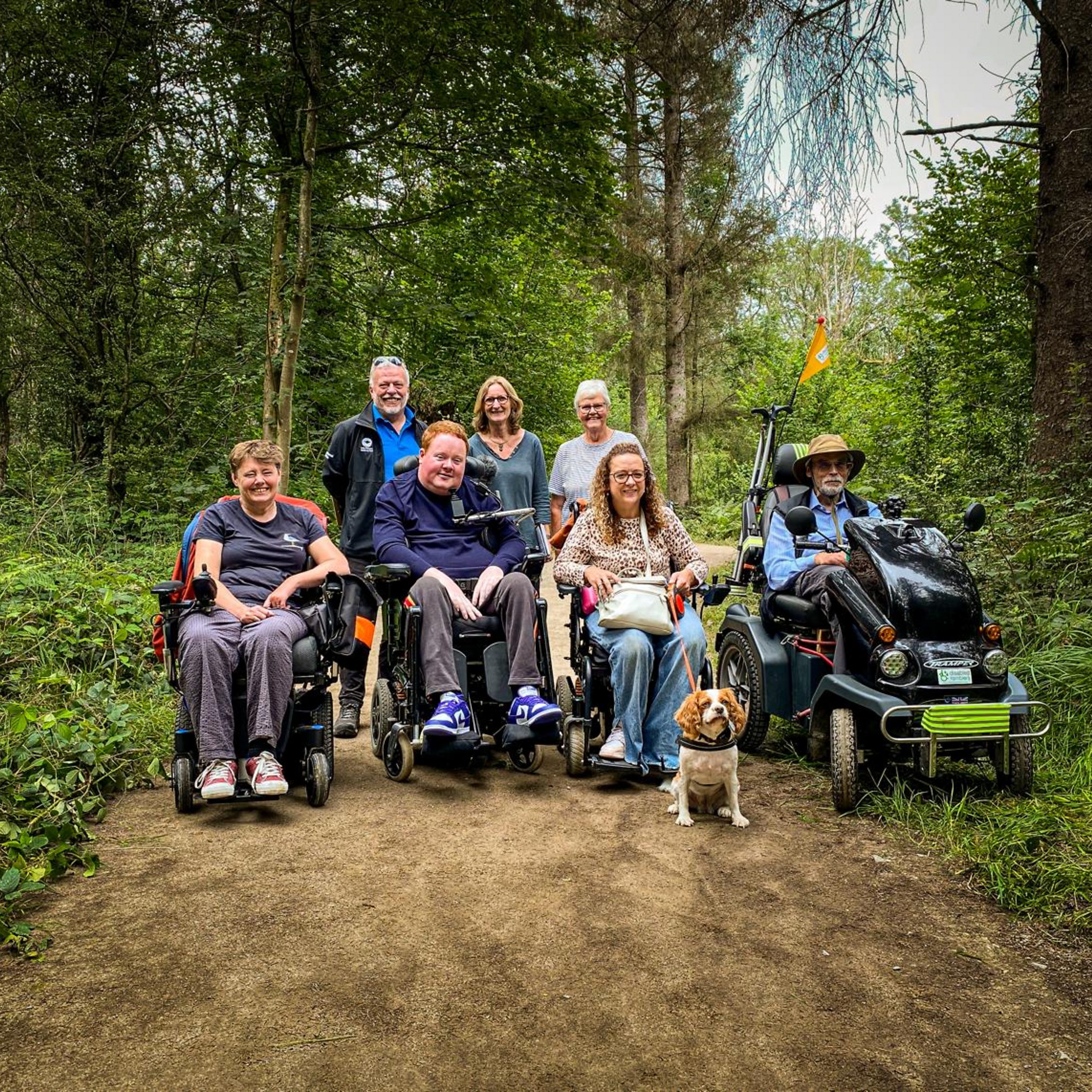
Exploring the Lakes by wheelchair
Aug 2800:23:46Tap to summarizeCaz Graham tries out Miles without Stiles, a scheme which helps disabled people access the Lake District. She joins a group of people in a fleet of mobility vehicles on a route from Sizergh Castle near Kendal, and visits the Keswick to Threlkeld path which was rebuilt after Storm Desmond but attracted controversy when it was surfaced with tarmac. Will Clark explains how the scheme helps him continue to enjoy the countryside after a mountain biking accident left him paralysed from the neck down. He explores the lakes and fells using a power chair which he operates with his chin.Produced for BBC Audio Bristol by Sally Heaven
Transcribe →Shifting Sands of Sefton
Apr 10, 202500:24:42Tap to summarizeThe Sefton coastline stretches for around twenty miles between Liverpool and Southport. It has one of the largest sand dune systems in the country, but is also one of the fastest-eroding shorelines, shifting back by around four metres ever year. In this programme, Martha Kearney visits Sefton to explore the ways in which this ever-changing landscape has been shaped by both human activity and the elements. She walks along Blitz Beach, where rubble was dumped from buildings destroyed when Bootle and Liverpool were bombed during World War II, and finds out how this has affected erosion over the decades since then. She learns about the treacherous sands of Crosby, where the famous Antony Gormley sculptures on the beach have proved a huge tourist attraction, but where an RNLI lifeguard explains how it is all too easy for unwary visitors to get stuck in the quicksand and mud. A few miles further up the coast at Formby, she finds out how work is going on to restore degraded sand dunes and goes out looking for sand lizards with one of the National Trust rangers. She asks what the future holds for this coastline, with its diverse wildlife habitats and fascinating history.Producer: Emma Campbell Assistant producer: Jo Peacey
Transcribe →