Loading summary
Transcript142 lines
- [00:00]
A
I'm Archmanning.
- [00:01]
B
I'm Madison Skinner. I'm Eva Jovic.
- [00:03]
A
I'm Decoria Moore. Wanna train like a Red Bull athlete?
- [00:06]
B
Tell us your fitness goals this summer to enter the Red Bull Athlete Challenge. You'll get to try each of our workouts for a chance to win an ultimate Red Bull experience. Think you have what it takes?
- [00:23]
A
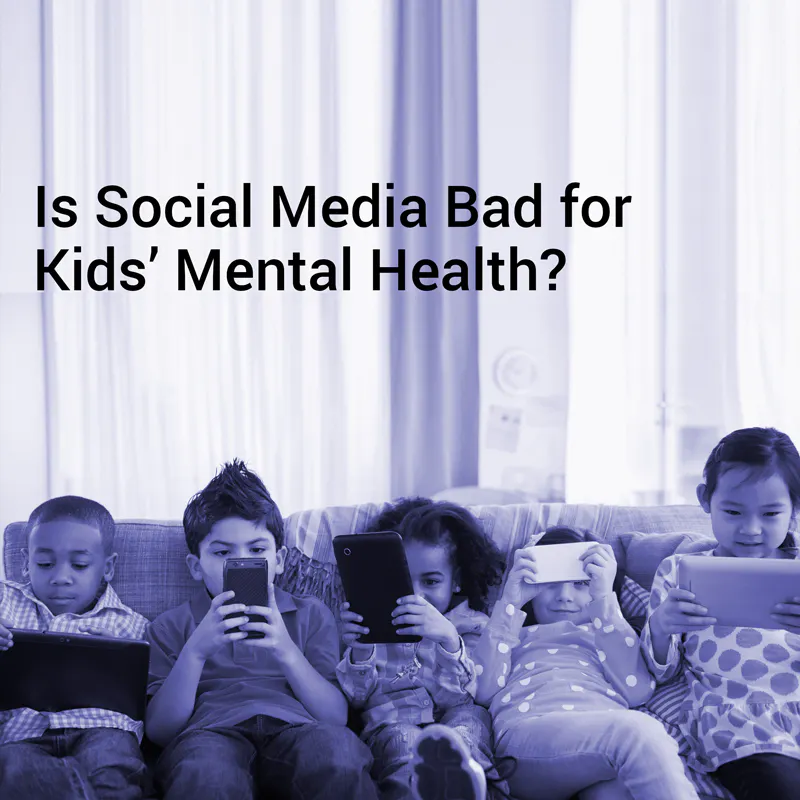
Hi, everybody, and welcome to Open to Debate. I'm John Donvan. When the US Surgeon General issues an alert over the mental health of American kids, talking about an increase in levels of depression, anxiety, and other issues that he says started before the pandemic, the natural question is, what is going on here? What happened in the lifetime of this generation of American youth that was not there before? And for many, the answer may seem just as obvious. Social media, the life the kids live out on their phones and tablets. Some say this is much more than a correlation. This is causation, which would be good to know because then there may be something to do about it. But does that argument hold up? What's the logic and what is the evidence? Is the concern with the role of screens and what comes across them in the life of kids right on target? Or is it amiss? That's what we are going to debate as we ask this question, is social media bad for kids mental health? We have two debaters. One will be answering yes to the question and one will be answering no. We want to first welcome up the debater who will be answering yes. He is the most popular professor at Stanford University for 30 years in a row. He's a civil rights law. He is the founder of Common Sense Media, which is the largest child advocacy group in the United States, and also has founded the largest tech privacy group in the world. Please welcome Jim Steyer.
- [01:43]
C
Thank you. Thank you. Oh, boy.
- [01:50]
A
And arguing no in answer to that question, arguing social media is not bad for kids mental health. A Duke University researcher and University of California, Irvine professor of psychological research and informatics, as well as director of research and faculty development at UCI School of Social Ecology. Candace Odgers.
- [02:06]
C
Yes. Hi, Candice. Have a good one. Have a good one.
- [02:14]
A
Oh, what a good start. In fact, I understand the two of you have at least virtually collaborated before. Is that right? We have.
- [02:20]
C
That's true. That's true. Candice has done research for Common Sense.
- [02:24]
A
How did it go?
- [02:24]
B
We're gonna find out if Jim read it today.
- [02:28]
A
Nah. All right, let's get to our first round. And our first round is comprised of each of the debaters having five minutes to make an opening Statement directly to you laying out their reason for arguing yes or no. Jim, you are up first. Your answer to that question is yes, social media is bad for kids mental health. The floor is yours.
- [02:46]
C
Okay, great. Well, thank you very much, John. Hello, Candice. So I would just say to the question, it's a pretty simplistic way of phrasing this, but the basic answer to the question is completely obvious. I would say, duh, social media is clearly bad for kids mental health and your mental health. And by the way, the rule tonight is put your phones away. Nobody's allowed to have their phones out while I'm talking or when Candace is talking. You have to have a device free debate. So there are other sides of this which we'll get into. But basically I would frame it to you this way. Social media is having a tobacco moment in our society and it's about time. It's at long last. And my good friend Vivek Murthy, the Surgeon General issued that warning which has openly deemed social media as unsafe and a major contributor to the youth mental health crisis in the United States. And do not kid yourselves. We are going through a youth mental health crisis in the United States here, but also globally, period, full stop. And by the way, it's affecting many of you as well. There's a wealth of research that shows that social media is first and foremost addictive. It's been intentionally designed for maximum user engagement, an arms race for your attention, for your kids attention, and it capitalizes upon the most vulnerable and underdeveloped brains. It's essentially a no brainer. 45% of teens, girls, say they're addicted to TikTok just for one example. Second, it's invasive. The amount of private and personal data that they store on users. Yes, even teens and kids users that they're not supposed to store would scare every parent and every educator here and every teen here too. And third, it's basically unregulated. It's pathetic how Washington has failed to do anything about this. Over the past 15 years, expensive, highly paid tech lobbyists in the hundreds of millions of dollars a year have made sure that there's a golden fence around big tech and in social media in particular. Allowing these platforms to conduct an unparalleled experiment on my kids brains, your kids brains, and our society. And the results? Loneliness, insomnia, depression, anxiety, body image issues, suicide, drug use and more. Okay, for too long, well over a decade, we've allowed a handful of companies and social media platforms in particular to compromise the basic health and safety of our children, period. Tonight we're going to talk about their social, emotional and cognitive development. But my hope is that after you hear this debate, quote, unquote debate, you won't just agree with me in common sense, you will be motivated personally to do something about this and to work with millions of young people and adults around the world to change the status quo and to put kids first. I mentioned the tobacco theme. Let me lay out just quickly the way that we can address this because I hope we'll spend a lot of time talking about solutions tonight, because to me, the answer to the question is obvious. Seven things we should keep in mind because learn this from the tobacco experience, which we finally successfully did. Number one, speak truth to power. Power is basically the tech industry and the biggest, wealthiest companies in the history of the world. Second, educate all segments of the public in a thoughtful and accessible but bold way. Explain how this relates to AI too, which is going to explode in your lives quickly. Third, use science and public health, as Dr. Murthy has done, to declare that this is a public health crisis that affects your children and your families and our entire society and frame it as a public health crisis and nonpartisan. Fourth, develop it a sophisticated legislative, regulatory and legal framework. This is exactly what happened finally with tobacco. And really change it. Remember, you're up against the richest, most powerful companies in the world, so you've got to be really tough to win. Fifth, educate young people in schools. We have been developing and are about to roll out a curriculum this fall for students, teachers and parents that we've created with the Harvard Ed School, which is very difficult as a Stanford professor, and also with Dr. Murthy and the Surgeon General's office. Sixth, conduct sophisticated public awareness campaign. Town halls, Aspen ideas, school talks. You guys all have ideas how to do this in your community. Media campaign using athletes and celebrities. Social media released specifically with people like Selena Gomez, a number of professional athletes. Naomi Osaka. There's a guy here, Rainn Wilson, who's expert on this as well. You need to destigmatize this issue, period. Jim, celebs can help.
- [07:47]
A
Thank you very much.
- [07:48]
C
Perf.
- [07:49]
A
Thank you.
- [07:49]
C
That was my last point.
- [07:50]
A
Excellent. Good time. And so, Candice, it is your turn. Your answer to the question is no. No, it is not harmful to kids. Mental health, social media. So the floor is yours.
- [08:01]
B
All right, well, clearly I've been given the easy side of this debate. So here we go. I wanted to start with a confession, and I think it's important for everyone in the room to know. I hate Social media, I don't use it that often. I'm not a heavy user, not a fan. But I became an expert in social media and digital technology because I followed kids to the spaces where they spend their time. I wrote a report about three months ago for the national center for Developing Adolescent arguing for regulation around privacy, saying that social media tech companies needed to come into the public square and design their tech in ways that supported our kids. So there I am. But I'm standing up here tonight as a psychologist and for the last two decades of my life, I've studied kids mental health. Since 2008, I've actually followed them around on their phones. I know it sounds a little bit creepy, but tracking what they do online, what they do in school, how much they sleep, how their school day went, experiences of discrimination, experiences of mental health. And I'm here to tell you tonight, Jim, I told you in the report, but I'm here to tell you tonight that the story you're being sold about social media and our kids mental health is not supported by the science. Now don't take my word for it. There have been thousands of studies on this topic. There are over 100 meta analyses and narrative reviews. We did one in 2020. The most recent one was done at Stanford. It analyzed 226 studies. They looked at the association between social media and well being. You know what they found? The association was indistinguishable from zero. There was no effect. This is not an uncommon finding. Sometimes we find that social media is associated with symptoms of depression, really tiny associations. Now the important part about this, and you're all sick of hearing correlation is not causation, but in this case it's actually really important because I think we're drawing the arrow in the wrong direction. Why I think that is if you follow kids over time, there's a Great study of 1700 kids in Canada that's done this. Follow their mental health, their social media use, what you find? Well, first for boys there's nothing, no association for girls, there's an association that's there. But what happens is girls are experiencing mental health problems. That predicts the type of social media they use, their social media use down the road, but not vice versa. Social media use does not predict future mental health problems. Now you're saying, but wait, the Surgeon General of the United States just issued an advisory. He did. I was on the phone with his office until the night before saying that this is going to be the wrong message to parents saying that social media is damaging to kids. Mental health. That's actually not what the report said. If you read the report carefully, what it says is social media may have risks and benefits. There's not conclusive evidence, but they're taking a safety first approach. Given the concerns fair, they can take a safety first approach. The next morning when that report was released, every major news outlet yelled, the surgeon general is warning that social media is damaging youth mental health. It's causing things like depression, anxiety, suicide. So if it's not social media, all of you have seen those graphs and they're awful. Again, I spent my life studying youth mental health. I'm worried about the youth mental health crisis. I want us to focus on solutions. I want us to from the kids who are going online because they're not the services in their offline world. They're going online to seek support, to seek mental health treatment, to find community. I want to have a conversation tonight, but I want to have a conversation that brings those voices into the conversation. So thank you.
- [12:00]
A
Thank you very much, Candace. We're going to take a break. Right now. We are debating the question, is social media bad for kids mental health? We've heard our opening statements from Jim Steyer and Candace Odgers and when we come back, we will continue the debate. I'm John Donvan. This is open to debate and we'll be right back.
- [12:44]
C
Heat up your fourth of July at the Home Depot with our wide variety of grills under $300 and make every gathering one to remember. Give your outdoor space a glow up, whatever your budget is with savings on seasonal plants starting at $5. With the grill fired up and your backyard set to perfection, you'll be able to invite friends and family over to kick off the party. Start celebrating. With low prices guaranteed at the Home Depot, prices may vary by store. Exclusions apply.
- [13:11]
B
Seehomedepot.com Pricematch for details.
- [13:17]
A
Welcome back to open to debate. I'm John Donvan. We're debating the question, is social media bad for kids mental health? We've heard our opening statements from Jim Steyer and Candace Odgers and now we're gonna get right into the discussion. So we're gonna move into more of a conversation now and I wanna summarize what I think I heard the two of you saying. Jim's made the argument that he feels that the case for the harm caused by social media is just completely obvious. He cites actually a wealth of research pointing out that it is addictive and causes harm and has a very deep concern that it's totally unregulated and that, in fact, the companies that benefit from having kids addicted are involved in preventing regulation from taking place. And I'm hearing from Candice the argument that actually the evidence isn't there that while there are serious concerns about the mental health of youth, that individuals may have challenges with mental health and they're going online, then that it doesn't start from that point of view. So we start with a kind of fundamental disagreement about what the research is saying, which is often a difficult position to put all of you in because you don't have access to the research. But we want to try to talk it through as much as possible. I just want to start with a fundamental question to see. Do you each agree that we are in a mental health crisis for you, is that undeniable?
- [14:33]
C
Total.
- [14:34]
A
All right, so, Jim, let me take to you the question, especially since Candice spoke last, her argument that as an expert who's looked at this, I think obviously in good faith, that she's just saying the numbers aren't there, the data's not there. And I just want to ask you to respond to that.
- [14:49]
C
Look, I have great respect for Candace, but the truth is. No, that's simply not correct. A lot of this is just language. Guys. Look, and everyone out here knows this, right? What Vivek is saying, the Surgeon General. What I'm saying is that we know that in many, many cases in the youth mental health crisis, that social media, various forms of it, are a major contributing factor. I'm a professor at Stanford, but I'm not an academic. Candice is an academic who we hire, by the way, and who we have great respect for. But she's absolutely, she's framing it in really narrow terms that academics and researchers use, by the way. I don't even agree with some of her basic analysis, some of the research. And we will continue to hire Candice. But at the bottom line is this social media is a huge contributing factor.
- [15:36]
A
I just want to get some clarity when you say she's defining it so narrowly.
- [15:39]
C
Yes.
- [15:40]
A
What do you mean by that?
- [15:41]
C
So part of it has to do with understanding how researchers or scholars at a school like Stanford or Harvard or UC Irvine or whatever have extremely specific characteristics in order to say certain things, because that's how you actually publish studies, et cetera. So it's very difficult to draw demonstrable, perfect conclusions. And so therefore, you have to be careful the way you frame it.
- [16:03]
B
I think two things, Jim, in the academy, it's actually the kiss of death to have a null finding and a null Finding is when you find no association. So we are incentivized to find a relationship. So every hundred studies you do, five times out of those 100, you'll have a chance finding, chance positive. What I'm saying is that when you survey the entire research and there's that many null findings, there's something happening. The second thing I'll say is Nick Allen, who's at the University of Oregon clinical practice with kids suffering from depression suicide, reviewed the research specifically around adolescent depression and social media use. They found tiny associations again. And they concluded that if they were to make a list of known risk factors for adolescent depression, social media would not be on it.
- [16:48]
C
I don't agree with this at all. And I consider myself to be a scholar. I know the research not at the level that Candace does, but I just think that's basically an overly narrow framing of all of this. I have no issue at all as a professor and also as the head of the biggest kids advocacy group saying that the evidence is there. Now, the key, though, is that the evidence, evidence is not that it's the only factor and it's different in various kids. And that's very, very important. And so I could list a number of studies, if you want me to, that would disagree with Candace's assessment because there are plenty of studies out there that show the. Oftentimes it's more correlation than causation. So I could go through a list of studies as well from various experts, wherever.
- [17:33]
A
Okay, let me.
- [17:33]
B
So, Jan, I just, I want to say that this is interesting, but after studying this for over a decade, what I'll say is the most shocking finding for me is the disconnect between what people believe. If you give them a survey and they say, is social media addictive? Yes. Kids believe this. They'll say that it's impairing, it's addictive. And what the evidence says, including when you follow those same kids, link it to their administrative school records, do clinical assessments on them. So it is true that people believe this. They believe this deeply. Right. They believe that social media is a cause of things. And believe me, I wish it was, because it, it would be an easier solution than the real causes of depression and anxiety.
- [18:11]
A
And that would be because turning off the phones would be the cure.
- [18:13]
B
Turning off the phones would help us.
- [18:14]
C
That would be an aspect. But I would tell you that's just too simplistic an explanation, guys. And I'm being serious. I say it with great respect for Candace, but I will tell you, researchers are doing the public and the country a massive disservice with this nitpicking stuff and being so wishy washy. Is it nitpicking? And they have been for years, by the way. And it's a significant problem that the researchers have been so narrow in the way they frame it. Even the most intelligent, thoughtful ones like Candace.
- [18:41]
A
So you've been portrayed as nitpicking, not cherry picking, but nitpicking that you're looking at small bore stuff. Maybe you can share what you are looking at.
- [18:52]
B
So when you analyze 225 different studies and do the actual data analysis and come up with the estimates, I mean, that's a pretty broad survey of the landscape. And don't get me wrong, I'm always checking my assumptions against the data. So there are a number of people right now who are doing the kinds of studies which I think we need, which are delay of onset studies. Right. So what happens if we delay young people's initiation to social media and smartphones? Doing that in a randomized way or as randomized as you can and tracking if there are negative effects. But you also have to check if there are things you're taking away when you take away their phones. Right. Opportunities for education, for belonging, for finding information about reproductive and sexual health. Right. So I'm engaged in those experimental studies. I'm always checking these assumptions. I'm a mom, I'm a clinical psychologist. I care. And this is a case where we all care. We all care about kids. We differ in terms of what we're seeing here.
- [19:46]
A
I've been hesitant to say this because it would sound like I'm taking sides. I'm definitely not. But I brief for this. And our team put together several meta studies of the studies and the overwhelming majority of them agree with Candace's Take that. And I understand you're saying that there's maybe a problem with how they're focusing the studies, but that they're inconclusive on
- [20:06]
C
the issue of whether because they're calling for pure causation. It's a different way of interpreting it. John. You're correct about the broad picture, John.
- [20:15]
B
I'm talking about correlational studies find zero association.
- [20:18]
C
I'm sure you find some. But you said about what the public thinks. You know why? Because they know it's right. If it walks like a duck and quacks like a duck, it is a duck. And that's what the situation is.
- [20:31]
A
Is that science, the duck? So j.
- [20:33]
B
No, but I'm gonna study that. But I will say that there's something we also know that each generation looks back at the one before and says, I don't like how you're using your time. They demonize the activity. So how much of this is what we.
- [20:48]
A
Moral panic, you're saying?
- [20:49]
B
I'm saying that maybe, and I was talking to a colleague that I always come in as the voice of reason. There's a bad headline, there's kind of a weird study. People panic. And then they quote me at the bottom, I'm the voice of reason. And I said to Alison Gopnik at Berkeley, I said, you know, maybe we just have to let the moral panic die to have a real conversation about kids today. And she looked at me and said, no, generative AI is coming.
- [21:11]
A
So I had a conversation with a friend this morning who reminded us that Congress held hearings on comic books in the 1950s as being harmful to youth.
- [21:20]
B
Libraries.
- [21:20]
A
In my era, libraries, television was also that thing. And I think what I'm hearing from Candace is that this is the latest iteration of that, where the public says,
- [21:31]
C
it's obvious that is simply not correct. And the answer is to draw a comparison between television and social media is like a joke to me. Having said it, many people say what you just said, John. They tend to be not familiar with what's really going on with the issue. And having said it, I say it with respect. And I think we should talk about some of what we should do about this, whether or not I want to
- [21:55]
A
get to that, but I want to get to what we should do about it, because I think what we're really talking about, if there is a dominant single cause, then it suggests all kinds of policy responses. And I think that's why this conversation is important, among other reasons. But I want to take to you, Candace, a couple of the points that Jim made in his opening. Social media being addictive. Social media is addictive, is it not? I mean, is that not, like really, really, really built in to the process by design?
- [22:24]
B
Yeah. So people say that it's addictive. And the analogy I'll often give here, and I know the designers in the room will say that we design it to be addictive, that we're powerful enough to addict you. But here's the, you know, kind of. Here's the interesting part about, like, the addiction narrative is that you kids believe it, right? So kids believe it. Parents believe it. When you ask people, you know, is social media addictive, they believe it's true. But if you look at impairment, when you talk about addiction, it interferes with your sleep, with your ability to form friends. You know, if we think of it from a clinical perspective of what addiction is, it's impairing in all these aspects. And what I'm saying is that when we look at those other aspects of life, there's the belief that people have that it's addictive, but we're not seeing evidence that social media is causing those impairments. And the analogy I would give is vaccines. We can ask people, it's important to know what people perceive of something like social media, that it's addictive, that it's harmful. That's one important piece of information. But we wouldn't go around and ask people about how efficacious they think vaccines are and assume that's the effect of vaccines. That's what we're doing with social media every day.
- [23:33]
A
So the presumption that I built into my question reflected me being part of that problem of saying it's addictive. Of course. And you're saying, no, the evidence really isn't there.
- [23:41]
C
I just disagree. Some of this is just a basic disagreement and I'm quite confident in my point of view it is not the pure cause. It is a major contributing factor. And do not kid yourself. And the data is clear on that.
- [23:55]
A
Another point that Jim hasn't come up, but again came up in the research is one of the concerns is that a kid sitting on the phone for hours is not outside exercising. It's not good for their health if they're doing it late at night, it's not good for sleep, and that those are not good for mental health. What about those phenomena?
- [24:15]
B
So, absolutely. So spending too much time not doing the things you're supposed to do as a kid is going to be bad for your health. Right now the argument is that is social media or digital tech the cause of that? So people look at this as in obesity all the time. And smartphones have been blamed for a lot of things. They've been blamed for kids having too much sex, not enough sex, drinking too much, not enough kids gaining weight. But that has been happening for a long time. Right. So that was happening 15 years ago, the childhood obesity endemic, before social media smartphones came on the scene. So we saw this increase and now we're seeing the increase and we're blaming it on. And so what I often say to parents is, you know, stop setting the screen time limit and fighting with your kids about screen time, because that's what they fight with in families about, and start asking the question, is my kid sleeping enough? Are they exercising? Are they doing well? In school.
- [25:09]
A
If there are multiple factors, why not continue to look at critically social media? What's the harm in bringing that into view when you're looking at all of the other factors? And if it's not social media, what else should we be looking at?
- [25:21]
B
We need to keep checking our assumptions against the data that is absolutely true and that has to be the case. We need to raise the bar on the type of evidence we generate. We're talking about disorders and diseases. When we talk about depression and suicide that take our kids lives. We would never, we would never accept this quality of evidence for childhood cancer. It would be a joke. But we're just going around and we're closing the book on this. We're saying we have a cause. People are looking at it not necessarily as the main cause but it is sucking all of the air out of the room in discussions we need to be having about serious mental health problems.
- [25:57]
A
Jim, I want to go to the point you wanted to made in your opening. You have a call to action. But I want to talk about something that I'm aware that you're doing which is Senate Bill 237 in California, which is still kind of cooking along common sense media is behind it. And this would penalize, basically force the big social media companies to pay up for the harm that they're causing.
- [26:19]
C
It would hold them liable, correct?
- [26:20]
A
Yeah, hold them liable.
- [26:21]
C
Exact Senate bill number. But the most important piece of legislation in the US this year on tech is a California Senate bill that actually will have a really big salutary effect on reining in the handful of platforms that are really largely responsible for contributing to this crisis. Remember, listen to my language. Contributing mightily to this crisis. The other thing I would tell you is that in Europe, in England and Everywhere but Washington D.C. there's been really important legislation passed. By the way, evidence based could never have been passed had that not been the case because the tech industry has cited every statistic that Candace has done a thousand times over with hundreds of millions of dollars of lobbying efforts. So everybody but Washington has recognized this and California is about to pass. Well, is about to consider pass. I can't guarantee a very big piece of legislation around the impact of social media as a harm.
- [27:15]
B
There's a lot of agreement in the solutions space and I've been on the record saying we need to regulate big tech. There's, it's egregious how data is handled, how privacy is handled among everyone, including our kids. And so I've been pro regulation. I just think both things can be true. I think you can hate social media companies. I think you can want regulation. And it's also true that social media isn't causing these problems in our kids.
- [27:39]
A
So you would be okay with that kind of holding them to account for
- [27:43]
B
causing mental health, not for causing mental health. Regulation and ways to use the carrot and the stick to regulate an unregulated industry. And I agree with the Surgeon General in that space too. There's a lot of agreement in the solution space. But if what's happening is that everyone wants to use children as a tip of the spear to slay social media companies and that's an effective strategy. That's a very effective strategy. It'll probably.
- [28:09]
A
Do you think it's regulation cynically motivated that it's.
- [28:12]
B
No. I think children are perfect pawns. Everyone wants to protect them. I think everyone believes that they want to protect them, they want to save them. They want to. They see this as a. As a culprit. But shutting off the phones isn't gonna solve this problem.
- [28:25]
C
I think that's just that I actually disagree. That is not a fair characterization of the work that I and my colleagues have done for the past decade on these issues. We do not use children as a pawn. I have a great respect for Candace, by the way. That's not a fair comment, Jim.
- [28:38]
B
I wasn't saying you using it as a pawn. I'm saying we're rushing forward.
- [28:43]
C
We're rushing forward because we have a mental health crisis and we've had a problem with this that's dramatically affected the social, emotional and cognitive development of my children, your children, and everybody as children for well over a decade. And I think the evidence is there that it's time to do it. And we can talk about how to do the regulation and how to hold people liable, but at the end of the day, the Surgeon General of the United States and the President of the United States would not be out here doing this and you would not have the consensus you will among the general public if it wasn't true and if you didn't have an imperative for action in the very near term.
- [29:20]
A
I want to ask you each to consider a child alone in his room having an hours long conversation with some other peer somewhere else in the world. They've never met, but they're talking for hours. Is that child alone in his room on his phone a child who's isolated or is that a child who's made a connection?
- [29:36]
C
You don't know. And it's a fair question. And that's why you have to look at this in the broad aggregate and stop getting lost in some of the weeds. I can go down a list of all the positive things that I think social media can do for young people, including kids with major learning differences or autism or who isolated LGBTQ youth in some rural conservative place who have no way to reach out to anybody else like them, but they can find somebody online. I can talk about all the positives and still be very clear about what the evidence says about the impact on young people's mental health as a major contributing factor. That is all you need.
- [30:14]
B
Can I come back to your question, John, about what is it? Because this is a question that I get a lot and I'm just going to take you through a 15 year old kid born today. So a 15 year old kid born today was born in the aftermath of the Great Recession when the opioid epidemic was raging, decimating rural communities like the one you talked about. They lived through a global pandemic, massive caregiver loss. The recession that hit those families at the bottom did not recover. 50% of adolescents in the US today either live in low income or in poverty. We've had an awakening among our young people. Me too. Black Lives Matter. We have more adolescents today that identify as youth of color than we ever have in this country. So this is the landscape into which we're pointing at social media right now. I've also gone on the record and say, you know what, social media can make a bad situation worse. There's going to be vulnerable subpopulations, that it might be no effect on the whole population and we need to worry about kids who are at risk for eating disorders and kids from low income families. But what I'm saying is that I haven't seen it yet. And that's just my honest assessment of the data. And again, I'm motivated to find it.
- [31:25]
C
I respect totally what you said and I also agree with what you just said about all the other factors or the several other really key factors that have been part of the youth mental health crisis. I totally agree with you about that, Candice, and I never would question your motives at all. I am an advocate and a teacher. You're a teacher, but you're an academic and a researcher. And it's just different way of framing this. But at the end of the day, it is time to do something big and now. And it means regulating it and acknowledging how much of a factor social media is in this youth mental health crisis.
- [31:58]
A
We're gonna have to wrap this up here and Take a short break. Before we get into the Q and A portion of the program, we're debating is social media bad for kids mental health? I'm John Donvan. This is Open to Debate and we'll be right back.
- [32:16]
B
This is a Bose moment. You've been there.
- [32:18]
C
Small talks going nowhere.
- [32:20]
B
But then the Bose speaker kicks in. Music you can feel fills the room. And no more chat with Dani from accounts. Your life deserves music.
- [32:28]
C
Your music deserves Bose. Find your perfect product@bose.com.
- [32:35]
A
welcome back to Open to Debate. I'm John Donvan here with Jim Steyer and Candice Odgers. And we're debating the question, is social media bad for kids mental health? We're going to move into the question and answer portion of the program right now. All right, I'm going to go to questions now. So right down in the front here.
- [32:53]
B
So I feel like what we've been hearing so far is a lot about kids consuming social media. And Candace, I have to say you are very persuasive. What about kids who are bullying on social media? And what is some of the research show about that? And you know, granted from news stories
- [33:13]
A
we read, and may I throw into that the sense in which social media just scales everything up and speeds everything up. So you might have had two bullies in school and now you can have 4,000 in an afternoon.
- [33:24]
B
So cyber victimization is a huge issue. There's been people that have been working on this for a long time. I think there's some bad news and there's some good news. Right. So the bad news is that it does have these other kind of affordances that kids can't get away from in that it lives permanently on record in the ways that traditional bullying wouldn't. Right. So there are a number of negatives about these online spaces. What you find is a huge amount of overlap between kids who are bullied offline and online. So some of the warning signs that you can see of kids who are being victimized in their schools and in their communities, you also will see them at risk for online harassment. Now, the good news is that the interventions we have to prevent bullying offline also seem to work for online bullying, about creating community, about teaching kids the bystander effect, to intervene in these settings. So these are the types of skills that young people, we need to build within them. So like any other setting that kids come into in a group, there's going to be conflict, there's going to be bullying, and we have it there, too.
- [34:20]
A
Jim, I want to give you a crack at that question, bullying was actually not one of the points that you brought up.
- [34:24]
C
No, but bullying is part of mental health issues for kids, for sure. But is that a factor? Sure it is, and I think it's a good point. There are many different examples. By the way, the idea that social media and phones do not have any impact on young people's sleep is, come on, a complete joke. We all know that. And it's just not true. So, next question.
- [34:45]
A
May I? Okay, students, so let the mic come to you. Okay. Front row, please. Thanks.
- [34:53]
B
All right, so my name is Brendan Salisbury. I'm from Phoenix, Arizona.
- [34:56]
C
I am very well educated on neurotransmitters, dopaminergic models, and looking at how social
- [35:03]
A
media producers use this to be able
- [35:04]
C
to draw us in, I can honestly tell you there's a reason for the term doomscrolling. So how would you respond to this form of addiction? Because I know you've said it's not necessarily addicting in and of itself.
- [35:15]
B
All right, I'm glad you mentioned dopamine. It's my favorite transmitter. Okay, so young people are sensation seeking, right? You're information seeking. Your brain is primed for risk taking. You're looking in all kinds of spaces for risks and rewards. We don't give you many opportunities offline to do that anymore, so you're looking online to do those things. Now, there's all kinds of studies that are out there that are showing there's a correlation between a certain structure on an FMRI task and social media. Those are pretty correlative. Some people might be more likely to scroll or feel like they can't stop scrolling, but the whole narrative that young people aren't in control and have no agency over their action is simply not the case, Jim.
- [36:00]
A
Ok.
- [36:01]
C
It's addictive, obviously. And by the way, your behavior and most people's behavior with it is compulsive. Next question.
- [36:09]
A
You know, I'm the one who says next question, so next question right in the back, please. Thanks.
- [36:18]
B
Candace, can you speak to the subset of research on girls and eating disorders? You mentioned that, and I think that's something I've read about. But I'd be curious your take on the research.
- [36:26]
A
And by the way, I want my next question directed to Jim.
- [36:29]
C
That's okay. I'm going to talk at the end longer.
- [36:31]
A
Okay, fine.
- [36:35]
B
I think that's a great question. That's one of the populations that I and others had identified early that this might be a group that makes a bad situation worse. Right. So they're coming into adolescence already having images related to body dysmorphia, et cetera, and they're seeking out information. Now, young people who've struggled with eating disorders have done this in the past too, with other forms. So the question is whether or not seeing it constantly can make a bad situation. I think there's probably some evidence that those kids have to be supervised more strongly. And that's actually the biggest take home from all the research we've done is that offline risks. Kids who are struggling in other contexts, at school, at home, et cetera, they need closer supervision and support as they navigate the online world. So just like they're going to encounter risks offline, they're going to counter them online, no question.
- [37:23]
C
Look, I have two daughters, both of whom have experienced social media for well over a decade. I know this as a parent and I know the research. It's absolutely a factor in body image issues for girls and boys, by the way, it's also a major factor in certain types of more extreme eating disorders and anorexia. It is not the sole factor. There are other factors. It is a huge problem. Do not kid yourself. We have funded, probably more than anyone, the research on this topic. So I really do believe I know what I'm talking about on this topic.
- [37:54]
B
So I'm a parent and I've come to trust common sense media for advice on what entertainment to show my children. So thank you for that. And I recognize that it's not like I'm looking for studies to tell me that an R rated movie is gonna harm my young child. I kind of get it right. It's instinctual. So I'm wondering for you, given that your take, Candace, is there's not enough research to say conclusively that it's a harmful thing. And that's your argument. I'm also wondering, well. Well, is there any. We haven't proven that it's not. So what study would need to come out to make you believe that we don't need to worry this much about social media?
- [38:32]
C
Are you asking me?
- [38:33]
B
Yes.
- [38:33]
C
I don't need any more studies to come out. I feel 100% confident as both a professor and a parent and the head of the biggest kids advocacy group. Having said this, Candice and other really, really smart colleagues will continue to do cutting edge research that matters that helps us have a more nuanced view. Really what Candace, I think, and she's doing a very good job representing her point of view, even though she's incorrect about it some of the times. But I Will say this with all respect. With all respect, though, because these are complex issues. There are multiple factors in some of the disorders we're talking about. And at the end of the day, we have to move forward on all of this stuff, period.
- [39:14]
B
Hi. I have a question for Jim too. You mentioned that there are positives to social media in terms of helping with inclusion and belonging for kids who are in the middle of not in places where they feel like they belong. And I'm wondering, how can you make regulation that preserves the good but gets
- [39:30]
C
rid of the bad? By being thoughtful and intelligent, basically.
- [39:33]
B
But do you have a specific example? I'm just curious.
- [39:36]
C
Okay, here's what I would tell you then. Let's look at the legislation that's gonna be announced on Tuesday in California and then have a conversation with you about it. It was written by really thoughtful child development experts, leading lawyers, and people who have to craft legislation that is both fair to the company, fair to the public, et cetera.
- [39:54]
A
But I think the questioner is not looking for the principle involved, but the specifics involved. Like, what would that do? How do you hit that balance?
- [40:01]
C
This is too, in my opinion, specific a question because I should show you the legislation. Look, we also wrote the privacy laws in the United States, the California Consumer Privacy act of 2018. Okay. The industry got up and had many experts say that this was not an issue. Right. Privacy. Privacy, a fundamental right under the 14th Amendment to the US Constitution, even though the current Supreme Court is trying to wipe it out in many cases. However, can I take a crack at the laws are clear. The laws could be crafted carefully.
- [40:31]
A
I want to move on to another question because of time and the row right in front. Thanks.
- [40:36]
B
Thank you.
- [40:37]
A
I want to actually push both of you to get a little more clarity on each of your issues. So, Candice, I noticed you were toggling a little bit between social media and phones. And I'm wondering how you would more limit your discussions to social media specifically.
- [40:51]
B
Jim, you.
- [40:53]
C
I'm gonna ask you.
- [40:54]
A
Social media is broad, correct?
- [40:56]
C
So what aspects of social media do
- [40:59]
A
you think are actually positive? And aspects like maybe there's some issues or some elements of social media. Okay. So I never allow two part questions, but that was such a good two part question. I'm gonna go with it. So you go first.
- [41:09]
B
So the reason I merge the two is the concern among kids is that once they get their own phones, that's when the independent access to social media starts to begin. So those become really coupled and viewed as one issue. But I love your Second question, and I can't wait for Jim to answer it. Which is defining social media. Cause this is part of the problem. It's this massive problem.
- [41:30]
A
Well, I think your question was also, which social media is harmful and which might not. Might be more benign as well, I think. Yeah.
- [41:35]
C
So basically there are many positive aspects for individual kids. Remember, generalizing is really hard here. And so you have to think, I have four kids. Kids, they're all different. Their experiences with many things, including social media, are all different. So generalizing is tough here. So I would say the connectivity for kids, the ability to find a ton of information and connection and facts about the world and people that they can't. I think in the case of young people with learning differences, cognitive differences, social media can be very pathetic. It's a longer discussion about what we mean by social media. I'm largely referring to the big platforms like TikTok, YouTube, Instagram, Snapchat. I would call them the big four.
- [42:22]
A
Okay, I'm afraid this is gonna be our last question, so please make it great.
- [42:27]
C
Standard 40 hour workweek for America, right?
- [42:30]
B
On average, Candace, how many hours are children spending on phones a week? Yeah. And so this is a point I start every report with, which is, most American children are spending more time in online spaces than they are in schools. Right. And people gasp at that. But my point is, we spend a lot of time thinking about how to make schools safe and productive, not just not make them hurt kids. Right. And we have devoted so little time to that. Now, the interesting question for me, I know this is horrifying to people, right. The interesting question for me is if you split that by socioeconomic status, what you find is a huge opportunity gap, that kids from high SES phones, who have their life schedules, who have all these activities, have a lower screen time count, they have a more personalized and supported experience. And young people in low income households are not getting that. And so the argument we've been making is that it's not screaming about social media and mental health. We should be talking about closing that divide, that opportunity gap that is replicating itself in online spaces, allowing kids to leverage technology to help them with their daily lives.
- [43:37]
C
I mean, one of the underlying issues that we have here, two things, and I'll end with this, are one, the extraordinary wealth inequality. And by the way, we're in Aspen, Colorado, so you should think about it while you're sitting here. And the beauty of Aspen, which I love, but it reflects some of that. And I'd say second, this is the first generation of young people. And afterwards, for the Bezos scholars. I'd love to talk about this. It's the first generation of young people that think they're going to be worse off than their parents. That's a very heavy indictment of the American dream, but also a huge stressor on young people in our society.
- [44:08]
A
So we're gonna go to closing rounds. Closing rounds, like the opening rounds is the debaters are gonna take the floor and make their point one more time to you and give you some kind of takeaway thoughts to walk away with. So in our closing round, in answer to the question, is social media bad for kids mental health? Your answer is no. Candice, your last chance to explain why.
- [44:26]
B
Okay. My answer is still no. The surgeon general issued an advisory on youth mental health, but he also issued another advisory a couple months ago, and that was an advisory saying that there is an epidemic of loneliness and of disconnection in American society. That was a good call because we know loneliness impacts our health. We know it takes years off of our life. Here's something you might not know. There are two peaks in the life course when loneliness is at its highest. The first one is in older adulthood, often after the loss of a spouse or living alone. Where's the second one? Adolescence. And this was true long before phones were in their hands. Right? This is a feature of adolescents. They are looking for ways and need ways to connect, to find purpose and to find meaning. And a lot of young people today are finding that connection. They're finding that purpose in online spaces. Now, the thing that we didn't talk about today is if you survey adolescents and ask them where they're going to get help for mental health problems, where they're searching for answers, they're going online. And I don't blame them. The ratio of counselors in our middle and public schools is one to every 500 students. How do we expect kids to get help in offline spaces? Right? They're coming online, and we're standing there not having the services, not having the response that they're asking for, and, frankly, that they deserve. So we have two choices in front of us, right? We can pause, check our assumptions when we hear the latest headline that comes out about social media destroying our kids and start to move forward with smart, sensible solutions that give adolescents the things that they need. Right? Or we can blindly accept that social media is the thing. Right? We can accept this evidence. We can go forward. It's going to be effective in regulation. Right? This is a compelling argument. People believe it and people love it. My worry is it's not going to help our kids.
- [46:35]
A
Thank you very much. Now making his closing statement, answering yes to the question, is social media harming kids mental health? Here one more time is Jim Steyer.
- [46:47]
C
Thank you. And by the way, I would stand by what I said. Yes. And with great respect for Candace, it seems absolutely clear to me. I'm going to read you a prayer for children that a friend of mine wrote 25 years ago, because this is really about children. So that's how I'd like to end. We pray for children who sneak popsicles before supper, who erase holes in math workbooks, who throw tantrums in the grocery store and picket their food, who like ghost stories, who can never find their shoes. And we pray for those who stare at photographers from behind barbed wire, who can't bound down the street in a new pair of sneakers, who were born in places we wouldn't be caught dead in, who never go to the circus, who live in an X rated world. We pray for children who sleep with the dog and bury the goldfish, who bring us sticky kisses and fistfuls of dandelions, who get visits from the tooth fairy, who hug us in a hurry and forget their lunch money. And we pray for those who never have dessert, who have no safe blanket to drag behind them, who watch their parents watch them die, who can't find any bread to steal, who don't have any rooms to clean up, whose pictures aren't on anybody's dresser, whose monsters are real. We pray for children who spend all of their allowance before Tuesday, who shove dirty clothes under the bed and never rinse out the tub, who don't like to be kissed in front of the carpool, who squirm in church or temple and scream into their phones, whose tears we sometimes laugh at and whose smiles can make us cry. And we pray for those whose nightmares come in the daytime, who will eat anything, who have never seen a dentist, who aren't spoiled by anybody, who go to bed hungry and cry themselves to sleep, who live and move but have no being. We pray for children who want to be carried and for those who must, for those we never give up on and for those who don't ever get a second chance. For those we smother with love and for those who will grab the hand of anybody kind enough to offer it. I would tell you that when you look at this issue, there's evidence, there's really important discussions and thoughtful nuance that we have to take into mind here. But at the end of the day. We have failed as a society to invest in and protect young people in this country, period. One of the areas is the failure to regulate social media. I hope that you will go away not just with a better understanding of the issues involved, but a fundamental commitment to change the world for kids. Thank you very much.
- [49:53]
A
That's a wrap on the argumentation part of the program. Thank you. I want to thank our debaters for how you did this. Our aim with our program is to prove that people can disagree with one another but do so civilly and shed light at the same time. And the way that you both worked through this conversation so epitomizes what we want to do. I just want to say thank you to both of you for the way that you did this. Thank you for tuning in to this episode of Open to Debate. You know, as a nonprofit, our work to combat extreme polarization through civil and respectful debate is generously funded by listeners like you, by the Rosenkrantz foundation and by supporters of Open to Debate. Open to Debate is also made possible by a generous grant from the Laura and Gary Lauder Venture Fund Philanthropy Fund. Robert Rosenkranz is our chairman, Clea Connor is CEO, Leah Matthau is our Chief Content officer, Marlette Sandoval is our producer and Gabriela Mayer is our Editorial and Research Manager. Gabrielle Ionicelli is our social media and digital platforms coordinator. Andrew Lipson is head of production, Max Fulton is our Production coordinator, Damon Whittemore is our engineer and Raven Baker is events and Operations manager. And I'm your host, John Donvan. We will see you next time. Insurance isn't One size fits all. That's why customers have enjoyed Progressive's Name
- [51:40]
B
your Price Tool for years.
- [51:41]
C
Now.
- [51:41]
B
With the Name youe Price Tool, you tell them what you want to pay
- [51:44]
A
and they'll show you options that fit your budget.
- [51:47]
B
So whether you're picking out your first
- [51:49]
A
policy or just looking for something that works better for you and your family,
- [51:53]
C
they make it easy to see your options.
- [51:55]
B
Visit progressive.com, find a rate that works for you with the Name youe Price Tool Progressive Casualty Insurance Company and Affiliates
- [52:02]
A
Price and Coverage Match limited by state law
- [52:07]
B
Panoply.