← Optimal Finance Daily - Financial Independence and Money Advice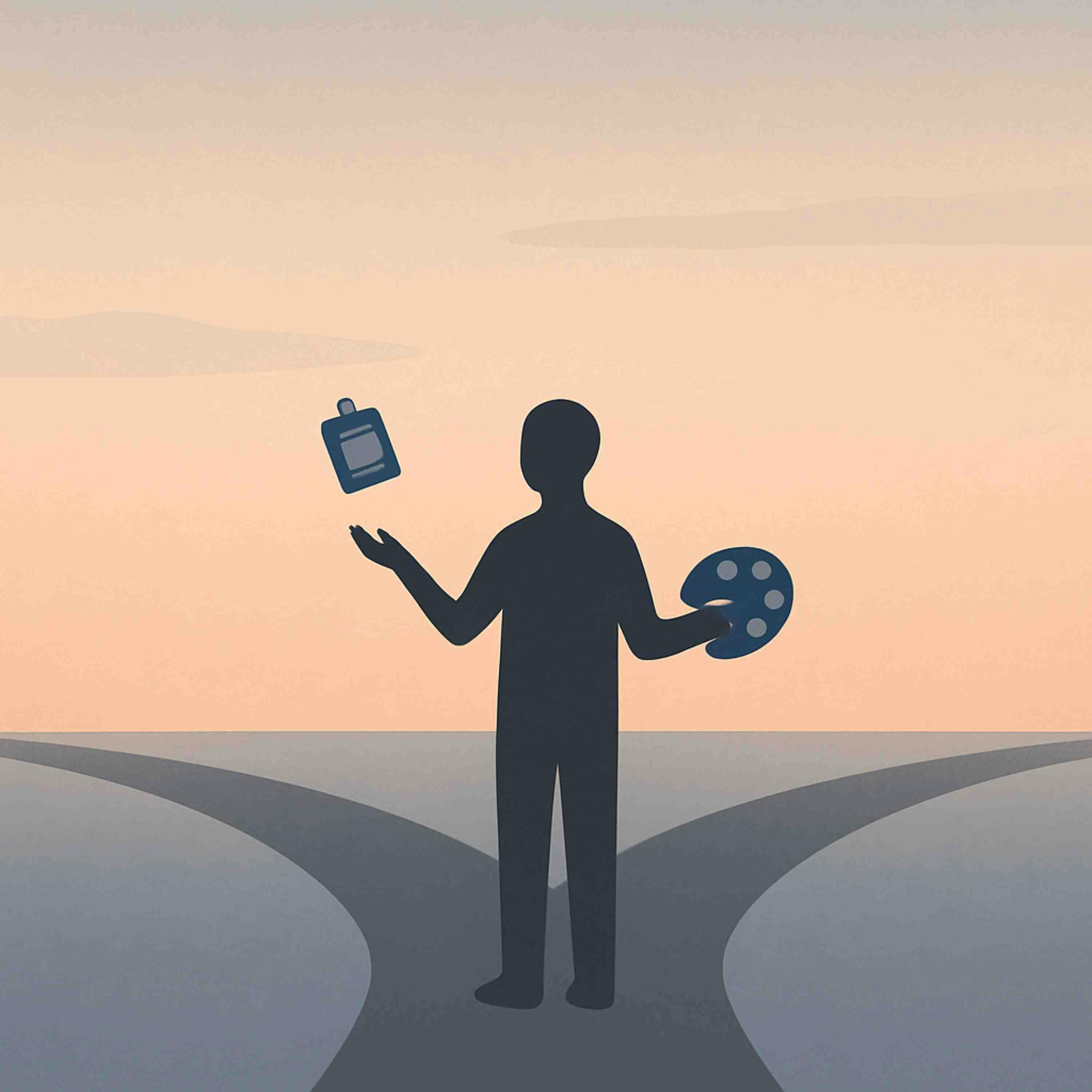
Optimal Finance Daily - Financial Independence and Money Advice
3366: Financial Independence Is A Hall Pass For Safe Reinvention by Dave of Accidental FIRE on Financial Freedom
00:10:23
Dave from Accidental FIRE explores how financial independence can become a powerful launchpad for reinvention after professional decline
Loading summary
Transcript25 lines
- [00:00]
A
Your business identity is everything from what customers see to the paperwork they never do. Northwest is your one stop business resource. Build your business identity fast with access to thousands of free resources, forms and.
- [00:13]
B
Step by step guides.
- [00:15]
A
No account required. Don't wait.
- [00:17]
B
Protect your privacy.
- [00:18]
A
Build your brand and get your complete business identity in just 10 clicks and 10 minutes. Visit northwestregisteredagent.com ofd free and and start building something amazing. Get more with Northwest registered agent@northwestregisteredagent.com OFDFREE. You know you want to start a business. What you may not know is how.
- [00:41]
B
To make it a reality.
- [00:42]
C
GoDaddy Aero's got you.
- [00:44]
A
It uses AI to help you find the domain name that's right for you.
- [00:48]
B
Next.
- [00:49]
A
Answer a few prompts and with a couple of clicks, Aero will design a professional looking website or storefront in minutes. Aero can even help you stay engaged with your customers. Just attach a professional email that matches your domain.
- [01:02]
C
With GoDaddy Aero you can build a.
- [01:04]
A
Business without having to know a thing about this stuff. Just visit GoDaddy.com to get started. That's GoDaddy.com premium features require paid subscription. See Terms on site.
- [01:17]
B
This is Optimal Finance Daily Financial independence is a hall pass for safe reinvention by dave of accidental fire.com I've been part time at my main W2 job for well over five and a half years now. Not 32 hours a week, but a scant 20 hours a week. A drastic change like that after almost 25 years of full time workaholism has huge consequences. I wrote about how I was slowly losing what I call my W2 muscles back in 2019, only about two and a half years into my part time status. My presentation skills were waning, my grasp of technical terms and corporate speak was weakening. I was losing my sharpness Even then in 2019. Now three years later, I'm a literal has been a Persona non grata in my industry, but I've embraced my professional decline. With reinvention going down, most of us will experience a decline in our work performance as we age. In his book From Strength to Finding Success, Happiness and Deep Purpose in the Second Half of Life, author Brooks writes about how we cognitively decline as we age and how there are different kinds of intelligence such as crystallized intelligence and fluid intelligence. As this Harvard Business Review article says, Lawyers, financial professionals, doctors, these types of workers often expect their abilities to remain steady or grow with time. But Brooks points to data showing that's not the case in almost every high skill profession. He finds decline sets in between a person's late 30s and early 50s as the brain's prefrontal cortex degrades in effectiveness. Ouch. Sounds like we're all headed on the inevitable path to old man shouting at cloud status. But the good news, according to Brooks, is that we don't just decline cognitively, we change. Quote the research showed that it's not all decline past 40. Certain aptitudes grow during middle age that favor wisdom, teaching and sharing ideas. Language skills and articulation tend to increase, he says, and professions that combine and use existing ideas, such as applied mathematics, see greater longevity. Teachers often experience long lasting success, and a Chronicle of Education study says the oldest college professors tend to have the best teaching evaluations. End quote. That's good news for me as I've spent over 20 years teaching in my career, including 17 as an adjunct faculty member at a large university. Sounds like I could do that again in the future without much cognitive decline. I could even buy a corduroy sport coat with elbow patches and become the poster child of the old college professor four Step Program of Regression As Brooks says in a different article he wrote for the Atlantic, the key to managing your professional decline is to learn to be content with your reduced capacity and accomplishments and to find your self worth in other aspects of life. And he lists four strategies for coping with your Turning inward, teaching the next generation, deepening relationships, and staring down death. Turning inward involves self reflection of your career and what you've accomplished. It also involves spirituality and finding deeper meaning than the career or business goals you've been pursuing. Teaching the next generation is self explanatory. You've done your best work. You're on the decline now. Teach others how to do their best work. You have wisdom. Pass it on. Deepening relationships is also pretty self explanatory. It's likely that you'll start figuring out in your 50s and 60s that people are what matter in life, not achievements. Bonuses, medals and accomplishments. Those are great, but once you've peaked and are declining, they can become sad memories of when you were living the glory days. Move on, focus on people and stare down death. None of us gets out of here alive. Following the stoic advice of thinking about death is a hell of a great way to remind yourself to live the best life you can while you have it. It's more likely you'll teach others and deepen relationships when you regularly remind yourself that you might not be able to do it tomorrow. Reinvention I like Brooks's advice and four strategies, but I would Add a fifth reinvention. Why not just have a second career trying something totally different? Most of us are complex personalities with many interests, yet we often spend careers in just one field. Experiencing professional decline in your chosen field is just a cue to start the ball rolling on a new career. That's what I did. I'm still in the muddy middle of pivoting from a long career in a pretty technical and stressful job for the federal government to being a solopreneur producing and selling art and graphic designs. The two careers couldn't be more drastically different, but one fit the time and place of my younger life, and the new one fits like a glove for where I'm at now. My brain has a techy side and a creative side, and I want to fully experience both. Being financially independent is the magic trick that underpins this reinvention. It's the bedrock beneath it all. Without that, I'm far too risk averse to do it. Being FI allows me to take risks with the comfort of knowing the consequences of failure are minor. Financial independence is basically a hall pass for safe reinvention. And don't think striking out on your own is the only way to reinvent yourself after your professional decline. You could do what Austin Murphy did and just get a new job. He was a top writer for Sports Illustrated for years and wrote over 140 cover articles for that magazine. He then pivoted to delivering packages for Amazon. It's an entertaining story and a testament to the power of humility and joy through simplicity. A new you There are thousands of benefits to financial independence. Being able to safely reinvent yourself after your professional decline is one of the bigger ones and worth pursuing FI in and of itself because you have to face the facts, you will decline in your career. You may have already done the best thing you will ever do in your line of work. So maybe it's time for a safe reinvention. You just listened to the post titled Financial Independence is a Hall Pass for Safe Reinvention by Dave of accidentalfire.com Imagine.
- [08:01]
A
You'Re a business owner who has to.
- [08:03]
C
Rely on a dozen different software programs to run your company. Each one is expensive, overly complicated, and worst of all, none of them are connected. Now imagine a platform that could tackle all of your business management needs in one place. That platform you're imagining, it's Odoo. Odoo has all the programs you'll ever need and they're all connected on a single, simple, easy to use software, giving you peace of mind that your business is always being taken care of from every angle. Odoo assists in accounting, marketing, inventory, hr, CRM, manufacturing, and everything in between through its user friendly interface and open source applications. Basically, if your business needs it, Odoo's got it. Odoo sounds pretty amazing, right? So stop wasting your time and money on those expensive, disconnected platforms and let Odoo harmonize your business with simple, efficient software that can handle everything for a fraction of the price. It doesn't get much better than that. So what are you waiting for?
- [09:05]
B
Discover how Odoo can take your business.
- [09:08]
C
To the next level by visiting odoo.com that's o d o o.com odoo Modern management Made Simple Time it's always vanishing.
- [09:21]
D
The commute, the errands, the work functions, the meetings Selling your car. Unless you sell your car with Carvana, get a real offer in minutes. Get it picked up from your door. Get paid on the spot so fast you'll wonder what the catch is. There isn't one. We just respect you and your time. Oh, you're still here. Move along now. Enjoy your day. Sell your car today. Pickup fees may apply.
- [09:48]
B
I think you may decline in certain skills as you downshift in the workforce, but for me personally, these are skills that I no longer care about. While my ability to navigate corporate politics or put together a fancy status report may have declined, my authenticity has skyrocketed.
- [10:08]
C
Since leaving my W2 job.
- [10:10]
B
I'm a better writer, I'm a better speaker, I articulate my views without fear of retaliation, and I've drastically improved my ability to take care of my body and my mind. I've lost my patience for cold calling and following up and micromanaging my colleagues. Though the corporate speak is a hard habit to break, I can circle back, take a deep dive, communicate a hard stop, and highlight my core competencies with the best.
- [10:37]
C
Best of them.
- [10:38]
B
I love this quote from the article Today. Being PHI allows me to take risks with the comfort of knowing the consequences of failure are minor. Some people think the benefit of reaching FI is no longer having to work, but I disagree. I think financial independence and early retirement is much more about separating our finances from our work and not having any pressure for our work to provide for our livelihoods. Work is a meaningful part of life. Most of us just want way more control over how much we work, what.
- [11:11]
C
We work on, and most importantly, who we work with.
- [11:16]
B
That brings us to the end of today's episode. Thank you so much for listening all the way through and I'll catch you tomorrow on our next episode, where your optimal life awaits.