← Optimal Finance Daily - Financial Independence and Money Advice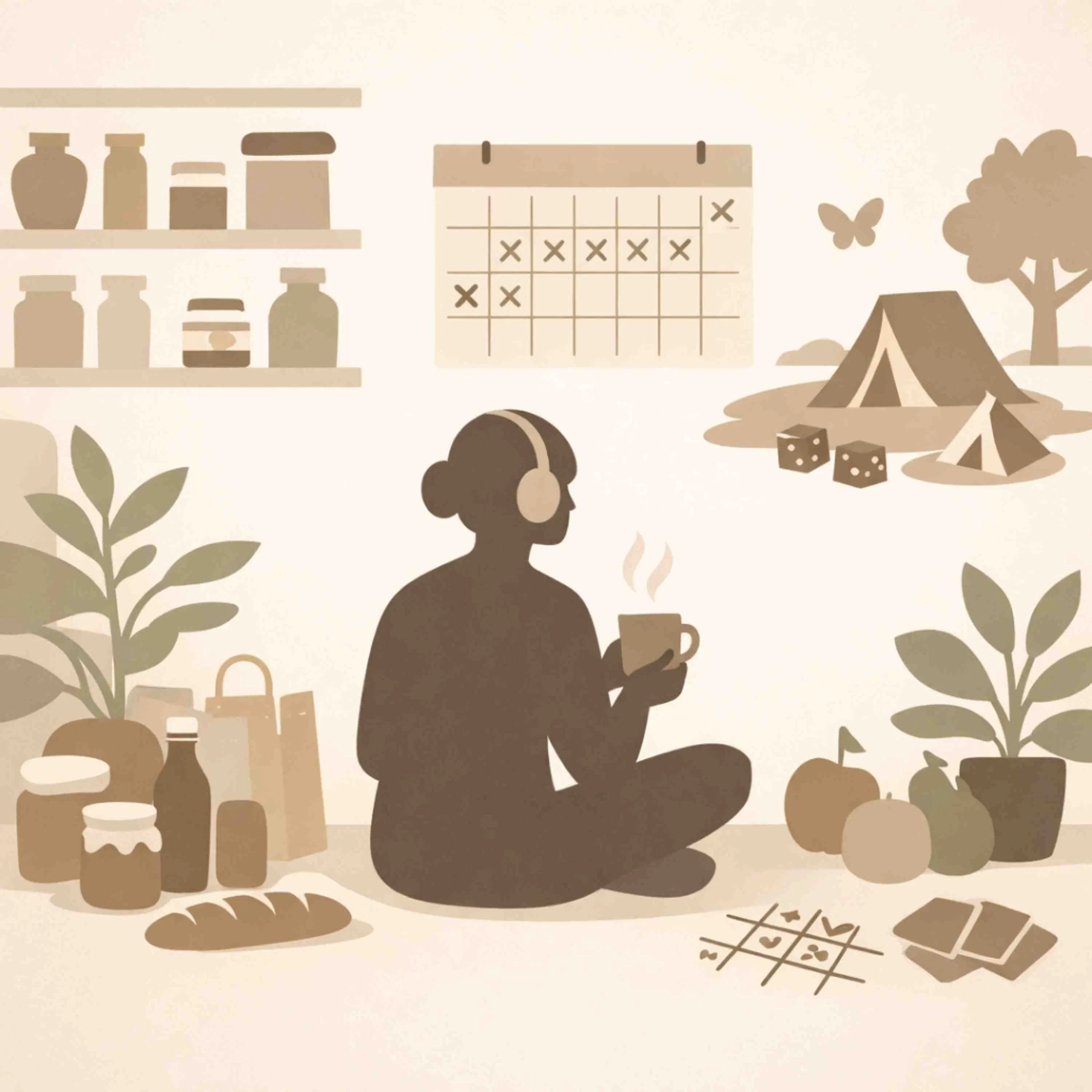
Optimal Finance Daily - Financial Independence and Money Advice
3435: The Power Of A No Spend Challenge by Michelle Schroeder-Gardner of Making Sense of Cents on Conscious Consumption
00:07:42
Michelle Schroeder-Gardner explores how a no spend challenge can transform your financial habits, reduce clutter, and even boost your health and motivation
Loading summary
Transcript11 lines
- [00:00]
A
When you're ready to start your business, Northwest Registered Agent gives you access to thousands of free guides, tools and legal forms. Everything you need to launch and protect your business in one place. Northwest Registered Agent has been helping small business owners and entrepreneurs launch and grow businesses for nearly 30 years. They're the largest registered agent and LLC service in the US with over 1500 corporate guides. Real people who know your local laws and can help you in your business every step of the way. Plus, with Northwest, privacy is automatic. They never sell your data and handle all services in house because privacy by default is their pledge to customers. Don't wait, protect your privacy, build your brand and get your complete business identity in just 10 clicks and 10 minutes. Visit northwestregisteredagent.com ofdfree and start building something amazing. Get more with Northwest registered agent@northwestregisteredagent.com ofd free.
- [01:03]
B
This is optimal Finance Daily the Power of a no Spend Challenge By Michelle Schroeder gardner of making senseofsense.com I'm currently taking part in a no spend challenge where I'm not spending money on clothing or any sugary treats such as cake, pie, doughnuts, candy, etc. I haven't set a time frame for myself because I'm trying to see how long I can last, but it's been an interesting challenge so far. I'm a big sugar addict, but I've realized that eating a sugary treat every day is definitely not healthy for me. It's also a waste of money and probably killing my teeth. I'm also attempting to spend no money on clothing because we have no room in the rv. Plus I don't need to buy any and I'm saving time as well because I'm not looking for clothing. I believe that by taking part in these two no spend challenges that I can change the way I think about spending money in these areas, be a little more healthy, have a little less clutter and save some time. I believe that taking part in no spend challenges can help others as well. Here are some of the many great reasons to take part in a no spend challenge. A no spend challenge can be whatever you want it to be. In case you're wondering, a no spend challenge is when you challenge yourself to stop spending money. Pretty easy to understand, right? There is no right or wrong way to take part in a no spend challenge. You can completely say no to spending altogether or you can just limit yourself in the areas in which you do not do so well. You can do a challenge that's for no clothing shopping, no food shopping, no coffee spending, no fuel shopping, no shopping with a credit card, no eating out, no Target shopping, and so on. Some do challenges for a week, a month, a year, and so on.
- [02:51]
A
Whatever you think will fit you best.
- [02:54]
B
Some believe that no spend challenges will just cause you to spend the same amount of money once the challenge is over. I disagree with that for the most part, and you can hear more about why later on. No spend challenges can prevent impulse spending We've all gone to Target and spent way more money than we originally planned. Going into a store and only needing one item, yet coming out with 10 other things is even a norm for some. By taking part in a no spend challenge, you can prevent yourself from cluttering your life with items you don't need. I think this is one of the great reasons for why no spend challenges work. By not allowing yourself to go shopping, you're preventing yourself from impulse shopping due to the fact that you'll be forcing yourself to think longer about the items you want to buy. You can find use in the items you already have. If you're like me, you probably have tons of food in your pantry and freezer that you're not eating. Plus you may have clothing in your closet that you haven't taken out of there in forever. This can be applied to many other items in a person's life as well. By taking part in a no spend challenge, you may find use for the items you already have instead of letting them spoil or completely forgetting about them. You will also realize that items you probably shouldn't buy anymore because they're a waste of money. A no spend challenge can help a person be more motivated. A good challenge can help anyone and everyone become more motivated. By challenging yourself, you can push yourself and make it more of a game so you can save more money. It can make you aware of your spending problems. Challenging yourself and analyzing your spending can help you be more aware of where your money's going to. You'll see how many times each month you almost spent money and think about the ways you can improve your spending behaviors. It can help you declutter and prevent waste. By taking part in a no spend challenge, you are still able to buy certain things depending on what type of challenge you're doing, but for the most part you're trying to use up the things you already have. This can help you declutter, clear out your pantry and more. I've done a no spend challenge for pantry and freezer items before and it really helped me save money on food and to also clear out things that were about to go bad. It doesn't have to be hard. There are many ways to take part in a no spend challenge and still have a great time. Here are some examples.
- [05:15]
A
Look for free days.
- [05:16]
B
There are many days where businesses will offer items for free. There's National Coffee Day, Donut Day, Ice Cream Day and more. Look for coupons for free stuff similar to the above. You may be able to find free treats, free movie rentals and more. Play board games with friends or family. Finally complete that DIY project that you've been pushing off. Have a potluck. Get your friends to join in so that it's more competitive. Plus, everyone can help each other out. Visit your local library. The libraries in Colorado are even giving away free state park passes. You can also borrow movies, books, read your favorite magazine and more. Go to free events around your town. Go to a national park when they're free and there are a few days each year when they're free. Take part in mystery shopping so that you can get items and meals for free and explore your town in the outdoors. You just listened to the post titled the Power of a no Spend Challenge by Michelle schroeder Gardner of makingsenseofsense.com Carvana is so easy.
- [06:28]
C
Just a click and we've got ourselves a car. See so many cars. That's a clicktastic inventory. And check out the financing options payments to fit our budget. I mean that's Clickonomics101 delivery to our door. Just a hop, skip and a click away. And bot no better feeling than when everything just clicks. Buy your car today on Carvana. Delivery fees may apply.
- [06:56]
A
Imagine you're a business owner who has to rely on a dozen different software programs to run your company. Each one is expensive, overly complicated, and worst of all, none of them are connected. Now imagine a platform that could tackle all of your business management needs in one place. That platform you're imagining, it's Odoo. Odoo has all the programs you'll ever.
- [07:16]
B
Need and they're all connected on a.
- [07:18]
A
Single simple, easy to use software, giving you peace of mind that your business is always being taken care of from every angle. Odoo assists in accounting, marketing, inventory, hr, CRM, manufacturing, and everything in between through its user friendly interface and open source applications. Basically, if your business needs it, Odoo's got it. Odoo sounds pretty amazing, right? So stop wasting your time and money on those expensive disconnected platforms and let Odoo harmonize your business with simple efficient software that can handle everything for a fraction of the price. It doesn't get much better than that. So what are you waiting for? Discover how Odoo can take your business to the next level by visiting odoo.com that's o d o o.com odoo modern.
- [08:06]
B
Management made Simple I like the way a no spend challenge can make you more aware of what you might buy out of habit. But just like with frugality, rather than seeing it as restriction, perhaps we can focus more on what we're gaining. For example, right now I'm doing a no booze challenge and I'm getting better sleep, I have more energy and I'm discovering healthier ways to decompress at the end of the day. Those are all additional benefits to saving money. Challenges in general, whether they're fitness challenges, healthy eating challenges, or no spend challenges, definitely have the potential to jumpstart healthier habits and help us learn more about ourselves. But that brings us to the end for today. Thanks so much for listening all the way through, and I'll catch you tomorrow on our next episode, where your optimal life awaits.