← Optimal Finance Daily - Financial Independence and Money Advice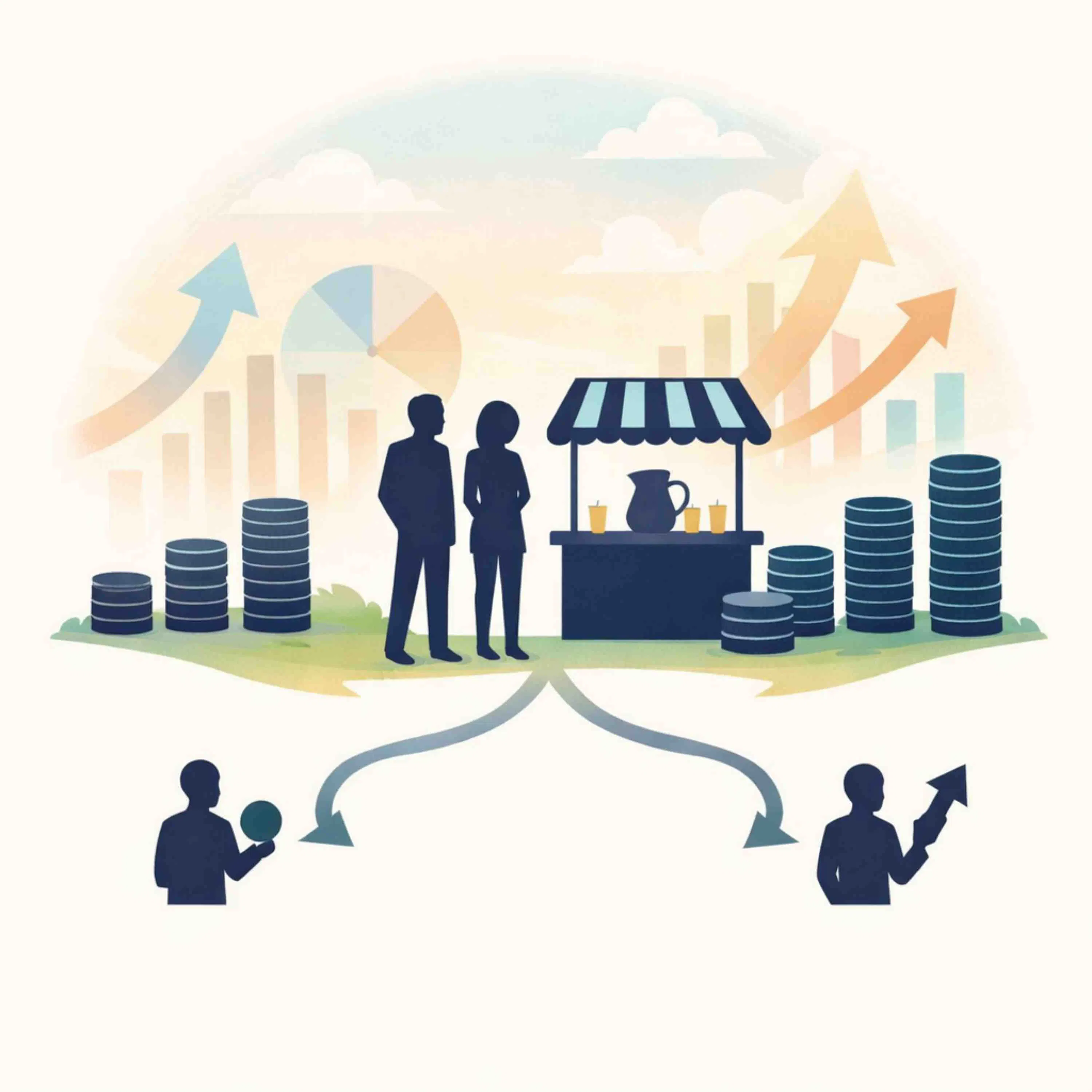
Optimal Finance Daily - Financial Independence and Money Advice
3436: Making Your Own Stock Dividends by Chris Reining on Income Creation
00:09:13
Chris Reining challenges conventional retirement investing by illustrating why relying on dividends isn't always the smartest move
Loading summary
Transcript9 lines
- [00:00]
A
When you're ready to start your business, Northwest Registered Agent gives you access to thousands of free guides, tools and legal forms. Everything you need to launch and protect your business in one place. Northwest Registered Agent has been helping small business owners and entrepreneurs launch and grow businesses for nearly 30 years. They're the largest registered agent and LLC service in the US with over 1500 corporate guides. Real people who know your local laws and can help you in your business every step of the way. Plus, with Northwest, privacy is automatic. They never sell your data and handle all services in house because privacy by default is their pledge to customers. Don't wait, protect your privacy, build your brand and get your complete business identity in just 10 clicks and 10 minutes. Visit northwestregisteredagent.com ofdfree and start building something amazing. Get more with Northwest registered agent@northwestregisteredagent.com ofd free.
- [01:03]
B
This is optimal Finance Daily Making your own stock dividends By Kris Reining of ChrisReining.com I started questioning my entire investment strategy. I had built a stock portfolio for growth and was sure it was a horrible mistake. I had already quit my day job to live off stocks, but was only getting $3,798 in dividends. That's the reason retirees love income portfolios. They invest their nest egg in things that generate enough income to fund their retirement. Typically stocks like AT and T or Coca Cola or whatever pays a fat dividend. So I considered switching my portfolio from growth to income. It certainly would make life simpler getting those quarterly paychecks, but it also be an expensive undertaking. I'd need to pay the capital gains tax. And then a funny thing happened. The more I thought about it, the more I realized something important. I don't want dividends. The reason I invest in a business is pretty simple. I think the business can grow. And if the business grows, the stock price should move in unison. How exactly do businesses grow? Well, they can acquire another company like Amazon buying Whole Foods, create a new product line like the Apple ipod, iPhone, iPad, watch or expand their territory Netflix from the US to 190 countries. These bets on growth don't always pan out. For instance, Amazon's fire phone was a $170 million flop. But management only needs to be right more often than wrong for the winning bets to overshadow the losing ones. And that's why I don't want dividends. I want management to smartly reinvest 100% of earnings into growing the business and improving the earnings and widening the moat. Rather than paying me A dividend. Granted, sometimes earnings can't be efficiently deployed. Hence stock buybacks and dividends. Maybe an example would help. Okay. Pretend you and I own a lemonade stand that's worth $10,000. The stand earns 10% per year, or $1,000. We can earn the same 10% on any earnings we reinvest. There are also some kids in our neighborhood who would love to buy into our stand. Why work at the stand when the stand can work for you? These kids are willing to pay 125% what the stand is worth. You know, projected future earnings. So the market value of our 50% ownership stake is $6,250. I'm thinking the stand should pay each of us 25% of earnings. The remaining 75% will reinvest into growing. Sound good? So in the first year, the stand earns $1,000. We each get a dividend of $125. The stand keeps and reinvests $750. In 10 years time, the stand will be worth $20,610. And we'll each be getting a $258 dividend. But here's the what if we had decided to reinvest 100% of the earnings, we'll lose our $125 dividend. But remember, we can sell part of our ownership stake to those kids. And if we each sell just 2%, it creates the same initial $125 quote, unquote, dividend dividend. Are you still with me? After 10 years, the stand will be worth $25,973. But since we've been selling 2% of our stand every year, we now own just 40.85%.
- [04:52]
A
That's bad, right?
- [04:54]
B
Well, in the first scenario, we each collected $2,026 in dividends, and our 50% ownership stake is valued at $12,881. That totals $14,907. In that second scenario, we sold 2% of our ownership stake each year and collected $2,059 in quote unquote dividends. And our stake is valued at $13,244. That totals $15,303. So making your own dividends was better. We got more cash to spend. Plus our ownership stake is worth more, even though we own less. I hope that exercise wasn't too painful, but I think it's helpful to show what can happen when 100% of earnings are reinvested into a business. And really, our lemonade stand isn't that much different than a business in the S&P 500. Here, the argument grows stronger because the S&P 500 earns way more than 10% per year and and sells at prices higher than 125%. All this doesn't change the fact that retirees love income portfolios. My guess is that it's mostly psychological that when you get a dividend you never feel bad about spending it because you never touch your principal. And then you insist that every stock you own pay a dividend because a stock that doesn't pay a dividend means less money to spend. On the other hand, selling shares to make your own dividend means means making decisions what stock do I sell? What if the market is down? When should I sell? What if the stock goes up? It's very easy to make a regrettable decision. So dividends. But I'm not trying to convince anyone who's building an income portfolio to abandon their strategy. I'm just telling you why dividends are a small part of my investing and why. You just listened to the post titled Making your own stock dividends by Chris Reining of ChrisReining.com Carvana is so easy.
- [07:04]
C
Just a click and we've got ourselves a car. See so many cars. That's a clicktastic inventory. And check out the financing options payments to fit our budget. I mean, that's Clickonomics101 delivery to our door. Just a hop, skip and a click away. And bot no better feeling than when everything just clicks. Buy your car today on Carvana. Delivery fees may apply.
- [07:32]
A
Imagine you're a business owner who has to rely on a dozen different software programs to run your company. Each one is expensive, overly complicated, and worst of all, none of them are connected. Now imagine a platform that could tackle all of your business management needs in one place. That platform you're imagining, It's Odoo. Odoo has all the programs you'll ever.
- [07:52]
B
Need and they're all connected on a.
- [07:54]
A
Single simple, easy to use software, giving you peace of mind that your business is always being taken care of from every angle. Odoo assists in accounting, marketing, inventory, hr, CRM, manufacturing, and everything in between through its user friendly interface and open source applications. Basically, if your business needs it, Odoo's got it. Odoo sounds pretty amazing, right? So stop wasting your time and money on those expensive disconnected platforms and and let Odoo harmonize your business with simple, efficient software that can handle everything for a fraction of the price. It doesn't get much better than that. So what are you waiting for? Discover how Odoo can take your business to the next level by visiting odoo.com that's o d o o.com odoo modern.
- [08:42]
B
Management made Simple I thought Kris made a very compelling argument here about why he doesn't want to fund his retirement with stock dividends. I've heard many other reasons to not do it, but his specific reason was simply regarding the return. By investing in companies that reinvest in growing the business versus paying a dividend, you're more likely to get a better long term return through selling shares. He makes a great point here in that it might seem like a good deal, but sacrificing growth for income now might affect your income over the long run. From what I've seen, many buy and hold investors don't prefer dividend focused investments because it's more beneficial to control income for tax purposes when you're drawing down on a portfolio. When you receive a dividend, you have no control over the size or timing of the payment, and 100% of the money received is considered income. Retirees are re evaluating their drawdown strategy year to year based on what the market's doing, any changes in their circumstances or spending, and if they stumble upon other sources of unexpected income. So it's highly beneficial to have a lot more control over how much income is coming from your investment portfolio year to year. Some years you may sell off more, some years less, or you may decide not to sell at all and cover your income needs from other sources. A portfolio built on dividend income doesn't allow this kind of strategic planning year to year, so in addition to a suboptimal return, you could be pushing yourself into higher tax brackets unintentionally. And that's a wrap for another Monday show. Have a great rest of your day and start to your week and I'll be back tomorrow where your optimal life awaits.