← Optimal Finance Daily - Financial Independence and Money Advice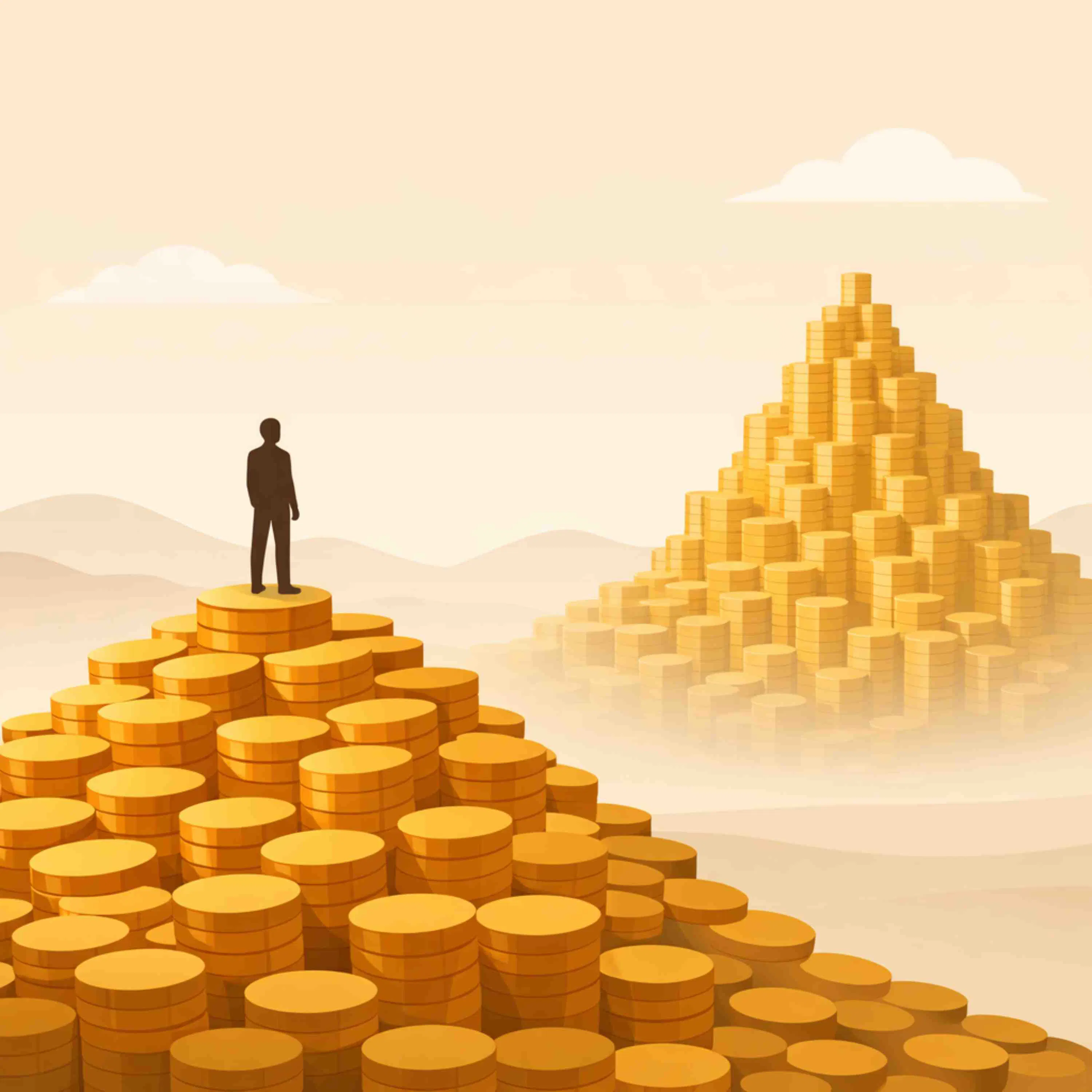
Optimal Finance Daily - Financial Independence and Money Advice
3449: Who Feels Rich Really? by Nick Maggiulli of Of Dollars and Data on Wealth Psychology
00:11:22
Nick Maggiulli explores the paradox of wealth perception, highlighting how even billionaires like Lloyd Blankfein don’t see themselves as rich
Loading summary
Transcript3 lines
- [00:00]
A
Starting a business means juggling a lot and not just what customers see. There's operating agreements, compliance filings and legal paperwork that all make up your business identity. That's a lot to manage on your own. Start your business with Northwest Registered Agent. They help you get more for your business, more privacy, more guidance and more resources. Northwest has been helping small business owners launch and grow their businesses for nearly 30 years. They're the largest registered agent and LLC service in the US with over 1500 corporate guides, real people who know your local laws and can help you every step of the way. With Northwest, privacy is automatic. They never sell your data and they give you free tools like operating agreements, meeting minutes and thousands of how to guides. Don't wait. Protect your privacy, build your brand and get your complete business identity in just 10 clicks and 10 minutes. Visit northwestregisteredagent.com ofdfree and start building something amazing. Get more with Northwest registered agent@northwestregisteredagent.com ofdfree this is optimal Finance Daily who Feels Rich? Really? By Nick Magiulli of of dollarsanddata.com One of the greatest short stories I've ever read is How Much Land Does a Man Need? By Leo Tolstoy. The story centers around a peasant named Pahom who wants to acquire land so that his family can live a more comfortable life. Unfortunately, Pahom's quest for comfort quickly becomes an obsession as he amasses more and more land, yet is never fully satisfied. The climax of the story occurs when Pahom hears of a neighboring tribe who's selling their land for next to nothing. In an effort to secure some of this cheap land, Pahom showers the tribe and its chief with lavish gifts. The chief becomes so impressed with Pahom's hospitality that he makes him an irresistible offer. The Chief tells Pahom that he can have all the lands that he can mark off within a single day as long as he returns to his starting point before the sun sets. Pahom accepts the chief's offer with his mind racing over how much land he will soon have in his possession. The next day, Pa Home takes off in haste as he starts plotting out his newly imagined estate. However, as the day drags on, Pahom begins to tire and questions whether he can return to his starting point in time. With his body breaking down from a full day of walking, Pahom has no choice but to go into a full sprint as dusk quickly approaches. Rushing with all his might, Pahom crosses the starting point just as the sun is setting, only to collapse from exhaustion and die. The tale ends with Pahom being buried in a grave just long enough to fit his body. With the final line of the story, reading six feet from his head to his heels was all he needed, end quote. I was reminded of this story and its timeless lesson about human nature and greed after reading a recent interview with ex Goldman CEO and current billionaire Lloyd Blankfein. In the interview, Blankfein claims that despite his immense wealth, he isn't rich. Blankfein insists that he's well to do not rich. I can't even say rich, he insists. I don't feel that way. I don't behave that way. He says he has an apartment in Miami as well as New York, but he abjures most of the trappings. If I bought a Ferrari, I'd be worried about it getting scratched, he jokes. Ken Griffin, the Chicago based hedge fund billionaire, buys all those houses. He's out there every minute calling the office. It can't make any sense to people outside. End quote. As shocking as this sounds, I kind of understand his sentiment. When you regularly hang out with people like Jeff Bezos and David Geffen and Count Ray Dalio and Ken Griffin among your peers, having only a billion doesn't seem like much. However, on a completely objective basis, Blankfein is in the top.01% of US households, or the 1% of the 1%. According to Saez and Zucman, the top 01% of US households, about 16,000 families, had a net worth of at least 111 million in 2012. Even if you adjust for the increase in asset prices since 2012, Blankfein would easily be in the top.01%. But it's not just Blankfein with this perception problem. Most people at the upper end of the income spectrum think they're less wealthy than they actually are. As an MIT article illustrates, most households in the upper half of the income spectrum on average, don't realize how well they have it. Even households at the 90th percentile and above believe that they're in the 60th to 80th percentile range. It's like the article Everyone is getting hilariously rich and you're not on repeat. While this result might seem surprising at first glance, if you think about wealth perception as a network problem, it makes a lot of sense. Matthew Jackson explained this concept well in the Human Network when discussing why most people feel less popular than their friends. Have you ever had the impression that other people have many more friends than you? If you have, you're not alone. Our friends have more friends on average than a typical person in the population. This is the friendship paradox. The friendship paradox is easy to understand. The most popular people appear on many other people's friendship lists, while the people with very few friends appear on relatively few people's lists. The people with many friends are overrepresented on people's lists of friends relative to their share in the population, while the people with few friends are underrepresented. You can apply the same thinking within your social networks to illustrate why most people feel less rich than they actually are. For example, you can probably think of at least one person who is wealthier than you are. Well, that wealthier person likely has some wealthier friends, so they can think of someone wealthier than themselves as well. And if they can't, they can easily reference a celebrity who is like Gates or Bezos. If you extend this logic to its natural conclusion, you'll realize that everyone besides the world's richest person can point to someone else and say, I'm not rich. They are. That's how filthy rich billionaires like Blankfein can feel that they're just well to do. Well. Guess what? You probably don't act all that different. How do I know? Because you're likely far richer than you think. For example, if your net worth is greater than $4,210, then you are wealthier than half of the world, According to the 2018 Credit Suisse Global Wealth Report. And if your net worth exceeds $93,170, which is similar to the median net worth in the US that puts you in the top 10% globally. I don't know about you, but I would consider someone in the top 10% to be rich. Let me guess. You disagree. You don't think it's fair to compare yourself with random people across the globe, like rural farmers in the developing world. Well, guess what? Lloyd Blankfein probably doesn't think it's fair to compare himself with people like you and me, either. Yes, Blankfein's claim of not being rich is objectively more outlandish than the claim that being in the top 10% globally isn't rich. However, they are fundamentally the same argument. We're just splitting hairs. After all, is the top 10% rich, the top 1%, the top.01%, and at what aggregation level? Globally, nationally, citywide? There's no right answer. Because being rich is a relative concept, always has been and always will be. And that relativity will be present throughout your life. For example, you would need a net worth of 10.35 million to be in the top 1% of US households. However, if you control for age and educational attainment, the top 1% varies from as little as 264,000 to as much as 33 million. This is why when I ask who feels rich really? The answer is no one, because you can always point to someone else who's doing better. But the trick is not to forget all the people who could be pointing at you. You just listened to the post titled who feels rich really? By Nick magiulli of of dollarsanddata.com the new year gets people thinking about finances, Building an emergency fund, saving for a home retirement Done just tracking past spending Want a tool that helps you actually achieve those goals? Set yourself up for financial success this year. Monarch is the all in one personal finance tool designed to make your life easier. It brings your entire financial life, budgeting accounts and investments, net worth and future planning together in one dashboard on your phone or laptop. Be aware and in control of your finances this year and get 50% off your monarch subscription with Code Optimal. I've been using Monarch for years. It keeps me focused on moving forward, not feeling bad about past spending. The savings projections help me make decisions that actually move the needle. Set yourself up for financial success in 2026 with Monarch, the all in one tool that makes proactive money management simple all year long. Use code optimal@monarch.com for half off your first year. That's 50% off your first year@monarch.com with code optimal.
- [10:29]
B
Reggie, I just sold my car online. Let's go Grandpa. Wait, you did? Yep, on Carvana. Just put in the license plate, answered a few questions, got an offer in minutes. Easier than setting up that new digital picture frame. You don't say? Yeah, they're even picking it up tomorrow. Talk about fast. Wow. Way to go. So about that picture frame. Ah, forget about it. Until Carvana makes one, I'm not interested.
- [10:53]
A
Car Selling made easy on Carvana. Pick up fees may apply this article made me think more about the emotional benefits of feeling satiated when it comes to money. When we compare to others, we're more likely to feel the emotions of greed, lack inferiority or superiority. In many ways, we're wired to expand, to grow, to improve. We set personal and professional goals, financial and otherwise, to give us something to work towards. But unchecked growth or pursuing more for the simple act of pursuing more seems to me where things get out of hand. If money is only a tool, having a bigger tool without an underlying purpose for it seems like a bit of a waste for example, in the story of Pahom, why did he want so much land? Did he plan to use it to impact the world in some positive way? Or was all that effort driven by greed with no greater outlet? The concept of enough when it comes to money is really powerful. It helps us feel a sense of contentment and purpose and allows us to enjoy our good fortune. And it's not just enough money. How about enough stuff and relationships and success and achievement? I learned from my friend Rose Lunsbury that enough is not a destination that you reach, but a state of mind that you need to cultivate. If you want to hear more from Rose on this topic, check out the speech the Journey to Enough on the Economy Conference YouTube channel. But that'll do it for today. Have a happy rest of your day and I'll see you on the Sunday show tomorrow, where your optimal life awaits.