← Optimal Finance Daily - Financial Independence and Money Advice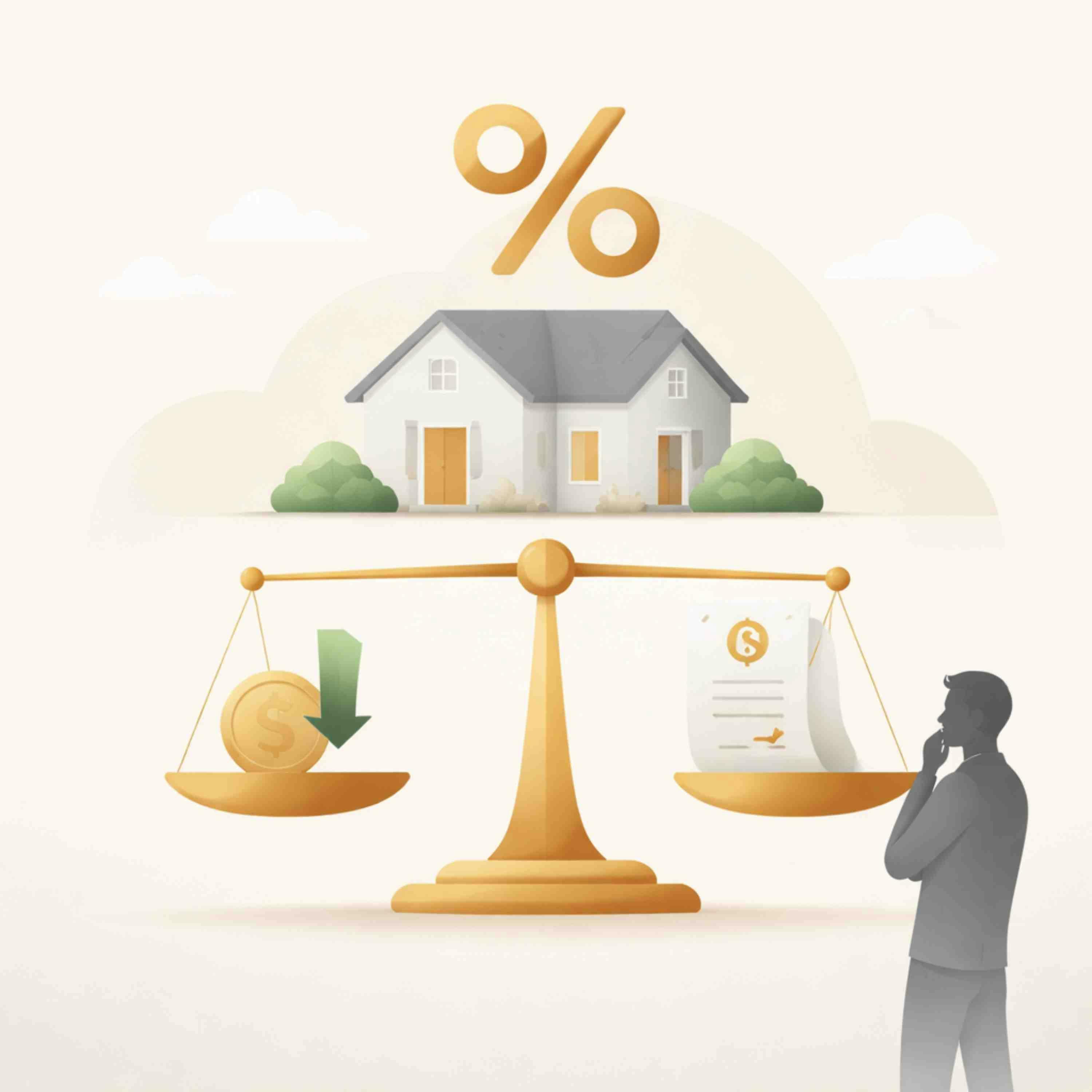
Optimal Finance Daily - Financial Independence and Money Advice
3472: Is It a Good Time to Refinance Your Mortgage? by Kumiko of The Budget Mom on Debt Management
00:09:46
Kumiko breaks down how to determine whether refinancing your mortgage truly makes financial sense, especially in a low interest rate environment
Loading summary
Transcript8 lines
- [00:00]
Narrator/Advertiser
Starting a business means juggling a lot and not just what customers see. There's operating agreements, compliance filings and legal paperwork that all make up your business identity. That's a lot to manage on your own. Start your business with Northwest Registered Agent. They help you get more for your business, more privacy, more guidance and more resources. Northwest has been helping small business owners launch and grow their businesses for nearly 30 years. They're the largest registered agent and LLC service in the US with over 1500 corporate guides, real people who know your local laws and can help you every step of the way. With Northwest, privacy is automatic. They never sell your data and they give you free tools like operating agreements, meeting minutes and thousands of how to guides. Don't wait, protect your privacy, build your brand and get your complete business identity in just 10 clicks and 10 minutes. Visit northwestregisteredagent.com ofdfree and start building something amazing. Get more with Northwest registered agent@northwestregisteredagent.com ofdfree
- [01:12]
Kimiko (The Budget Mom)
this is optimal Finance Daily Is it a good time to refinance your mortgage? By kimiko of thebudgetmom.com as I sit down to write this article, federal interest rates are historically low, and although the federal funds rate and mortgage rates aren't directly tied together, there's still a good chance that you may be able to find a lower interest rate than what you're paying on your current mortgage. Because rates are lower, many people are wondering whether it's a good time to refinance their mortgages. Unfortunately, there's no clear answer that will apply to everyone's situation. In some cases, refinancing your mortgage is wise, yet for other people, it's not a good move. Listen on to learn how to determine if you should refinance your personal home loan. Pros and Cons of Refinancing a Mortgage A lower rate may help you save on interest. Refinancing to a lower rate could lower your monthly payment, and you may be able to use the equity in your home to pay down high interest.
- [02:18]
Narrator/Advertiser
Debt
- [02:21]
Kimiko (The Budget Mom)
load costs might outweigh your savings. It could take you longer to pay off the debt, and using equity to pay off debt is dangerous if you don't break overspending habits. Is it a good idea to refinance your mortgage? When it comes to interest rates, lower is better, but if you only look at the interest rate when you decide whether or not to refinance your home loan, you're skipping some important steps before you pick up the phone to call the mortgage lender of your choice, there are several questions you need to ask yourself. First, Is your credit strong enough to qualify? Is a lower interest rate available? What are the costs to refinance? And how long do you plan to stay in your home? Is your credit strong enough to qualify? Before you start loan shopping, take an honest look at your credit. Your three credit reports and scores play a huge role in whether or not you can qualify for a new mortgage. If you do qualify, your credit will have an impact on the rate you're offered. Better credit generally equals lower interest rates. You can claim your three free credit reports once every 12 months@annualcreditreport.com There are also several places you can access free credit scores online. Some of my favorite credit score resources Credit Karma free credit scores VantageScore 3.0 from TransUnion and Equifax and Experian Free Credit Score From Experian FICO Score 8 if you discover problems, you may need to work to improve your credit before you apply for a loan. I know from experience that credit challenges can be stressful, but with the right plan, it's completely possible to turn your situation around. Is a lower interest rate available? Though a lower rate shouldn't be the only reason you refinance your mortgage, it does matter. Some professionals say that a refinance is worth considering if you can lower your interest rate by at least 1%. Others say you only need a 0.5% savings to make a refinance worthwhile. There are a lot of opinions on the subject, so you have to decide what makes sense for you. Crunch the numbers to see how much money a lower rate could save you. Start with LendingTree to see the latest mortgage rates. What are the costs to refinance? Taking out a new mortgage comes with a lot of fees, also known as closing costs. You may choose to pay closing costs outright, finance them into your loan, or or get a no fee loan in exchange for a higher interest rate. But no matter what you choose, you have to pay for those costs. Refinance costs may include an appraisal fee, home inspection application fee, attorney fees, loan origination fee, mortgage insurance fees, title insurance fees, owners and lenders upfront HOA fees, and more. On average, you'll pay 2 to 3% of the loan amount when you refinance a mortgage. So if you're refinancing a $200,000 home loan, fees ranging between 4 to $6,000 are common. Be careful. Some lenders charge higher than average fees. Once you know the cost to refinance, you can calculate whether a lower interest rate will save you enough to offset those fees. How long do you plan to stay in the home? Next, it's time to consider how long you plan to stay in the home. Whether you plan to move in the near future or stay put is a huge part of determining whether or not to refinance a mortgage. Let's say you took out your original home loan two years ago. It's a 30 year fixed rate mortgage for 300,000 with an interest rate of 5.5%. You refinance to a 30 year fixed rate mortgage with a rate of 4%, but you'll have to pay $7,500 in closing costs to do so. In this scenario, it would take you a little over two years to reach the break even point on your new mortgage. At that point, you'll have saved enough on your monthly payments to offset the $7,500 in loan fees you incurred when you refinanced. After that point, the savings would continue to pile up. However, the same scenario wouldn't make sense to refinance if you were planning to sell your house in 12 months. In that case, you would only have saved $3,708 or $309 times 12 months. That savings wouldn't offset the money you paid to refinance. Figure out the break even point on your new mortgage to see if refinancing your home loan makes sense. The bottom line? Only you can figure out whether it's a good time to refinance your mortgage. There's no universal answer and everyone's situation is different. If you run the numbers and decide that you do want to refinance your mortgage. Take the time to shop around. Rates and fees can vary between lenders. Do your homework and make sure you find the best deal available for your situation. You'll be glad you didn't rush the process in the long run. You just listened to the post titled Is it a good time to refinance your mortgage? By kimiko of thebudgetmom.com Reggie I just
- [07:51]
Reggie
sold my car online. Let's go Grandpa. Wait, you did? Yep, on Carvana. Just put in the license plate, answered a few questions, got an offer in minutes. Easier than setting up that new digital picture frame. You don't say. Yeah, they're even picking it up tomorrow. Talk about fast. Wow. Way to go. So about that picture frame. Ah, forget about it. Until Carvana makes one, I'm not interested.
- [08:14]
Kimiko (The Budget Mom)
Car selling made easy on Carvana.
- [08:18]
Narrator/Advertiser
Pick up fees may apply. Imagine you're a business owner who has to rely on a dozen different software programs to run your company. Each one is expensive, overly complicated, and worst of all, none of them are connected. Now imagine a platform that could tackle all of your business management needs in one place. That platform you're imagining, it's Odoo. Odoo has all the programs you'll ever need and they're all connected on a single, simple, easy to use software, giving you peace of mind that your business is always being taken care of from every angle. Odoo assists in accounting, marketing, inventory, hr, CRM, manufacturing, and everything in between through its user friendly interface and open source applications. Basically, if your business needs it, Odoo's got it. Odoo sounds pretty amazing, right? So stop wasting your time and money on those expensive disconnected platforms and let Odoo harmonize your business with simple, efficient software that can handle everything for a fraction of the price. It doesn't get much better than that. So what are you waiting for? Discover how Odoo can take your business to the next level by visiting odoo.com that's o d o o.com odoo modern
- [09:29]
Kimiko (The Budget Mom)
management made simple thanks again to Kimiko for outlining these considerations when Refinancing I wish I would have read an article like this before I looked into refinancing in 2020. I really only got one quote and quickly determined that the cost of refinancing wasn't worth it. Looking back, I wish I would have put a bit more effort into evaluating more options because once I left my corporate job, I became less appealing to lenders. When you're self employed, lenders typically want to see two years of self employment income before they'll consider you for a refinance. I had mistakenly thought that my other assets and investment portfolio would have helped, but lenders seem to care mostly about income. As mentioned in this article, when you're reviewing all the costs and trying to see if a refinance makes sense, calculate the break even point. This is the point at which it starts making financial sense to refinance and take on the terms of a new mortgage. To determine the break even point, you divide the cost of refinancing by the amount you save every month. The result is the amount of time it would take you to break even on the deal. So, for example, let's say you save $50 per month by refinancing, but the loan comes with $5,000 in closing costs. It would take you 100 months or a little over eight years to break even if you stay in your house beyond the break even point, you could save on the loan. That's a wrap for another Friday show. Have a great start to your weekend and I'll be back tomorrow where your optimal life awaits.