← Optimal Finance Daily - Financial Independence and Money Advice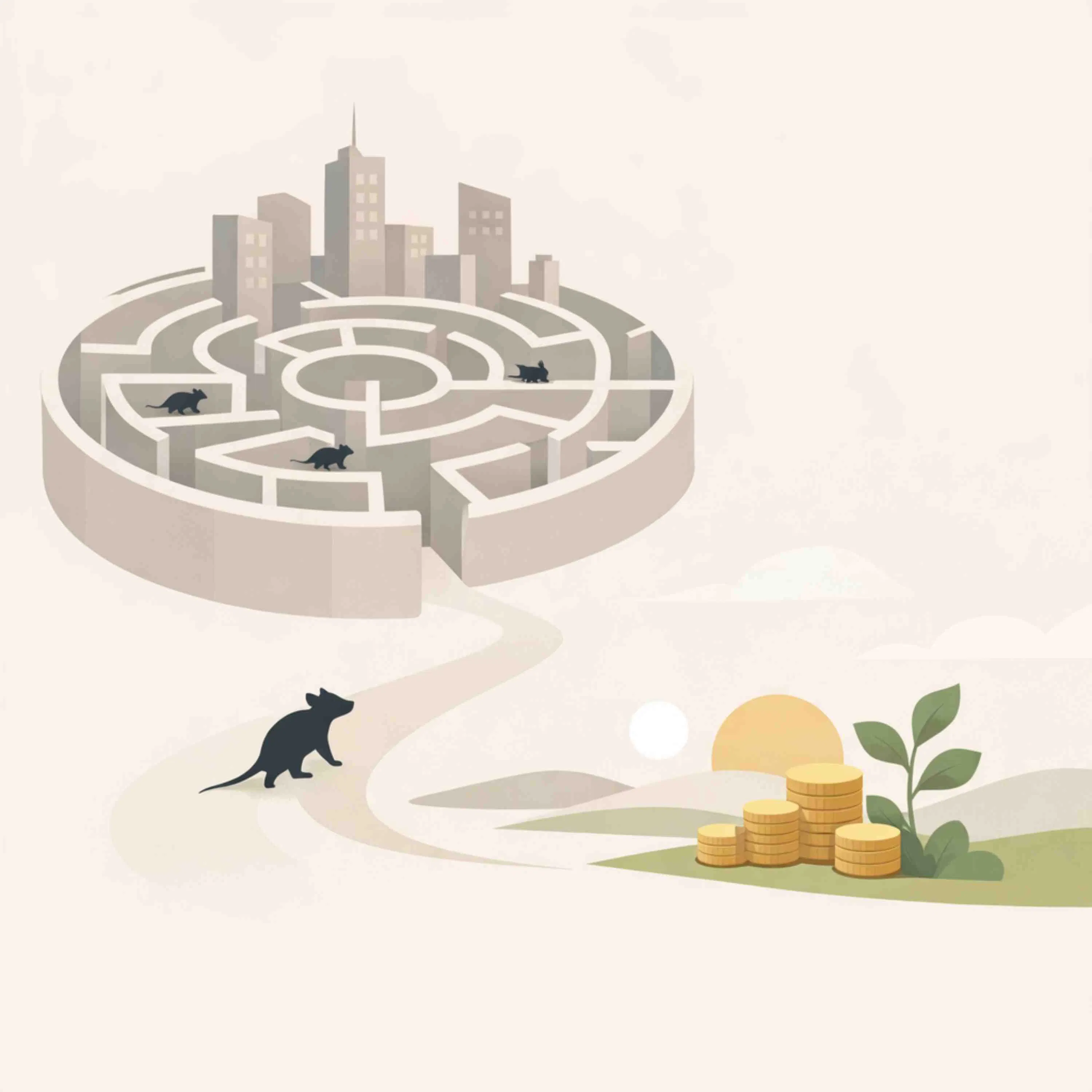
Optimal Finance Daily - Financial Independence and Money Advice
3495: The Road From Rats to Riches by Julien Saunders of Rich and Regular on Wealth Building Journey
00:08:52
Julien Saunders reflects on how perceptions of wealth are often illusions shaped by appearances, social comparison, and hidden financial struggles
Loading summary
Transcript11 lines
- [00:01]
Carvana Spokesperson 1
Carvana is so easy. Just a click and we've got ourselves a car. See so many cars.
- [00:07]
Carvana Spokesperson 2
That's a clicktastic inventory.
- [00:09]
Carvana Spokesperson 1
And check out the financing options payments to fit our budget. I mean, that's Clickonomics101 delivery to our door.
- [00:16]
Carvana Spokesperson 2
Just a hop, skip and a click away. And bot no better feeling than when everything just clicks. Buy your car today on Carvana. Delivery fees may apply.
- [00:31]
Indeed Advertiser
This episode is brought to you by indeed. Stop waiting around for the perfect candidate. Instead, use Indeed Sponsored Jobs to find the right people with the right skills fast. It's a simple way to make sure your listing is the first candidate. C According to Indeed data, Sponsored Jobs have four times more applicants than non sponsored jobs. So go build your dream team today with Indeed. Get a $75 sponsored job credit@ Indeed.com podcast. Terms and conditions apply.
- [00:59]
Julian Saunders
This is Optimal Finance Daily. The Road From Rats to Riches By Julian Saunders of richandregular.com when most people I know of think of being rich, they imagine things they've seen on television or the movies. But is that what rich really looks like? There are countless examples highlighting what we see and believe is nothing more than a smokescreen from the ESPN 3030 documentary Broke, which exposed the shocking, not shocking stats on how quickly many professional athletes lose it all to the revealing tweet Storm Kanye west shared it's not uncommon to realize what's really happening once you look closely and dig below the surface. This illusion appears with us regular folk too. It's not uncommon to assume that your boss and your boss's boss are raking in the dough because you've seen the car they dr, pictures of their home, or a job description that shows their salary range. In reality. For many of these people, accompanying their
- [02:05]
Northwest Registered Agent Advertiser
big paychecks are really, really big bills
- [02:09]
Julian Saunders
and enormously expensive lifestyles. Once you boil it down to the details that really matter, you often find they're living paycheck to paycheck and are absolutely miserable because of it. Knowing this, most people are still thinking that I'd take that situation over my own. But I can assure you, comparing yourself to others is dangerous. More often than not, you're comparing yourself to a pipe dream and ignoring that others are glamorizing you the way you're drooling over others. As a teenager, my mother moved us to Atlanta from Brooklyn, New York because she thought it would give us both a better life. In Brooklyn, we lived in a small one bedroom apartment and and I slept on a twin bed in the living room. Moving to Atlanta gave me something I'd only ever dreamed of my own room. At first I didn't know what to do with all the space, the carpet and the air conditioning. Similarly, my mother wanted nothing more than a house to call her own. Like many people, she felt owning a home was a symbol of success and stability. Little did I know that my mother miscalculated how difficult it would be to make the transition. She struggled to find comparable work, and for a period of time we were using food stamps to get by. One day after school, I learned that my jacket was stolen from my locker. I dreaded telling my mother, but I knew I couldn't hide it. While on the bus ride home, I remember telling my friend JD that my jacket had been stolen and we both brushed it off as if to suggest it happens, a common reaction for anyone that has lived in an urban environment. To my surprise, when I got home, my mother wasn't upset, and that very night we went to Burlington Coat Factory to replace my jacket so that I wouldn't be cold waiting for the bus in the morning. The next day when I saw JD he noticed I had a new jacket and said, d you must be rich. At that moment, I remembered where I'd come from, the people I'd lived around, and how fortunate I was. I was able to put into perspective that while there were benefits to being where I was at at this point, there was still struggle hidden in plain sight around me. Could he have been joking? Sure. But it's just as likely that a new jacket in under 24 hours was something he would not have expected if he were in my situation. Looking back, While I didn't have the perspective to fully wrap my head around the situation, it was an early lesson in poverty, income inequality, and the impact it can have on your life as you get older. It was also one of several pivotal lessons that being rich was relative and that comparing what you have to others can lead to some destructive behaviors later in life. I had my fair share of moments as I was surrounded by other predominantly White students who seemingly had it all. Knowing what I know now, I'm confident that many of them faced their own form of struggle and hardship. The upward climb to improve your socioeconomic status is filled with moments like this, some more jarring than others. But it's these moments that set the tone for what you expect out of life going forward and can also catapult you into making some regretful financial decisions. In the spirit of I just want my kids to have what I didn't have when I was younger. The Bottom Line there's nothing wrong with aspiring for more and setting others as a benchmark, but make sure your benchmark is real. As Lily Tomlin once said, the trouble with the rat race is that even if you win, you're still a rat. You just listened to the post titled the Road From Rats to Riches by Julian Saunders of richandregular.com when you're ready to start a business, there's so much
- [06:03]
Northwest Registered Agent Advertiser
more to it than just filing paperwork. You need a business address, a website, a phone number, an operating agreement. Basically a complete business identity. And Northwest Registered Agent helps you build all of that from day one. Northwest Registered Agent has been helping small business owners and entrepreneurs launch and grow businesses for nearly 30 years. They're the largest registered agent and LLC service in the US with over 1500 corporate guides. Real people who know your local laws and can help you and your business every step of the way. Plus your home address, personal email and phone number. Stay private. No upsells, no selling your data. Don't pay hundreds or thousands of dollars for what you can get from Northwest for free. Visit northwestregisteredagent.com ofdfree and start using free resources to build something amazing. Get more with Northwest registered agent@northwestregisteredagent.com OFDfree
- [07:08]
Lowe's Advertiser
Spring is here and the shopping list is long. Time to make a Lowe's run. Buy three bags, get three free of stay green one cubic foot garden soil Plus Right now members can earn four times the points on an eligible purchase. Start Spring off strong with these deals and more. Our best lineup is here at Lowe's. Ballot through 325 while supplies last soil offer excludes Alaska and Hawaii loyalty program. Subject to terms and conditions. See lowe's.com terms for details. Subject to change Point boosters subject to exclusions and more Terms apply.
- [07:35]
Julian Saunders
One time only offer this post made me think about the concept of stealth wealth as depicted in the book the Millionaire Next Door. That book helped me realize that most millionaires are not living in the lap of luxury like we imagine. They live below their means and they don't flaunt their wealth with material possessions. I think there's a distinct difference between being rich versus being wealthy, though. Most people use those words interchangeably. When I imagine a rich person, I think of someone with a high income that spends their money on stuff. When I imagine a wealthy person, I think of someone who uses whatever income they have to buy assets, not stuff. Assets are things like stocks, bonds, real estate and businesses. Anything that can allow your money to make more money. Wealthy people recognize that money can be put to work, and that's going to provide more security and peace of mind in the long run. The more time I spend around people who have reached financial independence and have the kind of wealth where they do whatever they want, the more I realize how immune they are to this kind of posturing with fancy looking stuff. Wealth doesn't look like luxury on the outside. A lot of the time it looks like money in the bank. And most millionaires in the US Aren't flashy about it. You'd never really know by looking at them. Just look at Warren Buffett. The man is worth something like $84 billion, and yet he still lives in the same house he bought for 30, 31,000 in 1958. Talk about living below your means. And that'll do it for today and another installment of Optimal Finance Daily. Have a happy Thursday. Thank you for being here every day and listening, and I'll see you on the Friday show tomorrow, where your optimal life awaits.