← Optimal Finance Daily - Financial Independence and Money Advice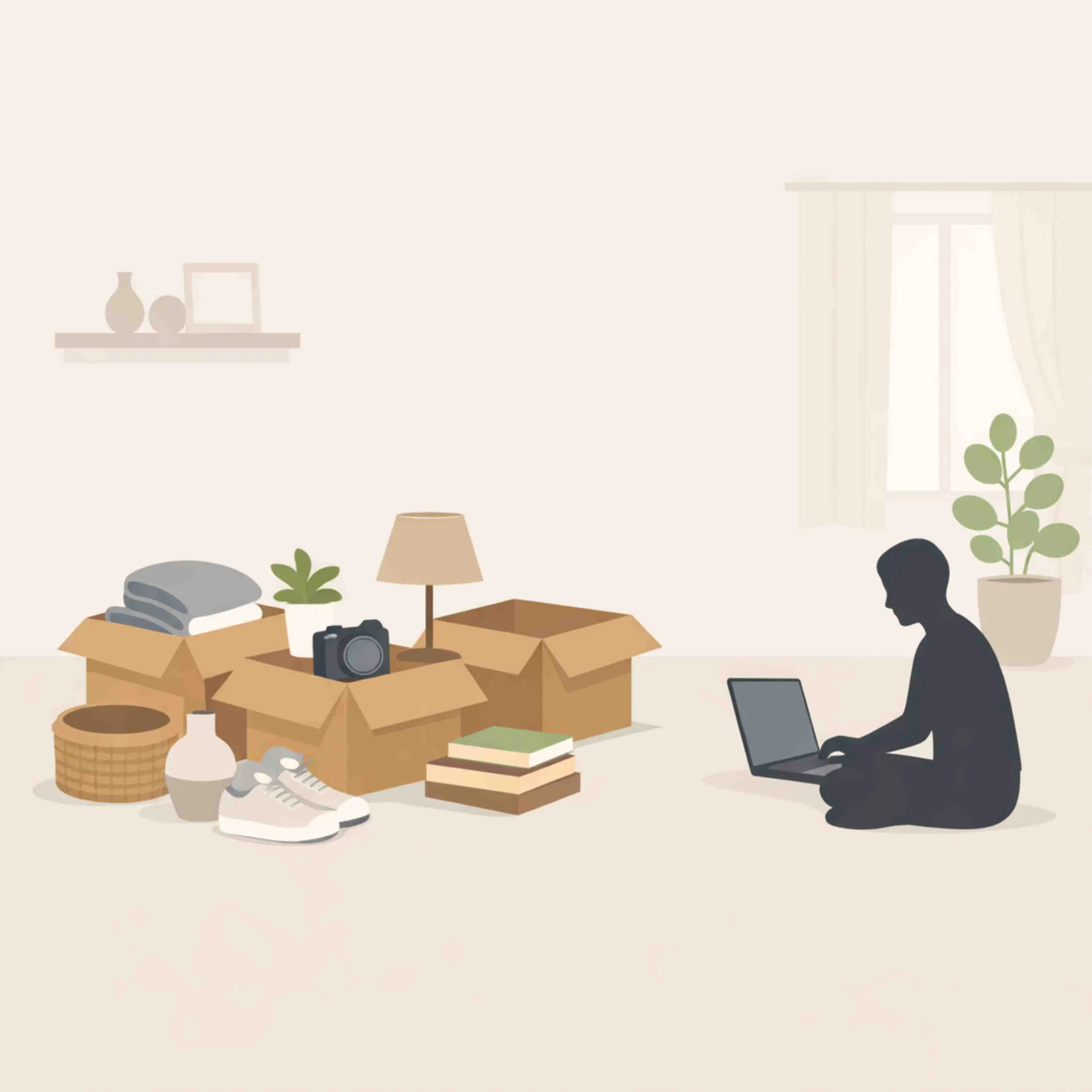
Optimal Finance Daily - Financial Independence and Money Advice
3498: Why You Should Stop Donating Your Stuff (and Do This First) by Anthony Ongaro of Break The Twitch
00:08:33
Anthony Ongaro challenges the common habit of automatically donating unwanted items
Loading summary
Transcript9 lines
- [00:01]
A
Hey Sal. Hank, what's going on? We haven't worked a case in years. I just bought my car at Carvana and it was so easy.
- [00:08]
B
Too easy.
- [00:09]
A
Think something's up? You tell me. They got thousands of options, found a great car at a great price, and it got delivered the next day. It sounds like Carvana just makes it easy to buy your car, Hank. Yeah, you're right. Case closed.
- [00:25]
C
Buy your car today on Carvana. Delivery fees may apply. This episode is brought to you by indeed. Stop waiting around for the perfect candidate. Instead, use Indeed Sponsored Jobs to find the right people with the right skills fast. It's a simple way to make sure your listing is the first candidate. C According to Indeed data, Sponsored Jobs have four times more applicants than non sponsored Jobs. So go build your dream team today with Indeed. Get a $75 sponsored job credit at Indeed.com podcast terms and conditions apply.
- [00:59]
D
Welcome back to a bonus Sunday episode. I do this once a week so we can hear a little more content to optimize our lives. An extra episode from one of our other shows where we read articles to you. Today, I'm sharing one from Optimal Living Daily. If you enjoy it, you can follow or subscribe in your favorite podcast app for daily episodes. So with that, here's Justin from Optimal Living Daily as we optimize your life.
- [01:29]
B
Why you should stop donating your stuff and do this first by Anthony Ungero of Breakthetwitch.com thanks to the minimalism movement sweeping the globe, many of us are getting rid of tons of stuff. In fact, donation centers are receiving more clothing and goods right now than ever before. And while that might seem like a good thing, it's actually a problem. It's a big enough problem that what we need is for people to stop donating. It's great to thoughtfully donate items in good condition based on what organizations can actually resell or use, but many centers are so overrun with stuff that, realistically, no one wants. They simply don't have the manpower to process through everything, and many items end up in the landfill. Here are the reasons why you should stop donating as a default. Number one Regain monetary value. There's an obvious reason you should seriously consider selling things instead of donating or giving them away. Money. Of course, it's very likely that you spent money on the things you own, so why not recapture some of that value in the process of letting go? This can be especially helpful if you went through a heavy consumerist phase or are trying to pay down debt. While it can be a lot of work. Selling off each item, getting some of the money back is positive and there are even more benefits to selling as you'll see in a minute. Number two Sustainable lifestyle change takes time and effort and that's why it works. Truly shifting your lifestyle from a consumer based to a more creator based approach takes time and effort. It's not something that happens overnight. If you bear the pain of going through and dealing with each item, you you are more likely to change as a person and evolve through the decluttering process. Selling off your items one by one is a conscious act and reminder to be more intentional with future items you bring into your life. Dropping a bunch of things off at the donation center really just makes her clutter someone else's problem Julie Kearns, Season 2 podcast guest and advocate for conscious Consumption shares the importance of of being a responsible owner of the full product life cycle from beginning to end. Over the past several years, and especially the two months before our big move, Amy and I sold a lot of our furniture and items individually. Dealing with the items worth selling definitely helped reinforce more intentional buying behavior going forward. Number three if you can't sell it, neither can someone else. Another benefit of selling instead of donating an item is it's an indication of whether it's really something that ought to be donated. If no one wants to buy it from you, what are the chances that someone else will be able to sell it, including the donation center? There are certain exceptions though, depending on where you live and local organizations around you. This is where doing some research and thoughtfully donating can be very beneficial. Animal shelters will often gladly take, clean and use towels and blankets, among other household things. Homeless or transition shelters will often take toiletries, makeup, towels, books, and many other household items. Checking with local organizations is a great way to intentionally donate items you no longer need or want. Number four Paying increases perceived value and product life cycle. When someone is specifically looking for your item and is willing to pay for it, they'll appreciate the item more. The person also has a higher likelihood of using the item. This extends the product life cycle of the item. It also results in a lower carbon footprint since the person didn't buy a new item. It's also a great feeling knowing your unwanted or unused item is going to a motivated buyer. As we were selling off our things, it was reassuring to know that people had a need for those items and number five more likely to buy used, save money and reduce consumption. Another reason to stop donating is you're more aware of how much value is lost once an item is no longer new, you start realizing the value of buying used. The most sustainable item is the one that already exists. Not only is it much more environmentally friendly, but many used items are also just as good, if not better than new. Older items sometimes are composed of better materials and thus last longer. Before leaving Minneapolis, I bought this awesome electric guitar for my friend Adam. I researched amps to play the guitar through and discovered they were $600 new. Searching on Craigslist, I found the exact amp for $300 instead. It's actually better than buying new since older mechanical amps have a soulful sound that the new ones just don't have. It can be a wonderful thing to donate items in good condition that are usable, needed, or easily resellable, but it's time for us to take more ownership of the full product life cycle. Simply collecting items and donating them just transfers the problem from your home to another location. For the record, I think donating usable, practical things or giving things to people that need them is wonderful. Still, donate things, just don't default to it. Selling items gives you money back, reinforces a more intentional mentality, and is better for the environment. You just listened to the post titled why youy Should Stop Donating youg Stuff and do this first by Anthony Ngaro of Breakthetwitch.com when you're ready to start
- [06:59]
E
a business, there's so much more to it than just filing paperwork. You need a business address, a website, a phone number, an operating agreement. Basically a complete business identity. And Northwest Registered Agent helps you build all of that. From day one. Northwest Registered Agent has been helping small business owners and entrepreneurs launch and grow businesses for nearly 30 years. They're the largest registered agent and LLC service in the US with over 1500 corporate guides. Real people who know your local laws and can help you and your business every step of the way. Plus your home address, personal email and phone number. Stay private. No upsells, no selling your data. Don't pay hundreds or thousands of dollars for what you can get from Northwest for free. Visit northwestregisteredagent.com ofdfree and start using free resources to build something amazing. Get more with Northwest registered agent@northwestregisteredagent.com OFDfree
- [08:04]
F
Spring starts at the Home Depot and we are bringing the heat to your backyard this season. Fire up the flavor with our wide variety of gr for under $300 like the next grill four burner gas grill that's perfect for hosting your spring cookout. Then set the scene and turn your outdoor space into the go to spot the patio sets for every budget. Bring it this season with grills that deliver flavor and patios that set the vibe from the Home Depot. Start your spring with low prices guaranteed at the Home Depot. Exclusions applies to homedepot.com Pricematch for details,
- [08:34]
B
take you to Anthony Fair point here. When I first saw this article, I thought the main message was going to be if you're going to end up giving it away in the not too distant future, maybe don't buy it in the first place. But it ended up being an article about selling instead, which again I think is a fair point considering the product life cycle. He's not saying that donating is bad necessarily, just that maybe there's another option to consider here. So do consider it. Have a great morning, afternoon or evening whenever you're listening to this and I'll see you tomorrow where your optimal life awaits.