
Podcast
OT conversations
Hosted by Hao · EN
This is a UK-based Occupational Therapy podcast expressing personal clinical experiences, views, and aspirations for occupational therapy practice in the UK. It is aimed to help OT students and clinicians navigate their way through their clinical practice involving occupational therapy. When it gets controversial, it is Rant Involving Occupational Therapy. When I talk about foundation OT knowledge, it is Relevant Information about OT. When I celebrate amazing people I encounter, It's Rollicking Individuals of OT. If I 'yap' about anything I fancy, then, it is Random Information about Ordinary things. Whatever the theme, this OT conversation is a RIOT Conversation. Enjoy - HAO
Disclaimer: Topics discussed are personal opinions and do not represent any professional body or Trust/Health organization.
26episodes
Episodes
Newest firstAll episodes
Level up neuro talk
2w ago01:06:42Tap to summarizeHere’s a neuro talk that should interest therapists because it’s so essential to your professional sanity 🤣
Transcribe →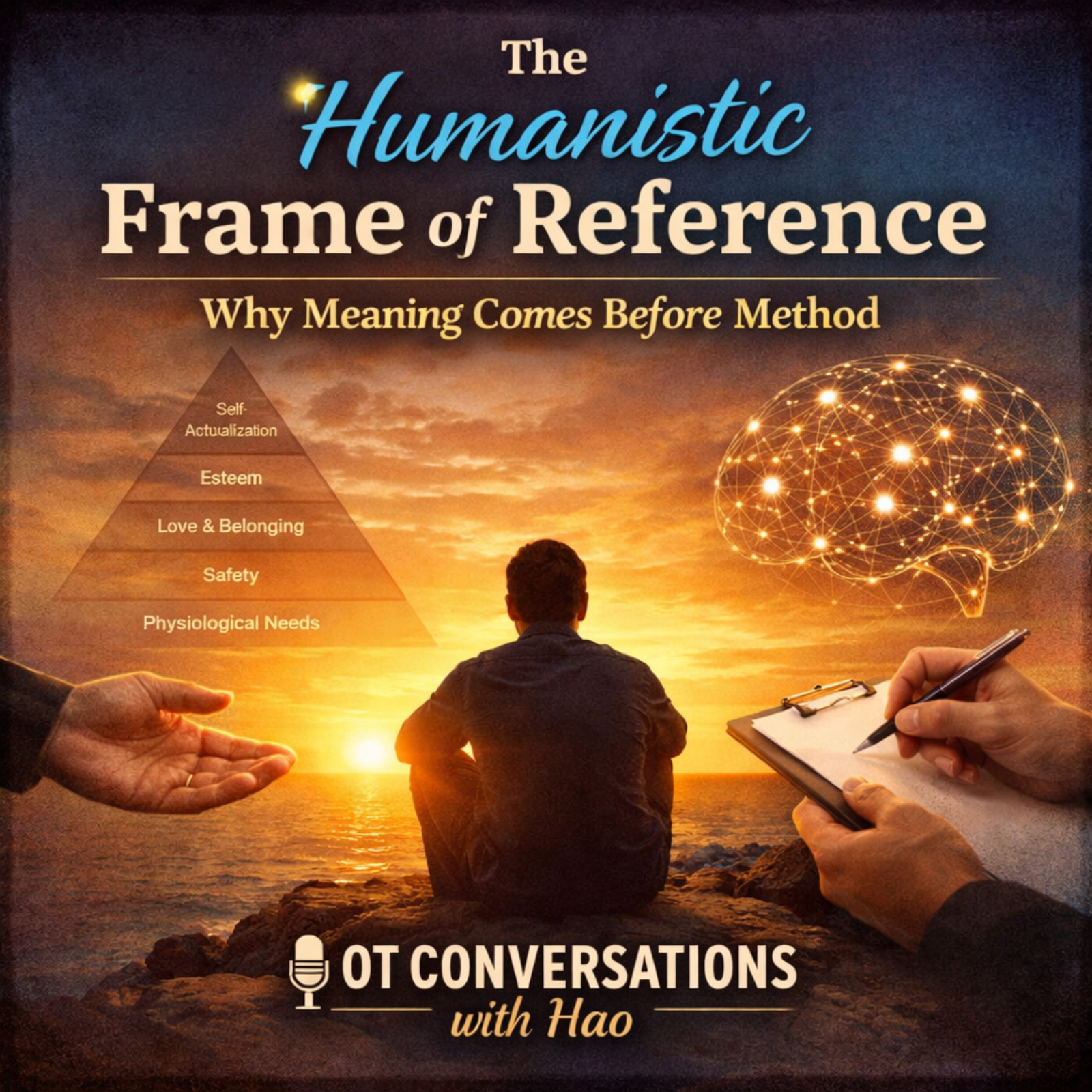
The Humanistic Frame of Reference: Why Meaning Comes Before Method
3w ago00:24:23Tap to summarizeWhat happens when Occupational Therapy stops asking “What task is broken?” and starts asking “Who is this person becoming?”In this episode, we explore the Humanistic Frame of Reference in Occupational Therapy — not as a soft or abstract idea, but as a clinically powerful way of thinking and practising.Humanistic OT reminds us that people are not problems to be fixed. They are individuals with values, identities, losses, hopes, and a deep drive toward meaning. Function matters — but meaning is what sustains engagement, motivation, and recovery.We unpack:What the Humanistic Frame of Reference actually is (and what it isn’t)Why the therapeutic relationship itself is a skilled interventionHow concepts like choice, dignity, identity, and readiness shape outcomesWhere humanistic thinking fits in acute care, rehab, mental health, and long-term conditionsWhy UK OT practice often uses humanistic principles without ever naming themThis episode is for occupational therapists who:Feel the tension between targets and timingSense that readiness matters as much as performanceWant language to explain the “invisible” parts of their clinical reasoningKnow that sometimes the most powerful intervention is how you sit, listen, and paceHumanistic OT isn’t about abandoning structure or risk.It’s about knowing when to intervene, how to hold space, and why occupation must remain personal.If you’ve ever slowed a session because the person wasn’t ready —If you’ve ever prioritised dignity over speed —If you’ve ever felt that meaning came before method —This conversation is already part of your practice.🎙️ Listen, reflect, and bring the human back to the centre of Occupational Therapy.
Transcribe →
Occupational Risk-Readiness-Re-entry Model
4w ago00:18:01Tap to summarizeWhat does Occupational Therapy really assess when someone is preparing to leave hospital or re-enter everyday life? In this episode, we explore Occupational Risk, Readiness, and Re-entry—a practical way of understanding what UK OTs actually do in real systems. This conversation looks beyond task performance and independence to examine sustainability, timing, environment, support, and self-regulation. It’s about recognising where everyday life might fall apart, knowing when someone is truly ready, and supporting a return to life that holds outside the safety of healthcare settings. Ideal for clinicians, students, and anyone interested in the deeper reasoning behind OT decisions that are often felt but rarely named.
Transcribe →Owning a decision
Jul 700:14:32Tap to summarizeAt some point in your practice, discharge stops being a checklistand starts becoming a judgement.Not a date.Not a form.A decision you carry.In this episode of OT Conversations, we explore what happens when Occupational Therapists move beyond process and begin to own clinical judgement—especially in complex discharge decisions involving frailty, risk, capacity, and uncertainty.We talk about:The difference between difficulty and dangerWhy frailty does not automatically mean dependencyHow capacity shifts responsibility without removing accountabilityThe quiet emotional weight clinicians carry after the decision is madeAnd the moment you realise you know enough—but haven’t trusted it yetThis is an episode about professional maturity.About standing behind proportionate decisions.About judgement that is rarely loud—but deeply consequential.If you’ve ever replayed a discharge in your head on the way home,this conversation is for you.🎧 Listen. Reflect. And trust the thinking you’ve been building.
Transcribe →Bandaging
Jun 3000:23:30Tap to summarizeIn this episode, let’s talk about bandaging.
Transcribe →The common oral motor interventions NICU OTs use
Jun 2300:15:50Tap to summarizeThis episode is a riot journal review exploring the common ones used by NICU therapists. It is very insightful to know that across the pond, OTs have a higher clinical scope that we should aim to be at par with- Hao
Transcribe →The chamber between what is taught and what is known
Jun 1600:12:34Tap to summarizeThere comes a point in practice where protocols are no longer enough. This piece reflects on the quiet shift from competence to judgement, and the inner work that shapes professional identity over time.
Transcribe →The Dark side of not having a UK OT Model
Jun 900:18:26Tap to summarizeThis is what happens when the occupational therapy practice does not have a unified model
Transcribe →“Stop Teaching Energy Conservation Too Early”
Jun 900:20:49Tap to summarizeWe talk a lot about energy conservation in occupational therapy, but rarely about when it truly belongs. This episode explores why energy conservation only works after functional optimisation, why acute care is the wrong context for real application, and why patient-reported ease matters more than independence when measuring success.
Transcribe →The UK OT model no one named
Jun 200:20:21Tap to summarizeThe UK doesn’t have a single, named occupational therapy model — and that isn’t a failure of theory. It’s a reflection of how UK OT actually works. In this episode, we unpack why UK practice grew without a branded model, how the NHS, social care, housing, and MDT culture shaped a different kind of professional reasoning, and why many experienced OTs feel uneasy saying “I don’t really use a model.” This conversation reframes that discomfort as maturity: model-literate, not model-bound practice. If you’ve ever felt that real OT work doesn’t fit neatly into diagrams, this episode puts words to what you’re already doing.
Transcribe →