← Classical Music Happy Hour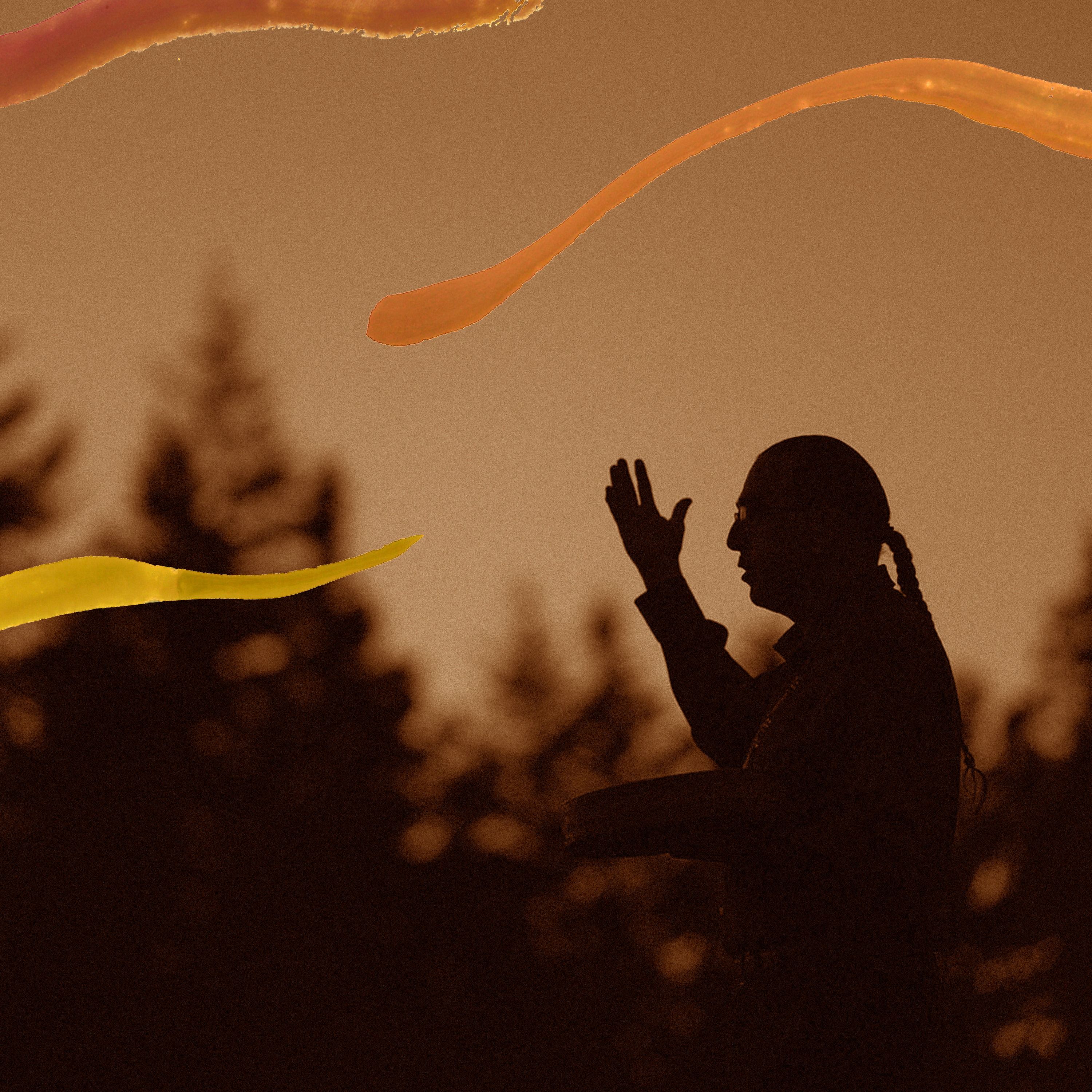
Classical Music Happy Hour
Acadia: Yo-Yo Ma and the Wabanaki Play for the Dawn
00:32:04
The series opens with a window into the Yo-Yo universe, one where music and nature work together. Host Ana González guides us into Yo-Yo’s mindset, connecting Bach to leaves, birds, and sunlight.
Loading summary
Transcript120 lines
- [00:01]
Ana Gonzalez
Would you describe yourself as an outdoorsman?
- [00:04]
Yo Yo Ma
No. No, I like to pretend that I am. I have many fantasies of parachuting someplace and going, you know, fly fishing or rock climbing, but I'm not. Is this being recorded?
- [00:19]
Ana Gonzalez
Yes. Well, I wanna know. Why are you making a podcast about being outside so much?
- [00:26]
Yo Yo Ma
Oh, that's a very good question. Well, first of all, it's what doesn't exist in my life that I know is missing.
- [00:39]
Ana Gonzalez
Hi, I'm Ana Gonzalez, and this is our Common Nature, a musical journey with Yo Yo Ma through this complicated country to help us all find that connection to nature that so many of us are missing. We climb mountains, play music, drive dirt roads, recite poetry, traverse rivers and oceans, and even our own brains. All to figure out how to better live on our planet together.
- [01:04]
Yo Yo Ma
So you think people get that?
- [01:06]
Ana Gonzalez
Yes.
- [01:07]
Yo Yo Ma
Really?
- [01:07]
Ana Gonzalez
Yeah. Okay, let's get started. When you picture Yo Yo Ma, he's probably indoors, in a suit, maybe a tux, and he's playing a cello. He's probably playing this piece, the Prelude from bach's Cello Suite no. 1 in G major. He's played it everywhere. In baroque churches, mountain forests, along streams, on rooftops, in large concert halls for the BBC and a tiny desk for npr. He even played it in an episode of Arthur.
- [01:37]
Chris Newell
This is the best thing I've ever heard.
- [01:42]
Ana Gonzalez
And on a sunny spring day, you might even catch him playing this piece in a national park somewhere, right after crawling on the ground in his khakis to take a photo with a baby named Jojo.
- [01:52]
Chris Newell
Can we have a pic?
- [01:53]
Yo Yo Ma
Of course. Let's do this.
- [01:56]
Ana Gonzalez
Oh, that is so cute. Jojo and Yo Yo.
- [02:03]
Yo Yo Ma
I play bach Cello Suite no. 1 because it's the closest piece of music I play that reminds me of the infinitude of life.
- [02:24]
Ana Gonzalez
It's also one of the first pieces of music he ever learned when he was a little kid. And now he's just celebrated his 70th birthday. Part of the Yo Yo's secret sauce is that he can make the leap from Bach to infinity. But what about the rest of us who aren't, you know, Yo Yo Ma and who have maybe never played Bach and aren't really sure that they're even pronouncing the name correctly? Well, I've spent the last few years trying to figure that out. Over the next seven episodes, I will be traveling across these United States with Yoyo leading the way as he plays music under the stars and deep down in caves. We're going to explore the unbreakable connection between the art and the stories that people create in the places that they're from, from Appalachia to Hawaii to today on the coast of Maine. But before we get to that, back to yo yo and that piece. What about this piece connects yo yo to nature? Well, it goes back, way back.
- [03:28]
Yo Yo Ma
I used to get into trouble. I used to think it's really hard to start this flowy kind of thing because I'm starting from nothing. Right. So it's like jump starting a car. Yeah. But what made it work for me is when I started thinking of an image of seeing the flow of water, and I join it. The peace has started long before I'm joining it. I use the energy of that flow. That's happened before. Do do do do do do has been happening forever. I'm welcomed into the flow.
- [04:19]
Ana Gonzalez
If you could zoom into Yo Yo's brain when he plays this piece, you'd see images appearing. First the water, and then that transforms. You start to see flying things, birds flying through sunbeams. You look in the ground, you see roots and soil.
- [04:36]
Yo Yo Ma
You go underwater.
- [04:38]
Ana Gonzalez
Whales and coral reefs bubbling through notes.
- [04:40]
Narrator/Announcer
That are more than 300.
- [04:44]
Ana Gonzalez
It was clear when I started talking to yo yo that he uses nature to connect to music, and then he uses music to connect right back to.
- [04:53]
Yo Yo Ma
Nature, you know, the infinitude of life.
- [04:56]
Ana Gonzalez
And about two thirds of the way through the piece, all the music just stops.
- [05:03]
Yo Yo Ma
We don't like silence. And then it starts again, but differently. Oh, It starts to build up. It keeps going, becomes more insistent. The music gathers more and more energy. Where are we going? And finally, we hit almost the beginning, but a different version of the beginning. At a higher octave, it's higher energy. And the piece ends. What could all this mean?
- [05:51]
Ana Gonzalez
Yo yo has spent practically his entire life thinking about this piece, about the power it contains. He's traveled the world playing it, sparking conversations on borders and deserts and ruins and rivers, all because, for him, this piece represents how human beings have the ability to overcome anything if they just take a step back. And this is especially important today, when there seems to be more loud, conflicting opinions than ever before, with people kind of stuck in their own extreme bubbles.
- [06:32]
Yo Yo Ma
We always had division, but family comes together when there's an emergency.
- [06:37]
Ana Gonzalez
I notice you're saying we like we as Americans, even though, you know, you were born in a different country and you immigrated here. Do you feel like you're an outsider to that division, or are you a part of it?
- [06:52]
Yo Yo Ma
Well, you know, really, it depends how you think of it. I arrived as an immigrant in 1962. So do I just own part of the country starting from 1962? Am I responsible for slavery, for the removal of Native Americans? I think I am. Because if I am a citizen, I'm responsible for all of it.
- [07:16]
Ana Gonzalez
And so a good place to start mending our relationships to each other is.
- [07:22]
Yo Yo Ma
By asking, what do we have in common?
- [07:26]
Ana Gonzalez
Big question, right? Let's just take the United States. If you zoom out, everybody who lives here on this land has one thing in common. We're living on this land, and we have to learn how to live on it and amongst each other, despite division, disconnect, a really tough history, and an uncertain future. So the thing that yo yo does best, the thing he's most famous for, is connecting people through. Through music. And now he wants to take that out into nature. He's dropping the endpin of his cello straight into the dirt, and he's inviting all of us to listen and help fold our lives back into nature, back to each other.
- [08:14]
Yo Yo Ma
I think the purpose of our common nature, if I've learned anything, is to reinforce the fact that we are part of nature. And if we acknowledge that, it means that whatever we do with or to nature allows us to live to survive.
- [08:36]
Ana Gonzalez
So let's back up. Where do we even start? Well, yo yo started this musical road trip where everything begins with a new day. How can playing music connect us to a sunrise?
- [08:55]
Yo Yo Ma
Oh, so this would be a really quick question. Well, both are forms of energy. One that actually allows for our ecosystem to exist, and the other is a system that we've developed that puts us in the necessary state of mind to function. You don't play a lullaby when you want an army to go march into war. You don't do a drum set and loud percussion when you want a baby to sleep. It's something that we've invented, and every culture has its own version of what works.
- [09:41]
Chris Newell
One of the things that we're supposed to be doing is as the sun, that first, first beam of light. When it finally peaks over the horizon, that's when we're supposed to be singing to welcome the sun. And that changes everything.
- [09:54]
Ana Gonzalez
That's Chris Newell, and he's going to teach yo yo how to play for the dawn after the break.
- [10:12]
Narrator/Announcer
Our common nature is supported by the National Forest Foundation, a nonprofit transforming America's love of nature into action for our forests. Did you know that the national forests provide clean drinking water to one in three Americans? And that national forests and grasslands cover nearly 10% of the U.S. hosting 150,000 miles of trails and providing habitat for over 3,000 species of plants and animals. The National Forest foundation supports the places where we come alive, keeping the trails, rivers and forests we love healthy. Last year, they planted 5.3 million trees and advanced over 300 projects to protect nature and communities nationwide. Their work creates lasting impact by restoring forests and watersheds, strengthening wildfire resilience, and expanding recreation access for generations to come. And when forests struggle, so do we the water in our taps, the air we breathe, and the trails that connect us all. Learn how you can help@nationalforest.org Yoyoma WNYC.
- [11:16]
New York Philharmonic Announcer
Studios is supported by the New York Phil Mozart's music is showcased in two concerts. Violinist Gil Shaham leads the orchestra as soloist in two concertos. The elegant second and exuberant fifth, Louis Langri then conducts the orchestra's wind section in Mozart's genial Grand Partita and Richard Strauss lyrical serenade January 2nd and 3rd at David Geffen Hall. Tickets@nyphil.org.
- [11:45]
Francis Lam
Hey, it's Francis Lamb, host of the Splendid Table. Every week on our show we talk about food and cooking and the meanings of food and cooking. We talk with the most interesting people in food about their techniques, their culture and everything in between. Whether it's about how fried chicken took over the world or how Instagram changes the way people are actually eating, it's a food show where everyone is welcome. Come join us. You can listen to the Splendid Table wherever you get your podcasts.
- [12:20]
Ana Gonzalez
Our common nature is back. I'm your host Ana Gonzalez and we're on the coast of Maine where there's a group of people who have a long standing cultural tradition of using music to bring the sunrise each day.
- [12:33]
Chris Newell
And those were sacred times, especially as a young man, you know, the easiest thing to do was to just stay up all night, five o', clock, you know, just, just stay up at the fire and sing and have a good time and welcome the sun. It's an amazing thing to experience that and feel that feel force of creation. You know, that's really what it is. It's the closest thing I can say or one of the ways that I connect with our creator. We don't imagine it as a singular person. That's all powerful. It's rather more, you know, all of the forces of nature and a way to experience that is to experience in a sunrise.
- [13:20]
Ana Gonzalez
Chris Newell grew up in northern Maine.
- [13:23]
Chris Newell
I am a Passamaquoddy citizen, born and raised in the community of Madocmegook, which is known on English maps as Indian.
- [13:30]
Ana Gonzalez
Township, Maine Passamaquoddy is one of the five Wabanaki nations that encompasses parts of present day New England and Canada. Chris is an educator now, but he made most of his career touring different powwows as a singer and a drummer, a practice he learned from his community and his dad.
- [13:47]
Chris Newell
My dad used to sing all the time, and one of the things my father did was preserve our language. So I was blessed to grow up with him always imbuing that in me.
- [13:58]
Ana Gonzalez
Yo yo came to Chris because celebrating sunrises is a crucial part of his tribe's spirituality and creation story.
- [14:12]
Chris Newell
We have the belief in a cultural hero named Gluskop. He fired arrows into the ash trees, and from the ash tree came the first men and women, who he called Wabanaki, which is the people of the dawn. Gluskap said, we have a duty as Wabanaki people to welcome the sun with music.
- [14:38]
Narrator/Announcer
How would you describe that?
- [14:39]
Ana Gonzalez
First, the dawn. What does it look like? What does it feel like?
- [14:44]
Chris Newell
You know, it can get quiet at nighttime, but then you start to hear the bird life, and everything start to rise just before. And then the colors. That first beam of light, when it finally peaks over the horizon, that's when we're supposed to be singing to welcome the sun. Those first beams, as they come upon us, and that changes everything. As soon as that first beam comes, it becomes so much brighter. The colors become so much more vibrant, and life kind of restarts.
- [15:52]
Lauren Stevens
My name is Lauren Stevens. I'm Passamaquoddy for Madagmi Gog.
- [15:56]
Ana Gonzalez
Lauren is the voice you hear singing.
- [15:58]
Lauren Stevens
When I sing, it's almost like I feel. Feel the power of those songs, and they just come out. People make mention of, oh, that's so beautiful. And I'm like, yes, because that's our ancestors. Our ancestors held on to these traditions for thousands and thousands of years, despite not being recorded and despite not being able to practice them. So to be able to hold onto some of them and to be able to share them and is a responsibility, really.
- [16:31]
Ana Gonzalez
Lauren is what she calls a traditional song keeper. She was given that role by her elders, who invited her to sing at gatherings.
- [16:39]
Lauren Stevens
Chris's dad, you know, he. Every time he saw me, he acknowledged me by name, and he'd say, hey, Duz, come here. And he'd usually have me sing.
- [16:57]
Ana Gonzalez
Lauren and Chris grew up together and still play music together. And one day, in the middle of the pandemic, when native reservations like the one that they grew up on, were getting hit hardest by Covid, they got a call from Yo Yo And I.
- [17:11]
Lauren Stevens
Remember yo yo asking, you know, how can I help? What can we do? And I remember saying, we're already doing it. That visibility factor of indigenous people when we were supposed to be eradicated, ultimately, we weren't supposed to be here, but we're here to be able to collaborate, to be able to share our culture in a space that was very visible.
- [17:37]
Chris Newell
My suggestion was for him to experience playing his music as the sun rose.
- [17:43]
Ana Gonzalez
And so the plan was hatched. Yo yo would drive from his home in Massachusetts, up the coast of New England, meet Chris and Lauren, and learn a new way of experiencing this land through music, which meant learning a new way of playing.
- [17:59]
Chris Newell
Powwow Music is so different from Western classical music. You really gotta be immersed in it to get it down. The drum beat for a powwow song, a straight powwow song is. Is, you know, kind of a. A straight beat like that. But the song, the melody that we're singing over it is composed in triple or sometimes beats of five.
- [18:19]
Ana Gonzalez
Oh.
- [18:20]
Chris Newell
If you're somebody that's used to, you know, know, snapping your fingers on the downbeat, this is left footed as heck, you know, it really is.
- [18:31]
Ana Gonzalez
Chris started looking through old tapes of powwow performances that he'd done. And he found this recording of his old bandmate Kenny singing an original P.
- [18:47]
Chris Newell
Listening to him sing it, and I was like, you know, that melody, the way he's singing it, I bet you could pull that off on a cello. I actually created kind of a how to video. I felt silly doing it. I was like, man, I'm making this for Yo Yo Ma. And I was like, I don't know if he'll actually go for it. But then when we met to rehearse, he asked me the story. And I told him Kenny was a.
- [19:11]
Ana Gonzalez
Good friend, like a brother to Chris, who died a few years ago.
- [19:14]
Chris Newell
It would be beautiful to see my brother's song this way. And that's how it ended up happening. All right, we're here.
- [19:23]
Yo Yo Ma
We're here, boss. Tell us what to do.
- [19:26]
Ana Gonzalez
So, yeah, so yo yo arrived at Acadia national park on a June night in 2021. He met Chris in person for the first time, who was there with his parents.
- [19:36]
Yo Yo Ma
I'll never forget that I met Chris father, and he was cold. And I was able to just have some words with him.
- [19:44]
Chris Newell
Cause it was a little chilly where we were rehearsing. He actually brought a blanket from his room and put it on my dad. That's how they met each other, which.
- [19:52]
Yo Yo Ma
Was so comforting to talk to such a beloved elder.
- [19:57]
Chris Newell
And my father at the time was nine years into being treated for multiple.
- [20:02]
Ana Gonzalez
Myeloma, a rare blood cancer.
- [20:04]
Chris Newell
His body was in kind of rough shape. But when they met, it was like two human beings that really saw the humanity in each other. It was like two old buddies that came together after the dinner. They sat and talked and talked and talked, just having the greatest time.
- [20:23]
Ana Gonzalez
And everybody went to sleep that night, not exactly knowing how the morning would go if yo yo would be able to pull off an entirely new musical style with folks that he just met that night. But they set their alarms extremely early, and after the break, we'll hear what happens and at sunrise.
- [20:48]
Narrator/Announcer
Our Common Nature is supported by the National Forest Foundation, a nonprofit transforming America's love of nature into action for our forests. Did you know that the National Forests provide clean drinking water to one in three Americans? And that national forests and grasslands cover nearly 10% of the U.S. hosting 150,000 miles of tree trails and providing habitat for over 3,000 species of plants and animals. The National Forest foundation supports the places where we come alive, keeping the trails, rivers and forests we love healthy. Last year, they planted 5.3 million trees and advanced over 300 projects to protect nature and communities nationwide. Their work creates lasting impact by restoring forests and watersheds, strengthening wildfire resilience and expanding recreation access for generations to come. And when forests struggle, so do we the water in our taps, the air we breathe, and the trails that connect us all. Learn how you can help@nationalforest.org Yoyoma WNYC.
- [21:52]
New York Philharmonic Announcer
Studios is supported by the New York Phil Mozart's music is showcased in two concerts. Violinist Gil Chaham leads the orchestra as soloist in two concertos, the elegant second and exuberant first, Louis Langrie then conducts the orchestra's wind section in Mozart's genial Grand Partita and Richard Strauss's lyrical Serenade. Jan. 2 and third at David Geffen Hall. Tickets@nyphil.org.
- [22:21]
Francis Lam
Hey, it's Frances Lamb, host of the Splendid Table. Every week on our show we talk about food and cooking and the meanings of food and cooking. We talk with the most interesting people in food about their techniques, their culture and everything in between. Whether it's about how fried chicken took over the world or how Instagram changes the way people are actually eating. It's a food show where everyone is welcome. Come join us. You can listen to this Splendid Table wherever you get your podcasts.
- [22:56]
Ana Gonzalez
Our Common Nature is back and we are on the coast of Maine just before dawn, walking out into a field.
- [23:04]
Lauren Stevens
I remember that morning. It was like, kind of cold.
- [23:09]
Ana Gonzalez
That's Lauren Stevens again.
- [23:11]
Lauren Stevens
There were a lot of bugs. They were happy, I'm sure, because they were getting fed. And while the ocean is very much present and close, it felt secluded, like we just had our own little bubble right there.
- [23:30]
Chris Newell
Willy Spuzz Will. Good morning, everybody. As part of Wabanaki People, our existence is to sing the sunrise up in the morning for us. As Wabanaki People, we understand our meaning of life. We are meant to do this. We are meant to start the day. We are meant to reside in our homelands, here in Djekwabanak Yig, in the land of the dawn forever.
- [23:56]
Ana Gonzalez
Chris and Lauren are standing in the middle of a field with a few other performers. Another singer, a storyteller, a flautist. Audience members surround them in folding chairs. Beams of light begin to pull over the trees.
- [24:29]
Lauren Stevens
I knew it was important to perform the welcome song. That song is important for every time we gather or every time there were visiting tribes, as that welcome as that kind of starting point. This was the first time I had ever heard our traditional music with a non traditional instrument. And to hear the welcome song played by yo yo on the cello, it resonated internally, like I could feel it in my body. It vibrated my soul.
- [25:31]
Ana Gonzalez
Chris and Lauren walked to the side and left yo yo to play by himself. He continued playing through the rest of the Bach cello suite, movement after movement, something he's so used to doing. But then Chris joined him on the.
- [26:37]
Narrator/Announcer
Drum.
- [26:47]
Ana Gonzalez
And then they began to play that powwow song that Kenny recorded into Chris's cassette player more than 20 years ago. That was like a really vulnerable thing that you did as Yo Yo Ma to be like learning music in front of people. Did it feel that way to you?
- [27:21]
Yo Yo Ma
No. Well, you know what I think, right? I truly want to live my life where I'm a human being first, a musician second, and a cellist third. And what you just said involves thinking that I'm someone of note because I play the cello well, but actually I'm a human being first. So I'm the five year old playing with another five year old in the sandbox. Pow.
- [28:07]
Ana Gonzalez
Woo.
- [28:09]
Chris Newell
Yes. The first powwow cello.
- [28:12]
Ana Gonzalez
I love it. This was not a traditional sunrise ceremony. Those aren't allowed to be recorded. But this performance was a moment of collaboration across cultures in the presence of a dawning day in the middle of a pandemic, at a time when people were so separated, it was scary to walk by, past each other on the sidewalks. Remember that? And here were musicians from super different places playing together, being kids in a sandbox together.
- [28:43]
Chris Newell
It was a moment of transformation. You can transfer that energy onto people, you really can, through music. In my experience, that happens in the powwow world a lot. You sing just the right songs for a dance and they just get into it and all of a sudden they get it. That energy comes through and everything is working right and they nail it.
- [29:10]
Ana Gonzalez
After the performance, there was a talking circle, a place for everyone in attendance to share what they thought and how they felt. Like Hawk Henrys, a flautist from the Nipmuc people who also performed.
- [29:21]
Yo Yo Ma
My hope is that as we look listen to the sound of our songs, that we remind ourselves of the songs of bird and insect and tree and water.
- [29:34]
Chris Newell
And those songs bring us joy.
- [29:37]
Yo Yo Ma
And they have the capability of allowing us to see the common thread that weaves its way through all of us.
- [29:46]
Ana Gonzalez
Thank you to the Wabanaki people for bringing this unto me every day of the 60 years I have been alive. Local and national leaders spoke. Deb Haaland, very honored to serve this country as the Secretary of the Interior. Yo yo spoke.
- [30:04]
Yo Yo Ma
So this has been extraordinary. I'm left with two words that I'm thinking a lot about, and they're hope and gratitude. A lot of you spoke of both of these words, but I think Chris's.
- [30:18]
Ana Gonzalez
Dad, Wayne, managed to make his way to the performance and he offered a prayer.
- [30:22]
Wayne Newell
Good morning, Dhanagach. If you can please stand. You notice I'm not. Let's get into a prayerful mood. Dear Creator, we thank you for life, for another day. We thank you for our sleep. We hope that each one of us had dreams that we can work on. Dreams that we can understand eventually if we don't. Dreams that we can ask other people for. We thank you for gathering here today, all of us. We thank you for our grandfathers and our grandmothers and most of all, our children. They are our future. Well, let's hope that we can teach them. Well, we thank you for all that is past. Regardless of how that past was, it is a past. We thank you for today. We thank you for the future. None of us have an idea what that will be, but this gathering certainly strengthened to the hope that that future will be a good one together.
- [32:02]
Yo Yo Ma
It starts with caring. And because we went there, we. We met people, we made a relationship. You don't break it. That honor is being human.
- [32:14]
Ana Gonzalez
How do you see sunrises now?
- [32:16]
Yo Yo Ma
You know, I actually think of gratitude when I see the sun, that I'm part of the solar system and that there's magic to it and there's a miracle to it.
- [32:31]
Ana Gonzalez
And yo yo is committed to making more and more of these relationships through our common nature. And that means more performances with people who have special connections to this land. From underground time capsules finding their names.
- [32:44]
Yo Yo Ma
On the cave walls, walking in the footsteps and just feeling the power to.
- [32:48]
Ana Gonzalez
Glaciers and it just looks like a river frozen in time. From forests the Cherokee people have always known of this mountain to coal mines.
- [32:57]
Chris Newell
This is the kiss my butt curve.
- [33:00]
Ana Gonzalez
From the deck of ships in the Pacific Ocean, feeding sharks by hand, chanting to them and they swim in to the coast of the Atlantic and beyond.
- [33:09]
Yo Yo Ma
And the fact that with these different backgrounds we can talk and agree on things. We are going to actually learn about what people know there. Because we realize, my goodness, had we not done those things, our concept of the world would be a slightly smaller and slightly poorer world. That is for me, the purpose of art.
- [33:43]
Ana Gonzalez
Next time we go to the longest cave system in the world that just so happens to be in Kentucky to hear a symphony explore the underworld. Our Common Nature is a production of WNYC and Sound Postings hosted by me, Ana Gonzalez. Produced by Alan Gofinski with editing from Pearl Marvel. Sound design and episode music by Alan Golfinski mixed by Joe Plorde. Fact checking by Ana Alvarado. Our executive producers are Emily Bottin, Ben Mandelkern, Sophie Shackleton and Jonathan Bayes. Our advisors are Mira Burtwin Tonic, Kamaka Diaz, Kelly Libby and Chris Newell. Additional audio provided by the Upstander Project. They're a film, storytelling and educational company doing amazing work. They're actually the reason Chris and Yo yo even met. You can learn more about them by going to upstanderproject.org and if you want to watch the film that their Reciprocity Project team made about Yo Yo's visit to Acadia, you can find it in our show notes. Special thanks to Acadia national park. And if you want to listen to more music from this series, you can check out the Our Coming Nature EP featuring Yo yo playing with Eric Mingus, Jen Kreisberg and an Icelandic choir. Now available on all streaming platforms. This podcast was inspired by a project of the same name conceived by Yo Yo Ma and Sound Postings with creative direction by Sophie Shackleton in collaboration with partners all over the world. Our Common Nature is made possible with support from from Emerson Collective and Tambourine Philanthropies. This episode is dedicated to the memory of Wayne Newell, Chris's dad, who just a few months after we left Maine, died.
- [35:30]
Chris Newell
They wrote each other and stayed in touch. And when my father passed away that December, yo yo actually sent us a tribute video for him, which we were able to play the audio for for his funeral. That was special. I mean, the gift of music is. Is unreal to have a gift from yo yo for him specifically. And we keep it private. You know, it's. It's for us.
- [35:53]
Ana Gonzalez
Yeah.
- [35:54]
Chris Newell
Yo yo was like, no, we're not sending flowers. Hold on.
- [35:56]
Ana Gonzalez
You know more than that.
- [35:57]
Yo Yo Ma
Yeah.
- [36:11]
Narrator/Announcer
Our common nature is supported by the National Forest Foundation, a nonprofit transforming America's love of nature into action for our forests. Did you know that the National Forests provide clean drinking water to 1 in 3Americans? And when forests struggle, so do we. The National Forest foundation creates lasting impact by restoring forests and watersheds and strengthening wildfire resilience and expanding recreation access for all. Last year, they planted 5.3 million trees and led over 300 projects to protect.
- [36:41]
Ana Gonzalez
Nature and communities nationwide.
- [36:44]
Narrator/Announcer
Learn more@nationalforest.org Yoyo Master.