← Classical Music Happy Hour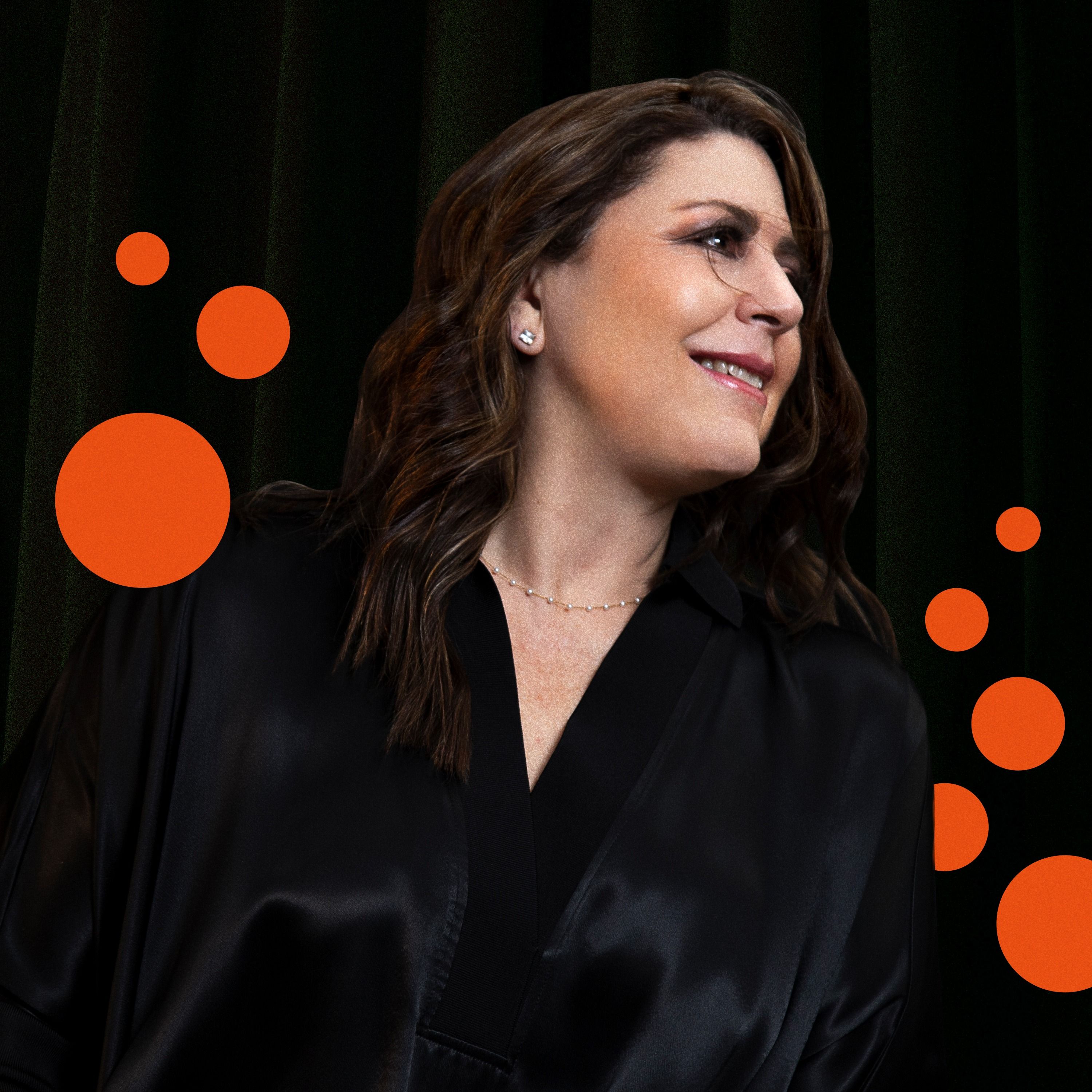
Classical Music Happy Hour
Gabriela Ortiz - Composer and Grammy Gal
00:39:00
Composer Gabriela Ortiz joins Manny Ax to talk about her grandfather’s surprising connection to Mahler, her own compositional process, and her enduring love for works by Debussy and Stravinsky. Listeners call in with tricky questions about folk music’s influence on classical works, new developments in orchestral instruments, and the realities of orchestra cliques. In our game segment, Manny puts Gabriela to the test—can she identify which famous composer was panned by critics?
Loading summary
Transcript137 lines
- [00:00]
A
Classical Music Happy Hour is supported by Viking, committed to exploring the world in comfort, offering destination focused small ship experiences on all seven continents with a shore excursion included in every port and programs designed for cultural enrichment. And every Viking voyage is all inclusive with no children and no casinos. Learn more@viking.com Gustavo, did you see the score?
- [00:29]
B
Yes. Let's rehearse it. I said, oh my God. Okay, here we go.
- [00:36]
C
From WQXR and Carnegie hall, this is Classical Music Happy Hour, hosted by me, pianist Maniacs. Each episode we'll speak with a special guest about their lives, listen to some of their favorite musical gems, play music inspired games, and answer questions from you, our listeners. Conductor Gustavo Dudamel has called my guest today one of the most talented composers in the world. Growing up in Mexico City within a family of musicians, she insists that rather than choosing music, music chose her. She's known for her mixing of musical idioms and her latest album called Revolucion Diamantina won three Grammy awards, including best contemporary classical composition. Gabriela Ortiz, welcome to the show and thank you so much for coming.
- [01:32]
B
Thank you, Emmanuel, for this incredible invitation.
- [01:35]
C
You grew up in a musical family. Did they all play instruments? Were they composers themselves? What did they do? Really?
- [01:43]
B
Well, you know, my mother played the piano. I mean, she studied piano. She was a good reader. She never became a professional pianist and she was a psychologist. But yeah, she played the piano. She was the one that knew how to, to read music. But then my father played the guitar. My father, his family comes from Guadalajara, from Jalisco, where, you know, the mariachis and the song Jaliciante comes from. So my father loved to play the guitar and he sang very, very well. So basically I grew up listening to folk music and listening to classical music. That was very normal in my house. And they found this group called Los Volkloristas that was a famous group in the 60s, playing all the folk music not only from Mexico, but from Latin America. And I listening to the Los Volcloristas rehearsing in my living room, in my house. And then my father, let's play Beethoven. Or so it was very common in my house to hear Beethoven and then to hear folk music and then hear mariachis. And that was very common.
- [02:43]
C
So that's an amazing combination because very often the background of a composer or a pianist or a violinist is one type of music. They hear Beethoven all their life and that's what they play. But to have this combination as a child must have been amazing.
- [03:01]
B
Yes. You know, my favorite uncle, he's a scientist, he's a mathematician, but he's the one that introduced me to the Beatles. And he's the one also to introduce me to the rock of the 70s and in the 60s. And then my brother love it. So it was very common that don't hear folk music. Let's hear Le Zeppelino. And I prefer Led Zeppelin. So I have my brother always going into the opposite side of my parents.
- [03:27]
C
So all of that must be influencing what you do now.
- [03:31]
B
Absolutely.
- [03:33]
C
But you also, you wanted to be a flamenco dancer as a child, right?
- [03:39]
B
You know, one of my favorite folk music in Mexico is Son Jarocho. And the son Jarocho, it's played in Veracruz and it's very famous because they do the zapatiado, the stepping, and that comes from the flamenco. So that's why I also like flamenco very much. And probably this is also because of my grandfather. He came from Pais Vasco. So I have this Spanish side also as well in my blog, probably that it's just. I love it. I mean, it's fire. It means so many things. So, yes, I was just dancing flamenco. And then when I was 14 years old, I remember that I saw this movie that it's called Bodas de Sangre, you know, based on Lorcas, text by Carlos Aura, this famous film, Spanish filmmaker.
- [04:27]
C
Yes, I've seen the Carmen movie.
- [04:29]
B
Exactly, Carmen. And then, you know, that was. Antonio Gadez was one of these famous flamenco dancer. And I remember saying, my father, you know, I don't want to finish high school. I want to move to Spain and I want to study with Antonio Gadez and I want to dance in his company. And then my father said, do your homework. And then we can talk later about beside the.
- [04:52]
C
Well, it's my fantasy to dance like him and look like George Clooney. And for some reason, neither of those things happened, I'm sorry to say. And then you have a connection to Mahler and a specific movement from his fifth Symphony, the adagio, Which. It's a sublime, sublime movement. But what do you feel is special about that?
- [05:39]
B
The aracheto is one of the most tender moments in music history. It's so difficult to describe with words because it's so, so intense, it's so beautiful. But also, I think that I have an attached history behind the adagheto. My grandfather studied medicine at Georgetown University. He came from Spain. He arrived to Jalisco in Guadalajara, and then his family sent him, this is at the beginning of 20th century, to Georgetown University, to Study medicine. And at that time, he went to New York and hear Mahler. He saw Mahler conducting.
- [06:51]
C
Wow.
- [06:52]
B
So my father grew up listening to Mahler. I mean, that came from my grandfather. And it's an interesting story because when he came back, he was a doctor and he was working in a hospital in Guadalajara. This is when, you know, the Mexican Revolution just started. And Pancho Villa came to the hospital and he asked, who is this guy, you know, with a blonde hair that is taking care of my soldiers? Oh, my grandf. He said, well, you're coming with me. And so my grandfather spent 10 years, by the way, you know, with Pancho Villa in the Mexican Revolution.
- [07:23]
C
Amazing.
- [07:24]
B
It's an amazing story. You know, my grandfather, but he loved Mahler, really loved Mahler. And I remember the first time I saw my father really crying is when he was listening the Other Jet.
- [07:43]
C
Sam, Do you find yourself being quite liberal with people who play your music? I mean, allowing them to do different things?
- [08:24]
B
I really believe that performers are also creators. They are incredible artists. And they have this creative perspective that I really respect. So when a performer puts his own personality into his playing, I really respect that. Like, for example, the Attacker, a string quartet play my piece. And they did it so wonderful. And it's their own interpretation, their own world, their own way of playing. And that was really fantastic.
- [08:51]
C
So sometimes you imagined a different sound, but you might be happy with what you get.
- [08:57]
B
Exactly. I mean, with Gudamel, for example, sometimes he really plays very fast. My music. And sometimes it's very exciting. It's like how, Gustavo, you're just really conducting this so fast. Wow.
- [09:09]
C
I actually wanted to ask because in the revolution, the pink glitter, unbelievably, it sounds incredibly difficult. And the chorus is just amazing. How do you get these people to do that?
- [09:25]
B
I know I write very difficult. Sick. But not because, you know, difficult music means that it has to be really good. I mean, that's.
- [09:33]
C
No, it's incredibly exciting. It's just. As someone who plays, you know, I'm always thinking, oh, my God, I could never learn that. You know, it's just. Well, part of it is because I'm really old.
- [09:46]
B
No, I don't think so. You don't look like that. You look fantastic.
- [09:50]
C
Can you tell me a little bit about a piece like Clara?
- [09:54]
B
Well, you know, Clara was commissioned by the New York Philharmonic and Gustavo do Damel. And the idea is that they commissioned this piece to be paired with Schumann's symphonies. So, Gustavo, why don't you explore the relation between Clara and Robert because of that, you know, I start reading a lot about Clara, about Robert, about these really strong but very complicated and painful relationship between them.
- [10:26]
C
So you get a lot of the inspiration comes from the life of the composer.
- [10:31]
B
Absolutely. The life of both.
- [10:33]
C
I see.
- [10:33]
B
But then there is a central section of this piece, because I thought a lot about, should I quote Clara's music in this piece, or shall I quote Robert Schumann? And then I decided, no, but what if instead of me traveling to their world, why I don't bring them into my world? That was my question. And then trying to have this conversation in a circle kind of thing where the past meets the future or the future meets the past. So in the middle section is my idea of bringing what happens if Robert Schumann and Clara come to Mexico
- [11:14]
C
or
- [11:14]
B
drink tequila or what would have happened. So this is my idea. So the central part is very rhythmic, and it has a very different feeling.
- [11:30]
C
So, Gabriela, I'm hoping that you can help me answer some questions about classical music from our WQXR listeners. We've invited them to submit their questions, and we're going to do our best to answer them. And if I don't know the answer, I'll just make something up. Okay, now we have a question about musical instruments.
- [11:55]
D
Hi, Manny. This is Nancy from Lewis, Delaware. Here's my question. It doesn't seem as though the basic instruments of the orchestra have changed much in hundreds of years. Why is that? The cello is, of course, perfect. But are there no improvements or inventions that can be made to other instruments other than adding computer elements? Could there be a differently shaped string instrument or a longer flute? I see invention in composition and forms of musical performance, but not much invention other than electronics in the instruments themselves. Why is that? Inquiring minds want to know. Wow.
- [12:32]
C
Okay. Well, I'm going to let Gabriela start to answer that because she knows that's
- [12:39]
B
a very interesting question. I know that there are a lot of explorations on strings, but in terms of how musicians play the strings, no, in terms of the acoustic of the instruments. But what I know, for example, with the flute, because I'm married with a flutist, is that there are a lot of improvements about the flutes, for example, glissandos, that normally the flutes cannot do a glissando or, you know, the range of the flutes. Now we have, like, a contrabass flute, but they are not in the orchestra for other reasons. Because, for example, the contrabass flute, the sound is very soft. They need an amplification. So probably one of the reasons that Composers have not used these instruments in the context of an orchestra is because of that, probably because of the balance in percussion, for example, the marimba. The beginning of the 20th century, the Marimba got to a low A, and now we have a five octave marimba, which means that we have a really bass marimba thing, and that's really common. So basically in percussion, you know, you can see always new instruments, acoustically speaking, that they are not electronics.
- [13:49]
C
Yeah, I think as far as going higher than a violin, I don't know that the human ear would pick up so much. So, as you say, if the cello is perfect, I would say the violin is probably pretty close to perfect for what it does. And my main instrument is the piano. In fact, my only instrument is the piano. I've never played anything else. But there have been incredible changes up to the beginning of the 20th century. Since then, we've been sort of locked down. But they're always extensions in terms of just sheer volume. The pianos from 1900 did not have the power of the piano today. So that's a big change, I suppose. And there are pianos with extra octaves that are made by Busendorfer, which is actually very scary to a pianist because, well, they do put them in black rather than white. But I remember playing a Brahms concerto on one of the. And this particular concerto starts on the next to last note of the regular piano. And I was looking down, all of a sudden I see all these extra keys and I think, what the heck is that? So you need to get used to it. Also, I did play what you'd call an ergonomic piano. There's a famous architect, Raphael Vignoli, who died last year, who designed the hall in Philadelphia, the Verizon Hall. And he also built a piano that was sort of based on the ergonomic computer. You know, where the keyboard is kind of curved. This keyboard is also curved. And I actually practiced and played it in Philadelphia in his hall. He designed this piano. He was a very good amateur pianist. And it looks amazing. So that is. I don't know if it's an improvement, but it's certainly a change. I don't know if we'll see a lot of that. Anyway, thanks for the question. This is Classical Music Happy Hour. I'm maniacs. We'll return in just a moment.
- [16:06]
A
Classical Music Happy Hour is supported by Viking, committed to exploring the world in comfort. For over 25 years, Viking has been connecting the thinking person with the world, first on the great rivers, then on all five oceans, now on all seven continents. Whether you choose to journey through the heart of Europe on an elegant Viking longship, explore the ancient cities of the Mediterranean on a small ocean ship, or venture to the white shores of Antarctica on a purpose built expedition ship, you will always experience thoughtful service, destination focused dining and cultural enrichment on board and onshore. And every Viking voyage is all inclusive with no children and no casinos. Learn more@viking.com from Weta Classical in Washington
- [17:02]
C
Classical Breakdown is your guide to classical music. Join us as we explore entire symphonies, concertos, operas and more to show you what to listen for. We also dive into the personal lives of composers to gain a better understanding of their music and we learn all about the instruments of the orchestra with the prose themselves. Plus bonus episodes featuring full length works. I'm Jon Banther. Listen to Classical Breakdown in your podcast app or online@classicalbreakdown.org. I'm Manny Axe and this is Classical Music Happy Hour. Let's return to our conversation with Gabriela Ortiz. What is your favorite drink after a long day?
- [17:45]
B
I used to drink tequila, but now I think that Mezcal is one of my favorite Mexican drinks.
- [17:52]
C
Wow, Amazing.
- [17:54]
B
But also a glass of wine. I mean, my father loves wine. So yes, also good wine, Good, you know, dry white wine.
- [18:03]
C
What's the best book you've ever read about music?
- [18:07]
B
About music? Oh my gosh, that's very difficult. You know, there is a Cuban writer, Alejo Carpentier. He's not really famous probably in the English, but there are three books and it's called El Musico Chevo, the Music that is Inside Me. And it's really an incredible writer. And I think that that was one of the best books that I read about music.
- [18:33]
C
Great. What is a concert that you would wish to hear again?
- [18:38]
B
You know, the first time that I heard the Rite of the Spring live was when I was studying music in London and I heard Bules Conducting by Memphis. And I was so, so surprised because I've never heard Stravinsky and especially the Ride of the Spring in a life situation. And yes, I couldn't even breathe after that.
- [19:09]
C
You talk about the idea of pulse being maybe different from rhythm. Or is that sort of one word meaning the other to you?
- [19:19]
B
I mean, pulse is about rhyth. But you know, what happened especially in the second half of the 20th century is that many European composers feel the rhythm in a more abstract way. They focus more in the series of durations and things like that instead of filling the music with a pulse and the way probably Latin culture fills, the rhythm is always within A pulse. For me, it's very difficult to feel a piece of music that doesn't have a. And a specific pulse. Even if you have metric changes or it's very regular, you have a pulse, you have the sense of pulse. And for me, that is very important.
- [19:58]
C
What I find in your music is also a great variety of rhythm and great variety of, if you choose to call it pulse. I think what I was brought up with was very steady metric beats and in a way, more importance being paid to harmony and melody. And I think maybe that's one of the things that's changed in music, in composition since 1900.
- [20:28]
B
That's true. I mean, I think that there are so many parameters in music that you can focus on. Timbre, texture, noise. But certainly, you know, my feeling towards harmony and melody is still very important in my music.
- [20:42]
C
Well, sure. You can't get rid of one theme.
- [20:44]
B
No, no. I think that's part of what I do.
- [20:47]
C
One of the pieces that completely blew me away was this violin concerto, which is on the revolution right now with Maria Duenas, who sounds incredible. Do you know the violin? Well, it sounds terrifyingly difficult, but it all seems to work.
- [21:05]
B
No, I don't play the violin, but probably my experience about writing string quartets gave me some knowledge about the violin. And then I think Maria was a very strong inspiration for me. This is very important for a composer when you know that you're going to write for a specific performer. It's just fantastic.
- [21:26]
C
So you heard her play and you heard recordings, and did you talk to her at all as you were working on the piece?
- [21:34]
B
Only once, believe me.
- [21:36]
C
Just one time?
- [21:37]
B
Yeah, I think twice, but very briefly. And then I sent her, you know, the solo part, and then I said, wow, probably I will receive thousands of questions. And then silence. So I was very curious and I was very scary, actually, you know, I have to confess that, well, maybe she doesn't like it or. I don't know. And then I arrived to the hotel before the first performance with Ellie Philharmoni, and I remember that we have our first rehearsal in the hotel in her room, and then she played the entire concert to me. Incredible. And she just mentioned, you know, these octaves at that speed are very complicated. So maybe I just want to play the top note of these octaves. Probably that's all we change.
- [22:20]
C
I remember reading some letters of Brahms where he was writing to his friend Joseph Joachim back and forth about, is this practical? Is this practical? Is this practical? But I guess with someone like her, it doesn't matter. Everything is practical. And in a way. May I ask the same kind of question about working with someone like Dudamel? You give him a piece of music. Does he make changes? Does he make suggestions? Do you talk about things like balances, tempos, what's possible, what's not possible?
- [22:54]
B
I think we do that, Mel. It's a very different situation. When you work with a performer or when you work with chamber musicians. You have more time for rehearsals. That's the truth. But with an orchestra, time is very limited.
- [23:08]
C
Sure.
- [23:08]
B
So you have to arrive with a very professional score. You don't want to waste time during the rehearsal. Okay, could we try this? Or could we try this in the other way? We could do that in specific places. But you have to be very smart, because time is cold.
- [23:26]
C
Yes. But before you ever get to the rehearsal stage, when you look through the piece with him, before the orchestra even begins to play, does he have suggestions about things?
- [23:39]
B
Normally, Gustavo is so busy that we. To be sincere. I mean, usually you just arrive to the rehearsal and that's it. But at this point, Gustavo knows my music so well. He understands everything so well that there's no need really to do that. But I remember, you know, my first time with the New York Philharmonic. I was just really, really scary. I arrived to the first rehearsal and my heart was beating at. I don't know, at a really high speed. And it was like, gustavo, did you see the score? Yes. Rehearse it. I said, oh, my God. Okay, here we go.
- [24:28]
C
What about la mer? So la mer? Yeah, I know you love the piece.
- [24:34]
B
I love the piece.
- [24:35]
C
What about it?
- [24:42]
B
Something that I really like is that the Busy really captured the poetry and the mystery of the ocean. I had this obsession with water. And obviously one of my obsessions is the sea is the ocean. I spent my childhood going to Colima, Manzanillo, which is one of the states where my grandmother comes from, and spend the whole summer in front of the beach. And I always find it fascinating. His sense of harmony is unbelievable. His sense of color, it's so beautiful. The way he orchestrate that is so unique. It simply is enigmatic and beautifully crafted.
- [26:08]
C
Do you find some kind of connection between Ravel Debussy and water? There seems to be a lot of music by both of them that deals with water.
- [26:22]
B
You know, I had the chance to visit St Jean de Lu, which is the little town where Ravel was born and is near the ocean. I think that Rabel grew up having the ocean in his head.
- [26:38]
C
A listener wants to know about the social dynamics of orchestras?
- [26:44]
D
Do members of large orchestras get cliquey? Like is backstage of the symphony kind of like a high school cafeteria where the woodwind people don't sit at the same table as the percussion people? Or is everyone maybe a lot friendlier than I'm giving them hypothetical credit for?
- [27:03]
C
Gabriela, would you like to try to answer that, or.
- [27:07]
B
Well, it depends on the orchestra, I guess. Can you answer that? I mean, from your own perspective?
- [27:13]
C
My experience is that, yes, sometimes they gather by instrument, but I actually know of several cases where, because of some longstanding feuds, for reasons which I'm not aware of at all, there are members of a section that don't speak to each other for years. It's like a family. You know, there are families where all the brothers and sisters get together every holiday, and there are others where you don't really. You don't meet until you have to.
- [27:50]
B
Exactly.
- [27:51]
C
Until there's a funeral or something.
- [27:54]
B
But in my experience, probably the precautionists are the exception. Normally, that section, they're very friendly to each other, and I agree with you.
- [28:03]
C
And also trombones. Trombones and tuba are always together, and they like to have a beer after a concert. That's been my feeling.
- [28:13]
B
Yes. Yes.
- [28:14]
C
Thank you for the question. So let me ask about a title, Revolucion Diamantina, the album that won the Grammy. What does the title mean?
- [28:26]
B
Well, you know, Revolucione Martinez, a ballet. And the ballet is inspired about this protest that happened in Mexico City against violence to women. And this protest became very controversial because these women that went to the streets protesting, they did a lot of graffitis in very important monuments, and then they throw glitter through the whole city. So since then, that protest took the name of Revolucion Diamantini.
- [29:03]
C
Because of the sparkle.
- [29:04]
B
Because of the sparkle, yeah. So the title comes from that protest. And it's a kind of. It's my protest. It's my way of saying, we need to stop this. You know, unfortunately, in Mexico, every single day, there are 11 feminicites. 11 women die every day in my country. So that has to stop.
- [29:26]
C
Yeah. You're often moved to write music in response to ideas like this.
- [29:35]
B
Absolutely, yes. Because I want to express many things. For example, climate change. I think that we are facing a very difficult moment right now as human beings, and I want to talk about that. And the best way that I could do it is through my music. So definitely those themes are just fuel for my creativity and also the necessity for me to speak out.
- [29:58]
C
Do you find that Music is a way to escape what's around us or a way to engage us in what's around us.
- [30:08]
B
I think it has those meanings. I mean, you can escape. Escape by listening to wonderful music. For example, if I feel sad and then I played Celia Cruz, which is, you know, the salsa music, I start dancing and I forget my sadness. You know, it's contagious. So you can escape, or you can really feel consolation or comfortability by listening to music that gives you that. Mozart, for example, for me is a way to get comfort. But also you can get the other thing. I listen to music. And when you read the program notes and then you understand why this composer wrote this music, then you can get consciousness about many things or think about Messiah when he wrote the Couture pour la Fin du Temps. This quartet was written in a concentration camp. When you feel that, you feel the strong believing in humanity and in art. And despite all this really terrible conditions, he was producing one of the most beautiful pieces that I ever heard.
- [31:19]
C
I find it amazing to read, for example, about what Beethoven was going through when he was in despair and thinking about ending his life and writing music that's actually his funniest music. So it's. Sometimes the disconnect between those two is endlessly fascinating to me.
- [31:42]
B
Me, too. I mean, just think about Bartok writing the Concerto for Orchestra or the Viola concerto at the end of his life when he was having cancer.
- [31:50]
C
Yeah.
- [31:51]
D
Yeah.
- [31:52]
B
I mean, it's unbelievable. He wrote, I think, that symphony in three months.
- [31:56]
C
Yeah. Here we have a question from a listener in South Carolina. This I know you're gonna love.
- [32:17]
D
My name is Jock, and I'm here in Charleston, South Carolina. My question has to do with folk music. And I would like to know how popular has it been for folk music to be recorded, written down by composers, and then turned into great symphonies or. Or clarinet concerto or whatever it might have been. So that's my question. Thank you.
- [32:40]
B
Well, you know, there are so many composers that got inspiration in folk and popular music. I can tell you, just to give you an idea, most of our composers in Latin America, like Villalobos, Gina Stera, Carlos Chavez, Ilbreste Rovoltas from Mexico, Villa Lobos from Brazil, Ginestera from Argentina. All of them got inspiration in folk music from the. So I can tell you hundreds of composers that got inspiration. Even John Adams got inspiration in jazz or popular music. Steve Reich, so many American composers. Bernstein is a wonderful example of an incredible composer, conductor, incredible musician, Gershwin, even Mahler. I mean, there are so many.
- [33:25]
C
You Know one of your inspirations, Bartok.
- [33:28]
B
Bartok, of course, Bartokti at the beginning of his career. Lutoslavski as well, at the beginning of his career.
- [33:36]
C
And as you say, even Beethoven wrote three string quartets which to some degree are based on Russian tunes.
- [33:44]
B
Absolutely.
- [33:44]
C
Russian folk songs. The opus 59 quartets. Chopin wrote 53 mazurkas, which are based on Polish dance. So I think the idea that classical music and other music are separate is something we need to very strongly oppose all the time. That idea should not be part of our life, I think.
- [34:10]
B
Bravo.
- [34:11]
C
Yes, I agree with you, I think, and I'm so glad you asked this question because I think that's something we should keep talking about and making as much sense of that as possible.
- [34:24]
B
Totally agree.
- [34:36]
C
So Rite of Spring was a big influence.
- [34:39]
B
The Rite of the Spring was one of the most revolutionary ballets in 20th century. Introduction is just amazing. I mean, that beginning with bassoon playing in a very high register, that actually saintzan got really angry and said that Stravinsky didn't know how to write for the bassoon. Soon
- [35:04]
C
it's become sort of a problem because the bassoon players today are so fabulous that they make it sound like a very natural and simple tune. I'm sure when he wrote it, the bassoon playing was not of this quality. And so it sounded all choked up and unnatural. And I think that's probably what he meant. So we need to find some really bad bassoon players.
- [35:28]
B
Yes.
- [35:29]
C
And after this sort of primordial thing, then we start getting this crazy rhythm.
- [35:45]
B
The adolescents dance. And the accents. I mean, that beginning of that, it's just amazing. Or the dance as a crowd, you know, the last one. All these metric changes are incredible.
- [36:14]
C
Yes. At the end it's terrifying and I. I find that you can't really follow it, but it sounds right. In other words, it always is unexpected.
- [36:28]
B
Absolutely. Yes.
- [36:40]
C
So our game for today is bad reviews of famous composers.
- [36:47]
B
Okay.
- [36:47]
C
And there's a wonderful book called the Lexicon of Musical Invective, which was compiled by Nicholas Solonymsky, a very brilliant and funny and wonderful man. I will read a bad review and you decide which composer this is about. There'll be a choice. So this is from the London Observer. In 1923, I suffered more than upon any occasion in my life, apart from an incident or two connected with painless dentistry. To begin with, there was his piano touch. But touch, with its implication of light fingered ease, is a misnomer. He had a touch like a paving stone. Was this about John Williams, Sergei Rachmaninov or Bela Bartok.
- [37:46]
B
Certainly John Williams. Not because of the time.
- [37:49]
C
Right.
- [37:50]
B
So I guess Bartok.
- [37:53]
C
Bartok is the answer. Sure, Bartok is the answer. Here's one from 1907 from the New York Post. This composer's music is the dreariest kind of rubbish. Does anybody for a moment doubt that he would write such chaotic, meaningless, cacophonous, ungrammatical stuff if he could invent a melody? Was this about Copeland, Steve Reich, or Debussy?
- [38:32]
B
Debussy.
- [38:34]
C
Absolutely right. Debussy.
- [38:36]
B
Unbelievable.
- [38:37]
C
Unbelievable.
- [38:38]
B
Yes, unbelievable.
- [38:51]
C
And now the final question.
- [38:54]
B
Okay, okay.
- [38:55]
C
I won't even tell you. Maybe I shouldn't give the date. This composer's second Symphony is a crass monster, a hideously writhing, wounded dragon that refuses to die. And though bleeding in the finale, furiously beats about with his tail erect. Was this Schubert, Hildegard von Bingen or Beethoven?
- [39:24]
B
Beethoven.
- [39:25]
C
Beethoven is right. And this is about the second Symphony. That's our quiz.
- [39:36]
B
That was so fun.
- [39:45]
C
Gabriela Ortiz, thank you so much for joining us today.
- [39:49]
B
Emmanuel, thank you so much. It was one of the funniest and entertainment interviews that I ever had.
- [39:58]
C
I'm Manny X, and this is Classical Music Happy Hour. Classical Music Happy Hour is supported in part by the Robert and Mercedes Eicholtz foundation and by Linda Nelson. Our production team includes Lauren Purcell Joyner Eileen Delahunty, Laura Boyman, Elizabeth Nonemaker, David Norville, Christine Herskovitz, and Ed Yim. Our engineering team includes George Wellington, Irene Trudell, and Chase Culpan. Classical Music Happy Hour is is produced by WQXR in partnership with Carnegie Hall.