← Classical Music Happy Hour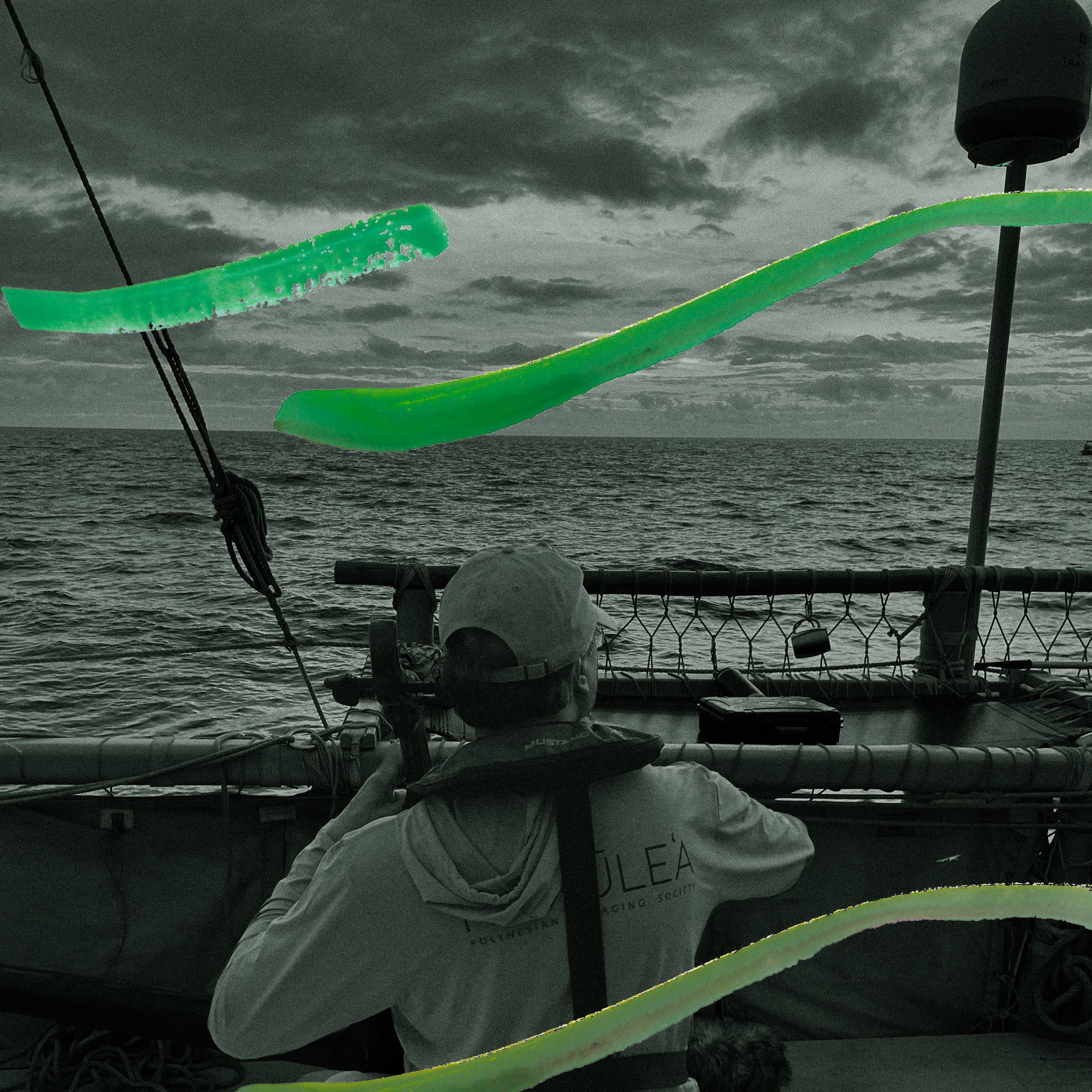
Classical Music Happy Hour
Hawai‘i: Yo-Yo Ma and the Whales
00:43:46
Yo-Yo Ma has wanted to use his cello to communicate with whales for years. And, in Hawai’i he got a chance. With help from the Polyneisan Voyaging Society and hula master Snowbird Bento, Yo-Yo learns about the ancient art of Hawaiian chant, what one Hawaiian describes to him as their “contribution to the orchestra of the world.”
Loading summary
Transcript99 lines
- [00:00]
A
Our common Nature is supported by Princeton Theological Seminary now offering Damascus Road in partnership with my next season. This five month faith based journey invites executives to pause, listen and make a sacred shift as they reimagine God's call for the next season of life. With retreats on the seminary's campus, formation with seminary faculty, and one on one coaching, Damascus Road weaves together scripture, vocation and real world tools, guiding leaders toward clarity and renewal. Take your next step at ptsem. Edu Damascus Road. Hi, it's Anna. I wanted to start this episode with something from last episode when I asked Mikiala, how do you connect with your ancestor who was a patient? And she said, we chant. We sing to them. Chanting. What is chanting in Hawaii specifically? Is it really so powerful, so. So all encompassing that it can connect Michiela or anyone to things we can't see? When you chant, the vibrations effect change. And we believe that when we chant.
- [01:41]
B
Our voice remains in existence.
- [01:45]
A
Some people think that when the sound ends and they can't hear it anymore.
- [01:48]
B
That it ceases to exist.
- [01:51]
A
But for us, it's still out there.
- [01:53]
B
Just rippling and rippling. And that's why we will chant the.
- [02:03]
A
Same chant every day if we have to. We'll do it three times a day if we have to, because it's about amplifying and adding another layer and another layer until you have a whole chorus. Our human ears cannot hear that anymore, but the universe can. And so our chants are our contribution, the orchestra of the world.
- [02:39]
C
I think you can feel it in the chanting. You could feel it in the dancing. You could feel it in the political narrative. It comes from the earth and the sky and the volcano and the ocean and. And there's almost nothing more powerful.
- [03:01]
A
That's Yo Yo Ma and I'm Ana Gonzalez. This is our common nature a musical journey with Yo Yo Ma through this complicated country to find that connection to nature that so many of us are missing. And today we're going to harness the. The power of chanting and makes it with the power of Yo Yo's cello to attempt to communicate with a singular voice in the chorus of the ocean.
- [03:34]
C
I just have a whale of a time.
- [03:38]
B
Great pun.
- [03:39]
A
Why, why, why did you want to try to communicate with the whales? Like, where was the inspiration for that from?
- [03:45]
C
Well, whales are our mammal relatives. They obviously have a sophisticated language and they are sentient beings, as are we, and yet we don't know their language.
- [04:07]
A
Over 50 years ago, humpback whales were on the verge of extinction. Whaling actually reached its peak. Peak in the 1960s, and scientists were trying to raise the alarm on the industry. Nothing really worked, though, until there was this biologist, Roger Payne, who decided to record the sounds he was hearing from the families of humpback whales that he studied because they were so similar to human sounds. And Roger also pioneered this theory that whales communicate to their herds up to hundreds of miles apart, not through sight, but through sound singing and hearing their family's songs. Payne was also a classical music fan and an amateur cellist. So he decided to make an album of these songs and release it in hopes that people would hear it and begin to protect these gentle marine giants. And it worked. Ever since Songs of the Humpback Whale was released in 1970, Commercial Whaling has been banned, and humpback whales have steadily come back because people heard their voices calling out so similar to our own.
- [05:28]
C
And I listened. I heard, my goodness. These are sounds that are kind of in the register of the cello. They are absolutely replicable on the cello. I just thought, from just a musical point of view, I wonder if I were to replicate some of those sounds in the way that, you know, I go to a different country and I'm learning some words and I'm going to try out my vocabulary.
- [06:11]
A
Our trip to Hawaii offered a real chance to try out these sounds because we would be there right at the start of the Hawaiian humpback mating season, and we'd be joined by Hawaiian musicians who have their own way of communicating directly with all the elements of the natural world.
- [06:36]
B
I chant a lot.
- [06:38]
A
This is Snowbird Bento, and she's a teacher of Hawaiian music and culture. She's an expert in chants or in Hawaiian melee.
- [06:47]
B
Everything I chant is my prayer. As we chant, we're actually putting out vibration into that universe and expecting response.
- [07:07]
A
Snowbird tells me she chants to affect the weather, to carry histories of people, plants and animals, and to protect things.
- [07:15]
B
And you're asking for your people to come help you, give you what you need.
- [07:19]
A
And Snowbird was one of the first people yo yo called when he was organizing a concert in Honolulu.
- [07:25]
B
I won't lie, I about screamed my head off and fangirled, and I said, oh.
- [07:32]
A
Turns out Snowbird actually played cello growing up.
- [07:35]
B
And I had a picture of young yo yo sitting with his cello, and his eyes were closed, and he was, like, in this position. And I thought, I'm going to keep practicing, because one day, this is the guy that inspires me. Like, I'm going to. I would just love to meet him. I never thought I was that good of A cello player.
- [08:00]
A
In this concert, yo yo was set to play all six, six of the Bach cello Suites. And if you don't already know, playing all of the Bach cello Suites is a tour de force in cello performance. It's about two hours of solo cello, and it's one of Yo Yo's specialties. He usually does it straight through, no breaks. But this time, he invited Hawaiian musicians and performers to come out in between the suites. And Snowbird was first.
- [08:44]
B
I decided to perform Kaulu Vehi Vehi. It speaks to this time in the existence of our land, when everything was in balance and healthy. And so what I attempted in my performance was to create this space that even for a minute, we can touch that type of beauty and perfection.
- [09:19]
A
But in the last verse, the energy changes from a meditation on the beauty to a directive to the audience.
- [09:32]
B
Land is the chief, man is its servant. Remember our place. Can you imagine the way that it changes the way you see yourself within this environment? You're actually saying, I'm not above or below. We're all equal.
- [10:14]
A
Human beings have the tendency to think of ourselves as separate from the world around us. And even better, we think we can control it, that we're on top. But in this melee, this chant, Snowbird is saying, that's not how it works here. So if Yo Yo's going to communicate with whales, he's going to have to meet them where they're at. He can't just expect to walk out of a Waikiki hotel room and play for the whales as they swim out on the beach. Yo yo is going to have to enter the space where whales live. And for Snowbird, that place exists both in the depths of the ocean and in the deepest parts of our br. It's a place with a Hawaiian name, Po.
- [11:04]
B
For some, Po means the cosmic night. Po is a source. Po is origin. Po is darkness. Po is black.
- [11:18]
A
Its physical manifestation lies in the realm of. Of the ocean. Because the deeper you go in the ocean waters, the sun begins to fade. The darkness gets thicker. This is the pull Whales dip into this world, holding their breath as they go deeper and deeper. Their eyes can't pierce through the darkness, so they begin to sing. Their songs and screeches, ripple out through the water and tell them where to find their friends and families. Snowbirds ancestors also used sound to communicate through the ocean.
- [12:24]
B
In my own family, we have stories of my great great grandfather feeding sharks by hand, chanting to them, and they swim in.
- [12:34]
A
Snowbird refers to her family and the sharks and the whales as kanaloa. People, because in the Hawaiian creation story, the ocean is ruled by Kanaloa.
- [12:44]
B
Yeah, Kanaloa is one of our four.
- [12:47]
A
Major akua, a Hawaiian deity or God. Kanaloa lives within the Po and controls the oceans and all of their creatures, which are mostly mysteries to us.
- [13:00]
B
We don't know half of the creatures that live in the deep parts of the Kanaloa.
- [13:07]
A
Because do you know how much of the oceans human beings have actually explored? 5%. Just 5. Which means that 95% of the oceans are unknown to us, which means there could be anything living in there, undiscovered creatures and portals and maybe things beyond the physical.
- [13:29]
B
Kanaloa represents a subconscious mind. The Kanaloa realm is open to us when we allow for us to cross over from the conscious to the subconscious.
- [14:01]
A
I think it's a good time to tell you how I actually first met Yo Yo Ma. It wasn't through Arthur or Sesame street or seeing him live or even through this podcast. It was through something else. And I'll tell you about it after the break. Our Common Nature is supported by the National Forest Foundation, a nonprofit transforming America's love of nature into action for our forests. Did you know that the National Forests provide clean drinking water to one in three Americans? And that national forests and grasslands cover nearly 10% of the U.S. hosting 150,000 miles of trails and providing habitat for over 3,000 species of plants and animals. The National Forest foundation supports the places where we come alive, keeping the trails, rivers and forests we love healthy. Last year, they planted 5.3 million trees and advanced over 300 projects to protect nature and communities nationwide. Their work creates lasting impact by restoring forests and watersheds, strengthening wildfire resilience, and expanding recreation access for generations to come. And when forests struggle, so do we. The water in our taps, the air we breathe, and the trails that connect us all. Learn how you can help@nationalforest.org Yoyoma Since WNYC's first broadcast in 1924, we've been dedicated to creating the kind of content we know the world needs. In addition to this award winning reporting, your sponsorship also supports inspiring storytelling and extraordinary music that is free and accessible to all. To get in touch and find out more, visit sponsorship.wnyc.org Our common nature is back. This is Ana and I want to tell you about the first time that I met Yo Yo Ma. It was through a memory passed down to me.
- [15:56]
B
Hey, Anna.
- [15:57]
C
Hey, Mom.
- [15:58]
A
What's up? I was just chewing on a hot brownie and I couldn't. Yeah, Keep chewing. I also had a work question I wanted to ask you about for the yo yo podcast.
- [16:10]
B
Okay.
- [16:12]
A
Do you think it would be okay if I talked about him playing at Empath's funeral in the show? Absolutely. Yeah. Yeah. I think it's a treasured memory for everyone, so I think it's a beautiful memory. I don't think there's any way to. It would be an honor. The year before I was born, my mom's sister Beth died of breast cancer. It was a shock to everyone who knew her. And yo yo was one of those people. Their kids went to school together, and I was always told with this sort of disbelief from family members that Yo Yo Ma played at my aunt's funeral. Well, it was just so extraordinary and unexpected. There had been a big snowstorm, so there was a lot of snow on the ground, like a foot or two, you know, like a lot of snow. And it was like crystal clear blue sky and sparkling sun on the snow. And it was quite a crowd of people. And then he just stepped out of the crowd, and his wife put this, his stool down for him to sit on. He didn't even know he was there. Wow. And then he sat down on the stool, he started to play. It's him playing. That. That is what I remember about her burial. It's that moment. You don't remember anything else? No. Like, it's one of, you know, those things. Like, it's. I have the exact picture. I know exactly where I was standing. I know the exact setting. I know exactly where he was sitting. I know, like, the whole scene is just there. When you think about it now, does it feel like it's still, like, present? Like, still happening? Almost Absolutely. This memory lives in a place I can't see. It's a place my mom can't see either, but she feels it, and so do I. It ripples out forever into our universe, in our subconscious and minds and in the Kanaloa realm. I didn't tell anybody about this connection I had to Yo Yo. It just never felt right. And when I got the call to maybe join yo yo out on some trips in nature and make a podcast, it felt like this strange boomerang, like a small, unexpected bit of fate coming back to me. But I held onto it. I didn't tell him until we were in Hawaii.
- [19:13]
C
The most amazing moment. We're sitting on that plane.
- [19:17]
A
Yeah.
- [19:18]
C
And you tell me, so, do you remember Beth Pyle?
- [19:23]
A
Yeah. Yeah. Oh, yeah. And then.
- [19:27]
C
And I've known you already for a while, you know, so it's like, I saw you, West Virginia. We talked and this. And then boom, boom, you land. And then suddenly we're connected.
- [19:38]
A
Yeah. From before I was born.
- [19:40]
C
I know.
- [19:41]
A
That was a year before I was born.
- [19:44]
C
It's hard for me to kind of wrap my mind around because, you know, obviously I think of you as very separate people, but the fact that your mother was so close to her is really important.
- [20:07]
A
Do you feel bad, though, now? Because I don't want to leave you feeling bad. No. Okay. No.
- [20:13]
C
No.
- [20:13]
A
I mean, no. It's just. It's something, you know, And I think of Beth's death. I always think of just how unfair life is. Was just a terrible thing that happened. Yeah. So, you know, if we can. Any way to honor her is a good thing. Cool. That's what I'm trying to do. It's probably Aunt Beth trying to do it. Honestly, that's probably how I got this whole thing. I'm sure it is. She's probably like, ooh, that would be interesting. Yo Yo's on stage in Waikiki. He's in the middle of playing notes he's played for more than 60 years. He's not even really playing the notes. It's like he's accessing them in a place he can't see but can feel. A place where the notes live. That always ex.
- [21:37]
C
I associate playing with having an elevated consciousness where you have access to your subconscious. And I think the performing part is a deliberate discipline to get those portals open so you have maximum access to your subconscious.
- [22:01]
A
So over the past 60 plus years, yo yo has been opening those portals in his mind to mesh his conscious and subconscious. All that imagery that yo yo says he envisions when he plays Box Cello.
- [22:14]
C
Suite Number one, the image of the flow of water. You start to see flying things.
- [22:22]
A
That all lives in Yo Yo's personal ho. It's the untouchable place that human beings have yet to explore, where light fades. It's where my aunt and her memory remain living. It's a realm yo yo dips into every time he performs, where he uses sounds to navigate his universe, just like the whales.
- [22:49]
C
And if you have access to that, you have access to a vast repertoire of ideas, memories, or just trash. But somehow when you're performing, you're aware of that much more.
- [23:10]
B
I know exactly what that feels like.
- [23:12]
A
Snowbird again.
- [23:14]
B
It's like a light switch. You move from one consciousness into the next, and you cannot help that. When you flip the switch from the conscious to the subconscious in performance, you're no longer playing the music. It's almost like the opposite, right? The music is playing you. There are times when I'll come out of it and I can't remember a darn thing because my eyes close and I just, I go. And if I'm being completely honest, I'm not performing for the physical audience that's sitting there watching me. I'm performing for who needed to hear it, even if that audience is an audience of one. Some of my best performances have been with just me and the wind and the elements around me, because they'll let me know. They'll signal if it was good, if it moved them.
- [24:44]
A
When I watched Snowbird on that stage in Waikiki, she seemed to be in her own world, performing for those who needed to hear it. Yo yo and Snowbird both navigated through portals opened between their conscious and subconscious to access the pole. And that's exactly what they needed to do the night before. Our final journey of this story in this series, the one where we go out onto a traditional Polynesian canoe where there are no navigating instruments, no gps, just us, the ocean, the wind and the sky. That's after the break. Our Common nature is supported by the National Forest Foundation, a non profit transforming America's love of nature into action for our forests. Did you know that the National Forests provide clean drinking water to one in three Americans? And that national forests and grasslands cover nearly 10% of the U.S. hosting 150,000 miles of trails and providing habitat for over 3,000 species of plants and animals. The National Forest foundation supports the places where we come alive, keeping the trails, rivers and forests we love healthy. Last year, they planted 5.3 million trees and advanced over 300 projects to protect nature and communities nationwide. Their work creates lasting impact by restoring forests and watersheds, strengthening wildfire resilience, and expanding recreation access for generations to come. And when forests struggle, so do we. The water in our taps, the air we breathe, and the trails that connect us all. Learn how you can help@nationalforest.org Yoyoma this is Ira Flaydo, host of Science Friday. For over 30 years, the science Friday team has been reporting high quality science and technology news, making science fun for curious people by covering everything from the outer reaches of space to the rapidly changing world of AI to the tiniest microbes in our bodies. Audiences trust our show because they know.
- [27:01]
C
We'Re driven by a mission to inform.
- [27:03]
A
And serve listeners first and foremost with important news they won't get anywhere else. And our sponsors benefit from that halo.
- [27:12]
C
Effect for more information on becoming a.
- [27:15]
A
Sponsor, visit Sponsorship wnyc. Our common nature is back. I'm Ana in Hawaii with Snowbird Bento.
- [27:31]
B
I was about three years old when I was first introduced to Hokulea on the shoulders of my uncle. He walked me down into the water and he said, this is Hokulea, Bebe. You know, one day this canoe will take you around the world.
- [27:45]
A
Hokulea is a double hulled canoe with two massive sails. It's this brilliant wooden vessel with a large deck and sleeping quarters for its crew. It was built in the 1970s as a replica of the original ships that brought the first Polynesians to the archipelago of Hawaii. Thousands of years ago, a group of activists and culture keepers came together to build the ship and learn how to navigate the seas as their ancestors did and to form a crew who could move through the open ocean with just the stars. Hokulea is more than a feat of sailing and engineering. It represents a fierce devotion to Hawaiian culture and a hope that it will remain. And today, Hokulea is going to serve as a vessel for us as we navigate the realm of Po and Kanaloa and hopefully connect with some whales. We met Hokulea in Kauaihai harbor on the island of Hawaii, where, by the way, Mauna Loa, the volcano was erupting for the first time in almost 40 years. It's so cool that I wish for the first time that this was a movie like with video and not just a podcast. But as we approached Hokulea, the red glow of the lava coated the harbor and we gathered to board also. I'm Ana, by the way. Nice to meet you. I met with Lehua Kamalu, one of the captains and primary navigators of Hokulea. We are about to take Hokulea out of Waihai harbor on a short sunset sail. It's a beautiful afternoon and I think, you know, invite the whales and in the ocean to listen to something. Maybe they have a quite heard before from the deck of a canoe. Going to be super amazing. With yo yo on board, a number of our elders and kupuna and practitioners, and there are about 40 or 50 people on this working port. It's a real mix, like Lehua said, older Hawaiian people who know Hokulea well, Yo Yo's team and a man who called the group together. His name is Nainoa Thompson. He's the CEO of the Polynesian Voyaging Society that runs Hokulea and, and he's a legendary navigator in Hawaii. But just quickly, there's A lot of people that want to come on this trip only got so much room for everybody.
- [30:05]
B
We're only taking people who protect something.
- [30:09]
A
Whether it's this land, whether it's this.
- [30:11]
B
Ocean, whether it's our ancestors, whether it's our culture.
- [30:13]
A
So that when everybody was calling us saying we want to come, we were asking them, what are you willing to protect?
- [30:21]
B
There's a thousand thank yous.
- [30:23]
A
We don't have time. The sun is beginning to set and the winds are rolling in. There's like 20 of us who go over this short plank, and we're on Hokulea. All these clouds are moving in and drizzling rain on us. And suddenly a double rainbow appears over Mauna Loa, which is spitting lava into the clouds. And I find. Yo yo, how are you feeling?
- [30:44]
C
Well, first of all, there's a double rainbow here, which is unbelievable. It's just like we have the volcano, we have the rainbow, and we're going out to see whether we can maybe spot a whale or two. We'll then see whether it's possible to make some form of contact through their songs.
- [31:09]
A
Do you think? Yeah. How do you think it's going to be the producing?
- [31:14]
C
Well, I think possibly, as with any two living beings, if you spot one another, there's a greeting, you know, there's some form of recognition. And if we could try and get to that, that would be an amazing thing, because then what happens after that is a relationship, you know.
- [31:42]
A
Yo, yo, let me put this on you. Why someone comes over and puts a life vest on Yo Yo. We're all kind of like stumbling around this ship as it undulates on the calm, glassy waters.
- [31:54]
B
I think we can catch you.
- [31:56]
A
People are throwing rope and going under deck to grab supplies. There's a group working together to row this long oar at the back of the canoe, which helps the ship move without wind. And one of them pointed to an urn she brought on board with her. Your mom? Is this your mom? Well, I'm glad she's here. She'll tell us where to go. You know her? Well, a little ways down the canoe, there are marine biologists with audio equipment. Hey, Lars. Hey. How you doing? Good. Lars BER is the director of the Marine and Mammal Research Program in the Hawaii Institute of Marine Biology. How you feeling? Before we send. I'm so excited. Look at this background. Look at that rainbow right there. Two of them. Yeah. It's going to be awesome. Lars specializes in marine megafauna, AKA big old ocean animals like whales. Take me through, like, the sciencey side of what's going to happen right now. What are you planning on doing? Yeah, so it's a little bit early, but the whales have started showing up. So if we're lucky, we're going to put a hydrophone, so an underwater microphone in the water, and that's going to be listening for whales and snapping shrimp and all kinds of other things that are in the ocean. And then at the same time, Yo Yo's jello is going to be connected to a speaker that we're going to put in the hull that hopefully will project the sounds into the ocean. And those sounds we will be recording together with anything else that we're hearing in the ocean. And if we're lucky, we'll pick up up some humpback whale song. Let me break this plan down a little bit. So these waters and all the living beings in it are very protected by law from all human disturbance. So we actually could not get permission to use speakers to project Yo Yo's cello directly in the water. So Lars and his colleagues have rigged up the wooden hulls of the Hokule' a to be natural amplifiers. Yo yo will and his cello will shoot out through the ocean through the canoe. And the marine biology team set up a hydrophone that's an underwater microphone to drop off the side of the canoe. When Yo Yo's performance starts, we'll have the hydrophone recording, and hopefully we can record what's happening underwater. This is Ode, one of Lars's colleagues, and she's crouched on the side of the canoe with a little audio setup and headphones pressed to her ears. Yes. Have you ever done anything like this? No. This is the first time it goes back to what sound is, and it's a wave, and wave travels and transmits. And what is sound? What is a wave? And waves are everywhere, and how long do they last? There's no guarantee that Yo Yo's sound waves will reach any whales or that the whales will respond if they use do hear them. All right, I'm excited. Moments later, Hokulea sets sail, and we're off. Yo yo is busy setting up his cello with the marine biologist. But out of the corner of my eye, I see Snowbird, because I think.
- [35:04]
B
My job was whale chantress, that I would be chanting for the whales. Well, let's see who decides to come out then to play. As we sailed out and we started to move away from the pier, I kept my eyes scanning the horizon in front of me, and I started to chant. I called out to my ancestors, the ones I descend from. And then I said, if it is possible for us to connect with you folks, then please show us whatever those signs are. Let's see if we can connect with the rest of the Kanaloa people, like the whales, and see if the Kanaloa people want to make their presence known as. And then went into asking for my kupuna to help validate that we were in the right place to be at that time. And it wasn't crazy, it wasn't loud, it wasn't grandiose, because who's the audience at this point? None of us on the boats or on the canoe are the audience. Who's the audience? Kanaloama. The last portion of the chant says, eho mai kaike. Grant unto me wisdom. Grant unto me strength. Grant unto me knowledge. Grant unto me the ability to see the things that others may not see. And then the last line is, ehomai kamana. Grant unto me the spiritual power. And when I clapped twice, right off my left side, 45 degrees, I saw the tail flat.
- [37:27]
A
I was like, what?
- [37:33]
B
And that was it. Nothing else. I didn't see it breach. I didn't see it blow air out, just the tail flat poom. And it was gone. And I was like, you saw that, right?
- [37:50]
A
The mood was different after that. And the focus turned to yo yo, who sat in the glow of Mauna Loa's lava and the double rainbow crown and dropped the endpin of his cello. He played a medley of all the pieces he's been playing throughout this series. Somewhere over the Rainbow, Amazing Grace, a Catalan folk tune called Song of the Birds, the prelude to Bachcello Suite Number one in G Major. And we waited by headphones, listening underwater for a response. Nothing. But yo yo had another idea. Maybe if he played the sounds of will that he learned to replicate, maybe some whales would call back.
- [39:26]
C
I think the only thing that I can count on is purity of intention. You know, we mean no harm going there. The intentions are benign.
- [39:42]
B
I watched how he played, how he closed his eyes, how he moved. And I thought, they're hearing you, and they'll respond to you in the way that they will respond. On.
- [39:58]
A
The water remained quiet.
- [40:01]
B
Sometimes you don't get it recorded. Sometimes it's not seen by everyone because it's not meant for that. It's meant for that audience, even if it's an audience of one.
- [40:22]
A
We don't know if yo yo is not music or whale sounds reached any whales after the tail flap. We didn't get any response but through our attempts to communicate with the whales, we thought like them. We entered the realm of Kanaloa. We accessed the Pole with help from Snowbird and Yo Yo. And I think the whales felt our presence.
- [40:47]
C
That whole trip was magical. I remember those double rainbows, you know? And are they signs? Are they just natural occurrences and all coincidences and we don't know, right? We probably will never know. And whatever we know, we're trying to bring as a peaceful offering. And if they choose to engage, which in our case, they didn't really, that doesn't mean that we can't try again and see what happens, because that's what people do.
- [41:22]
A
Because it all comes back to knowing our place in this world. If we're truly connected to the world around us, we're listening, we're observing and striving to understand something we can't yet see or touch, but know exists 1,000%.
- [41:43]
B
That is the way yo yo affects his environment around him. If he's in his subconscious and he's just playing to play the cello, and he become the vehicles getting those reverberations out into the universe, and he's affecting his immediate environment from the top of his head, the zenith, to all the things that are around him as far as his eyes can see, that's his universe. And he is absolutely affecting the audience within that universe.
- [42:22]
A
On each one of these trips over the past three years, I've been fortunate enough to experience the yo yo universe everywhere. He drops the end pin of his cello and picks up his bow. He's taking in the energy of the land and the people, and he becomes that conduit that Snowbird is talking about. He reflects it right back to his audience, which is whoever and whatever needs to feel it. From the tallest peak in the Smoky Mountains to coal country riverbeds, from a snowy New England cemetery to the deck of Hokulea, yo yo plays to rebuild our connections to each other, to the past, to the present, and to the future of this world we live in. Because that's what music does. It's a form of love. And in Hawaii, they have a name for that kind of love.
- [43:19]
B
Aloha is having a deep love and respect and understanding for all the good stuff and all the bad, all the obstacles and all the successes. Aloha is when you look at someone with empathy and compassion. If I say to you, Aloha Kaua, love and respect, understanding dwells between you and I. The world needs that.
- [44:08]
A
So the last song of Yo Yo's Honolulu concert, the last song of the series is Aloha Oe Farewell to Thee. It was composed by Queen Lili Uokalani, the last reigning monarch of the Hawaii Islands, and the story is she wrote it as a love song, a mele Hooipoipo. But over the past 150 years it's become a symbol of all the good and all the bad in Hawaii, people mourning the loss of their sovereignty but also enjoying luaus and high school graduations. And tonight we sing it all together under the dark Hawaiian sky. Our voices go out into the universe, forever rippling, Reaching whoever and whatever needs to hear it until we. Our Common Nature is a production of WNYC in Sound Poem hosted by me, Ana Gonzalez, produced by Alan Gufinski with editing from Pearl Marvel and original music by Alan Gufinski mixed by Joe Plord Fact Checking by Anna Alvarado. Our executive producers are Emily Botin, Ben Mandelkern, Sophie Shackleton and Jonathan Bayes. Our advisors are Mira Burtwin Tonic, Kamaka Diaz, Kelly Libby and Chris Newell. Special thanks to my mom Maura for picking up the phone and the Hawaii Institute of Marine Biology and the Polynesian Voyaging Society for making our whale dreams possible. This podcast was inspired by a project of the same name conceived by Yo Yo Ma and Sound Postings with creative direction by Sophie Shackleton in collaboration with partners all over the world. And if you want to listen to more music from this series, you can check out the Our Common Nature episode featuring yo yo playing with Eric Mingus, Jen Kreisberg and an Icelandic choir, now available on all streaming platforms. Our Common Nature is made possible with support from Emerson Collective and Tambourine Philanthropies. Special thanks to the one and only Yo Yo Ma. And I want to dedicate this episode to the memories of Eleanor Sterling, who used to run the Hawaii Institute of Marine Biology, and to my aunt Beth Pyle. Until we meet again. Our Common Nature is supported by the National Forest Foundation, a nonprofit transforming America's love of nature into action for our forests. Did you know that the National Forests provide clean drinking water to 1 in 3Americans? And when forests struggle, so do we. The National Forest foundation creates lasting impact by restoring forests and watersheds, strengthening wildfire resilience, and expanding recreation access for all. Last year they planted 5.3 million trees and led over 300 projects to protect nature and communities nationwide. Learn more@nationalforest.org Yoyoma.