← Classical Music Happy Hour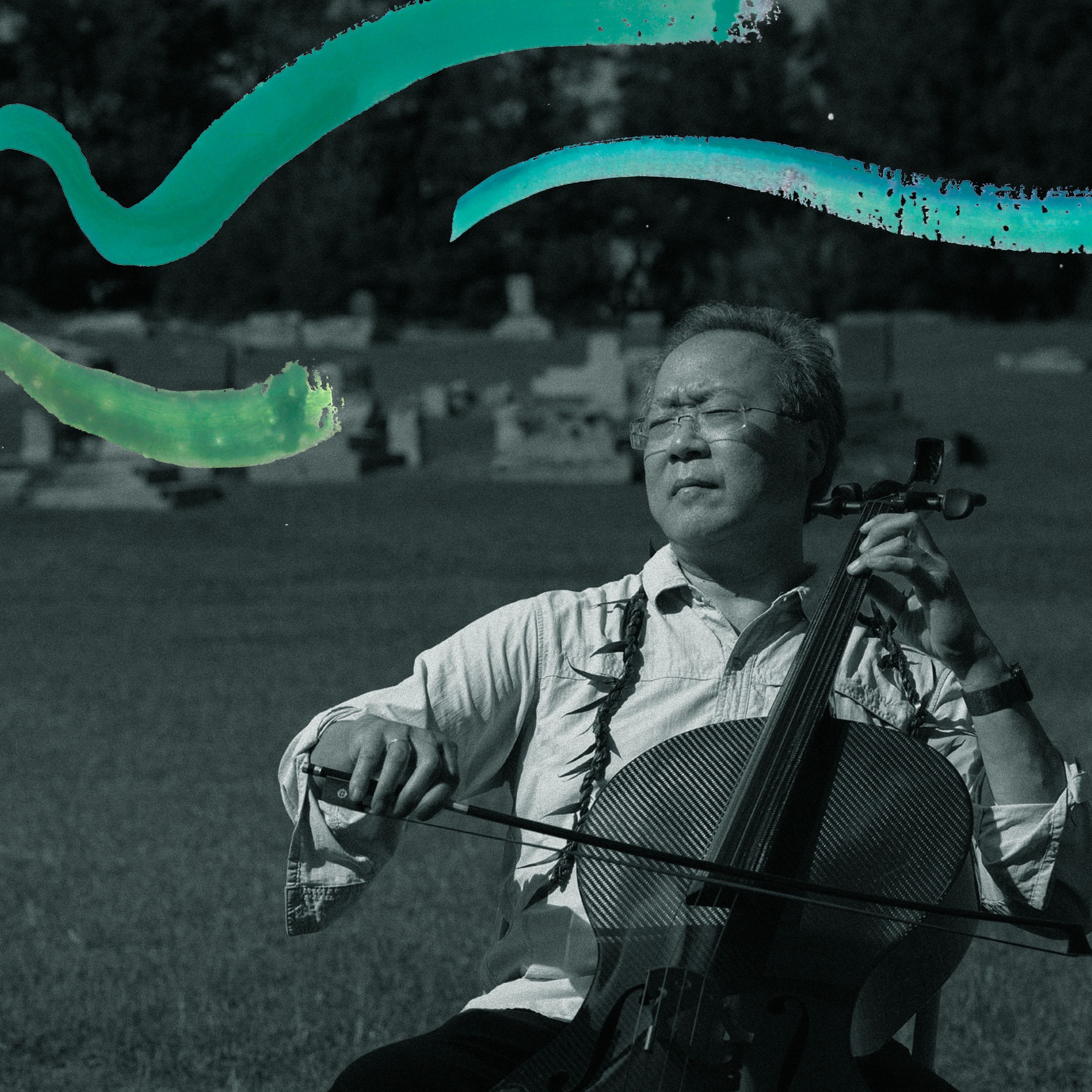
Classical Music Happy Hour
Hawai‘i: Yo-Yo Ma on Moloka‘i
00:44:33
On the island of Molokaʻi in Hawaii, we trace the spiritual power of mana, from a sacred grove to the Kalaupapa colony, where music, story, and Yo-Yo Ma’s performance honor the resilience and memory of those who came before.
Loading summary
Transcript169 lines
- [00:11]
Bernard Punikaya
Got up this morning and looked around me to see the beauty of my hovering Took a little walk into the town Pain and sorrow are the things I found.
- [00:39]
Interviewer
Bernard always had this quote. Dignity is inherent in every human being. It's not something someone gives you. It is inherent in you.
- [00:51]
Bernard Punikaya
Where birds never fly. Where birds never fly.
- [01:05]
Ana Gonzalez
For most of his life, Bernard Punikaya lived on the island of Molokai in Hawaii. But it wasn't by choice. He was part of a community forced to live there.
- [01:17]
Yo Yo Ma
People sent in exile, right? Basically, never to return. It's a very powerful place. It's a very powerful place. Historically, humanly, politically, it's charged.
- [01:35]
Ana Gonzalez
That's Yo Yo Ma and I'm Ana Gonzalez. We're gonna get back to Bernard in the second half of this episode. But this charge is what today's show is about. In Hawaii, they have a name for it.
- [01:47]
Mikiala Pescaia
That's mana right there.
- [01:49]
Ana Gonzalez
Yo yo and I went to Molokai to tap into this mana using music. And we came away with two very different stories from two sides of this mystery, mysterious island that make us question, what do we do with all of the memories left in the land.
- [02:08]
Mikiala Pescaia
That'S.
- [02:09]
Ana Gonzalez
Today on our common nature? A musical journey with Yo Yo Ma through this complicated country to help us all find that connection to nature that so many of us are missing. In the Hawaiian archipelago, there's an island shaped like a blade cutting the waters between Oahu and Maui.
- [02:34]
Mikiala Pescaia
The name of our island can be pronounced two ways, Molokai or Molokai.
- [02:39]
Ana Gonzalez
Molokai, no stops, means middle of the churning oceans.
- [02:43]
Mikiala Pescaia
But the word kai, kai with a little glottal stop in there. Kai means lead, to set the pace, to take charge, to. So in that sense, Molokai can also mean to produce leaders.
- [02:58]
Ana Gonzalez
So I'm going to use Molokai for this episode because it makes sense. You'll see Molokai is different than its neighbor islands, where tourists and millionaires have made and remade the landscapes. When you drive east from the airport into town on the one road that circles Molokai, there's a sign someone made that says visit, spend, go home. As you continue to drive down that two lane road past farms and mom and pop shops, sometimes the forest is so thick you can't see around the tight curves. Sometimes all you see is a cliff on one side and a drop off into churning, foamy ocean on the other. In the rainy season, the road easily turns to mud and the best way to get around is in a lifted Yoda, AKA a raised Toyota truck. At night, Molokai is so dark, the eyes of deer and wild pigs peek out from the woods. You can feel why this island is considered among Hawaiian people to contain an innate power that comes from the land itself. In Hawaii, they call it mana, and it feeds everything.
- [04:12]
Mikiala Pescaia
Every time you eat something, you take the mana of that plant in. You drink the water, you breathe the air. You're taking all that mana, that energy, and then you convert it into the acts and words that you put out.
- [04:25]
Ana Gonzalez
But you don't necessarily use all of it in your one life, especially if you've accumulated great amounts.
- [04:32]
Mikiala Pescaia
And then there's a bunch of it that just collects and stays with you. And that's the thing is, like, for us, mana, death cannot take away from us. It takes the body away, but the other things still exist.
- [04:47]
Ana Gonzalez
Micheala Pescaia was one of the first people Yoyo and I met when we landed in Molokai. She works for the US Park Service and grew up in Molokai.
- [04:56]
Mikiala Pescaia
My first name, Mikiala, means to be alert and punctual. My grandmother gave me that name because I guess I wasn't so alert or punctual when I was younger. So it's kind of a nickname that I've kept because I think it's something worthy of aspiring to.
- [05:15]
Ana Gonzalez
Mikiala loves Molokai for everything it is and everything it isn't.
- [05:20]
Mikiala Pescaia
We don't have any stoplights. We fish and farm. We're not very transient. Like, a lot of families live in the same place or even in the same house that their parents grew up in or their grandparents built.
- [05:32]
Ana Gonzalez
A lot of Mikiella's family comes from the north side of Molokai in the Pelekunu Valley, where the winds are so strong that people actually figured out a way to ride them.
- [05:44]
Mikiala Pescaia
Yes, Pelecuno people, they live in this narrow valley. The walls extend out into the ocean. You cannot walk the coastline. You have this narrow view. You watch the birds every day, flying, you're gonna notice that there are wind currents just as there are ocean currents. You'll notice the way birds glide and fly. And if you have generations and generations and generations of observation, at some point, somebody figures out, you know what, we can mimic that with a leaf. And that's what they would use to hang, glide across the valley and even over the ocean.
- [06:30]
Ana Gonzalez
That is the coolest thing I've heard. Yeah, maybe ever. All of the elements of nature on Molokai were so strong that Michiala was taught to name them.
- [06:42]
Mikiala Pescaia
Every rain has a name. Every mountain, every hill, every wind has a name. The iliilikihiro swirl the sand at the black sand beach of Picuone. Kui ala lipua. It brings up the smell of the seaweed. Kui means to hit or strike. Ala is fragrance. Lipua is a type of seaweed. So the kui ala lipua just knocks you out with that whiff.
- [07:14]
Ana Gonzalez
Mikiala and Molokai are intertwined, and she believes, like many Molokaians do, that when she dies, she needs to be buried in Molokai so that her mana, the energy, the charge left in her physical body, can return back home.
- [07:30]
Mikiala Pescaia
That which is extracted from this aina should be returned to this aina.
- [07:35]
Ana Gonzalez
Michiala told me a story about someone who went to great lengths to bury his bones on Molokai and keep them secret.
- [07:44]
Mikiala Pescaia
Lanicala is so powerful that his energy should not be in anyone else's hands.
- [07:52]
Ana Gonzalez
In the 1500s, Lanikaula was a trusted advisor to leaders and kings. Because he could foresee the future. He was killed by a rival, and his family knew that when they buried him, it had to be in secret, or else people might dig up Lanicala's bones and use them irresponsibly. Selfishly, his children decided to bury their father's body on a plateau and leave the spot unmarked. On top of his remains. They planted trees so that the mana from Lanicala's bones would fuel the trees for eternity.
- [08:31]
Mikiala Pescaia
And that's why the trees are sacred, because if their roots are touching his bones, then that energy is coming up through them, out into the leaves.
- [08:41]
Ana Gonzalez
So Michiela brought us to this grove, a place where the mana of Molokaismo's powerful leader remains buried, so we could better understand what she's talking about. So this area that you're looking at right here is considered the old grove. The trees are delicate, thin trunks, and their leaves are shining and silvery. They're called kukui trees, or candlenut. I'm careful not to step on too many saplings on the ground, but they're everywhere.
- [09:20]
Mikiala Pescaia
Lanicola is very peaceful. The wind moves through the trees, unlike other trees, but it has this stillness when you enter it. It's sort of quiets and commands reverence. It's very welcoming to sit, and yet it almost feels like you shouldn't sit and that you should be very mindful of the space you occupy when you're there.
- [09:55]
Ana Gonzalez
Michiela led us in a ceremony I couldn't record, where we sat in a small circle on a woven mat. And drank Ava, a drink made from a root vegetable. As we explained how we use our gifts in the world, around our circle, there were maybe 30 more people who'd come to watch the ceremony and experience Lanikaula with us. And then yo yo took out his cello to play.
- [10:22]
Yo Yo Ma
And I hope this cello works. Come closer. You can form a circle around me. This is not a stage.
- [10:32]
Ana Gonzalez
He took a seat under the delicate shade of the Kukui trees.
- [10:36]
Yo Yo Ma
What I've learned as a musician because, you know, I don't have a steady job, so I have to travel from place to place. And so I pick up things. And one thing I pick up are songs that are meaningful to people. A song that may be about a bird, but kind of a sacred bird. Because for people that have experienced genocide, that becomes a symbol of life for them.
- [11:26]
Ana Gonzalez
Sitting in the grove, listening to yo yo play this, I felt the reverberations of his cello. I felt it before, but this time it was different. It was mixed with the energy of the people around us watching yo yo play. There are beekeepers and surfers, teenagers and grandparents, aunties and uncles, all forming a circle around us. Lanicala's trees form a circle around them. It's a relationship of mutual protection that can only come when a community knows the history of its people and its land and recognizes the energy that still exists from those who lived here before. We had to come here first. Before we could go to the other side of Molokai, we had to understand what mana is and that it could never be destroyed, even by death. Because on the north side of Molokai, there's a peninsula where death is everywhere. We go there after the break.
- [13:04]
Narrator/Announcer
Our common nature is supported by the National Forest Foundation, a nonprofit transforming America's love of nature into action. For our forests. Did you know that the national forests provide clean drinking water to one in three Americans? And that national forests and grasslands cover nearly 10% of the U.S. hosting 150,000 miles of trails and providing habitat for over 3,000 species of plants and animals. The National Forest foundation supports the places where we come alive, keeping the trails, rivers and forests we love healthy. Last year, they planted 5.3 million trees and advanced over 300 projects to protect nature and communities nationwide. Their work creates lasting impact by restoring forests and watersheds, strengthening wildfire resilience, and expanding recreation access for generations to come. And when forests struggle, so do we. The water in our taps, the air we breathe, and the trails that connect us all. Learn how you can help@nationalforest.org Yoyoma WNYC.
- [14:08]
Sponsor Announcer
Studios is supported by the New York Phil. Mozart's music is showcased in two concerts. Violinist Gil Shaham leads the orchestra as soloist in two concertos. The elegant second and exuberant fifth. Louis Langri then conducts the orchestra's wind section in Mozart's genial Grand Partida and Richard Strauss Lyrical Serenade January 2nd and 3rd at David Geffen Hall. Tickets@nyphil.org.
- [14:37]
Frances Lambe
Hey, it's Frances Lamb, host of the Splendid Table. Every week on our show we talk about food and cooking and the meanings of food and cooking. We talk with the most interesting people in food about their techniques, their culture, and everything in between. Whether it's about how fried chicken took over the world or how Instagram changes the way people are actually eating. It's a food show where everyone is welcome. Come join us. You can listen to the Splendid Table wherever you get your podcasts.
- [15:08]
Bernard Punikaya
Foreign.
- [15:16]
Ana Gonzalez
Welcome back. This is our common nature and we're on the north side of Molokai, Hawaii, where there's a remote peninsula with a dark history.
- [15:25]
Mikiala Pescaia
Growing up, it was always like, oh, that's where they sent all the sick people. I never thought of it in a scary way or like an avoidance. It was more like all the sick people, that's where they took them so.
- [15:39]
Ana Gonzalez
That nobody else got sick. Michiela is talking about the peninsula of Kalaupapa. It's hard to access. Folks usually fly into a small airport and then drive into town, but you can also take a mule over a mountain, hike for an hour or historically get there by boat. Kalaupapa is a place of transition from an old Hawaii, a Pre WesternPre US Hawaii, to a globalized colonized Hawaii, all because of a disease that by the end of the 1800s was ravaging the Hawaiian Kingdom.
- [16:18]
Bernard Punikaya
And of course in those days they referred to us as lepers. And that's really a terrible word to use to, to describe anyone.
- [16:29]
Ana Gonzalez
This is the voice of one of the more than 8,000 people sent to live in Kalaupapa because they contracted a disease, a disease that we used to call leprosy. This is one of the few voices recorded at length and thanks to the Park Service, these VHS tapes have been digitized for us to listen to.
- [16:48]
Bernard Punikaya
Well, I guess I should start off with saying my name, which is Bernard Kahuakaokalani Punikayo. And I've been here at Kalapaku since 1942. So it's a long time ago.
- [17:13]
Ana Gonzalez
Bernard Punicaya was interviewed in the 1980s. In these two tapes, he's sitting in a chair in his living room and on the steps of a building for staff members of Kalaupapa, with palm trees in the background. At this point, he's a middle aged man looking back on his life. But in 1942, he was 11 years old.
- [17:36]
Interviewer
Okay, let's go back a little bit to some of the things at the way beginning. How old were you when you went into Kalihi?
- [17:45]
Bernard Punikaya
Six and a half.
- [17:47]
Ana Gonzalez
When Bernard was just six years old, a nurse noticed he had red spots on his neck and face. And he was sent to a local clinic.
- [17:56]
Bernard Punikaya
And you stand on this little revolving stand and everybody poke you and do things to you just like a specimen. And finally they told my mother that I had to be admitted to Galiha Hospital. I didn't really understand even then that I would be taken away forever, almost.
- [18:23]
Ana Gonzalez
Hawaiians called the disease maihoa kaawale, the separating disease, because since 1865, anyone who showed symptoms of it were separated from their families by the Hawaiian Board of Health and sent away. Because the disease spread easily, there was no treatment or cure. And a diagnosis meant first painful disfigurement and eventually death. The English speakers called it leprosy. Today because of all the stigma associated with that term. It's called Hansen's disease. It's a bacterial infection. It attacks your skin, nerves and respiratory tract. People lose feeling and use of their muscles until their bodies no longer function. And somehow Bernard contracted Hansen's disease as a kid in Honolulu. And his mother was ordered to bring him to live in a nearby hospital to stop the spread.
- [19:20]
Bernard Punikaya
You know, the separation. It was very difficult for my mother and myself.
- [19:28]
Ana Gonzalez
There were other kids at the hospital already, different ages, and a bunch of nurses, teachers and doctors.
- [19:34]
Bernard Punikaya
During that day, it was easy to forget. You gotta go to school, you gotta go to the doctors and get tests and everything. But at night the reality sinks in and the loneliness is really very strong. And I used to cry a lot at night.
- [19:57]
Ana Gonzalez
At least. His mother and siblings visited, but when they hugged, they were reprimanded by the watchful staff. Bernard made friends, and sometimes he was able to watch movies. The disease, however, progressed, it affected his face, his mouth, his hands. He figured it would just get worse in this hospital until the day he died. But then.
- [20:29]
Bernard Punikaya
We were having our breakfast. We heard all these noises outside, guns firing and the radio. He was saying, this is an air raid. Take cover. This is a real makoa.
- [20:47]
By enemy planes.
- [20:52]
The city of Honolulu has also been attacked.
- [20:57]
Ana Gonzalez
December 7, 1941, the day the Japanese attacked Pearl harbor and the hospital where Bernard was staying was just miles from the attack. So he and the other kids ran outside and climbed up a tree to see what was going on.
- [21:13]
Bernard Punikaya
This plane came so long that you could see the Highland looking down like this and smiling as he was firing his gun.
- [21:26]
Ana Gonzalez
With World War II on the horizon, the decision was made to move the kids away from Honolulu and one island over on Molokai. There was a peninsula only accessible by boat really, because of its sharp cliffs and dense mountain forests. And people with Hansen's disease had already been sent there for the past 80 years.
- [21:47]
Bernard Punikaya
The chief said to us that we're sending you to Kalapaku. The nurses had helped to make us very much afraid. The description that they would give to us scared the hell out of you. And they were talking blood all over the walls and everything. And we were just kids. And every one of us said, please, please, please don't send us.
- [22:13]
Ana Gonzalez
Already. Kalaupapa had a reputation among Hawaiians. It was known as the place where people with Hansen's disease went to die.
- [22:22]
Mikiala Pescaia
You have these tall cliffs that sort of. The island broke and sheared off and it created all these big boulders in the ocean. The water is rough and deep and it's always like moving.
- [22:34]
Ana Gonzalez
Kalaupapa sits just to the west of where Michiela's families would hang, glide over the wind's nose sea. And it's a similar geography. You have these 2,000 foot sea cliffs that form a natural barrier around a valley by the sea. So King Kamehameha V chose Kalaupapa as the site of Hawaiis official quarantine for people with Hansen's disease. Patients began arriving on Ships in 1866.
- [23:04]
Mikiala Pescaia
It was really harsh in the early years.
- [23:07]
Ana Gonzalez
Today Kalaupapa is a national Historical park. And part of Michiela's job is to help people understand the colony's history.
- [23:16]
Mikiala Pescaia
There were some people who felt like I died the day I left home.
- [23:22]
Ana Gonzalez
Because for Hawaiian people, especially at that time, the land was family. Removing someone from their homelands was a spiritual death. Not everybody sent to Kalaupapa was Hawaiian. You had people from Europe and Asia there as well. But the stigma against contracting this disease was so high it crossed all cultures. Some families disowned their sick relatives. Married couples, often divorced mothers had to leave their children. And they all had to start a new life in a series of small wooden houses in the valley between cliffs where the wind whipped. The colony wasn't prepared for the hundreds of patients they received. People didn't live very long once they arrived. But over time, the community became stronger. The doctors and nurses became more informed, the church leaders had more compassion. And people with the disease began advocating for themselves. And by 1942, when 11 year old Bernard and the rest of the kids from Kalihi Hospital set sail for their new home, the scary stories of Kalaupapa were a thing of the past.
- [24:40]
Bernard Punikaya
As we were coming in, we looked to a shore. We could see that people just lined up from the shop area all the way down to the camp. People just line, hundreds of people.
- [24:54]
Ana Gonzalez
All the hundreds of residents of Kalaupapa came to greet this new shipment of kids. And they immediately welcomed them into their world. Instead of blood on the walls and scary sick people, Bernard found beaches, birds, monk seals, lava rocks. He found other kids to play with and aunties and uncles who invited him over for dinner in their home.
- [25:19]
Bernard Punikaya
It was really great. These Kalapaku patients, you know, when they came down, they came down with their fish and dried fish and ipikaola and pehis hoi and would just dig in, you know, as they say, to pick out, you know, that good Hawaiian food.
- [25:39]
Ana Gonzalez
Even better. There were parties, you know, they always.
- [25:43]
Bernard Punikaya
An excuse for celebration. And there were at least three patient orchestras that would rotate during the dancing round. And everybody danced. He had the entire floor to the patients.
- [25:57]
Ana Gonzalez
Bernard started going to church. He became a Catholic. Even though the disease had affected his face and hands, Bernard felt comfortable enough to begin to sing and accompany himself on the auto harp. Compared to the hospital in Honolulu, living in Kalaupapa felt free. But there were still restrictions. Kalaupapa was run by the Hawaiian Board of Health. Patients could not leave and travel to other islands. They had jobs and chores and they still had Hansen's disease.
- [26:30]
Bernard Punikaya
I was in the hospital for a long period of time. The doctor had looked down my throat and, and said that was so bad that sooner or later they would have to do a tracheotomy. That was a reality.
- [26:44]
Ana Gonzalez
Bernard's condition got so bad, doctors considered cutting a hole in his throat and placing in breathing in feeding tubes if the disease progressed. But at this point, there were treatments for Hansen's disease being used in other places, just not at Kalaupapa. And they were working.
- [27:04]
Bernard Punikaya
The success rate was so great and yet our physicians here refused to even consider it. Their rationale was that it was still experimental and there was no guarantees. People were not asking for guarantee without medication. The guarantee was you would die. That's it, plain and simple.
- [27:31]
Ana Gonzalez
So the patients of Kalaupapa came together and demanded to get this new treatment or take the administration at Kalaupapa to court. The pressure worked. The drugs came.
- [27:44]
Bernard Punikaya
They were the miracle drugs. They changed our lives. They really did.
- [27:51]
Ana Gonzalez
Bernard started to heal. More on that story after the break.
- [28:06]
Narrator/Announcer
Our Common Nature is supported by the National Forest Foundation, a nonprofit transforming America's love of nature into action for our forests. Did you know that the National Forests provide clean drinking water to one in three Americans? And that national forests and grasslands cover nearly 10% of the U.S. hosting 150,000 miles of trails and providing habitat for over 3,000 species of plants and animals. The National Forest foundation supports the places where we come alive, keeping the trails, rivers and forests we love healthy. Last year, they planted 5.3 million trees and advanced over 300 projects to protect nature and communities nationwide. Their work creates lasting impact by restoring forests and watersheds, strengthening wildfire resilience and expanding recreation. Access us for generations to come. And when forests struggle, so do we. The water in our taps, the air we breathe, and the trails that connect us all. Learn how you can help@nationalforest.org Yoyoma WNYC.
- [29:10]
Sponsor Announcer
Studios is supported by the New York Phil Mozart's music is showcased in two concerts. Violinist Gil Shaham leads the orchestra as soloist in two concertos, the elegant second and exuberant first, Louis Langrie then conducts the orchestra's wind section in Mozart's genial Grand Partita and Richard Strauss's lyrical Serenade January 2nd and 3rd at David Geffen Hall. Tickets@nyphil.org.
- [29:39]
Frances Lambe
Hey, it's Frances Lamb, host of the Splendid Table. Every week on our show, we talk about food and cooking and the meanings of food and cooking. We talk with the most interesting people in food about their techniques, their culture and everything in between. Whether it's about how fried chicken took over the world or how Instagram changes the way people are actually eating. It's a food show where everyone is welcome. Come join us. You can listen to the Splendid Table wherever you get your podcasts.
- [30:14]
Ana Gonzalez
Our common nature is back. Bernard Punikaya had been at Kalaupapa for more than 20 years before the drugs to treat Hansen's disease arrived. And that's also around the time that Anwe Skinces law first went to the north side of Molokai.
- [30:29]
Interviewer
I started going to Kalaupapa when I was 16. I'm now getting Social Security, so it's been a lifetime.
- [30:36]
Ana Gonzalez
It was the 1960s, and the patients at Kalaupapa were still legally forced to spend their lives on this peninsula with jagged cliffs and whipping winds.
- [30:46]
Narrator/Announcer
But the disease was no longer a Death sentence.
- [30:49]
Interviewer
Kalaupapa was a very lively place in those days. And there was a gathering place called Mariano's Bar, which is where everybody. You could go meet people and you'd be in there and everyone would buy you beer and you'd leave with a pile of six packs there. And Mariano, the owner, would save them for next time, I'm sure. That is where I met Bernard. And I can't even remember what year it was.
- [31:15]
Ana Gonzalez
Bernard was a people person. He was always out at the parties and functions of Kalaupapa, singing and playing music.
- [31:24]
Interviewer
There was one they always. The Alphabet song. It was called Kalaupapa. And it was like K, A, L, A, U, P, A, P, A. And it was like he would say, kalapapa, my hometown.
- [31:34]
Ana Gonzalez
At first, Bernard was skeptical of this white teenage girl. A lot of the residents were.
- [31:40]
Interviewer
But I kept coming back and the question always started being, are you spending the night here? Because if you spent a night, it showed you had more commitment than if you just flew in and out.
- [31:51]
Ana Gonzalez
And eventually Anwe got a grant to start recording oral histories of the residents of Kalaupapa.
- [31:58]
Interviewer
I mean, you know, you naturally go and you talk about when someone was taken away from their family and the pain and the separation. But we also made a point of talking and recording people's talents, you know, if they were painters or musicians and things like that.
- [32:12]
Ana Gonzalez
She recorded people playing ukulele, reading poetry and telling their life stories. And eventually Anwe convinced Bernard to sit for two on camera interviews. That's what you've been listening to this whole time.
- [32:25]
Bernard Punikaya
So do you have any other questions Now?
- [32:29]
Interviewer
I'll start. Okay, let's go back a little bit to some of the things at the way beginning. How old were you when you.
- [32:36]
Ana Gonzalez
A lot of their conversations had to do with Bernard's work in local politics and advocating for the residents of Kalaupapa.
- [32:43]
Interviewer
So Bernard was on the citizens committee that studied the laws. And, you know, they were still fumigating mail. They were doing all these outdated things.
- [32:52]
Ana Gonzalez
Kalaupapa at this point was a medical colony that was over 100 years old. There were no new residents because the drugs were preventing outbreaks of Hansen's disease elsewhere. And yet the laws keeping people in Kalaupapa had not changed since the 1860s.
- [33:10]
Bernard Punikaya
It was about 104 years we had of isolation to realize that our laws were so archaic and so for medieval times almost, even though there were no longer any valid medical reasons to maintain an isolation policy. And yet they still live here to.
- [33:30]
Ana Gonzalez
So Bernard worked with other residents and patients to repeal the law. In 1969, the government of Hawaii repealed the law. Bernard was 39 years old. For the first time since he was 6 years old, he could travel wherever he wanted. And one of the first places he went was his first home, Honolulu. And after more than 20 years away, during which time there was World War II and Hawaii became a US state, the world had changed.
- [34:04]
Bernard Punikaya
Got up this morning and looked around me to see the beauty of my Hawaii Took us a little walk into the town Pain and sorrow are the things I found Walls of concrete reaching to the sky Higher and higher.
- [34:43]
Ana Gonzalez
Bernard began living in Honolulu in a residential treatment center facility for people with Hansen's disease. It was called Hale Mohalo. And there's this famous moment where the government tried to knock that building down. And Bernard is photographed getting arrested and dragged out of the apartment with other protesters.
- [35:02]
Bernard Punikaya
We dare to challenge the state and say, no, we won't go. We will not go. You know, Halemu Halo is our home. You may not do with us as you have been doing for the last hundred plus years.
- [35:17]
Trying to find my way to the.
- [35:21]
Sea.
- [35:25]
Rocks of concrete were hiding it from me Turned right around to see the mountain towers of concrete and done it again.
- [35:43]
Ana Gonzalez
The song you're hearing right now is the only recording I could find of Bernard singing and playing auto harp. He's playing with guitarist Peter Kealoha and another auto harpist named Imai Kalani Kalahele. It's a song he wrote reflecting on his own history and the history of Hawaii. It's called Where Birds Never Fly.
- [36:04]
Yo Yo Ma
Oh, my gosh.
- [36:05]
Ana Gonzalez
I played it for Yo Yo. It's a mournful song, But I also see a lot of joy in just the fact that he's playing it. He wrote it. He was supposed to be gone. He was supposed to be dead to his family at age 11.
- [36:34]
Yo Yo Ma
Yeah.
- [36:35]
He says, okay, look, you know what I'm gonna do is I'm gonna tell a story. You can see it on video that I've had Hansen's disease. I'm singing about this whole history, and he's like a bard. I am now gonna tell you the story of my life. This is what's happened over decades, and you're left to live with it.
- [36:56]
Ana Gonzalez
Yeah.
- [36:57]
Yo Yo Ma
Shostakovich wrote about the Stalin era in a way that is not about saying, okay, here. Millions of people died because I don't have capacity to understand what millions of people means.
- [37:09]
Ana Gonzalez
Right. Just like 8,000 people sent for having Hansen's disease, like exiles, like, that's too much for you to comprehend how many families.
- [37:16]
Yo Yo Ma
Look, I mean, let me give you the encyclopedia of all the names of the families, okay? What am I going to do about it? But you hear a song like that, I can hear it over and over again, and I could pass it on to you, and you could live with it.
- [37:34]
Ana Gonzalez
So I asked yo yo if he would learn the song and play it with Bernard. Does it make sense, what I wrote? Okay, good. I'm gonna turn it a little louder so you can hear it better.
- [37:50]
Yo Yo Ma
And.
- [37:50]
I'll play just very quietly so that it just kind of matches.
- [37:54]
Ana Gonzalez
All right, here we go. Yay.
- [38:27]
Yo Yo Ma
That's great. That's great.
- [38:30]
That is great.
- [38:35]
Ana Gonzalez
Bernard lived the remaining years of his life traveling the world to promote the dignity and rights of people with Hansen's disease. When he was back in Hawaii, he split his time between Honolulu and Kalaupapa, where a lot of his old friends still lived in their seaside homes.
- [38:52]
Interviewer
I lived in West Virginia by that time, and he would call me up and we would, you know, sometimes work on things. That's why one day he called me and he said, I know you're gonna think this is weird, but will you give the eulogy at my funeral? So I said, yeah.
- [39:09]
Ana Gonzalez
And then when did that day come that you had to go?
- [39:13]
Interviewer
He died in 2009, February 25, 2009.
- [39:28]
Ana Gonzalez
Bernard had two services, one in Honolulu and one in Kalaupapa. His body was buried in Kalaupapa in a cemetery called Papaloa.
- [39:41]
Bernard Punikaya
This is Papalo.
- [39:43]
Ana Gonzalez
The sister was saying, like, 2,000 people are buried. Yes, this is the mass graves right here in Kalaupapa. Today, there are more graves than there are people. Some are in mass graves, and others are individual markers that shine bright under the hot sun. Some are ornate. Others are small and worn. Some are just crosses in sandy grass. And many have washed away entirely due to tidal waves and erosion.
- [40:14]
Yo Yo Ma
How's that? Is that safe? Is that okay? Okay.
- [40:19]
Ana Gonzalez
Bernard is buried here along with hundreds of other people who called Kalaupapa home. Yo yo is here to play for all those who have died and for the very few who remain living here.
- [40:32]
Yo Yo Ma
I'm so grateful to be able to hear, and I thank you for allowing our presence, my presence, to be here to honor and to pay respects for all the people that have been part of this community.
- [40:52]
Ana Gonzalez
Yo yo settles into his chair and unscrews the end pin of his cello as he squints to sleep out of his eyes.
- [40:58]
Yo Yo Ma
And I want to thank especially Uncle Danny for being here. I was told, danny, you've been here since 1942. So that's about 80 years if my math is still working.
- [41:17]
Ana Gonzalez
Yo yo is talking to a man in a wheelchair flanked by nurses. He's older, and I'm still standing behind him, so I can't see his face, but I know he's a patient. He came with Bernard, actually, on that ship in 1942, and he's still here. Soon, a rusty old pickup truck pulls up right next to him, and it's another man, another patient. Out of the 8,000 people who were forced to come to Kalaupapa, these two men are the sole survivors.
- [41:50]
Interviewer
The history of Kalaupapa is not over, but now is a challenge. How do you do justice to everything?
- [42:03]
Ana Gonzalez
There are plans to create a memorial to the patients of Kalaupapa within Kalaupapa National Historical park, where all of their names would be engraved on a stone wall. But Micheala, our friend from the top of the show who took us to Lanikaula and works at Kalaupapa, says not everybody agrees with that decision.
- [42:22]
Mikiala Pescaia
So for me, it's rough because I work for the Park Service, we have to remain neutral. Professionally, I have to remain neutral. But as a descendant of a patient, I get to say that personally. Like, no, we don't want his name on that.
- [42:41]
Ana Gonzalez
Hmm. This is the first time that Michiela admitted to me, after knowing her and speaking with her for hours, that she had a relative who was a patient at Kalaupapa. She won't say who, but I can tell that the admission comes with a lot of baggage. And so she says that there's a much simpler, much more discreet and personal way to memorialize the people who came to Clau.
- [43:06]
Mikiala Pescaia
Papa, if we know stories like, you used to come to this beach and go fishing all the time, go and.
- [43:12]
Ana Gonzalez
Stand in the water there and have.
- [43:13]
Mikiala Pescaia
A moment and see your prayers.
- [43:17]
Ana Gonzalez
How do you connect with your ancestor who is a patient?
- [43:21]
Mikiala Pescaia
We chant, we sing to them, we dance. I just talk to them all the time. I feel like they're always here. They like you here, and I think they like me being here, because every time I try to leave, they find some reason to remove my other opportunities.
- [43:39]
Ana Gonzalez
They're going to miss you. You can't leave them.
- [43:42]
Mikiala Pescaia
Yes, that's how I feel.
- [43:50]
Ana Gonzalez
In life. The thousands of people forced to Kalau Papa had so many of their freedoms taken from them and so much of their identity. But in death, their energy, their mana, what made them who they are remains here in the land.
- [44:12]
Yo Yo Ma
One of the things that I've been learning in Molokai is that energy is key to life. And one of the things I learned from science is energy is never destroyed. So if this were true, it means that the energy of our ancestors, of all the people who've traveled come here, is not gone. So here's a way to call them through music.
- [45:04]
Ana Gonzalez
Do you hear that bird? If you've listened to enough of this show, you know that I'm going to say, that's gotta be Bernard. And maybe some of the other 8,000 people who came to Kalaupapa are here too. And as I stand here listening to Yo Yo, I hear the ocean, I hear the wind. I hear the people who gave their mana back to this land that are still here. And I'm connected to them.
- [45:45]
Mikiala Pescaia
When you hear that peace that you feel, that's them.
- [46:08]
Yo Yo Ma
What an honor it's been. Thank you very much, Daddy. Thank you. May I shake your hand? May I shake your hand? Thank you, sir. I hope it pleased you a little bit.
- [46:20]
Bernard Punikaya
It did.
- [46:21]
Yo Yo Ma
Okay, good. That's what the music is there for. Keep now. Okay.
- [46:29]
Bernard Punikaya
All right.
- [46:30]
Mikiala Pescaia
All right.
- [46:31]
Yo Yo Ma
Thank you.
- [46:32]
Thank you very much.
- [46:46]
Ana Gonzalez
In the next episode of Our Common Nature, we stay in Hawaii and we go a little bit deeper into how music and chanting can connect us to the deepest parts of our existence.
- [46:59]
Yo Yo Ma
I just have a whale of a.
- [47:00]
Mikiala Pescaia
Time.
- [47:03]
Ana Gonzalez
And it's the finale, so it's gonna be a good one. Hope you listen. Our Common Nature is a production of WNYC and sound postings, hosted by me, Ana Gonzalez, produced by Alan Gofinski with editing from Pearl Marvel. Sound design and episode music by Alan Gofinski, mixed by Joe Plorde, Fact checking by Anna Alvarado. Our executive producers are Emily Botin, Ben Mandelkern, Sophie Shackleton and Jonathan Bates. Our advisors are Mira Burtwin, Tonic Kamaka Diaz, Kelly Libby and Chris Newell. Special thanks to Kalaupapa National Historical Park, Michiela and Kaoki Pescaia, Val Lawson of Ka Ohana Okalaupapa, Uncle Bobby and Patty and Anwe Skinces Law. And also to Joan Lander of Namaka Okaaina for her recording of Where Birds Never Fly. If you want to watch the video of Bernard playing it, it's in our show notes. And if you want to listen to more music from this series, you can check out the Our Common Nature EP featuring Yo yo playing with Eric Mingus, Jen Kreisberg and an Icelandic choir. Now available on all streaming platforms. This podcast was inspired by a project of the same name conceived by Yo Yo Ma and sound postings with creative direction by Sophie Shackleton in collaboration with partners all over the world. Our Common Nature is made possible with support from Emerson Collective and Tambourine Philanthropies. See you next time.
- [48:39]
Narrator/Announcer
Our Common Nature is supported by the National Forest Foundation, a nonprofit transforming America's love of nature into action for our forests. Did you know that the National Forests provide clean drinking water to 1 in 3Americans? And when forests struggle, so do we. The National Forest foundation creates lasting impact by restoring forests and watersheds, strengthening wildfire resilience, and expanding recreation access for all. Last year, they planted 5.3 million trees and led over 300 projects to protect.
- [49:10]
Ana Gonzalez
Nature and communities nationwide.
- [49:13]
Narrator/Announcer
Learn more@nationalforest.org Yoyoma.