← Classical Music Happy Hour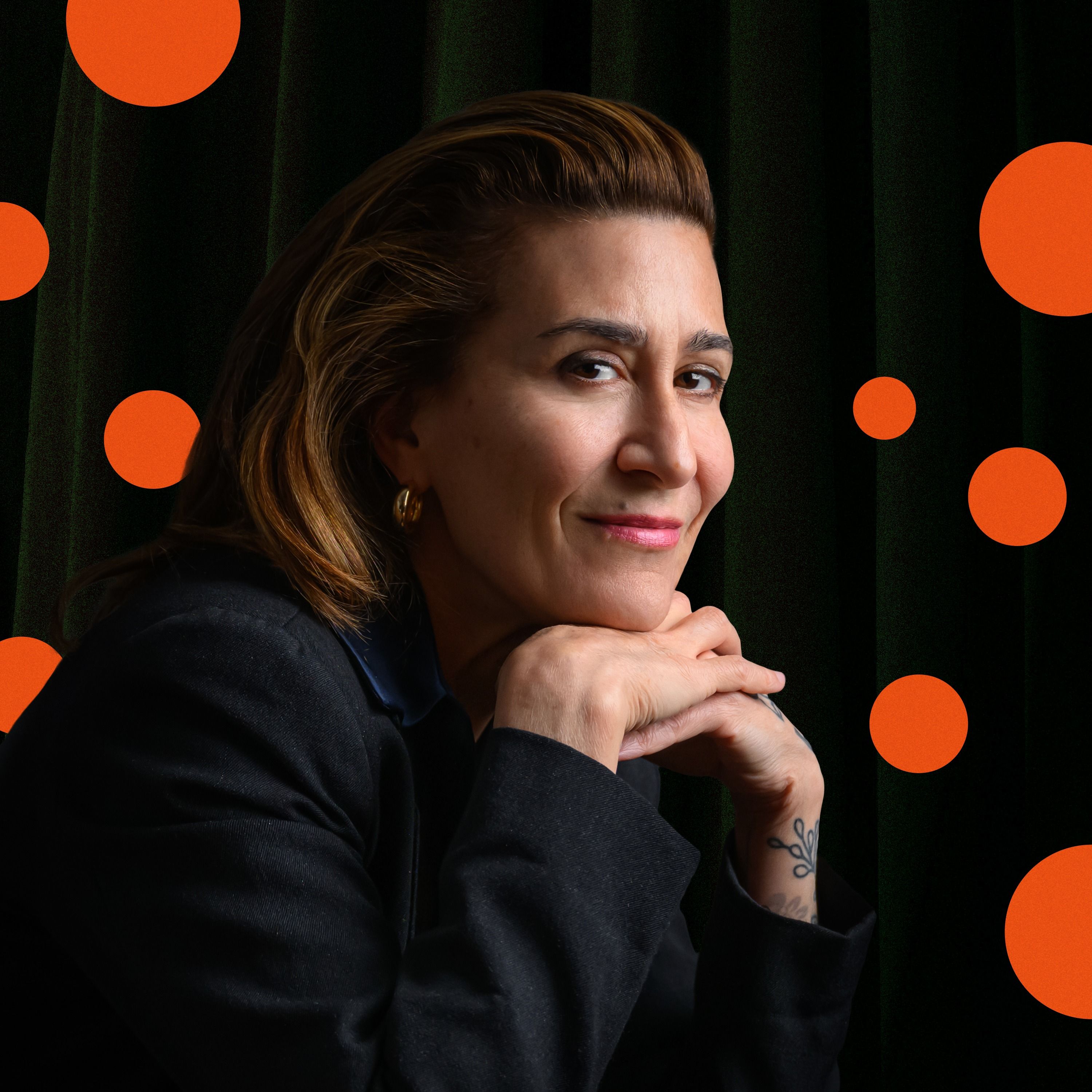
Classical Music Happy Hour
Jeanine Tesori - from “Fun Home” to the Met Opera
00:36:17
Composer Jeanine Tesori is a two time Tony Award winner, a two time finalist for the Pulitzer Prize and in 2024, she became the first woman composer to open the Metropolitan Opera Opera season in its 139 year history. On this edition of CMHH she tells Manny about her time living in a lighthouse, about her love of Stravinsky, and why she decided not to be a doctor.
Loading summary
Transcript200 lines
- [00:00]
A
Classical Music Happy Hour is supported by Viking, committed to exploring the world in comfort, offering destination focused small ship experiences on all seven continents with a shore excursion included in every port and programs designed for cultural enrichment. And every Viking voyage is all inclusive with no children and no casinos.
- [00:24]
B
Learn more@viking.com that was my nautical period, Manny. I was nautical.
- [00:34]
C
From WQXR and Carnegie hall, this is Classical Music Happy Hour hosted by me, pianist Maniacs. Each episode will speak with a special guest about their lives, listen to some of their favorite musical gems, play music inspired games and answer questions from you, our listeners. The New York Times said that my guest today can take apart music and put it back together as well as any composer who's put note to paper. She's a two time Tony Award winner, a two time finalist for the Pulitzer Prize in drama, and in 2024 she became the first woman to open the Metropolitan Opera season in its 139 year history. Composer of Broadway favorites like Kimberly Akimbo, Fun Home and operas like Blue and Grounded. Janine Tesori, what an honor to welcome you to the show.
- [01:36]
B
It's an honor to be here, truly.
- [01:38]
C
Now, you started as a pianist, right? And probably studying like the rest of us regular music. Right.
- [01:45]
B
You know, it's interesting. My teacher recognized that I was antsy. And of course when we all started, there was that pedal for the pedal, you know that when your legs are too short, you have a pedal that's higher. Right.
- [01:59]
D
So we all had that.
- [02:00]
B
And he introduced the circle of fifths. We talked about all of the techniques,
- [02:06]
D
but he knew that I loved to play by ear. So we did everything in different keys. He had me listen to all different kinds of music at a very early age, a lot of world music.
- [02:17]
B
So as I was learning what I
- [02:20]
D
considered incredibly boring things, he also, he knew that I loved rhythm. And so we started anything that had a beat with it. So I loved classical music, but I really loved rhythm. And so it fed both those things that I was listening to with my sisters. I grew up with three sisters, all of them musical and all the things we were listening to. And then, you know, we would play Mozart and Bach and Kadilevsky, Bartok and he was very helpful and having me, you know, respect the rhythm in psy classical music, that everything wasn't lyrical. I had a very hard time with Chopin because I didn't understand that as a young person, the lyrical line. But something with rhythm I could really grab ahold of and play way too
- [03:06]
C
quickly, I guess for all of us, ideally Rhythm is the base of music anyway. I mean, I suppose from the heartbeat on.
- [03:14]
B
Yeah. I feel like, you know, we are built on counterpoint and that idea that there's something rumbling underneath that we want. And it was just very helpful for me as a portal this way in.
- [03:28]
C
You went to college. You were pre med, I believe?
- [03:31]
B
I was pre med. Wow. I studied piano for a very long time. And my parents, with all great intentions and a friend of theirs, thought it was time to really get serious. So I went into Manhattan, auditioned for the gifted and talented, whatever program they had. I started studying, and I really lost my way because it just wasn't right for me at that point.
- [03:55]
C
Were you still working on sort of standard piano repertoire?
- [03:59]
B
Well, that's the point where all of the sort of experimental work of improv and those fun parts that were sort of my reward, that all went away. And it all became concerto work and very, very serious. And I really rebelled. And When I was 14, I was with yet another pianist because I kept switching teachers because I became a in quotes problem. It's never stopped. And then she turned to me once and said, you are a problem. And I thought, I really am. I'm a problem. And the next day I quit, and I didn't play for four years.
- [04:38]
C
Wow.
- [04:39]
B
And I thought, I'll show you a problem.
- [04:42]
C
Amazing.
- [04:42]
B
So I went into science.
- [04:45]
C
And were you really intending to be a doctor? I mean, were you okay with actually blood and bodies and so forth? Was that all right?
- [04:53]
B
There's so many bodies in musical theater and opera that just align the space with them. Okay. I was. You know, my father was a doctor. He had his office. So people often went to the wrong door, and you open the bing bong, and there'd be someone holding their own thumb. And I think, dad, someone's here for, you know. So my sisters and I used to play this game. Cause there was this magazine called Jama Jama, The Journal of Americans, American Medical Associate, something like that. And you had to keep your eyes open when we turned the page, if you closed your eyes, you had to put in a quarter.
- [05:28]
C
Oh, I see.
- [05:29]
B
So there was a pot. And then if there was something gruesome, you had to keep your eyes open.
- [05:34]
D
Oh, God. I got a lot of money.
- [05:35]
B
It's how I pay for school.
- [05:36]
D
That game.
- [05:37]
C
Amazing.
- [05:38]
D
So I got very used to it.
- [05:40]
C
But you did not get a medical degree, though.
- [05:42]
B
I didn't. I was there. I studied very hard. I was especially interested in bio and physics. And then I moved to the city when I was 17. 1979. And the city was so alive and so dangerous, but inside, there was a lot of danger in all of the art that people were making. And you could just feel it. And so that was my way back to music on my own terms.
- [06:06]
C
Yeah. Yeah.
- [06:08]
B
And so I went back to my parents and said, I'm going back into this. And my father said, well, you'll have to make your way. I think you should get an education degree with it. And I said, no, I. I don't want anything to fall back on. And I also remember saying to him, what would I teach? I have nothing to teach. All this stuff to learn. And that was it.
- [06:40]
C
Can you please explain what you were doing in a lighthouse all by yourself in 1992? Were you collaborating on guiding some ships?
- [06:50]
B
That was my nautical period, Manny. I was nautical. You know, it was 1993. I had made a lot of unfortunate
- [07:00]
D
choices, and I was playing in pits with people I loved in an industry that I didn't understand.
- [07:08]
B
There was a director who was quite
- [07:10]
D
cruel and blackballed me from the business. And I thought, well, if I'm not
- [07:16]
B
gonna work, I guess I have to
- [07:18]
D
find something else to do. And so I left for a little while. And I had gotten the rights with Brian Crawley to the short story by Doris Betts. And it just seemed logical to me to go live in isolation for a while. I am a semi hermit. I need a lot of time alone. It's how I sort of operate, the energy if I'm 2 around people. So New York City is a perfect place for me.
- [07:51]
C
Okay, but why a lighthouse? I mean, my goodness, it's so.
- [07:56]
D
I know, so drama, you know, I wasn't on a Craigslist looking for a lighthouse. I knew that I wanted to go away. I knew the Adirondacks very well because I had done a lot of hiking there. I knew the town.
- [08:09]
B
I had a couple people who I knew, and I thought, I'm gonna go climb a lot of mountains. I'm gonna be very quiet. I'll have a piano there and lots of books, laser discs that dates me of conductors. Cause I was still conducting then, and I'm not a good conductor. And I ended up writing. And I came back to New York with most of a musical.
- [08:35]
C
Wow. But have they put a plaque in the lighthouse yet?
- [08:38]
B
Do you know what's so funny? I did the moth, and I've done it twice. Once was at the Met and once was at Symphony Space. And unbeknownst to me, the owner of the lighthouse was in the audience she didn't know that I was one of the storytellers. And I didn't know that she was there. I haven't seen her since 1993. Meredith and we. It was unbelievable. I mean, that place was really. The idea of what being alone really means. I was never lonely. I was never scared. And it can be a really scary place. It's just. I bet when I went up there, I was afraid of heights. And when I left, I was not. I just made sure to go up to the Widow's Walk every day. And legs shaking. But by the end, I was just like, wee. Cause I just thought, you can do this. You are capable. You can do this. You just have to be resilient. Find it.
- [09:32]
C
It's just. It's absolutely amazing. Which musical did you come back with?
- [09:37]
B
That was Violet. That was the very first real musical that I did from the ground up. Fabulous.
- [09:43]
C
I just think, you know, it's having adventures in life that I can't conceive of. It's fabulous.
- [09:51]
B
Yeah. There are adventures, and then there's the recapturing of what it's like to be there without having to leave. That's been the. That's the secret to me now. It was a wonderful time. And that was so interesting that my parents were not. They were very strict to me. My father was a strict Sicilian doctor, and he didn't bat an eye when I said, you know, I'm gonna go live in a lighthouse and write. And so he FedExed me a hunting knife with a little note. Use this just in case.
- [10:23]
D
Oh, my.
- [10:24]
B
Use this just in case. Okay. But I kept it by my bedside.
- [10:28]
C
Incredible.
- [10:30]
B
Just in case.
- [10:31]
C
Yeah, the just in case part is. So, Janine, I'm hoping that you can help me answer some questions about classical music from our WQXR listeners. We've invited them to submit to their queries, and we're going to do our best to answer them. And as usual, since I don't know very many of the answers, I will make up whatever I feel like.
- [11:07]
B
That's my whole career.
- [11:09]
C
Yeah. So here's a question from Altoona, Pennsylvania.
- [11:15]
E
Hi, I'm Jack. I love listening to you all. I'd like to know how pianists with small hands like Alicia Dellarocha handle the really big pieces that made big hands. Thank you very much.
- [11:28]
C
Okay. I think that's a wonderful question because I also would love to know how Alicia de la Rocha played all that music. She played all of Gojeskas by Albanez. She played the Rachmaninoff third. She played both Brahms concertos, and she never had any issues with getting all the notes perfectly. So I guess, according to Alisa de la Rocha, you don't need big hands to play the piano.
- [12:00]
B
Well, I think, you know, unlike the cello, where small hands are really hard for the positions, I wonder sometimes if a small hand is not the same as the wingspan of the pinky to the thumb. And the flexibility. Like, I have a solid octave and a step, I have to break up a tenth, probably, with my left hand, but I have small hands. I wonder if it's flexibility and mobility, not just the actual size of the hands, but what the reach is.
- [12:30]
C
I think that's a really good point. I think, actually, the more flexible your hands are and the more your pinky is angled away from the hand, the better it is. So maybe. Maybe Alisa de la Rocha had a pinky that really was angled and she could do it, but whatever she did, she managed very easily. I don't know, it seems to not matter so much, but I think it's a great question.
- [12:57]
B
It's a great question.
- [12:59]
C
Thank you, Jack. Do you always start with text?
- [13:10]
B
Always.
- [13:11]
C
Always with text.
- [13:11]
B
Always.
- [13:12]
C
And then the music? The music is inspired by the text?
- [13:15]
D
Always. I love working with playwrights. I will ask them to read their words to me many times to hear their cadence.
- [13:23]
B
I've worked with so many different Tony
- [13:25]
D
Kushner, David Lindsay abair, Dick Scanlon, J.D. mcClatchy. And it's just there is already a built in, baked in musicality in there. So we're doing it together. But the first part of writing for me is in the design of listening to what is this language telling me,
- [13:43]
B
what does it need?
- [13:44]
D
What's the shape of it?
- [13:45]
B
What is the mapping, the silhouette of this? You know, it really is like a 3D map. And that comes from every word, every punctuation.
- [13:53]
C
Do you start with a smaller idea and then orchestrate, or do you write right away on the whole score?
- [13:59]
B
What I tend to do is I sit with a libretto for a long time, and I've never had someone present a libretto to me that I set. And that's not everybody's cup of tea. I've. If we're going to write together, I want you to know that you're not gonna send this to me. I'm not gonna just write it. If there are things that need to be cut, we'll have to cut it. And that's not for everybody. It's malleable. It's really an oil Paint for a very long time. I sit with a libretto and I'll sit with a playwright because I've done so much story work to say, you know, what are the contours? What are these moments? What are the events, the choices? What is the time? What does that look like? And it just. It takes a lot of design.
- [14:40]
C
Do you start on the piano and then think about a trio or a quartet or a quintet and then orchestrate? Or do you actually see the orchestral palette in front of you, as it were?
- [14:53]
B
I do. When I first started out, it was all piano. And Earl Red used to say, oh, you're making paw music. Like, paw music? Yeah, where your paws go down. So he was like, who's going to play that? The orchestra does not operate like a piano. The orchestra does not have a sustained pedal. The orchestra cannot possibly play those arpeggios. You have to get to know and respect every single instrument. And that's taken me a very long time. I love players because I was one. I was in pits. And so I love finding out what they can do with their instruments and what they worry about. And, oh, my God, the reed making. And, you know, every section has its own worries and its own joys. So it's. What do they do really well? So when I'm at the piano and I'm writing, I always hear Burle saying, who is going to play that?
- [15:45]
C
It's hard for me to visualize conceiving so many different sounds.
- [15:52]
B
I've studied so many orchestrations, and now what I do is.
- [15:57]
D
This sounds so silly.
- [15:58]
B
I've never told anybody I draw and doodle over everything, but I actually write out the orchestra as people on a large sheet where they're sitting, because you have to really remember how close players are sitting, what the configuration of this orchestra is, and if they're gonna be able to play in tune, and how many horns you have and where they are and come. And I look at them and I think of them as a cast, as, you know, a cast like the people on the first level and think of them as players as opposed to on a grid on a score page. And it's really helped.
- [16:35]
C
This is Classical Music Happy Hour. I'm maniacs. We'll return in just a moment.
- [16:49]
A
Classical Music Happy Hour is supported by Viking, committed to exploring the world in comfort. For over 25 years, Viking has been connecting the thinking person with the world, first on the great rivers, then on all five oceans, now on all seven continents. Whether you choose to journey through the heart of Europe on an elegant Viking longship. Explore the ancient cities of the Mediterranean on a small ocean ship or venture to the white shores of Antarctica on a purpose built expedition ship. You will always experience thoughtful service, destination focused dining and cultural enrichment or on board and onshore. And every Viking voyage is all inclusive with no children and no casinos. Learn more@viking.com
- [17:44]
C
I'm maniacs and this is Classical Music Happy Hour. Janine Tesori was speaking to us before the break. Let's hear a little more of that conversation. This show is called Classical Music Happy Hour. What is your favorite drink after a long day?
- [18:02]
B
Well, it used to be what is called ranch water.
- [18:06]
D
I don't know if you're aware of it.
- [18:07]
B
It is my favorite drink. It's tequila and lime juice and any kind of Mexican club soda. Oh, it is so delicious. But I broke my shoulder. So when we started grounded, I was
- [18:18]
D
in a giant sling and I felt
- [18:20]
B
very sorry for myself.
- [18:21]
D
But all kinds of people opened doors for me. The usher helped me put my hair up. It was just, it was very humbling. And because of some medication, I haven't been able to have to stop drinking for a little while. So I really miss it. So now it's non alcoholic beer, which I've just discovered.
- [18:39]
E
Oh.
- [18:39]
C
Which is really good.
- [18:40]
B
I think it really is good.
- [18:42]
D
And now I'm like comparing.
- [18:44]
C
You almost can't tell the alcohol is missing.
- [18:46]
D
It's true. Your brain gets tricked into that. You're having a much better time than you really are.
- [18:51]
C
Yes. And the calories are still there.
- [18:53]
D
Yes. That's the beautiful thing of carbohydrates.
- [18:56]
B
They last.
- [18:57]
C
What do you drink that's non alcoholic? Aside from non alcoholic beer?
- [19:01]
D
You know, I have such a coffee problem. So that's the first thing. I think it's one of the things that really, when I think about, and this is absolutely true, when I go to bed at night, I think, well, at least tomorrow morning there will be coffee. An espresso. I have at least three or four. And then an iced coffee. And then I feel like I can open up the New York Times and read it.
- [19:26]
C
Sounds wonderful. Sounds like a great morning. What's the best book you've ever read about music?
- [19:33]
B
Oh, my gosh. Oh, wow. So Seiji Ozawa and Haruki Murakami. Yes. That book about music, I've read it three times. It moved me so deeply, the conversation. There was something about two friends, two people, masters of their own artistic practice, talking about music in that way. Oh, I just. It wasn't just about the musical Insight. It was the value that they held for each other. I absolutely loved that book.
- [20:08]
C
I loved it too. I thought it was beautiful. So you thought we should hear the three movements from Pietrushka?
- [20:25]
B
Yes, I love Petrushka. I love Stravinsky. When I was studying, conducting, one of the pieces I conducted was Dumbarton Oaks, which was just really thrilling and everything. Stravinsky. I went to every concert of the Stravinsky festival for the New York Phil. Every single one I went to. But there was something about the piano playing the Russian dance that it's just. I return to it again and again. I think the first movement is the one that I particularly love. The exuberance, the parallel nature of the
- [21:06]
D
chords,
- [21:16]
B
You know, the. The speed with which you switch in the parallel movement. There's no evidence that it's difficult. It just doesn't where it's process. And that was everything. That is a core memory of listening to something.
- [21:47]
C
I was so fascinated by both the operas you wrote. When you write an aria and there's gonna be applause.
- [21:56]
D
One would hope.
- [21:57]
C
Well, one would hope. But do you ever worry about the applause covering your next music?
- [22:03]
B
Oh, that's such a good question.
- [22:05]
C
Because there are parts, for example, in like Bizet's Carmen that I've actually never heard in the opera house because there's so much applause after the aria that when the orchestra plays the next bit, I never catch it.
- [22:20]
D
Yes.
- [22:35]
C
I wonder if that ever entered your mind.
- [22:39]
B
No, I used to be. When I started out, oh my God, I was such a little snot bird. But I remember because I was mentored by someone named Burlred, Wonderful composer, student of Elliott Carter. And when I started out and I was writing and I thought, I don't understand applause or buttons. What are these buttons? That's absurd.
- [22:59]
D
And he just nodded.
- [23:01]
B
He was so much older. He's like, yes, I think you will
- [23:04]
D
maybe someday feel differently. And I was like, I will never feel differently. Cut to button, button, button, button. And what I learned was, you know, so much of composition for me is tension and release. And sometimes an audience needs to release.
- [23:20]
B
They just need it 100%.
- [23:22]
C
I mean, I can't imagine not applauding Leontine price in Act 3 of AIDA. Right. No, you can't. You've got to. There's no way to help it.
- [23:33]
B
That's right. There's a response, a give and take. That is the beauty of something being live.
- [23:37]
C
And I think, I believe that something like Nesun Dorma, this aria from Turandot
- [23:48]
D
Ra.
- [24:22]
C
I think they've actually written a different ending for the aria. You kind of stop and add a chord because there's gonna be applause. And then you find a way to segue into the next bit.
- [24:33]
B
I mean, that's a beautiful example of not fighting what is. But I think the engineering of something is, you know, usually it's at the crest of applause that you think, I'm gonna ease back. This music is meant to be felt, not heard, so the audience will feel something.
- [24:51]
C
Definitely a better problem to have than no applause where the music is right there and you can hear everything.
- [24:57]
B
Oh, my gosh. I have written something you hear, and you just think, oh, my God, I'm gonna go to grad school. Not for music. Acme Plumb.
- [25:13]
C
She. One of the things that was great about the end of Grounded is the fabulous audience reaction it got.
- [25:32]
B
Oh, I loved doing it, and, man, the critics hated it. It was so amazing because for me, it was really the first time that people were mad at me. And I thought, wow, this is interesting. This is a kind of test of your belief system of who you write for. And so you have to take it. Tough skin, the language used. I was like, wow, you called it silly. That's really something. And when we had people in the audience, people who had never been to the opera, many people in theater who came.
- [26:12]
C
Yeah.
- [26:13]
B
And vets who came.
- [26:14]
C
Yeah.
- [26:16]
B
The response about being seen was. That was like Dayenu. For me, that was really enough. It was the greatest lesson of why we do what we do. It was a hard lesson, but a necessary one.
- [26:39]
C
Alan from Manhattan has a question about Ravel.
- [26:42]
E
I'm wondering what happens if the drummer messes up in Ravel's Palero.
- [26:52]
B
Oh, my God, what a nightmare question that is. Just hearing that question made my tummy go bloop.
- [27:09]
C
So what do you think? I wonder how you mess up. I mean, I guess.
- [27:12]
B
I mean, it's the same pattern over and over, right. What is. What does messing up look like in the Bolero?
- [27:30]
C
I would imagine that if you get the first couple of bars right, you just repeat. I suppose you can't really lose your place.
- [27:40]
B
No.
- [27:41]
C
So it's a matter of not losing one of the sticks.
- [27:45]
B
Not losing one of the sticks or not rush or getting. I don't. Yeah, that's interesting. I mean, the hypnotic feeling about it. Maybe if. Maybe if the piece ends and you just keep going.
- [27:56]
D
I don't know.
- [28:06]
C
I have so many chances to mess up in what I do. I think the drummer in Bolero probably is More secure.
- [28:13]
D
Yes.
- [28:14]
C
So, Alan, I would worry a lot more about me than about him.
- [28:18]
B
But maybe it's. I think those repeating patterns, it reminds me of. There's a trance like nature to it, and maybe you can get lost that you stop looking or.
- [28:30]
D
It's interesting what messing up might be in that situation.
- [28:34]
B
The pressure is you really are conducting the piece. So I guess that's just almost like a temp, that you're becoming the metronome for the orchestra. I can't imagine what that part might be. I just. I shudder.
- [28:48]
C
Yeah, well, look, if he messes up, he's just a dead duck. Let's put it that way. That's what happens. You like sports? You follow sports?
- [29:07]
B
Oh, I love sports.
- [29:08]
C
I do, too. I'm a huge tennis fan. Both my wife and I are tennis fanatics.
- [29:14]
B
Yes, how fun.
- [29:15]
C
And we love it very deeply. But the thing that interests me is that I, who know nothing about tennis, am perfectly happy to sit there and yell at the screen and tell Roger Federer what he should have done on the last point.
- [29:29]
B
Yes, but we know so much more than Roger Federer.
- [29:31]
C
Exactly. Exactly.
- [29:33]
B
Because we are in the stands.
- [29:37]
C
Do you feel there's a connection between tennis tactics and focusing on the tactics of writing an opera?
- [29:46]
B
That is such a great question.
- [29:47]
C
I know that may be a very
- [29:49]
B
silly question, but I don't think it's silly at all. You know, when I left music, I played sports.
- [29:55]
C
Oh.
- [29:55]
B
And anything with something that could harm another girl, I played. I see something with a stick or something with a mouth, anything like that, and I could hit someone. But I grew to appreciate being part of a group. This understanding that you can't do it alone. It's much less fun to do something alone. The idea of a community. And from the way that I was raised, I needed community. And I've said that to so many people when they were saying, what do you really feel like is very helpful. And I always think, be on a team.
- [30:28]
C
I see.
- [30:28]
B
Even if you're a soloist, be on a team. Because it is one thing to come out. Yes, I'm at the score pad alone. That has its own demons. But at the end of the day, that connection, like what you were saying when you were applauding in the third act of Aida. And it's just a sense that we just aren't by ourselves, because I feel like the world is asking us to feel that way so often. You're alone in this. It's like we're really not.
- [30:59]
C
Is the fact that you like to be part Of a team is what attracts you to Broadway opera as opposed to playing the piano, where you sit most of the time, alone, practicing.
- [31:14]
B
I don't know how you do it. I know I've heard you speak about practicing. I was at Aspen. I was studying with George Tsintakis, and I would go to those cabin y things, and there were students who would go in in the morning and they would come out at night, and I thought, oh, that's not my relationship with this instrument. I love sitting at the piano, but the piano is a means to another end. I'm simply not good enough and never was. I just love the instrument so much. I feel like I've gotten to know it. And I love listening to people play, especially on the keyboard side. I was just at a concert. Thomas Bartlett was playing and the language, especially what he would do with his body. And it's an astonishing instrument. But that was not me. I thought it was, and people around me thought it was, but it was actually something that had a greater range than the orchestra. But the team playing. For me, it's incredibly important. It really makes you check your ego too. There are things that I do. My ego is very solid. But you are only as great as the way that someone in the room feels when they're at their worst.
- [32:21]
D
And that kind of feeling comes from
- [32:23]
B
being on a team.
- [32:33]
C
So this is our game. It's called fake or Flop. We'll give you the plot of a musical and you have to tell us if it's a made up production or a real musical that flopped on Broadway.
- [32:46]
B
Okay. I like this. I'm ready.
- [32:49]
C
Here we go. Number one. Based on a famous horror novel. A teenager discovers that she has telekinetic abilities. She uses them to exact deadly revenge on the people who have wronged her. Is this a fake or was this a flop?
- [33:06]
D
Flop.
- [33:07]
C
Hmm.
- [33:08]
B
Okay, Carrie.
- [33:09]
C
Well, yes. You not only got it right, you got the actual show. In 1988, the musical Carrie premiered in Stratford upon Avon, of all places, co produced by the Royal Shakespeare Company. Despite middling reviews and dangerous technical problems, they moved to Broadway even though it had an $8 million budget. It closed after 16 previews and five performances, with one critic saying Stephen King's horror movie has been turned into a horror of a Broadway musical. The only thing terrifying about Carrie is that there is a second act.
- [33:48]
B
I want to add to it that recently they had an off Broadway version that did quite well.
- [33:53]
C
Yes. It had since been revived in an off Broadway production in 2012 and has attracted a cult following. Yes, okay, question number two. A young woman agrees to marry a prince she doesn't love after she believes her true love has been killed by pirates. But after many misadventures, she learns that wav cruel wove conquers all. Is this a fake or was it a flop?
- [34:23]
D
God, I don't know.
- [34:24]
B
Is it the Pirate Queen? The flop? No.
- [34:27]
C
No. Shall I read the answer?
- [34:29]
B
Yes.
- [34:29]
C
Although the Princess Bride has been both an acclaimed novel and a movie, it hasn't made its way to Broadway yet. Although one has been in redevelopment since 2019. I can't wait for the number about the rats of unusual size. Number three. Set over 900 years in the future. A space garbageman rejects the strict conformity of the Earth to find community with a group of outcasts seeking to board a spaceship and start their own civilization on a distant planet. Fake or flop?
- [35:09]
B
Flop.
- [35:10]
C
Wow. Can you identify the musical?
- [35:12]
B
Oh my gosh. It was in the 70s, right?
- [35:15]
C
It is from the 70s.
- [35:16]
B
It's a very famous flop, but I can't remember the name.
- [35:19]
C
You've done so brilliantly. It's the sci fi musical via Galactica.
- [35:24]
B
Galactica, Right, right.
- [35:26]
C
Closed after seven performances and was the first show to lose a million dollars. Wow.
- [35:32]
B
Wow.
- [35:33]
C
While the plot of the musical was difficult for audiences to follow, it was also plagued by technical problems. Sets and actors frequently fell through the trampoline flooring. One of the actors was stuck dangling over the orchestra for 20 minutes due to a rigging mishap. And the wireless microphones picked up one of the local police precincts. Mid show broadcasting arrests in midtown to unsuspecting audiences.
- [36:04]
B
Well, that part was entertaining.
- [36:06]
C
That's more mistakes than I made in my last recital. Wow. Okay. You are a champ in every way. Writing music, giving quiz answers. What more can you ask for?
- [36:20]
B
I made everybody a plate of gluten free chocolate chip cookies. That's. They're outside the studio, so. Yes, I do it all.
- [36:29]
C
Well, I just want to say. Janine Tesori, thank you so much for joining us today. It's been a real privilege.
- [36:36]
B
Wow. This is so fun. And everything that classical music should be is happening right here.
- [36:44]
C
I'm maniacs. And this is Classical Music Happy Hour. Classical Music Happy Hour is supported in part by the Robert and Mercedes Eichholtz foundation and by Linda Nelson. Our production team includes Lauren Purcell Joyner, Eileen Delahunty, Laura Boyman, Elizabeth Nonemaker, David Norville, Christine Herskovitz and Ed Yim. Our engineering team includes George Wellington, Irene Trudell and Chase Culpan. Classical music Happy Hour is produced by WQXR in partnership with Carnegie Hall.
- [37:37]
F
WQXR is supported by Carnegie hall presenting a one night only event with leading soloists Leonido Skavakos, Gil Shaham, Antoine Tamisti, Pablo Ferrandes and Elisa Weyler Stein performing Beethoven's Kreuzer Sonata and Schubert's String Quartet in C major May 15th. Tickets@carnegiehall.org.