← Classical Music Happy Hour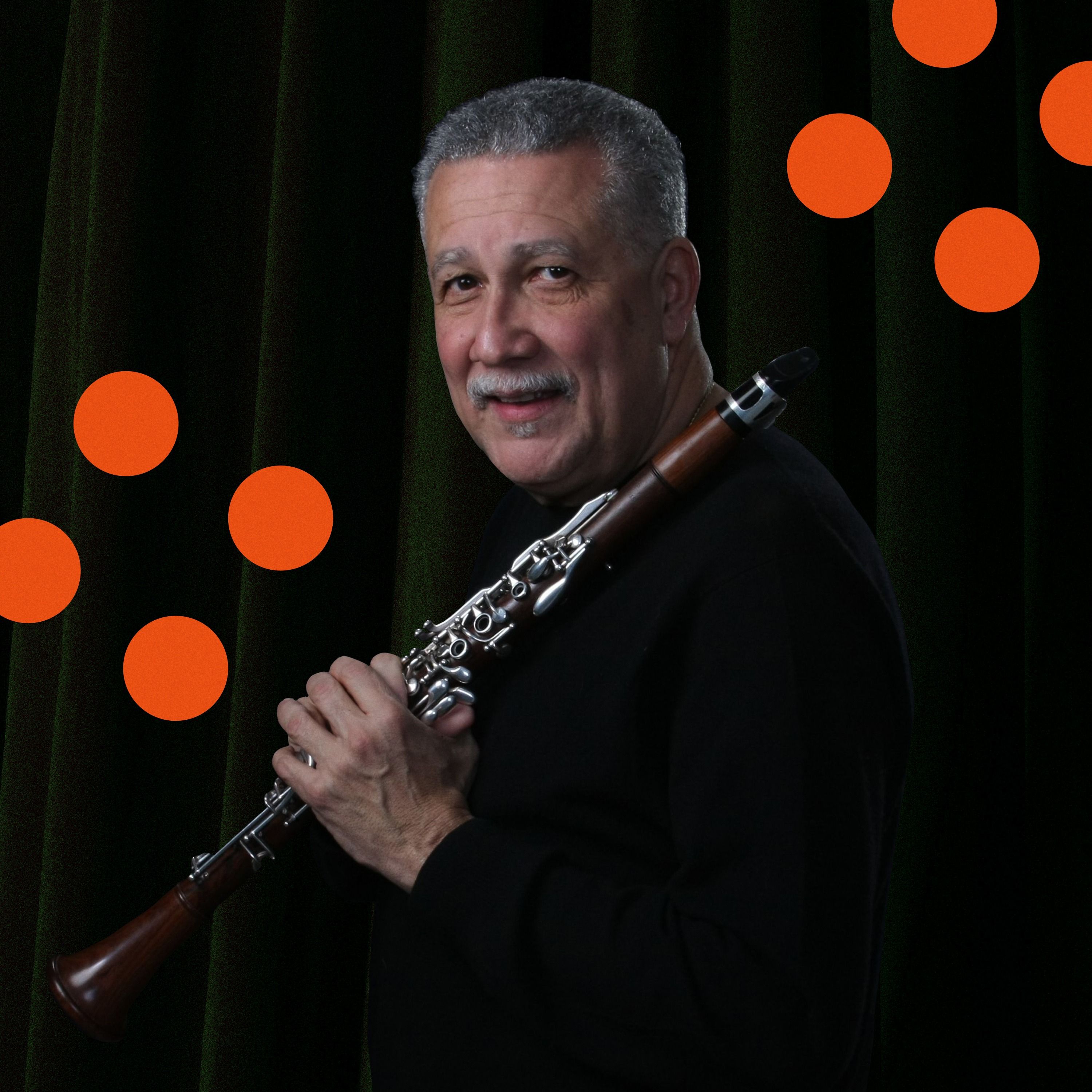
Classical Music Happy Hour
Paquito D’Rivera -Beef, Beans and Benny (Goodman)
00:28:15
Paquito D’Rivera is composer, saxophonist and clarinetist whose work spans classical, jazz and latin music. Born in Havana, Cuba, D’Rivera started his career playing with the National Theater Orchestra at the age of 10 and has been on stage for seven decades. During their chat, Paquito and Manny discuss what beef and beans have to do with Benny Goodman playing Carnegie Hall, what kind of music teacher his father was, and all things clarinet. He also joins Manny for an in-studio performance of one of his compositions. In our game, Manny and Paquito decide if a sound is made by a musical instrument or an animal.
Loading summary
Transcript187 lines
- [00:00]
Announcer
Classical Music Happy Hour is supported by Viking, committed to exploring the world in comfort, offering destination focused small ship experiences on all seven continents with a shore excursion included in every port and programs designed for cultural enrichment. And every Viking voyage is all inclusive with no children and no casinos. Learn more@viking.com Frank west used to say
- [00:29]
Paquito de Rivera
that the clarinet was invented by five men that never met.
- [00:38]
Maniacs (Host)
From WQXR and Carnegie Hall. This is Classical Music Happy Hour hosted by me, pianist Maniacs. Each episode will speak with a special guest about their lives, listen to some of their favorite musical gems or play music inspired games and answer questions from you, our listeners. Saxophonist, clarinetist, composer, author. It's hard to put my guest today in a single category. At least I know he's not a football quarterback. Born in Cuba in 1948, he's a founding member of the Cuban Modern Music Orchestra and along with Chucho and Oscar Valdez, the innovative ensemble Iraquere. Over the course of his career, El Pacman, as he's known, has racked up 16 Grammys and Latin Grammys awards and recorded more than 40 solo albums. Paquito de Rivera, welcome to the show. It's a great honor.
- [01:45]
Paquito de Rivera
Thank you for having me here. Mani. I can't believe that I am in the same studio with you. I admire you for so many years. You know, I am a lucky guy.
- [01:53]
Maniacs (Host)
I'm at least as lucky as you. So it's wonderful to have you. How old were you when you started? When you first got an instrument in your hand?
- [02:01]
Paquito de Rivera
Five years old.
- [02:02]
Maniacs (Host)
Five years old from your father?
- [02:04]
Paquito de Rivera
Yes, my father was retired from the army, so he used to practice his standard saxophone 26 hours a day entirely and gave me a plastic saxophone from Sears or something. And then they say that I pretend to practice next to him. I see he saw that my inclination to the music world and then he gave to me and little soprano that I still have that instrument and he presented me when I was six years old.
- [02:34]
Maniacs (Host)
Fantastic.
- [02:35]
Paquito de Rivera
So that happened 70 years ago.
- [02:39]
Maniacs (Host)
I heard in one of your interviews something very important. I think you were talking about playing and teaching and you said it doesn't always go together. And being a great teacher is like its own talent.
- [02:54]
Paquito de Rivera
It's a total different talent.
- [02:56]
Maniacs (Host)
I completely agree with you.
- [02:57]
Paquito de Rivera
Yeah, some people, they definitely knows how to explain things. That's all what it is. The people that know how to explain to others how to do and especially
- [03:08]
Maniacs (Host)
I think in a way the most difficult thing is when you have young kids because when they're older already musicians, you can talk about music but to teach young children, to keep them interested and still to be serious, to have fun and to be serious. It's a special talent.
- [03:27]
Paquito de Rivera
Yes.
- [03:27]
Maniacs (Host)
Your father must have been fantastic.
- [03:29]
Paquito de Rivera
He used to say that you learn more from your students than what the student learned from you. Mainly because sometimes they ask you things that you never ask yourself. But you have to find a way to answer it because they are waiting for you to answer that question. So you have to do a research yourself and find the answer.
- [03:52]
Maniacs (Host)
Was he a nice teacher or a tough teacher?
- [03:55]
Paquito de Rivera
Well, he was a tough teacher. Tough teacher. He was a very rebel student too.
- [04:00]
Maniacs (Host)
I see.
- [04:01]
Paquito de Rivera
Especially because I inherited from him I had a too developed sense of humor. I was a prankster. And my father wanted me to be a little more serious, you know, in what I was doing.
- [04:14]
Maniacs (Host)
Did you practice a lot?
- [04:16]
Paquito de Rivera
I am not a good practitioner, you know. But with him you had to practice that. You know, he loved Jaja Heifetz.
- [04:22]
Maniacs (Host)
Yes.
- [04:23]
Paquito de Rivera
And say, you see the way Jaja Haifet played. There is no shortcut for that.
- [04:41]
Maniacs (Host)
You were very influenced by Benny Goodman
- [04:44]
Paquito de Rivera
a lot still today. Sometimes I steal one or two of his phrases.
- [04:49]
Maniacs (Host)
What are the characteristics of his playing that you love?
- [04:53]
Paquito de Rivera
The sound. Music is about sound. He has a very recognizable and beautiful sound because some other people have recognizable but horrible sound. You can recognize the face of Frankenstein. Oh, immediately you recognize that. But it's horrible. But Benny had a beautiful tin Bernard to play the clarinet.
- [05:15]
Maniacs (Host)
I see.
- [05:16]
Paquito de Rivera
Which is an instrument that is very easy to make it sound horrible. The saxophone is a more reasonable instrument. I call it. You know, the clarinet is that you have to pay attention to what you are doing, because in any minute you would do.
- [05:30]
Maniacs (Host)
I see, I see.
- [05:32]
Paquito de Rivera
I remember that I asked the wonderful Phil woods once, what is your clarinet? And he said, my clarinet is a lamp. Now, that is. Some men scream in the case. You have to take care of what you're doing. It's like a violin or something. That doesn't make any sense, but that's the way it is. Frank west used to say that the clarinet was invented by five men that never met.
- [06:07]
Maniacs (Host)
Wonderful. You were able to play Benny Goodman's clarinet at Carnegie Hall.
- [06:13]
Paquito de Rivera
It's a great instrument. It's not the instrument that he played in Carnegie hall in 1938.
- [06:17]
Maniacs (Host)
Right.
- [06:17]
Paquito de Rivera
A different one, because that was the same. The one that I played was a buffet. It looked like it was an instrument made for a star like him. It's a very fine instrument.
- [06:28]
Maniacs (Host)
And was it also kind of a great feeling of connection or.
- [06:33]
Paquito de Rivera
It was an honor, you know, to be invited. The only thing that I was so sorry was that my father was not there. Because he was the person who planted that in my heart. But was a very touching feeling.
- [06:44]
Maniacs (Host)
A touching moment.
- [06:45]
Paquito de Rivera
Played the Benny Goodna clarinet. Yeah.
- [06:59]
Maniacs (Host)
I'm hoping that you can help me answer some questions about classical music from our listeners. We've invited them to submit their questions and we're going to do our best to answer them. And if I don't know the answer, I'll just make something up.
- [07:15]
Paquito de Rivera
Let's do it.
- [07:16]
Maniacs (Host)
That's all.
- [07:16]
Paquito de Rivera
Remember that I have only 100 words in English and 50 of them. I'm not very coachable.
- [07:22]
Maniacs (Host)
That's okay. Okay. I answer everything in Polish. So nobody knows, nobody understands anything. So it's perfect. So this is a write in question. So I'm going to read the question. I never understood why woodwinds such as the B flat clarinet, E flat saxophone and so forth don't sound the note they're reading. Is it to do with the fingering? Is it easier to read the music without flats? Why don't we all play C clarinets?
- [07:56]
Paquito de Rivera
Because the different instruments in the different keys make the sound totally different. The C clarinet is too bright. The B flat is mellower. And the A clarinet is like honey.
- [08:09]
Maniacs (Host)
I see, I see.
- [08:11]
Paquito de Rivera
It's a little more complicated instrument because of the intonation and all that. Just for me. But the different sizes of the instrument have to do a lot with the choral of the instrument.
- [08:22]
Maniacs (Host)
I see. But I'm curious. Let's say you bring your B flat clarinet and the music that you're playing for happens to be written for a clarinet. You have to actually deal with that. Right?
- [08:36]
Paquito de Rivera
You have to deal with that. Oh my God. Yeah, yeah, yeah. I used to do that. Very good. Especially that transposing type of thing from B flat to A. I see. Was very common because in Cuba very few people have A clarinets. We were fantastic transposing. No, he said eight clarinet, but no problem. So we used to do that video.
- [08:57]
Maniacs (Host)
There are piano geniuses who play with singers very often. And you know, they have music in, let's say, B flat. And the singer will say, no, I need it lower. I would like to do it in A flat. And the pianist says, oh, it's no problem. I just play it that way. They're quite genius people.
- [09:16]
Paquito de Rivera
I know some pianists who do that. The pianist, Uruguayan pianist. That is fantastic doing that. The Pablo Singer, Uruguayan pianist from New York. He always dealing with singers. I am so sorry for him, because I don't feel good. She'll say, ah, that's not my problem. But then he goes and play in any.
- [09:50]
Maniacs (Host)
You go from classical music, jazz, Latino, you name it. You compose. Is it just natural to go from one to the other? I mean, it's for you. Is it natural to play the Brahms clarinet trio, and then the next minute to play something like una contrada, una rumba contradanza? It's just natural.
- [10:13]
Paquito de Rivera
Yeah, well, you know that you don't play two styles of music the same way. You have to do minor or major adjustments. You don't play the same way Stravinsky, like the way you play highland. It's a totally different way of approaching music. You don't play the Cuban music like you play Brasilian music, for example. Brazilian music is more nostalgic. Cuban is more spontaneous. I can say that Brazilian, they mix happiness. They have something called nostalgia. Sing Saudade. Yes, the saudade is something that the Brazilian musician put in the music that have no explanation. I asked them, is that nostalgia? I said, no, it's a lot more than that. It's interesting. You have to adapt yourself to the difference when you pass from one composer to the other. So the same thing when you pass from one style of music to another, you know?
- [11:09]
Maniacs (Host)
So we have a treat, I hope, for our listening audience, and that is Paquito wrote a piece called Contradanza. And I'm going to try and fake my way through the accompaniment so that we can hear Paquito de Rivera play this piece. And I have the pleasure of watching him and messing up with the piano notes, but getting to hear you play.
- [11:36]
Paquito de Rivera
And I am very happy that we're going to play specifically this piece, because Contralaza is dedicated to the most representative of all Cuban musicians, a great concert pianist and composer by the name of Ernesto Le Cuona.
- [11:50]
Maniacs (Host)
Okay?
- [11:51]
Paquito de Rivera
So it's an honor to do it, especially with the fantastic pianist that I have here with me. Maniacs.
- [11:58]
Maniacs (Host)
Next year I will practice it. I need one year and then I'll be ready to play.
- [12:02]
Paquito de Rivera
I will be ready waiting for you.
- [12:03]
Maniacs (Host)
I'll be ready to play. And we have to do some Brahms also.
- [12:07]
Paquito de Rivera
Oh, very good. We do the trio. Yo, yo.
- [12:09]
Maniacs (Host)
So let's. Let's have a go. Okay, so we try.
- [12:14]
Paquito de Rivera
Okay, let's do it.
- [13:25]
Maniacs (Host)
Sa. Sam foreign. I'm Maniacs. And this is Classical Music Happy Hour. We'll return in just a moment.
- [14:28]
Announcer
Classical Music Happy Hour is supported by Viking, committed to exploring the world in comfort for over 25 years. Viking has been connecting the thinking person with the world. First on the great rivers, then on all five oceans, now on all seven continents. And whether you choose to journey through the heart of Europe on an elegant Viking longship, explore the ancient cities of the Mediterranean on a small ocean ship, or venture to the white shores of Antarctica on a purpose built expedition ship, you will always experience thoughtful service, destination focused dining and cultural enrichment on board and onshore. And every Viking voyage is all inclusive with no children and no casinos. Learn more@viking.com hi, I'm Joe Yakin, host of the 2026 Webby Honorary Podcast Alphabet Intelligence. As we Approach Africa Day 2026 to celebrate the identity, creativity and global influence of the continent, Alphabet Intelligence is continuing our work by democratizing the sound of the genre. To celebrate, join us for a special conversation on May 22nd as I sit down with the BAFTA, Grammy and Sundance award winning Wale Davis. So tune in to Alphabet Intelligence on May 22 and celebrate Africa Day every day, not just in May, by following us on Apple Podcasts, Spotify, YouTube or wherever you listen.
- [15:54]
Maniacs (Host)
This is Classical Music Happy Hour. I'm Manny Axe. Let's rejoin our conversation with Paquito de Rivera. This show is called Classical Music Happy Hour. What is your favorite drink after a long day of work?
- [16:09]
Paquito de Rivera
Well, you know, I like non alcoholic beers.
- [16:13]
Maniacs (Host)
Oh, I see.
- [16:14]
Paquito de Rivera
I don't drink alcohol for a few years now, but I love the taste of the beer.
- [16:19]
Maniacs (Host)
Yes, I see.
- [16:20]
Paquito de Rivera
And especially in Spain they have different brands of non alcoholic beer and I love that.
- [16:25]
Maniacs (Host)
Fantastic.
- [16:25]
Paquito de Rivera
I can't even drink it and play a concert.
- [16:28]
Maniacs (Host)
No, I agree. I love it as well. It's wonderful. What is the best book that you ever read about music?
- [16:36]
Paquito de Rivera
One of my favorite is the Oscar Peterson biography that is called Jazz Odyssey and I was very impressed with that book because Oscar Peterson was a great pianist, but also he writes very good. He's a poet too. He was a poet. So it's amazing. The history of this man I read constantly, but this is a book that impressed me very much.
- [16:57]
Maniacs (Host)
Great. I'll have to get it.
- [16:58]
Paquito de Rivera
Oscar Peterson.
- [16:59]
Maniacs (Host)
What is the first album that you bought with your own money?
- [17:04]
Paquito de Rivera
Wow, that is hard for me. I remember the first album that I heard that my father played for me, which was Benny Goodman, Life at Carnegie Hall.
- [17:15]
Maniacs (Host)
And when you heard the name,
- [17:21]
Paquito de Rivera
This
- [17:21]
Maniacs (Host)
is one of my favorite things that I ever heard that when he told you it was Benny Goodman at Carnegie hall, what did you hear?
- [17:31]
Paquito de Rivera
I understood Carnegie.
- [17:37]
Maniacs (Host)
And you said, what does beef and beans have to do with music?
- [17:42]
Paquito de Rivera
When My mother cooked at home. Then he played to me, the city of New York. Ever since I was obsessed, you know, with the city of New York and being a musician here and well, finally I became a musician in the city of New York.
- [17:55]
Maniacs (Host)
It's fantastic. It's a fabulous, fabulous remark. Which composer would you like to have dinner with the most?
- [18:03]
Paquito de Rivera
Antonio Carlos Yobean, for example. Really? He's one of my favorite. Yeah, if he choose the food, probably he would choose some beans also.
- [18:11]
Maniacs (Host)
Okay.
- [18:12]
Paquito de Rivera
You know,
- [18:15]
Maniacs (Host)
so Carnegie Frijoles.
- [18:16]
Paquito de Rivera
Yeah, yeah.
- [18:31]
Maniacs (Host)
How do you learn to improvise? Because I'm so hopeless. You know, when I started as a kid, you play exactly what's on the
- [18:40]
Paquito de Rivera
page, which is not really exactly.
- [18:43]
Maniacs (Host)
Well, it's never exactly right. I agree with you, I agree with you.
- [18:48]
Paquito de Rivera
There is not too many maniacs around, you know, the interpretation of the music.
- [18:52]
Maniacs (Host)
I just mean, you know, the idea of actually deciding at the moment, instead of playing the duples, you play triplets. I'm just beginning to learn. In Mozart piano concertos, where the tradition really was to add many things in the slow movements, to add little notes and passages. It's a kind of improvisation, but the kind you do is. It's phenomenal. You have to understand the harmony so well.
- [19:20]
Paquito de Rivera
Oh, yeah, yeah, yeah. You have to know harmony by theory or by ear. Some people learn it by ear and they don't know what they are playing,
- [19:27]
Maniacs (Host)
but they hear it.
- [19:28]
Paquito de Rivera
Everybody has a different way to do.
- [19:30]
Maniacs (Host)
Is there a way to learn to improvise?
- [19:33]
Paquito de Rivera
I think Paul Desmond said that you can learn. I learned by transcribing and I started with the Benny Goodman concerto and all the pieces that he played there. I used to, with my little soprano saxophone. I tried to transcribe by ear all the solos, not only from Benny, but from Harry James, Lionel Hampton, the wonderful Terry Wilson. That was one of my favorite musicians.
- [19:59]
Maniacs (Host)
Yes, fabulous.
- [20:00]
Paquito de Rivera
And I used to copy all those solos. I think if I play LP now the recording, I still. I can play all those solos. And then some friends of my father was improvising, told me on top of those solo. You try to do your own solo, huh? Mainly by ear. Mainly by ear. But it's good to learn harmony, you know, to have a good.
- [20:23]
Maniacs (Host)
But then you just experiment, try and fail.
- [20:25]
Paquito de Rivera
That what is.
- [20:26]
Maniacs (Host)
But it's phenomenal. It's a phenomenal art.
- [20:29]
Paquito de Rivera
And we are talking about only the jazz improvisation. But I know a fantastic improviser in classical music. Her name is Gabriela Monteiro.
- [20:38]
Maniacs (Host)
Of course, of course.
- [20:39]
Paquito de Rivera
The wonderful pianist.
- [20:40]
Maniacs (Host)
Wonderful.
- [20:40]
Paquito de Rivera
And sometimes she Cannot tell you what she's doing.
- [20:43]
Maniacs (Host)
Right.
- [20:43]
Paquito de Rivera
She told me that. No, I really don't get what it is. But you like it? I love it, yeah.
- [20:49]
Maniacs (Host)
No, she's quite phenomenal as far as classical piano. There's Robert Levin who improvises a cadenza for Mozart. Every time different on the stage. So there are people. Yeah, Gabriella is amazing.
- [21:01]
Paquito de Rivera
Gabriela's amazing. And I like it, bro. I think because since I was a kid I played the Moza concerto a few times. Then I used to learn the written ones by people like Simeon Belison and people that know the style very well. Those cadenzas are very well written, but I prefer to do my own cadenza, which is, I think what they used to do in those days.
- [21:24]
Maniacs (Host)
Uh huh. In the slow movements especially. They would never be what's on the page. He writes sometimes a half note and then a quarter note. And he himself probably played all kinds of roulades and passages and. And so forth.
- [21:37]
Paquito de Rivera
And jokes, I love that because.
- [21:39]
Maniacs (Host)
And jokes.
- [21:39]
Paquito de Rivera
Yeah. I heard that he was a pranker too.
- [21:42]
Maniacs (Host)
He was a prankster, yeah. Apparently he was a prankster from the letters, you know, a little bit. Yeah, yeah. We have another write in question. Are you born with perfect pitch or can you develop perfect pitch?
- [22:02]
Paquito de Rivera
Well, I saw an advertise in a magazine, there is a guy who say that you can acquire that thing. I don't know, I never check. But no, I don't have perfect pitch.
- [22:14]
Maniacs (Host)
Yeah, I don't either. But I know that Leonard Bernstein was asked the question, he did not have perfect pitch. He had relative pitch. And some people, you know, if I hear a note on the piano, I usually can know what note it is. But if you say single, I couldn't find it. And you couldn't either, right?
- [22:35]
Paquito de Rivera
No, you can't do that.
- [22:37]
Maniacs (Host)
Yeah, you have to hear it.
- [22:38]
Paquito de Rivera
It's not very common, that type.
- [22:40]
Maniacs (Host)
No, probably not. Probably not. It's interesting because also my wife does have the perfect pitch, but for her it's a problem now because you probably know that the general pitch of orchestras and of instruments has kept going up, up, up, up, up, up, little, little by little, more and more and more.
- [23:03]
Paquito de Rivera
Tell me about.
- [23:04]
Maniacs (Host)
It becomes. So the A From our childhood, 440 was 440 MHz and now it's probably 445.
- [23:14]
Paquito de Rivera
That much?
- [23:15]
Maniacs (Host)
That much. So she says very often she hears a piece in B flat and she hears it in B.
- [23:24]
Paquito de Rivera
Well, but also when I talk about perfect pitch, I am talking about harmonically too, right?
- [23:29]
Maniacs (Host)
That too.
- [23:29]
Paquito de Rivera
Which like Jojo, you can't do whatever wrong in the piano. And he tells you all the notes.
- [23:36]
Maniacs (Host)
He tells you everything. Yeah, Boulez was like that. Pierre Boulez was like that. Yeah.
- [23:40]
Paquito de Rivera
No, Stravinsky was not really.
- [23:43]
Maniacs (Host)
I heard that Stravinsky wasn't like that.
- [23:45]
Paquito de Rivera
I have a friend of mine, my assistant, Juan Ruiz, who told me that Stravinsky used to have a person that he bring this person to rehearsals in case there is some note that he wrote wrong in the orchestra. And Stravinky was not able to detect the note. I heard that. You know, they say yes, but they call him the Ear or something.
- [24:06]
Maniacs (Host)
I see.
- [24:07]
Paquito de Rivera
Yeah. The guy said, oh, yeah, Igor, the second trumpet. That is a wrong note and all that. Amazing. He didn't hear this. You know, I wrote it, but I don't. Something is wrong, but they don't know what is wrong.
- [24:18]
Maniacs (Host)
I see. As you know, sometimes the stuff I do, the classical music, sometimes it's very serious stuff. But I'm hoping that you can help me a little bit to be not so serious. And we have a game to play. It's called Animal or Instrument? We're going to hear sounds. We have to decide, is this an animal or is it a musical instrument? So are you ready to play?
- [25:09]
Paquito de Rivera
Yeah, let's go for it.
- [25:10]
Maniacs (Host)
Okay, let's try.
- [25:25]
Paquito de Rivera
That sounds to me like an electronic instrument or something.
- [25:28]
Maniacs (Host)
You know what? I think it's an instrument, not an animal. I think it's a slow version of a wind machine like they have in Don Quixote of Strauss. I'm guessing that that's what it is. So I think the answers are written here. That was an animal.
- [25:46]
Paquito de Rivera
Yeah.
- [25:47]
Maniacs (Host)
Yeah.
- [25:48]
Paquito de Rivera
A boar.
- [25:49]
Maniacs (Host)
No, it's a type of seal that lives in the Antarctic and they weigh up to £1,100.
- [25:58]
Paquito de Rivera
It shows. Yeah, it sounded like that.
- [26:00]
Maniacs (Host)
So even £100 more than me. Okay, number two.
- [26:14]
Paquito de Rivera
Can you play that again, please?
- [26:19]
Maniacs (Host)
Well, I mean, sounds like a bird, huh?
- [26:23]
Paquito de Rivera
That sounds like a bird to me, too.
- [26:26]
Maniacs (Host)
Yeah. Shall we guess a bird?
- [26:28]
Paquito de Rivera
Yeah, that's a bird.
- [26:30]
Maniacs (Host)
No, it's not a bird. It's an instrument.
- [26:32]
Paquito de Rivera
It's an instrument. What type of instrument is that?
- [26:34]
Maniacs (Host)
It's called the Seagull effect, and it's a technique for the cello.
- [26:39]
Paquito de Rivera
For the cello.
- [26:39]
Maniacs (Host)
For the cello.
- [26:40]
Paquito de Rivera
We have to tell Yo Yo.
- [26:42]
Maniacs (Host)
Yeah, we have to tell Yo Yo. Then the next time he plays the Dvorak Concerto.
- [26:47]
Paquito de Rivera
Yeah.
- [26:47]
Maniacs (Host)
He can add, you know, a little bit for the bird. Okay, let's do number three.
- [27:01]
Paquito de Rivera
That's a contrabassoon you the contrabassoon. Yeah.
- [27:06]
Maniacs (Host)
Okay.
- [27:06]
Paquito de Rivera
I to me, sound like a contrabassoon.
- [27:08]
Maniacs (Host)
I go with you. I go. I go. I go with you. I go with you. That's an animal.
- [27:14]
Paquito de Rivera
Yeah. Very important.
- [27:16]
Maniacs (Host)
It's called a musk ox. It's found in cold places. They live in the Arctic, and they produce a kind of wool that's called qiviut. Oh,
- [27:32]
Paquito de Rivera
it's cold here.
- [27:34]
Maniacs (Host)
So if I could get a jacket from this wool, I could go.
- [27:42]
Paquito de Rivera
He's col. Oh, here.
- [27:45]
Maniacs (Host)
Do we have one more? We have one more. Yeah. Okay.
- [28:02]
Paquito de Rivera
It's an instrument in the water. Somebody is win. Playing his trumpet, you know, in the swimming pool.
- [28:13]
Maniacs (Host)
So what do you think?
- [28:14]
Paquito de Rivera
What's he. Wow. It's like. It's like something. Somebody blowing instrument in a. In underwater or something, but on the surface.
- [28:28]
Maniacs (Host)
On the surface of the water.
- [28:29]
Paquito de Rivera
Yeah. But I don't know if it's a person or an animal.
- [28:35]
Maniacs (Host)
It's an animal playing a trumpet.
- [28:37]
Paquito de Rivera
Yeah.
- [28:38]
Maniacs (Host)
Okay, let's see. It's an instrument. Okay. But used up. You were 100% right. Almost 99. That's a trumpet played into a bowl of Jell. Okito de Rivera, thank you so much for joining us today. It's a great, great honor and pleasure. It's wonderful to talk to you.
- [29:09]
Paquito de Rivera
Thank you for having me in mind, because I am an old f. I'm maniacs.
- [29:15]
Maniacs (Host)
And this is Classical Music Happy Hour. Classical Music Happy Hour is supported in part by the Robert and Mercedes Eichholtz foundation and by Linda Nelson. Our production team includes Lauren Purcell Joyner, Eileen Delahunty, Laura Boyman, Elizabeth Nonemaker, David Norville, Christine Herskovitz and Ed Yim. Our engineering team includes George Wellington, Irene Trudell and Chase Culpan. Classical Music Happy Hour is produced by WQXR in partnership with Carnegie Hall. Classical Music Happy Hour is supported by Carnegie hall. Presenting violinist Maxime Vangurov in recital with Polina Ositinskaya performing works by Schubert, Shostakovich and Brahms. May 27. Tickets@carnegiehall.org.