← Classical Music Happy Hour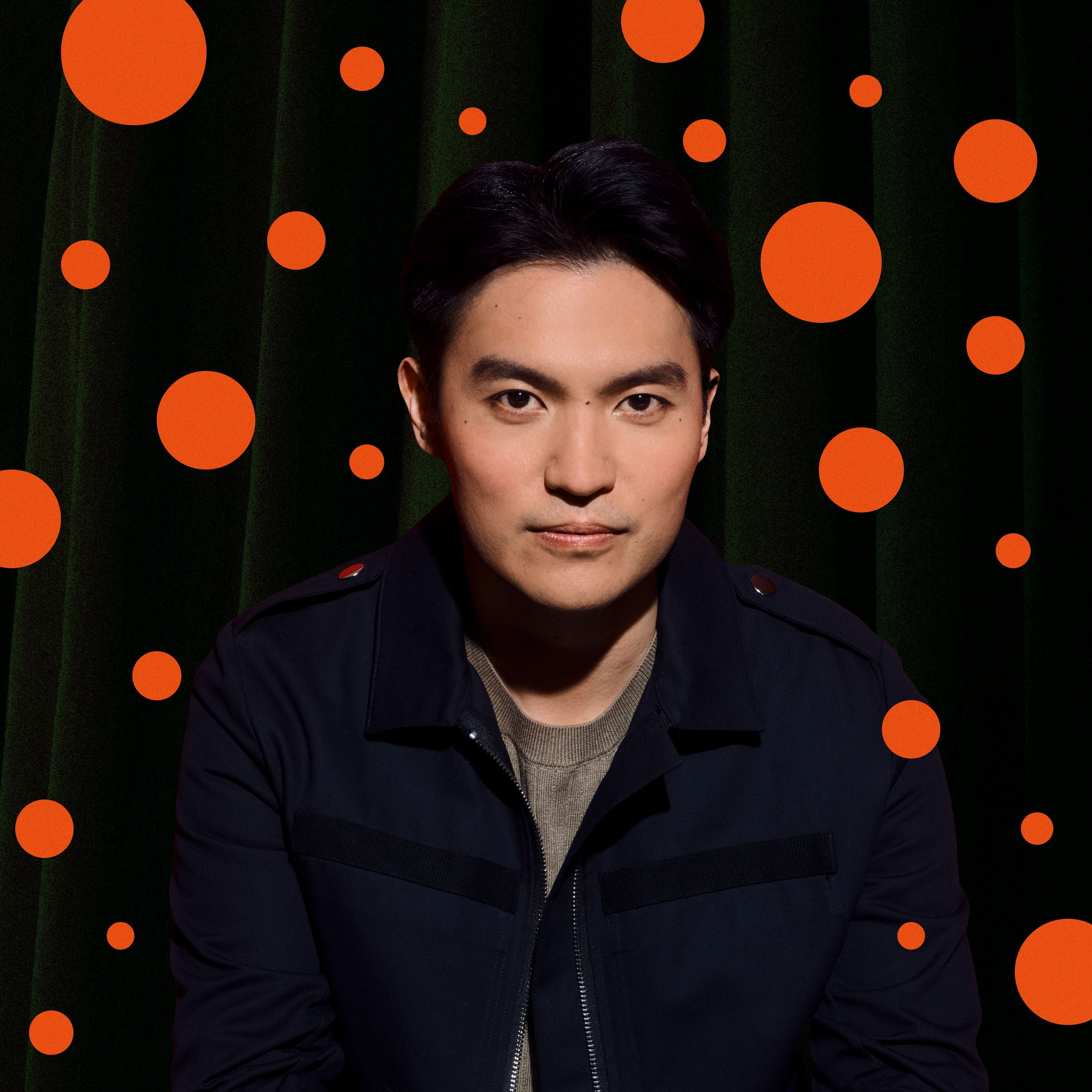
Classical Music Happy Hour
Ray Chen - superstar violinist wants you to practice
00:35:04
Violinist and social media guru Ray Chen wraps up this season of Classical Music Happy Hour with an in-studio live performance. He chats with Manny about video games, performance anxiety, and his practice app Tonic. In our game, he joins Manny in our game called Is It a Composer or Is it Cheese?
Loading summary
Transcript155 lines
- [00:00]
Podcast Announcer
Classical Music Happy Hour is supported by Viking, committed to exploring the world in comfort, offering destination focused small ship experiences on all seven continents with a shore excursion included in every port and programs designed for cultural enrichment. And every Viking voyage is all inclusive with no children and no casinos. Learn more@viking.com every time you hear it,
- [00:29]
Ray Chen
it's like long term friendship that you're returning to someone you care deeply about and you don't need like to catch up on anything. You just start right where you left off last.
- [00:41]
Manny Ax
From WQXR and Carnegie hall, this is Classical Music Happy Hour hosted by me, pianist Maniacs. Each episode will speak with a special guest about their lives, listen to some of their favorite musical gems, play music inspired games, and answer questions from you, our listeners. You're just as likely to see my Guest today on YouTube as you are on the concert stage. He's performed with almost every major orchestra you can think of, but he's also collaborated with Sting and been featured in the Netflix animated series Arcane Book both on audio and on screen. I got to see some of that. His latest album mixes classical themes with music from television, movies and video games. And if that weren't enough, he's also the co founder of a music app called Tonic. Ray Chen, it's a pleasure to welcome
- [01:40]
Ray Chen
you to the show. Oh, thanks so much for having me, Manny. It's a pleasure to be here.
- [01:44]
Manny Ax
How did you start playing? Was that through your parents? Was that something you heard? Were you early on? Were you very young?
- [01:52]
Ray Chen
Yeah, so I started playing violin when I was 4 years old. My parents were the ones who got me into it, you know, being a first gen immigrant. We immigrated from Taiwan to Australia and like many first gen immigrants, my parents were all about giving me the opportunities that they couldn't have growing up. And one of these was playing music especially for my mom, cause she played a bit of the piano when she was young but couldn't continue due to financial constraints. So for me it was very important to her on a personal level that one of her kids, I have a younger sister as well who also played a variety of musical instruments, but at least one of her kids would play music. And so it became this thing where she was very invested, if not equally, if not more invested in kind of my musical learning journey, taking me to all my lessons, practicing with me. All of this was done together with my mom.
- [02:49]
Manny Ax
She must be ecstatic now.
- [02:51]
Ray Chen
Oh yeah, absolutely. She just looks at my calendar and says, you know what, I'd love to go there.
- [02:56]
Manny Ax
It's wonderful. And you played at the Olympics when you were young?
- [03:00]
Ray Chen
Yes. This was one of my early, I think, turning pivotal points. I was eight years old. I got invited to the 1998 Winter Olympics in Nagano, Japan.
- [03:09]
Manny Ax
Wow.
- [03:09]
Ray Chen
And it was in celebration of Dr. Suzuki. I was a Suzuki method kid. And so it was in celebration of his legacy. And I think 500 kids from all over the world were invited to play at the opening ceremony of the Winter Olympics, which is pretty cool. I stayed at a host family local there. We still keep in touch, by the way, to this day, like almost 30 years later. Yeah, it's pretty amazing. And then through that, I loved just the idea of, hey, I can practice this wooden box and it can take me to all these different places. So, yeah, that was how I got into the whole idea of being a musician.
- [03:42]
Manny Ax
Yeah. And then you auditioned for Curtis. I thought it was so amazing that your mother took you. You went there, you auditioned, you didn't get in, and you came back a year later.
- [03:53]
Ray Chen
That's right.
- [03:53]
Manny Ax
And you did get in.
- [03:54]
Ray Chen
That's right. Yeah.
- [03:56]
Manny Ax
It's quite amazing to me that you could have possibly been rejected once. It doesn't make sense.
- [04:03]
Ray Chen
Well, you know, I was really young at the time. I was 14. And now, that being said, I mean, plenty of people get into Curtis. Gary Grafman was like 9 when he got in, I think. So they're no strangers to young kids.
- [04:15]
Manny Ax
No. I think what it shows you is that the whole process of auditioning and competitions is such a lottery. You just never know what's going to happen.
- [04:25]
Ray Chen
Yeah. I think a lot of it is how you play that day and then who you're up against and you could be feeling slightly uncomfortable and then you let slip and that's it.
- [04:33]
Manny Ax
Yes. And it could be the mood of the judges, too. You know, it could be anything at all.
- [04:37]
Ray Chen
Yeah. But, you know, went back to Australia, then practiced a whole year and then got in the second time.
- [04:42]
Manny Ax
And that's all it took for a springboard. A fabulous career. Ray, we've got a few listeners who submitted questions, and I hope you can answer them for me. If we don't know the answer, we'll make something up. Right.
- [05:11]
Ray Chen
I'll do my best. I'll do my best.
- [05:12]
Manny Ax
Okay. So a listener asks, was there a time when you realized that you made it as a soloist?
- [05:21]
Ray Chen
Oh, that's a great question. So I, of course, like many of my colleagues, you know, I dreamt of playing on the stage in what form or shape that was. You know, it was to be determined and it was in my mind at the time of like, oh, if I worked harder, then I would be at the front of the stage, you know, as opposed to the back, sitting in an orchestra. And of course, that doesn't make any sense looking back at it. But at the time, it was a great motivator for me. And so I went about this path. I thought about how I was gonna reach the front of the stage. This was like 12 year old me, by the way. And I thought, okay, maybe someone will invite me, like a great conductor. But in the meantime, I'm just gonna do these competitions and just get as much time on the stage as I can. Right. That's kind of like being on the front of the stage. You're in a competition, you get stage experience. And so I went about like, signing up for basically every single competition that I could find that was local to me. And I started that process. And by the way, I lost a lot more competitions than I won.
- [06:23]
Manny Ax
Well, you only have to win one. Yeah, it's fine.
- [06:27]
Ray Chen
But finally, at the end of this whole process, there were two competitions that really elevated, I think, that gave me that sense. Oh, wow. First one was the Menuin competition, the Yehudi Menuin Competition. That was in 2008. And within a span of a year, I won the Queen Elizabeth. And so the first one, the Yehudi Menu, I gave me the feeling of, oh, man, I could really do this. It gave me a lot of confidence. It didn't really make an impact to my career. There weren't like many concerts that came out of it, but it made a whole world of a difference to how I approached really myself and music. And it amplified the learning process to a tremendous level. And then the following year, I did the Queen Elizabeth. I participated and won. When I won that, that's when everything was like, wow, okay. It's not just a peek through the door. I've got my foot through the door and the rest is up to me.
- [07:24]
Manny Ax
Yeah, well, of course, that's a major, major competition. And when you win something like the Queen Elizabeth, you are destined to be an important soloist.
- [07:35]
Ray Chen
I think it's a lot to still weigh up. I remember when I first won that competition, I just felt this immense weight on my shoulders as I looked back at all the previous winners, all the way back to David Oistrock and thinking, oh, my goodness, like, I have so much to live up to.
- [08:05]
Manny Ax
It's so fascinating to me that you started this app called Tonic.
- [08:10]
Ray Chen
That's right.
- [08:11]
Manny Ax
And it fascinates me because as you say, you worked very, very hard when you were young, and you kept working hard. But how to work is another whole subject which I think most of us need to learn a lot about. And I know that, for example, our mutual idol, Yo Yo Ma, I think he actually is the best practicer I know.
- [08:35]
Ray Chen
How does he practice?
- [08:36]
Manny Ax
Well, it's all very concentrated. He hears something that's not working, and he will try to analyze that particular problem, and in a few minutes, he'll say, okay, this is the problem. This is what I have to fix. And once he does that, he's got it. So what impresses me so much about it is that I have to spend endless hours doing things over and over and over, over to get a result. And he doesn't seem to need that so much. And I think it's the practice habits, which are so amazing. So I was gonna ask you about Tonic and the whole idea of practicing in front of other people or hearing
- [09:20]
Ray Chen
other people play, that's exactly what it is. So it's a livestream practice app where musicians of all levels, of all ages can share their work in progress. Right? They're practicing, which is, if you think about it, the longest of the journey, right? The most hours aren't spent performing. The longest part of the journey is actually when you're practicing on your own solitude, in isolation. And, sure, that gives you focus, but just like the example that you gave of yo yo and yourself, like, you guys have figured out to each your own ways of practicing, most people don't have either that discipline or that framework, their way of practicing. Harry Grafman wrote that book. I really should be practicing. Right? I mean, that's the problem that Tonic aims to solve. And is that helping to motivate people who know they should be practicing, but they might not have the next performance opportunity for months. So where do they go to get that final point of, like, fulfillment of the sharing part? Right? Music is so much better when it's shared.
- [10:23]
Manny Ax
I'm trying to sort of visualize it. Let's say I heard this person practicing a Mendelssohn piece. And would he want to know that I'm there?
- [10:33]
Ray Chen
Oh, absolutely. I mean, people want to feel seen, right? And supported. Like, that's kind of cool. And unlike YouTube or anything like that, Tonic, it's all under that context where everyone understands everyone is in the work in progress. So you're not being judged from a performance vantage point. Right? People are there to support you. They understand that they're there. It's like open rehearsal when People go to open rehearsal, they know that they're there to. To like see a work in progress.
- [11:02]
Manny Ax
Yeah. Are people willing to devote the time to other people?
- [11:07]
Ray Chen
Absolutely. You know, we have the metrics that show us that the average use time of a studio when no one's There is already 36 minutes. 36 minutes of practice time averaged out across all people is pretty substantial already. But then as soon as one person joins that practice, time increases drastically. We're at almost 50 minutes now with one person and then with two people, it's over an hour. It's like an hour and 16 minutes. From the listener's point of view. It's kind of like a radio, right? It's a radio where you can just listen and then you can interact with the player. So that's pretty cool too. Like, both sides give each other what the other side needs and value.
- [11:42]
Manny Ax
It's an amazing idea and connection. I saw an interview you did where you talk about when you play, when you commune with the composer, that's one thing. But when you have someone listening to you, communing with the composer, that to you is the ultimate satisfaction.
- [12:02]
Ray Chen
Yes, absolutely. Because at the end of the day, like, we're musicians, we have our own interpretations. This is what I believe, by the way. Our purpose is to share those interpretations with others. Now, of course, you could just play for yourself, but what about that part that's missing? I think it's the part where someone else is there when that person's there. It's like a chef, you know, a chef's purpose is to serve dishes to others. Right. And all of their different ideas come together on a plate. For us, it comes together on the stage. And that stage might be even the living room of someone's house. It could be on the stage of Carnegie hall, but it's a stage nonetheless.
- [12:49]
Manny Ax
You've brought in some music that you really like. The Brahms piano Intermezzo.
- [12:55]
Ray Chen
Yeah, I love that piece. I used to learn piano as a kid.
- [13:00]
Manny Ax
You never learned that one?
- [13:01]
Ray Chen
No, I discovered this piece after I had already. Well, when they say quit the piano, that's a strong term. I may return to it, but where I put it aside momentarily for a few decades.
- [13:14]
Manny Ax
Okay. What do you like about this Intermezzo?
- [13:18]
Ray Chen
I mean, I just love how it just begins. Every time you hear it. It's like long term friendship that you're returning to someone you care deeply about. And you don't need, like to catch up on anything. You just start right where you left off last. And it's like no words need to be said. You just have that feeling and that's what that piece gives me.
- [13:56]
Manny Ax
There are two elements in that piece that get to me every time. First of all, the fact that the tune itself is actually slightly tortured. It's so spread out, those leaps, And yet because of the harmony, it's so incredibly beautiful and seamless. And then the other part that completely gets me is that he always goes to that a. He always goes. And then the very last time, it goes one note higher.
- [14:40]
Ray Chen
Yes, yes, yes.
- [14:58]
Manny Ax
And it's marked very, very soft. It's such an arrival. Brahms was always a guy for me who. Who kind of. It's very hard to get somewhere. You know, it's like Sisyphus pushing the rock up the hill, but once you get there, he gets to stay a little bit. Unlike Sisyphus, a lot of the time, he is also like Sisyphus in that it rolls right back down and it's depressed all over again. But once in a while, he gives you the pleasure of getting up there and remaining up there.
- [15:35]
Ray Chen
Yeah, I mean, he's definitely not trying to show off, right? No, he's just saying something so quietly and it goes straight to the heart and it's. It's just so tender and. And sad a little bit and deep. You know that all the emotions that are there. Yeah, it's so. I love that,
- [16:08]
Manny Ax
Sam.
- [16:35]
Podcast Announcer
Classical Music Happy Hour is supported by Viking, committed to exploring the world in comfort. For over 25 years, Viking has been connecting the thinking person with the world, first on the great rivers, then on all five oceans, now on all seven continents. Whether you choose to journey through the heart of Europe on an elegant Viking longship, explore the ancient cities of the Mediterranean on a small ocean ship, or venture to the white shores of Antarctica on a purpose built expedition ship, you will always experience thoughtful service, destination focused dining and cultural enrichment on board and onshore. And every Viking voyage is all inclusive with no children and no casinos. Learn more@viking.com
- [17:29]
Manny Ax
I'm maniacs. And this is Classical Music Happy Hour. We'll return in just a moment. This is Classical Music Happy Hour. I'm Maniacs. Let's hear more from Ray Chen. This show, as you probably know, is called Classical Music Happy Hour. What is your favorite drink after a long day?
- [17:52]
Ray Chen
Oh, favorite drink after a long day would probably be a sparkling water that's really cold with ice and lemon. Fresh lemon.
- [18:01]
Manny Ax
Okay, so you're not really a drinker?
- [18:03]
Ray Chen
I used to drink, but then I stopped drinking about a year ago. I was undergoing Like, a pretty heavy schedule back then, balancing between what I was doing with Tonic with a startup, as well as my concert career. So I stopped drinking for a month, and then it sort of just went on for. It's been over a year now.
- [18:19]
Manny Ax
What is the best book you've ever read about music?
- [18:23]
Ray Chen
Ooh, best book. I have to say. Indivisible by 4. I love that one. Written by Arnold Steinhardt about quartet life. His life in quartet. I read it as a student. To this day, I still think of it as like my highliest recommended book in music. About the career especially.
- [18:40]
Manny Ax
Yeah, I love it, too. First album that you ever bought with your own money?
- [18:45]
Ray Chen
Oh, first album. This takes me back. I think that it might have been, you know, I remember going to the store and, oh, my gosh, this is so embarrassing. It was Barbie Girl by Aqua. You know, back in those days. I'm a barbiego. You know that one?
- [19:03]
Manny Ax
I don't, but if it had been the Schoenberg Orchestral Variations, I would have known it. Now, can I ask you about. I know you've done a number of things with video game music. It's in snippets, right? Am I right about that?
- [19:20]
Ray Chen
Yeah. So video game music is a little bit like recording soundtracks from movies, right? Each scene has a different section, a cue, as we call it. And usually it's recorded separately from the orchestra. So you're recording your own part, but you might be hearing a backing track. There's usually a click track to it, but so you have to find musicality in between. Sometimes they tell you. And I get this a lot. Oh, can you just be a little less musical? Because we've got dialogue going over this particular scene, and you don't want to stand out too much. So that happens a lot. Okay, but other times. But other times. Yeah. And so it's like, okay, got it. I got it. A little less vibrato. I call it the less musical ray that they're going to get. But other times it's just knowing your role. Right. It's kind of like when you don't have the main melody in a chamber music piece. You don't. You don't want to just, like, always be blasting out your line all the time.
- [20:16]
Manny Ax
What is your favorite video game, if you have one?
- [20:20]
Ray Chen
I would never have expected to be asked that question by Emmanuel Axe. Oh, my gosh. What is my favorite video game?
- [20:27]
Manny Ax
Well, I can tell you what mine is. It's very easy. Mine is Tetris. The reason I really love it is because I'm incredibly inept at it. And my kids used to watch me trying to play it and would get hysterical with laughter. They thought it was the funniest thing in the world, me trying to manipulate this thing, moving from side to side, which of course does nothing right.
- [20:51]
Ray Chen
But meanwhile you're playing like thousands of notes. Yeah, I do have so many. It's kind of like asking, what's your favorite piece? I wouldn't be able to give you one particular title, but the genre of video games that I love are usually open world. So one of my favorite games of all time is Skyrim. We call it RPG role playing game. And the concept is that you are in a. Gosh. I have to explain this in a way that audiences that don't play video games will understand. So it's where you choose your character, but every decision that you make affects the storyline. And so that's what makes it really interesting. You're in this fantasy world. There's a lot of fighting involved, but there's also a lot of story involved as well. Several factions are at war with each other and you're this main character that goes through it all. And it's got great music as well. It's written by Jeremy Soule. It sounds very reminiscent of what you might hear from Howard Shore of Lord of the Rings. But like each place, each geography, each region has its own identifiable music. Like to this day, the whiterun music is still like stuck in my head just from the hours of gameplay that I've been in there.
- [22:10]
Manny Ax
We seem to be, generally speaking, in a video oriented society and, and I wonder, do we still have a role to play in it? Do we still have Bruckner symphonies to listen to? Or is that gonna go away because it's too long without video action?
- [22:30]
Ray Chen
No, I don't think it's going away anytime soon, to answer your question in one quick sentence. And the reason why is because there's kind of passive listening and a lot of these streaming platforms have that. Right. It's just in the background. I think what you're referring to with the visuals, that's very active listening and it's kind of link to social media. The way I view it as that's the top of the funnel. That's when you're trying to grab people's attention. People who might not be regular or they're just kind of casual classical music fans, or they might not even be regular classical music fans. And you're trying to be like, hey, here's the most epic part of the Mendelssohn violin control. I usually have like some fire emojis that go along with it. You're trying to grab their attention and then you funnel them in. Now what happens next is a very long process to them. And that Bruckner Symphony, right? Or the Schoenberg Verclarte Nacht, right?
- [23:20]
Manny Ax
Yes.
- [23:21]
Ray Chen
That's like a long journey for them.
- [23:22]
Manny Ax
But that's exactly what I wonder about is do you feel there will be people who will make the transition from the 5 minute segment to the 45 minute journey?
- [23:34]
Ray Chen
Oh, yeah. It's just a matter of making sure that at each stage of the funnel that it gets narrower and narrower. And that's the shape of the funnel.
- [23:41]
Manny Ax
Right.
- [23:42]
Ray Chen
It's natural to lose people at each stage. So let's say you have at the top of the funnel, 42nd, you know, TikTok Instagram reel of Vivaldi, Four Seasons. Right? That's right at the top of the funnel. And I've had some videos that hit over a hundred million views. Right? That's a lot of people. That is so wide. It would be great if a whole 100 million of those people, like started becoming classical music fans. Right? And so for them, then there's the next part, maybe that's like the Bach preludial and they sort of like funnel goes narrower and narrower and then you finally get to Bruckner. But. But unless you widen the funnel, make the whole thing bigger, there's gonna be less and less people reaching the innermost part of the funnel. That's just a scalability kind of question. So when people ask, is classical music gonna die? I say, not if we keep increasing the funnel, it won't die. But if we start to narrow in and stop thinking about the widest part of the funnel, then yes, it will become smaller for sure. And that's what's happening. We're seeing that because classical music is being defunded everywhere. Right. The top of the funnel used to be huge. It used to basically everybody in New York City just taking one city alone had something to do with classical music through radio, through television. And now we're seeing it become privatized. Sure, it's moving a lot to these social media platforms, but yeah, it's becoming smaller and smaller. So we have to put ourselves out there now to serve the music to the people and create the top of the funnel all over again.
- [25:23]
Manny Ax
The whole idea of nerves in performance, you seem to feel that as you get closer to the audience, you have less nerves.
- [25:33]
Ray Chen
That's correct. I have so many people asking Me. How do you get rid of anxiety, of stage anxiety, performance anxiety? How do I get rid of it? And my belief is that if your desire is to play and perform and share music in front of people, well, you should practice doing that, then. You should practice in front of people. It's the most straightforward answer that I can give. And most people just don't have enough opportunity and access to doing that. And so by being able to play in front of people, which is much of what Tonic is, that's their opportunity, that's their access.
- [26:06]
Manny Ax
Do you have any sense of why people are terrified of performing? I mean, I am terrified of performing.
- [26:12]
Ray Chen
You are?
- [26:13]
Manny Ax
But I don't know why.
- [26:14]
Ray Chen
No way.
- [26:14]
Manny Ax
Absolutely. I get terribly nervous before every concert, and I'd love to know why.
- [26:19]
Ray Chen
I mean, you're about to go into an unknown, but you're also. I think of it as excitement. There's nerves, for sure. There's adrenaline.
- [26:28]
Manny Ax
Right.
- [26:28]
Ray Chen
Let's be unbiased for a moment and just call it by what it does to the human body. There's adrenaline that goes in. I think of nerves as not necessarily a good or bad thing, a positive or negative emotion, but the emotion is the sticker we slap on it right through either positive or negative experiences. So if you have bad experiences with being on stage, then that could be a trigger right there. But if you have positive ones and you focus on those, then it's more likely that it's excitement. Kind of like it's about to be your birthday, and so, you know, it's like something's gonna happen in a good way.
- [27:03]
Manny Ax
The perfect situation would be to be excited but not frightened.
- [27:08]
Ray Chen
Yes. Yes, for sure. Especially when it's livestreamed and they tell you and everyone's like, adjusting the microphones in front of you. And on top of that, you know, it's gonna be also on YouTube or it's gon. Livestreamed on television.
- [27:20]
Manny Ax
I have to tell you, I am so glad to hear you say that, because I'm an oldster now and coming from my generation, the whole idea of live performance for recording or for television or anything like that is the most frightening thing in the world.
- [27:36]
Ray Chen
Oh, absolutely.
- [27:37]
Manny Ax
So I'm glad to hear you have a little of that also.
- [27:40]
Ray Chen
Oh, I have a lot of that. And the reason for that is because, you know, recordings are done with such care, meticulousness, and it's like, I'm ready to present you a legacy piece, not a snapshot of who I am in that present moment where it could be misinterpreted. Due to anything. It could be a fly that's like flying in the air, or maybe a sweat that went into my eye that makes me unable to see. I just don't want to be judged based on that particular moment. And so, yeah, that's something that. Yeah, there's definitely anxiety inducing for me.
- [28:16]
Manny Ax
You've brought in some music that you love.
- [28:20]
Ray Chen
I mean, from a player's perspective as well as the listener's perspective. It's just so satisfying to both listen and play to. Yeah, it goes through everything. It's totally my desert island piece. If I could only play one piece, and it was my last piece ever, it would be the Bakshacon.
- [28:34]
Manny Ax
Can you play the beginning and tell us what it does?
- [28:36]
Ray Chen
Okay. All right. All right, let me go ahead and make sure my instrument's in tune. All right. So just. I mean, just that beginning. Right. Is so gripping, it's so commanding, and it's so unlike the rest of what Bach wrote for the sonatas and partitas as well. And now, of course, I'm playing in a very. What some might call romantic style, where it's much more broader and more emotional. But I think the piece deserves that. The vessel of the piece can contain that.
- [29:32]
Manny Ax
What you played.
- [29:34]
Ray Chen
Yes.
- [29:34]
Manny Ax
Was half of the theme. Is that correct?
- [29:38]
Ray Chen
That's correct, yes. So it's half of the 8 bar Chaconne, the form that replaces, repeats harmonically
- [29:45]
Manny Ax
for the duration of the piece.
- [29:47]
Ray Chen
For the duration of the piece, yeah. And then we have this middle section which goes to a major major moment. A major key, I guess you could
- [29:55]
Manny Ax
say it's a theme and variations on this harmonic progression. Right?
- [29:59]
Ray Chen
That's right. That's right.
- [30:00]
Manny Ax
And how many variations. Any idea?
- [30:02]
Ray Chen
There are 64 variations in Bach. Chacon.
- [30:04]
Manny Ax
Fabulous.
- [30:05]
Ray Chen
And the full repeating unit is eight bars. So we just heard the four bar pattern.
- [30:11]
Manny Ax
Would you mind playing the eight bars? Would that be possible?
- [30:14]
Ray Chen
Yes. Yes. Let's hear it.
- [30:49]
Manny Ax
That's wonderful. Thank you very much.
- [30:52]
Ray Chen
Thank you. No, thank you.
- [30:53]
Manny Ax
I will also say I'm glad that you only had to tune the violin. Cause if you had been here for the piano, we would have been an
- [30:59]
Ray Chen
hour and a half.
- [31:00]
Manny Ax
Thank you for playing that and for mentioning how the piece is kind of structured. As you mentioned, there's a whole area in the middle which is in D major and then going back to D minor. But it's the same basic repetition of the eight bar kind of harmonic underpinning, right?
- [31:19]
Ray Chen
That's right. That's right. Yeah. But somehow it's never repetitive. It's just this journey, this massive journey.
- [31:33]
Manny Ax
Ray, you play a lot of wonderful games on your YouTube channel. So we decided to challenge you today.
- [31:40]
Ray Chen
Okay.
- [31:41]
Manny Ax
We're hoping you can tell us. Is it a composer or is it cheese?
- [31:46]
Ray Chen
Oh, I know this game.
- [31:49]
Manny Ax
This will be quite easy for me because I don't know much about the composers, but I know I eat a lot of cheese, so I should be able to know that.
- [31:59]
Ray Chen
Oh, my gosh. Okay, let's bring it on. Let's hear it.
- [32:02]
Manny Ax
Let's start with number one.
- [32:04]
Ray Chen
Okay.
- [32:05]
Manny Ax
Gruyere. Composer or cheese? Gruyere.
- [32:08]
Ray Chen
That's definitely a cheese. That's definitely a cheese. I love Gruyere.
- [32:11]
Manny Ax
Definitely a cheese. I can even describe it. It's a semi hard cheese made from cow's milk, named after the town Gruyere, Switzerland.
- [32:20]
Ray Chen
Lovely, lovely.
- [32:22]
Manny Ax
Oh, here's one. Philidor, Composer or cheese?
- [32:26]
Ray Chen
That feels more like a composer because I don't know the cheese. Philador.
- [32:31]
Manny Ax
Absolutely Corre. Francois. Andre Philidor was an 18th century composer. He might not be associated with cheese, but he was a great chess player. And there are chess moves named after him, actually.
- [32:52]
Ray Chen
Wow. So I didn't know about Philidor, but now I will look him up.
- [32:58]
Manny Ax
Number three, Brillat Savarin. Composer or cheese?
- [33:05]
Ray Chen
Actually, this one is stumping me. You know, as someone who. I wouldn't say that I know either very well in terms of like, know all my cheeses or all my composers. I'm gonna go with composer on this one.
- [33:18]
Manny Ax
Okay. You would be mistaken.
- [33:19]
Ray Chen
Oh, wait, say the name again.
- [33:21]
Manny Ax
Brilla Savarin.
- [33:23]
Ray Chen
Oh, was it in the Brie? Is it a Brie kind of cheese?
- [33:26]
Manny Ax
No, no, no, no, no. It's B, R, I, L, L, A, T, E. And what kind of a cheese is that? Named after a famous French gourmet and politician. Cow's milk cheese, notes of sweet cream truffles and a texture of whipped buttercream. It pairs well with champagne and berries.
- [33:47]
Ray Chen
Wow, that sounds so delicious the way you describe it.
- [33:50]
Manny Ax
Yeah, yeah. Although I would say Ravel and Debussy also pair very well with champagne and berries.
- [33:56]
Ray Chen
That's true.
- [33:57]
Manny Ax
You know. Yeah, yeah, yeah. And number four, Rousseau.
- [34:01]
Ray Chen
Rousseau is definitely a composer.
- [34:03]
Manny Ax
Right. But. But here's the surprise. It's also a cheese. What? So there's Jean Jacques rousseau was an 18th century philosopher, writer and composer. Right. But there is also a cheese named after him.
- [34:16]
Ray Chen
Oh.
- [34:18]
Manny Ax
Entitled Tom de Chevre Cav.
- [34:21]
Ray Chen
Rousseau. Wow. Imagine having a cheese named after you. Do you have a cheese named after you?
- [34:28]
Manny Ax
No, no, I'm Afraid not.
- [34:31]
Ray Chen
Le Emanuel. Notes of sharp, brie and I don't know, like apricot. Pairs well with the finest drc.
- [34:46]
Manny Ax
Yeah, I think. I guess I like potatoes. If I ever do a book, it's going to be called the Sensuous Potato. But no, no cheese. So this is Tom de Chevre Carve Rousseau, a goat cheese aged for a minimum of three months. Earthy, tangy flavor pairs well with bread, fruit and cured meat.
- [35:09]
Ray Chen
Oh my gosh, you're making me so hungry right now.
- [35:25]
Manny Ax
Ray Chen, thank you so much for joining us today.
- [35:29]
Ray Chen
Thank you. Thank you so much, Manny.
- [35:32]
Manny Ax
I'm Manny X and this is Classical Music Happy Hour. Classical Music Happy Hour is supported in part by the Robert and Mercedes Eichholtz foundation and by Linda Nelson. Our production team includes Lauren Purcell Joyner, Eileen Delahunty, Laura Bouman, Elizabeth Nonemaker, David Norville, Christine Herskovitz and Ed Yim. Our engineering team includes George Wellington, Irene Trudell and Chase Culpan. Classical Music Happy Hour is produced by WQXR in partnership with Carnegie Hall. Foreign. Hi there, it's Manny. Thank you for joining me in my conversations with my guests. Playing some games and listening to classical gems. By listening, you are a central part of Classical Music Happy Hour. Classical Music Happy Hour is a podcast brought to you by wqxr, New York's non profit classical music station. It takes a lot to put together a podcast like Classical Music Happy Hour. A whole team of people, time and financial resources, but it also takes you Listener donations are an important source of funding for the shows that WQXR produces. So if you've been moved or excited by some of the conversations we've had, pieces we've shared, please take a minute to make a donation so we can bring you more podcasts like this. To give, go to classicalmusichappyhour.org donate thank you for listening and for supporting our show.