← Classical Music Happy Hour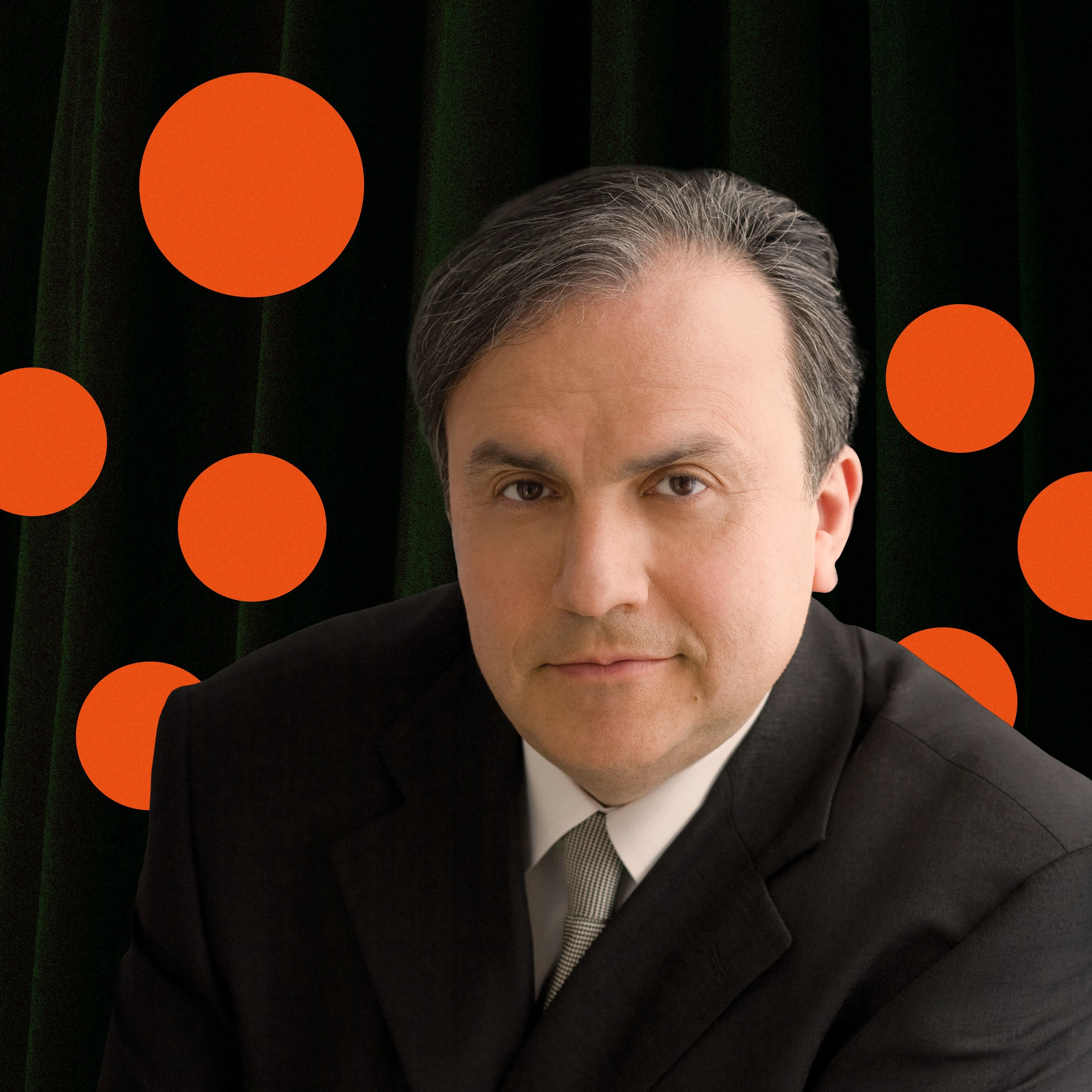
Classical Music Happy Hour
Yefim Bronfman - master of the keyboard
00:33:07
Pianist Yefim Bronfman, “Fima,” chats with Manny about their decades-long friendship, their love of sports, their surprising anxiety around live broadcast performances. They’ll answer listeners’ questions about recovering from injuries and picking repertoire, even the stuff no one heard of! Fima and Manny work together in our Newly Dead game to identify odd ways composers have died.
Loading summary
Transcript196 lines
- [00:01]
A
Three months later, I saw Matsuyev and we ran into each other in, I think in Australia. And I said, you know this piano in Kiev? They told me that you played in it. I said, no, it's not true. I've canceled that concert. So they lied to me on top of it.
- [00:15]
B
I see. From WQXR and Carnegie hall, this is Classical Music Happy Hour, hosted by me, Pianist Maniacs. Each episode will speak with a special guest about their lives, listen to some of their favorite musical gems, play music inspired games, and answer questions from you, our listeners. My guest today is one of the truly great pianists of our time. His astonishing command of the keyboard is fully matched by his probing intellect and above all, his fearless emotional depth. He has played in virtually every important venue in the world and with all the great orchestras, and continues to explore new and old music equally. To top it all off, he is a totally charming, delightful man, and I feel very lucky to have the pleasure of speaking with him today. Yefim Bronfman, welcome to the show.
- [01:15]
A
Thank you. I'm speechless. Such introduction is really totally undeserved.
- [01:19]
B
But you just talked. How speechless can you be?
- [01:23]
A
From now on, I will be now.
- [01:27]
B
Your friends call you fema.
- [01:28]
A
Yes.
- [01:29]
B
So I will allow myself to do the same thing.
- [01:32]
A
Thank you. Thank you. That would be great.
- [01:33]
B
Now, we met for the first time, I think just around 1975 when you came to New York.
- [01:41]
A
We met before, you say.
- [01:42]
B
We met in Israel after you recital
- [01:44]
A
at the Museum of Tel Aviv. And you played Andante's piano Grandpa. And you played Gaspar.
- [01:52]
B
How could you remember all that?
- [01:54]
A
Well, I remember great performances.
- [01:55]
B
Crazy.
- [01:56]
A
And I met you in Yokov afterwards and you were greeting people and come say hello. And you were very nice.
- [02:02]
B
Your debut in New York was at Carnegie Hall. Bernstein conducting Israel Philharmonic, Rachmaninoff 3. How do you remember that concert?
- [02:14]
A
I remember I was less nervous than I get now. And we played the night before in Washington and just got to the day off. And I was very relaxed. I was not experienced enough to play such a big gig, you know, Bernstein and Carnegie hall. I was 18 years old. I barely played with orchestras then, you know. So to have somebody like Bernstein, who was not the simplest person to play with because he was such a big personality, obviously he commanded and dictated his way of playing. And I remember suffering a little bit because his temper was much slower than I was used to.
- [02:52]
B
I see.
- [02:53]
A
So I feel that that kind of engagement came in the wrong time of my life. I would appreciate him much more ten years later. Obviously, he was a genius and great musician, but I was too young to know that. So in a way, that was a difficult experience, looking back at it. But at the time, it seemed like, okay, I'm playing Rain iii. Of course. That's fun. That's great fun.
- [03:15]
B
And you've worked with so many of the great conductors and artists. Isaac Stern, for one.
- [03:22]
A
My debut in Carnegie hall was 10 days earlier at the series called Isaac Stern and Friends.
- [03:29]
B
Oh, I see.
- [03:29]
A
Where I played Schubert's Fantasy with Jean Bernard Pumier.
- [03:33]
B
This is the Forehand Fantasy.
- [03:34]
A
Forehand Fantasy. That was my first time playing.
- [03:38]
B
Is that a piece you've played often or.
- [03:41]
A
I played it a few times, but, you know, not that often. I played it with some very good pianists. We have never done it. I don't think we have done it during the.
- [03:48]
B
No, we've never done it.
- [03:49]
A
Done it. It's a nice piece. You should look into it, you know. It's a really lovely piece.
- [03:54]
B
Yeah. Well, Schubert, you know, sometimes. Sometimes he does good things.
- [03:59]
A
Sometimes. Yeah.
- [04:01]
B
How do you design a recital program? Do you have a design in mind?
- [04:06]
A
There are different ways to approach it. I think that sometimes you focus just on one composer. And some composers, like old Beethoven program works well, better than maybe others. I mean, I've done all Prokofv programs when I did all the sonatas, but I don't know how interesting it is for the public, you know, to hear.
- [04:26]
B
You studied in Philadelphia, so I hear a little Philadelphia accent in your speech.
- [04:31]
A
Are you serious or are you joking? It's a suburb of Philadelphia. I understand. That's more New Jersey side.
- [04:39]
B
That's more and more mainline.
- [04:41]
A
Mainline, yes.
- [04:43]
B
But the reason I mention it is because you're also a great punster. And I remember once when you were talking about doing all Prokofiev and saying that, I hope no one here is Anti Kofiev.
- [04:54]
A
You're either Prokofiev or Anti Kofiev.
- [04:56]
B
Well, it's nice to know that both are possible.
- [05:00]
A
Yeah, but sometimes you also choose, like a topic like you decide to do night music or you decide to do Fantasy Program. This is always fun because it kind of stimulates you to have Claire de Lune and Moonlight Sonata on the same problem.
- [05:18]
B
Yes.
- [05:19]
A
There's so much repertoire we have. We can pick any subject. You know, there's just so much that we have at our disposal.
- [05:38]
B
So, fema, we have some questions about classical music from our listeners. We're going to do our best to answer them. If we don't know we'll just make something up. Okay, no problem.
- [05:49]
A
That's fine.
- [05:50]
B
Let's hear from a caller who has a question about choosing unfamiliar music.
- [05:57]
C
Dear Manny, I'm wondering, what do you look for in music that is unfamiliar to the public? I'm curious if you only want the megastars or if you take the chance on an unknown. Thank you.
- [06:14]
A
First of all, one should play the music that you really want to play only if you believe in that music. And if you like it, then it's worth bringing it to public. I think that public views very much influenced by the performers they hear. So if they hear Szymanowski for the first time, They may like it or may they not like it, or love for this music will grow with the time. Maybe not. But if I personally believe in that music, I need to play it in public, regardless of famous or not.
- [07:02]
B
Yeah, no, I think that's actually absolutely correct and true. And I think that there are many, many people who love you, love your playing, love everything you do, and they will follow you if you present music that's not familiar to them. I think there's another side to it that sometimes you get asked to do a piece that nobody has seen. It's going to be written for you to play. And then of course, you take a chance just like everybody else. With any luck, it will be a wonderful piece, especially if you like that composer's music. Sometimes it doesn't come out as beautifully as you were hoping, but it's something that you take a chance on. And you've done an incredible amount of new music. You've done a concerto of Magnus Lindbergh, which is the most terrifying thing I've ever seen. Millions and millions of notes.
- [08:00]
A
Well, there's a story behind it, how late he delivered it. Maybe five weeks before he finally delivered the score.
- [08:06]
B
And you were under the gun for the performance? Of course.
- [08:09]
A
And I was performing in many different places, so I would stay after the concert, you know, and practice till two in the morning when I could. And then two weeks before the concert, I was playing in Philadelphia and I get a phone call from him, said, fema, I have great news. Oh, thank God. Before it's canceled, I completely. I finished the cadenza. I'm sending it to you. Oh, no.
- [08:33]
B
Oh, God.
- [08:34]
A
Oh, great. So I received. It was like all black on the page. You know, there's just thousands of notes.
- [08:42]
B
But I remember I saw a write up about the first performance of the piece, and I believe the man who wrote it up said, whatever Mr. Bronfman got paid for that performance. It was not enough.
- [08:57]
A
I should have negotiated my contract differently.
- [09:13]
B
When you're at home, I know you're practicing all the time. Do you play stuff for fun or do you always play what you're working on?
- [09:21]
A
First of all, I don't practice more than four hours. You just get tired. I think prolonged practicing you lose perspective of sound a little bit. And I think that listening music from inside sometimes is more important than hearing it live in a small room.
- [09:37]
B
Did you ever use a silent keyboard to practice? It's like the action of the piano without actually the hammers and the strings, or it might even have the hammers. But there'd be no strings. So in fact you would be getting no sound, no musical sound. You would just get the mechanism. You would practice the mechanism and there'd be no sound.
- [09:57]
A
Only before the concert. But I never really practiced keyboard.
- [10:01]
B
No, because I think, if I'm not mistaken, I think in the days when people traveled by train in the 30s, they would often have a silent keyboard in the baggage car and actually practice on those things.
- [10:16]
A
That's where, oh, they had to take, let's say, ship from Europe to America. Like Rachmainov days. He must have had some keyboard to practice before playing when he landed in New York. I think it's a great idea. I just personally never tried it.
- [10:30]
B
Yeah, there's so much video and recording of live concerts now. Is that something you are for? Or maybe not as much?
- [10:44]
A
Not as much. I would say I'm always dreading this kind of situations with live TV and live radio life. Radio is better for some reason. I know it makes no difference, but for some reason I don't see the cameras. Yeah, that's already a better feeling. But it's something that's difficult to deal with. Very often I'm so nervous I can't even sleep the night before and go play half asleep, you know, it's just I'm afraid to oversleep, you know, I'm afraid I don't have time to warm up. I like to come to the concert hall two hours before. So if you play at 11 o', clock, let's say you have to be there by 8:30 because last half hour before the concert, try not to play. Because I just need to have a little quiet before you go on stage. And I'm not a morning person. On top of that, I know you are much better than me. I know you. Sometimes after concert you practice very early in the morning while I'm still asleep.
- [11:36]
B
Yeah, but that's just habit, but I know just what you mean. As a performer, I agree with you completely. I dread the whole process, and it makes me terribly nervous, even more nervous than a concert. On the other hand, as a listener or as a consumer, I love the idea of having performances that I can watch or listen to. So it's a little bit on both sides. Of course, I think in the perfect world, I would never do it, but everybody else would. So I can hear it. Now. We have a caller from Providence, Rhode Island.
- [12:18]
D
Hi, this is Ana. I'm from Providence, Rhode Island. My question is, what do you do if you get injured? Do you go to physical therapy? Are there hand exercises that you do? Do you exercise to be a pianist?
- [12:36]
A
Very good question. The thing to do when you have hand injuries, take time off and not play for a couple of weeks. That happened to me. I was working and playing a lot of concerts with a very difficult repertoire, and after a while, your hands start hurting, and that's when you need to take time off. And if that doesn't cure it, then you have a more serious problem, then you go see a doctor. But basically, to be a pianist, you have to be in good shape physically because we sit a lot practicing and rehearsing and playing concerts, and we need to move and we need to exercise. And I do a lot of walking myself. There's really nothing you can do with your hands. You know, any heavy lifting for me is not. Doesn't help. But basically, you just keep your body in good shape and you don't go out of breath when you perform.
- [13:23]
B
So you wouldn't recommend amputation?
- [13:25]
A
Not particularly.
- [13:27]
B
Okay.
- [13:27]
A
Only if you need it.
- [13:28]
B
Okay. It's hard to reverse, I guess.
- [13:32]
A
Exactly. Yes.
- [13:34]
B
Yeah, I guess I would go along, probably. Most things for the hands, if you're lucky, will be taken care of by some rest. I think it's a matter of really luck to some degree. I've been pretty fortunate in not having too many issues. But what's interesting is how little is generally known by everybody about the body. I remember I had some shoulder issues a few years ago now, and I went to a very highly recommended doctor for sports medicine, and this lady did an mri, and she said, well, it could be something up here in the neck, or it could be a little lower down in the shoulder, or it could be underneath. So I said, aha. So what do you think I should do? Well, why don't you not do anything? I said, okay, that sounds like a wonderful solution. And in fact, it went away after a certain time.
- [14:32]
A
Did you have to pay for that.
- [14:34]
B
I. I had to pay for the consultation, of course, but at least there was no follow up. That was the good thing. I'm maniacs. And this is Classical Music Happy Hour. We'll return in just a moment.
- [14:55]
E
Classical Music Happy Hour is supported by Viking, committed to exploring the world in comfort. For over 25 years, Viking has been connecting the thinking person with the world. First on the great rivers, then on all five oceans, now on all seven continents. Whether you choose to journey through the heart of Europe on an elegant Viking longship, explore the ancient cities of the Mediterranean on a small ocean ship, or venture to the white shores of Antarctica on a purpose built expedition ship, you will always experience thoughtful service, destination focused dining and cultural enrichment on board and onshore. And every Viking voyage is all inclusive with no children and no casinos.
- [15:45]
B
Learn more@viking.com this is classical Music Happy Hour. I'm Manny Axe. Yefim Bronfman joined us before the break. Let's hear a bit more of that conversation. The show is called Classical Music Happy Hour. What is your favorite drink after a long day?
- [16:04]
A
Well, you know, I drink less nowadays. I find that for me to stay focused, especially when you are on the long tours. I'm trying to save my energy and I think when I wake up the next morning and if I drink, I feel the tiredness more. More than if I don't.
- [16:17]
B
So you don't drink at all?
- [16:19]
A
I drink very little.
- [16:20]
B
Very little. What would it be? Wine.
- [16:23]
A
Well, you know, I love wine, especially the red wine. And if it's bad wine, I don't touch it. Okay. You know, and if it's a good one, I touch it.
- [16:32]
B
Excellent. What is the best book you've ever read about music?
- [16:37]
A
You know, the best book about music was really not about music, but it was autobiography of Stefan Zweig, the World of Yesterday, because he writes there about the musicians and the composers that he met in his lifetime.
- [16:51]
B
What's the first record that you bought with your own money?
- [16:55]
A
Oh, that's the toughest question you've asked so far. I never bought any records in Tashkent, where I was born. But the first great pianist I heard on television when I was about 10 years old, it was a gray haired man playing live in Moscow. It was Rubenstein and I was so impressed that I couldn't stop watching it. And it was live from Moscow. And it was just a revelation for me then. That was something I'll never forget. And you know, there's now this concert is available on YouTube and I watch it all the time because some of the greatest playing I've ever heard, I
- [17:32]
B
know the exact performance you're talking about. And I also listen to it all the time.
- [17:36]
A
Unbelievable.
- [17:37]
B
Do you go to concerts a lot?
- [17:39]
A
I go to concerts when I can really listen and enjoy myself. I go more to concerts when I'm in Europe than in New York.
- [17:47]
B
I understand.
- [17:47]
A
You know.
- [17:48]
B
Yeah.
- [17:49]
A
For some reason, I'd like to focus on music. And then I don't need to worry about what I say, what people say to me, and all this stuff.
- [17:55]
B
It just reminded me, I think one of the great old pianists, maybe Rubinstein, once said to his wife, I have to go and say hello to the man in row C24. And she says, why? That's the only one who hasn't talked to me yet. So probably if you went to see the New York Giants, they wouldn't bother
- [18:16]
A
you, but they have a World cup in. The final's gonna be New Jersey.
- [18:21]
B
So you're gonna go?
- [18:22]
A
I would love to go, but I can't imagine the traffic.
- [18:24]
B
Yeah, well, it's not like a music concert. I mean, this is serious stuff.
- [18:27]
A
Of course. I know, but I love soccer.
- [18:30]
B
You love soccer?
- [18:31]
A
Yes. I grew up with that.
- [18:33]
B
It's funny that you should love soccer. It's the one thing you cannot do, is use your hands.
- [18:39]
A
I used to do it when I was a little kid.
- [18:41]
B
Where you played?
- [18:42]
A
I played every day we played. I was mostly. I was goalkeeper. Because I was the size, the ball never went through me. So when the boys looked at me and said, you be the goalkeeper,
- [18:58]
B
I'm sure you were fabulous at it.
- [19:00]
A
I was fabulous, yes.
- [19:02]
B
I have no doubt.
- [19:03]
A
I have no doubt either.
- [19:04]
B
Are you a sports fan? Aside from soccer?
- [19:06]
A
Yes. I love chess.
- [19:08]
B
Okay.
- [19:10]
A
No, I love all kind of sports.
- [19:12]
B
Do you play chess online?
- [19:14]
A
No, I play chess with people who like to play chess. You know, like live interaction. And I'm not very good. I was better than before, but, you know, very hard to find anybody to play with.
- [19:24]
B
Well, we could play. I'm terrible, but we could play.
- [19:27]
A
I am worse than you.
- [19:28]
B
I doubt it. Do you see any connection between sports and music?
- [19:34]
A
Of course. Especially in tennis, which I love. I think the way they plan their strategy, depending who they play. In our case, it's depending what we play. I think that's a great lesson to hear great players, how they focus on certain aspects of the game, which we do before each concert. You have to be strategic in many ways. So I think there is a strong connection with it. Not to mention chess, of course, in
- [20:01]
B
chess analysis, they talk about strategy and tactics, and I guess we probably to some degree do that in a piece of music.
- [20:11]
A
Absolutely, yeah. Strategies they're overlooking and tactics is you change it as you go along. Depending on circumstances. It could be a piano you're not happy with or very happy with. Concert hall or the public. You know, there's so many nuances that go into changing things. If the restaurant closes earlier than the,
- [20:30]
B
you have to play a little faster.
- [20:33]
A
I'm just kidding.
- [20:41]
B
We have a question about piano preferences.
- [20:45]
C
Because you can't carry your instrument with you, I would like to know if there is a particular brand of piano that you prefer to play. If so, why? Also, I'd like to know what restrictions are placed on instruments that you use in performances.
- [21:02]
A
So I liked Steinway piano. I always play Steinway piano. Couple of times I've played other brands, and I enjoyed it very much. But my overall preference is for Steinway. My first instrument was Yamaha. When I practice at home, I still have that instrument, and I like practicing on it because it's a very good piano, but I would not necessarily use it in the concert.
- [21:26]
B
Yeah, I think there are a lot of good pianos made by different companies. I agree with you. I think we're used to playing Steinways because so many places have Steinways, and I like them as you do very much. Again, I've also used other instruments, especially when a good Steinway may not be available at the place. And sometimes they're a lot of fun to play. I don't think there's specific restrictions in any way. I think we can play the best piano that's available at the time, but it's usually a sineway.
- [22:01]
A
Yes. Once in my career, it happened that I arrived at the venue that only had two Bessendorfers, and I really loved it because playing Schubert on it was just so. You find different things in it. One learns from playing a certain instrument. You learn something about music you play, you know, so it kind of gives you inspiration to do something different. And that was the case.
- [22:23]
B
What's also interesting sometimes is to play a really old piano, a piano from 1825 or 1850. I played some Chopin on an 1850 erard, a French piano.
- [22:37]
A
Yes. I remember you made a recording on
- [22:39]
B
it, and that was the first piano that actually had a steel frame inside. And it was a very, very different kind of experience. The treble and the bass had very different sounds. In some ways easier to play, but in some ways harder to play, because you really had to pound to get any kind of sound. You had to very loud. So it was an adjustment, but a very interesting way to, as you say, to hear the music in a different sound world.
- [23:07]
A
I remember in Tafkent, where I grew up, there was only one Steinway in the whole city. And of course, students were not allowed to touch it. I had a piano at home called a Russian piano, called Red October, the name of it.
- [23:22]
B
Krasny October.
- [23:24]
A
Krasny October. Yes, October, which was terrible. But that's what I practiced when I was 8 years old, you know. And then we had Petrov, which was a huge upgrade. Upright piano.
- [23:33]
B
Those were very good, I think.
- [23:35]
A
Well, there was an upright, but it was much better.
- [23:37]
B
Cause I played a couple of Petrovs, a Czech piano. I think there was a time when there were many, many companies producing their own pianos.
- [23:45]
A
That's right, yes.
- [23:46]
B
And Steinway was only one. I was just reading the biography of Arthur Rubinstein, who came to America in 1906, was his first tour, and he came using the Knabe piano.
- [23:58]
A
Knabbe, yes.
- [23:59]
B
Yeah. K N A V E. So it was a different world, kind of.
- [24:03]
A
Yes, yes.
- [24:13]
B
You are very, very pragmatic. You adapt to pianos when you need to, but you're quite picky about what you like.
- [24:22]
A
Less so than I used to be. You know, when you play a lot of not such great pianos, how often one is really happy? This is a dream piano. Doesn't happen that often, but when you have the experience of playing many different pianos all the time, you just accept it more. I think I'm becoming much more accepting of piano. And I think, you know, in Russia, for example, I was never in Moscow Conservatory, but in the days of famous pianists, students were not even allowed to talk about how bad piano is. They had to play. And I remember also Rudolf Serkin always said, there are no bad pianos. There are only bad pianists.
- [24:59]
B
I see.
- [25:00]
A
Which is partly true, but only partly.
- [25:03]
B
Yeah. I think some people adapt a little faster and a little more willingly to pianos than others.
- [25:09]
A
Yeah.
- [25:11]
B
Did you ever have a situation where you had a program that you were supposed to play and the piano you found you simply had to say, I'm sorry, I can't play that program.
- [25:23]
A
This never happened, but it was close. For example, I ended up one day in Kiev crying about 15 years ago. And the piano was so bad. I was playing Brahms Second Piano Concerto,
- [25:38]
B
which is a monster, a monster piece.
- [25:41]
A
The piano was the worst piano in my career. Some kids were not even playing. You know, I was on tour with A wonderful orchestra. And I went to the manager, I said, you know, I don't think I can play. For some reason, I ended up playing the whole concerto. It was a terrible experience. But what made me play is I was complaining bitterly backstage when one of the workers said, well, you know, you're complaining. But Matsuif played on it, so I felt guilty. Matsuyev played. But three months later, I saw Matsuyev. We ran into each other in, I think in Australia. And I said, you know, this piano in Kiev, they told me that you played in it. I said, no, it's not true. I've canceled that concert. So they lied to me on top of it.
- [26:30]
B
I see, I see.
- [26:32]
A
That was the piano. I wish I did not play.
- [26:34]
B
But generally, you make friends with the instruments.
- [26:37]
A
Sometimes only acquaintances. Sniffles
- [26:42]
B
now, you are an incredibly entertaining person. Do you feel that humor is important to music or.
- [26:50]
A
Thank you. I'm very humbled by your compliment. Maybe I should have gone to entertainment.
- [26:57]
B
Well, I always think that if you weren't such a fabulous pianist, you'd be Robin Williams.
- [27:02]
A
You know, the thing is that the kind of life we lead, not have humor about it, would be devastating. You know, it would be hard to see the. The other side of what we do, because it's, you know, it's a lot of time. You go on eight week trip and you don't go to places you necessarily want to be. You need to have some kind of enlightenment in your life. I don't know if you agree with me, but humor is important. But I don't try to do it. I think it has to come naturally, you know, if I laugh at it, that's what makes me feel good.
- [27:31]
B
And it's. Sometimes it's easier with other people, isn't it? As pianists, of course, we travel alone a lot of the time, but when you are doing chamber music or you're with an orchestra, a lot of things become funny. That would have been unpleasant.
- [27:47]
A
Absolutely. If you're alone, you make me laugh all the time, you know.
- [28:05]
B
Okay, fema, we are here to challenge you today with a game that we're calling the Newly Dead Game. We'll give you some clues about odd composer deaths and you tell us which one is correct.
- [28:19]
A
Okay?
- [28:21]
B
Number one. Baroque composer Alessandro Stradella might be best known for his chamber cantatas, but his death also put him in the news. How did Stradella meet his end? Here are the A. He had won too many pre concert coffees and his heart gave out mid performance. B. After surviving an earlier Assassination attempt. He was murdered under mysterious circumstances. C he embezzled money from the wrong cardinal, and D he ate some bad pasta and died of a stomachache.
- [29:04]
A
I think he was probably murdered.
- [29:06]
B
You're absolutely right.
- [29:12]
A
Really?
- [29:12]
B
Yes. Stradella had a habit of seducing the wrong woman. And after an unsuccessful attempt, a wronged fiance finally got his revenge. Okay, but in fact, it seems that C could also be possible. Yes, because he did embezzle money from the church.
- [29:34]
A
So both are right.
- [29:35]
B
So both are right.
- [29:36]
A
Yeah, yeah.
- [29:37]
B
Stomach ache? Not so much, I guess. Not so much. Number two. Jean Baptiste Lully was a 17th century Baroque composer, dancer and instrumentalist, best known for his operas. How did he die? He made fun of the French royalties who sent him to the guillotine. B he fell off the stage while dancing to one of his own pieces and hit his head. C, he hit his foot with his conducting staff and ended up with gangrene and dying from the inf. D, he met his end in a duel over an Italian countess who had too many suitors.
- [30:30]
A
That's a tough one. I would go with guillotine.
- [30:33]
B
Okay. The actual answer is C. He hit his foot with his conducting staff.
- [30:40]
A
Oh, really?
- [30:41]
B
Ended up with gangrene and dying from the infection.
- [30:44]
A
Oh, wow. Important historical document.
- [30:56]
B
Conducting a dangerous business.
- [30:58]
A
Yes, yes.
- [31:00]
B
During Luli's time, just to explain, a conductor would use a big wooden staff to pound the floor. And to keep time, during one performance, he missed the floor and got his foot. Yeah, and gangrene came in. The doctor suggested an amputation and Lully refused. Gangrene set in and Lully kicked the bucket.
- [31:21]
A
Is that what the little stick was born for? Conductors, probably.
- [31:26]
B
Although sometimes they stab their hand.
- [31:28]
A
They don't do this. The safest way is without a stick.
- [31:31]
B
That's also true. Number three. Bach and Handel were born in the same year, the same country, and both became giants of the Baroque period. What was similar about their deaths? A they both died after complications from eye surgery performed by the same doctor. B, they both died of chocolate poisoning after one too many desserts. C they both suffered a Harpsichord accident. And D3 toxic wig glue.
- [32:28]
A
My totally wild guess. The first one. Eye surgery.
- [32:32]
B
That's absolutely right.
- [32:34]
A
Every sight these eyes behold.
- [32:38]
B
Bach and Handel were both treated for cataracts by the same quack doctor named John Taylor. Who else can say they single handedly killed an entire musical era? Yefin Bronfman, thank you so much for joining us today.
- [33:03]
A
Thank you for having me. It's really great honor to be here.
- [33:08]
B
I'm Manny Axe and this is Classical Music Happy Hour. Classical Music Happy Hour is supported in part by the Robert and Mercedes Eichholtz foundation and by Linda Nelson. Our production team includes Lauren Purcell Joyner, Eileen Delahunty, Laura Boyman, Elizabeth Nonemaker, David Norville, Christine Herskovitz and Ed Yim. Our engineering team includes George Wellington, Irene Trudell and Chase Kulpan. Classical Music Happy Hour is produced by WQXR in partnership with Carnegie Hall.
- [34:00]
F
WQXR is supported by Carnegie hall presenting a one night only event with leading soloists Leonidas Kavakos, Gil Shaham, Antoine Tamisti, Pablo Ferrandez and Elisa Wylerstein performing Beethoven's Kreutzer Sonata and Schubert's String Quartet in C major May 15th. Tickets@carnegiehall.org.