Podcast
Paper Napkin Wisdom · Leadership & Entrepreneurship Insights for Founders and Executives
Hosted by Govindh Jayaraman · EN
Most entrepreneurs who've built something real are still leading from an identity that was built for a chapter that's already behind them. The mask still works, but it's not their face anymore.
I help them shed it. Through 1,000 collected napkins, real conversations, and a daily practice called The Field, I help proven entrepreneurs stop leading from who they were and start becoming who they're already turning into.
That's Paper Napkin Wisdom.
Paper Napkin Wisdom is a leadership and entrepreneur podcast hosted by executive coach and speaker Govindh Jayaraman, where founders, executives, and leaders distill their most powerful insight into one napkin-sized idea.
Each week, guests from billion-dollar founders and bestselling authors to under-the-radar innovators share the single lesson that changed how they lead, decide, and build. Not theory, lived wisdom you can act on today.
These conversations go beyond business strategy. They're about clarity under pressure, decision-making at inflection points, team culture, and the kind of leadership development that creates real impact: on your team, your clients, and your community.
Raw. Practical. Deeply human.
If you're a founder or leader who wants small shifts that lead to big results, this is your place. Grab a napkin, listen in, and share your takeaway with #PaperNapkinWisdom.
37episodes
Episodes
Newest firstAll episodes

John Keim on Trusting the Truth: Why the Right People Shape the Right Blueprint
1w ago00:54:35Tap to summarizeThe Truth Does Not Need to Perform Some people spend a lifetime trying to prove who they are. John Keim's napkin points in a different direction. "Trust the truth and surround yourself with the right people." That sounds simple at first. Almost too simple. But in Episode 363 of Paper Napkin Wisdom, Keim makes it clear that this is not a slogan. It is a way of living, working, leading, and staying grounded when the room gets noisy. Why John Keim's Perspective Matters In Episode 363 of Paper Napkin Wisdom, Govindh Jayaraman sits down with John Keim, ESPN NFL Nation Reporter covering the Washington Commanders, to explore truth, humility, leadership, and the people who shape our lives. Keim has covered Washington football since 1994 and is the host of the John Keim Report. His work gives him a rare front-row seat to high-performance teams, coaches, athletes, and organizations under pressure. Trust the Truth Starts Inside The napkin came from reflection. Keim says he thought hard about the guiding idea he wanted to share. At first, it kept coming back to truth. "Trust the truth," he says. "Trust the truth of who you are as a person, as a worker." That is where the conversation turns quickly. Govindh points out that many people hear "trust the truth" as something external. Keim takes it inward first. Before truth is about facts, reputation, or what others think, it is about knowing who you are and not needing to perform it for the world. Keim shares a story about a time when his reputation took a hit in a neighborhood situation. Rather than defend himself by talking about someone else, he chose not to go there. "I know the truth. And you now know the truth. I don't need to say anything." That restraint is not passivity. It is confidence without broadcast. The People Around You Become Part of the Blueprint The second half of the napkin matters just as much. Keim connects the idea of truth to people. From a fifth-grade teacher warning him to be smart about who he surrounded himself with, to his wife, family, friends, coaches, colleagues, and mentors, Keim sees people as part of the blueprint. Who you allow close becomes part of what you become. The Slow Path Was Not a Detour Keim's story also holds something many entrepreneurs will recognize. The path that shapes you often does not feel like the path while you are on it. It feels like delay. It feels like being behind. It feels like doing work that does not yet match the ambition you carry inside. Keim talks about covering high school sports for years. Field hockey. Track. Crew. Cold football games where he was keeping his own stats on the sideline and sometimes could not read his own handwriting by the end. At the time, that was not glamorous work. But later, he could see the blueprint. The habit of making more calls than necessary. The discipline of gathering more voices. The instinct to ask, "Why should somebody read me?" That question could sound like insecurity. For Keim, it became structure. It became a standard. It became the reason to do more thoughtful work. The Difference Between Doubt and a Standard This is where the conversation becomes especially useful for leaders who have already built something real. There is a difference between doubting yourself and challenging yourself. Keim's question was not, "Why would anyone read me?" as a way of shrinking. It was, "What can I do that gives them a reason?" That distinction matters. For a proven entrepreneur, the next chapter rarely begins with pretending the last chapter did not happen. It often begins by finally respecting what the last chapter built in you. The hard seasons. The strange assignments. The slow years. The parts that felt like they were taking too long. Keim says it took him a long time to appreciate the way his path unfolded. Earlier in his career, he beat himself up for how long it took. Later, he embraced it. He could see that the way he got there helped make him the person he became once he arrived. That idea, "trust the blueprint," becomes one of the most important threads in the conversation. What Football Reveals About Leadership It also shows up in how Keim talks about teams. Covering the NFL has given him a front-row seat to high-level achievement and high-level dysfunction. He has watched coaches succeed when they surrounded themselves with the right people. He has watched organizations struggle when the front office and coaching staff were not aligned on what the team actually needed. Talent matters. But talent without fit creates friction. Keim talks about teams where scouts do not feel heard, coaches do not get the players they need, or leaders assume that talent alone will solve the problem. It rarely does. The best teams have communication, collaboration, and a clear sense of what each person is there to contribute. That applies far beyond football. Talent Without Fit Creates Friction In business, it is easy to confuse a strong resume with the right person. It is easy to hire capability and still miss chemistry. It is easy to build a leadership team full of smart people who are quietly pulling in different directions. Keim's napkin points to something more durable. Surrounding yourself with the right people is not about comfort. It is about clarity. It is about the people who help you stay true, think better, and do the work in a way that matches who you are becoming. The Support That Keeps You Grounded One of the strongest examples of that is how Keim talks about his wife. Every time the conversation comes back to surrounding yourself with the right people, she appears first. He describes her as the rock. Someone who understands not just what he does, but what the work requires from him. She understands the calls that come at night. The games on holidays. The stories that interrupt plans. The energy it takes to stay in a profession where the work does not always stay neatly inside working hours. That support is not sentimental. It is practical. It is the kind of support that lets a person stay close to the truth of the work without losing the truth of the life around it. For entrepreneurs, that may be one of the most important ideas in the whole conversation. The people closest to you are not just watching your results. They are living with the cost of your ambition. The right support does not simply cheer when you win. It helps you keep your center while the demands keep moving. Returning to the Blueprint Keim also speaks about mindset without making it sound polished or easy. He does not claim to wake up every day full of perfect confidence. He has days where he feels unproductive. Days where he questions whether the story is good enough. Days where he needs to reset. His reset is often simple. Make a list. Go for a bike ride. Clear his head. Find one good idea. Do something positive early in the day. There is no performance in that. Just a worker returning to the blueprint. That may be why this conversation lands. Keim is not offering a theory from a distance. He is describing the patterns that have held up in real life: truth, humility, discipline, support, and the right people. Not louder leadership. Truer leadership. Five Key Takeaways from John Keim 1. Trusting the Truth Starts With Who You Are John Keim on trusting the truth is not about waiting for the world to agree with you. It is about refusing to distort yourself for approval, defense, or attention. Take Action: Before correcting the record, ask: "Am I responding because truth needs clarity, or because my ego needs relief?" 2. The Right...
Transcribe →
[EON] Give Away the Last Word: Why Calm Leadership Means Letting Go of Winning | Paper Napkin Wisdom
2w ago00:15:37Tap to summarizeThere's a moment in every conversation… where it could end cleanly. And then it doesn't. Not because anything new needs to be said… but because something inside you wants to say it anyway. THE TENSION Most conversations don't break because of disagreement. They break because someone needs to win. And winning… often sounds like one more sentence. One more clarification. One more correction. One more attempt to land it just right. The last word. THE CORE IDEA In this Edge of the Napkin reflection, Govindh Jayaraman explores a subtle but powerful truth about leadership presence: calm is not defined by what you say. It is defined by what you no longer need to say. This insight emerged not from a dramatic moment, but from something quieter. A series of conversations where nothing seemed outwardly wrong. No raised voices. No conflict. And yet, something was off. The realization came through a simple observation: "You always need the last word." That sentence lands differently when it's true. Because it forces a deeper question: What is the last word trying to accomplish? THE REFRAME: CALM IS THE GATEWAY Most people think calm means staying quiet. But silence is not the same as calm. Silence can be restraint. Silence can be control. Silence can be tension waiting for another moment. Calm is something else entirely. Calm is the absence of the need to win. That distinction matters. Because the moment you need the last word, you are no longer in a conversation. You are in a competition. And competition changes everything. It shifts your focus away from understanding and toward asserting. Away from connection and toward control. Within the Magnetic Leadership framework, calm is not just one of the pillars. It is the gateway to the others. Without calm, confidence becomes force. Without calm, congruence becomes rigidity. Without calm, contribution becomes noise. Calm is what makes leadership safe to experience. And the fastest way to lose it… is to fight for the last word. THE STORY: THE CHAMP Years ago, long before frameworks and podcasts, there was a different kind of lesson. Driving between painting jobs, the radio would fill the space. And every so often, a segment would come on featuring a character known simply as "The Champ." The format never changed. The Champ would hear something. Misunderstand it. React instantly. Usually at the expense of his sidekick, Knuckles McGee. In one story, they were shopping for tuxedos. Knuckles pointed out that the Champ's ascot looked good. But the Champ didn't hear "ascot." He heard something else entirely. And without pausing to clarify, he reacted. Completely. Over the top. Total escalation. And at the end of the story, no matter how ridiculous the reaction… The same line. "Ever since I've been the champ." It was meant to be funny. Ironic. Absurd. But over time, it started to sound familiar. Because that moment between hearing and reacting… is where most conversations are won or lost. FIVE KEY TAKEAWAYS 1. Needing the Last Word Signals a Need to Win The final sentence in a conversation is rarely about clarity. It is about control. It is the subtle attempt to close the loop on your terms. When you notice that pull, it is worth asking what outcome you are really after. Is it understanding, or is it validation? A leader who needs the last word often sacrifices connection for correctness. And over time, that trade becomes visible to everyone else. 2. Calm Leadership Removes the Scorecard from Conversations The moment a conversation is being scored, it stops being a conversation. There is no scoreboard in a meaningful exchange. There is no winner. There is no closing argument. Calm leadership is not about saying less. It is about releasing the need to keep track. When the score disappears, something else becomes possible. People speak more freely. They share more honestly. They stop defending and start contributing. 3. Confidence Shows Up as Clean Feedback, Not Final Statements There is a difference between offering perspective and needing to finalize it. Confidence allows you to say what needs to be said, clearly and directly, without needing to reinforce it again at the end. That second statement, the extra sentence, the final clarification, is often where confidence gives way to insecurity. If the message was clear the first time, it does not need a closing argument. 4. Congruence Is Revealed in How You Exit Conversations It is easy to align your words and actions when you are speaking. The real test of congruence comes when you are done speaking. Do you trust the exchange enough to leave it where it is? Or do you feel compelled to adjust it one more time? The way a conversation ends often reveals more about your leadership than the conversation itself. 5. Contribution Means Creating Space, Not Filling It Many leaders believe they contribute by adding more. More insight. More perspective. More direction. But real contribution often looks like restraint. It looks like creating space for someone else to finish their thought without interruption. It looks like allowing a conversation to land naturally. It looks like being a safe place to express, not a place to be corrected. THE PRACTICE The shift is simple. Stop trying to have the last word. Start giving it away. At the end of a conversation, say "thank you." And then stop. If nothing follows, the conversation is complete. If something does follow, acknowledge it without extending it. A nod. A smile. A pause. And then move on. It is a small behavior. But it changes the entire tone of your leadership. THE NAPKIN MOMENT If this idea had to fit on a napkin, it might read: <p class="Par...
Transcribe →
Rick Blackshaw on Footwear Innovation for Men: Why Comfort Has Been Ignored for Too Long
2w ago00:53:49Tap to summarizeMost men don't realize their shoes are working against them. They assume discomfort is part of getting older. Sore feet. Tightness. A slow pull away from movement, activity, and confidence. It happens gradually enough that it feels normal. But what if it isn't? What if the problem isn't age… but design? GUEST INTRODUCTION In Episode 361 of Paper Napkin Wisdom, Govindh Jayaraman sits down with Rick Blackshaw, a lifelong footwear executive who has helped put over 500 million pairs of shoes on people's feet through brands like Converse, Sperry, and Crocs. Now, as the founder of Stoke Shoes, he is challenging the very system he helped build to address a gap most men never knew existed: shoes that actually fit the way their feet are shaped. The Problem Hiding in Plain Sight Rick Blackshaw has spent decades inside the footwear industry. What he discovered over time is not a small flaw. It is a fundamental misalignment between how shoes are built and how men actually live. He explains it clearly. "Athletic footwear… has been running with this century-old idea" of narrow construction designed for containment. That might work for younger athletes. It does not work for the average adult man. The consequences show up slowly. Tightness. Instability. Pain that becomes normalized. Rick puts it directly: "For anybody over the age of 25, it's horrible… it literally is the pathway to instability, bunions, neuroma, discomfort." Most men don't connect those outcomes back to their shoes. They assume it is just part of life. A Data Point Most Men Never Hear The insight becomes sharper when Rick shares the numbers. A large-scale study using 3D scans revealed something the industry has largely ignored. "Seventy-five percent of guys have actually wide feet… and there's more guys that have triple E feet than D width feet." Yet the standard footwear model still caters to the minority. That disconnect is not theoretical. It plays out every day. Rick describes watching men in airports, noticing the same pattern again and again. "The shoes that they're wearing look like sausage casing… their feet are spilling over." It is not subtle. It is visible. And still, it goes unaddressed. The Disconnect Between Marketing and Reality Rick calls out something deeper than design. He calls out the story the industry tells. Major brands focus on elite athletes and performance gains. "They've got this absurd idea about everybody wants to be an elite athlete… and wear these shoes you're going to four percent faster." But that is not how most men use their shoes. "At the end of the day, 80 percent of the guys out there… never use them for their intended purpose. They just simply want something that's comfortable." That gap between narrative and reality is where opportunity lives. Not just in footwear. In any market where identity has replaced utility. What Happens When You Solve the Right Problem Rick did not start with branding. He started with the problem. The response was immediate. He shares a common reaction from customers. "The most common response that people have when they put these shoes on is… 'holy shit.'" That reaction is not about novelty. It is about relief. Relief from pressure. Relief from constraint. Relief from something many men did not realize they had been tolerating for years. And that relief carries further than the foot. Rick describes it in a way that connects beyond product. "When your feet are comfortable… you're at a higher elevation." There is a shift in energy. A shift in confidence. A shift in how you move through your day. Why This Matters More Than It Seems This is not just about footwear. It is about awareness. Rick connects foot discomfort to a broader pattern. "Sixty percent of people have some form of foot discomfort… and about fifty percent of people are actually sedentary." It is not hard to see the link. When movement becomes uncomfortable, activity declines. When activity declines, confidence follows. Over time, identity starts to shift with it. That is the hidden cost. And it raises a question that goes beyond shoes. What else have you accepted as normal that was never designed for you in the first place? 5 Key Takeaways Most Systems Are Built for a Version of You That No Longer Exists Rick highlights how footwear is still designed for young athletes, not grown men. That pattern shows up everywhere. Tools, systems, even habits often outlive their usefulness. Take Action: Identify one area of your life where you are still operating with an outdated assumption. Replace it with something built for who you are now. Discomfort That Becomes Normal Is Still a Problem Foot pain, tightness, and fatigue are often dismissed as part of aging. Rick reframes that completely. These are signals, not inevitabilities. Take Action: Pay attention to one recurring discomfort you have been ignoring. Ask what is actually causing it, not just how to manage it. Market Narratives Often Don't Match Real Use The footwear industry sells performance and identity. Most men just want comfort and function. The gap between story and reality creates opportunity. Take Action: Look at your own business or role. Are you solving for what people say they want, or what they actually experience? Solving a Real Problem Creates Immediate Trust Rick's experience with Stoke shows that when you address a genuine need, people respond quickly and clearly. You do not need complexity. You need relevance. Take Action: Simplify your current offering. Focus on one problem you can solve better than anything else. Comfort Is a Performance Advantage Rick ties comfort to confidence and energy. When your body is not in distress, everything else becomes easier. Take Action: Upgrade one physical aspect of your daily routine this week. Something small that removes friction and increases ease. There is something powerful about noticing what everyone else has accepted. Rick spent decades inside an industry before stepping back and asking a different question. Not how to improve what exists. But whether it was built right in the first place. For the entrepreneur navigating the next chapter, that question matters far beyond footwear. Where in your life or business have you adapted to something that was never designed for you… and what would it look like to build differently? 🎙️ Listen to Episode 361 of Paper Napkin Wisdom: ▶ Apple Podcasts: https://podcasts.apple.com/ca/podcast/paper-napkin-wisdom/id881968098 ▶ Spotify: https://open.spotify.com/show/3SHAOGMrMGM6qgJqmPCHEr ▶ YouTube: https://www.youtube.com/@papernapkinwisdom <p class="Paragraph SCXW24382856...
Transcribe →
[EON] Focus Feels Clear… Until It Doesn't | Edge of the Napkin — Paper Napkin Wisdom
3w ago00:33:58Tap to summarizeYou don't need more focus. You need a different relationship with it. 🧠 TL;DR – Play the Whole Movie 🧭 FOCUS Most people focus on the outcome… and skip the part that actually determines whether they can live inside it. 🔹 Key Question: What version of me have I actually been rehearsing? 🔹 Napkin Thought: If I only picture the ending, I won't recognize the moment when it arrives. 🎯 ALIGN The moment feels off because I'm still leading from a version of me built for a chapter that's already behind me. 🔹 Reframe: It's not a lack of clarity. It's a mismatch between identity and direction. 🔹 Mantra: I respect the scene I'm in, even if I'm still learning how to play it. 🚀 ACT The next chapter doesn't arrive through intensity. It arrives through small, visible proof. 🔹 Name one behavior that belongs to the next version of you and repeat it this week 🔹 Rehearse one difficult moment fully… not just how it ends 🔹 Slow down one reaction and let the newer version of you take the lead 🔁 REMEMBER: The outcome is one moment. The movie is everything. There's a moment where things still work… and something still feels off You built something real. You earned your place in the rooms you're in. You know how to operate. You know how to deliver. And yet… There's a quiet friction that wasn't there before. Nothing is broken. But something doesn't sit the same way it used to. The conversations feel slightly heavier. The wins land a little flatter. The effort feels… misdirected. Not wrong. Just… off. The question this episode is really about This isn't a focus problem. It looks like one. It feels like one. But it's not. The real question is this: What have I been rehearsing? Because your brain is always listening. Always building. Always reinforcing whatever you repeat. So if you've been repeating the same identity that built your last chapter… That's the version of you that keeps showing up. Even if you've outgrown it. The common version Most people think focus means locking in on the outcome. The goal. The number. The moment it all works. They picture the end. The celebration. The recognition. The clean result. And it feels powerful. Until it doesn't. Because real life doesn't arrive like a highlight reel. It arrives in fragments. Messy conversations. Delayed signals. Moments that don't feel like progress even when they are. And when those moments show up… They feel like problems. Not part of the plan. That's where the disconnect begins. The reframe Focus isn't about seeing the ending. It's about playing the whole movie. Every part of it. The part where it works. The part where it doesn't. The part where you're unsure. The part where you adjust. That's what changes everything. Because when you only rehearse the outcome, reality feels wrong when it isn't perfect. But when you rehearse the sequence… Reality starts to feel familiar. This is where Focus → Align → Act becomes real. Focus is not just what I want. It's who I'm becoming. Align is not forcing belief. It's respecting the moment I'm in. Act is not dramatic movement. It's small, visible proof. And that's the shift. From chasing a result… to becoming the person who can hold it. Michael Phelps There's a reason the story of Michael Phelps keeps coming up. Not because he visualized winning. Because he didn't stop there. He visualized the entire race. Every stroke. Every turn. Every possible disruption. Even the worst-case scenario. There's a moment in Beijing where his goggles filled with water. He couldn't see. Most people panic. He didn't. He counted his strokes. Finished the race. Won. Not because he reacted well. Because he had already been there. That's the difference. He didn't visualize success. He rehearsed reality. Five Key Takeaways 1. Outcome-Only Focus Creates Hidden Instability When focus is locked on the result, anything that doesn't look like progress feels like failure. That creates pressure. And pressure pushes you back into the identity that knows how to force outcomes… even if that version of you doesn't belong in this chapter anymore. The instability isn't in the business. It's in the gap between what you're aiming for… and who you're still being. Take Action: Write down one goal you're currently focused on. Now list 3 "messy middle" moments that are likely to happen on the way there. Rehearse how you'll respond to each one — not just how it ends. 2. The Middle Is Where Identity Actually Changes The outcome proves something. The middle builds everything. That's where tone gets tested. That's where patience either shows up or doesn't. That's where leadership becomes visible. If you skip rehearsing the middle, you don't just miss steps. You miss the chance to become the person the outcome requires. Take Action: Pick one recurring situation this week (a meeting, a conversation, a delay). Decide in advance: "Who do I need to be in this moment?" Then practice that version of you — even if it feels unfamiliar. 3. The Old Identity Still Works — That's the Problem The version of you that built the last chapter still produces. It still earns respect. It still gets results. That's what makes it hard to let go. Because you're not walking away from something broken. You're walking away from something that works… but no longer fits. ...
Transcribe →
Erik Marks: Systems Don't Change Lives. People Do.
3w ago01:09:04Tap to summarizeThere's a kind of wisdom that looks clean on paper… and then there's the kind that shows up wrinkled, worn, and written on a napkin. This one falls squarely in the second category. "Systems don't change lives. People do. Slowly, imperfectly, and at great personal cost." And when you hear the story behind it, you realize… this isn't a quote. It's a scar. The Man Behind the Napkin Erik Marks is a lawyer, professor, and author of Rescuing Ethan and Gabe: The Power of One Stable Committed Relationship. His work sits inside systems most of us assume are built to protect and serve… child protection, children's rights, legal frameworks. And on paper, they are. But as Erik shares through both his lived experience and the story in his book, systems often leave people behind. Not because they are broken… but because something essential is missing in how they're lived out. That missing piece? People. The Illusion of Systems We love systems. They make us feel safe. They give us structure. They create the illusion that outcomes are guaranteed. But Erik's experience reveals something deeper: Systems work in theory. People determine what actually happens. And more importantly… It's not the system that saves someone. It's the person who chooses to stay. The Power of One At the heart of Erik's story are two young men. Two very different lives. Different backgrounds. Different struggles. Different paths. Connected by one thing: One stable, committed relationship. And here's what's fascinating… Research across the world shows the same pattern. Children who grow up in the hardest conditions, poverty, trauma, instability, consistently point to one thing that changed their trajectory: Someone who stayed. Not someone perfect. Not someone trained. Not someone with a system. Someone who didn't leave. Slowly We live in a world addicted to speed. Fix it fast. Solve it now. Show results immediately. But human change doesn't work like that. It unfolds in conversations… In repeated moments… In showing up again and again when nothing seems to be working. The kind of progress that matters most is often invisible while it's happening. Imperfectly This is where most people stop. Because helping someone is messy. You say the wrong thing. You misread situations. You doubt yourself. You get judged. And systems? They don't reward imperfection. They often punish it. But real impact doesn't come from getting it right. It comes from staying in it… even when you're getting it wrong. At Great Personal Cost This is the part we don't talk about enough. Helping someone deeply is not neutral. It costs you: Time Energy Emotional capacity Clarity Sometimes even your own sense of stability And here's the truth Erik shares with remarkable honesty: Sometimes one person walks away better… and the other walks away carrying scars. And still… it matters. The Leadership Mirror This is not just a story about mentorship. This is leadership. Because leadership, at its core, is not about systems, strategies, or structures. It's about people. It's about the willingness to: Stay when it gets uncomfortable Show up when progress is invisible Support someone without knowing how it ends Care enough to keep going That's not management. That's leadership. The Invisible Person in the Room If you're wondering where this applies in your life, Erik offers something powerful: Don't look for the loudest person. Don't look for the one asking for help. Look for the one who is invisible. Because often… the person who needs it most is the one saying nothing at all. The Real Question This napkin doesn't ask you to become a hero. It asks something much more confronting: Are you willing to stay? Not until it's easy. Not until it's recognized. Not until it fits your schedule. But until it matters. 5 Key Takeaways from My Conversation with Erik Marks 1. Systems Are Only as Good as the People Inside Them Even the best-designed systems fail without human connection. Take Action: Look at your team or environment. Where are you relying on structure instead of relationship? 2. One Person Can Change Everything You don't need scale to make impact. You need consistency. Take Action: Identify one ...
Transcribe →
[EON] Knowing and Still Being Incomplete | Why Wonder Beats Certainty in Leadership
4w ago00:13:36Tap to summarizePaper Napkin Wisdom Episode 358 - Edge of the Napkin #34 🧠 TL;DR – Wonder Over Certainty 🧭 FOCUS We're taught that knowing more leads to clarity, control, and confidence. 🔹 Key Question: What if knowing more actually reveals how incomplete your understanding is? 🔹 Napkin Thought: Knowing closes. Wonder opens. 🎯 ALIGN The deeper truth is not to replace certainty with doubt… but to hold both what you know and what you don't with curiosity. 🔹 Reframe: You don't need to know everything — you need to stay open to what you don't. 🔹 Mantra: I know something… and I'm open to what I don't know. 🚀 ACT 🔹 Replace "I know" with "I think" in one conversation this week 🔹 Ask someone: "I wonder what you meant by that?" and listen fully 🔹 Revisit something you're certain about and look for what you might be missing 🔁 REMEMBER: The goal was never certainty. The goal is staying open long enough to keep discovering. There's a moment you don't notice at first. You move from learning… to knowing. And for a while… it feels like progress. Like you've arrived somewhere. Like things are finally making sense. And then something strange happens. The more you study something… the less certain you feel. The Question This Episode Is Really About What does it mean… to know something and still be incomplete? And if that's true… If knowing doesn't actually finish the work… Then what is the right posture to take? Because the instinct is predictable. You either hold tighter to what you think you know… Or you start to question everything. Neither one feels right. So what is? The Common Version Most of us are trained to believe that knowledge is the destination. More information. More experience. More frameworks. Eventually… clarity. And with clarity… Control. That belief becomes identity. We say things like: "I understand how this works." "I've seen this before." "I know what I'm doing." And for a while… That works. Because certainty feels like strength. It stabilizes you. It simplifies the world. It gives you edges. But what it's actually doing… Is compressing reality into something manageable. And in that compression… You lose something. The Reframe The deeper you go… The more you realize… Knowing is not a destination. It's a doorway. Every layer of understanding doesn't close the loop… It opens another one. And that creates tension. Because if knowing doesn't resolve things… What does? This is where wonder enters. Not as curiosity. Not as a personality trait. But as a practice. Wonder is the ability to hold two things at once: What you know… and what you don't. Without collapsing into certainty… Or dissolving into doubt. And when you look at it through the lens of the Magnetic Leadership framework… You start to see why it's so rare. Confidence is required — not to be right, but to not know. Congruence is required — to genuinely stay open, not perform openness. Calm is required — to sit in the tension without rushing to resolve it. Contribution is the result — insight that only comes from staying open long enough. This is not passive. It's discipline. Eighteen I remember thinking I knew more than my father. Not in a loud way. In a quiet… internal way. I was eighteen. Different country. Different references. Different lens. And in my mind… That meant I understood the world better than he did. That was the peak. Not of intelligence. But of certainty. Because it's been downhill from there. The more I learned… The more I saw what I didn't understand. The more I experienced… The more I realized how many variables I couldn't see. And over time… What changed wasn't what I knew. It was how I related to knowing. Knowing Is Always Partial Everything you know is shaped by where you stand. Your context. Your experiences. Your environment. It feels complete because it's complete to you. But that doesn't make it complete. It makes it partial. And the moment you forget that… You stop looking. Where in your life are you treating your perspective as the full picture? Certainty Closes Faster Than You Think Certainty feels efficient. It ends conversations quickly. It resolves ambiguity. It protects your position. But it also shuts down discovery. Because the moment you believe you've arrived… You stop exploring. And when you stop exploring… You stop seeing. What might still be available to you… if you didn't rush to conclude? Doubt Isn't the Answer Either When certainty breaks… It's easy to swing the other way. Into hesitation. Into overthinking. Into questioning everything. But that's not growth. That's avoidance. The goal is not to know less. It's to relate to knowing different...
Transcribe →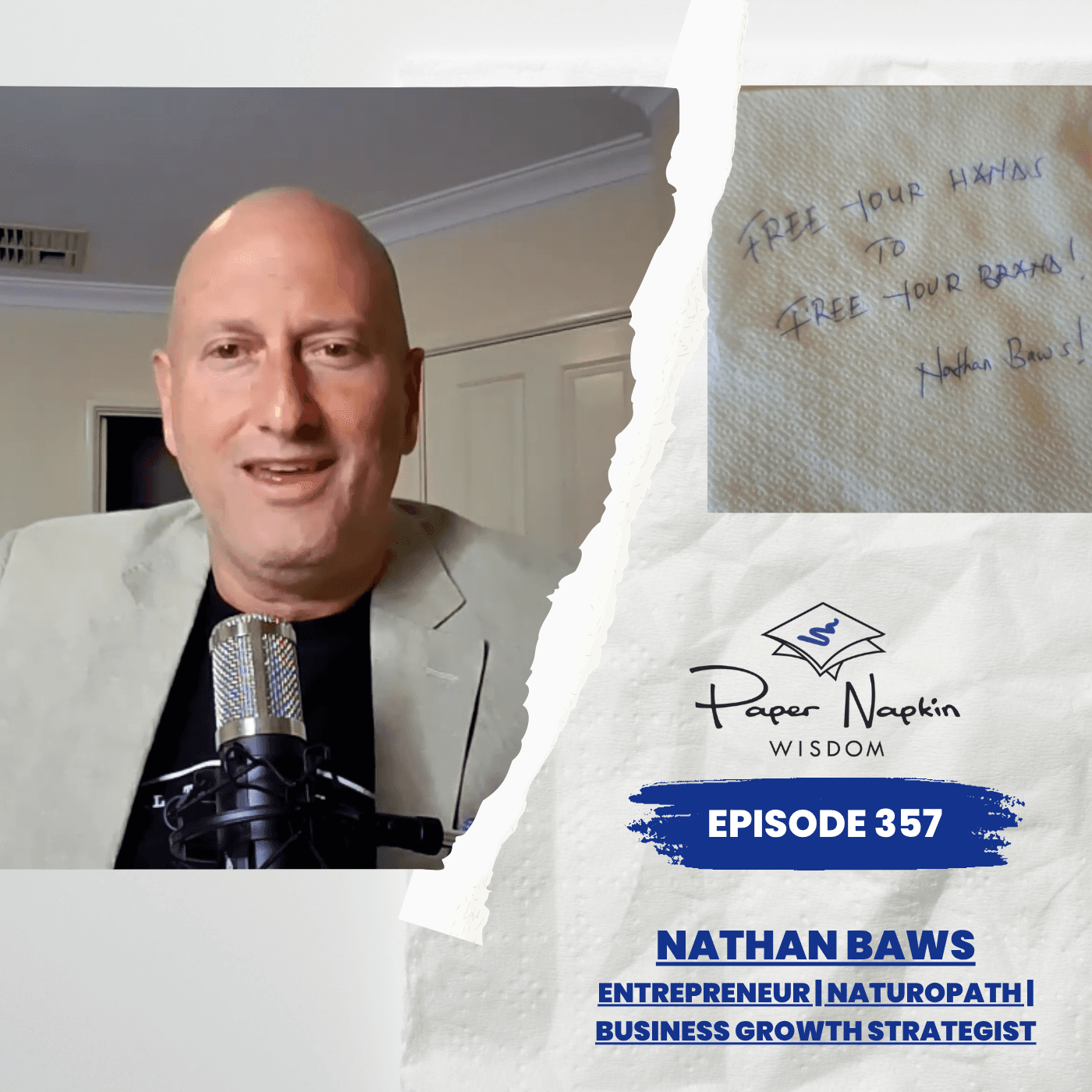
Free Your Hands to Free Your Brand: The Hidden Shift That Unlocks Real Growth
Apr 1600:46:58Tap to summarizePaper Napkin Wisdom Episode 357 When you first hear the phrase "free your hands to free your brand," it might sound simple. Almost obvious. But as reveals in this conversation with Nathan Baws, it's anything but easy—and it may be one of the most misunderstood ideas in business today. Nathan Baws is an entrepreneur, naturopath, and serial business builder with nearly 20 companies under his belt. His journey spans health, retail, supplements, property, and growth consulting—each venture shaped by a relentless curiosity for solving problems and creating scalable solutions. And yet… the real breakthrough didn't come from doing more. It came from doing less. The Trap Most Entrepreneurs Fall Into In the early stages of business, doing everything feels necessary. You are the operator. You are the firefighter. You are the engine. And for a while… that works. But as Nathan explains, growth eventually demands a shift: You only get growth when you start freeing yourself up and working on the brand—not just performing the business. This is where many entrepreneurs get stuck. They confuse activity with progress. They believe: If I'm busy, I'm growing If I'm involved, I'm needed If I let go, things will break But the opposite is often true. Your involvement becomes the bottleneck. From Survival to Scale Nathan uses a word repeatedly throughout the conversation: survive. Because for many entrepreneurs, that's the phase they never truly exit. And here's the paradox: If you stay in survival mode, you never create the capacity required to grow. To move beyond survival, you must: Step out of the day-to-day Build systems that operate without you Create space to think, build, and expand That's the shift from: Working in the business → Working on the business Execution → Strategy Operator → Architect And it starts with one uncomfortable move… Delegate Before You're Ready No one feels ready to delegate. No one. And yet, Nathan points out that his breakthrough came when he was forced into it: Delegation didn't come from confidence. It came from necessity. This is a powerful reframe. Delegation is not: A reward for growth A sign you've "made it" It is the requirement for growth. When you delegate: You create capacity <p class="Paragr...
Transcribe →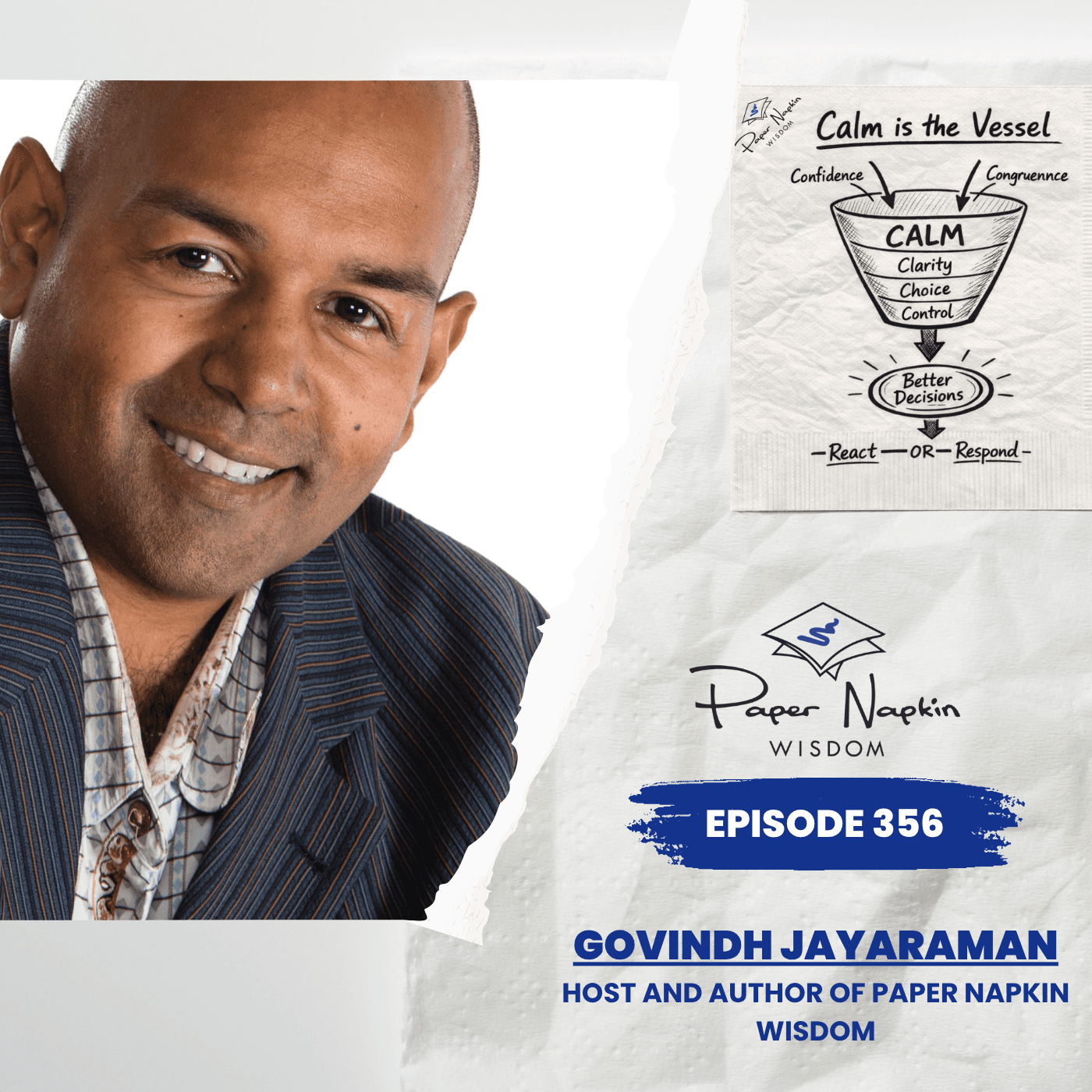
[EON] Calm Is the Vessel ...
Apr 1200:16:03Tap to summarizePaper Napkin Wisdom 356 - Edge of the Napkin #33 There's a moment before things go wrong. You don't always see it right away, but you can feel it if you're paying attention. The energy shifts. The noise starts to rise. People begin reacting before anything has actually happened. It's subtle at first, and then it builds. If you've ever been on a bench, in a meeting, or in a conversation that matters, you know this moment. It's the point where the outcome is still undecided, but something inside the environment has already started to tilt. Most people miss it because they are focused on what is happening around them. They are watching the play, the numbers, the surface-level signals. But the real game has already started somewhere else. Inside. And over the years, I've come to understand something that changed how I lead, how I coach, and how I show up in pressure situations. The game is rarely lost because of skill. It's lost because of state. The Best Seat in the House I've been coaching my son and his teammates for many years now, and it has been one of the most meaningful experiences of my life. What makes it even more interesting is this. These young men are better hockey players than I have ever been. At this stage, their skill level, their speed, their instincts, they are operating at a level I simply never reached. And that's not something I resist. It's something I genuinely enjoy. Because it gives me the best seat in the house. I get to watch them grow. I get to watch them compete. I get to watch them figure things out in real time. And at some point early on, I had to get very clear with myself. If I am not the best player on the ice, and I'm not the one showing them how to execute at their level, then what exactly am I here to do? Yes, I understand the game. Yes, I can contribute strategy, positioning, systems, all of that matters. But that's not the highest value I can bring to that bench. The real opportunity is leadership. Helping these young men become the kind of people who can handle pressure, who can stay grounded when things get chaotic, who can think clearly when it matters most. Not just hockey players. Leaders. There Is Never Enough Time One of the biggest challenges in coaching is that there is never enough time. Practices are short. Games are intense. The windows for connection are limited. You don't always get the one-on-one conversations you want to have. So over time, I started to look for different ways to reach them. Ways that didn't rely on long speeches or perfect timing. Ways that could create impact quickly, but still land deeply. I wanted them to feel seen. Not just evaluated. I wanted them to understand their value beyond performance. And earlier this season, we did something that changed the dynamic of the team in a way I didn't fully anticipate. The Exercise That Shifted Everything I handed every player a sheet of paper and gave them two simple instructions. Give gratitude. Receive it. Each player wrote something meaningful about another teammate. Not surface-level comments. Not "good job" or "nice play." Something real. Something specific. What they appreciated about them on the ice, and what they appreciated about them away from the game. Then they passed the sheet. Another player wrote. Then another. And another. By the time it came back around, every player had a page filled with how they were seen by the people they compete with every day. And then we did the part that mattered most. We gave it back out loud. One by one, they handed the sheets to each other and said it. "I'm grateful for you because…" That moment changed the room. You could feel it physically. The tension dropped. The walls came down. Players who normally stayed quiet leaned in. Players who rarely showed emotion started to feel something. This was no longer about hockey. This was about identity. The Bus Ride That Locked It In We didn't just leave it there. We got on a bus and headed to an Ottawa Senators game, carrying that energy with us. On the bus, we reflected. What did you hear about yourself? What surprised you? What stuck with you? The answers were incredible. You could see players sitting differently. Talking differently. Thinking differently. They weren't just a team anymore. They were connected. And then something happened that caught my attention. They started sharing what they saw in me. What Actually Landed I expected them to talk about hockey. Systems. Strategy. Decisions. They didn't. They talked about calm. They said they appreciated how steady I was. They said it didn't matter what was happening in the game, my demeanor stayed the same. They said I listened, that I gave everyone a voice, that I didn't overreact. That's what landed. Not what I said. What I was. And it made me realize something important. The thing you think you're teaching is rarely the thing that transfers. The thing you model always does. The Semifinal Last night put all of this to the test. Semifinals. One game. Winner moves on. And there was history. The same team we lost to last year. A game we controlled but couldn't finish. A loss that stayed with us for a long time. So this wasn't just another game. We took the ice, and you could feel it right away. The tension was high, especially on the bench. We were up by one after the first period. That's not a comfortable lead. That's a fragile one. As the game progressed, we started to pull away. The score moved in our favor, but something else started to shift at the same time. When the Energy Turns The other team got more physical. They started targeting our key players. That's part of hockey. When you control the puck, the other team reacts. But perception changes quickly in those moments. It starts to feel personal. It starts to feel like something needs to be answered. And our bench started to feel it. Voices got louder. Comments got sharper. Energy started to move in a direction that could easily take us out of the game. This is the moment where most teams lose themselves. Not when they are down. Not when they are up. </p...
Transcribe →
All or Nothing, Now or Never with Lisa Ascolese, Inventor, Entrepreneur
Apr 900:36:10Tap to summarizeIntroduction There are some people who don't just talk about ideas… they live them. Lisa Ascolese—known as "The Inventress"—is one of those people. She is the founder of Inventing A to Z, a company dedicated to helping entrepreneurs bring ideas from concept to commercialization, and the creator of the Association of Women Inventors and Entrepreneurs (AOWIE). With decades of experience, dozens of patents, and products that have reached major platforms like QVC, Lisa has built her life around one thing: Turning ideas into reality—and helping others do the same. And her napkin? "All or Nothing. Now or Never." Simple. Direct. Urgent. But as you'll see… it's not just a phrase. It's a way of living. The Napkin That Demands Action "All or nothing. Now or never." This isn't motivational fluff. It's a decision. Lisa shared this because she sees something every single day: People hesitate. They wait. They overthink. They look for certainty before they move. And in that hesitation… Momentum dies before it ever begins. As she put it, when you're starting something—especially in business or invention—you don't know everything. You don't know the cost. You don't know the path. So what do most people do? They pause. And that pause… becomes permanent. Momentum Is Everything One of the most powerful ideas in this conversation is this: Going from zero to one is the hardest step you'll ever take. Once you're moving, things get easier. But getting started—and staying started—is where most people fail. Lisa reinforced something we often forget: Momentum is fragile It takes energy to build And even more awareness to protect When you stop—even briefly—you don't just pause progress… You lose energy, belief, and direction. And restarting? That's often harder than starting. What Actually Stops People Lisa broke it down into two simple forces: 1. People (The Naysayers) Not strangers. Not critics online. People close to you. "Why are you doing this?" "This doesn't make sense." "Are you sure?" And here's the truth: It's not what they say… It's that you listen. 2. Money (The Unknown) When people don't understand: What it will cost What it will take What success actually looks like They begin to question everything. And questioning leads to hesitation. And hesitation leads to stopping. The Real Difference: Problem vs. Idea This might be the most important distinction in the entire episode: Falling in love with the idea vs. solving a real problem. Lisa has seen it over and over again. People get excited about: A clever concept A cool product <ul class="BulletListStyle1 SC...
Transcribe →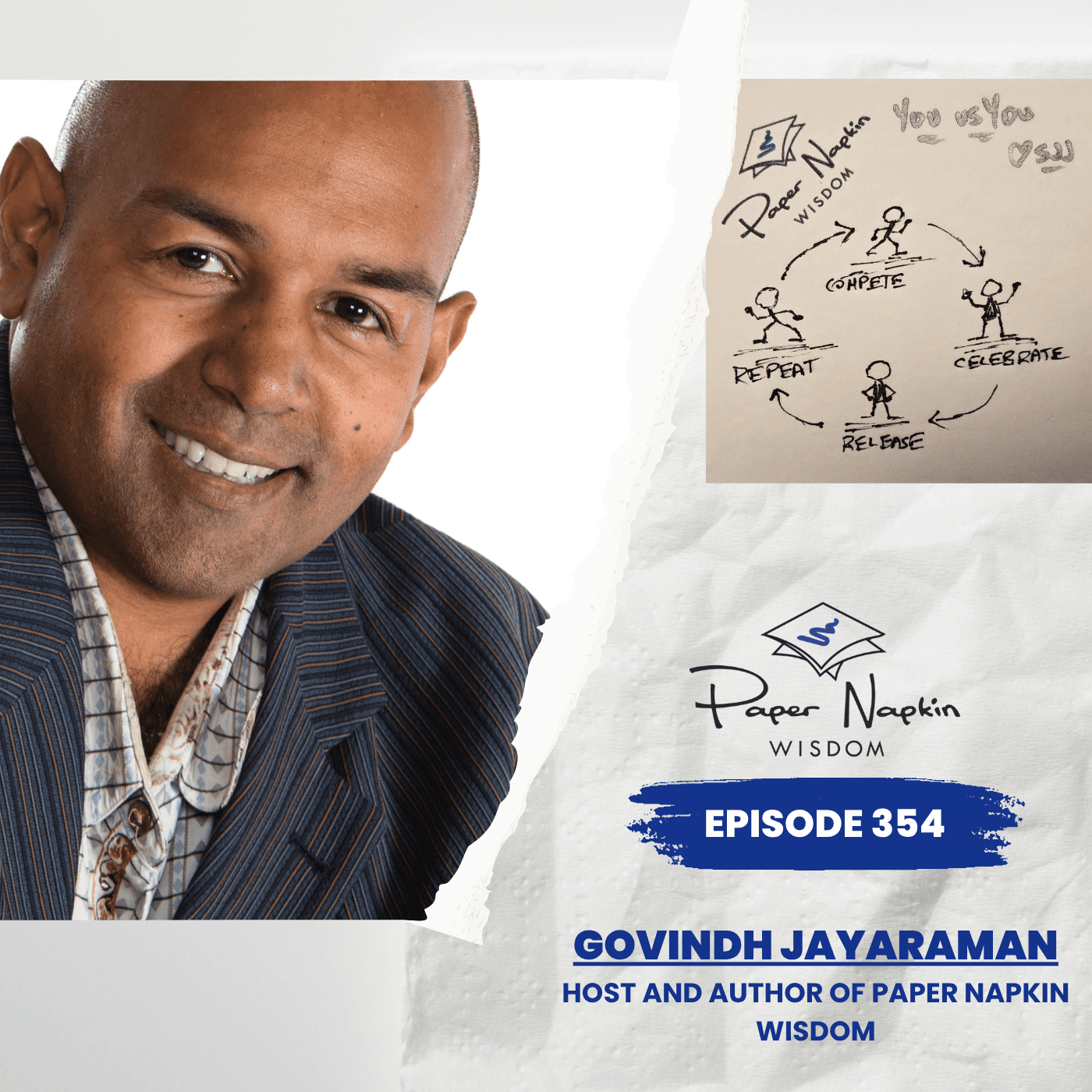
[EON] Compete With Yourself. Love Your Teammate. Release the Outcome. Edge of the Napkin 32
Apr 500:21:47Tap to summarizeA Story I Almost Didn't Tell There are moments in life where you realize… the lesson isn't something you're teaching. It's something you're being shown. And often… it comes from the people closest to you. This one comes from my daughter. The Beginning of an Ending She's graduating this year. And with that… she's closing a chapter that has been a defining part of her life since she was four years old. Dance. Not just as an activity—but as a way of being. For over a decade—and especially in the last several years—she's spent between 30 and 60 hours a week in the studio. Training. Practicing. Refining. Becoming. This wasn't something casual. This wasn't "a class." This was a second home. A rhythm. A commitment that shaped how she thinks, how she shows up, and ultimately… who she's become. From Watching… to Seeing Dance wasn't my world growing up. I didn't come from it. I didn't fully understand it. My exposure was limited—some traditional Indian dance in the background, the occasional performance, maybe a trip to the National Arts Centre. I remember appreciating it. Respecting it. But not really feeling it. That changed the moment I watched my daughter dance. Because when it's your child… you don't just watch. You see. You see the four-year-old who can't quite stay in formation. Who forgets the choreography. Who smiles at the wrong time. And then… you blink. And that same child is standing on stage with presence. Control. Confidence. Expression. She dances everything—ballet, jazz, contemporary—but if you really asked her, her heart lives in tap. And over time, she didn't just improve. She became exceptional. But This Isn't About Dance Because the most powerful lesson I've learned from watching her… Has nothing to do with technique. Nothing to do with choreography. Nothing to do with performance. It has everything to do with… How she competes. The Paradox of Competing Alongside Your Best Friends In competitive dance, there are group performances—and then there are solos. And in those solo categories, something fascinating happens. My daughter's biggest "competition"… Is also her best friends. They've danced together for over a decade. Grown up together. Trained side by side. Shared wins, losses, long practices, early mornings, and everything in between. And when they step onto the stage for their solos… They are, technically, competing against each other. Sometimes my daughter wins. Sometimes one of her friends wins. Now, if you know me—you know I'm competitive. In our house, even a simple game of cards can turn into something intense. Voices rise. Emotions show up. Competition is very real. So I watched this dynamic closely. Expecting rivalry. Expecting tension. Expecting comparison. But what I saw instead… Was something completely different. They Don't Compete Against Each Other They compete… With themselves. When they come off stage, they don't ask, "Did I beat them?" They ask, "Did that feel better than last time?" And the answer is always honest. Simple. Unfiltered. Real. Then they move on. No overthinking. No spiraling. No attachment to what the judges might say or what anyone else might think. And here's the part that gets me every time… They Cheer For Each Other—Loudly When one of them wins, the others are often the first ones standing. Clapping. Cheering. Celebrating. Not politely. Not performatively. Genuinely. Because in their world… Your success doesn't take anything away from me. That's a lesson most adults haven't learned yet. One Shot. One Moment. No Reset I often compare this to hockey. My son plays hockey, and in hockey—you get shifts. You make a mistake? You get another chance. Another shift. Another opportunity to recover. Dance doesn't work like that. Dance is one shift. Two to three minutes. Months of preparation. Hours of rehearsal. And then… That's it. No redo. No reset. No next play. Just presence. And inside that pressure—internal and external—they've learned something remarkable: Go all in… and let go of the outcome. Focus. Align. Act. — Lived, Not Taught Watching her, I realized she's living something I talk about all the time. Not conceptually. Not intellectually. But practically. Focus. Align. Act. She lives it. FOCUS — Know What You Want She wants to win. Let's be clear. She's competitive. She cares. She pushes herself. But her focus isn't on beating someone else. It's on being better than she was before. That subtle shift changes everything. Because when your focus is internal, your energy stays clean. No jealousy. No comparison. No distraction. Just growth. ALIGN — Be With Yourself Fully Before she steps onto the stage, there's a quiet process. <p class="Paragraph SCXW70058342 BCX0"...
Transcribe →