← Paper Trail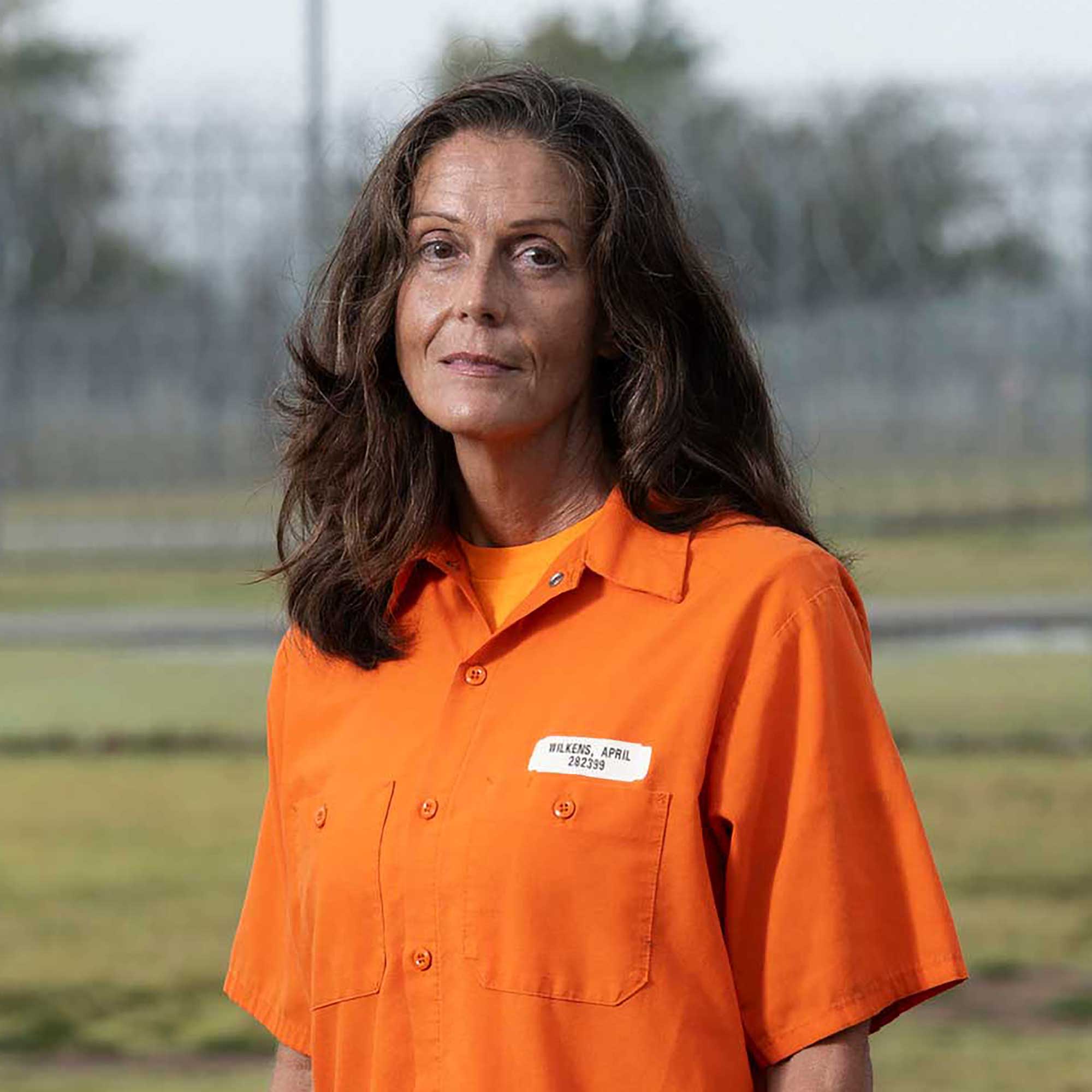
Paper Trail
Should People Who Killed Their Abusers Walk Free?
00:38:34
In Oklahoma, a group of mostly women serving long sentences for the murders of their abusive partners found an unlikely potential pathway to freedom. But that wasn’t the end of the story.
Loading summary
Transcript142 lines
- [00:01]
Jessica Lessenhop
ProPublica Investigative journalism in the Public Interest. As a heads up, in this episode, you're going to hear about domestic partner abuse. If you'd rather not, maybe skip this one. As a reporter, I have covered a lot of subjects, but the one I spent the most time on is the criminal justice system, writing about police and crime and prisons. And over the years, that has had one very tangible result. I can't watch Law and Order anymore. I can't. This aversion is really to a specific kind of Law and Order episode where the world it depicts is too tidy. The villains are so villainous, like an abusive husband who murders his wife in the moment. It's like, hell, yes, lock that guy up. TV off, and I'm ready for bed. It's supposed to feel really satisfying,
- [01:09]
Amanda
but
- [01:09]
Jessica Lessenhop
reporting on this stuff, even when I was just a baby reporter, you quickly learn that a lot of the millions of people locked up in US prisons are not cartoon villains. That's just not how real life works.
- [01:23]
Pam Koloff
As we know from our reporting, there aren't really black and white narratives. There's a lot of gray.
- [01:29]
Jessica Lessenhop
This is Pam Koloff, also not a huge fan of Law and Order. She writes for ProPublica and the New York Times Magazine about the criminal justice system.
- [01:39]
Pam Koloff
I primarily look at wrongful convictions, junk forensic science, and flawed eyewitness testimony.
- [01:47]
Jessica Lessenhop
I devour her stories when they come out. Her investigations have helped get multiple innocent men out of prison, including one on death row. I recently heard about her latest project, which had this really messy question at the heart of focused on a group of people in prison who are not claiming to be innocent. They're saying, we're both perpetrators and victims.
- [02:14]
Pam Koloff
So these were usually, but not always, women who were abused and who had struck back at their abusers and had. Had killed them.
- [02:24]
Jessica Lessenhop
Women who murdered their abusers. If the abuse was a major reason for their crime, should they spend less time in prison? A new law was trying to give people like them a pathway out.
- [02:38]
Pam Koloff
The idea of that law is that if someone is incarcerated and they are a survivor of domestic violence and they can prove to a judge that their crime stemmed from their abuse, then a judge should reconsider their sentences.
- [03:01]
Jessica Lessenhop
All of this was happening in Oklahoma. Oklahoma has one of the highest rates of female incarceration in the country. The US has some of the highest incarceration rates in the world. We're fourth, behind El Salvador, Cuba and Turkmenistan. So this law seemed like it was part of Oklahoma's attempt to address this in some way. The law was pretty Radical. It could theoretically let people convicted of first degree murder out of prison.
- [03:33]
Pam Koloff
To me, it was like, what the hell is going on in Oklahoma? What is happening? I want to know. And so that was the beginning of almost a year of reporting.
- [03:43]
Jessica Lessenhop
Pam went to Oklahoma to watch this new law roll out and to meet the women at the center of it.
- [03:50]
Pam Koloff
And as I should have known, no criminal justice story is simple. It never turns out the way you think it's going to. And that's what happened here.
- [04:03]
Jessica Lessenhop
I'm Jessica Lessenhop. This is Paper tr.
- [04:12]
Pam Koloff
But, okay, going. Going back to the beginning. Would that, would that math be right? That you were about seven or seven?
- [04:20]
Amanda
Yes.
- [04:21]
Jessica Lessenhop
Pam found out that this whole story starts back in the mid-90s with a young girl named Amanda. She had an aunt that she loved named April.
- [04:31]
Amanda
I remember Aunt April always laughing a lot. And I loved her. I thought she was really cool. She had cool insights.
- [04:40]
Jessica Lessenhop
Aunt April had gone to graduate school and ran her own business. But then April got engaged to this guy.
- [04:48]
Amanda
But I remember he seemed kind of like, scary. He was not very expressive. In fact, he seemed.
- [04:55]
Jessica Lessenhop
Amanda remembers that there suddenly seemed to be a lot of chaos in April's life.
- [05:00]
Amanda
A lot of, like, panicked phone calls. Sometimes like my mom picking up the phone and like saying, april, I can't deal with this right now. Or, um, or my grandma Louise kind of freaking out about April. And a lot of my.
- [05:16]
Jessica Lessenhop
April and her fiance broke off the engagement, but they kept seeing each other. And then one night, something really terrible happened that changed everything for the family.
- [05:27]
Amanda
I remember we stayed out really late at grandma's house and grandma was crying. And I was aware of what happened, but not the details. For a long time, I think I just knew that April had done something bad and she was in jail. And then I understood that she had killed someone.
- [05:49]
Pam Koloff
April killed her ex fiance in 1998. And then in 1999, she was sentenced to life with the possibility of parole.
- [06:01]
Amanda
As a kid, I didn't want to know everything. And I. My parents, you know, they're. They're very far right, but they're Christian and they believe in, like, visiting the incarcerated and like, supporting them. And I, I did feel very convicted, like I need to keep this connection, you know, like, she's my family.
- [06:28]
Pam Koloff
It never really added up for her. It never made sense to her why this really beautiful, wonderful woman who she had a strong relationship with, how it would be possible that she was capable of a crime like the one she
- [06:42]
Amanda
was convicted of having to deconstruct. That Growing up was a long process.
- [06:49]
Pam Koloff
So Amanda, when she was a grown woman, started investigating all this and started try to make sense of what had happened to April.
- [06:59]
Jessica Lessenhop
Here's what Amanda learned in her research. April met her ex fiance when she was 25. He was 37, the son of a very successful car dealer in Tulsa. Two of his previous romantic partners had gone to the police to report abuse, but April didn't know that at first. He proposed two months into their relationship, which not long afterward turned violent.
- [07:25]
Pam Koloff
Stalking and rape and terrible abuse, verbal abuse.
- [07:30]
Jessica Lessenhop
April called 911 at least 10 times to report him. She'd gotten three orders of protection against him, but the abuse didn't stop.
- [07:40]
Pam Koloff
And that abuse was extremely well documented. I saw eight police reports and there were many witness statements from uninvolved bystanders and they were really hair raising.
- [07:55]
Jessica Lessenhop
April's niece Amanda eventually would read these witness statements herself. A neighbor once saw April's ex fiance chase her down the driveway, grab her by the hair and drag her screaming back inside the house. A doctor who lived across the street from her ex once saw April sitting in her car, bloodied after he smashed the window and grabbed her keys so she couldn't leave.
- [08:19]
Pam Koloff
But generally speaking, the local law enforcement in Tulsa did nothing.
- [08:24]
Amanda
My understanding also is like drugs were involved and you do stupid things when you're on drugs.
- [08:32]
Jessica Lessenhop
April would later testify that her life continued to fall apart when her ex introduced her to cocaine and to meth.
- [08:40]
Pam Koloff
April starts using drugs and her mental health deteriorates. And she was in a really frightening situation in the middle of the night
- [08:51]
Jessica Lessenhop
one night, April went over to her ex's house.
- [08:55]
Pam Koloff
The way she explains it, she went after just years and years of all of this to try to make peace with him. In her mind, this made sense at the time.
- [09:07]
Jessica Lessenhop
According to April, after she refused to have sex with him, he raped her and threatened to kill her. She grabbed his handgun and when he came towards her, she fired.
- [09:19]
Pam Koloff
What was in dispute in April's case is April and her attorneys have explained that this was an act of self defense, that this was a situation where she was certain she was going to die. And Prosecutors, the Tulsa DA's office, does not see it that way. And they characterized her at trial as this meth crazed fabulist who went there looking for drugs and revenge.
- [09:57]
Jessica Lessenhop
A jury found April guilty and sentenced her to life with the possibility of parole. But over the years she was denied multiple times. The district attorney's office opposed her release saying, quote, she presents a safety risk to the public. When Amanda learned all of this as an adult, she tried to figure out how to make sense of it. Was her aunt a perpetrator, a victim, or both? But when she tried to ask these questions, not many people seemed up for having a nuanced discussion.
- [10:33]
Amanda
I was getting questions like, well, why did she go to his house that night? And it's like, well, why was she even dating him? Why was she even bothering to date men in general? You know, we can go, what if, what if, what if? And then it was kind of just being ashamed to talk about her case, too. I'm like, I don't know that I can argue for her very well. But then as I'm talking with her, you start to really question things, and that was part of my journey.
- [11:06]
Jessica Lessenhop
Eventually, Amanda came to believe that no matter what April's level of culpability was in the crime, spending the rest of her life in prison was not a fair punishment.
- [11:16]
Amanda
My family understood that what happened to her was not fair. She was punished too harshly. Even if you think she did something wrong.
- [11:29]
Jessica Lessenhop
Amanda started a blog documenting her research into her aunt's case, hoping someone would take an interest and help.
- [11:37]
Pam Koloff
And she kept approaching different people, Lawyers, reporters, you name it, saying, my aunt's case really, really needs attention. You really need to look at this.
- [11:48]
Jessica Lessenhop
Pam wanted to talk to April herself about what happened next, so she arranged a visit.
- [11:53]
Pam Koloff
I went to McLeod, Oklahoma. Tiny, tiny little town, and went to Mabel Bassett Correctional center, which is a very imposing building, sort of in the middle of farmland. And I was given not long. So I'm gonna tell you, you know, how do you ask someone about their story like that? An hour?
- [12:20]
April Wilkins
This has been a roller coaster. It has been such a roller coaster.
- [12:26]
Jessica Lessenhop
So April told Pam how ground down she'd become in the months leading up to the murder.
- [12:33]
April Wilkins
There were times as I became broken and lost my, like, every ounce of self worth. You start to. It starts to. You know, you even start to question yourself afterwards. I did.
- [12:54]
Jessica Lessenhop
By the time Pam met April, her niece Amanda had been researching and begging for someone to look into the case for almost 10 years.
- [13:02]
April Wilkins
And so my niece and what she did and how she set that up, and she stayed with it. And that's a testament to love and the power of what one human being can do.
- [13:14]
Jessica Lessenhop
Her niece Amanda eventually reached two lawyers who advocated for criminal justice reform in Oklahoma. And they said, yes, we want to help April. But they had something bigger in mind. Using April's case as a way to illustrate the need for a new law, a law that would Allow abuse victims to apply for resentencing.
- [13:35]
April Wilkins
I was like, yes, yes, yes. I think that was my answer.
- [13:38]
Amanda
Yes, yes, yes.
- [13:39]
April Wilkins
Right. Thank you, Jesus. Yes, yes, yes. You know, so I'll say.
- [13:49]
Jessica Lessenhop
The lawyers knew there were more women like April in prison. In addition to having one of the highest rates of female imprisonment in the country, Oklahoma also has one of the highest rates of domestic violence. The lawyers wanted to find more people who the law could apply to. They asked April if she had any ideas.
- [14:11]
Pam Koloff
April sort of thought about this and decided that maybe a way to figure out the answer to that question was to do her own survey of the women she was incarcerated with.
- [14:22]
April Wilkins
I said, you know, there's like, over 1200 women here, and so we just need to let them tell us ourselves. So put the little survey together, let people tell it in their own words, and said, okay, if you.
- [14:37]
Pam Koloff
Obviously, abuse is a fairly common, sadly, thing for people to have experienced who are incarcerated. And what she was trying to figure out is, of those women, how many of them had crimes that stemmed from their abuse like hers? And so she had a friend within the prison who had access to a printer and ran a couple hundred copies of this questionnaire off for her, and she and friends of hers passed it out and asked women to please fill it out if they had a story to tell.
- [15:13]
April Wilkins
There's so many times we have been shamed into silence. I have had to really encourage the ladies not to be silent.
- [15:27]
Pam Koloff
Prison is a place where you're shielding yourself. You're not exactly trying to be vulnerable all the time. You know, she's a lifer. She's older, she's respected. She has a certain charisma. So she was the right person to ask people to tell those stories.
- [15:44]
April Wilkins
Silence perpetuates abuse. It perpetuates injustice. So if we remain silent, then there will be no change.
- [16:02]
Jessica Lessenhop
How many responses did she get?
- [16:05]
Pam Koloff
156 women responded to the questionnaires.
- [16:09]
April Wilkins
I knew I had a lot of company, but I didn't know it was that much company.
- [16:14]
Jessica Lessenhop
Pam read through some of them with the names redacted.
- [16:18]
Pam Koloff
The one that stood out to me the most, and I thought about it for a long time afterward. This woman described some pretty terrible abuse that she had been through. And then she wrote, but I am free, all capital letters now. And I just thought that you might prefer prison to escape abuse, I think speaks volumes about what these women's experiences are like.
- [16:46]
April Wilkins
I know these women, and I care about these women.
- [16:52]
Pam Koloff
April got to know those women pretty well, and these are People of very, very different backgrounds. And they found this kind of common ground where things weren't quite as lonely as they had been.
- [17:08]
April Wilkins
So we're survivor sisters. We are a support system.
- [17:18]
Jessica Lessenhop
The lawyers who had taken on April's case agreed to represent other women in the sisterhood, too. By this point, the proposed law had a name, the Oklahoma Survivors act, which would give a judge the power to determine whether or not abuse had been a substantial contributing factor to the crime. And if the women could prove that, they'd be eligible for resentencing. April and the lawyers started a media campaign to try to build support for the bill.
- [17:48]
Pam Koloff
I didn't want to hurt him. I didn't want to take his life.
- [17:51]
April Wilkins
I just wanted to be safe. April Wilkins.
- [17:55]
Pam Koloff
April was really at the forefront of that, so she would do newspaper and local television interviews.
- [18:03]
April Wilkins
I would never, ever, ever, ever take my freedom for granted again.
- [18:07]
Jessica Lessenhop
Amanda, April's niece, started lobbying, too.
- [18:11]
Amanda
We had advocacy days up there, and so we would go and we talk to legislators, like, go to each office, Learning about the legislative process. Yeah, it's so complicated.
- [18:24]
Jessica Lessenhop
Prosecutors expressed concern and opposition, but a coalition of both Democrat and Republican lawmakers were able to push the bill forward. In 2024, it came up for a vote in the legislature.
- [18:37]
Pam Koloff
April was allowed to go to Mabel Bassett's law library and listen to the vote.
- [18:43]
April Wilkins
So you were live. And when I heard the roar come up from the gallery, like, you could see the boat coming, right? You know, like, when I heard their roar come up for the gallery, then we had our own roar there. It was just a few of us. It was count time. We were just like, ah, it passed.
- [19:00]
Pam Koloff
And that was a really, really, really exciting moments.
- [19:04]
April Wilkins
Oh, my gosh. It was amazing. Yeah, yeah, yeah.
- [19:06]
Pam Koloff
And she then announced that, you know, to everyone in her area, where she was housed in the prison.
- [19:13]
April Wilkins
So I was able to run out there and tell them, and they were able to run and spread it through the compound, and you could just hear the roars. And everybody's so excited, like, oh, my gosh. It was just. Yeah.
- [19:26]
Jessica Lessenhop
After some revisions to the bill, the governor signed it.
- [19:29]
Pam Koloff
I really don't think anyone thought, yeah, we're going to, in just a couple years, change state law and pass the most progressive law in the nation like this. But that's what happened.
- [19:42]
Jessica Lessenhop
And then do they allow themselves to then think we. We might get to go home?
- [19:50]
Pam Koloff
I think everyone was very excited about the law getting passed, but my sense from talking to people was that no one really knew what was going to happen.
- [20:00]
April Wilkins
Yeah. Then people like, okay, this is real. Is it going to apply to me? Can I do it?
- [20:04]
Pam Koloff
And then when these women started filing their resentencing petitions, you know, everyone knew each other's court dates. They knew who was going first and who was going after who, and they would compare notes.
- [20:17]
April Wilkins
And so we were all excited. It was just, you know, we're survivor sisters, sister survivors.
- [20:26]
Pam Koloff
So there was a lot of goodwill heading into Lisa Moss hearing. In January of 2025,
- [20:38]
Jessica Lessenhop
The survivor sisters started having hearings scheduled. And the first one to go was a woman named Lisa Moss. She was serving a life sentence for the murder of her husband, who she said had beaten and raped her throughout their marriage. Her case was a bit unusual. Even though she was convicted of first degree murder, she hadn't actually been present the night her husband was killed. Lisa's older brother shot him. But during the trial, prosecutors argued successfully that she had helped orchestrate the killing. Under the new survivors law, a judge was able to review her case and decide whether the violence and abuse had been a substantial contributing factor to the crime. At her hearing, Lisa got up on the stand and told the story of her marriage. About getting slammed against a refrigerator and raped with a curling iron, and about her growing fear that her husband was molesting her 4 year old daughter from a previous relationship. Afterwards, the judge decided to yes, the abuse had contributed to the crime. He determined that her life sentence was too harsh, and he reduced it. After more than 30 years behind bars, Lisa was allowed to walk out of prison. That very day.
- [22:02]
Pam Koloff
April got news of this, and she sort of like leapt off of her bed and ran to go tell some of the other women who were in her housing unit. Lisa's going home. And then everyone started screaming and crying. And I think that moment was so meaningful to so many people that Lisa had been believed that Lisa was going to get to see her kids, her grandkids. And when April returned, there was a message from her lawyer that said, you're next. And the way that April described that, what she said, our exodus had begun.
- [22:49]
Jessica Lessenhop
In some ways, this all happened really quickly. The Survivors act had gone from an idea to a law to someone getting released from prison in just three years. But some people were also pushing back. That included the Tulsa County District Attorney.
- [23:08]
Steve Kunstweiler
We literally are going to be opening up Pandora's box for any person who in their past can say at some point they were the victim of some type of domestic violence.
- [23:19]
Jessica Lessenhop
In an interview with a local TV station, he questioned whether the law might be a slippery slope.
- [23:25]
Steve Kunstweiler
I'M not opposed or want to see anybody be the victim of domestic violence, but there's plenty of characters out there that will take advantage of what this idea is.
- [23:36]
Jessica Lessenhop
Pam talked to him. His name is Steve Kunstweiler.
- [23:40]
Steve Kunstweiler
I always am supportive of the process. I'm very much a constitutional person.
- [23:50]
Jessica Lessenhop
He said he had to balance the needs of the women in prison with the needs of the murder victims families.
- [23:57]
Steve Kunstweiler
I can't. You know, in many respects, I'm speaking for victims who don't have a voice anymore. Like in each one of these cases that you mentioned. I mean, those victims are dead and passed away, and their family members don't get to celebrate birthdays and holidays with their loved one because their lives were wrongfully terminated by individuals.
- [24:16]
Pam Koloff
You know, prosecutors make sure that justice is served.
- [24:21]
Steve Kunstweiler
I represent the state and in most respects, the victims in these murder cases. These are all defendants who were found guilty of murder by 12 men and women beyond a reasonable doubt and were sentenced accordingly unanimously.
- [24:40]
Pam Koloff
I think the idea of going back and second guessing some of that is what Bothers prosecutors.
- [24:46]
Steve Kunstweiler
So Ms. Wilkins had the right to appeal, and she did, and the Court of Criminal Appeals denied her appeal. She's under a life sentence until the Pardon and Parole Board determines otherwise.
- [25:09]
Jessica Lessenhop
According to prosecutors like Steve Kunstweiler, the problem with this law went far beyond April and the other women hoping for lower sentences. Because if we started to take defendants abuse histories into account during their sentencing, well, where would you stop?
- [25:27]
Pam Koloff
And I think those questions are part of what made prosecutors so nervous about this legislation, because it is a sort of Pandora's box. Right? Like, if you acknowledge that these women have committed these crimes in part because of the abuse that they went through, what about other people? What about people who have been abused in their childhoods or have gone through all sorts of difficult things? Is that something that we should also factor into these decisions? And when you look at how high the rates are of abuse of incarcerated populations, it raises a lot of larger questions
- [26:13]
Jessica Lessenhop
that Pandora's Box prosecutors were afraid of. Oklahoma was about to open it. That's after the break.
- [26:38]
Megan
Hi, I'm Megan. I work in membership at ProPublica. I want to tell you a bit about the newsroom that makes this podcast. The first thing you should know is that we're a nonprofit, which means we have no owner, no corporate interests or government funding, and we have no paywall. So everything we publish, including this podcast, is free. Our business model protects our independence. We're not beholden to benefactors. Funders have no say in what we cover. Our Reporters have the freedom to investigate the most powerful people and institutions in this country and follow the facts wherever they lead. Right now, a lot of the news industry is being reshaped by political influence, profit motive and financial pressure. But ProPublica is different. It's investigative journalism for the people, not for profit. Find out more@proPublica.org info
- [27:36]
John Biewen
Most Americans are inundated with news from countless sources, but we're not very happy about it.
- [27:42]
Jessica Lessenhop
To me, Fox News, just not. They don't tell the whole story.
- [27:46]
Pam Koloff
I'm not particularly interested in msnbc, and that's where I'd get irritated and not want to listen to it.
- [27:51]
John Biewen
I'm John Biewen, host of Scene on Radio. In our new season, the News, we explore what's really wrong with the news media and what could make it better. Scene on Radio the news available now, wherever you get your podcasts.
- [28:12]
Jessica Lessenhop
After Lisa Moss was released In January of 2025, other women who had applied for resentencing got hearing dates. Because their cases took place in different counties from Lisa's case, they would all be heard by different judges. April's court date was months away, but in the meantime, Pam started attending hearings for the other women.
- [28:35]
Pam Koloff
The thought had been that it was important for each survivor at the resentencing hearing to do what Lisa had done, which was to get up on the stand and to tell the story of
- [28:46]
Jessica Lessenhop
their abuse on the witness stand. The women would tell their stories, sometimes really harrowing accounts of their abuse, in response to questions from their own lawyers. Pretty friendly, sympathetic questions designed to get them to explain what they'd gone through. But then the prosecutors had the chance to cross examine them, and those questions were very different.
- [29:10]
Pam Koloff
The one that struck me the most was a hearing that happened over the summer of Tyisha Long, who's the youngest member of the survivor sisterhood. The prosecutor would say, and I'm paraphrasing here, but would say something to the effect of today you said you were strangled to the point of unconsciousness twice. But at your trial you said it was once, which is it was the sex that you had, you know, you said it was not consensual. Is that accurate? You know, we have a lot of text messages between you all. She started off very, very confident and relatively calm, you know, given the circumstances. But as things wore on, she was on the stand for over five hours.
- [30:01]
Steve Kunstweiler
Wow.
- [30:02]
Pam Koloff
She started giving these, like, monosyllabic answers. It was like she was sort of like folding into herself and literally getting smaller under this questioning, you know, the Courts want people in all cases to have a very linear explanation of what happened, A to B to C, on the night of the crime. And from everything we know about trauma and what trauma research has told us, when you are a victim of sustained abuse, that affects your recall. That affects the way that you remember the abuse. But I was struck by the hostile tone, and April talked to me about this afterward because, of course, she was getting news of how these hearings were going.
- [30:51]
April Wilkins
I will tell you that it reminded me of how my ex talked to me. So then that brings that up, too.
- [30:59]
Pam Koloff
And she had testified at her own trial, and she said that for her, one of the things that was difficult was that that sort of scolding tone, that disbelief, was not that different than what a survivor remembers from the way that an abuser spoke to them.
- [31:27]
Jessica Lessenhop
After these hearings over the summer, the judges didn't immediately issue rulings like the judge in Lisa's case. And the months slowly went by. Finally, April's hearing day arrived. The courtroom was packed. Amanda, April's niece, was there. Lisa Moss, the first person released under the law, was also there. The state would be represented by Steve Kunstweiler, the DA Himself, who'd also opposed April's attempts for parole. In his opening remarks, he told the courtroom, she sits here as a convicted murderer.
- [32:08]
Pam Koloff
So the state hired its own expert. And that expert said that he did not believe the abuse had been a contributing factor, and that what had been a contributing factor was both her drug use at the time and her mental health. And a really painful determination was made by both April and her lawyers that she would not take the stand. And I think everyone could see the way that was going to go. It was going to be a grueling experience, and what would it accomplish, really?
- [32:45]
Jessica Lessenhop
And so April did not take the stand throughout the hearing. She sat silently next to her lawyer at the defense table.
- [32:55]
Pam Koloff
So after everything had concluded, the judge said that he was ready to make a ruling and that he would not be agreeing to re sentencing, and that he did not feel that the defense had met their burden of proof in showing that the abuse that April went through was a, quote, unquote, substantial contributing factor to the crime.
- [33:22]
Jessica Lessenhop
And as he's explaining his decision, Are you watching April? What was her reaction?
- [33:30]
Pam Koloff
April was very stoic at the time. It was very emotional, obviously, but she kept it together. The emotion I remember the most was in the gallery among the people who'd come to watch. She had a lot of family members who were there. Lisa Moss was there. And it was absolutely devastating for the People who were there. And I met with Lisa the following morning for coffee, and she just was so shocked and sad. She said to me, I don't understand how I'm out here, and April has to go back to prison. I just don't understand. And I think one of the things that was so hard for both of them was April was always supposed to be the one who led the way. She filed her petition on the very first day that this law was enacted. She had literally been there since the beginning with this questionnaire and with her advocacy from within the prison.
- [34:29]
April Wilkins
Like, there was. It was bittersweet. So exciting with Lisa and getting to talk to her grandkids. And then it. But then, you know, at the same time, you're like, yeah, I want to be free, too. And I want to. I want to hug my granddaughter. And I want to, you know, like, don't we all? You can't help and not feel that.
- [34:56]
Jessica Lessenhop
After April's denial, the judge followed up with the decisions on other women who had hearings one by one. They were all denied. To date, Lisa Moss is the only person to be released under the Oklahoma Survivors Act.
- [35:13]
Pam Koloff
Lisa was the only person of that group who wasn't present at the time of the killing. She did not commit the act herself, and she was not there. And I think that has to be a piece of this. I think another thing I was really struck by is that so much of this is really about the discretion of prosecutors. So in Lisa's case, it was not the super aggressive type of cross examination that I saw in these other cases. So I think we can see that depending on what prosecutors think the outcome should be, that often is what happens here. April liked to quote the scholarship of a law professor who's written a lot about this, about how the legal system is always looking for the perfect victim.
- [36:08]
April Wilkins
So I'm not a perfect human being. I don't know any perfect victims.
- [36:14]
Pam Koloff
And how none of them really were the perfect victims and things that count against you. You know, just the idea of a woman committing that kind of violence. Right. That makes you an imperfect victim. And there are other things. Race, class, education, sexual history, drug use. None of them were perfect victims. And that was a mark against them.
- [36:38]
April Wilkins
It's just important for people to understand that we're human and that we are dealing. When you talk about survivors who have survived horrific acts of domestic violence, what does it say about a society that treats some of its most victimized or vulnerable human beings, you know, with so little mercy, so little compassion?
- [37:07]
Pam Koloff
So if we want to address mass incarceration. And that's one of the reasons why Oklahoma has instituted some reforms, is because it has this overflowing prison population, then if we stop at nonviolent crimes, it still doesn't make enough of a difference to really address the numbers we're talking about. We have to wrestle with these harder cases. Right. And I think it's really important just to stop for a moment and think about the murdered, the victims themselves and the victims families and what is best for them and what they want. And this is really complicated. Those things don't always align. And at the same time, we have to reckon with some of the people who are in prison who've committed violent crimes if we want to reduce mass incarceration. So where do we begin? And a lot of that is beginning with, for example, victims of abuse. But none of these cases are easy. If someone has been handed a life sentence and there's not a question about guilt or innocence, something really terrible happened. But we do have to at least think about it if we want to address the enormous prison population we currently have.
- [38:35]
Jessica Lessenhop
April is still appealing her case. Lisa Moss, the only person to be released under the act, now goes by her maiden name, Lisa Wright, and she works as an advocate for incarcerated survivors. And Amanda, April's niece, continues to advocate for her aunt's release. This episode was produced by Kathryn Wells and Sabi Robinson. It was edited by Julia Longoria, David Herman mixed and sound designed the episode. Music by Julian Sartorius, Filippo Ansaldi and Simone Sims Longo with additional music from Epidemic Sound. Our team also includes Gabrielle Burbet and Emma Talkoff. Pam Koloff continues to report on miscarriages of justice and her new book is coming out next month. It's called Catch the Devil and it's the story of a con man who helped send an innocent man to death row. We'll see you in two weeks for a brand new episode of Paper Trail.
- [39:43]
Amanda
Sa.