← Passion Struck with John R. Miles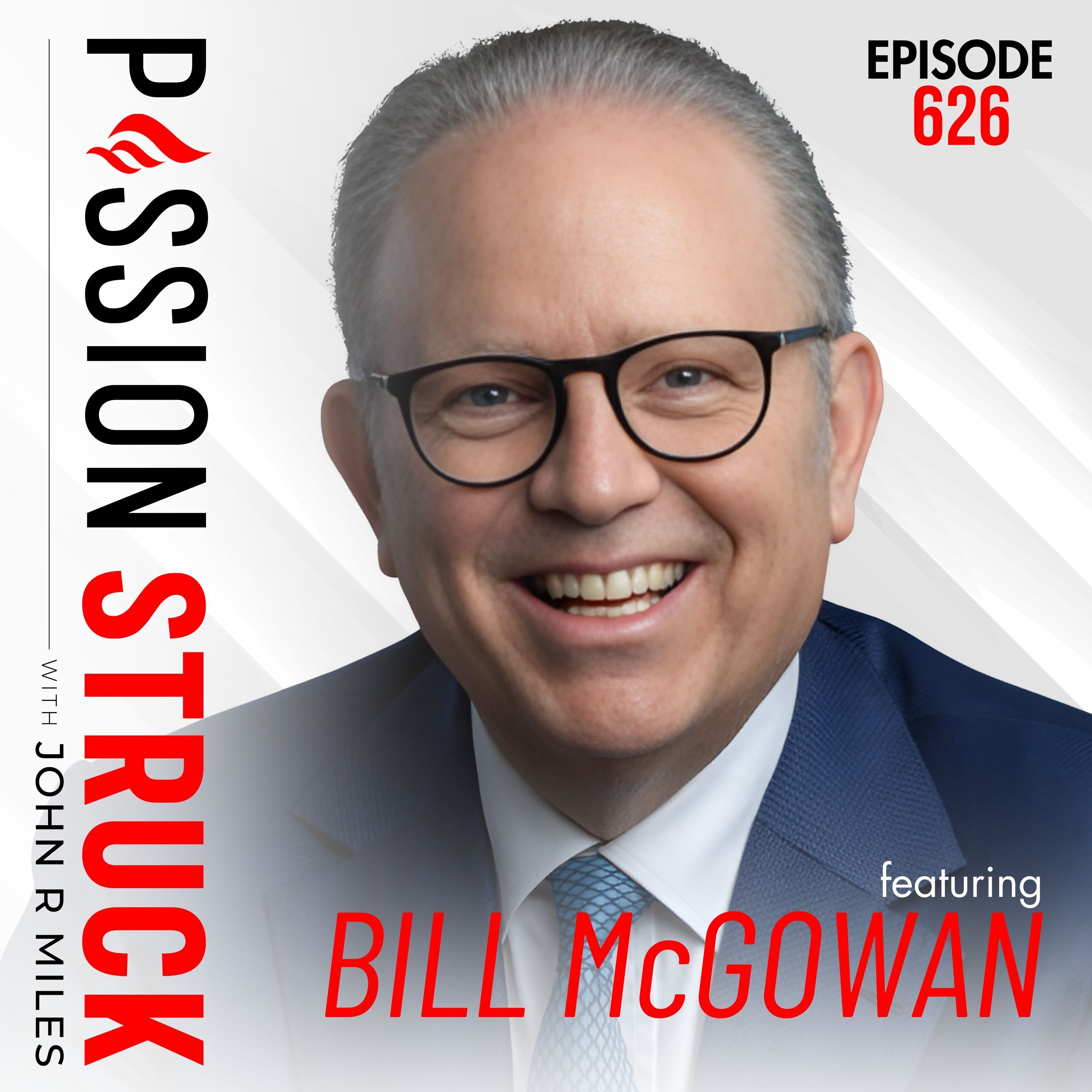
Loading summary
Transcript58 lines
- [00:01]
Bill McGowan
Business owners wear many hats, but mailing and shipping expert shouldn't have to be one of them. Hi, I'm Al Ko, CEO of Stamps.com We've helped over 4 million customers print postage, manage tracking and schedule free carrier pickups so they don't have to leave the office. Stamps.com is committed to delivering the best solutions and rates all on one platform. So you don't waste your valuable time. Go to stamps.com to sign up for a special offer.
- [00:30]
John R. Miles
Coming up next on Passion Struck.
- [00:32]
Bill McGowan
I think it's a fool's errand to try to replicate the style and the content of an established speaker. The minute you start playing somebody else's game, you've lost because there's no way you're ever able to recreate that. It's not you. I often tell people that the best way to create content in a presentation or a speech is not to sit down at a computer and write it. And the reason why is because unless you've worked in TV or radio, your writing style, it's one that's designed for the eye, not the ear. And people in the media have been taught how to write content that is easy to deliver and is also easy for the audience to absorb. So what I often recommend to people.
- [01:31]
Al Ko
Is welcome to Passion Struck.
- [01:33]
John R. Miles
Hi, I'm your host, John R. Miles. And on the show we decipher the secrets, tips and guidance of the world's most inspiring people and turn their wisdom into practical advice for you and those around you. Our mission is to help you unlock the power of intentionality so that you can become the best version of yourself. If you're new to the show, I offer advice and answer listener questions on Fridays. We have long form interviews the rest of the week with guests ranging from astronauts to authors, CEOs, creators, innovators, scientists, military leaders, visionaries and athletes. Now let's go out there and become Passion Struck. Hey, Passion Struck fam. Welcome Back to episode 626. I'm your host, John Miles. And this is the space where we ignite change from the inside out so you can live life with more intention, meaning and connection. All this month, we're diving into the Connected Life, a series exploring how we build real relationships in an age of noise, distraction and disconnection. And one of the most powerful tools we have for building connection is communication. Because here's the truth. How we speak, how we listen, and how we show up in conversation doesn't just influence what people hear. It shapes how we're remembered. Whether it's in a boardroom, a kitchen table, a podcast studio or a simple text thread. Words matter and presence matters even more. Earlier this week I had an incredible conversation with Dr. Anna Lembke, the best selling author of Dopamine Nation. We explored the neuroscience of craving distraction and how intentional discomfort can actually lead us back to real connection. And last week I had two powerful voices, Suzanne Giesman, who helped us listen beyond the noise and into the soul, and Dr. David Hamilton, who revealed the biochemistry of kindness and why human connection is literally good for our health. Today, we take that conversation into one of the most practical and high impact arenas of modern life. How to Speak Memorably My guest is Bill McGowan, a two time Emmy Award winning journalist, world renowned executive coach and the founder of Clarity Media Group. If you've ever watched someone walk into a room and command it not with volume, but with clarity and ease, there's a good chance they've been trained by Bill. He's helped CEOs, artists and thought leaders communicate with impact and his best selling book Pitch Perfect became a go to guide for pervasive storytelling. Now in his latest work, Speak Memorably, he distills over three decades of experience into a toolkit for anyone who wants to be heard, remembered and understood. In today's episode, Bill and I explore why trying to sound professional often sabotages real connection. The Ricky Bobby what happens when nerves hijack your delivery? We go into how to transform data into stories that stick and why saying less with clarity can create the most lasting impact. Whether you're pitching to investors, leading a meeting, or just trying to connect more deeply with your partner or your kids, this conversation will sharpen the way you show up and speak. And if you're looking to stay connected between episodes, here are three ways. Subscribe to the Ignited Life on Substack. It's where I share exclusive tools, curated episode starter packs and personal reflections to help you live more intentionally every week. You can find it@theignitedlife.net check out the new Passion Struck Gear apparel designed to be a daily reminder that your life matters. It's more than merch, it's a mindset. Or head over to our YouTube channels where you'll find full episodes, behind the scenes, insights and bite sized clips to revisit anytime you need a spark. Now let's dive into this masterclass in powerful communication with the one and only Bill McGowan. Thank you for choosing Passion Struck and choosing me to be your host and guide on your journey to creating an intentional life. Now let that journey Begin.
- [05:42]
Al Ko
I am absolutely thrilled, thrilled and honored to have Bill McGowan join us on Passion Struck. Welcome, Bill.
- [05:48]
Bill McGowan
Thanks for having me, John.
- [05:50]
Al Ko
Bill, you have had such an impactful career, and you have worked with some of the biggest names across sports, including Olympians, professional athletes, CEOs, and titans of some of the largest companies that everyone knows about. I wanted to ask across all of them, when it comes to speaking and how they present themselves, have you found a couple of shortfalls or common mistakes that are the grain across all of us, no matter who we are?
- [06:24]
Bill McGowan
There are a number of most common mistakes, and I would say first is brevity. I love the FDR quote of be sincere, be brief, be seated. It's a great quote. But I find that most people don't exercise an economy of words. And there's a chapter in the book called the Verbal Diet, which is all about this notion of imagine if you were suddenly told that you couldn't say the normal amount of words you utter in a single day. So the average person speaks about 16,000 words a day. Now imagine if somebody came along and said, john, today you got 12,000. Imagine what that would do to how selective you'd be about making every word count for fear that 4 o' clock may roll around and you may run out of your allotment and have to pantomime the rest of the day until midnight, when your supply would automatically replenish. So we're constantly working with people on how to say things more succinctly, because the more succinct it is, typically the more impact it has. And the last thing you ever want to do is overstay your conversational welcome. I'm sure all of us have had that terrible moment at a party where we realized, okay, this story, I think, is dragging on a little too long, and the person I'm talking to is now looking over my shoulder to see who else at this party is available to talk to. And you never want to be that person. So I would say brevity is first and foremost on the list.
- [08:12]
Al Ko
I love that, because one of the things I first did when I was starting this podcast was I started to go through and edit all my own episodes because I was wondering what I was sounding like when I was on the air. I realized, especially as I was interviewing people and then myself being interviewed, that I was often talking way too much and not leaving the proper succinctness, as you point out, to how I was answering. What are some tips that you have for how people can see themselves as A reflection of how they're speaking to understand if they're doing what you just said about being not succinct enough.
- [08:55]
Bill McGowan
Recording yourself is a really effective tool. There's a reason why professional athletes no longer wait until their first off day after a game to watch film. They're watching video on the sidelines in between their time on the field. And that's because video is just an amazing teaching tool. So if you have a meeting you have to lead at work or a presentation you have to give in front of colleagues or maybe an external group, take your phone. This is, they used to say, practicing the mirror. This is the most amazing practice tool on the planet. All you have to do is prop it up, hit the red button for record and let it rip and record yourself saying it. And I think what you'll find is that your tone in giving a presentation is too formal, it's too stilted, it's too long. And you're often going to be able to find by watching the video, wow, that transition from my second slide to my third slide, that's pretty rocky. I should be able to figure out a smoother, more segue driven way to say that you're going to be able to move the needle of improvement a lot better by watching yourself and making some changes. And of course that's where I come in. What I do for a profession, people hire me to be the watchful eye, to give them the guidance when we look at the videotape. To say, maybe you don't want to start that sentence with, well, I think that's just running in place. That's just filler talk and noise coming out of your mouth when what should happen at the beginning of your thought is making a very intentional decision. What are the first five words out of my mouth when I begin to convey this thought? And if you make that a very intentional selection, I think are not going to be one of them. You're going to be able to start with crisp versus valuable content.
- [11:06]
Al Ko
I couldn't agree more with you on that. And I wanted to use those as a couple warm up questions because today what we are talking about is how you communicate. And we're actually in a month long series here on Passion Struck about how to communicate in life, the art of communication. And Bill, your first book, Pitch Perfect is what many people know you for. The subtitle of that was how to say it Right the First Time Every time. And today we're talking about your brand new book Speak Memorably. And I wanted to ask why did you think now was the right time to bring out this book which is all about the art of captivating an audience?
- [11:52]
Bill McGowan
It has to do with the noise level that has changed since I wrote the first book. I would say the level of competition for attention has skyrocketed. There's so much noise out there today. Everybody grappling for to be noticed, to have their words land. And unfortunately, in companies all over the world, in every conference room, in every press release, in every quarterly earnings call they do, it's a golden opportunity through what you say to inspire, motivate, inform. All those things are possible when you open your mouth to talk. And these opportunities are getting squandered every single day in companies all over the world because people fall into this conformity trap. And that's what I talk about in the book, this desire to be in a comfort zone that is actually a conformity zone where you emulate everybody else. You hear getting up in front of a room and speaking, because that feels safe, that feels like what's normal. And the problem is most people are emulating stylistically other people who are thoroughly forgettable. And yes, it feels risky to be different and to migrate outside the bounds of that conformity zone, but it is truly worth the effort and worth what you think is a perceived risk. I think one of the great gifts of life is to have our words remembered. And in fact, one of the great compliments anybody can pay you is maybe you go to a company that you haven't been at in three or four years and you having another visit to have someone come up to you and say, I'll never forget that thing you said to us the last time you were here. To me, that's pure gold. There's nothing better than that to realize some message you delivered had lasting power and it actually made an impact on people. And maybe it persuaded them, maybe it influenced them, maybe it, maybe it motivated them, maybe it inspired them in addition to just informing them.
- [14:17]
Al Ko
I want to double down on that conformity trap just for a second. I was interviewing about 18 months ago, Christina Lacchiani. If you're not familiar with her, if the audience isn't, she's the co founder of Mindvalley with her ex husband Visheni. And she was telling me this story that at Mindvalley they did a lot of big events and they had a lot of big names who talked there. You might have even talked there yourself, but people like Tony Robbins, Bo Eason, etc, and she wouldn't give me the person's name, but she said she was following one of these huge voices who's on stages around the world often, and at first she was gonna go up and emulate that person. And then she said. She paused for a moment and said, there's no way I'm going to be able to bring the same speech, the same energy that, let's just say it was Tony Robbins is bringing. So she made a deliberate decision that what people want to hear is her authenticity. So she went into it giving a speech that was almost 180 degrees different, but equally memorable. A lot of people, when faced in that same situation, would take a different route and. And probably try to follow the person who is up there just before them in a similar manner. And I think this is what you talk about when you talk about the conformity trap and how we actually dull our voices. You touched on it a little bit. But maybe using Christina's example, could you highlight perhaps what she did right and what she did wrong, in your opinion?
- [15:59]
Bill McGowan
I think it's a fool's errand to try to replicate the style and the content of an established speaker. The minute you start playing somebody else's game, you've lost. And because there's no way you're ever able to recreate that, it's not you. I often tell people that the best way to create content in a presentation or a speech is not to sit down at a computer and write it. And the reason why is because unless you've worked in TV or radio, your writing style, it's one that's designed for the eye, not the ear. And people in the media have been taught how to write content that is easy to deliver and is also easy for the audience to absorb. So what I often recommend to people is make an outline of what it is you want to say. Don't overwrite it. Just hit the points that you want to make. And then pick up your phone, and there are lots of apps that will take the recording of your voice and transcribe it and get up and just say it as it would naturally come to you. And don't worry if it's full of starts and stops and mistakes and hiccups. That totally doesn't matter. You can go and clean that up later. Just keep forging ahead. And then what I want you to do is take that transcript and export it to a Word document or whatever you work off of and make that your rough first draft. And again, you can clean it up, but don't stylistically change it. And what you're going to find is that stylistically, it's shorter, choppier sentences. Not everything is a full, grammatically complete, beautifully prosed sentence, which is good. That's not how we naturally talk to people in real conversation. We don't speak the way we write. And the other benefit to it is what you've recorded is going to be a much closer representation of instinctively how these ideas come spilling out of you. So when you go to deliver it for real, you're never going to feel at odds with the content. It's going to be naturally what comes to you, and that's going to aid in the delivery of it. But the conformity zone, John, that I was referring to. And there are lots of things that exist in that nasty circle. One of them is this preponderance of warning people about what you're about to tell them. All this talking about what we're going to talk about. Or so I want to walk you through this strategy. It's all this advanced heads up about what you're about to say. Just say it. That you don't need to tee yourself up all the time. But in every single presentation I hear that I work with clients on, it is littered with that. And I posed a challenge to a group of trainees I had a little while back. There were six people, and everybody was going to get their opportunity to get up individually, give their presentation, have me record it, playback feedback. And I laid down this challenge and I said, I will buy dinner for anybody who can get through their practice presentation without saying, so I want to talk a little bit about this or I want to unpack or walk you through that. And the third one was. So as we think about this, these cliche expressions that I hear in every single presentation, if you can avoid saying any one of the three, or let's unpack that, let's double click on that, let's drill down on that. If you can avoid saying all of those things, I will buy you dinner. Even. Even with advanced warning, my credit card never came out of my wallet. Nobody could do it. There's. It's so ingrained in people and that's what makes you sound like everybody else. And the goal when you get up to talk is you should sound different. You shouldn't sound like everybody else because then you just blend into this noise. Which takes us back to your earlier question.
- [20:41]
Al Ko
I do Toastmasters and one of them, by the way. Oh, yeah, program. And one of my favorite exercises that they do is the table topics, because you never know. It's kind of like Forrest Gump you never know what you're going to get out of the box of chocolate.
- [21:00]
Bill McGowan
Yeah.
- [21:01]
Al Ko
And some of the people ask the most witty scenarios. But one of the things I love about the tabletops is that no matter what question you get, so if they give you one that really stumps you. What a lot of people don't know about Toastmasters is you don't have to answer that question. So there have been times that I get up there and they'll ask me a question I really don't want to understand, I don't want to answer, or I don't think I've got a great answer for it and I'll segue into something completely different. But what I found is that there's definitely an art to finding that magical 90 seconds to you don't want to exceed two minutes of talking where you can be pretty profound in that amount of time with in a way that I think most people don't think think you could be in that short a period of time. And I think that's where you were going at the beginning with brevity. You don't realize how much importance you can say in a succinct period of time. So that's why I like that exercise as it helps with it.
- [22:06]
Bill McGowan
Well, it's interesting because I just finished a project with Angela Duckworth who wrote Grit. I'm sure you're familiar with that book and her, she's a brilliant behavioral psychologist from the University of Pennsylvania at Wharton. And she was teaching an MBA class at Wharton and she and I stay in regular touch and I was telling her about the book and there's a bonus chapter that I make available to people who pre order. And the bonus chapter is on how to tell your life story in 60 seconds. And because the hardest question that people get is something they mistakenly think is the easiest question and that's John, tell me about yourself. More people stumble and fumble around with this long winded circuitous say nothing response to that or they mistakenly think, I guess I should start reciting my CV now. Where I was born, where I went to school was my first job. That's not what your 60 second life story is supposed to be about. So we created this project for her students in the MBA class and she had all of them record their 62nd life story. And I gave them parameters about what should BE in that 60 second life story, what's the basic structure of it. And so she sent them off and they all submitted their recordings and she picked the seven who she thought were best out Of, I don't know, dozens, I guess, who take her course. And then we had a virtual session where I screened all seven videos. And then I gave feedback to her students on what I thought was working, what I thought could use a little tweaking. And it was a great exercise because a friend of mine told me that his daughter was applying for a graduate program at New York University, and they required this as part of her application. Submit your 60 second life story. And so it's my belief that this is going to be more and more important as time passes. That may very well be a requirement in college admissions, graduate school admissions, and it comes up in your first job interview. Tell me about yourself. The last thing you want to do is go off haywired, taking somebody on a long, rambling road that doesn't really have anything interesting in it.
- [24:46]
Al Ko
Yeah. So I want to double down on that just for a second, because I'm glad you brought this up because it's something I struggled myself with. How do you answer? I typically lean, I think, too far into the. The professional aspects of my life. Do you recommend that people keep a balanced view and bring in their family life as well when they're answering the question?
- [25:08]
Bill McGowan
I think it depends what's important to you in life? My recommendation to these students, structurally, is see if there is a story about a point in time where perhaps you had an epiphany or a revelation that something was supremely satisfying for you and how you were able to perhaps parlay that into now what you do or explain how that is now the driving motivation for why you're pursuing a certain something. For me, I had to give them an example of what a 60 second life story was. So I did my own to give them. And I started with a story about how when I was a producer at cbs, I had a couch in my office and people would come and plop down on the sofa and spill their troubles to me about a conversation, a difficult conversation they needed to have with somebody. And inevitably, people were seeking my advice on. So what do you think I should say to this guy? I really need to resolve this, but I just don't have the right words. And I didn't realize at the time I was message developing and media training for them. I was a producer in television, and I would give them my advice on what I thought was the right thing to say, and they would bounce up from the couch and leave feeling buoyed and renewed and confident. And I realized, hey, I'm pretty decent at this. I'm good at recommending to people what's going to be most effective and what you could say that's going to generate the best outcome. And so that was the story that led my 62nd life story as a prelude to how did I get into this line of work that I find tremendously satisfying and rewarding.
- [27:06]
Al Ko
So if you went back and you might not be able to remember them all, you probably can't because you're a busy guy. But if you think about those seven MBA students and the stories that they were providing you, was there commonality across all of them or was there one that really stood out to you?
- [27:28]
Bill McGowan
The commonality, I would say, was suffering from the curse of knowledge. You have to empathetically, really understand what can I reasonably assume this audience knows? I may eat, sleep, and breathe a certain topic. I may know it backwards and forwards, but is this perhaps the first time they're hearing about this idea or this concept or this program? And if so, you need to be really basic in how you explain it. And I find the majority of them lose the audience because they are talking about a program or maybe the name of somebody they're familiar with. The audience has no idea who it is. And that is a sure fire way to lose people. So the curse of knowledge, I would say, is one of them. And the second one is just too many details in telling a story. Think about telling a story like you tell a joke. There's a setup and there's a punchline. And one of the big pitfalls of telling jokes is when the setup becomes interminable and then the person you're telling the joke to, you can see them in their mind going, yeah, I get it. Just get to the punchline. And you never want to be that person either. So it's the old William Faulkner quote, learn how to kill your darlings. And that was his advice to writers, which is now, you don't need all of that in there. You think you do, but you don't. And the same applies to communicating.
- [29:06]
Al Ko
So I just wanted to sidebar for just a second on Angela Duckworth. I've had her on the podcast. She's. I also call her a friend, although I speak more frequently to her partner, Katie Milkman, than I do with Angela. But I remember when I had Angela on the podcast, I was actually wanting to confront her about part of her research about grit. And for those of you who have never met Angela, she is a beautiful human being. She's very kind, very nice, but one of the most intelligent people on earth. You will ever meet. And so I knew when I was going to have this discussion with her, I had to come in prepared because she is the first, that if she doesn't agree with you, she's going to.
- [29:49]
Bill McGowan
Just say it if she disagrees with you. She's very gentle in her contradiction.
- [29:55]
Al Ko
She did well. Basically I was telling her in Grit. I think she missed a side of the triangle. And that side of the triangle, you mentioned it earlier, is intentionality, which is the same thing I would say it is. We did get to this discussion that she views intentionality in scientific terms as the research of self control and that you obviously need to have self control and how you're utilizing passion and perseverance or it's not going to be aimed at the right thing. And that's basically where I was trying to go with it. But then on typical Angela form, she also says, but those aren't the only ingredients you need to look at. You need to look at XYZ and etc. So you're right, she did do it in a very kind way.
- [30:42]
Bill McGowan
Well, I find that story very timely because I just worked with her on a commencement speech she gave Bates, and it's obviously predicated on a lot of the research she's doing currently. And one of the big takeaways from her speech was that willpower is overrated. And it's just a really dynamic concept as only Angela can put forward. And it's not about just denying yourself the things you feel like you shouldn't have or shouldn't do. It's about situationally removing those things. Because even if you say you have a cup of coffee nearby and you decided, I want to cut down on my coffee consumption, it's not enough to just deny yourself that cup of coffee that's sitting there, because even that saps your attention.
- [31:43]
Al Ko
Right?
- [31:43]
Bill McGowan
Is now making you think too much about that. Just take out all the coffee from your kitchen, just don't make it even within arm's reach or available. And that clears it from your mind. You know, obviously her examples were much more academic and much more scientific. But willpower is overrated. I love that thesis that she came to.
- [32:10]
Al Ko
I hear she's working on a new book. I can't wait to read that one. And I hope it's as good, if not better than grit. So I wanted to go in a couple different directions, Bill. The first is I had mentioned Beau Eason earlier, who I think is one of the better public speakers. Another one that always comes to my head is Eric Edmeads. And I've been fortunate to have conversations with both of them about speaking. And one of the things that they both say that people do is they tend to lean into the highlights from their life like the highlight reel, instead of going into the deepest, darkest moments that they've had. And the way I remember Bo bringing it up, since he's a former NFL athlete, is he's. No one wants to hear the highlight reel about Tom Brady winning seven Super Bowls. They want to hear the story of the University of Michigan when he almost gave up being a quarterback at all. And it was through his perseverance that he decided he was going to double down and made the commitment that he was going to stay at Michigan and make a shot at becoming their number one quarterback. Do you agree with what they're saying?
- [33:27]
Bill McGowan
Pointing to some poignant character building moment that represents a turning point in somebody's life is a lot more interesting than the highlight reel. For instance, there's a great story. Everybody admired Derek Jeter. While we're talking about Michigan, everybody admired Derek Jeter as a baseball player and as a sportsman. He embodied what we hope all professional athletes act, a gentleman, somebody who's gracious and generous in his acknowledgment of other people. They don't even necessarily have to be on his own team. And you can tell a lot of stories about his accomplishments, accomplish accomplishments on the field. But the story I really love about Derek Jeter was when he was nine years old and he wasn't the calm, in control Derek Jeter we know today. He was a little bit of a hothead kid and he had something happen in Little League and his father had advised him and warned him and urged him to be a sportsman, don't pop off, don't act in an unprofessional and dignified way. And something went wrong and he threw his equipment, he threw his mitt, had a little temper tantrum on the field, and his father took his baseball mitt away for a week. And from that moment on, it was torture for him not to have his baseball mitt for seven days. But from that point on, he was the consummate sportsman on the field. It was the lesson that he learned that shaped who he is. And so to me, that is a lot more interesting than talking about all of his World Series rings and his the record book accomplishments. So, yeah, something that represents a turning point or as a lot of people like to say, a tipping point and explains how somebody's character was shaped. Those, to me, are the better stories.
- [35:43]
Al Ko
When you were describing that because I also wrote about Derek Jeter in my book and I also brought up his work ethic that people don't realize how hard he worked, not only on himself, but he was always there acting as a secondary coach to his teammates, trying to pump them up, which is something that you don't really hear a lot about. But it reminded me of a little bit of both Emmett Smith and Barry Sanders in that these two were incredible running backs. And one of the things that you don't see with either of them was you never really heard them complaining about their team, teammates or the outcomes or anything like that. They were focused on bringing their best every single game. And I think all of these stars that we're bringing talking about right now share that humility in common with each other. And I think that's something that I find is extremely important that you bring to the stage as well. Because. Because I personally feel an audience responds more to someone who's humble about their experiences rather than someone who's a large ego. But I'm interested in your perspective on if ego plays into it or being humble plays into how you deliver your speeches.
- [37:03]
Bill McGowan
I don't think you need to be egotistical to come across confident and professional and have gravitas. I think they're different things, and it's usually the very secure, confident person who feels the license to express humility. But one of the things I really urge clients not to do is push it too far, because there's nothing more distasteful than false humility that I absolutely have no tolerance for. And I think it's one of the things that people really bristle at. So I'm always very aware of making sure that people don't tread into that territory.
- [37:48]
Al Ko
So earlier you were talking about how you were coaching a number of people and how you were telling them not to say, drill down on this or I'm going to go into more on this. However, today we have so much data that's around us and oftentimes people want to put data into their speeches. But there you describe that there's importance to have data with content context as a difference between a number and a narrative. In this age where we've got dashboards and AI and KPIs all around us, how do you teach leaders to turn raw data more into felt insight, something that doesn't just inform but ends up moving people?
- [38:38]
Bill McGowan
Numbers alone don't really tell the story. As you just mentioned, it's what the number represents to people in real human terms. So My co author, Juliana Silva, was working with an author who had written a book on Taylor Swift as a business phenomenon. And one of the interesting data points in the book was that in the ERAs tour that she had brought in $3 billion from that tour, and rightly she pushed it and said, Listen, 3 billion is an impressive number, but if we put it into some context, it's going to be even more impressive. So she did some investigation and she found that over the course of their entire careers as a band and musicians, adjusted for today's dollars, that the Beatles did not make close to $3 billion in their entire lives. Forget about one tour. So to be able to say to somebody that Taylor Swift made more from one tour than the Beatles made off of live performances in their entire careers, I think it adds more weight. And that context bolds and underlines that number. We work with companies all the time that are incorporating data into their presentations. And if you're working with one of the wireless companies, they like to boast 100Mbps speed on 5G, and the average person has no idea if that could. Is that bad? Give me some idea of whether I should be wowed by that. And so we push them and we say, what can I do with that? What does that tangibly mean to me? And when pushed, they'll tell you, well, you can download a high def movie in three minutes. Said, okay, now we got something. Now what you need to say in your presentation is in the time it takes you to go to the kitchen and get your popcorn ready, your movie's ready, right? That's what holds meaning for people, practical application in real life, not just the number.
- [41:03]
Al Ko
I completely agree with you, so thank you for sharing that. I wanted to go into another area you talk about in the the book you quote Francis Ford Copa storytelling formula where you end with your best moment, but you start with your second best. And so, as you've been coaching a speaker or someone who's potentially listening to this episode, how do you help them to identify what those moments are?
- [41:30]
Bill McGowan
Sometimes we're not the best judge. Sometimes you need to have the ear of a trusted colleague, friend, advisor and let them know, here's what I'm planning to talk about. And let the person say, wow, that's really interesting. You may be underestimating its importance or its interest, but try to gain and put together your own small unofficial focus group and bounce it off a few people and ask them, what did you find most interesting in there? And this is what we do professionally. We sit and we talk to people who have to give a presentation or a speech, and we hear what they have to say. And oftentimes what we feel they should lead with or what they should close with is something that they had as a throwaway. They didn't even really showcase it, and clearly they didn't see the value in it. And sometimes that outside set of ears and eyes are really important to say no, that's really interesting. Start with that. And it's a great story. And metaphorically, you can connect that story to the body of your speech or your presentation. So don't create something in a vacuum, because sometimes you just have blinders on and you're not really aware of what's going to play and resonate with an audience.
- [43:07]
Al Ko
It also reminds me of something that you also bring up in the book, which is the primacy residency effect, where I'm sure, and I've done it myself, you can have brilliant content and you end up burying it instead of placing it in areas that would really catch people's attention either at the beginning or the end of a speech. How do you, in those occasions, if you're working on your speech, restructure it so that you can find those hidden moments and put them in places that actually land.
- [43:42]
Bill McGowan
The primacy recency effect is fascinating because it doesn't just apply to the broad, overarching story. We feel it applies equally well to each and every slide of your presentation. And so when we coach people on how to give a professional presentation in a work environment, we tell them that there are three things that they should know by heart, backwards and forwards. The first one is what is the simple, punchy, declarative line that gets me into this slide? The second one is what is the big idea in this slide? The classic if you remember nothing else from the slide, remember this. Although never, ever say that. And third is how do I what's the finish line of this slide look like and sound like? What is the closing, declarative, punchy sentence? Or what is the line that helps me segue from one slide to the next slide? And those three things should be simple, declarative sentences, and you should memorize those. Everything in and around those three things can have a little bit of conversational wiggle room. You don't need to be locked into a verbatim script. As long as you know what the concepts are, you can freely talk about those. But when you know those three components and you deliver them with conviction, it gives your presentation a really well produced, crisp feel to it. And when I see people struggle with telling a story or giving a presentation. It's often how they get out of the starting blocks and how they cross the finish line. I'm sure we've all seen and heard a colleague who gets to the end of a slide and says, and yeah, so yeah, that's what that is. It's almost like this running out of gas, rolling stop that they come to, which is not very dynamic and memorable for all the wrong reasons. And also, the beginning of a slide should never be okay. Now if we look at this from a macro perspective, never ever, don't again, don't warn people about what you're going to do. It's all just inviting them to drift and start fantasizing about what they're going to have for lunch.
- [46:25]
Al Ko
So I want to keep going on a couple more areas that you introduced to end the episode. And I want to introduce the verbal diet chapter with something that we all end up doing when we speak. And that is we use too many filler words or as you say, empty calorie words. And that's going back to Toastmasters. One of my favorite exercises that they do is they have someone who's counting how many times you say so kind sort of those types of things. Why is it so imperative that people kick the junk word habit?
- [47:05]
Bill McGowan
When you speak cleanly without filler, you appear more thoughtful and more intentional about what you're saying. Filler words dilute the impact of what you're saying. Recently I had to work with an executive who, who had attained this new position. And I thought to myself, wow, he's using a lot of filler words, it seems. And so I ran it through our AI tool that we use and the analytics of the AI tool tallied them all up and he had said 320 times in an hour and a half, which is seems almost impossible to achieve. But what was very interesting was what also stood out from the analytics and that was his speaking pace. I realized as I was listening to him this is a breakneck speed he's going at. And so I ran that through the analytics and the uppermost range of what's acceptable is about 170 words per minute. He was at 235. So he was completely in sixth gear. Speed and filler are directly correlated because when you speak really fast, you're giving your brain less opportunity to navigate out ahead down that conversational road that you're about to go down and make careful and intentional selections about what you say. When you're speaking fast, you're putting too much pressure on your brain to make those selections. And we know that we don't always make those selections cleanly and efficiently. Sometimes we stop. Maybe we're looking for a particular word that's not coming to us, or maybe we're second guessing ourselves about going down this road as opposed to this road. There are lots of reasons why our brain comes to these intersections and stops. If you're speaking fast, think of it as your mouth tailgating your brain. And when your brain stops, your mouth has to do something while it's waiting for the next set of instructions. And that's what filler is. Filler is what your mouth does while it's waiting for your brain to make the next call. So if you want to try to rid yourself of filler, first record yourself and understand what is my brand of filler? I never knew I said the word so so many times. That may be the revelation you come to record yourself, understand what's my brand of filler. And then I am going to implement this strategy of the less certain I am about how this next sentence gets articulated because I am thinking it through in real time. The slower I'm going to go and the more I'm going to pause. Sometimes even pausing in the middle of sentences and being comfortable with a beat or two of silence. Most people are totally uncomfortable with pausing, so you need to grow more comfortable with pausing and you need to acknowledge what am I perhaps saying for the first time? There are no reference points here for me and I am ad libbing, so I need to take this slower. When you get to a section where you say something that is common to you, you've said it a million times, then you can step on the gas and be nice and brisk and conversational, but not if you're thinking it through in real time and are never the first two words of any sentence. But unfortunately today they are universally the first two words of every sentence.
- [51:03]
Al Ko
When I was first starting this podcast, as I told you before we came on, I used to edit every single episode because I was noticing I was doing too many filler words. And so I started going through this very granular, painstaking process of doing just what you were advising the audience to do, which was looking at the words I was using the most as fillers. And then the more you recognize yourself doing them, you start eliminating them. So Bill, I wanted to end by going into to this topic because I think it's an important one for people. And in the book you write that there's a study by the Annenberg School for Communication at the University of Pennsylvania and the School of Communication at the Ohio State University that supports the idea. Then in public speaking, you have a choice. You can be funny or you can be forgettable. And you write that. For years, presenters have been told, start off with a joke, they'll love it. And you say that this is the single worst piece of advice you can get. Even worse than picture the audience in their underwear. Why is that and what would you recommend people do?
- [52:14]
Bill McGowan
I've worked with a lot of executives who do think that's their trademark, that starting off with a random joke works. And if it's completely disjointed from the content of what you're there to talk about, it doesn't really have a well put together feel. And I've been urged by the heads of communications at these firms. Can you please tell this guy to stop telling jokes? I know he loves it, I know he thinks it's his trademark, but it really needs to stop. And I feel as though stand up comedy is the ultimate high wire act of communication. It is so much harder than people think it is, and we should leave it to the professionals. What I recommend in the book is try to find the humorous lens through which you can view the topic you are discussing with your audience. There's a big difference between that and telling jokes. And a lot of people do it really well and they're good at it because they don't overshoot. They don't try to take on more than their skill level permits them. But there are lots of studies that show that humor has a physiological effect on you, on the audience. It can release the right kind of hormones that make your audience feel happy. It can release the kind of hormones that actually cut stress, relieve pain. So it's an incredibly pleasurable experience for your audience. And when you sense they're having a good time, it relaxes you. But think about the risk you're running about telling a random joke. If that thing bombs and you don't get the laughs you think you're gonna get.
- [54:19]
Al Ko
Yes.
- [54:20]
Bill McGowan
You're never gonna recover. You're never gonna get your feet under you again.
- [54:26]
Al Ko
Bill, I'm gonna end with a fun question. You advise warming up like a pitcher in the bullpen. Literally speaking, the first five minutes out loud. For taking the stage. What has been the strangest bullpen ritual you've ever seen from a top communicator?
- [54:41]
Bill McGowan
It's interesting because I often coach people in advance of doing the real thing, but I don't attend the real thing. And I don't know if that makes any sense or not, but I can work with people for two or three days of rehearsals before a big conference where everybody has to go on stage. But once the rehearsals are over, it's okay. Bill will try to do exactly what you told us and I know you're on to the next thing. I don't often see people in the real setting, but I will tell you that a few common exercises like standing in a champions position with your arms up in the air like a. Like you would in victory debunked, that has absolutely no value, no benefit. And maybe people, maybe it's a attitude placebo for some people and they think they're feeling more confident, more powerful form of it does absolutely nothing physiologically for you. The best thing you can do is find a quiet place, hear yourself say the first two minutes out loud when you're going to be the most nervous and try to just make sure you know that section backwards and forwards. And oftentimes when I have to get up to present, that's what I work on a presentation the most. How do I connect what I would consider the pleasantries? Good morning everybody. It's great to see you. I so appreciate it. For the invite to be here today and the content of my first slide. There is a gaping hole between those two things that I call the presentation chasm that is about 30, 40 seconds long that people just decide, hey, winging it and saying the first thing that pops into my head here between the pleasantries and the presentation, that's what I'm going to do. And your audience is making its most important judgments and decisions about you in that time. So it is ironic that most people leave to winging it, making it up on the fly to that moment in time that is the worst possible time. You do not have a ironclad plan about how to get from point A to point D.
- [57:14]
Al Ko
Bill, it was such an honor to have you today on Passion Struck. Congratulations on your new book. I highly encourage all the listeners to go out there and buy a copy and they will be just as impressed as they were with Pitch Perfect. Thank you so much for being here.
- [57:27]
Bill McGowan
Thanks John. I appreciate it.
- [57:29]
Al Ko
That's a wrap.
- [57:30]
John R. Miles
I hope this conversation with Bill McGowan left you as energized as it left me. Because we often think of communication as just talking clearly. But what Bill reminds us is that memorable communication is about resonance. It's not just what you say, it's what people carry with them after you leave the room. That kind of impact doesn't happen by accident, it happens by design. And when we become intentional with our words, our presence and our stories, we don't just inform, we transform. That's the heartbeat of this Connected Life series, moving beyond scripts and surface talk and stepping into the communication that feels human, grounded and real. If you found value in today's episode, send it to someone who's trying to lead more courageously, speak more clearly, or just reconnect with their voice. Let's grow this movement one meaningful conversation at a time. If you got value from today's episode, here are two simple ways to support the mission. Leave a five star rating or review wherever you listen. It's one of the best ways to help others discover these conversations that truly matter. Second, bring the message to your team or organization. I speak to companies, conferences and communities about intentional leadership, human connection, and the behavioral science of change. You can learn more or book a talk@johnrmiles.com speaking and before we go, next week's episode is one you don't want to miss. I'm sitting down with Dr. Michael Morris, one of the world's top social psychologists and a leading expert on how culture shapes cognition. We're going to explore why our beliefs often feel so right, even when they're wrong, and what it takes to update our thinking in a polarized world. It's one of the most thought provoking episodes I've recorded all year, and I can't wait to share it with you.
- [59:12]
Bill McGowan
Every generation thinks things are falling apart.
- [59:15]
Al Ko
It's incumbent on us to not despair and not engage in mystical fatalism about our problems, instead to try to understand.
- [59:25]
Bill McGowan
Them as best we can and understand.
- [59:27]
Al Ko
What levers we have and how we can go about remediating the problems. And at the same time, problems are dramatic and they dominate our attention. The good things that happen as a result of our tribal motivations happen at.
- [59:43]
Bill McGowan
A more tacit, implicit level, and we.
- [59:46]
Al Ko
Don'T stop to think about them very much.
- [59:48]
John R. Miles
Until then, remember, if you got value, share it. And more importantly, live it. Because ideas don't change lives, action does live life. Passion struck.