← Passion Struck with John R. Miles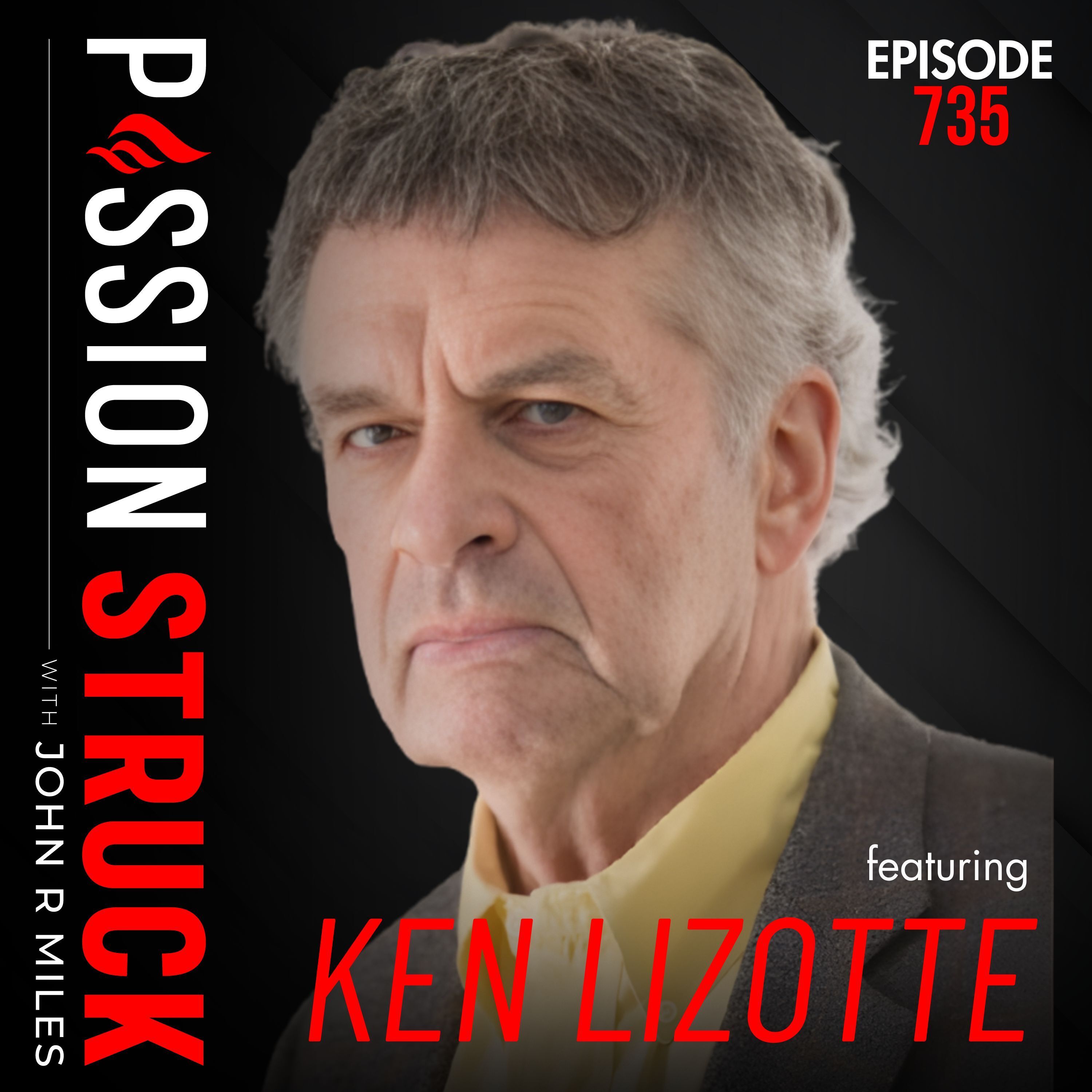
Passion Struck with John R. Miles
Does Your Life Matter? Reclaiming Worth With Thoreau | Ken Lizotte - EP 735
00:54:02
Loading summary
Transcript81 lines
- [00:01]
Progressive Insurance Announcer
This episode is brought to you by Progressive Insurance. Do you ever find yourself playing the budgeting game? Well, with a Name youe Price Tool from Progressive, you can find options that fit your budget and potentially lower your bills. Try it@progressive.com Progressive Casualty Insurance Company and affiliates Price and coverage match Limited by state law not available in all states.
- [00:21]
Sleep Number Advertiser
Why choose a Sleep Number Smart bed? Can I make my site softer?
- [00:25]
Progressive Insurance Announcer
Can I make my site firmer?
- [00:26]
Ken Lazott
Can we sleep cooler?
- [00:28]
Sleep Number Advertiser
Sleep number does that cools up to eight times faster and lets you choose your ideal comfort on either side your Sleep number setting. Enjoy personalized comfort for better sleep night after night. And now during our President's day sale, take 50% off our limited edition bed plus an extra $100 off all mattresses and Saturday only at a Sleep number
- [00:48]
John Miles
store or sleepnumber.com Coming up next on Passion Struck.
- [00:53]
Ken Lazott
What drove him crazy was watching people just struggling and working five, six days a week in factories or on the farm or whatever to pay bills just like we do now. That's where the other quote the mass of men's lives are lived in quiet desperation. But they don't know how to get out of it. So what he was trying to say with your quote is there's another way to look at this.
- [01:19]
John Miles
Welcome to Passion Struck. I'm your host, John Miles. This is the show where we explore the art of human flourishing and what it truly means to live like it matters. Each week I sit down with change makers, creators, scientists, and everyday heroes to decode the human experience and uncover the tools that help us lead with meaning, heal what hurts, and pursue the fullest expression of who we're capable of becoming. Whether you're designing your future, developing as a leader, or seeking deeper alignment in your life, this show is your invitation to grow with purpose and act with intention. Because the secret to a life of deep purpose, connection and impact is choosing to live like you matter. Hey friends, and welcome Back to episode 735 of Passion Struck. This week has been an important one. On Tuesday, I released my new children's book, you, Matter Luma. And alongside that launch, I had two conversations that shaped this moment in a powerful way. On Tuesday, with Dr. Gordon Flett, we explored something both concerning and deeply hopeful. Nearly one out of every four children feels like they don't matter. That is a staggering statistic. He described this as a quiet epidemic of unbearable insignificance, one that shapes how people see themselves and how they move through the world. But we didn't stop there. We also explored what we can do to change it. How? Mattering is built through attention, through small moments of care, through relationships where a child feels seen, heard and significant. Because mattering is experienced. And it can be strengthened early, consistently and intentionally. Which is exactly why I wrote you matter, luma. Yesterday with Dr. Martin Shah, we approached the same idea from a different direction. Martin and I explained how myths and storytelling shape identity. How the stories we live inside of give us a sense of place, purpose and direction. And how without those stories, people begin to lose the thread of who they are. Taken together, those conversations point to something essential. We need to feel like we matter, and we need a way to live that truth. That's where today's conversation begins. There are a handful of thinkers who have stayed with me over the years. People like William James, Viktor Frankl, and Henry David Thoreau. They ask questions that still feel unresolved. Thoreau wrote that most people live lives of quiet desperation. I've spent years thinking about what he meant. When I look at the world today, I see a pattern, a quiet disorientation. People stay busy, keep producing, and continue moving forward. Yet many still carry the sense that something essential is missing. The more I studied Thoreau, the more I've come to see this clearly. He was really describing a loss of connection to one's own worth, a loss of the feeling that a life is inherently meaningful. In today's language, this is a mattering problem. My guest today is Ken Lazott, author of Walden for Hire Business Lessons from Henry David Thoreau. I wanted to bring this conversation into this week because it completes something we've been building. We've explored why mattering is essential. We've explored how it's shaped through story. Now we're looking at how a life can be structured to sustain it. And what stood out the most in this conversation is that Thoreau approached work as a form of life design. He examined cost, time, effort, and necessity and structured them in a way that protected his independence, his values, and his sense of self. As Ken and I discuss his work, from improving pencil manufacturing to building a successful surveying practice, it reflects a deliberate and disciplined approach to livelihood. This reframes how we think about him. And it reframes something even larger, work itself. This conversation centers on one simple what is the true price of the life you're living? Now, let's begin our conversation with with Ken Lazott. Thank you for choosing Passionstruck and choosing me to be your host and guide on your journey to creating a life that matters. Now let that journey begin.
- [05:42]
Progressive Insurance Announcer
This episode is brought to you by Progressive Insurance. Do you ever find yourself playing the budgeting game? Well, with a name your price tool from Progressive, you can find options that fit your budget and potentially lower your bills. Try it@progressive.com Progressive Casualty Insurance Company and affiliates pricing Coverage match limited by state law not available in all states. This episode is brought to you by Progressive Insurance. Do you ever find yourself playing the budgeting game? Well, with the name your price tool from Progressive, you can find options that fit your budget and potentially lower your bills. Try it@progressive.com Progressive Casualty Insurance Company and affiliates Price and coverage match limited by state law not available in all states.
- [06:23]
Lenovo Pro Advertiser
There's no championship league for small business owners, but if there was, you'd be at the top of the standings. Because going pro with Lenovo Pro means you've got the winning formation. One on one advice IT solutions and customized hardware powered by Intel Core Ultra processors help you stay ahead of the competition. Business goes pro with Lenovo Pro Sign up for free@lenovo.com Pro Lenovo Lenovo
- [06:54]
John Miles
I
- [06:54]
am absolutely thrilled today to welcome Ken Lazott to Passion Struck. Ken, so nice to meet you.
- [07:01]
Ken Lazott
Nice to meet you, John. I'm thrilled too to meet you.
- [07:05]
John Miles
I get a ton of people reaching out to me to be on the podcast and it's not very often that I get hit and something speaks to me as much as this book that you wrote, Walden for Business Lessons from Henry David Thoreau does. It was so meaningful for me because Henry David Thoreau has been such an inspiration in much of my work on the likes for me of William James or Victor Frankl. So much life wisdom. So when I saw this, I knew I had to interview you, but I wanted to ask what made you feel that now was the best time to bring this book to the world?
- [07:49]
Ken Lazott
Well, you know what, the way you're introducing it speaks to me in terms of what my experience of thorough has been. And by the way, I got to start with correcting the way you say his name.
- [08:03]
John Miles
Thorough.
- [08:04]
Ken Lazott
Say his name. Okay, there's two aspects to it. You may already know this, but maybe not all the folks out there know it. Henry was born David Henry Thoreau. David Henry. And as he got into, I don't know, maybe teen years or twenties, I don't know when it was he wanted to switch David and Henry. He wanted to be Henry David. And also he liked the French pronunciation of his last name, which most people say thorough. But it's thorough. Thorough like thoroughly thoroughly or thorough job or thorough and as opposed to Henry David Thoreau. Thoreau. See, I have trouble now saying Thoreau because I've gotten so used to thorough.
- [08:51]
John Miles
Thorough.
- [08:51]
Ken Lazott
So I won't correct you every time you mess up, but it is a bit of a learning curve. But that's the deal with Henry David Thorough. But here's to answer your question. The thing that I noticed as I spent 10 years as President of Thorough Farm, which is Henry's birthplace, house, it was restored. It was. They were going to tear it down and conquer it at one point. And about 25 years ago, a bunch of us, a small bunch of Concord citizens, said, no, you can't tear that down. Of all the famous writers and thought leaders, let's say that came out of concord in the mid 19th century, including, for example, Louisa May Alcott and Ralph Waldo Emerson. None of them were born in Concord, but Henry was. And these people got together and they did all kinds of things to get the town to agree to back up this up and then to raise some money for it and all those kinds of things. But the thing about. Is that what you said about yourself in terms of your relationship to him, that this was more exciting than a lot of the topics because it meant something to you. I've seen that in my work with being on the board of trustees again and again. Get somebody who come in, like particularly a worker. We had to have an inspector come in and look at our elevator, for example. And he came in and he had to look at some violations and see if he confirmed them or not, according to the state of Massachusetts. And he said, what is this house again now? And we say, well, this is Henry David Thoreau's birthplace. And he said, david thorough. I love that guy. In high school, we read him and I've never forgot him. And those kind of uncovering people's relationship to him. Nobody wears a badge that let us know this. It's a subculture that's out there. And so I had a feeling that this idea, business lessons from him, would resonate with a certain group of people, of which I would say, you. You represent this relationship with Henry. But beyond that, it didn't come about because I thought this was the right time as much as it was the right time for me. I'd. It'd been percolating in my head for a while, long while. And I just felt like I couldn't believe. The more I looked into it and I saw that there never. For all of books, there has never been a book focusing on Henry as a business mind. And since I also Have a business with which I help business leaders, entrepreneurs and business leaders, consultants. I help them become thought leaders by getting their own ideas published, by getting a book published, by getting articles published, by doing, speaking. All the things that Henry does or did. Then it came together. These two aspects of my life came together. Knowing about Henry and knowing about business and business thoughts, two of them together. Never been a book on that, so here I am.
- [12:14]
John Miles
I love it. So it's going to take me a long time to get used to saying thorough.
- [12:20]
Ken Lazott
Thorough. You will be thorough about it, given
- [12:24]
John Miles
I've been saying it the other way for 50 years.
- [12:27]
Ken Lazott
We all slip up, including us, who are part of this whole thorough subculture. All of us slip up from time to time. Like I said, it's a learning curve.
- [12:40]
John Miles
Can many people picture Thoreau as a solitary philosopher at Walden Pond? Yet what I loved about Thorough, the way you write about him is that
- [12:52]
he's a builder, he's a marketer, he's
- [12:54]
an inventor, he's a teacher, he's a surveyor, he's a profitable entrepreneur whose life spans so many disciplines.
- [13:02]
So what do you think is the
- [13:04]
biggest misconception culture holds today, like our modern culture holds today, about his relationship with work and success?
- [13:14]
Ken Lazott
The closest thing to my book is a book titled Henry at Work. And that came out about two years ago. Before that, I don't think I could see anything like that book and this book. And I think that with that title, Henry at Work, for a lot of people, it would signify that he did work. The cabin seems to people to be just this sort of easygoing, Let me float around the pond and the Walden woods and that area and just dilly dally my life away each day. But it's not what he did, even going to the pond and creating that cabin. He built the whole thing himself, although with the aid of some people to help him do things like raise the roof and things like that. But for the most part, he did it by himself. And what he did inside it was significant, too, in terms of significant work, because he spent that the two years, two months and two days that he spent in that cabinet at Walden Pond writing. And that was his principal dream career, was for him to be a writer. But at the time, he hadn't published any books yet. In the end, he would end up publishing only two books, although a number of his essays would become books. So he really became a successful writer. But plotting away at it day after day or day in that cabin is what eventually led to that. So you have him working on the manuscript for Walden. And it said that he spent. He went through seven drafts in nine years, seven drafts of Walden in nine years before he turned it over to a publisher. So the thing about the cabin again is was he just lolling around in there or was he really doing something that was not just businesslike but profitable? And if you remember from that chapter, one of my fellow Vienne colleagues who is a. An economist at the University of Connecticut named Tom Mitchelli. Tom wrote it. He wrote an analysis. He put analysis together about what did Henry. What really happened in terms of economic output from Henry during that time at Walden Pond. And he was able to calculate that Henry was actually profitable even though he didn't get $100,000 for his manuscript then and there. In time, what he did there led to that. Not to that specific figure, but it led to a book contract. It led to people buying the book and after he died it'll let more people bought the book. More people. And it's 170 years now and the book is still selling.
- [16:28]
John Miles
Yeah.
- [16:29]
Ken Lazott
So where did that profit that's being made? How was that created? It was created in the cabin. And during that time that he was there, that's the misconception is that he was a loafer. He didn't really do that much. He did a lot in a lot of other ways too. But I like to think about how that Tom Bacelli was able to identify the finances of what happened and the aftermath of Henry being there.
- [16:58]
John Miles
Can I have a fun question for you?
- [17:00]
If Henry had LinkedIn today, what would
- [17:03]
surprise people most on his resume?
- [17:06]
Ken Lazott
You might remember that I had a little mock LinkedIn a couple of pages in the beginning of the book.
- [17:13]
John Miles
That's why I went here.
- [17:15]
Ken Lazott
Yeah. And, and I put down as much as I could about all the variety various things that Henry did in his life that were business like or work like like or whatever. And in the end I say how could you not hire this guy? There is just so much there. I think it would be that there would be so much of a variety of business related achievements on his resume. I think that people would expect it to be a much smaller document and it wouldn't be all that much. And if you take certain things that Henry did that were not the whole of his life but just a kind of episode in his life, you could look at certain things and say if this was the only thing he did in his life in a business sense, he could have had a mark, made a mark in history that way. I'm thinking about the pencil, for example. Okay. His father ran a. A successful pencil manufacturing firm in Concord. And while Henry didn't spend a lot of time there, as he grew up, he was looking at other things that he might do with his life. He did spend some time working for his dad, and he noticed that there was something wrong with even the successful pencils that his dad produced. At that time in America, pencils were very sloppy, unpredictable. We were starting to come out of the inkwell era and into the pencil era, and it wasn't. A pencil might write cleanly and clearly or it might slop all over the page. There was a problem. And yet that could be considered a successful pencil because it was a state of the art, even though it's not pushing the phrase the state of the art. Anyway, he, Henry, had a feeling that there could be something better. So I write in the book about how he decided to do some research. And he went back to Harvard, where he graduated, and he went to the library there, and he started hitting the books. And he found that in Europe, particularly in Germany and France, pencils were much, much better than in America. So why was this? And he determined what the recipe, as they call it, for the lead inside was, how it was mixed and constructed and all. And he brought that information back to his dad and also created an invention, I'll call it a contraption, that allowed just the perfect, perfect kind of ingredient to be created in the pencil factory and then mixed together and used for the ins. For the lead inside the pencil. He basically reinvented the pencil because his process caused it to be something that you could. It was predictable. You could rely on it. You knew that it wasn't going to get sloppy all over the page, and it then spread to the rest of America. So successful pencil makers, just like his father, that type of pencil went away because of what Henry had done. If that's the only thing he did in his life, that would have been enough to make his mark on history. But it wasn't. It was just one of many things that he did that was remarkable and a contribution.
- [20:44]
John Miles
Before we continue, I want to pause for a moment. Across this week's conversations with Gordon Flett, Martin Shaw, and now Ken Lazotte, a clear pattern emerges. Mattering is the foundation. The stories we live shape how it develops, and the structure of our lives determines whether we sustain it. That's why I wrote Umatter Luma. It's designed to help a child feel their worth early, before it becomes tied to performance, approval, or constant proven. Because when that foundation is in place, people move through life with greater clarity and stability. If you want to learn more, you can visit umatterluma. Now, a quick break for our sponsors. Thank you for supporting those who support the show. You're listening to Passion Struck on the Passion Struck Network. Now back to my conversation with Ken Lazotte.
- [21:33]
Yeah, I love that story. I happened to be interviewing Joan London yesterday, and it was interesting because the way she was describing her life is how you were describing Henry's. If people, People only thought of her of being the anchor for Good Morning America, they'd be missing out on the three decades of work she's put into. Cancer advocacy, dementia advocacy, elder advocacy. But I think it's a common issue that we. We tend to look at people through a narrow lens instead of seeing the greater impact that they've made. And I think Thoreau was exactly that case. The way you just described it, I
- [22:16]
Ken Lazott
have to tell you that before I got involved with the Thorough Birthplace House, and particularly before I began my research for this book, I didn't know that much about him. I grew up 20 miles from here at a Massachusetts small city called Marlboro. And we never came over to Concord except to go to Walden Pond once. A crazy beach afternoon. We're all on school buses and just going wild. But as far as really understanding who he was, didn't really understand it. So one of my inspirations, one of my moments of inspiration for this book had to do with that pencil. Because what happened was I had. I had. There's an auction every year. The Thorough Society puts on for all kinds of artifacts and things, various books and recordings and things like that. But I had to put out a winning bid for something. I can't remember what it was, but I had to go over to the Walden woods, basically artifact shelter, and where they have a lot of things that are up, up behind glass, and they all have to do with Henry. And the guy who was the caretaker of it said to me, I was looking at this pencil behind a glass, and he said. He said, you know what that is? And he told me the story. And I was, like, stunned. I had lived and conquered for a number of years at that point. I still didn't know that. So that there was something in there that clicked in me then that eventually led to this book, because it just was leaping out at me that he did that. How could he do that with no training, with no 30 years in the industry or anything like that? That's the sort of thing that if you go Back to the LinkedIn resume. That's the sort of thing that I think people don't know about because I didn't know about it.
- [24:16]
John Miles
Ken, a lot of my work deals with the bridge between, in some aspects, work, some aspects are personal lives, but then worth and mattering. And as we talked before we went live, I mentioned to you that I was going to try to bring some of my favorite quotes from Thoreau into this discussion.
- [24:39]
Ken Lazott
You're doing good, John.
- [24:41]
John Miles
And one of the first ones I wanted to bring up is the price of anything is the amount of life you exchange for it. And I had a question for you about that. When you step back from the business achievements, do you think Henry was ultimately wrestling with a deeper question, not how to succeed, but whether a human life can feel inherently worthwhile.
- [25:06]
Ken Lazott
That's probably what he defined as success. What drove him crazy was watching people just struggling and working five, six days a week in factories or on the farm or whatever to pay bills, just like we do now. That's where the other quote the mass of men's lives or lived in quiet desperation, but they don't know how to get out of it. So what he was trying to say with your quote is there's another way to look at this. In the first chapter of Walden, he talks about what he calls the necessaries of life. Not the necessities, but the necessaries. That was his word. And he's looking at things like clothing, for example, and saying, how much clothing do we. How many shirts do we need, how many pants, pants do we need? That sort of thing. And looking at that. And so it's like if you feel like you need 20 pairs of shoes and 20 pairs of pants, et cetera, you're going to have to get some money to pay for that. But he felt that in order to really be successful, you could have much less stress, feel much more at one with the universe around you, and spend time on things that you might care about more than some job that's on an assembly line and let those things go that you need the money for. So that was a work life balance approach to things, but it's not something that's easy to do. But he was able to do it pretty well. He's certainly a good example of doing it, but it doesn't mean we're all going to run out and live in a cabin for two years and just have only one pair of pants. But that was his thinking there.
- [26:56]
John Miles
Ken, I'm glad you brought up quiet desperation, because I have just Turned in a manuscript to myself for a book that'll come out in October, where what I try to do in this book is create the modern day infrastructure for how do we in our modern lives overcome quiet desperation. But in the book, I thought a lot about quiet despair. And I can't even tell you how long I thought about this, because as I was thinking about Henry's definition, what he was arguing is that most people live trapped by debt, obligation and endless labor, disconnected from meaning. And his response to it at the time was radical simplification of life's necessities, which you go through in the book. Food, shelter, clothing, fuel, movement, things like that. But as I have started to really look at this, and I wanted to ask you about this, I have started to say that today the mass of men are not living in quiet desperation, they're living in quiet disorientation. And what I mean by that is Henry was really looking at the lives within the walls that contain us. And I think today, with algorithms and the digital world we live in, those walls are becoming translucent. And so to me the difference is a quiet disorientation is this ache that we feel when we fill every silence that we have with chatter or the pursuit of the next achievement. So it's expanding upon his legacy. I just wanted your thoughts on that expansion.
- [28:46]
Ken Lazott
There's nobody that's a better standard bearer of quiet and or natural sounds like Henry. A lot of people don't know that he spent literally four hours a day out wandering the woods. That's a significant amount of time. And he saw the factories starting to become in and the noise that accompanied them, and he didn't want any part of it. He had his own issues with technology at that time. It's not as. Wasn't anywhere near as crazy and disorienting as it is now, but it was starting to happen, right? The train was now just coming in, the telegraph. Not much more though, when you think about it, certain kinds of machinery and that kind of thing. But he felt that to be a whole human being, a human being that was in touch with nature and also and in that way with their core and what mattered to them, well, what they felt like they should be doing with their lives. Those are the things that I would say were his attempts, successful attempts to escape the disorientation of his life and his surroundings. Disorientation is certainly more simplistic than what we have now. But it mattered to him as well that the quiet was important. When he and his brother started a school in There, I think they're around, both of them in their 20s or so. They. Part of the curriculum was to go out for a number of hours in the afternoon with the kids and experience nature. And if that happens in our school systems today, it's certainly not every day, and it's certainly not three or four hours. But that was important to him. And Henry knew. Henry had grown up in public schools in Concord, and he had even taught for a very short time there. And he knew the curriculum was what had to do with rote memory and just the basics of the three Rs and that kind of thing, and then a memorization. Definitely. He wanted more critical thinkers to emerge from his teaching. And that's the way he did get out there. And. And that's the quiet, I think, that he was able to find. And you could still do that now. You can still go out. Either of us, anyone listening to us right now can, once this is over, not before, but once this is over, go out, take a walk around nature. And scientific studies these days that indicate that the simple matter of going out for 20 minutes and just looking at trees as you walk down the street or something like that can be a great stress reducer. And it's just so simple. But Henry was locked into that back then.
- [31:43]
John Miles
Thoreau writes that when people live these lives of quiet desperation, I think the critique of the labor system that he was looking at during his time mirrors today's hustle, culture and burnout epidemic. And as I think about this and what you were just saying, he's really not diagnosing an economic problem. He's describing what happens when people stop feeling that their lives truly matter. And I think that's what that quote really means. The price of anything is the amount of life you exchange for it. And if you're exchanging it for your fundamental sense of significance, then quiet desperation is the result that you're going to end up with. Do you think simplicity, when it came to Henry's life, when you look at it through this lens, was a productivity
- [32:39]
strategy, or do you think it was
- [32:41]
for him a spiritual discipline?
- [32:44]
Ken Lazott
Maybe both. I certainly think it was a spiritual discipline, but he's getting me thinking about it. I think that it felt to him like the most natural way to go about your life. Whether that was in the course of. You use the word productivity, was that in the course of doing things or not, simplicity. He became very successful as a surveyor, which we talk about in the book, and. But the way he went about it was to be truly dedicated to measuring the plot. The land. The plot. Plots of land. The plots of land as carefully as he could. Or he had. He had a project in the Conquered river where he was plumbing the depths of the Concord river and all of that. It was simple the way he was doing it, but it was also much more intense in the sense of being committed to getting it done right. So in some sense it's productive and profitable, but another, it's just. It wasn't doing anything that was having five different instruments to do the measuring or anything like that.
- [34:05]
John Miles
Ken, as I read your book, and I would do a lot of this at night because I would read it and then I'd spend time contemplating what you wrote because the words are very deep and philosophical. And what I came to the conclusion of is I think his radical simplicity was not withdrawn from the world. I think it was a way that he was trying to protect something that he felt was sacred and that was the ability to live without constantly proving his worth. And what I took from it is that when life is simplified, space opens for mattering. And that was a huge awakening for me when we examine how he lived his life, because that's what I think he was trying to say.
- [34:51]
Ken Lazott
Yeah, simplicity was something that he. I think there are a few different quotes from him on simplicity through his life that emerged. I think he was something that he tried to apply everywhere and to profess everywhere, to get other people to pay attention to it. It helped me with one of my experiences about six months ago when I ended up landing a client who wanted to do a book. And again, that's what I do in my day job. I help business people get books published, even though they wonder if they could ever get a book published. Would anybody ever care about what I write about, that sort of thing. And this particular guy, he was working with a self publishing firm and they were having him come back every other day or something for meetings and like this and that. And he was personally using AI and he was getting all this information and all these graphs and all this kind of stuff. I always had to say to him is simplify. You got to simplify this. This is actually more straightforward. You think about your thoughts, you write them down, you may. You reread them, you re rewrite them, you get some feedback, but if it's. But simplify. And apparently it worked in his case because he did come and sign on with me. But. But it's just that I saw him try and do so many things. AI in particular is a thing nowadays that we get so much Information, it's easy to get. You can get it in 20 seconds or whatever, but it's so much information. Do we need all that information? And I think that. I think it would have driven great Henry crazy and disoriented the hell out of them. But I think what he would have done in response was get out of the freaking house and go back to Walden woods and walk around for four hours and just forget about it.
- [36:43]
John Miles
Well, I think this whole idea can. Of simplicity is so valuable for people today. And I think what Thoreau was really trying to do is he was trying to say that simplicity is the protection of your soul. And I loved his quote. Our life is fretted away by detail. And then you can simplify.
- [37:04]
Ken Lazott
Yeah.
- [37:04]
John Miles
Because I think what he was saying here is it's a move toward freedom and autonomy and agency over your life. At least that's how I read it.
- [37:16]
Ken Lazott
Yeah. I think I put this in the book. But when he said that this is. It's hard to know if this was a real thing. Thing that happened or not. But it's said that Henry said that to Ralph Waldo Emerson. Simplify. To which Emerson supposedly said, oh, Henry, one simplify would have been enough. So I. The point I make with that is that it was tough even for him. Even in a simple message like that. It's very insidious kind of thing to be pulled toward complexity and information overload and that kind of thing. But he's our guy to keep reminding us that we should resist it.
- [37:59]
John Miles
Yeah.
- [37:59]
So another thing I wanted to really hit on is I think the world moves in very interesting ways over decades and centuries. And there's this thing called social cycle theory where we end up coming back to patterns. And I think we've been in this pattern now for four or five decades where more and more people have moved away from entrepreneurship and independence to conventional employment and working for big companies. And in the manuscript, you repeatedly show that Henry intentionally chose entrepreneurship and independence over that type of employment because for him, meaningful work mattered more than lucrative work. When I look at why so many people are disengaged today, I think that is at a crux of a lot of this. I knew I faced this. I remember I was in a Fortune 50 company. I was at the pinnacle of this company. And I just remember one day I'm like, why am I spending 80 to 100 hours a week making someone else's dreams come true while I'm feeling more and more hollow inside? And I think
- [39:20]
when I read his
- [39:21]
work, what I'm Thinking is like, his approach to business was fundamentally ethical. It wasn't just practical. And his reason for doing it was because of all the reasons I just laid out. So is it fair to say that Henry's real innovation wasn't just perhaps entrepreneurial independence, but the insistence that your livelihood should never require you to betray your own significance?
- [39:53]
Ken Lazott
Yeah, you're reminding me of a quotation. Beware of enterprises that require you to wear new clothes or purchase new clothes or whatever. His life was all about being what he felt we should all be. So he chose entrepreneurialism because whenever he didn't, it seemed like he got himself into trouble. His job as a teacher, for example, is a good example of it. Where here he had just graduated from Harvard, and. And there were no jobs because it was a depression at the time called the panic of 1837. And he did somehow land a job as a teacher right there, right here in Concord. But he was assured that he would not have to maintain discipline through corporal punishment. And then there was a supervisor from the school committee that came and sat in the back of the room and watched how he handled things and things where kids were a little wild and this and that. And the guy told him afterwards, you're going to have to do that. You've got to have got to maintain order and quiet. So he said, you got to do this. And Henry, for whatever reason at that moment, said, all right, okay, I'll do it. He called up a couple of students or whatever, and he wrapped them on the knuckles and wrapped them on the wrist and whatever, and they went back to their seats crying. And he felt really bad about it that day. He felt so bad about it that when school was out, he went to this school committee man's office, and he said, I'm quitting. And it was only 10 days that he'd been working there. So it was just the. That's the sort of thing that he would recognize when he was not being an entrepreneur. And they put it pushed him more and more in the direction of entrepreneurialism, because it just seemed like the most honest and successful in his definition of it, and in such a way that he didn't have to feel the way you were feeling, which was like, what am I doing here all this time? He knew what he was doing here and there. So that worked for him, and he pretty much became an entrepreneur, very successful entrepreneur, profitable as well, to the ends of his. The last phase of his life.
- [42:14]
John Miles
Ken, if Henry was alive today, what do you think he would reject about modern capitalism? And what do you think he would admire?
- [42:27]
Ken Lazott
I think that. I think that Henry's thing was that he didn't necessarily outright reject anything without extending his curiosity toward it and trying to understand it. I think the short answer is what we've just discussed. I think that he would say simplify, simplify. And I think he'd probably stay away from AI as much as he could. But I also remember that part of technology invading his life at that time was that the railroad train was coming in and in Concord, the railroad goes right by Walden Pond. It doesn't go over it or around it or any of that, but it's off to the side. But you can see it. If you're walking around Walden Pond, you can see a train going by or you can hear it or whatever. And, and he. So he builds this cabin and there is no train tracks. And while he's there, the tracks are starting to be put in. And then ultimately a train started going by. And he would watch the trains going by and he would see the people looking out the window, the passenger cars, and he would say, why do we need trains to bring people from Concord to Boston and to work 10 hours a day and be exhausted and come back. Why can't they just work here? Or why do they have to do that kind of work at all? So the resistance to like the whole point of having trains and that kind of technology was high on his list of what he didn't admire. But, but as time went by, because he used to, to go into Boston and roam around and go to museums or the Boston Athenaeum and study and just take. Admire the way the parks were in Boston and all of that. One day he tried taking a train trip into Boston rather than a four hour coach stagecoach that were walking. A lot of what he did and a lot of what people did in those days was just walk to a place. It could be like someplace that took a day to walk.
- [44:46]
John Miles
Perhaps it was why they were so skinny.
- [44:48]
Ken Lazott
Maybe. Yeah, maybe. How much food could they carry right then there was no Arby's or Burger Kings on the way. But anyway, he got on the train and he went in and then he was able to take his pleasurable saunter around Boston. And then after two, three, four hours or whatever, you get on a train and go back. He liked that. He didn't really appreciate that at the very beginning, but he wanted to try it. And he was known for walking around a city like Boston and seeing like a factory or some kind of, some kind of office building that was doing something that he didn't know what it was all about. He was famous for going in and just saying, I was walking by. I'm not sure what's in here. Could anybody show me around? And they would. So I think that today he would employ the same process of being willing to, let's keep AI in the picture. Being willing to see what it did in the beginning, possibly say, oh, no, too complicated, this is crazy. But then maybe little by little, he could get drawn into. Feels like that's what Henry would do. But the verdict would still be there. The verdict of whether maybe at the end of his process of being curious about AI, maybe he would say, forget it, this is too complicated. I don't know what he would say. But that story of the train, I've never forgotten that because it just showed me that he had the ability to change his initial biases and, and see some value in, particularly in technology.
- [46:26]
John Miles
Ken, I realize you didn't intend to do this when you wrote the book, and other people have different interpretations of it, but in a world where we live in today, where 70% of all employees worldwide are disengaged, I think one of the most important insights from your book was that ethical entrepreneurship equals what I call relational mattering in work, meaning it's really the way that cultures today should be designed. Because what Thoreau did was he wasn't rejecting work, he was designing it intentionally so that livelihood, as I interpret it, would not violate conscience. And to me, this is such a profound principle when it comes to mattering, because what I interpret from it is work that requires self betrayal destroys our sense of mattering, but work aligned with values restores it. And I think so many companies today have these empty values that they put on their walls and then they're there for, like, face value, but no one lives it. And I think that's what Henry was trying to say is you have to live it. And it's something that Marshall Goldsmith wrote about in his book the Earn Life. He's you're not going to earn the life that you want until you match your values with your ambitions and your aspirations. And that's what I look at. His entrepreneurship wasn't about profit maximization. It was about moral independence, his ability to live without surrendering his own inner significance in exchange for it. And I think that's one of the most powerful messages from your book.
- [48:14]
Ken Lazott
If we go to surveying for a moment, he believed committing himself all in to surveying in such a way that he could learn what needed to be learned. Regardless of what perhaps was set out for him in the beginning in this thing called the Concord River Project, this was almost like an early climate change type of research project, because it was looking at the banks of the Concord river and what happened year after year, what happened when it flooded, and how it might erase fields and farmlands and things like that. But he got hired by the town of Concord to be able to measure the river all up and down the river, and he spent months working on that. And he would go there in the dead of night as well as in the dead of day, the light of day, the dead of night, and measure again and again. He wanted to do it right. He wanted to do what was going to bring the information out. And Emerson actually apparently was criticized him for that. He said, what? He just goes there and he's just all going back and forth measuring the same thing. But that's what it was all about for him. That was a moral code, you might say. It's the ethicalness of doing it right, as opposed to just maybe doing the minimum. If he was working for somebody and being told what to do, he might have been told, no, don't go out there at night, don't do that. We don't. We're not getting paid for doing all of that, spending all that time. To him, it didn't matter. He wanted to do the job right. And I think it's a thread that then runs throughout his decisions in his life, all the way through, from beginning to end.
- [50:05]
John Miles
Ken, I want to end today's discussion. I'll ask you a question, but I want to end it on this thorough quote. Henry writes, a man is rich in proportion to the number of things which he can afford to let alone. And to me, this is a refrain of wealth as freedom from proving, freedom from comparison and freedom from external validation. If you could leave one thing for the listener today, that reading Henry's work, he would want them to start doing differently. What would it be?
- [50:43]
Ken Lazott
I think it would be extend what I just said about the total commitment that he would put into it just to make sure the job was going to be done right and. And not to cut corners. And I think it would be to look at every moment, even like us here talking together and then people watching and listening and hopefully reading this book. I do that. We're putting ourselves into this deeply so that real learning comes out of it, and this is just us in this hour. But we'll both shut off the technology and we'll go to do something else, whether it's responding to an email or if it's some sort of conversation or whatever it is, all through the day, committing yourself to doing something, not just a job, but doing something your family or whatever, doing it in the way that feels meaningful, feels like a real contribution to that situation. That's what I think Henry was trying to do all through his life. And the more we can do that, I think the more we. We clarify a lot of the conflicts that we have and we face.
- [52:07]
John Miles
And I'm going to leave the audience with my own quote here that I would like to leave them with. So many people are disconnected today, and they. They're most disconnected from themselves and from the experience of life. Like you were saying, like walking in the woods, experiencing the beauty. And Henry said, live in each season as it passes, breathe the air, drink the drink, taste the fruit. And what I think he was trying to say is embody your life, Slow down and be present. And I think that is a tremendous message for so many people today.
- [52:47]
Ken Lazott
Right. I think that's exactly what I was trying to say. In Henry's words, breathe. Breathe what's around you. Taste the fruit. Really taste it. I think that's what we often don't do. And it's not. It shouldn't be a matter of moving on to the next thing, but Right being at attention to the thing that you're engaged in at this moment.
- [53:13]
John Miles
Ken, it was such a pleasure to have you and such a fun discussion. Congratulations on your book and I highly encourage my audience to go out and buy your own copy. It's called Walden for Hire. Business Lessons from Henry David Thoreau.
- [53:29]
Ken Lazott
Thorough.
- [53:32]
John Miles
There we go.
- [53:33]
Ken Lazott
You got to throw yourself into pronouncing it that way from here on. I think you're about to say it.
- [53:41]
John Miles
Ken, thank you so much for joining me.
- [53:43]
Ken Lazott
Thank you, John. I had a great time. A lot of fun.
- [53:47]
John Miles
That brings us to the end of today's conversation with Ken Lazotte. This episode brings the week into focus because across these conversations, a clear structure begins to take shape. We need to feel like we matter. The stories we shape carry. How we understand ourselves and the way we live determines whether that sense of mattering holds. Thoreau's example adds something practical to that structure. He treated life as something that could be designed. He examined what was necessary. He reduced what was not, and he built his work around what he valued. This leaves us with a useful prompt to look at the life we're building and consider whether it reflects our values, our priorities, and our sense of self. If this conversation resonated with you. Share it with someone who may need it, leave a five star rating or review on Apple Podcasts or Spotify and explore more at our substack theignitedlife.net to continue the journey, learn more about Walden for hire, visit umatterluma.com and watch the full conversation on YouTube @JohnRMiles before we close, a look at what's coming next Next Tuesday, I sit down with Joan London, journalist, author and former co host of Good Morning America, to discuss her new memoir, Life beyond the Script. In this conversation, we explore life transitions, caregiving and what it means to navigate change across different stages of life. From advocating for her mother during later life care to redefining her own identity across decades, Joan shares what it takes to move through uncertainty with resilience and purpose.
- [55:15]
Joan London
People often hear things that are opportunities and they immediately think, oh bow, now that would be great for someone, why not for you? And I don't think that people just let ideas and opportunities like pass them by, like just float right by them because they don't take that moment to consider, maybe I could do that. And you don't have to see. One of the quotes in my book is you don't have to see the whole staircase, you just have to take the first step.
- [55:46]
John Miles
Until then, remember, you matter and the life you build should reflect that. I'm John Miles and you've been passion struck.
- [56:06]
Progressive Insurance Announcer
This episode is brought to you by Progressive Insurance. Do you ever find yourself playing the budgeting game? Well, with the name your price tool from Progressive, you can find options that fit your budget and potentially lower your bills. Try it@progressive.com, progressive Casualty Insurance Company and affiliates. Price and coverage match limited by state law not available in all states.