← Passion Struck with John R. Miles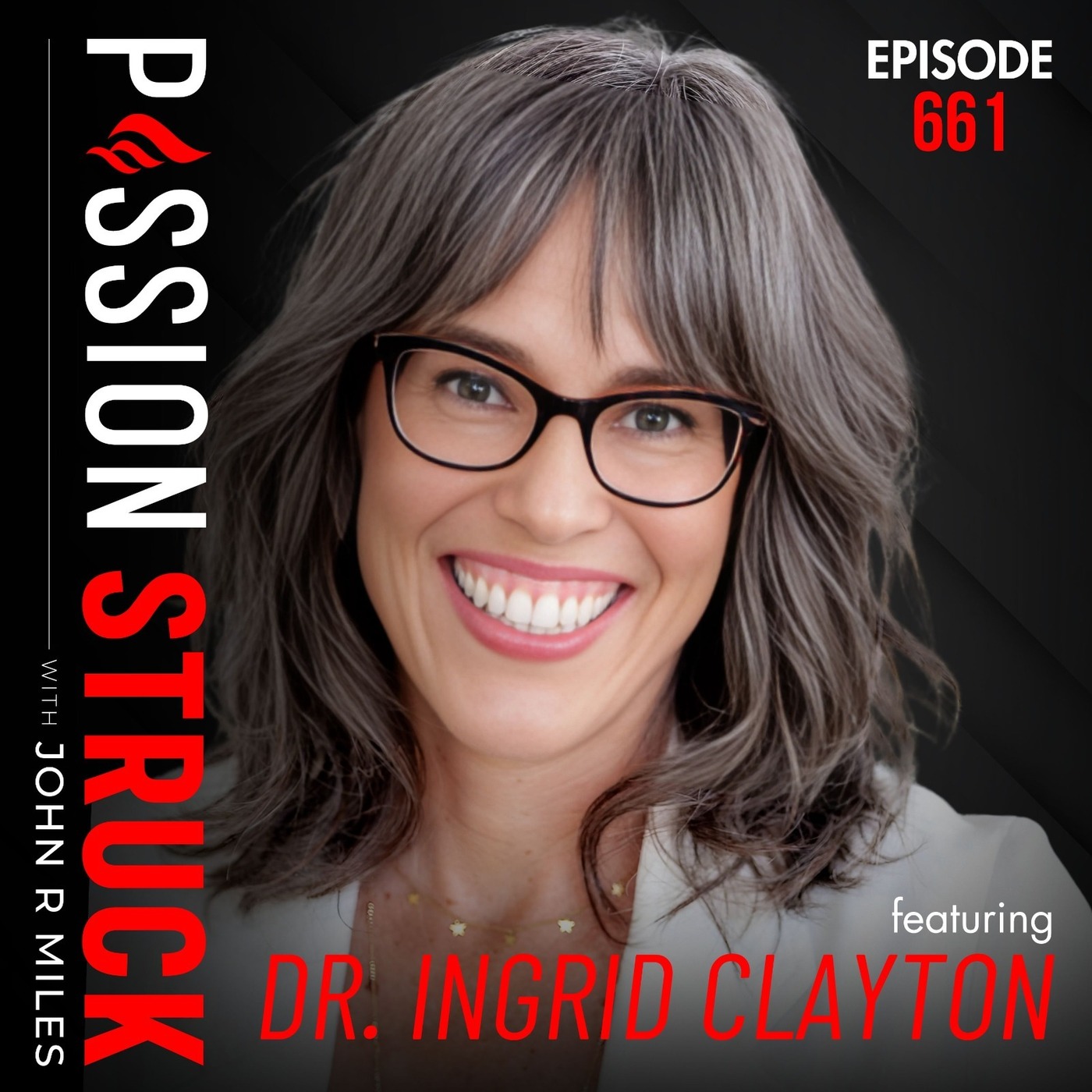
Loading summary
Transcript102 lines
- [00:00]
John R. Miles
Coming up next on Passion Struck, I.
- [00:03]
Dr. Ingrid Clayton
Feel like people have been stuck in a chronic fawn response and they don't know it. They actually think they're being kind or empathic or generous and they don't understand the degree to which these characteristics that belong to them are essentially being hijacked for the sake of other and the level of self abandonment that this creates. We think we're being kind, but we don't realize that by so solely prioritizing everybody else, we're not being kind to ourselves. And so highlighting this is incredibly important personally and professionally and then some. If I don't have a sense of self, how can I fully show up in the world?
- [00:44]
John R. Miles (Intro Host)
Welcome to Passion Struck. Hi, I'm your host, John R. Miles. And on the show we decipher the secrets, tips and guidance of the world's most inspiring people and turn their wisdom into practical advice for you and those around you. Our mission is to help you unlock the power of intentionality so that you can become the best version of yourself. If you're new to the show, I offer advice and answer listener questions on Fridays. We have long form interviews the rest of the week with guests ranging from astronauts to authors, CEOs, creators, innovators, scientists, military leaders, visionaries and athletes. Now let's go out there and become Passion Struck.
- [01:26]
John R. Miles (Narrator/Host)
Welcome Back to episode 661 of Passion Struck. I want to begin by thanking you for being here. Over 36% of you return every single week and I can't tell you how.
- [01:38]
John R. Miles
Much that support means.
- [01:39]
John R. Miles (Narrator/Host)
It reminds me that together we're building not just a podcast, but a global movement. I have a quick update. After years in the making, I am so thrilled to announce the launch of the Passion Struck Network, a mission aligned network redefining the creator economy around mattering not metrics. We're building creator first shows and intentional communities where authenticity beats noise and impact beats impressions. If you want voices that inspire transformation, not just consumption, follow the network feed and explore what's next@passionstrucknetwork.com we're now in week two of our new series, Decoding Humanity, where we're unpacking the biology, psychology, identity, trauma and community that shapes who we are. Last week we explored brain health with.
- [02:28]
John R. Miles
Bruce Miller and Virginia Sturm, emotional resilience.
- [02:31]
John R. Miles (Narrator/Host)
With Caroline Fleck, and in my solo episode, I broke down the four critical.
- [02:36]
John R. Miles
Aspects of the living code.
- [02:39]
John R. Miles (Narrator/Host)
But here's why today's conversation is so important. Because one of the most human truths is when life gets unsafe, we adapt to survive and Sometimes those adaptions save us in the moment, but cost us ourselves in the long run. That's why I invited Dr. Ingrid Clayton onto the show. Ingrid is a clinical psychologist, a trauma survivor, and the author of the forthcoming book Fawning, which releases why the need to please Makes us lose Ourselves and how to find our way back. She takes something most of us have experienced, whether in families, relationships, or in our workplaces, and names it for what it is. Fawning, not people pleasing. Not codependency, but a survival response, one that often robs us of our voice, our truth, and our sense of self. This episode matters to me because I know what it's like to feel invisible, to shrink yourself, just to keep the peace and to confuse accommodation with safety. And I know many of you listening have lived that reality, too. My hope is that this conversation gives you both language and courage to recognize those patterns and to begin the process of reclaiming your own story. Before we dive in, our new store, Start Mattering, is now live. It's part of our commitment to the mattering revolution, a movement built on one simple matter. Live like it. Every hoodie, tee, and hat carries that reminder, because when you live like you matter, you create ripples that extend far beyond yourself. Now let's dive into this profound conversation with Dr. Ingrid Clayton. Thank you for choosing Passionstruck and choosing me to be your host and guide on your journey to creating an intentional life. Now let that journey begin. I am absolutely thrilled today to have Dr. Ingrid Clayton with me.
- [04:27]
John R. Miles
Hi.
- [04:28]
Dr. Ingrid Clayton
Hi.
- [04:28]
John R. Miles
I'm great. How are you today?
- [04:29]
Dr. Ingrid Clayton
Great, John. Thanks for having me on.
- [04:32]
John R. Miles
Well, I'm so excited to have you on for multiple reasons, but I want to start the opposite. I want to start the episode out with this question. You've spent years as a clinician, but also as someone who's lived this journey yourself. What's one thing you've learned about yourself recently that surprised even you?
- [04:55]
Dr. Ingrid Clayton
Well, that is a great question. I think a part of my experience now as a person in my 50s, I'm realizing the paradigms, and particularly in the mental health field, that at one point were helpful, but I'm realizing now they were actually harmful at the same time. And so things that once really served me are now. It's important for me to shed some of these old ideas, and some of those include things like the language of codependency or even people pleasing. And coming up in September, I'll be 30 years sober, and there's language related to being an addict or an alcoholic that I once really held dear. And these things provided a sense of community and acceptance and reduction in shame. But I can see how some of these paradigms have also kept me stuck in this larger picture of healing from unresolved complex trauma. And it's been pretty surprising, to be honest, to have to unpack some of these things that once really defined the core of who I felt like I was.
- [05:59]
John R. Miles
And it's interesting, I wasn't going to go here, but I will since you brought it up. But it's interesting that I've recently read that now I think the statistics were in the mid 50% of adults are not drinking alcohol right now.
- [06:14]
Dr. Ingrid Clayton
Wow, that's a big statistic.
- [06:17]
John R. Miles
And especially in the Gen Z generation, it seems to be swinging more and more to them moving away from alcohol, which to me, I found both of those quite surprising. I wanted to ask you, and I've been two years sober myself, how different for you was life after alcohol compared to before you were sober? Like, what were the biggest things that you've experienced on the other side of it?
- [06:47]
Dr. Ingrid Clayton
Well, it's such a huge question and I've lived more of my life now in sobriety than I did as a drinker. Right. And I got sober about two weeks after my 21st birthday. So I was barely even legal. But I started very young and alcohol for me was for like, like a lot of people experience. It was a solution. It was a solution to the constant unrest, to social anxiety, to overwhelm that I was experiencing in my body. And yet it became a problem real quick when it was the only tool for coping, as it was for a long time. And so I think the biggest shift for me is just by not drinking, I was able to avail myself of resources and coping that didn't have such a downside, including a huge community. People both that I got sober with or that I've met in the last three decades, they are, they are my people. Right. The woman who helped me in early sobriety, she was my first sponsor, is now the godmother of my 10 year old child. Right. These are people that became ultimately a chosen family. And so I really felt a sense of belonging and connection and availed myself of resources that were not available to me before recovery.
- [08:08]
John R. Miles
My own journey is I ended up going through a divorce and coming out of that divorce, I ended up finding myself as a single person more and more in intoxication culture. I just found that was taking a bigger priority for me than it should have. And I'm the type of personality type that if I'm going to break away from something. I need to get away from it and move myself solely away from it. I didn't end up going through any program. I just said to myself, I gave a date, August 1st, I'm gonna stop. And that's what I did. And it's been two years since. But I have found. Not sure I. I would have written a second book or a children's book or done so many of the things that I've been able to do. Because on the other side of it, I have just found that I am more cognitively alert. I'm. I'm able to function at a higher level. And man, my sleep has improved so drastically. It's night and day from what it used to be.
- [09:07]
Dr. Ingrid Clayton
So I really identify with those two. Prior to getting sober myself, I didn't think I was very smart. I was drinking all through high school. I almost failed out of my freshman year of high school. I really had this identity that was like, academics aren't for me. But I ended up going back to school and here I am today. Dr. Ingrid Clayton. Three degrees under my belt. That would have been absolutely impossible. I couldn't have conceived of it, much less shown up day in and day out for the work that it required to navigate all of that. So I'm so grateful. It's been foundational for everything else, that's for sure.
- [09:41]
John R. Miles
Thanks for taking that detour. I want to get us into discussing your brand new book, which is your third book, Fawning, why the need to Please Makes Us Lose Ourselves and how to Find Our Way back. Congratulations on bringing this world this new book and it's with a phenomenal publisher, so congratulations on that too.
- [10:02]
Dr. Ingrid Clayton
Thank you so much.
- [10:04]
John R. Miles
You write in the book that fawning is seeking safety in an unsafe world, often at our own expense. I wanted to use that quote as a way for you to open up this conversation of what fawning is and how it differs from what people think of as people pleasing or as you and I were talking about before, codependency.
- [10:27]
Dr. Ingrid Clayton
Fawning is really an extension of what we've long known about fight, flight and freeze and that it's a survival instinct, it's unconscious, it's not looking for our opinion or we might not even know that we're doing it. In fact, often we don't. And it's a way where we appease or caretake in relationships to. To minimize harm or potential harm that might be coming our way. And it could be physical harm, emotional harm, it might be a threat to the relationship itself. So when we look at the vital relationships of our lives, whether it's parents or family of origin, larger community, it might be relationships in your job, your financial security. Right. We are hardwired as human beings for relationships and for connection. And when these feel threatened, the body might lean towards the fawn response in order to keep ourselves safe.
- [11:24]
John R. Miles
And I love that because a lot of what I explore here on this podcast is the art and science of what I call mattering, which I think is a bit different than belonging. I feel like if I were going to explain it, I feel is if you're a kid on a. On a schoolyard and they're picking a soccer team, when you get picked, you feel like you belong because you were picked.
- [11:49]
Dr. Ingrid Clayton
Yeah.
- [11:49]
John R. Miles
But it's in the way that your teammates treat you that make you feel like you matter.
- [11:54]
Dr. Ingrid Clayton
That's a lovely distinction. I haven't thought that much about it, but it's washing over me now. I appreciate that.
- [12:00]
John R. Miles
So I do think mattering really plays into your definition. The way you explained it. And you started the book out with a really powerful moment. There's a quote that I was really drawn to. You say it was the first time I felt unsafe with him while he was seemingly being kind. That moment changed everything. And we're talking about a scene in a. In a hot tub. Why was it important for you to begin fawning with your own lived experience? And perhaps for the audience, you can take us back to that moment and what was going on.
- [12:35]
Dr. Ingrid Clayton
Yeah, well, that was with my stepfather, and I was 13 years old. And what I now know, which I could not have used this language for most of my life, but that he was engaging in grooming behavior that he had exhibited prior in his own life with young girls and ultimately wanted me to be his girlfriend. Although my stepdad also had this overt rageful. These episodes. This. He was not rageful. He was leaning in for connection. He was leaning in with humor. He was really trying to lure me basically to his side of the hot tub. And yet my body felt as unsafe as when he was overtly rageful. So it was very confusing. And I start here for a couple of reasons. One is that fawning is a relational trauma response, and relational being synonymous with complex trauma trauma, childhood trauma, or developmental trauma. And relational trauma often looks different than what we typically think of as being in a car crash or a natural disaster. It's these ongoing, pervasive threats to our safety day in, day out, that you might not even identify in the moment as being traumatic or wounding. So this was really my entry point to this work as my lived experience of it. And how in that moment in the hot tub, I can look back almost 40 years later and realize this was the origin of a chronic fawn response for me, that I did not like him, I did not feel safe, I needed him to like me in order to be safe. And how this patterning ended up dictating my life for decades. And secondly, I lead with lived and personal experience because I believe even in the mental health field, that we can perpetuate these systems of power that elicit and encourage a phone response. So whether we're talking about childhood trauma and family of origin, or we're talking about racism, classism, patriarchy, all of these systems, Right. The body knows where it resides in the pecking order and who holds the power. So if I'm showing up as a therapist saying, well, John, I have all the answers, right, I'm basically letting you know or my client know that they are not empowered, that they don't have the answers, and this elicits the very problems that they're coming to me to solve. And so I want to level the playing field, essentially. I want to be collaborative. I'm coming at this more as a human being, more as a person with a body, than with a person who has all the answers.
- [15:21]
John R. Miles
I always start my books out well, not a children's book, but the non fiction books out from a personal perspective. Because I think anyone who's reading the book, you're best positioned to serve the person you once were. So leaning into your own personal story, I think makes it real right out the gate.
- [15:39]
Dr. Ingrid Clayton
Yeah.
- [15:39]
John R. Miles
For others who are reading it because they can identify themselves through your story.
- [15:44]
Dr. Ingrid Clayton
That's right. That's right.
- [15:46]
John R. Miles
As I understand it, Pete Walker originally coined the term fawning. However, what got me interested in the book was I had never heard this term before. When it came across my desk, I was intrigued. But it leads the question, why should my listeners care? You argue that fawning isn't rare and many of us have done it without even realizing it at work in our families and our relationships. Why do you think it's so important to bring this to the mainstream today?
- [16:16]
Dr. Ingrid Clayton
Well, I think it's important for a lot of reasons. One, because I feel like people have been stuck in a chronic fawn response and they don't know it. They actually think they're being kind or empathic or generous, and they don't understand the degree to which these characteristics that belong to them are essentially being hijacked for the sake of other and the level of self abandonment that this creates. So we're being. We think we're being kind, but we don't realize that by solely prioritizing everybody else, we're not being kind to ourselves. And so highlighting this is incredibly important, I think, personally and professionally and then some. If I don't have a sense of self, how can I fully show up in the world? Right? I'm not actually able to be in the healthy, reciprocal relationships that I'm longing for. I'm not able to break through those ceilings that I experience professionally. So ultimately, this work is about restoring a sense of autonomy and agency and self trust. These are things that go missing when we're stuck in a chronic fawn response. And additionally, I think we know more now. And so things like codependency and people please. This language arised alongside our language and understanding of trauma, particularly relational trauma. But for a long time they have not been in conversation, so they have not been trauma informed, which has left people shamed and blamed as though the origins of a problem all resort to some sort of character defect. And I'm tired of blaming the victim. I'm wanting to restore a sense of empowerment to people.
- [18:01]
John R. Miles (Narrator/Host)
We'll be right back after a quick break. You're listening to Passion Struck on the Passion Struck network. Back to Dr. Ingrid Clayton in just a moment. Welcome back to my interview with Dr. Ingrid Clayton.
- [18:19]
John R. Miles
I wanted to ask you a little bit of a philosophical question. There's this thing called self discrepancy theory, which you may have heard of, where we really have three versions of ourselves. Our actual self, our ought self, who we think we should be, who society tells us to be, and the ideal self that we could be if we really created a life of fulfillment. What do you think is fawning's relationship between that difficult gap of so many people living their ought life instead of their ideal life?
- [18:52]
Dr. Ingrid Clayton
I think fawning privileges the ought life to such a degree that the others might not even exist. And that's not to say that it always looks like perfectionism or smiling or being happy or caretaking. It can also look like really befriending the bully. It can look like staying with the in crowd who's doing really dangerous things or things outside of our values, because connection felt like protection. So I think ultimately, based on the model that you're talking about, ideally, as we unfawn, we finally have this larger lay of the landscape, right? The ultimate self, the stuff we've been presenting and maybe the. The ideal. And we get to be in relationship with our whole self. That is what has gone missing.
- [19:41]
John R. Miles
And I just wanted to give a warning to the audience that if you're with kids or you yourself have experienced trauma, we're going to be talking about some sensitive things today, which I'm going to be getting more and more into now that I just want to warn you about in case this might trigger you or it might be time, the kids are in the car, for you to put this in your earphones.
- [20:04]
John R. Miles (Narrator/Host)
Ingrid.
- [20:04]
John R. Miles
I want to get into the anatomy of what fawning is. And I thought I would do this through a story that you tell in the book that happened in Las Vegas. I'll start out with this quote that you have in the book you write. It would be 30 years before I understood what happened that evening and how this event shaped my response to conflict going forward in my entire life. Can you take us back to this secret trip to Las Vegas? And later, the sticky note that you brought to your counselor. What happened in that room and how did it reinforce this instinct that we've been talking about to fawn?
- [20:43]
Dr. Ingrid Clayton
So first, I'll just start by saying the fawn response tends to be the last house on the block. It arises when fight, flight or freeze are either not available or it would make things worse. So again, to go back to this idea that the body knows where it resides in the pecking order. We like to believe that we're all on this even playing field and we talk to people as though that's true. Like just have a voice and just set boundaries and raise your self esteem. And if it were that simple, Lord knows I wouldn't be here right now having this conversation. The truth is, my flight, my fight response, rather what you're referring to in this story, was essentially snuffed out. My body learned over and over that the fight response absolutely made things worse. So fawning became essentially my body's only coping mechanism and the foundational way that it learned that early on. I was 13 at that story at the beginning of the book in the hot tub. But years later, my stepdad basically snuck me away without my mother's permission or knowledge to Las Vegas for the weekend under the guise of championing me as a budding performer. I was a singer in childhood, but ultimately it was a secret trip. It was a trip that he lied about to everyone else in our lives. He paraded me around as his girlfriend, dressed me up as his girlfriend, and it was terribly frightening, right? It was frightening and ultimately also exciting, which tends to happen with grooming, is that someone is playing on, in this case, my hopes and my dreams. And he's saying, I want to champion all of these things in you. But ultimately, when I got back and he said he would tell our family where we had went and what happened, and he didn't, and this grooming behavior continued, There became a point in time where I shared my experience with a school counselor. And she said, ingrid, this is not okay. This is reportable. And social services was brought in. So I ultimately conducted this intervention as a child for my family. And we brought in my brother and stepbrother, my mom and my stepdad, the school counselor, and two social workers. And in that meeting, I had this sense of hope that ultimately my fight response, speaking up and having a voice and trying to set boundaries, was going to be supported by these other adults in my life, right? I had asked for help. I didn't have the power, but I knew that the people in the room had some. Some power and that together we were going to solve this problem. And what actually happened is it made things worse. There was no meaningful intervention. And in fact, my mom turned to me and said, ingrid, I believe that you believe those things happened, but I don't believe that they did. And this is my story, but it's such a common story in my practice that there's what happened, right? What we do can consider the traumatic events, but what ultimately is more devastating is the way that people responded or did not respond to these painful events. And this is where the wounding really takes place. We are shamed, we are blamed. I was told I was a liar, I was selfish, and I made it all up. So you think again about a fight response. Is this mobilization, right? It's this energy flight. Similarly, we're going to run. We're going to get out of here.
- [24:17]
John R. Miles
We.
- [24:18]
Dr. Ingrid Clayton
I had nowhere to go. My fight response was completely shut down. So my body learned I have to get up every single day and live in this house, right? I have to figure out breakfast to bedtime, how to navigate what was deeply troubling and upsetting situation. And then this patterning was woven deeply into my body as I was growing and developing. And this is another common presentation of chronic fawning. We start to think that really it's just our personality, right? I wasn't choosing to put everyone above myself. I wasn't choosing to chronically caretake and lean into essentially toxic relationships. Time and again. It was the only thing I knew. My body learned that my Only sense of safety was found in the face of neglect on one hand and exploitation on the other. So as a pattern of trauma reenactment, guess what I found over and over for decades? Neglect and exploitation. And I had all this information and all this desire to change and I never knew that the patterning was in my nervous system. So healing had to come from there as well. And this is why the lens and language of trauma is vital.
- [25:36]
John R. Miles
So is what you're describing this concept of living in a double bind that you bring up in the book and that in order to stay safe you end up starting to abandon yourself. Is that a good way to think about this binding concept?
- [25:51]
Dr. Ingrid Clayton
Yes. I think I language it as safety over self. The body will always privilege safety and survival. It doesn't care that I would like to have greater self esteem. It in a nanosecond, in a moment to moment basis will always privilege safety and survival.
- [26:09]
John R. Miles
I want to move from that to another story. And I wanted to go in this story because I think it helps illustrate instead of just talking about this through your scenario, giving listeners another relation. So I was hoping you could talk about the story of Sadie, who you bring to life. And Sadie's fawning wasn't just people pleasing for her, it was an act of survival.
- [26:41]
Dr. Ingrid Clayton
Yes.
- [26:41]
John R. Miles
And she mistook the chaos to relief cycle in her life. So I was hoping you might be able to go into her story because I found it really tragic.
- [26:53]
Dr. Ingrid Clayton
Yes. So Sadie is someone that I have had the privilege of working with for time long a over 10 years. And she came to me really as a young adult knowing in some sense that she was in dysfunctional relationships and she wanted to change. But like a lot of people that come into my practice, they believe in this notion that if I get better, if I unpack my stuff so that I'm not so broken, then my relationships will change. And of course that makes sense even as I say it out loud. But the problem in that thinking is that it's completely related to personal responsibility. And we never actually shift that lens to ask other people in our lives to take personal responsibility to. And so she stayed stuck in this pattern with her partner at the time where she was with a really abusive woman, physically, emotionally sexually abusive. And Sadie really believed, if I'm better, maybe she'll stop hurting me.
- [28:01]
John R. Miles
And I think Sadie's story even goes deeper than that because she was sexually abused by her father, she was physically beaten by her mom. By the time she was even 17 years old, she had attempted to commit suicide. She was using marijuana. This is what I found intriguing. She was using pot as a way to escape, went into rehab, and the people were actually saying, man, you just used pot. That's nothing. We're all heroin abusers. So in order to fit in, she starts trying heroin herself. And it's a pretty extreme example, but I think we fall into this trap ourselves in different ways. And that's what intrigued me. How did she pull herself, like, out of this? And how did you help her?
- [28:48]
Dr. Ingrid Clayton
Well, you know what's interesting, first of all, as you see where she came from in her childhood, it makes sense that she found herself in this romantic relationship. It mirrored everything that she'd always known. And to your point, yes, she was using pot 247 to cope. And later on, when she got this pushback around. What do you mean? That's not a problem. Weed isn't a problem. She didn't ever try heroin, but she adopted this performance that, oh, using heroin is something people take seriously. No one has ever taken me seriously, not in my suicidality, in the sexual abuse and the physical abuse. None of that was ever taken seriously. And now her smoking pot was similar. And so she came to me identifying as a heroin addict. And of course, this is what I believed. It's what she came in sharing. And one day she said, ingrid, I have something to tell you. I'm not a heroin addict. In fact, I have never used heroin. And it makes me emotional to this day because the way that she had to experience a sense of safety both within herself and in our relationship, enormous risk that she was taking, basically to say, to go back to your language, do I matter? Does my actual experience matter? And it was the beginning for her of building upon what for me, I hope in the moment and ongoing, was a resounding, yes, I get it. You matter. You don't have to pretend your story exactly as it is enough. You are enough. And it was pivotal and crucial and common that a lot of us, maybe we don't say we're heroin addicts in order to belong, but we have certainly adopted all kinds of personalities or value sets right from our community, from our families that have told us who to be. And ultimately we go, oh, okay, well, that's who I need to be in order to matter. And there's a lot of shedding that we have to do as we move into this healing work.
- [31:01]
John R. Miles
I want to go to your section of the book now you call the homing pigeon. I said earlier in this interview, I experienced a failed marriage. You also experienced a Failed marriage in your late 30s and you found yourself dating a sociopathic lawyer and trying very hard to make him your boyfriend. And I think when we come out of relationships and we're trying to seek something new, we put ourselves in this position. At least I did for a period of time where I don't know if I was pretending to be something different or seeking something different that I had before, but I noticed things were different in the relationships that I was in. Is this something that commonly happens?
- [31:46]
Dr. Ingrid Clayton
I want to make sure I understand the question, particularly as it relates to the homing pigeon story. You're saying that coming out of a relationship, you find yourself in sort of new circumstances or showing up differently.
- [31:59]
John R. Miles
I guess where I was going to this, he said that he'd been disappointed by countless other women.
- [32:04]
Dr. Ingrid Clayton
Yes.
- [32:05]
John R. Miles
You know, in my case, had been disappointed by my ex wife. And it caused me, I think, to put a guard up, maybe unfairly, to people I was meeting thinking that they were all going to be the same and everyone was going to disappoint me. And I guess that's what I'm asking. Is that a typical response?
- [32:24]
Dr. Ingrid Clayton
Well, that particular example, although it sounded like maybe he was expressing some vulnerability, what he was actually doing, those were attempts to manipulate, to put me up on this pedestal, as though to say, everyone else has disappointed me but you, Ingrid, you seem like you could hold the answers, but moments from that, that very putting me on the pedestal was an attempt to completely. I'm not going to tell the whole story, but to completely rip me down to shreds and let me know how devalued I actually was in his mind. And so that story for me is less about trying to show up differently in dating and seeing how once again I found myself in what was a trauma bonded dynamic where intermittent reinforcement was in the driver's seat. My value and worth was absolutely resting in someone's hands and I would do anything to stay in their good graces, including putting myself in a really dangerous situation.
- [33:33]
John R. Miles
Thank you for sharing that. And I understand why you don't want to go more into it.
- [33:38]
Dr. Ingrid Clayton
I'll let the reader see it on the page.
- [33:42]
John R. Miles
So you end up arguing that fawning is born out of complex trauma. How does that differ from acute trauma and why does it often go unrecognized?
- [33:53]
Dr. Ingrid Clayton
Well, I think as we spoke to earlier, acute trauma tends to be something that if you ask 10 people if that was a traumatic event, they're all going to say that was a traumatic event. It seems obvious. It's declarative like I referenced car crash, even sexual assault. Complex trauma is the prolonged, ongoing threats to our safety over time. And some people liken it to a million paper cuts or it's water torture. It's the drip. Over time, these experiences culminate the same in the nervous system as does these more obvious acute events. And similar to acute trauma, different people may experience the same experience and walk away with trauma or not. It's also based on what were your resources at the time? How did people come together and provide the care and comfort that you need in order to overcome? What was your age chronologically? What were you able to cope with developmentally? So complex trauma is relational childhood attachment trauma, essentially.
- [35:03]
John R. Miles
On this show, I've had the privilege of interviewing several actors and actresses, and they're always talking about shape shifting. And I'm relating this to Fawning, because you describe fawning as playing, quote, unquote, playing life, playing house, playing a part, sometimes as many parts as there are people in our lives. And so how does this perpetual shape shifting affect one sense of self?
- [35:29]
Dr. Ingrid Clayton
I think it obscures it, right? If we're always playing a role, if that's what we have to do in order to feel safe, we never have a sense of being our lived whole self out in the world. I think I talk about this a little bit in the book, but prior to writing Fawning, I wrote a memoir based on my personal experiences of complex trauma. And in speaking about those experiences, I went online on social media. But I didn't just do it as a clinician. I did it as a survivor. And it was one of the first times in my whole life that I wasn't just living this compartmentalized version of me where, oh, now I'm on camera. I need to be Dr. Ingrid Clayton and lead with my expertise. And maybe here in my personal life, I can, you show. Share a little more vulnerability. It was this opportunity for me to be all of me in one place at the same time. And it was so healing, so deeply liberating. I was also bringing in, I told you I was wanting to be a singer, a performer. Growing up, I was also having this performative quality and bringing in my sense of humor. And I had originally thought, truly, because I had shape shifted for so many environments across so much time, I truly believe that bringing all of me into one place would have deep consequences. Namely, I thought, I'm gonna. Whatever credentials I've earned, any credibility is going out the window when I do this. I really believed that it would tank my career. And of course, it's had the opposite effect. The more that I'm a whole person, the more that I bring all of these parts to me into one place in time, the more people can see me as a whole person, respect me as a whole person, see themselves reflected. But it's not how I lived. It's not how I lived for most of my life.
- [37:18]
John R. Miles
I do think it's so interesting. In my first book, Passion Struck. I opened it up about myself and that I felt like I was wearing a mask.
- [37:28]
Dr. Ingrid Clayton
Yes.
- [37:28]
John R. Miles
For a long time, I was trying to pretend to be someone I wasn't, to fit in.
- [37:33]
Dr. Ingrid Clayton
Right.
- [37:34]
John R. Miles
And I think so many people are wearing that mask and they just don't want to admit it. And so I've experienced that shape shifting firsthand. You talked about your own career being different now because you've recognized that and you've showed up as your full self. For someone who's listening to this, how does fawning show up differently in a professional setting? Because we've been talking about intimate relationships and kind of personal settings. Like, how does it show up differently with bosses or our colleagues?
- [38:10]
Dr. Ingrid Clayton
It's such a great question. And because the fawn response is dependent on context, right. The relationship that we're in at the time, it can present differently depending on the person and their boss or their colleagues. But one end is we want the job, we want the title. We think if I keep showing up, if I do more, if I take on extra work, if I say yes to everything, if I never take credit for my work, you know, that I'm going to arrive at a place where I'm finally going to be okay. And I certainly identify with that. Right. It's like maybe if I get the next degree or write the next book or have a private practice, we're seeking these benchmarks as though they. These external markers are going to make us internally safe. And of course, they don't, because these labels are not who we actually are. And so our safety once again remains at arm's length as outside of our very own body, it resides in someone else's body. Are you giving me validation or permission? Or do you see me? Do you think I'm worth it? So it perpetuates this, and the markers keep moving further back. I share a client story in my book of a man named Anthony, who absolutely identified with this coping, and he ended up a partner at this global powerhouse firm. And he was absolutely at the top of his game. And yet when he showed up in my office, it was really with the sense of. But I don't know who I am at all. So all this success, I think fawning can look like success. That's part of the performance. And yet who was it really for? He ultimately saw, although he appreciated some of the financial security and some of the things that he had gone missing in his life and how devastating that was to notice in his. In his mid-50s. And then of course, the other side of that is with the fawn responses that we're so worried about other people's perception and maybe getting their validation or permission that we stay really small. And I can identify with this too. It was this part of me is, I don't want to be that visible, John. I can't go online and bring all these parts of me, right? So we shrink in order to stay safe. It's like the bigger we are, the bigger the target feels for relational traumatic events to come our way. And so I've seen a lot of clients too in my practice where they're like, I can't. Why can't I get ahead? I know I have all this passion, I know I have all of this talent. And yet they're absolutely hitting a ceiling. And in part it's because they don't even realize how much they're tucking away parts of themselves that they're like, well, I can't make this stuff visible. And yet that's likely the very stuff that needs to be visible in order to get them over these real humps in their life.
- [40:59]
John R. Miles
Something that you just mentioned there, I refer it from my own personal experience of going through it, is I had become invisible in my own life. And it's one of the worst feelings you can possibly encounter. And for me, I became so emotionally numb. I wouldn't wish that on anyone. It took years to rebuild that. But it really starts and ends with a journey of self discovery. Because I think what ends up happening is we become so distracted, or we make ourselves so distracted, we forget who we really are and we keep moving farther and farther away from our zone of genius, our purpose for why we're here. And we end up doing things without there being any meaning to it. And so all of a sudden you wake up and you're like, my health is in shambles, my emotional well being is in shambles, My relationships are in shambles. When it just. What starts out in one area really starts cascading across all components of a stool. If you were sitting on it.
- [42:04]
Dr. Ingrid Clayton
That's right. And I guess I would extend that to say not Only are we personally distracted, but our distraction is endorsed, applauded, expected. Right. We are often the caretakers for others and the ones who, who are willing to soak up all the shame for these systems of power that aren't acknowledging this larger truth of what's happening. And similar with Anthony even, was he absolutely encouraged and validated in his pursuits of self abandonment? Yes, he was, even with the financial gains. So it's a personal problem for sure, but so much of it is also systemic and I think we have to look at that to see some of the hooks that continue to pull us back back in.
- [42:47]
John R. Miles
So Ingrid, another topic I wanted to talk about was the relationship between fawning and money. And in the book you say so instead of holding money and accumulating wealth, fawners sometimes shed it like a snake shedding skin. We use money to extend our caretaking and appeasement tendencies, feeling like our relational needs can only be met if we're over giving. Why do fawners have, have this relationship with money and how does it show up for someone who might be listening?
- [43:18]
Dr. Ingrid Clayton
Well, I think money is power. No one disputes that. And coming from a chronic fawn response, you feel pretty disempowered. Right? The systems have power, the boss has power, your parents have power. And so money becomes literal currency. Right. It's like I don't matter, but if I always pick up the tab or I'm the one, I'm going to be really generous or charitable. And again, I think a lot of people in a chronic fawn response are generous people. They are giving, they do have empathy, these are traits that they possess. But they don't know the extent to which they are extending beyond generosity towards do I really want to give? Do I really want to give this much? How would it feel for me just to hold and not feel like everyone else is more entitled? There's this hierarchy again that if we feel like we're at the bottom of the barrel, everyone else is more deserving. So you have a need? Well, of course I can fill it. It's a very common reaction. And so it happens emotionally, it happens sexually, and it happens financially.
- [44:32]
John R. Miles
It certainly does. So in part two of your book, you start going through a series of examples where you emphasize the importance of nervous system work over just talk therapy. What practices have you found help people move from survival mode they might be encountering into true healing?
- [44:52]
Dr. Ingrid Clayton
I think I would start just by looking at our language. I've referenced, even in our talk, this idea that people are saying, well, just raise Your self esteem or set a healthy boundary, right? Take care of yourself. And these are behavioral interventions that make sense rationally. No one's going to argue, right? It's a very cognitive based. Of course, this makes sense to me. Now go and do it. Response. But because what we're talking about is centered in our survival instincts, these come online without our rational mind, we don't have a sense of choice really in the matter. So what we have to start to orient to is not what we think about a thing, but what we're actually experiencing. And this is the language that we use in every trauma therapy that I've ever learned. We don't say, what do you think about that? Tell me your opinion. What should you do? We say, what are you noticing now? And to the listener, you might want to notice, bring your attention down into your body. It might be physical sensation, it might be a feeling. It might even be orienting with your senses, which are the language of the nervous system. What do I see? Right? What do I notice? What do I hear? And by orienting in this way, it sounds so simple. But what we're ultimately doing is creating a relationship to two things, present time and place. Which means we're not being hijacked by his historical trauma running the show and a relationship with ourself in our own body. And this to me is the bedrock for growing everything else that is a result of this work, which is changing my orientation to safety from being external. Do you like me? Do you give me permission to internal? Who am I? How do I feel? What do I notice right now? And the more that I can build on that sense of knowing and those cues and honoring whatever is there, right? That's the other big piece of it. It's not just what do we notice, but can we linger there? Can we bring some self compassion and curiosity to that process? These are the building blocks.
- [47:05]
John R. Miles
When you bring that self compassion to your healing. You describe it as a paradox. You say we must lower the bar to lower our defenses. What do you mean by that?
- [47:18]
Dr. Ingrid Clayton
Well, I think what I mean, even if you think about talk therapy is considered this top down approach, right? You think about the human body. Even the prefrontal cortex is the last part of the brain to develop. And that's what I'm talking about with these cognitive rational solutions. Lowering the bar, in part is lowering into our physical bodies, into our guts, right? The second brain, that has a whole different wisdom, that might not even be able to articulate necessarily what's going on, it speaks a different language. So part of it is this lowering the bar of what you think about that to what you're noticing. But it's also about the shame that we've experienced by not being able to engage in these cognitive, rational solutions. It gets all of that out of the way and says, you know what? You. You make sense. Your body did exactly what your body was designed to do in that situation to keep you safe. So can we honor the roots of the fawn response as genius and adaptive and healthy? And we are not meant to live in a chronic trauma response. We are not meant to live in survival mode 24 7. So when we understand that the origins of this thing is adaptive and healthy, it lowers the bar on the shame, which means we can go, I'm not just fundamentally broken, right? I make sense. I did this for a reason, and now I can find more flexibility.
- [48:52]
John R. Miles
Ingrid, you said in the book fawning is the rain and my voice is the magic. What do you hope this book catalyzes not just for trauma survivors, but for.
- [49:04]
John R. Miles (Narrator/Host)
The culture at large?
- [49:06]
Dr. Ingrid Clayton
Well, first, I want to say I did not say that, but the lovely Kelly McDaniel said that she's the author of Mother Hunger. She's.
- [49:13]
John R. Miles
I misread it.
- [49:15]
Dr. Ingrid Clayton
So that was her talking about what she gained from reading this book, and it was a very glowing endorsement. So I'm grateful. But ultimately, what I hope that people will get from it is what I'm just. Was just speaking to a moment ago, knowing that you make sense. This was the piece that was missing for me for so long. I solely felt broken and like the tools that were being offered were not helping me. And so it doubled down on the shame I was holding. And so I really want people to have reverence for themselves, self, compassion. But bigger than that, it's a knowing that you make sense then and you make sense now. And if you want more freedom and flexibility, it's absolutely available to you.
- [50:00]
John R. Miles
Ingrid, it was such a pleasure having you on the show today. If someone who's listening wants to learn more about you, where's the best place that they can go?
- [50:08]
Dr. Ingrid Clayton
My website has all the things. Ingridclayton.com all the links to social media, Instagram, Facebook, substack, all the places. And of course, you can find links to the book there, too, wherever books are sold.
- [50:20]
John R. Miles
Ingrid, thank you so much for being here. It was such an honor to have you.
- [50:23]
Dr. Ingrid Clayton
Thank you, John, for your amazing questions. I love this conversation.
- [50:28]
John R. Miles (Narrator/Host)
That's a wrap on Today's conversation with Dr. Ingrid Clayton, and I hope it left you with a new lens on something many of us do without even realizing. Fawning A few takeaways that struck me most. Fawning is not a weakness, it's the body's survival response to danger. The cost of fawning is self abandonment. We lose connection to our voice and our truth. And healing begins not by pushing harder, but by lowering the bar, creating safety and reclaiming the parts of ourselves we thought were lost. For me, this conversation underscored why decoding humanity is so necessary. Because if we don't understand the ways that trauma shapes our biology and psychology, we'll keep mistaking survival patterns for identity. And you deserve more than that. If this episode resonated with you, please take a moment to leave a five star review on Apple or Spotify. It's the best way you can help this movement grow and reach people who need these conversations. And if you want to carry today's message into your daily life, head to start mattering. Com. It's not just apparel, it's declaration that you matter. And if you want the companion workbook to today's episode so you not only listen, but can put into action what you hear on the show, go to theignitedlife.net our substack coming up on our next episode of Passion Struck, we continue our Decoding humanity series with Dr. Nicole Cain, a licensed naturopathic doctor, clinical psychologist, and author of the book Panic Proof. We dig into why panic isn't a defect, but an intelligent alarm, the nine types of anxiety, Nicole's timekeeper concept, and.
- [52:01]
John R. Miles
How to build a panic proof protocol.
- [52:03]
John R. Miles (Narrator/Host)
That restores safety to your nervous system.
- [52:05]
John R. Miles
From the inside out.
- [52:06]
John R. Miles (Narrator/Host)
You don't want to miss it.
- [52:08]
Dr. Nicole Cain
The difficulty is that we have this paradigm in medicine that our job is to get rid of the symptom. And if we just get rid of the symptom, it doesn't necessarily mean that the problem is gone. It could still be there and oftentimes it will show up in other places. And so the question I think that's more interesting is what are these symptoms trying to tell me needs healing?
- [52:35]
John R. Miles
And how?
- [52:35]
Dr. Nicole Cain
And what are the different ways that that the body is trying to protect me and hold me into this protective loop? And how can we reprogram that? How can we unwind that? And that may involve working with the gut microbiome.
- [52:51]
John R. Miles (Narrator/Host)
Until then, live boldly. Lead with heart. And as always, live life. Passion Struck.
- [53:09]
Shopify Advertiser
Shopify's Point of Sale system helps you sell at every stage of your business. Need a fast and secure way to take payments in person We've got you covered. How about card readers you can rely on anywhere you sell.
- [53:21]
Dr. Ingrid Clayton
Thanks.
- [53:21]
Shopify Advertiser
Have a good one. Yep, that too. Want one place to manage all your online and in person sales? That's kind of our thing. Wherever you sell. Businesses that grow grow with Shopify. Sign up for your $1 a month trial at shopify.com listen. Shopify.com listen.