← Passion Struck with John R. Miles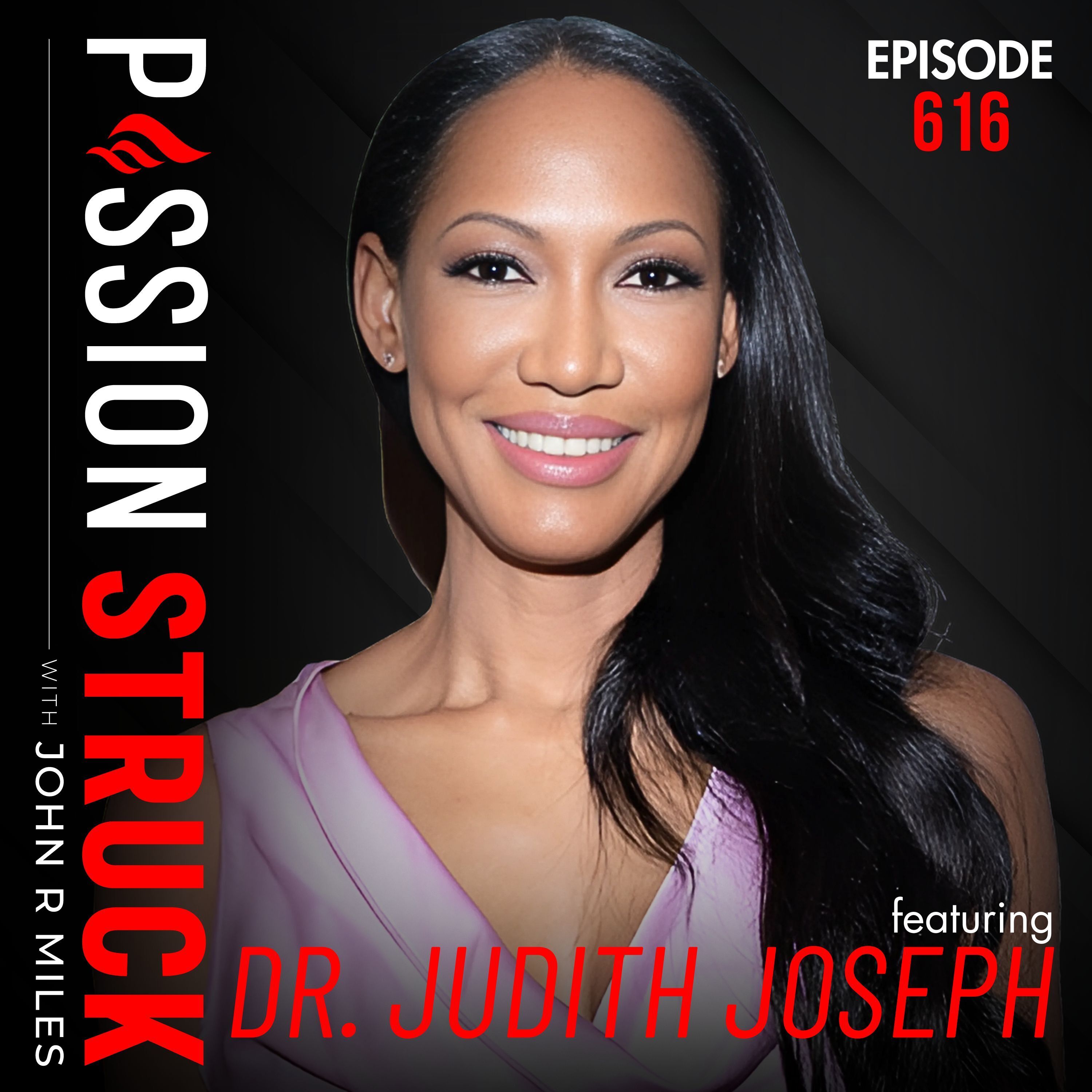
Passion Struck with John R. Miles
Dr. Judith Joseph on The Hidden Epidemic of High-Functioning Depression | EP 616
00:50:33
Loading summary
Transcript34 lines
- [00:00]
Dr. Judith Joseph
If you're a parent or share a fridge with someone, Instacart is about to make grocery shopping so much easier because with family carts, you can share a cart with your partner and each add the items you want, since between the two of you, odds are you'll both remember everything you need. And this way, you'll never have to eat milkless cereal again. So minimize the stress of the weekly shop with family carts, download the Instacart app and get delivery in as fast as 30 minutes. Plus enjoy $0 delivery fees on your first three orders. Service fees apply for three orders in 14 days. Excludes restaurants.
- [00:33]
John R. Miles
Coming up next on Passion Struck, what.
- [00:36]
Dr. Judith Joseph
I found is that when you see people who are over functioning, a lot of times it's not just them. It has been contagious. It spreads to their families, it spreads to their team, it spreads even to their pets, right? Everyone's not happy, there's a lack of joy. The anhedonia spreads to the ecosystem. But if you can retrain yourself and start to engage in being present, slowing down and accessing life the way you should, then that spreads as well. So you can actually reverse things if you're mindful and intentional about it.
- [01:08]
Narrator
Welcome to Passion Struck. Hi, I'm your host John R. Miles, and on the show we decipher the secrets, tips and guidance of the world's most inspiring people and turn their wisdom into practical advice for you and those around you. Our mission is to help you unlock the power of intentionality so that you can become the best version of yourself. If you're new to the show, I offer advice and answer listener questions. On Fridays, we have long form interviews the rest of the week with guests ranging from astronauts to authors, CEOs, creators, innovators, scientists, military leaders, visionaries and athletes. Now let's go out there and become Passion Struck. Welcome to episode 616 of the Passion Struck podcast. I'm John Miles and I'm so grateful you're here investing in your growth, your healing, and your pursuit of a life that truly matters. In case you missed it, last week, we had two incredibly resonant conversations. On Tuesday, number one, New York Times bestselling author Joseph Wynn helped us explore how to untangle the limiting thoughts that keep us stuck. And then on Thursday, Janet Edley joined us to share powerful wisdom on resilience, surrender, and using music as a path to inner peace. If you missed either one, I highly recommend going back to experience the death that they both brought. And in my most recent solo episode, 615, we zoomed out to look at the mental health ecosystem. The idea that thriving isn't just about what's in your head, but the people, places and systems that support or sabotage your well being. That concept leads us directly into today's conversation, because today we're tackling a condition that hides beneath high achievement and silent suffering, high functioning depression, with someone who's leading the charge to name it, understand it, and transform how we respond to it. I'm joined by Dr. Judith Joseph, a board certified psychiatrist, clinical researcher, founder of Manhattan Behavioral Medicine and Clinical Assistant professor at nyu. She's also the author of the groundbreaking new book High Overcome youe Hidden Depression and Reclaim youm Joy. In this deeply personal and powerful episode, Judith opens up about high functioning depression and how it nearly consumed her life. Depressed despite all outward signs of success. We talk about trauma, work, addiction, cultural pressure, and why this condition is so often overlooked, especially in caregivers, perfectionists, high achievers and marginalized communities. Her 5Vs framework offers a path toward awareness, healing, and ultimately, joy. You're going to walk away from this episode with a whole new lens on yourself and the people around you who might be silently struggling. And to go even deeper, check out our Episode starter packs@passionstruck.com starter packs or Spotify. You'll also find bonus content on our YouTube channel, so be sure to subscribe and hit the bell for updates. And don't forget to sign up for our new substack newsletter, the Ignited Life at either our passionstruck.com website or you can go directly to theignitedlife.net each week I'll share actionable insights to help you live with greater clarity, intention and purpose. And also, don't miss out on our new Merch line, which you can also find there. Now let's dive into this eye opening and heart expanding conversation with Dr. Judith Joseph. Thank you for choosing Passion Struck and choosing me to be your host and guide on your journey to creating an intentional life. Now let that journey begin.
- [04:55]
John R. Miles
I am so excited and honored today to welcome Dr. Judith Joseph to Passion Struck. Welcome Dr. Judith.
- [05:02]
Dr. Judith Joseph
Thank you for having me.
- [05:04]
John R. Miles
Before we dive into your groundbreaking work that you've done on high functioning Depression, I'd love to start with a more personal question. You've shared the idea that this new book that's coming out April 8, high functioning, overcome youe Hidden Depression and Reclaim youm Joy, came to you during a talk that you were giving to healthcare workers during the pandemic. Can you take us back to that moment and what led you on this Incredible journey.
- [05:30]
Dr. Judith Joseph
Yes, it was back in 2020. I was actually giving a talk to this healthcare system and they were asking me for tools to adjust to what was happening in the world. And it was halfway through that talk that I realized that I was actually struggling. And no one knew it on the outside. I was accomplishing incredible things. I run a research lab and we managed to stay open throughout the pandemic. And at that time, we're like the only doctor's office still open in our building because we were doing these FDA studies that had to continue. You can't just yank people off of medications. And I had just joined this prestigious board for an Ivy League institution and was on multiple television shows, media, but no one knew that I was actually struggling. And here I was on this call, really feeling like a hypocrite because questions coming through, well, how do we cope? What do we do? And I was just like, I feel the same way. And I how many people are just like me? How many people are the rock? How many people have to show up for their families? How many people have to show up for their teams, for their loved ones and push through pain in order to appear high functioning? And why is it that in mental health we wait for people to break down, to intervene? I thought that was a broken model. And that led me to be curious about high functioning depression, which is not a term recognized by the medical community, but it's a term that's used quite often by in therapy circles because we see it in our clients. We see our patients pushing through a pairing. High functioning. But they have all these symptoms of depression, like poor sleep, low mood, poor concentration, feeling guilty when they don't show up for others, when they fall short because they're overwhelmed and overworking and that busyness and restlessness that they can't sit still if they're not busy, if they're not working, they feel restless and empty and something called anhedonia, which is a lack of pleasure and interest in things that they once enjoyed. And people not knowing what that is, they'll say, I feel meh, I feel bleh. They don't know that's actually a symptom of depression. Right. Because no one's ever talked to them about it. There are many people like that walking around with these symptoms of depression, but instead of breaking down like what we think of in terms of the classical clinical depression, they're actually over functioning. That's how they cope, that's how they avoid dealing with their feelings. They over function, they over commit, they over show up. They're constantly on the go. But these people are left out of the support network because their doctor says, well, come back when you're no longer functioning, then we'll do something about it. And that is a broken model. And, John, we're seeing this renaissance in physical health where people are saying, let's catch the cancer before it even develops. Let's catch the heart disease before it even develops. Let's prevent the osteoporosis with menopause treatments and so forth before it happens. But where's this excitement for mental health? We're still in the dark ages, saying, well, let's come back when you've broken down. Then we'll have to be. Then we could do something about it. And I think that's a broken system. And I think if we don't change the way we think about mental health, if we don't start shoring up and supporting those of us who are functioning, quote, unquote, functioning, we are losing out on an opportunity to prevent a mental health epidemic that we already know is on the horizon. It's happening already.
- [09:08]
John R. Miles
I think it's already here, personally.
- [09:10]
Dr. Judith Joseph
It is. The data shows that it is here. It's only getting worse.
- [09:15]
John R. Miles
The saddest thing is that a number of my interviews that I've done, what keeps showing up is possibly the largest group that's impacted are those who are adolescents middle grade to high school level, into their early years in college. Yet we can't really get firm data on it because they're under 18. So it's not being reported. But it does seem to be significantly impacting them as well as the adult population as well.
- [09:45]
Dr. Judith Joseph
Well, the CDC reported in 20, I believe it was 20, 23, that these numbers in this younger population, they saw the numbers of suicidality, and this is just the thinking, not the actual behavior increasing in younger groups. In fact, one of the groups that used to be protected were young black boys. Like these are children. We're seeing those numbers going up and then the number of reported anxiety and depressive symptoms in these younger children, they're creeping up to too. And it's no surprise because we just went through something collectively as a society that was so unpredictable, so disruptive to development that it's no surprise that we're seeing these lingering effects. And after a major trauma in my work, excuse me, after a major trauma, we are supposed to make the person feel, number one, that it's not their fault, number two, safe, and number three, they should have routine. Well, our kids don't get That a lot of children, if they don't have the support, they internalize what's happening. They blame themselves. It's magical thinking. If I had only done X, then Z wouldn't have happened. And there's no, there was no routine for them. There was no back to a baseline for them. And that is really, I think, what's causing their development to seem somewhat arrested, that they're not able to bounce back. And there are a whole host of things in the world now that didn't exist back then. They have so much access to negative information all the time. They're constantly seeing whether or not they fit in because of social media and not being invited to certain groups. They have all this excess information that the generations before didn't have. And on top of this major collective trauma that society has endured. And also, it wasn't just them, it wasn't just isolated to them, it happened to their parents too. So the people that they look in a mirror for resiliency and adaptive coping mechanisms, they're suffering too. And so I think that we do have to think about depression and mental health issues differently. Rather than waiting for a breakdown, we have to provide people the tools to recognize the signs and also the tools to cope with the stressors that they're dealing with so that they don't break down. Because if we wait, there's one psychiatrist for every 10,000 people, 30,000 in some areas. There's just not enough of us. The mental health professionals can't address this need. That's why so many of us were asked to come out of retirement during the pandemic. There's just not enough of us. So let's prevent what we're seeing and give people the tools in the same way. We would say eat this and don't eat that to prevent cancer. Do this and don't do that to prevent heart disease. We need to start doing that with regards to mental health. We can't use the old system. It's just not cutting it anymore.
- [12:49]
John R. Miles
Well, thank you for sharing that, Dr. Judith. And I'm going to come back to this in a second. I just wanted to ground the audience in case they don't know more about you in your background, to establish your expertise and then we'll come back to it. Your family migrated from Trinidad when you were a young girl, as I understand it, and you ended up going undergraduate to Duke. What led you down this path to go to Duke and then to pursue not only a medical education, but you've got an MBA as well, etc, you're a very well rounded person on both the business side, the medical side and the scientific side. So it's interesting for me to explore this a little bit.
- [13:33]
Dr. Judith Joseph
When I came to this country, we had very little. And there's something that I talk about and I'm very vocal about it on social media. It's called scarcity trauma. And people are like, well, is that the same thing as scarcity mindset? No, because my mindset is just one component. It's just the way that you think about things. But scarcity trauma recognizes that your body will go into this fight or flight mode if you are aware that you may be running out of resources or if that's even a threat. And it may not be because you've personally experienced lack of resources. It could also be that the people in your family before you or your attachment figures, the environment that you were raised in, they have that trauma. Right? You see this in people who have the generational trauma of having ancestors flee from a country or being oppressed and so forth and not having resources. And so my way of coping with scarcity trauma was avoiding it. And in the PTSD studies that I do, there are over like 30 symptoms of PTSD and people don't even know that. One of the symptoms of PTSD is avoidance. And it's not the classic of, oh, I don't want to go to this place because it triggers a flashback or I don't want to see this person because it will trigger a nightmare. It's the avoidance of, I don't want to deal with my pain, so I'm just going to busy myself. And I see this a lot, not just in myself, but in other people who've come from scarcity. Let's just work, work to the bone. Even if we have enough in storage, it could all be taken away at any point. And a lot of people who are high functioning, they have that scarcity trauma. They never want to be in a position of bankruptcy again, they never want to be in a position of needing things again. And they collect money, they collect resources, and they collect degrees. You can see above me, I have so many degrees, I haven't even hung them. Some of them are in the cabinets. And I see this a lot with people who have similar backgrounds to my own. They'll continue collecting the accolades, but then it's never enough. And I found myself realizing that this was happening to me when I first started therapy and my therapist pointed out this busying. Why do you have to be so busy? Why do you have to be Collecting all these accolades and it wasn't a one stop healing. Like, I didn't go to therapy, figure it out, and then healed. It was something that peaks and ebbs and flows in my life. I go through these patterns of overworking and then having to be like, oh my gosh, I have to be more present and stay still. And then going back to that. So even as a board certified psychiatrist and researcher, I have to still practice tools to remind myself to slow down. And when I started creating content around this, people from all over the world would chime in, oh, my grandma's polish. And they did this because of the war. And I still do these things. And not just the busying, but also the behaviors like collecting things. Sometimes I look in my drawer and I'm like, well, I don't need all these ketchup packages. I'm not going to eat them. But we collect things in our lives. We create clutter that actually creates stress. It's not just environmentally conscious. Right. It's not like you're hoarding Tupperware from takeout because you want to save the environment. No, because some of that takeout container has holes in it. It's this hoarding mechanism is a way to cope with this trauma of not having. And when I talk about this at public speaking engagements, people will come up to me and say, oh, my grandpa was a farmer. And yeah, I grew up with having a comfortable life. But some of those behaviors from when he was a farmer, they've trickled down. Like, we keep old food sometimes because we don't even know what if. Because in his day, the crop he was dependent on the weather and whether or not he'd have a good season. So they just hold on to old foods. So I think people don't. They're not aware of how their past traumas cause them to engage in these behaviors that create busyness in their lives. But when you start pointing it out and you help them to understand the science of your happiness, which is different than my happiness, then they put the pieces together. But many of us don't know.
- [17:36]
John R. Miles
Thank you for sharing all that background because I think it paints a deeper picture. And I wanted to ask you this about yourself. When you think back to collecting all these accolades that you have, I want to ask you about the concept of belonging or mattering. Did you feel at this time like you mattered to others? Did you feel like you mattered to yourself?
- [18:01]
Dr. Judith Joseph
That's a great question. One of the symptoms of trauma is internalizing negative self worth and shame and blame again. There are 30 so many symptoms, but we only think about hypervigilance, flashback, nightmares. And one of the things that I had to, and I still challenge within myself is the self worth. And if you're someone who has that additional trauma of the microaggressions of being told you don't belong, that worsens that inner self worth. And you end up overworking, over functioning to prove yourself. And it's not just in women of color, it's in women, right? It's in people who are from groups that tend to not have as many opportunities they have to prove themselves. It's no wonder that women have twice the risk of anxiety and depression compared to men. There are just so many social factors involved and that we're not even going into their biology and their hormones. But there's just so much happening in the world of people when you think about their biopsychosocial, which is basically the model for the science of your happiness that we really need to think about. And personally, having to prove myself in at these prestigious institutions, if I had not reflected on it, that would have continued for the rest of my life, proving my worth do over functioning, overdoing. And eventually maybe it would have led to a breakdown mentally, but it also can lead to a breakdown physically. Sometimes I have patients who go to the ER and they're like, the doctor checked, nothing was wrong, but their heart was like almost 200 beats per minute, right? Or they had a fainting spell or some weird neurological things that didn't even get diagnosed. Your body will tell you like, this has to stop. And the other thing I see is that if you don't stop this over functioning, let's say you don't develop a mental breakdown, but you have and you don't develop a physical breakdown, you may be coping negatively, you may be drinking too much, or you may be being on devices and shopping more, engaging in these unhealthy, soothing behaviors. So something's going to give. What I found is that when you see people who are over functioning, a lot of times it's not just them, it has been contagious. It spreads to their families, it spreads to their team, it spreads even to their pets, right? Everyone's not happy. There's a lack of joy. The anhedonia spreads to the ecosystem. But if you can retrain yourself and start to engage in being present, slowing down and accessing life the way you should, then that spreads as well. So you can actually reverse things if you're mindful and intentional about it.
- [20:43]
John R. Miles
So I'm going to change the entire direction I was going to take on this interview, hearing you talk. And I'm going to bring more of myself into it instead of giving you a whole bunch of questions because maybe we can use me as a test study and just make this a conversation so similar to you. I didn't chase the accolades in the form of academics, although I have master's degrees, etc. I chased it more in titles I was trying to achieve, steps I was trying to take prominence, I was trying to gain. And I was a senior executive V Youngest VP at Lowe's Home Improvement at by the time I was 34 years old, had a group of hundreds of people working underneath me. And as I was going through this job, I ended up getting a promotion. And the time I got this promotion was after a two year very intense period where I had turned around the lowest performing group in the entire company. We had the lowest engagement scores, turned them into the second highest within two years. But I came out of it just exhausted because I had just poured myself into trying to turn this thing around. And then I was given a group about 10 times their size that I now needed to turn around. And I started to notice things in the background that just seemed off the world didn't seem as sharp, the I didn't seem as present when I was on the job. I didn't have as quite as much energy. And I remember there was a day that my kids were playing and my kids are about six years apart. So my son at the time, who's older, was making like towers and my younger daughter was tearing them down and it was really a moment of joy watching them do it. But I was there but not there. And I remember my son looking at me saying dad, why do you never laugh anymore? And I remember it just like it, it hit me and at first I wanted to answer, but instead I just took it in. And that night I couldn't sleep and I kept analyzing this and so I went in for help to see a psychotherapist and they told me that I was experiencing dystemia. But as I was looking at your work, I'm wondering was I really experiencing high functioning depression instead of this low grade depression that I was experiencing because fast forward I didn't know how to treat it because I couldn't slow down. And the rest of my life kept on unraveling and people would call it burnout. But it reached a point. I took the next job as a CIO at even bigger company with even more pressure. And before I Knew it. I was just overcome with emotional numbness. I stopped everything. And it wasn't just, as you're saying, impacting me emotionally. It was like physically I was out of shape, I was eating the wrong things, I wasn't exercising. My relationships were all out of kilter, but I just felt dead inside. Is that kind of the things that happen with high functioning depression?
- [24:09]
Dr. Judith Joseph
Absolutely. Because the cymic disorder by definition has to impair your functioning. And that's why the term high function depression came up. Because there was just no place for people who have depressive symptoms who are over functioning. There's literally no place for them in the DSM 5. And so the anhedonia that you're describing, that numbness, that blood, that is a major hallmark of high functioning depression. The first ever study on high functioning depression in the world was conducted in my lab. We just had a peer reviewed publication this year. Anhedonia is very important, but most people, even doctors, don't know what it is. It has been around for ages in the medical literature. It is prevalent in the research, but most clinicians don't. You don't know it, so they just gloss over it. If you're not crying and not getting out of bed, then why am I? Why are you even in my office, right? If you ever go to your doctor and you're like, I feel numb, blah, I'm going through the motions, I'm overproducing, they're gonna be like, why are you here? Right? But it is a problem. We are built with the DNA to get joy, like your son. You don't have to teach a child to be joyful. They just know. Watch any toddler give them a box and a spoon and they will play for hours. The DNA for joy is built into us. But some way, somewhere along the line, be it because of trauma, be it because of the roles we take on, whatever it is, some core belief that's not really true, but we hold on to it, we forget joy and we get tied up to our roles and we busy ourselves. And then after a while, we don't even know who we are anymore. We don't even know who we are without our roles. But we are here for a reason. There's only one you, John. There's only one Judith. If you don't understand the science of what's making you unhappy, how can you understand the science of how to make yourself happy? And it's so important to take a step back and to be like, why am I this way? What is it that I'm trying to do or achieve by busying myself. Is it a low self worth? Is it a need to prove myself? Is there unresolved trauma from childhood where I was neglected or not given the love and support that I needed? Was there something else? A personal tragedy? But the tools in my book will help people, I hope, to understand that and to understand what's pulling from their joy so they know how to add to their lives in ways to bring that joy back. Because it's in our DNA, we just forget how to access it.
- [26:46]
John R. Miles
So I want to get to some of the tools here in a second. But for someone who's listening to this, I want to maybe explore this a little bit more so we can help people see within themselves that this is something they're experiencing. Because people would explain what happened to me as you were burned out and as I've done more research, I don't really consider it necessarily I was burned out, but at the same time, given the roles that I was in, I think it's important for people to understand that you just don't get here overnight. It happened to me over a period of years and it kept building up. So it's not like you can take a simple vacation or leave the office for two weeks sabbatical and come back and think it's going to be all cured. It doesn't work like that. So how does unacknowledged high functioning depression manifest in the signs someone would see in their body over time?
- [27:46]
Dr. Judith Joseph
Well, burnout is a term that was only recently added to the dsm, the bible of psychiatry. But burnout by definition and by the way it was only recently added. But no one would argue that it didn't exist before it was put in the classification. Right? We all know it existed way before we decided to acknowledge it. Right? But by, by definition, burnout is related to your environment, your occupational role. And then by definition, once you're removed from it, you should get better. But people with high functioning depression, it doesn't matter if they're in their workplace because outside of work they're over functioning. They're doing too much, they're taking on too many roles in their church, they're taking on too many roles in their community. They're just like being everyone's everything. So there's something about us as people who are high functioning just have to keep busy. We can't slow down when we are still. We feel empty and restless and we don't take the time to process that pain. Instead we just do more. Like you knew I'm not your provider, I'm not treating you. But you're saying you knew that you should be slowing down, but what did you do instead? You kept going, you kept adding more to the pile, right? And it's important to make that distinction again, if it's true burnout. You go on a vacation, you take a leave, it should get better. You shouldn't be looking for more to do when you leave. But people who are functioning, they can't relax. They continue to add more, they can't slow down, they're running from something. But the tools to look for are when you're still do you feel restless? When you're not busy, do you feel empty? Do you find that things that you used to enjoy just don't give you that same spark anymore? For example, you're eating your favorite meal and you're just like shoving it in your mouth just to give yourself some calories and energy, not to savor it. When you're looking at art or something that used to find beautiful and breathtaking, you're just not as appreciative of it. When you're with people that you love, you're not engaged, you're not present. These are all signs that you should not ignore. They're not crisis, right? They're not something that's going to bring you to the er. But again, they're important because these are the things that make life worth living. These are the simple joys in life. Resting is a joy. If you want to argue with me, look at any baby. They can sleep and they love their sleep. Why? It is a joyful thing. Not being stressed and overwhelmed, that is joy. And when people say that, they're like, oh, well, isn't there a difference between anxiety, depression? Well, in the research, when we do the rating scales, being relaxed and not stressed is actually a point of joy that is measured in depression. Eating a meal and savoring it, that's a point of joy that's measured in depression. All of these things are points of joy. But when we think about happiness outside of research, it's always, okay, I'll be happy when I become the CIO. I'll be happy when I'm Forbes 50 under 50 or something like that, or whatever it is they do these days. I'll be happy when I get the job or the partner or the house and the kids. And. But the research shows us that if we use those metrics for the happiness and we delay happiness for a then a thing in the future, we're still not happy. We keep searching, we keep adding more to the plate. And if you have that reframe that shift of I'm going to search for joy, which is the experience, the plethora of sensations that make being a human worth living versus I'm searching for happiness, which is an idea or an ideal. It is a game changer and I'll use myself as an example. I used to chase the accolades of I want to get this prestigious study because then I'll prove to the academic community that I can do it. Chasing studies. I got the study, kept wanting more, I got the first lab, wanted a second lab, wanted a third. It just never ended. Versus now for me, the best part of my day is just being present with my 8 year old and reading a book with her and snuggling with her because she still has cheeks. That's just. Those are points of joy that I took for granted that I was missing out on because I was chasing this idea of happy. And when you're on your deathbed one day, you're not going to think, I wish I had that additional promotion and that extra certificate. You're going to be like, I wish I had five more minutes with that person that I love. I had five more minutes doing that thing that I love or seeing that sunset or being in nature. Right, that's what you're going to think about. But we get so distracted by the things we think we should be chasing that we miss out on the simple and basic joys in life that are literally within our reach.
- [32:25]
John R. Miles
Unfortunately saw this play out with my sister over the past few years. She ended up succumbing to pancreatic cancer and has a 14 year old, just turned 15 year old. But I saw in her final years she was very much like us. She was a high performer, went to Columbia like you did for her master's degrees, etc, has another master's degree from University of Texas in psychology. And I remember it was like a switch flipped. And all of a sudden, over the last, especially 18 months of her life, she was trying to get in as many experiences with those who meant the most to her as she can. Whether it was taking trips with her son, quiet moments, spending time with those who she felt closest to, and she pretty much moved everything else out of her life except for those things. And I remember in the final days before she died, she had told me that this period of her life had been some of the most fulfilling times and she wished she would have gotten here earlier in her life. She also, towards the end had shifted her career to being a psychotherapist and helping people. And she wished she would have done that earlier because she felt immense value in it. And it reminds me of the work of Cornell professor Tom Gilovich, who ended up studying thousands of patients, most of them in their third trimester of life. And 76% of them reported that the biggest regret they had was never pursuing their ideal self. And it, it gets me back to this idea that most of us end up in this place where we think we should be instead of where we could be. And oftentimes where we could be is this shift from performance based identity to more of self worth and self compassion and being really tuned into our soul's calling. I'm not sure how you feel about that.
- [34:33]
Dr. Judith Joseph
Absolutely. We get so distracted. I think even more today, John. I really do. I think because we have access to this, the phone. I think we are in an anhedonic crisis even more than ever. Not just children, but adults, because we are constantly given images of what we think we should be striving for. We're constantly giving comparisons. Like every time I open up my LinkedIn, someone's got another promotion or another company or another venture. We are being fed this idea of fake happiness, false joy, that we're missing out on the actual living that we should be doing. We are humans doing, not human beings. And I think that work in the end of life research is so important, but nobody wants to look at that. Nobody wants to talk about death. We don't want to think about that. But it's so important to understand how to live by looking at those who are, who are dying, who are close to death. And, and thank you for sharing that story. I know for you that's a personal trauma. To lose a sister before what should have been her time and to have a surviving niece, that's very painful. But those stories are so necessary. We need those stories. We relate to those stories because it reminds us to not miss out on the points of joy that are literally within reach. And I hope somebody hears that story and says, you know what? I'm not gonna eat through my. I'm not gonna watch a screen while I'm eating lunch. I'm not gonna look at the television while I'm eating dinner. I'm gonna sit and eat my food and be grateful that I can, like, taste these flavors. That I have another day to do that. I'm gonna walk my dog a longer path today. Instead of rushing back to watch something on my phone or to watch a movie, I'm gonna Live life. It really is that reminder because we get sent so many messages that distract us away from why we're really supposed to be here. We're supposed to be here to enjoy our time on earth, not be distracted away from it and told to be chasing something that may never happen.
- [36:47]
John R. Miles
Thank you for sharing that. It was extremely tough to see anyone at the time she was 46 to be given that diagnosis, especially someone who was. It's always seems to be the type of example, the person who was in prime shape, running marathons, doing yoga, very involved with Buddhism, constantly mindfulness, eating a healthy diet, the very ones that you don't think something like that would happen to. It's even harder when you see it in someone you love so much. But really eye opening to see how she changed her life. Well, Dr. Judith, I want to go back to your book because you present in it the first empirical framework for how do you deal with high functioning depression? And you call it the 5vs. Can you walk us through what they are? And we can either do you go through all of them or I can go through each one consecutively. What would you prefer to do?
- [37:49]
Dr. Judith Joseph
Well, I'll go through them quickly and I ask people to look at their hands. Most people have five fingers and the reason I picked five was for that reason. Easy to remember because you have five fingers, most of us do. And I want you to envision that happiness is within reach and it's in our DNA. And the first step is validation. Accepting how you feel no matter what. And that's good and bad. And it's important because when human beings don't know how they feel, they're very stressed. It's almost as if you're in a dark room and something falls and it's a loud thud and you start running for the door because you don't know what it is. You turn the light on and yet, oh, it's just like a picture frame. Like it's not scary. But if you don't know what it is, if you don't know what your emotions are, it is scary. And that's why you see so many people acting out these days. You hear these stories on planes and people are just there. Somebody put their seat back and they flip out as if they were being attacked. Right? If we don't know how we feel, it leads to so much confusion and we make poor mistakes. So acknowledging and accepting how you feel is important. And that's validation. The first V. The second is venting, expressing it. And you can express your emotions in Many different ways. You can do what kids do and cry, right? That's an expression of emotions. If you're an artist or performer, you can sing or you can dance. If you're someone who's more verbal, you can talk about it. But if you're someone who's not and you prefer writing, you can write. And some of us don't like any of the above, and we pray. But expressing the emotions and venting them is important because when you imagine venting, it's a term in physics. It literally means releasing the pressure in a system. You're letting the air out so the system is under less stress. And again, one of the points of joy in the research is feeling less stressed. Being less stressed is actually a joyful emotion. And then the third V is values. And these are things that I say they have. They're priceless. Not with the price tags, right? In my lab, we had an event recently, and we did an exercise with a beaker, a scientific beaker full of water. And we had all of the attendees hold a rock and write on the rock, something that brings them purpose and meaning in life. And then put that rock into the beaker. And then we use dye to color the waters with things that are frivolous, the surface things that we tend to distract from, the things that really ground us and give us meaning. And then we put a solvent in it to get rid of the color in the water. And it was a demonstration that was powerful because it showed us that many of us, we know what our rocks are. We know what the anchors are, but we don't appreciate them. We let other surface things muddy the waters. And so I asked those attendees to take that rock home. Keep it in your purse, your backpack, or your desk. But whenever you're feeling lost, remind yourself what those rocks are. John, for you, it's your family, right? For me, it's my family, my team. Don't let things get in the way of anchoring yourself to things that bring you meaning and purpose. And that could be a faith. It could be a cause. You believe in your family, your nature. Things that really, when you're on your deathbed, you're gonna be like, I wish I had more time with those things, those people. Those are the values that I want you to tap into. And then the vitals. We only get one body and brain. I tell my daughter this every day. We use the spiritual to speak, but you don't have to. But I say to her, how many bodies did God give you? And she goes, one, Mommy. And I said, what do you have to do with it? She goes, you got to take care of it. We've been doing this since she was three. And so she knows when you brush your hair, you got to brush it gently. When you take care of your skin, lather on that lotion lovingly. Because there's only one you. And that sends that message that when you take care of your body and your brain, there's only one you and your precious. You're here for a reason. But other vitals that are important are sleep, the traditional ones. And I give sleep hygiene tips, nutrition. What we put into our bodies feeds our brain or harms our brain movement and different ways for that. But I also stuck in there three non traditional vitals. Our relationship with technology, because I do believe it's going to cause a whole host of issues in the Future. In the DSM 5 there's going to be a whole area for tech related mental health issues. Our relationship to work because as high functioning people we have poor work life boundaries and then our relationships with people. If you look at the Harvard studies and material on longevity, our relationships with the people in our lives, that is the number one predictor of our longevity. But we don't talk about that when we go to the doctor's office. So I included that in the vitals. And then the fifth V is vision. How do we plan joy in the future and in the present so that we don't get stuck in the past? And that could be celebrating your small wins. Like after I I do this podcast, I'm gonna sit down, have a sip of water, have a snack and just be in peace. That's a win right? After my patience for the day, I'm gonna take a walk through Times Square and just enjoy it's sunny day in New York City. These are small wins. Every day when I get my kid to school on time, I reward myself. But having my coffee in my living room and then just enjoying cause I'm a coffee snob, right? I have this delicious rum flavored. It's not real alcohol, but it's rum flavored coffee that I got from St. Martin. I love and no one interrupts my coffee time. These are small wins. Take that time and celebrate them. You deserve that. You're doing the best you can. But the 5 is are really important because I made it accessible to everyone. You don't have to pay for them. It's not something you have to go out and buy. It's within our reach, but we just forget how to access it and and don't do all five in a day. Pick one or two. It's a reframe. How can you get one or two points of joy today? It may be more than yesterday, or maybe tomorrow you gamify get three. But just try to tap into one or two a day. And you should see that your life gets happier because you have reframed the idea of happiness.
- [43:50]
John R. Miles
I want to go back to number four, vitals. I've done a number of episodes now where we're talking about the gut brain linkage. And this whole area of fascination for me started with an interview I did with Chris Palmer, Harvard psychiatrist, who we were talking about his book Brain Energy where he found this link between all mental disorders are metabolic disorders. And then I talked to Dr. Hyman about it. I recently just talked to Dr. Gundry about it, who just wrote a book on it as well. What have you seen in your own lab between. You mentioned a bunch of vitals and sleep is absolutely important. Getting exercise is extremely important. But what do you think about nourishment and its link to high functioning depression?
- [44:39]
Dr. Judith Joseph
It's very important. In fact, we got rid of all of our artificial snacks in the lab to send that message to the patients and to the team that like, what you put into your body is medicine. Everything you put into your body, even water, has a side effect. Right. People are always talking about, oh, I don't want to take meds and everything you put sorry. Into your body has a side effect. I'm sorry, that was my alarm. I have like maybe one or two minutes because I have a patient. I'm sorry about that. But everything you put into your body can impact it. And so when you're eating foods that are highly processed, highly full of sugar, full of additives, that is increasing the level of inflammation in your body. And so you want to decrease the stress on the system. You want to eat foods that are high in fiber, that are high in nutrients like omega 3 fatty acids, that have vitamins. Because all of that adds to the science of your happiness. And that's why it's so important to know these things. Are they the cause of all these issues? No, because there's something called genetics. Things do run in families, but they're a part of it. And there are large studies out of institutions like Harvard that show that people who have symptoms of cognitive decline or depression, when you put them on certain diets that improve their brain health, it also improves their cognitive symptoms, it improves their mood, their sleep. But it's really hard to do because if you're not in an environment where you're having someone constantly coach you and remind you, then you fall into old habits. You go for what's easy, right? The sugary foods are easy. When you're stressed, you go for those, right? You go for the fatty foods, the greasy foods. But absolutely, I do believe that nutritional psychiatry is an important component in the science of your happiness. We just had an event here where we had Dr. Nate Wood, who runs the Yale Culinary Medicine Division at the Internal Medicine center at Yale School of Medicine, talk us through the different foods to eat to decrease inflammation in the brain and to increase our joy in the brain. So absolutely, these are the things that you can do every day to send the message to yourself that you matter, that you are worthy of slowing down and treating your body well, because you only get one body and brain.
- [47:08]
John R. Miles
Dr. Judith, I know you've got to run, but for people who want to know more about you, the book, your work, where's the best place for them to go?
- [47:15]
Dr. Judith Joseph
Well, John, this was a delightful conversation. I really enjoy talking about the science of happiness with you. I could talk about this for days. I'm passionate about it. I truly do believe that if we can focus on joy, I think we can change the world. And you can follow me at Dr. Judith Joseph on all the socials and on my website, Dr. Judithjoseph.com you can buy my book High Functioning. Everywhere that books are sold, I'm so excited about spreading joy and having people understand the science of happiness. Understand the science of your happiness because there is only one you. So please take care of yourself.
- [47:52]
John R. Miles
Well, thank you so much for putting this out in the world because for me, it was an opportunity to do self introspection of what happened in my own life and in my own journey and to help understand for myself how I can help listeners and others cope with not becoming a high functioning depressive person. So thank you so much.
- [48:13]
Dr. Judith Joseph
Oh, it was my pleasure. I enjoyed speaking with you. Thank you for having me.
- [48:16]
Narrator
And that's a wrap. What an enlightening and deeply human conversation with Dr. Judith Joseph. Her pioneering work on high functioning depression shines a light on a silent epidemic, one that so many high performers, caregivers and outwardly successful people are quietly battling every day. View this story is a powerful reminder that just because someone looks like they're thriving on the outside, it doesn't mean they're not hurting inside. And her 5vs framework gives us the language and tools to recognize the signs, honor the struggle, and start building a life rooted in authentic joy, not just performance. So as you reflect on today's episode, ask yourself, where in your life are you high functioning but emotionally depleted? Are you confusing productivity with purpose? And what would it look like to prioritize joy, not just achievement? If this episode moves you, please take 10 seconds to leave a five star rating and review on your favorite podcast platform. It helps us continue bringing you powerful conversations like this one. And if someone in your life could benefit from Judith's insights, share this episode, it might be exactly what they need to hear. For all the resources we discussed, including Judith's book High Functioning, head over to the shownotes@passionstalk.com and if this message of intentional living and mental wellness resonates with you, I'd love to bring it to your organization or event. I'm booking keynotes and workshops for 2025 and 2026. Visit johnrmiles.com speaking to learn more about how we can partner to spark transformation. Don't forget, subscribe to our substack theignited life@theignitedlife.net where you can also join the Ignition Room for deeper community and accountability and watch the full episodes and exclusive content on our YouTube channels. Coming up next on Passion Struck, Dr. Andrew Brodsky joins me to unpack how we can reshape our relationship with discomfort, uncertainty and the pressure to always be on. Trust me, you won't want to miss it.
- [50:06]
John R. Miles
You should pause and question your communication assumptions and decisions. We lose so much time just going with the flow. We always do meeting for this, so we'll keep doing meeting. The conversation's already in email, so we're not going to switch to phone. The problem with that approach is that you often end up in the suboptimal choice of communication medium. And when you actually stop and take a strategic approach to communication, not only can you improve your productivity, you can improve your relationships and you can improve your overall well being because you can make yourself happier, you can disconnect more, and you can find ways to thrive in a world of communication overload.
- [50:46]
Narrator
Until then, be bold, lead with purpose, lean in to what truly matters, and as always, live life. Passion Struck.
- [50:58]
Dr. Judith Joseph
SA.