← Passion Struck with John R. Miles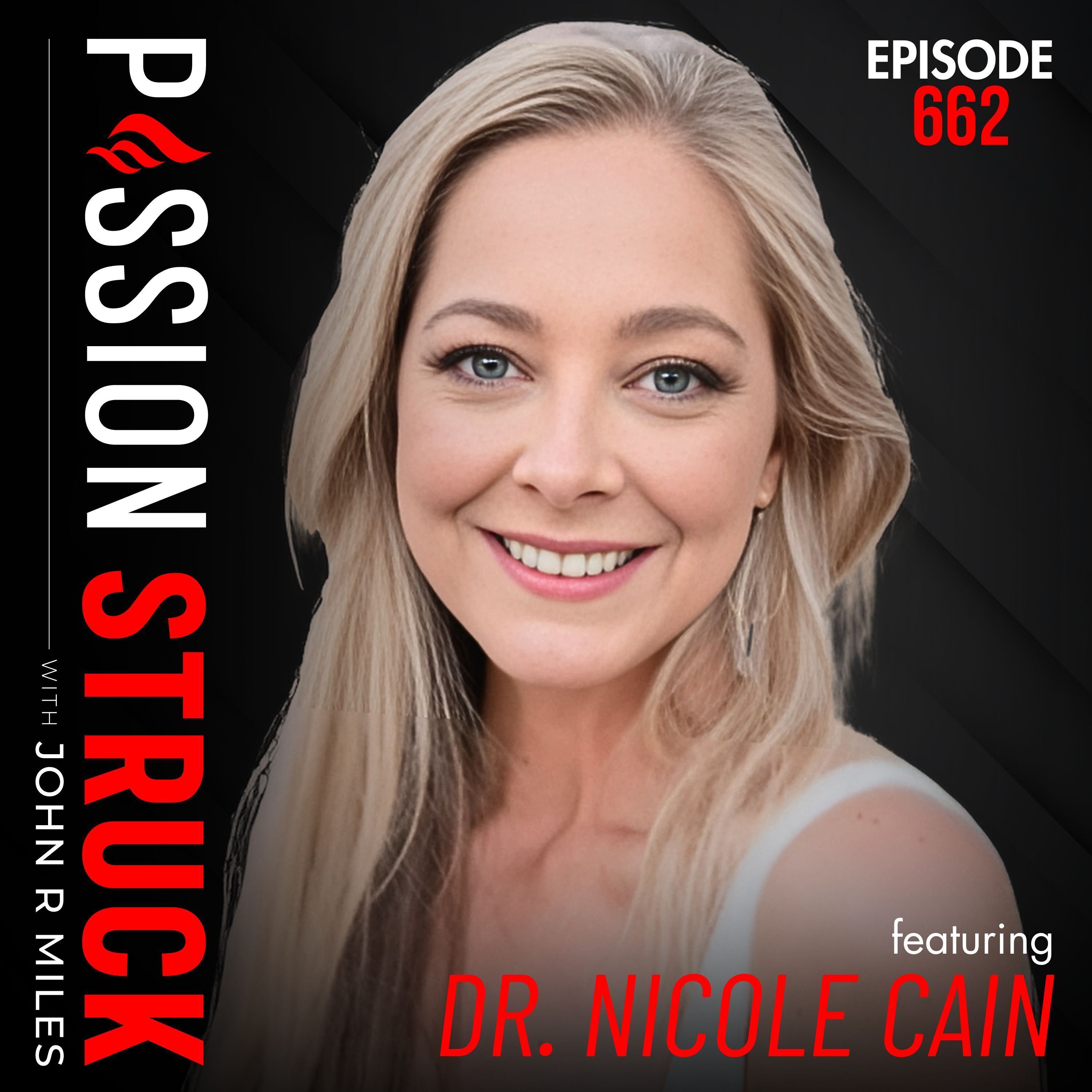
Passion Struck with John R. Miles
Dr. Nicole Cain on How to Build Your Panic-Proof Plan | EP 662
01:05:35
Loading summary
Transcript54 lines
- [00:01]
Audible Narrator
Audible's romance collection has something to satisfy every side of you when it comes to what kind of romance you're into. You don't have to choose just one fancy a dalliance with a duke or maybe a steamy billionaire. You could find a book boyfriend in the city and another one tearing it up on the hockey field. And if nothing on this earth satisfies, you can always find love in another realm. Discover modern rom coms from authors like Lily Chu and Ali Hazelwood, the latest romantasy series from Sarah J. Maas and Rebecca Yarros, plus Regency favorites like Bridgerton and Outlander, and of course, all the really steamy stuff. Your first great love story is free when you sign up for a free 30 day trial at audible.comWondery that's audible.comWondery.
- [00:44]
John R. Miles
Coming up next on Passion Struck.
- [00:47]
Dr. Nicole Cain
The difficulty is that we have this paradigm in medicine that our job is to get rid of the symptom. And if we just get rid of the symptom, it doesn't necessarily mean that the problem is gone. It could still be there and oftentimes it will show up in other places. And so the question I think that's more interesting is what are these symptoms trying to tell me needs healing? And how. And what are the different ways that the body is trying to protect me and hold me into this protective loop? And how can we reprogram that? How can we unwind that? And that may involve working with the gut microbiome.
- [01:30]
John R. Miles
Welcome to Passion Struck. Hi, I'm your host, John R. Miles, and on the show we decipher the secrets, tips and guidance of the world's most inspiring people and turn their wisdom into practical advice for you and those around you. Our mission is to help you unlock the power of intentionality so that you can become the best version of yourself. If you're new to the show, I offer advice and answer listener questions on Fridays. We have long form interviews the rest of the week with guests ranging from astronauts to authors. So CEOs, creators, innovators, scientists, military leaders, visionaries and athletes. Now let's go out there and become Passion Struck.
- [02:12]
Welcome Back to episode 662 of Passion Struck. I want to start by thanking you for being here. Over a third of you return week after week. And that loyalty tells me that we're building more than a podcast. We're building a movement. And big news. I've partnered with Rob Greenlee, podcast Hall of Fame inductee and one of the most trusted voices in the space to launch the Passion Struck Network. We believe podcasting works best when it serves communities and lifts up voices that matter. See what we're building@passionstrucknetwork.com today we're continuing our Decoding Humanity series, unpacking the biology, psychology, identity, trauma and community that shape who we are. And today's conversation hits a core human reality. When the nervous system doesn't feel safe, it sounds the alarm. We often label that alarm panic. But what if it's actually intelligent information asking for care, not control? That's why I invited Dr. Nicole Cain on the show. She's a licensed naturopathic doctor and clinical psychologist. She's also the author of the new book Panic Proof. Nicole's work blends holistic medicine, neuroscience and trauma informed care to treat anxiety at the root. Today we're going to explore the nine types of anxiety, how trauma imprints on the body, and how to build your own panic proof protocol so that you can reclaim agency and calm from the inside out. This episode matters to me because I've seen personally how panic can hijack identity, how we start to believe the alarm is who we are. My hope is that this dialogue gives you language, tools, and courage to tune into what your system is asking for and to respond with wisdom. Before we dive in, a reminder. Our store start mattering.com has just got a complete reboot. It's part of the mattering revolution built on one truth. You matter. Live like it. Every hoodie, tee and hat carries that reminder. Turning intention into daily practice. Now let's dive into this powerful conversation with Dr. Nicole Cain. Thank you for choosing Passionstruck and choosing me to be your host and guide on your journey to creating an intentional life. Now let that journey begin.
- [04:32]
I am so excited today to have Dr. Nicole Caine on Passion Struck. Welcome Nicole.
- [04:38]
Dr. Nicole Cain
Thank you for having me.
- [04:40]
John R. Miles
Well, I'm so excited to do this and you are one of the first naturopathic practitioners I've had on the show. So I'm really excited to dive into this because it's going to give us a different lens for this whole interview. I'm going to start off with I love to ask about defining moments, but I'm going to ask this question a little bit differently. You work across so many healing modalities from naturopathic medicine, which I just brought up, to functional psychiatry, to trauma informed care. Was there a defining moment that made you realize that the nervous system had to be the foundation for treating anxiety, panic, things like that?
- [05:20]
Dr. Nicole Cain
It was a rock bottom moment when I was using all of the functional treatments as the expert and people were coming to see me and obtaining relief, and we were doing the trauma informed work. And then when I had my own crisis in 2015 and then was using those same things and they weren't working, it was this moment of everything that I've learned over the past multiple decades no longer applied to me. And so in that moment, I had to decide, am I going to just flop? Which oftentimes can happen in a trauma response where we just give up and accept complacency. And that's what my life is, panic and terror and insomnia. Or we can go and start to disassemble everything that we've been told, the programming that we've been inheriting entire lives, and rebuild that. And so in that process of deconstruction and reconstruction, I started to do a lot of research into what we're discovering in neuroscience and as really some of the foundations of why we feel the way we feel. So it came out of necessity, which I know is the story for many of us.
- [06:43]
John R. Miles
When you think of anxiety, how does anxiety differ from post traumatic stress disorder or depression or other ailments that people might have? Is it an extension of it or something unique?
- [06:58]
Dr. Nicole Cain
On its own, anxiety is a signal that your body is out of balance. Whether it is telling us that there's too much of something or we don't have enough of something else, the question that you're asking it calls us to understand a little bit about why the body is doing that. If we circle back all the way into our ancestors, we know that the human brain is designed to, to protect us. And I always tell my clients is your brain isn't concerned about your well being, it's concerned with your safety. And so every single thing that happens all around us in our external environment, even in our internal body environment, the brain and the nervous system is continuously scanning and it's looking for signs that it needs to adapt and shift in order to promote your survival. And one of those main survival instincts is fear. So that those individuals who were able to mount a fear response when there was an indicator of danger, they survived. And so a tiger's in the woods and they growl and they rustle the leaves. And Susie gathering berries has a fear response which is very automatic. It kicks in long before her logical brain even knows what's going on. And she can fight flight, freeze or, or rescue herself from danger. And that similar process is what we as human beings use today. And so when we are born, we inherit genetic information that helps create our reality. And our adaptations, our coping skills. We also inherit our gut microbiome from our biological mothers, which will contribute to those biofeedback loops that help us to be safe and help us to adapt. And what we experience will encode that. And so we have, what we're noticing is a difference between fear and then we have anxiety and trauma. Fear is that natural biological response to something that's actually dangerous. But in our modern society, there are lots of stressors that occur that may not be objectively dangerous, but we've been genetically, environmentally, socially, psychologically, spiritually programmed to create that same response. And so what anxiety is, it's a fear response out of the context of actual danger that is associated with a lack of personal power. And so that can then be rooted in. As you were asking, that can be rooted in trauma. But even more, I think the language is changing to adaptations. We used to talk about trauma, especially with leaders such as Bessel van der Kolk, who wrote the Body Keeps the Score and his initial research into anxiety and panic and rage, with veterans who went through combat and tragedy and how the nervous system. The Body Keeps the Score, holds onto that. It memorizes that it's learned that any sort of associative color or sound might be dangerous. So they have these involuntary responses. But we're finding that trauma is really anything that overwhelms our ability to cope with it. And so I like to use the language of adaptations. Anything that requires that we make an adjustment.
- [10:44]
John R. Miles
I remember I'll go back about 10 years ago. It was probably eight years ago. I. I'm a combat veteran, and I think, like many of us, I had suppressed a lot of the circumstances that I was exposed to. And that, unfortunately, I think, is something that was a learned behavior from when I was in service, that we were taught to be strong, don't show your weaknesses. You can't talk to a psychiatrist or a psychologist because it could cost you your security clearances. You might get taken off the deployment rotation. There were a whole bunch of things. November 2017, I walked in on a burglar in my house who ended up pointing a gun on me. And I have to tell you, it was this series of moments that started happening after that. Not only was I starting to experience panic attacks that I almost thought I was having cardiac events, but it was like this most recent trigger brought all the suppressed feelings back to the surface. So it was almost like I was getting a double whammy from the event. Is that common in people?
- [11:55]
Dr. Nicole Cain
Yes, absolutely. So the brain and the nervous system are so associative, and it accumulates these experiences. And I think about it, we use the language in psychology as the stress diathesis model, and it refers to how much stress that we can withhold. And I think of it as like a big whiskey barrel, and it just gets more and more full to the point point where then it starts to overflow. So you had this foundation of trauma, adversity, overwhelm, danger, and then you had this big activating event. And so now the brain is referring to all these past experiences and then associating them with that moment you said in 2017. And now it's almost as though we've created an entire web linking all those things together and then bringing them into the present. So I imagine that for you, it compounded what was already a terribly traumatic experience of having someone in your home and having a gun pointed at you. And now that's being compounded by what the body was storing, what the nervous system was storing.
- [13:06]
John R. Miles
Absolutely. What really interested me about your work, and today we're going to be talking about your book, Panic, the new holistic solution to end your anxiety forever. But what really caught my eye was that you realize that anxiety needs to be treated holistically, not just cognitively. And that is something that, as I went through my own healing process, I went through myself. I love that you're writing about this, because I often talk about my own recovery as if I was sitting on a kitchen stool and the stool had different supports and mine were all out of whack. And that to get myself treated, I had to make sure that I was working on balancing the supports that were underneath me. And it wasn't just my mental health. It was. I had to have emotional recovery and physical recovery and how I was showing up in relationships. It's a different lens than what you're using, but I think it speaks to the same thing, of how you have to approach this.
- [14:13]
Dr. Nicole Cain
I really like that image because we can all understand it, because we've seen a stool before and it makes sense. And people use the language of pillars of health to try to depict a foundation. I also like to use the imagery of a car. If there's a collision, the tires are flat, the engine is crashed, the glass is broken. And in modern medicine, we have experts of tires, we have experts of engines, we have experts of windshields, if you will. And I think it's wonderful to have people who. That's their entire zone of genius. So if you really need someone who's going to fix your Tires, you want to go to the best, but there's limitations with that. When you don't look at it holistically, it's like fixing just one of the legs of the stool it's going in and just changing the tires. And then people become frustrated and discouraged and demoral, the car doesn't drive. So I have a lot of people, and they reach out to me and they say, I've tried everything. I've tried changing my diet, I've tried changing my lifestyle, my habits, and my mindset. I've taken supplements. And I remember being in that place where all of the things don't feel like they're working. And the difficulty is that we have this paradigm in medicine that our job is to get rid of the symptom. And if we just get rid of the symptom, it doesn't necessarily mean that the problem is gone. It could still be there, and oftentimes it will show up in other places. And so the question I think that's more interesting is what are these symptoms trying to tell me needs healing? And how. And what are the different ways that the body is trying to protect me and hold me into this protective loop? And how can we reprogram that? How can we unwind that? And that may involve working with the gut microbiome. Before we started recording, you and I were talking about the gut. That may involve the immune system, that may involve the nervous system, that may involve habits, it may involve your teeth and your dental. So looking at it holistically just makes more sense. It's what we do in other denominations, if you will. I think we have an opportunity to do that better in medicine.
- [16:36]
John R. Miles
We'll be right back after a quick break. You're listening to Passion Struck on the Passion Struck Network. Thank you for supporting those who support the show and make the movement a reality. Welcome back to my interview with Dr. Nicole Kane.
- [16:56]
I remember way back when I started the podcast, I was talking to a functionality medicine doctor named Cynthia Lee, and we were talking about how the system today is based on a whole bunch of protocols. And these protocols tend to treat, as you're saying, symptoms or extremities. And she gave me this analogy that we need to think of our body as a tree. And so often we're treating the leaves or we're treating the twigs or the branches instead of treating the trunk. And what's really at the root of what's causing these symptoms that we're seeing in the outer extremities, so to speak. And I think the same Thing is what you're talking about here in Panic Proof. And one of the things that I found is that you opened up the book, and I found this interesting by calling out two major lies that we've been told. And it goes into this whole symptoms thing that I was bringing up. One that symptoms are bad and that experts know more about our bodies than we do. Why do you believe those two lies are so deeply ingrained in our culture?
- [18:06]
And what's the cost of believing them?
- [18:09]
Dr. Nicole Cain
The antidote to anxiety is power. The antidote to anxiety is personal power. And we are brought into this world. Humans are the mammals that are dependent on caretakers the longest. And so many of us are living with our caretakers until we're 18 and then we launch. But other mammals, they don't have to be puppies. You can have a puppy that can be independent and let free of the litter when they're much younger, five, 10, 15 weeks. And so humans come into this world, and we're completely dependent on somebody else for survival. And the goal of growing up is to obtain independence. It's to obtain individuation. But the language around our health and our medicine is that we relinquish that to the authority. And that's part of my story, is I had symptoms, There was a lot of stress in my household. And if we look at it from an adaptive model, if you had stress in your household, the mind, the body, the nervous system is going to try to figure out the best way to survive. And so the ways that I did that was to become more hypervigilant of the nuances in my caretaker's body language, in their moods, in schedules and sounds and times of day. And when we go into that hypervigilance, the body will change your chemicals, for example, it may cause your hypothalamic, pituitary, adrenal axis to get activated to then release stress hormone, cortisol and adrenaline. And so then we have this change in our neurochemicals. And then high cortisol can affect the gut microbiome. It can suppress the immune system, which can then create more opportunity for invasive pathogens, so therefore increasing inflammation in other parts of the body. That inflammation goes to the brain. And now the brain says, oh, my goodness, we're inflamed, we're in danger. And so it sends out that danger signal, and we get more cortisol release. And then things go from there. And so then we get these automatic biofeedback loops, and it can cause symptoms head to toe. And so as A young person. I had horrible allergies, really high histamine. I had heart palpitations, I had insomnia. And there was no conversation about personal power. I was to go to the person in the white coat, and they were to look at my symptoms, and they said, oh, these symptoms are very bad. We want to relieve suffering. We're going to suppress them. So by the time I was a teenager, I was on six prescriptions and no better off. And when we are told that our symptoms are problems, we can feel broken. We can feel at war with our bodies. We can feel like, why am I so stressed? Why is my gut reacting to the food that I'm eating? Why can't I breathe through my nose? Why can't I sleep? These basic human functions. I'm broken. And so then we go to the experts, they give us treatments, and then we feel worse, and we're like, I can't get better. I'm broken. I'm at war with my mind and body. I'm helpless. And so that that sense of helplessness, that sense of powerlessness comes from being told that we are helpless and powerlessness and then feeling helpless and powerless when our symptoms improve and so many of us feel, well, I can never heal from anxiety. My lived experience is that I'm not getting better. And then we look at the dominant literature. So if we go to certain leading websites and if you Google it today, this is something that I really am on a mission to change. If you Google it today, what is anxiety? What is generalized anxiety disorder? Is it will say it's a part of the human experience and it's lifelong. But for me, it started with a fanny pack, and then it became a question, and then it became a movement where when I was a little one and there was all this stress and strife in my family, I was like, I want to heal them. I want to fix them. For those who know enneagram, I'm a three wing toot on the enneagram. I want to help, want to fix. That was my adaptation. And I noticed how if my little brother fell off of his bike and scraped his knee, the body could heal that. But yet we heal our emotions, we can't heal our hearts, we can't heal our minds, we can't heal our moods. That didn't make sense to me. So I went to counseling school. I got a master's in clinical psychology. I was like, okay, now we're gonna top down our ways into healing. Think positive. Good vibes only. Is this rational? Is this logical? How Can I mindfully make changes in my habits to try to heal? However, that hyper vigilance that I had been encoded to use as an adaptation was still there. My body was in these automatic feedback loops. And even though I knew that I was safe and I was an adult and I was in clinical school and I was helping people, those feedback loops don't care about your well being, they care about your safety. And so then I go to medical school. I'm like, well, I got to figure out these biofeedback loops. But it was still a symptom resolution paradigm. And that was, as I started in the beginning of our conversation together, is starting to realize that none of that is working. Having to deconstruct it and then really starting to look at it as, oh, maybe it isn't true that I can't heal. Maybe it isn't true that my anxiety is a problem. What if I listen curiously and acknowledge and look at what the anxiety is trying to tell me, just like doctors do with thyroid symptoms or gastrointestinal symptoms, other things that we can diagnose. What if we look at anxiety like that? And then things started to change and I got better. And then I started using with my patients and they got better and then I started teaching it, and then people were getting themselves better. In fact, I had a story. I just talked to a man yesterday, and he's a combat veteran and he was contemplating his exit strategy and he felt, I am so broken. Why can't I just be okay like everybody else? Why am I so debilitated? And the most powerful part of his change was to learn. Number one is that he can heal. And number two is that his symptoms were opportunities to identify what need healing and how. And when he started changing that lens and changing that conversation, he started changing his life. And I talked to him yesterday and he is positive, he's inspired, he's working a job, he has a partner, and he's even moved into his own home. So this is a story of how there's the proof in the pudding of how we can truly heal. And it's been so fun getting to talk to people like you about these stories. As you can tell, I get so emotional and activated by it. It's fantastic.
- [25:41]
John R. Miles
Thank you for sharing that. And I'm glad he's on the road to recovery because it's so easy to get trapped down the other cyclone that leads to dark areas none of us want to go to. And I'm also so glad, Nicole, that you keep sharing your story, because I Think we are best positioned to help the person we once were because we feel it innately inside of us and we know how much pain we experienced. And so if we can help someone else alleviate that pain, that's our gift to the world. And that's exactly why I started doing what I'm doing here, to try to help people overcome the symptoms of what I was feeling myself. So one of the things I wanted to talk about that you cover in the book is the science behind panic, meaning going into how panic lives in the body, not just the mind. And we've been discussing this a little bit, but I was hoping for those listeners who might not be familiar with the autonomic nervous system. What does it really do and why does it matter?
- [26:47]
Dr. Nicole Cain
Oh, I love this. The science behind panic. What is the autonomic nervous system? So the conversation has changed, thankfully to include more of the body. It used to be really what we call top down. And top down is in reference to the higher order parts of the brain, the logical parts of the brain, the analytical parts of the brain, and then using our logical analytical parts to try to put the body back into balance. But as, and probably a lot of your listeners know, is that sometimes the body just doesn't care. You may be feeling really panicky, really scared. Maybe you're bloated, you move reflux, and no matter what you do, logically, the body's sorry, not interested. So we know that top down doesn't always work. And so then we get to be curious about, well, what are we missing? If I'm using a hammer and I've hit all those nails in, but the boards still aren't sticking into place, maybe there's something else that I'm missing. And so we've done a lot in terms of research to figure out the other parts of fear and anxiety and panic. And that's the body. And so we have top down, which starts at the higher parts of the brain, the logical brain, and then bottom up is where we start in the lower parts of the brain in the body. And so this has opened the doors to somatic work. This has opened the doors to the gut brain access. This has opened the doors to polyvagal theory, the neurosequential model, and all these amazing thinkers. So when we look at the autonomic nervous system, the autonomic nervous system is trying to figure out are we going to be in autonomic arousal or sympathetic arousal, which is that kind of fight, flight, freeze activation, or are we going to be calm and relaxed, or in parasympathetic mode. This is the rest. Digest, reproduce. Right? And so this is directed by different parts of the brain. And it begins. I always like to talk about this, especially right now as we're recording this episode in 2025, is with stimulation that's coming into the brain. So our brain has what's referred to as the Salience Network, or the sn, and its job is to scan our environment around us, to scan our body, and to figure out is this salient data or not sal being relevant or important. If it's relevant and it could be dangerous, it will send it onto the emotional parts of the brain, primarily the amygdala. And so the amygdala, we think about emotional processing, emotional reasoning. The amygdala asks, hey, hippocampus, have we seen this before? Do you have any context for this data that I'm getting? If the hippocampus says, oh, yeah, this is bad, this is a loud sound. That loud sound in the past may have meant gunfire or something bad. The amygdala is, I got you. And it will send a. A domino effect to now the hypothalamic pituitary adrenal axis. But we're seeing a big change in how that whole cascade is taking place in our modern era. The human brain, the body doesn't change very quickly. It doesn't genetically evolve very quickly. And so our modern human brains are quite similar to what our ancestors human brains were like during the caveman era. So we have caveman brains in this modern, rapidly changing technological society. So now we have billions of data points that are coming into the brain. There's screens, there's car horns, there's helicopters, there's people, there's news flashes, there's push notifications. There's all this stimuli that's coming in. And the Salience Network can only process so much at a time. And so when in doubt, it's going to send it onto the amygdala. I don't know if what this is too much. It's a fire hose to the face of information. When in doubt, send it on. The emotional processing part of the brain is a similar response. While this is overwhelming, when in doubt, probably danger, remember, our brains care about our safety, not our well being. And so you're like, why am I overreacting to getting this email? Or why am I panicking being at this movie theater? The brain has been programmed by our ancestors and by your experiences and by your biology and your diet and environments and all these different factors for Whatever combination of things to then send on this cascade. And so then the amygdala sends it on. And so now we have this modern problem that's going on where we are very stressed, the human race is stressed. And we also see that we're farther from nature. We're living in more cities. We're not in the trees, in the forest, in water. We're not drinking food that has dirt from the earth. Much of our food has been very processed. And so now we are finding changes in our body chemistry with this overstimulation process. Our nervous system, our autonomic nervous system is an arousal. So everything is just a little bit elevated and we're poised for panic. So that's a little bit of introduction to the autonomic nervous system.
- [32:38]
John R. Miles
Thank you so much for sharing that. I just thought for someone who is new to this topic, it's very good to get a backdrop on how the whole system works and what is impacting it. Which leads me into chapter three of the book, where you go into your anxiety types and the panic protocol, and you outline nine different and distinct anxiety types in the book. You know, and these range from everything from your guts to your thoughts to nervous system, like we were just talking about to endocrine. And I wanted to ask, how does someone. And maybe you can touch on them a little bit more, but how does someone identify which one of the nine types that they have?
- [33:26]
Dr. Nicole Cain
I want to actually ask you about your experience because you were open to sharing what it was like for you, and you were having a lot of stress, especially after 2017. And so the question I want to give it a little framing, and then I'm going to ask you. The framing is on levels of autonomic arousal. So we start with what I call the green light zone. These are called stoplight strategies. So we start with a green light zone, and that's when we're calm, we're creative, we're relaxed, we're connected with ourselves and other people. And then as we get activated, maybe there's a little bit more stimulation. Maybe there's a little bit more pressure. Maybe we're not getting the rest. So there's an unmet need. Maybe our blood sugars are off. Whatever it is, we may get a little activated. And then that's the space between the green zone and the yellow zone. I call that the pay attention zone. It's. Ooh, something just changed for me here. Dr. Russ, who's the author of Anxiety Rx, he calls that your alarm. What's that sign? Or your canary, that something is changing. And then as that continues to activate, we get the yellow light zone. So that's moderate activation or moderate stress or overwhelm or irritation or headache. Right. And then the red light zone is crisis. That's sheer terror, sheer rage, sheer panic. That's emergency zone. So for you, I'm curious, do you have an impression of what that first pay attention or that first alarm is like, ooh, I'm not green anymore. I'm getting a little activated based on.
- [35:03]
John R. Miles
Your nine different anxiety criteria or just based on.
- [35:08]
Dr. Nicole Cain
Just generally. Just based on how you feel.
- [35:12]
John R. Miles
I guess the first thing that starts hitting me is I start getting impacted in the way I'm thinking and the clarity of thought that I have.
- [35:20]
Dr. Nicole Cain
So you notice that first sign that makes you pause is you're noticing your thinking starts to change. The clarity of thought starts to change.
- [35:27]
John R. Miles
And the sharpness.
- [35:28]
Dr. Nicole Cain
Yeah, sharpness. So you're noticing you're less sharp, less crisp. So we could talk about exactly what's happening in that moment. And so I'm going to shelf that. This is all about the executive control network in the brain, which is your executive dream team, logical team, problem solving team, versus default mode network, which is cruise control, which tends to take over when we get activated. Because remember, when the tiger's coming, we don't want to analyze the motivations of the tiger. We don't want to contemplate that. We want to just be safe and survive. So we start to notice default mode kicking in. Less logical brain activation, more emotional brain activation. And so that's thought anxiety. So the first thing that you experience is thought anxiety. But then what happens next? Let's say your stress is building and building and you get into the yellow zone. Irregardless, of the nine types, what do you notice?
- [36:23]
John R. Miles
Well, I mean, if it really gets bad or some. I'm not someone who typically gets angry, but if something is pushing my buttons a lot, I'll have an anger response. I could have a hunger response to it. I suffer a lot of migraines, so oftentimes it can trigger a migraine outbreak.
- [36:41]
Dr. Nicole Cain
So then it shifts, so you get this little whisper. And when the body whispers, if we don't respond by addressing the root cause of whatever's causing that whisper, it may talk a little louder. And see, if you have kids, the kid may be like, hey, dad. And then if we don't listen or hear them or we're doing something else, they may be like, hey, dad. And then get louder. So that's what our symptoms Do. So with the types of anxiety, this could show up with just a little bit of something. Maybe somebody gets a little bit of fogginess, lack of crispness. Maybe they get a little, ooh, a little flutter in their chest. Maybe they get a little bit of bloating in their stomach. Maybe they get a little bit of a twinge in their head muscles. My husband shrugs, his shoulders go up. I could tell just by looking at him, he's stressed. Like, oh, my goodness, we gotta calm that nervous system down. And so the value of the nine types of anxiety is, number one, it allows us to do a better job as clinicians researching anxiety. Because right now, if we look at the Diagnostic Statistical Manual, it's that purple book right over my shoulder for those who are listening and or watching the video, it's a big bucket diagnosis. Oh, you're anxious. It affects you more days than not. You feel worried, out of control. You probably have generalized anxiety or maybe panic disorder. And we're going to give you an antidepressant, a benzodiazepine, or we're going to send you to talk therapy. But we can do way better than that in medicine, and the research proves it. So when we look, if we put on a researcher hat and we look at everybody in downtown Manhattan, downtown Tampa, Chicago, Grand Rapids, and we ask everyone, what is it like for you when you get into the yellow zone and the red zone? And what we did, what I did, is we did a literature analysis of what all those symptoms are, and they can be categorized into nine approximate systems. And those systems will help zero in on appropriate testing. So if somebody, they deal with a lot of stomach upset. I have kiddos that have come into my office, they throw up with anxiety. Some people get really bad bloating and heartburn. We can then start looking at what's going on in the gut. Could this anxiety be stemming from the gut? Could this anxiety be impacting the gut? If I give someone with gut anxiety an antidepressant, one of the main side effects of antidepressants is digestive upset. It doesn't heal the gut. Right. And talk therapy probably isn't going to talk you out of reflux. Right. So it now allows us to get a little bit more specific in pharmacology. We're already doing this. We just don't use the language for it. And that's what panic proof is. Targeting and aiming to change is if somebody has chest anxiety, where the anxiety shows up and their heart is pounding and they can't get a good breath, and they don't want to be a zombie. They don't want to take the Xanax. They need to be crisp, like you said. A doctor may say, well, it's localized in the chest. It's localized around the heart. Your heart is pounding. We'll just give you something that zeroes in there. And they may give them like, like propranolol, a beta blocker, slows down the heart rate. Right. So it's a little bit more precise. And of course, it's looking at the symptoms and how to stop them as opposed to the root cause of the symptoms. But there is a gift in using precision based diagnostics and precision based care. So the nine types, may I go over them just briefly?
- [40:15]
John R. Miles
Sure.
- [40:17]
Dr. Nicole Cain
So the nine types is. Number one is thought anxiety. So when we get activated, you notice that your thoughts may be racing, looping, intrusive. Sometimes our thoughts go blank, emotions kick in, logical brains offlined. So someone asks you a question, and now I can't think of the words. I've lost my thought. Thought anxiety, chest anxiety, heart pounding, air hunger. I see this a lot with athletes. I've worked with a number of Olympians. And one of the main things is I feel like I can't get enough oxygen. The chest anxiety can also look like a heart attack. And we did a literature analysis of people going into the hospital concerned that they were having a heart attack. And 80% of those cases turned out to be a panic attack and that their heart was healthy. Chest anxiety, there's gut anxiety. That could be the gut microbiome, it could be inflammation, it could be the gut brain access via the vagus nerve, which is what the gut and the brain use to communicate back and forth. There's nervous system anxiety, which is the nervous system. Some of us get the shrugging of the shoulders, maybe numbness and tingling in the face, migraines, muscle pain and joint pain. There's endocrine anxiety, which you touched on earlier, and that's anxiety caused by imbalances in the endocrine system. The hormones I write about Charlotte in the book, who had really bad hyperthyroidism. The thyroid gland was overactive, producing all these stimulatory neuro hormones. Thyroid hormone that looked like panic. Benzos didn't work. Antidepressants didn't work. Talk therapy didn't work because the cause was the thyroid. She had to treat the cause. Right. Then there's immune system anxiety, that same pesky chemical that gives you the itchy, watery eyes, the runny nose, the post nasal drip, the Skin rash. Histamine can be as stimulating to the body as adrenaline. And so that same pesky allergen could be causing panic and anxiety and insomnia. And then we have depression anxiety, which is depression mixed with anxiety. We have anger anxiety, which you touched on is as we go into that autonomic arousal. That's the fight part of fight, flight, freeze. And then we have trauma anxiety. And that's anxiety that is really primarily under the umbrella of trauma. It happened. 2017 for you would be a good example. 2015 for me with that, Rock bottom was an example of that. And that's. We want to treat that first. Really everything is under the umbrella of trauma. But if the main thing is intrusive thoughts, flashbacks, there's a big T event. We want to treat that first with trauma informed therapy. So those are the nine types of.
- [43:10]
John R. Miles
So I want to go a little bit more into the gut brain axis, but I want to do this through an interesting question, since you're a naturopath. One of the things that a naturopath had me use when I was having some gut brain issues was diatomaceous earth to help get rid of parasites, heavy metals, or other biological obstacles that I might be having. For a listener who might not be familiar, I'm not sure if you're familiar with it, but how does using something like a food grade diatomaceous earth help people deal with their gut issues?
- [43:50]
Dr. Nicole Cain
I love that. I've actually never told a patient to use diatomaceous earth, but I've given it to my dog a lot. I like using it. So I think that's really neat that you had that experience. And the idea behind that is the closer to we are, the closer we are to health. And when it comes to the microbiome, microbial diversity is the name of the game. Dysbiosis is a term that we use that refers to an overgrowth of particular bacteria or yeasts. And so when we look at the modern diet, it's very sterile. People often eat the same thing again and again. And we're also oftentimes taking antibiotics. If we get an ear infection or sinus infection, we're taking medications that are wiping out our gut microbiome. So many people are walking around with imbalances in their gut dysbiosis. And that can be the root of the root for many people. In fact, if somebody comes to me and they're like, I will only make one change in my health and you can only tell me to do one thing. I'm anxious, I have insomnia my hormones are out of balance, blah, blah, blah. They say all these things. What's the one thing I can do is I would say to add fiber to their diet, because the gut is often at the root of everything, and your body is designed to heal itself. And so I think the underlying idea of the diatomaceous earth is to try to increase microbial diversity in your gut and going back to nature to do that. And there are a few ways that we can accomplish that. And so the question that is asked by a lot of functional practitioners is what do we need to do to heal their gut? Do we have to give a probiotic? Do we have to change their diet? Do we have to give killing agents? There's a lot of conversation about this around sibo, which is small intestine bowel overgrowth, where people are getting all these head to toe symptoms because they have dysbiosis in the small bowels. So the question is, what do we do about that? And one powerful place to start is fiber. And what fiber does is it feeds the good bacteria. Those good bacteria make butyric acid, they make butyrate. That is nourishing healing deliciousness for the cells and the walls of your intestinal tract. Because when we have dysbiosis, when our gut microbiome is out of balance, we have a change in the acid base balance. We may have an overgrowth of yeast, we may have an overgrowth of bacteria. And all of these different pathogens can release toxins that make them happier and crowd out all the good guys. And there's this wonderful research that Dinan and Kryon are doing. They were co authors of the book Psychobiotic Revolution, and they've discovered that changes in the gut can cause changes in the brain. And they've been exploring psychobiotics. Actually, as I'm talking to you about that, is that a term that's come across your platform before?
- [47:06]
John R. Miles
No, it's not.
- [47:08]
Dr. Nicole Cain
Oh, my gosh. We have to talk about psychobiotics. So when we used to treat the gut, we're like, okay, we know the gut matters. We know that the gut impacts moods, brain, immune system. We know the gut is the foundation of everything. And what we used to do is just throw as much diversity at the gut as we could. I remember when I was in medical school and I was telling patients, I was like, just try to get something over 80 billion that has at least four strains. And so then my patients were swallowing back all these probiotics. But this research that's come out in the last seven to 10 years has been showing us that there are specific bacteria that we know that can produce gaba. Lactobacillus rhamnosis produces GABA that communicates with the vagus nerve, that sends a signal to communicate with the brain, that changes the behavior of the brain, which then communicates back to the vagus nerve, to the enteric nervous system, the nervous system around your gut, to talk to those bacteria. So what they discovered is that if we intentionally formulate bacteria together whose roles are to balance neurotransmitters, to balance cortisol levels, to decrease inflammation, that people are getting better results. And so these formulations, these bacteria are called psychobiotics. The psycho is for our psychology and then of course biotic, referring to the bacteria. And so that's been game changing for people's health is we're finding that not only is their gut getting better fiber, it's more precise. We can do testing to look at what kinds of imbalances in the chemicals and the hormones we see. And oftentimes we can recalibrate that and we can feed those bacteria fiber. The one thing that I would really encourage people to do when it comes to this though, is to make sure that they're looking at the human clinical research. Because anyone out there, any manufacturer, could be like, oh, I'm going to have a little bit of Lactobacillus rhamnosus and a little bit of bifidobacteria. But independently they may do what we want. But then there's gotta be a matter of synergy. It's like when you build your dream team, your executive team, they may be awesome individually, but you want to make sure that they work together synergistically to help your work be shared to the world. And it's the same with our gut microbiome and the treatments that we give. So it's a long winded answer. But I love the gut brain access stuff.
- [49:40]
John R. Miles
I know that when I used it, it definitely was a little bit painful for a couple days, but after that I felt my whole system really reset and I ended up losing weight and I lost a lot of the brain fog that I was dealing with at the time. So whatever it needed to clean out, it absolutely did its job. Yeah, I thought. Well, you mentioned one of the stories from the book earlier. I think the name you brought up was Charlotte's Story. And throughout the different chapters you introduce different stories like that. And in chapter eight, you bring up the story of area. And I wanted to bring this up because oftentimes as People are dealing with depression or anxiety or something else, they're given different medicines to regulate themselves. And in the case of area, if I have it correctly, she was using Adderall for stimulation and Xanax to calm down and was experiencing the seesaw between panic and then zombie mode. How common is this stimulant sedative loop and how do we begin untangling from it?
- [50:50]
Dr. Nicole Cain
Thank you for that question. And I want to provide a little bit of radical empathy and balance to the work that I'm bringing into the world first. And then I would love to expand on. The philosophy is I want to make sure that, that people know that there's a time and a place for medications and medications can be life saving. And in fact, in my story, in the beginning, Lexapro was life saving for me. And I want to encourage people to be self empowered and to know that you can heal. But this doesn't mean that you have to immediately get off of all of your medications. For some of us, medications are necessary. So I really mention that and honor it. And instead of putting a period at the end of that sentence and saying, well, now I'm just stuck on this antidepressant or whatever I've been prescribed for the rest of my life is allow that to give you a little bit of space. If you had a knee replacement, you have a cane, it can take some of the pressure off so that we can then put a semicolon at the end, right. And then we can keep exploring what are my symptoms trying to tell me needs healing and how. And so for Aria, she had a lot of complex trauma. She had a lot of stress and she didn't have much sense of what was happening in her body. She wasn't able to hear the whispers, it needed to be shouting for her to pay attention. She was very focused, she was very singular minded. I know that you work with a lot of high powered, high pressure entrepreneurs, CEOs and there's a lot of stress, stress to perform and to really be on. And so Aria needed that Adderall at that time to help with clarity, to help with energy, to help with focus. But there was a reason, there was an underlying root cause as to why she lost some of that clarity, she lost some of that sharpness. She felt her mood dipping. And the great thing that when she came to me is that she was able to start doing the work of unpacking what's going on underneath of it. And also how much of your now experience is the side effect of the side effect. Of the side effect, what are the obstacles to cure for her? So she took the Adderall, but now she's in an autonomic arousal activated state. And so then she needed to take the benzodiazepine to calm back down. And our bodies are always trying to create homeostasis. Homeostasis is that state of balance. And I like to use the. Imagine a Bosu ball. This is a special form of torture. They use an exercise which is like a ball that's half cut and you can put your feet on it and balance it. So if you imagine someone standing on a Bosu ball and they've got their.
- [53:50]
John R. Miles
Undo burpees with that.
- [53:53]
Dr. Nicole Cain
Oh, absolute torture. So you're doing a burpee and solicit. Say that now I put a really heavy wrist weight just on one side, on one arm. You're going to have to adapt to that, right? You're going to have to position your body differently, your muscles are going to adapt differently. You might even compensate by cocking your hip to one side. And so that's what the body does when something is out of balance. It will try to shift to keep you back into homeostasis. And so this is what happens when we develop a tolerance for a medication or anything. If someone's used to drinking a gallon of water a day and then they drink half a gallon, suddenly their body is like, where's all my water? We've equilibriated around having this certain thing. And so that happens with medications. And so if we start with the benzodiazepines, they can become incredibly habit forming because as we increase the bioavailable gaba, that relaxing, calming neurotransmitter that Aria really wanted to calm down at night and is the body and the brain will stop producing as much of its own GABA and it will down regulate the number of receptors for gaba. It's trying to create homeostasis. But then as you try to come down on the dose or maybe skip a dose, you find yourself in a deficiency of gaba. So then we find that people are needing to take more frequent doses or higher doses. They're getting introduced withdrawal. So now Aria is finding she's needing to take more of the benzo, she's taking more of the Adderall because now she's hungover from the benzo. So she's in extreme whiplash. And in that story, something pretty horrific happens to her, which I know you read in the book. And so the process was, is she worked with her primary prescribing doctor to try to stabilize those medications. And then she and I started to do the work of what is underneath of that and how can we support the body to start to re equilibriate and readapt. And that's a real. We could have a whole conversation about what do we do with benzos, how do we help people to re equilibriate and come off of benzos? Because it can be a super challenging process. But it was a two point process. It's treating the root cause, keeping the water stable and then slowly dialing back those doses. Almost. Have you seen the meme of Homer Simpson, like slowly backing into the shrub? Yeah, we want to do that with medication. Tapering is slow and steady wins the race. You almost want to, what is it, Irish goodbye or is it a Dutch goodbye where you just leave? You just slowly back away?
- [56:40]
John R. Miles
Yes.
- [56:40]
Dr. Nicole Cain
Yeah. So that's what we ended up having to do with Aria and her story is just so cool because she was so spicy and fun.
- [56:47]
John R. Miles
Talking about one other example you had from the book, and this one came from chapter nine and a woman named Jenny, because I think this is something that many people, including myself, have experienced, which is a time warp that she experienced from a car accident that she was in. Why I wanted to bring this up is I like this concept that you bring up of how trauma timestamps itself into the nervous system and how we have to guide ourselves to rewire the response. So you describe this concept as, if I understand it correctly, the timekeeper in the brain and how it disrupts our ability to distinguish between our past from the present. So can you talk about Jenny's experience and how you had to help her reset her timekeeper?
- [57:38]
Dr. Nicole Cain
So the adaptation for that is, think about it in the metaphor of a winter coat. And so let's say you live in Detroit, Michigan, right? It's winter. Oh my goodness, it's incredibly cold. We get lake effect. It's wet, it's cold, it's snowy. Thank goodness for this coat. This coat protects us. This coat is necessary. This coat is life saving. But then you're like, I've had enough of this. I'm going to move to Tampa. But summer's here and it's hot and the love bugs are all flying around and you can't even open your mouth as you're walking outside because there's love bugs and heat and it's just hot. If you keep that coat on, that coat that was life saving and necessary and protective, that adaptation will make you suffer right so why does that happen to us? Why do we keep our coats on? The body will memorize adaptations, it will memorize states, it will memorize behaviors, scenes, scenarios. It logs that away. As Bessel says, it keeps the score. Because then any indication that you need that coat that comes along like, oh, I'm smelling snowflakes, it's cold. Oh, I see the Detroit Bridge that's going over to Canada, I see hear, smell, taste, detect into it, notice these things, things. We need that coat so that code is always at the ready. But that coat can cause us suffering. And so this is timestamped, this is memorized. And the frustrating part about this for many people is that these memorized states may occur outside of our conscious awareness. They may occur outside of parts of the brain that have, have access to time. So if you're listening to this and if you've ever smelled cookies or a candle or a place or something and it brings you back into the past. For me, always whenever I smell sandwich, bread sandwiches, it reminds me of my elementary school gymnasium. I think everyone just ate sandwiches in Iowa at that time. It brings me back because that is stored in the body, that's stored in my memory, that's stored in the nervous system, right? And so with Jenny, when she was really young, she was in a car accident and there was a red truck and the brain, that salience network we talked about earlier in this conversation, it's okay, rain, red trucks, windshield wipers, all of this was really dangerous. We were hurt, we were trapped in a car. We weren't able to rescue ourselves. We never want this to happen again. We must remember that all of these cues equal danger. And so even though she had logically moved on, her top down of her brain had moved on and she knows that it was in the past and she didn't even think about it. The brain, the nervous system, the body, it all remembers. So that in that story that you were remembering, she was in the backseat of the car with her friends and everything was good and fine and wonderful until rain came and she heard the windshield wipers and her bodies, we've seen this before, we're going to panic. And even though logically she was frustrated and irritated by this, the body's we don't care about your well being, we care about your safety. So what did we do to unpack that? So the standard when in doubt, I always would recommend for people who are like, yes, this is me is find a really good trauma informed therapist. My favorite modality is emdr, eye movement desensitization and reprocessing therapy. And I do have a hack that I taught Jenny and that I teach other people. And it's called the three Minute Hack. And this is something that you can start doing right now. Now to begin the process of time stamping and bringing those past memories into the present where we can hold the past while our logical brain is onboarded and start to clear those old memories. Because when they come up, it feels like it's all happening again. And I'm sure you resonate with that in your story. When there's a remembering of 2017, it can feel like it's happening again. And that three minute hack has been the tools used in that have been scientifically proven to be effective at clearing those old patterns and recalibrating it.
- [62:26]
John R. Miles
Well, thank you for going through that. And I wanted to use those two examples because the book is filled with them and I wanted to give it as a teaser for the audience because not only does Nicole provide examples like that, but then she goes through each chapter and gives you a whole bunch of exercises and prompts and other things that you can do if you're facing any of these things, to help yourself work your way out of the different situations that she brings up and teases with these stories. Nicole, if someone wanted to learn more about you and your work, your book, etc, where's the best place for them to go?
- [63:03]
Dr. Nicole Cain
I love to hang out on Instagram and I'm really active there. It's Dr. Nicole Kane. The book is called Panic Proof and you can find that anywhere books are sold is also at the library. And so if it's something that's cost prohibitive is to get a book right now in this economy, just go get it from the library and I would love words of encouragement. If you like it, share it, tell the world about it.
- [63:27]
John R. Miles
Nicole, thank you so much for joining us today. It was such an honor to have you.
- [63:31]
Dr. Nicole Cain
Thank you. What a wonderful conversation. Thank you for your work, John.
- [63:36]
John R. Miles
That's a wrap on Today's conversation with Dr. Nicole Cain. Three takeaways I want to underline. First, panic is an alarm. It's not a deficit. Treat it as information. Tend the signal. Don't fight the siren. Second, name the pattern. The nine types of anxiety in Nicole's Timekeeper concept help you see what is firing and why. And lastly, healing is holistic and paced. Safety first. Lower the bar and build a personal protocol you can actually live. For me, this episode reinforces a core theme of decoding humanity. When we mistake survival responses for identity, we lose access to choice. Understanding the system restores it. If this episode resonated, please leave a five star rating and review on Apple or Spotify. It's the single best way to help this movement grow and carry today's message with you@start mattering.com because reminders shape behavior and behavior shapes identity. Do you want more tools like today's? It's so important for me that you put these episodes into action.
- [64:39]
And that's why every one of them.
- [64:41]
Now contains a workbook to help you carry the show into your life. You can get it@theignitedlife.net our substack coming up next on Passion Struck, we're continuing our Decoding Humanity series with Cheryl McKessick Daniel, who is president and CEO of McKessick & McCassick, the nation's oldest black owned design and construction firm. In our conversation, Sheryl and I unpack what it really takes to build trust at scale. Leading high stakes projects, creating places where people feel they belong and turn vision into concrete outcomes without losing purpose. Sheryl opens up about legacy equity in the built environment, mentoring the next generation, why communities thrive when leaders design for matters, not just metrics.
- [65:25]
Cheryl McKessick Daniel
I think that's the root of who I am and what's made me the person I am today. And that is not like trying to seek approval. It's not trying to get approval. It's just more of here is who I am and here's who I want to be. You can be who you want to be over there. I don't agree with it. Yeah, but let my light shine. My light is going to shine so bright that you're going to look at it and you're going to say, okay, she's a black woman, but she's cool.
- [66:01]
John R. Miles
Until then, he'll from the inside out, live intentionally and as always, live life. Passion struck.