← Passion Struck with John R. Miles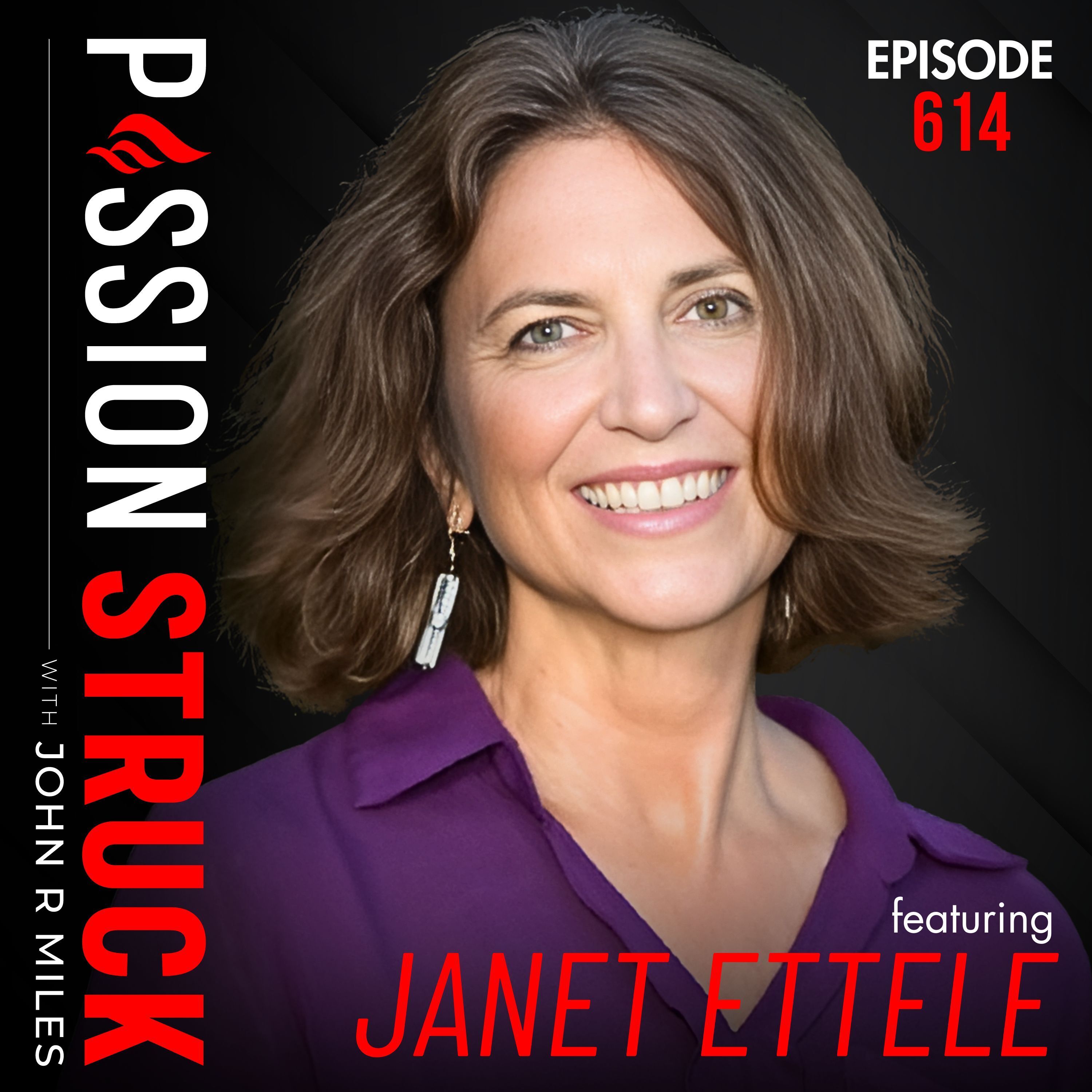
Passion Struck with John R. Miles
Janet Ettele on How Joyous Effort Transforms Our Lives | EP 614
01:08:11
Loading summary
Transcript131 lines
- [00:00]
John R. Miles
Coming up next on Passion Struck.
- [00:02]
Janet Edley
I also think that to the degree we are of self absorption is the degree of our misery just to being so self absorbed. Whereas in the Buddhist teachings that I've studied and granted there are different schools of Buddhism, I suppose the one I'm most familiar with is the Tibetan Buddhist teachings. That's all about the intention to benefit others. And I'm sure you've experienced this when you've done something to benefit someone else and you see that joy or you just are aware of how that benefit has been meaningful to somebody else that gets you, I think serves that purpose that you were saying people are missing.
- [00:43]
Narrator
Welcome to Passion Struck. Hi, I'm your host John R. Miles and on the show we decipher the secrets, tips and guidance of the world's most inspiring people and and turn their wisdom into practical advice for you and those around you. Our mission is to help you unlock the power of intentionality so that you can become the best version of yourself. If you're new to the show, I offer advice and answer listener questions. On Fridays. We have long form interviews the rest of the week with guests ranging from astronauts to authors, CEOs, creators, innovators, scientists, military leaders, veterans, visionaries and athletes. Now let's go out there and become Passion Struck. Welcome to passion struck, episode 614, the podcast that ignites change from the inside out. I'm your host John Miles and I'm thrilled to be back with you and I want to share a few quick updates. If you haven't heard yet. We officially launched the Passion Struck clothing line and I couldn't be more proud of it. Every piece was designed with intention to remind you that you matter, your presence matters and your purpose matters. Whether it's our you matter Live like it hoodie or our own youn Spark tee, this collection was made to help you wear your mission. To celebrate, we're giving away exclusive gear when you join the Ignition Room, our new free community. For deeper conversations, reflection prompts and behind the scenes insights, just go to theignitedlife.net or the passion Struck website to sign up. It's completely free and we're building something truly special Now. If you've missed last week's solo episode number 612, I really encourage you to go back and give it a listen. It's called how to reframe your inner world When Life Feels like Too Much. A guide to transforming your mental landscape when overwhelm sets in. And on Tuesday, I had a profound conversation with Joseph Wynn, author of Don't Believe Everything youg Think, where we explored how to break free from thought patterns that keep us trapped in suffering and self doubt. And today we continue our month long journey into mental health awareness, this time through a spiritual and narrative lens with someone who brings ancient wisdom in everyday life. Janet Edley is a writer, musician and devoted student of Buddhist Dharma. Through her How Life Works series, Janet masterfully translates the six per sections of Master Shantideva into modern parables that teach us how to live with more intention, mindfulness and compassion. Her newest book, How Joyous Effort Works, Even features a foreword by His Holiness the Dalai Lama and explores how our actions, when done joyfully and selflessly, can create ripple effects of transformation in the world around us. In today's conversation, we explore how ancient Buddhist principles help us navigate modern challenges, the balance between inner growth and life's external demands, practical ways to apply mindfulness, compassion and equanimity daily while focusing on the happiness of others can lead to deep joy within ourselves and so much more. Janet's work is a gentle but powerful reminder that the sacred often shows up in the small moments and that a life well lived is one that blends effort with wisdom and service with joy. Now let's dive into this thoughtful and inspiring conversation with Janet Edaly. Thank you for choosing Passion Struck and choosing me to be your host and guide on your journey to creating an intentional life.
- [04:13]
John R. Miles
Now let that journey begin. I am so honored today to welcome Janet Eddley to Passion Struck. Welcome Janet.
- [04:26]
Janet Edley
Thank you. Nice to be here.
- [04:29]
John R. Miles
I love to start these episodes out by asking opening questions that really get the guest to share parts of them that the audience may never have heard about before. So one of those questions I like to ask is, what is the kindest thing a stranger has ever done for you?
- [04:47]
Janet Edley
There have been a lot of kind things, but the first thing that comes to my mind is a long time ago. I was 17 years old. I had gone with two groups of friends, two vans to a Grateful Dead concert at the Nassau Coliseum in Long Island. It was March, it was cold. I had $5 in my pocket. I got separated from my friends. I think I was really eager to get close to the stage. I really wanted to see Jerry Garcia as close as I could. And when it came time to leave, we had all agreed that we would meet by a flagpole outside the venue. And I think what happened is each group of friends assumed actually they were friends of my older sibling, of my friend. So they didn't really know me really well, the two drivers. And they each Must have assumed the other had me. And the parking lot emptied out and emptied out. And it was cold and it was windy and it was dark. And I found a policeman. And I said, can you help me? I. Nobody's here. I live in Connecticut. And they said, well, can't help you. Go to the security office. So I spotted the security office and I knocked on the door and they told me they were closed and they wouldn't help me. And I, of course, started to cry. And there was a young man who saw me, must have seen what was happening. And he said, if you don't mind waiting. And with my brother, he's disabled, and his car has a special contraption to it to make it drivable. We have to get it towed, but once we get it fixed, if you don't mind waiting with us, we'll help you. I said, okay. And off we went in the tow truck with two complete strangers. And we get to the service station and I call my poor father. As a parent now, I think of what my poor father must have gone through. It's probably 11:30 at night. And I told him what happened. And I think he got on the phone with this guy and must have given him the third degree. What's your name? What's your license number? All the questions a father would want to know. And after the car was fixed, they drove me to Grand Central Station. The guy walked me into Grand Central, walked me to the train, put me into the train safely. It was like 4am the milk train, I think it's called, called. And gave me a kiss on the cheek and went away. And I never saw him again. I don't even know his name. And I made it safely home. It could have been gone quite horribly another way. So I think that was a very. Probably registers up there as one of the kindest things.
- [07:33]
John R. Miles
Thank you so much for sharing that. I have never had the privilege of going to see the Grateful Dead in concert. I have seen Fish in concert, and that is quite a show. But my father is 86. He seemed to be 87. And he was visiting me recently, and he told me that he had purchased his first Grateful Dead album at the age of 86. And he says this is some pretty good music.
- [08:02]
Janet Edley
He waited till it was 80s. That's amazing. Did he get an LP? Does he have a turntable and everything?
- [08:09]
John R. Miles
He always listens to things on a cd, typically. So he gave me most of his record collection. So I don't think he uses the turntable that we had, as when I was growing up anymore. But I. It was just interesting to hear him saying, I'm just discovering the Grateful Dead. And I said, you should listen to Fish then.
- [08:30]
Janet Edley
Well, I. Now I need to know, what album did he buy?
- [08:35]
John R. Miles
I do not know, but they're all very good.
- [08:38]
Janet Edley
Well, they're all good. I'm just curious which one he bought. So we'll have to follow up with that.
- [08:44]
John R. Miles
Well, I live here in the Tampa Bay area, and we actually have one of the best Grateful Dead cover bed bands in the country. They're called Uncle John's Band. And every time they play, Deadheads come from all over the area, and they typically have 300, 400, 500 people who come to the breweries or other event places that I've seen. So still a huge following.
- [09:11]
Janet Edley
That's wonderful. My son probably knows much more about the Grateful Dead than I do, and he wasn't even alive to see them as a band whole. But I'll let him know that about Uncle John's Band.
- [09:24]
John R. Miles
You are the third or fourth person I've had on the podcast who went to Berkeley College of Music, ironically. And one of them, Jeff Walker, I think, was the chairman of the board of Berkeley College of Music, interestingly enough. I'm not sure if you're familiar with Jeff, but he has a great podcast called System Catalysts, and he started the Contemplative science whole course at the University of Virginia and was its first president. So he is also very big into mindfulness, Buddhist practices, etc.
- [10:00]
Janet Edley
That's so interesting.
- [10:02]
John R. Miles
Well, I bring this up because your path to becoming an author is really unique because we're talking about Grateful Dead, and you started as a musician, which is why I asked you about Berkeley College of Music. How did this journey go from musician to studying Buddhist teachings and eventually to becoming a writer?
- [10:25]
Janet Edley
Wow. Well, writing, I never did as an author, but I think going way back when I was probably 15 years old and I had a teacher, I was sent away to school and I had a teacher that encouraged me to journal, and so I began journaling. I also grew up in a time when people still wrote letters, and I had a great aunt who was 60 years older than I was, so she had the formality of letter writing, and it was a beautiful form. So you get into some practice of telling stories through your letter writing. Right. Because this is where I went, this is who I saw, this is what it looked like. So there was that. And then when I went to Berkeley, there was a teacher that was really influential. I don't think he knows how influential he was for me. But he taught writing poetry. He also was a song lyrics teacher at Berkeley. His name is Pat. Pat. And I took every single one of his courses on writing poetry, as many as I could while I was there. So I had that sort of background in there, the music and writing music. I was a composition major. And I do feel that writing music and writing words has a lot of parallels in common. Things like dynamics, theme, motivic development, and things like that. But then I have to go really far ahead, skipping back up a few decades to when I had gone to New York University School of Continued Professional Studies, where I was taking a two year program to become certified as a life coach. And one of the books that was required reading is called the Mindful Coach by Douglas Silsbee. And he included in a lot of his pages little quotes that were from the Buddha or Buddhist teaching. And everything I read really struck a chord for me. I thought, this makes so much sense. It's just very practical. It's wise. You could just feel the wisdom in it. And I started researching books, reading as many books as I could on the subject. And every book I read said, if you want to use these teachings, if you want to bring them into your life in a meaningful way, you need to find a teacher. Long story short, it turns out five miles from my house is a Tibetan Buddhist center for universal peace. And that goes back, I want to say, 16 years ago, when I first began going and listening to teachings and continuing to study and read. And in the course of those 16 years, I met someone during one of the classes. We had a break, and we were both talking about how much we wished that these teachings, which are so practical, and Even though they're 2,500 years old, they still hold up. And wouldn't it be nice if we could find a way to bring them into Western culture without having to have people enter a Buddhist dharma center or even decide to be Buddhist just to be exposed to some of this wisdom. And I had that time been writing newsletters to promote my coaching work and was weaving in some of the things I was learning with these newsletters. And so we talked about that. Turns out he was in the publishing business. He had his own off, like a very small imprint of his own publishing company that was dedicated to Buddhist teachings. And so he had this idea for a series and invited me to write them. And that's how it started. Yeah. So the series he had in mind was based on a teaching called the Guide to the Bodhisattva's Way of Life by Master Shantideva, who was an 8th century Buddhist monk and scholar. And so these guide to the Bodhisattva's Way of Life is also known as the Six Perfections. So the idea was to have a book for each of the perfections and to write them as fictional, contemporary with contemporary characters living ordinary lives. And you get to see the main character learn, think about what he's been taught, begin to put the teachings into practice in a way that any of us could really relate to. Does that answer your question?
- [15:09]
John R. Miles
That's great. It answered the next question. I was going to ask you about the chance meeting with your publisher, but I want to go back to something you talked about and that is how we used to write each other's stories. Because when I was at home this past year and I was going throughout my bedroom, I found this bag where my parents had put together all these letters that I had wrote to them and that I had kept from my time when I was at the Naval Academy. And when I think about this art of writing people personal letters, there's really a joy to it, especially receiving those letters, that has really created a void, I think, in today's modern society. And to me, this whole concept of writing a letter like that kind of ties into the title of your new book, How Joyous Effort Works. Because to me, when you were writing letters like that, it really was a joyous effort to put that into the world. What are your thoughts on that?
- [16:20]
Janet Edley
I agree. I think that there's so much lost by not having the letters any longer in our lives. But in terms of the joyous effort, yeah, I guess in letter writing, usually it's someone you love or at least feel very fondly toward. And it's a joy to share, to have to be able to read what they're doing and respond and share what you're doing. There's a lot of you could remain quite close through that. And maybe I took your question and went a different direction with it. I'm not sure.
- [17:04]
John R. Miles
I wasn't trying to get you to go in any direction at all. I just wanted to hear what your thoughts were.
- [17:10]
Janet Edley
I think it's a shame we've lost that art. I really do.
- [17:13]
John R. Miles
It's not the only art that we have lost. But it really gets down to this big area of work that I'm studying right now on the science of mattering. Because I think we have really shifted so much in society from our lives and the connections that we had at one point throughout history to now, this void that's been caused. And it's interesting because in the book you have this statement. I'm going to read it. The nature of an untrained mind is one of distractions. Since the lives we lead are a manifestation of the quality of our mind, it's no wonder so many people feel their lives are out of control. And you and I were talking before you came on about. I have this saying that I keep using because I think it adequately describes what's happening. I call it the disease of disconnection, which to me is one of the largest epidemics that is impacting humanity. How does what I just read fit into that disease of disconnection?
- [18:21]
Janet Edley
It fits. It fits in terms of we are so distracted by. I know people enjoy social media. There's a lot of fun in that too. But I feel like is in so many cases it's, look at me, look what I'm doing. This is what I ate for dinner. This is my new house. This is this. And it's not with the exchange, like a genuine kind of exchange of story of sharing of your actual life. But we're distracted by this sort of glittery idea of the attention. It does seem some kind of attention seeking, like a real need of being all eyes on me. And it's a little uncomfortable for me, but I think it's. It doesn't hold up. It doesn't have anything to really sustain anything of any true quality with. Does that make sense?
- [19:22]
Narrator
It makes sense.
- [19:23]
John R. Miles
When I think of this disease, it surely impacts the relationships we have in others. But I think at the core of the disease is that people are losing connection to their very selves. We're like losing connection to our souls because we're spending so much of our time thinking out of our body that we're not dedicating enough cycles to truly understanding ourself, our talents, why we were put here on earth, and most importantly, what's our contribution to help end human suffering.
- [20:01]
Janet Edley
What did you mean by outside of our body? I'm not sure I understood.
- [20:07]
John R. Miles
Meaning we. We are constantly looking, I think for external validation of ourselves. And that comes through social media. It comes through the gaming that people do. It comes through the constant seeking for attention instead of really what is taught in Buddhist teachings, which is focus on mindfulness, focus on consciousness, focus on who we are as an individual and turning more inward. And I think it's becoming a lost art for so many people.
- [20:43]
Janet Edley
I think there's a lot to that really. I also think that to the degree we are of self absorption, which is to being so self absorbed. And the Buddhist teachings that I've studied and granted. There are different schools that have Buddhism, I suppose, and the one I'm most familiar with is the Tibetan Buddhist teachings. And that's all about the intention to benefit others. And I'm sure you've experienced this when you've done something to benefit someone else and you see that joy or you just are aware of how that benefit has been meaningful to somebody else, that gets you, I think serves that purpose that you were saying these people are missing. What do you think?
- [21:28]
John R. Miles
I think that's a big element of it. I think we've just gotten so focused on the importance of individual. And I think a lot of the frameworks that are being put in place through technology are just reinforcing or highlighting the importance of the individual. But what we're lacking is connection. What we're lacking is community. What we're lacking is looking at how we as an individual help others, serve others. Because I think that's what we're called to do.
- [22:04]
Janet Edley
I think that touches on something that is a real fundamental truth. For in this studies that I've done is just about interdependence, which isn't unique to Buddhism. We can see it in nature, right? Everything is interdependent. We can't grow things without the sun or the proper soil or the right conditions or the right temperature, right? In our lives we are. We've become so disconnected to even taking care of ourselves. The electricity that lights our homes, the fuel that heats them, the clothes we're wearing, the food that we pick up from the grocery store, everything that sustains us is independence on others that we don't even know. Talk about the kindness of strangers that we don't know that they're as. That really inspires gratitude in ourselves. And that also serves to bring to mind that we're not isolated, we're not living, no matter how independent we think we are, were not. And I think that sometimes that experience of gratitude really helps open that heart to feeling that connection a little bit more.
- [23:25]
John R. Miles
I agree. And part of the reason I went down this path is holiness. The Dalai Lama wrote the forward for your book. And everyone I've had on the podcast who has interacted with His Holiness, which is now probably nine to 10 people on the show, all tell me that he has a really unique way that he talks to them as an individual about their specific contribution to making the world better. And how they're small, plays a bigger role In. In helping others and helping society. Have you found the same things as you have interacted with him?
- [24:09]
Janet Edley
Well, I have interacted with him only one experience of being in the same room with him, which was pretty phenomenal, just to be in his presence. But one of the things he said often is, I am just one of seven billion human beings. We see him as, oh, my God. His Holiness, the Dalai Lama. He brings it down to, I am just one of seven billion human beings on this planet. And each one of us has the potential to develop further and to cultivate our ability to bring more compassion into the world around us, to extend that kindness to people who are strangers to us. And his presence is pretty. Pretty remarkable. And I do sense that he really seeks to remind everyone of their that kindness. What does he say? There's a quote of his that might be appropriate. What is it? He says, can I read this quote to you?
- [25:17]
John R. Miles
Sure.
- [25:18]
Janet Edley
He goes, we can reject everything else, religion, ideology, all received wisdom, but we cannot escape the need for love and compassion. This, then, is my true religion, my simple faith in the sense there is no need for temple or church, mosque or synagogue, no need for complicated philosophy, doctrine, or dharma. Our own heart, our own mind is the temple. The doctrine is compassion, love for others, and respect for their rights and dignity, no matter who or what they are. Ultimately, these are all we need.
- [26:05]
John R. Miles
It's really a beautiful quote, and it reminds me of the work of the late Emile Bruno, who I highlight on this show a lot. Emile was a professor at the University of Pennsylvania, if you're not familiar with them, and died from brain cancer way too young. But his work was really focused on dehumanization. And how do we start seeing the other in conflicts as part of ourselves? How do we see the commonality of all humanity so that we look beyond the differences and we look more to the commonalities in life and what draws us together as opposed to what is driving us apart, which to me, love, compassion, gratitude, all those things that you just brought up play directly into that.
- [26:58]
Janet Edley
I think sometimes it's helpful to recognize that everyone has varying degrees of suffering that they're experiencing in their lives. And that's just a fact of being human. As one of 7 billion human beings, none of us is an exception to that. I think sometimes even just bringing that to mind is a reminder in a difficult situation or a difficult moment to just take that pause and just recognize that other person's suffering that's in play at that time, and that just brings up compassion, and that changes the dynamic of everything in that difficult situation, just pretending of one. But I think we've all experienced them before. When you can bring compassion into any tense situation, it changes it profoundly.
- [27:55]
John R. Miles
You and I were talking about previous guest of mine, Rick Hansen, before you came on the show, and Rick has founded the Global Compassion Coalition. I just wanted to bring that up because he is seeing that especially in young males, this is becoming less and less something that people are looking at as a strength. And so he's trying to influence broader than that. But that is a core group of individuals he is really trying to put his focus on because so many young males today are adrift. Do you see that through your work as well?
- [28:35]
Janet Edley
Do I see young males as being uniquely. As being adrift compared to young women or.
- [28:42]
John R. Miles
I guess that would be part of it. I guess the first thing would be, do you think compassion in itself is starting to become less of an art than it has historically been? And do you think it manifests itself more in males or females, certain ages or not?
- [29:02]
Janet Edley
Gosh, I don't know that. I know that I've raised sons who are both. If you looked at them, you think they're a couple of linebackers. They're big, strong men, but they have very compassionate hearts. I'm grateful that they have that balance. But I think that men. I think we all need that cultivating of compassion because. And I think that men should. Having a program like your guest had set up for men, I think is really beautiful because I think there are a lot of. Growing up as a young man today has in many ways probably been a little confusing for these kids, kids as they've come up. I remember when my sons were in grade school, they were. They were confused because they were supposed to feel this guilt of they happened to be born white and they happened to be born male, and they were too young to carry that guilt that they were starting to absorb already, even in the classrooms at school. So I think that has been hard for probably not just them. They're okay. They're not scarred for life by that or anything. But I think it's confusing, perhaps.
- [30:20]
John R. Miles
And I just wanted to point out that the Global Compassion Coalition isn't about just men. It's really trying to establish compassion and justice as the foundation for all societies. And one of the things that they're doing that I'm trying to start myself is to create. Create a compassion circle, which they'll instruct you how to do in your local community so that you can start taking action. And in your own community, which is, I think, how action usually starts. And the more this is spread worldwide, the more it becomes a common practice instead of an outlier. I just. Where I was going is Scott Galloway and others talk about young men being adrift today. And one of the core areas that he and others talk about is the lack of compassion and exemplifying these powerful type of people, but not as much focusing on some of the inherent values that are needed to balance some of the powerful with some of the other values that we need to survive in life. That's where I was going. Okay, put it more in perspective.
- [31:33]
Janet Edley
I misunderstood that. But yeah. And I think across the board, this is needed. And I'm curious, what are the methods that he's using to help bring this into the communities?
- [31:47]
John R. Miles
Well, this is a global organization, so they're working throughout Africa, they're in Europe, they're in the United States. They provide you with a core structure on how to develop these Compassion Councils, how to bring these lessons out. So I'm at the beginning stages of the journey because I want to learn more about it and how they're trying to use this, as Malcolm Gladwell would say, to start influence, a tipping point happening where this becomes more the norm instead of not being the norm in society.
- [32:24]
Janet Edley
Yeah, I think I'd love to see that happen. There's a lot of the opposite. And as we were talking earlier about social media, that is a huge distraction to a lot of young people. So to have something like that to help balance that kind of influence would be huge.
- [32:47]
John R. Miles
Yeah, I remember I was interviewing Robin Sharman. He made this quote to me about what we're talking about. He said, you can either play on your phone or you can change the world. You can't do both.
- [32:58]
Janet Edley
I love that. I love that.
- [33:02]
John R. Miles
And I think what he's just saying is where you focus your attention is where your actions will result. And he's right. Whether it's on that, whether it's on gaming, whether it's on addictions, all those things hold us back from really fulfilling what we're put on earth to do.
- [33:21]
Janet Edley
It's like that expression where thought goes, energy flows. Something like that. Exactly right.
- [33:26]
John R. Miles
Yep.
- [33:27]
Janet Edley
And that's something we were. You were talking with your guests the other day about mindfulness, and this is one of the reasons why mindfulness is so important, to know where your thoughts are. I've read that the average person here thinks anywhere between 12 and a half thousand to 60,000 thoughts per day. And I did the math. I thought, all right, even if you were to sleep eight hours a day, you would have 57,600 waking seconds. And you know how fast thoughts move through your mind. So it's not stretch to think that you could have even more than 60,000 thoughts per day. But what I've also read is that somewhere between 80 and 98% of those thoughts are repeated daily. So what? Meditation is a method of familiarizing your mind to something. And if what we're doing in this repetition of 80 to 98% of our thoughts repeated daily, we're having our very own very wild, very unconscious meditation that is deepening and deepening whatever these thoughts are. Which is why cultivating mindfulness, starting to become aware of what are these thoughts. And if they're not, if they're not conducive to a more peaceful way of life, if they're based on things that aren't altogether accurate and true, the downside of that and the upside to cultivating awareness of those thoughts.
- [35:07]
John R. Miles
Yes. Reminds me of a teacher I had on the show a couple years ago. I'm not sure if you've ever heard of Don Depani.
- [35:16]
Janet Edley
No.
- [35:17]
John R. Miles
Dondaani is a Hindu priest and he was a Hindu monk for I think a dozen years. And he wrote this book on the power of focus. And really it was the most profound lesson that he learned from his years of being a monk. Was that it you can't be intentional about your actions unless you learn how to focus your mind on the right things. And I talk about this in my book from last year where I cite them in this chapter. I call it Living a Pinball Life. I use this analogy because I think so many of us today, we live out our days as if we're like the ball in the game of pin pinball. We're just bouncing off all the distractions. These 60,000 thoughts that we have throughout the day, and we let them play us instead of really being conscious and deliberate about how we control those thoughts. So instead of the game playing us, we learn how to play it. And to me, it's a great analogy for life.
- [36:22]
Janet Edley
Yeah.
- [36:23]
John R. Miles
And the whole. One of the core focuses of this podcast is really on, I believe it's the intentional choices that we make. I call them micro choices that end up resulting in either a valley of despair that we find ourselves in or reaching peak states of fulfillment and self awareness and self transcendence. And those micro moments really determine our choices. So it's how do you start controlling your mind to control the microchoices that you make? So they're leading you down the path that leads you to more fulfillment in your life and less, ultimately, regrets.
- [37:06]
Janet Edley
Right, Right. That's well said. Very well said. I like your pinball machine metaphor because I think it really fits to the thinking about the choices we make and things there. There is something taught in. In the Buddhist tradition called the Eightfold Path. Have you heard of that?
- [37:27]
John R. Miles
Yes.
- [37:28]
Janet Edley
Yeah. Which is right view, right thought, right speech, right action, right livelihood, right effort, right mindfulness and right concentration, which is what you were speaking about before. And if we can just bring our attention into that in our choices to check these things. And of course, there's more to each of that, and that's like the tip of the iceberg. But it's something that's manageable when you can put it into a context like that.
- [38:03]
John R. Miles
I think that's a great context for it. I'm glad you brought that up because that is a great way to think about it as well, which kind of takes the metaphor of the pinball and puts it into a framework that people can understand. So I have to think about combining that in the future. So thank you for that thought.
- [38:21]
Janet Edley
Absolutely. Yeah. In terms of mindfulness, there is in Shantideva, who was the person who did the teaching that my books are based on. There's one verse that I really love that he says, where would I find enough leather to cover the entire surface of the earth, yet with leather soles beneath my feet, if the whole world has been covered? And if that makes sense, it's like this is back in the day when people were traveling on rugged paths and there were thorns and things to get your feet. But it's. If you have leather, you can't cover the whole earth with leather. But if you can put a piece of leather underneath your feet, like this pair of sandals, then you're not going to be hurt by these thorns. And that's the same way with cultivating mindfulness, we're not going to be able to change the entire world around us really, as much to the degree that we wish we could. But if we can control our own mindfulness, if we can really cultivate that, we can have a much more peaceful presence that we bring to the world, as well as the way we experience the world.
- [39:38]
John R. Miles
No, absolutely. And I was going to go into Master Shantidava's teachings anyhow, so I'm glad you took us there.
- [39:45]
Janet Edley
Okay.
- [39:46]
John R. Miles
I really thought it was interesting how you started the book by examining his life from eight centuries ago and how he is amongst his peers and his peers look to him as being lazy, as not pulling his load. And so they create a test for him. And I was hoping maybe you could pick up the story of what that test was and what has been written about how he handled that test.
- [40:18]
Janet Edley
Well, yes, I can do that. He wasn't eight centuries ago. He was during the eighth century.
- [40:24]
John R. Miles
Oh, that's what I meant.
- [40:25]
Janet Edley
Yes, I knew that's what you meant. But I just wanted to say that, yeah, it seems like an unkind trick to do, but it really. They couldn't tell him to leave. They wanted him to be shamed into wanting to leave, is the way the story goes. And so they invited him to do a teaching. It should be something that had never been taught before. And they built this throne, which is not like a royal throne, but a high platform that he would be sitting on, so that everybody that attended it was going to be a huge audience, could. Could hear him and see him, but there were no stairs to climb up there. So the story goes that he touched the side of this throne and somehow managed to be transported right onto the seat of it. And he taught this teaching. It was like, in song, like poetry kind of form. And it was apparently just so profound, everyone was astonished by the quality of his teaching. And then when he got to the teaching on wisdom, they say that he rose and could no longer be seen by most people unless those who were there had the kind of spiritual attainments that made it possible for them to see him. And that's the story.
- [41:54]
John R. Miles
Well, isn't that like so many stories of famous teachers that you hear is they have cultivated this internally until the moment comes when they start to share it. And then when they do share it, it's shared with such profound knowledge. And what was so interesting about this story is that they tried to trick him not only into what they thought was putting him into an uncomfortable situation, but forced to teach something that the planet had never heard of before.
- [42:24]
Janet Edley
Yeah.
- [42:24]
John R. Miles
And then he does it so eloquently.
- [42:29]
Janet Edley
It's like a myth, Isn't it, mythology, that the hero has these very.
- [42:35]
John R. Miles
Yeah. It reminds me of this book right here.
- [42:39]
Janet Edley
I can't believe you brought that, because I was just about to mention that book, the Power of Myth and Joseph Campbell and his amazing series. He did. Who was the man who interviewed him back in the. It was in the 80s.
- [42:52]
John R. Miles
Bill Moyers.
- [42:54]
Janet Edley
Yes, you can still see it on YouTube. I think it was done in six episodes. It's brilliant. The Power of Myth. Have you seen it?
- [43:04]
John R. Miles
I have seen parts of it. I have not watched the whole thing. I've read this book probably 10 times. But I have to go back and do it because to me, looking at what he. This interview took place in the 80s and it's so interesting to me how you see these common myths play out. It's a different story, but basically the same story across so many different religions. I'm listening to Yuval's new book and he's talking about information and how information has evolved over centuries. And he goes into Joseph Campbell as well and the power of myths and how myths have been a cornerstone of storytelling and getting information demonstrated are disseminated for millennia.
- [43:51]
Janet Edley
Yeah.
- [43:51]
John R. Miles
So it. There really is something to this.
- [43:55]
Janet Edley
Yep, yep. I think Carl Jung wrote a bit about this as well, didn't he? Or he did. It's fascinating. And I guess again we realize that as one of 7 billion human beings, our experience is no different. We might have a different setting that we're living these lives in now compared to a few hundred or thousand years ago. But things. It's a lot of commonality, isn't there?
- [44:29]
John R. Miles
There's a lot of commonality. And something that I took from Joseph Campbell's words was to me, I. It came across that throughout history there have been recurring patterns where people stop going to church as much, let's just say it in that common way and the way he was representing it was that the myths get old and they need refreshing. And so new religions come about and they take hold because they spin the same stories in a way that relates to where people are in the modern lives that they live. And so that's what happened from Judaism to Christianity etc. And I'm not sure if it's true or not, but there sure seems to be some relevance to what he said. And I remember I was. I had a really great teacher when I was studying the Bible and he was a theologian, but he also had a PhD in history. And to me, a lot of the things that are said, especially in the Old Testament, are so hard to understand. And he was able to. To really take those ancient words and he would represent them to. This is what it means in the 21st century. And that translation I think is missing for a lot of people, I think.
- [45:54]
Janet Edley
So what is this person's name that. That wrote this?
- [45:57]
John R. Miles
Well, no, this was just a pastor of a Methodist church. I would, I was taking this course on discipleship from. His name is Terry. Terry. Pastor Terry. But it. I couldn't have have asked for a better teacher because you would read this and I would get really Stuck in trying to interpret what they were saying all the way back when the Old Testament was written. And he. He would have just these grand examples. And it's been a decade since I. Plus since I took this course of what those lessons meant in today's world, which made so much more sense when you were reading it. But I wish more of the Bibles would do that interpretation. And unfortunately, this Bible where I took copious notes from all these courses that he had taught got destroyed in the floods that impacted us four or five months ago. So I lost that Bible that I had decades worth of notes written in.
- [46:59]
Janet Edley
I'm sorry. Wow, that's a big loss. But it sounds like you've got a lot of it still in your mind, a lot of what you learned from this teacher. But I think that Old Testament is really hard to get your mind around, isn't it? The way things are presented, the things that are talked about are hard to. Like you said, hard to put to today's times.
- [47:23]
John R. Miles
They are. But it is interesting how Yuval, in this. In this new book, was really talking about when you think of Passover, you're really getting people to think about lessons from the past and to do it as a ritual every year. When you think about, in Christianity, Easter and the Christmas season, you're really doing the same thing. You're revisiting old myths and doing it as a ritual. So it's really this interplay of ritual with information, with doing it on a consistent basis, that ingrains these thoughts and lessons into people's minds.
- [48:05]
Janet Edley
Is that something you were asking earlier about compassion and the younger people you. I thought you were asking about young men earlier and that need for connection and experiencing more compassion in their lives. Is this missing ritual part of what you think is perhaps lacking for them?
- [48:32]
John R. Miles
I think that could be part of it. I just think that there is a void right now where they are very impressionable and that right now they're a lost generation, so to speak, and that something needs to fill that void. And that void could be something very nefarious, or it could be something that is based on profound lessons that shape who they become is what I'm leaning into.
- [49:01]
Janet Edley
Yeah.
- [49:01]
John R. Miles
So even the six perfections which you're writing about are important things. The power of generosity, ethics, which Ryan Holiday talks about a ton. Patience, effort, concentration, as we were talking about before, and wisdom, they all are key steps to a path of enlightenment. And they're just as relevant in the 8th century as they are today. Absolutely. But it's. How do you like you're trying to do through your book and your story that you're telling it through. It reminded me of Robin Sharma a little bit in the way you wrote it. You're really trying to bring these six perfections to a relevant state for people to absorb today.
- [49:48]
Janet Edley
Yeah.
- [49:49]
John R. Miles
Is how I interpret what you're doing.
- [49:51]
Janet Edley
That is what I've been trying to do, and I think it's been effective feedback. I've heard from people that it's helped them. I think that one of the things beyond just hearing a teaching or reading a book or listening to a talk someplace is really the process of taking that, what you've learned and spending time with it. Teaching Buddhism, the three stages of wisdom. One is listening to a teaching. The second is reflection, contemplation. We really take the time to think about it. Does this hold up? Is it relevant? In my life, you have to really test it out for yourself. And then the third step is meditation, where you really. That's that concentration where you've arrived at some understanding, and you really bring that in a concentrated level into your practice and meditation. But then the more you rehearse this, remember I was saying, meditation is a method of familiarizing your mind to something. The more you rehearse this, the more adept you'll be at being able to put these things into practice. So we don't leave it on the cushion, as you often hear people talk about, but we really do. It's just ready to be put into practice in your daily life. And I hope that the books that I've written, in particular the character Troy, who's a young man who goes through the series, is beginning to assimilate these teachings into his life and meets challenges that, like I said before, are challenges that are familiar to any of us in one way or another.
- [51:30]
John R. Miles
His journey really illustrates the challenge of balancing spiritual growth with everyday demands.
- [51:36]
Janet Edley
Right. Which is a real commandment for him. He's not sure he can do it.
- [51:43]
John R. Miles
I think if you go back and you look at Abraham or Moses or people from the Old Testament, they probably had the same question about could they balance the two themselves. Right?
- [51:55]
Janet Edley
Yeah.
- [51:56]
John R. Miles
And I think it's one of the universal struggles that we have. And. And it's. Where do you put your priorities? That same pastor I talked about, Terry, he used the Eisenhower matrix in a way I've never heard it talk about in a congregation. He just said, your effort and your focus and everything else really comes down to your calendar and your pocketbook, and it's really your prioritization. Matrix for where you're spending your time. So I did want to go into a couple more things about the book. One of the most downloaded articles I've ever written was on the importance of adult play. And I'm going to tie this into the book. Because you write, joyous effort is like the wind that pushes you towards your goal. And to me, what this really emphasizes is the importance of combining effort with joy or combining effort with play. How does this differ from the traditional idea of hard work?
- [53:06]
Janet Edley
I think when you, in the context of the book that I've written and actually anything is when you realize that there's a genuine benefit to something, your willingness to put that effort in, to achieving that, whatever it is you want to do, you're going to be joyful in it because you're pumped, you're excited to do it. Right? So it's a joyful effort when you know that the end result is something that is going to be really fruitful or whatever your objective is in terms of play. I think that, you know, I should probably think about this a little bit more before I answer this, but I think that it feels playful when you're doing something with joy, creativity, creating art, creating anything. There's an element of playfulness with that. That's my first thoughts on that.
- [54:08]
John R. Miles
Okay. And in your book, Troy learns about finding the right type of teacher. What qualities do you think someone today should look for in a mentor or guide, whether you're on a spiritual path or you're just looking for a life coach?
- [54:26]
Janet Edley
Well, first of all, that they themselves have studied, that you observe in the Buddhist tradition, the old books say you should observe a teacher for 12 years before you take them on as your teacher. Today we're not likely to do that. But that was in when that's for a spiritual guide, because that's a life path, pretty much. And so you want to make sure you're on the right path, that they live, watch them, observe them, Are they living? Are they walking, their talk? I think that's important to notice. Are they patient? Do they have those qualities of patience and kindness and generosity, the things that you would like to be achieving yourself? If you were interested in learning carpentry, you'd want to look at the quality of work that carpenter you were studying from was producing. So I think in the same way, it's like the quality of how someone is living is perhaps a little less tangible to and concrete to see. But you've got to take some time, spend time with that person and just, yeah, be Careful of what makes sense to you. The Buddha said, see my fingers pointing to the moon. Don't is don't mistake my finger for being the moon. Moon. It's because of my finger that you can see the moon. And so we want to make sure whoever we're taking on, whether it's a coach or a mentor or a teacher, that they see that and live it and can help guide you towards that in a really ethical way.
- [56:11]
John R. Miles
Yep.
- [56:12]
Janet Edley
And in a kind way.
- [56:14]
John R. Miles
Thank you for sharing that for me. And I'll just apply it to my technology career. I remember as I was looking for mentors for my career, I would always be looking for people who had done roles two or three ahead of where I wanted to be, with the goal that they could help me short circuit much of the suffering that comes along with having to learn things the hard way and help me think about the decision framework that I was using and how I was intentionally approaching my career to eventually get to where I wanted to go. But I think the same type of thought goes with any direction you want to take. And so you really want to pick someone who fits the ideals of who you're wanting to be in the future so that they can help you grow to be a mirror of that image, so to speak.
- [57:11]
Janet Edley
What you said is someone who was two or three steps ahead of you. I forget the word you use, but who's already done it, who's achieved what it is you're striving to achieve yourself. And I think in a spiritual situation, you can observe that quality in the person. And I guess in any other sort of mentorship, it would be a parallel sort of analogy.
- [57:37]
John R. Miles
I always just driven crazy when you go into companies and they would assign you a mentor. Because I never wanted to be assigned a mentor. I wanted to find a mentor who I wanted to live up to what I saw in them and how they projected themselves. A great example of this was when I was at Lowe's. One of my mentors was this guy, Steve Salagi, who at the time was senior vice president over distribution systems. He wasn't even in technology, but what I really loved about him was how he treated people as if they mattered. You would see him and the way he cared for people, the way he remembered them, the way he motivated them, the way he got people to do the impossible.
- [58:27]
Janet Edley
Wow.
- [58:28]
John R. Miles
Were just skill sets that I didn't have. So when I saw him embodying them, of course, course I wanted to learn from him. And sometimes, you know, people always say, well, how do you approach Someone about being a mentor. Well, sometimes you don't even have to do it. It just comes naturally by putting yourself in their presence, that the more you're around them, the more you start learning. And then it gradually just turned into something where he would share more and more with me just because he saw I was becoming a disciple of what he was trying to accomplish. And so sometimes it doesn't have to be as formal as I think people have to be.
- [59:09]
Janet Edley
I think that happens in life organically, like in your situation. And you had that sort of awareness that this is something that you were inspired by what you saw in this mentor. And so, like a magnet, you went toward that. That's, again, a choice that you made. I think people have to be. It's a way of being proactive. Right? You're not passively just sitting in the shadows. You put yourself in that environment to. To learn more closely.
- [59:40]
John R. Miles
I'll just tell you a simple statement. I'll give you just a simple example from someone I really admire just by watching how intentional he was. And that is senior. I got to meet him a few times over the years before he died. And when I met him, he was an older man, and he would still come into Perot systems every single day. He didn't have a leadership role at that point, but what was so intriguing about it even then was he was constantly trying to learn. And so every single day, he would come to the cafeteria, he was always dressed in a suit, and he would pick a different random table to sit at. And when he was there in front of the people he was sitting in, it wasn't about Ross. He was there to learn as much as he could about the people who he was sitting with, and then he would share connection with them. And to me, it was just such a fascinating gift to see him give to others. And you could see how much it meant to him that he was receiving that connection back. And it's one of my favorite aspects of observing this great man who had so many accomplishments. But when it came down to it, I think he knew that the most important one was the connection that we have with others.
- [61:04]
Janet Edley
And goes right back to what you were saying we were talking about earlier, that disease of disconnection. Just, this is a man who just. That's how he lived. And there was that connection. And he created the connection for those that he shared, that who he sat at the table with and had these conversations, just a way of being present.
- [61:33]
John R. Miles
And, Janet, if you could offer one piece of advice to someone who feels stuck or that they are missing that connection in their lives, what would it be?
- [61:49]
Janet Edley
Well, those are two different questions. Are they feeling stuck or are they feeling they're missing the connection or are they feeling both?
- [61:57]
John R. Miles
Well, how about we just go with. How about one piece of advice to someone who feels that they are missing connection in their lives and connection?
- [62:07]
Janet Edley
Well, I'd say a few things, like thinking about how actually not isolated they are, as I talked about earlier, about just understanding how everything that we have that sustains our lives is as a result of somebody else's work or kindness and get that feeling of gratitude. And you begin to feel that sense of gratitude. You're. It changes your energy feeling and it's sort of an opening of the heart. And I think when we can open our hearts, we can take those little steps, baby steps, maybe initially, but just to have that casual conversation with somebody in the produce section of the supermarket or pick up the phone and call somebody you haven't spoken to for a long time, be the person to initiate that kind of connection. And I'm not sure what everybody's different. Why they might feel that lack of connection. Is it because they are feeling very shy or unworthy? Could be so many different reasons why they're feeling that lack of connection that I don't know that there's one prescription for that. But those are the first things that come to mind is just opening your heart. Even if that can be a small beginning by just realizing how lucky you are to be in this life and how many how to remember that things are always in the process of change and because of that quality of impermanence, always being present, that you're not stuck in any moment or in any state of being. And we have that potential to influence the change that we would like to create in our own lives through mindfulness. Practicing mindfulness is another way too. Awareness of what are those thoughts that are running through your mind on a daily basis and how accurate, how truly accurate are they? Because from our thoughts we generate our feelings. From our feelings we create our actions. And from our actions we receive our results. So there's a lot to it. That's not an easy question, John.
- [64:27]
John R. Miles
Well, Janet, it was such a joy having you on today. Speaking of your book Joy. And could you please tell the listeners or viewers where they can learn more about you and pick up this book as well as your other books?
- [64:42]
Janet Edley
Sure. Thank you. My website is probably the easiest place to find me and to learn anything. Is my name Janet Edley, which is spelled e t t e l e janetedeley.com My newest book is going to be released on January 28th. It should be available anywhere you buy books. Anywhere you buy books. I don't want to specify just one place. Wherever your favorite place is to buy books, that's where you can get it. And the other books are also available. They're How Generosity Works, how the Root of Kindness Works, How Patient Works, Patience Works, and Joyous Effort Works. And thank you so much for having me here today. It was really wonderful to meet you and to have this conversation.
- [65:30]
John R. Miles
Well, thank you so much too Janet. And thanks for being a listener of the show. I always love it when I have guests on who have listened to previous episodes, so I really appreciate it.
- [65:39]
Janet Edley
I've enjoyed them. Thank you.
- [65:42]
John R. Miles
Thank you.
- [65:43]
Janet Edley
Stay well. Take care.
- [65:46]
John R. Miles
Thank you. You too.
- [65:47]
Narrator
That was such a calming, wise and.
- [65:50]
John R. Miles
Meaningful dialogue with Janet Edeley.
- [65:52]
Narrator
Her ability to distill complex spiritual ideas into soul nourishing stories is truly rare. As Janet shared, the key to lasting fulfillment isn't in achieving more, but in how we show up for others, how we approach the ordinary with joy, and how we align our energy with a higher purpose. Her message is one we all need right now. That joyous effort rooted in compassion and intention is not only possible, but transformative. So as we close, I want to leave you with a few reflection prompts from today's episode. How can you turn your daily routines into mindful acts of service? What does it mean for you to put joyful effort into your relationships, your.
- [66:30]
John R. Miles
Work, and your healing?
- [66:32]
Narrator
How might shifting your focus from self gain to other centeredness create more peace in your life? If today's conversation resonated with you, please take a moment to rate and review Passion Struck on Apple Podcasts or Spotify. Your feedback helps us grow and bring these powerful messages to more people around the world. You can find Janet's books, including How Joyous Effort Works, by visiting the show notes@passionstruck.com and remember, you can join our.
- [66:58]
John R. Miles
Growing free community inside the Ignition Room.
- [67:00]
Narrator
Subscribe to the Ignited Life newsletter on Substack and watch the full episode and bonus clips on our YouTube channels. And coming up next on Passion Struck, I'm joined by Dr. Judith Joseph, one of the most trusted voices in psychiatry, to talk about her groundbreaking new book, High Functioning and what it really means to heal the parts of ourselves no one else sees.
- [67:21]
Dr. Judith Joseph
What I found is that when you see people who are over functioning, a lot of times it's not just them. It has been contagious. It spreads to their families it spreads to their team. It spreads even to their pets, right? Everyone's not happy. There's a lack of joy. The anhedonia spreads to the ecosystem. But if you can retrain yourself and start to engage in being present, slowing down and accessing life the way you should, then that spreads as well. So you can actually reverse things if you're mindful and intentional about it.
- [67:55]
Narrator
Until then, live boldly. Live with purpose. And, as always, live life.
- [67:59]
John R. Miles
Passion struck.