← Passion Struck with John R. Miles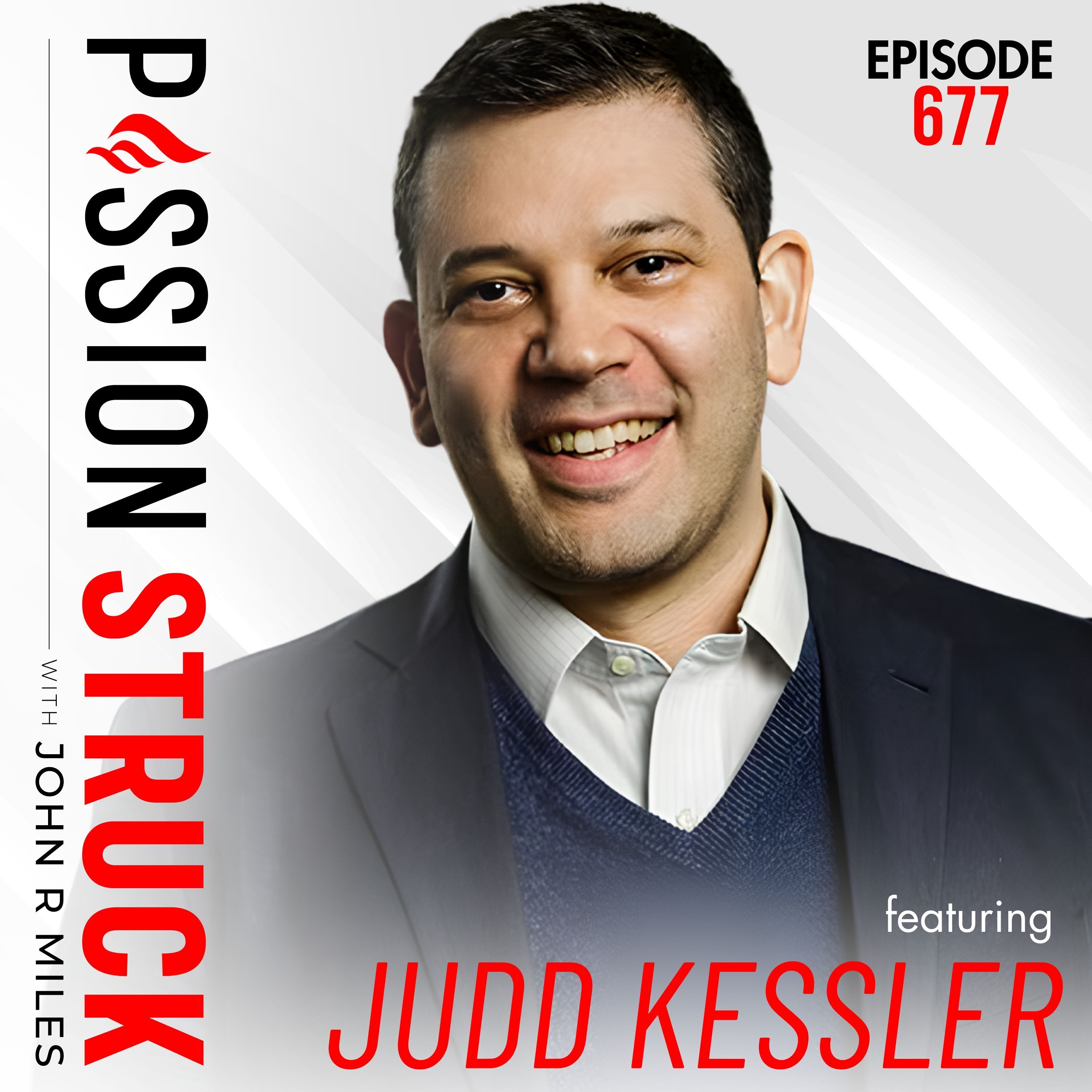
Loading summary
Transcript60 lines
- [00:00]
John Miles
Coming up next on Passion Struck.
- [00:02]
Judd Kessler
The way that I think about the hidden markets that I talk about in the book is indeed about scarcity and about when there's more people who want something than we have slots to give. And that's true for French laundry reservations. It's true for Taylor Swift tickets, it's true for the seats in the best elementary schools in New York City. But it's also true in getting into the elite colleges. And the admissions rates at the Ivy leagues and at many of the universities that are the best in the country are very small. The chance of getting in is vanishingly small.
- [00:34]
John Miles
Welcome to Passion Struck. I'm your host, John Miles. This is the show where we explore the art of human flourishing and what it truly means to live like it matters. Each week I sit down with change makers, creators, scientists and everyday heroes to decode the human experience and uncover the tools that help us lead with meaning, heal what hurts, and pursue the fullest expression of of who we're capable of becoming. Whether you're designing your future, developing as a leader, or seeking deeper alignment in your life, this show is your invitation to grow with purpose and act with intention. Because the secret to a life of deep purpose, connection and impact is choosing.
- [01:14]
To live like you matter.
- [01:22]
Welcome back friends. Welcome to episode 677 of Passion Struck. I'm John Miles and I'm so glad you're here. Whether this is your first time joining us or you're part of the growing community who returns week after week, welcome. Over a third of you come back for every episode and that loyalty fuels this global movement. If this show has ever inspired you or helped you take a meaningful step forward, here's how you can help it grow. First, share this episode with someone who'll find it valuable. Second, leave a five star rating or review on Apple or Spotify. It's the single best way to help new listeners discover these conversations. Earlier this week on Tuesday, we went live with Amy Lee McCree to explore Aura alchemy, the fascinating intersection of science and spirituality that shapes our energy fields, our interactions, and how we show up in the world. If you haven't listened yet, I highly recommend going Back to episode 676. It's a powerful conversation about tuning in to the invisible forces within and around us. I also want to remind you that tomorrow I'll be making a very special announcement about a project I've been working.
- [02:33]
On for over a year.
- [02:35]
I can't wait to share it with you. Stay tuned. Today we continue our series on the forces we cannot see with one that shapes almost every aspect of our lives and without us realizing it, Luck. My guest is Judd Kessler, professor at the Wharton School and author of Lucky by Design. Judd's work peels back the curtain on the hidden systems and rules that shape opportunities, from kindergarten lotteries and job offers to restaurant reservations and college admissions. In this conversation, we explore why luck isn't as random as we think, the hidden markets that structure our choices, the three E's of market design, equity, efficiency, and ease and how to intentionally design your life to invite more luck in, whether in our careers, relationships or personal growth. Before we jump in, remember you can get behind the scenes insights, key takeaways and companion workbooks for each episode at our substack theignitedlife.net you can also watch these full episodes and additional content on our YouTube channels at JohnR Miles and passion Star Clips now let's step into episode 677 and learn how to design your look with Judd Kessler. Thank you for choosing Passion Struck and choosing me to be your host and guide on your journey to creating an intentional life. Now let that journey begin.
- [04:02]
I am so thrilled today to have.
- [04:05]
Judd Kessler on Passion Struck.
- [04:07]
Welcome Judd. How are you today?
- [04:08]
Judd Kessler
Doing well. Thanks so much for having me.
- [04:10]
John Miles
Well, Judd, I know you did your PhD work at Harvard, but you're now at Wharton, where two of my favorite people, Katie Milkman and Angela Duckworth, have built a large community now of behavioral scientists. Why do you think it's so important that this exists and what do you think its impact has been?
- [04:29]
Judd Kessler
Those are two of my favorite people also. It's really helpful to have them building that here. I'm an economist and when it becomes to behave behavioral science economists are we're a part of it, but we're not central. And so it's nice to have a set of folks who have other backgrounds that are working together. So I've done a lot of some of my best work co authored with Katie and when we work together, it's great to bring these divergent fields to answer questions that we both care about.
- [04:58]
John Miles
And one of the things that I love about what they're doing is instead of working in isolation, they're trying to get the groups to collaborate with each other so that you guys are using mega studies, which makes the research even more compelling, especially in the real world instead of the classroom.
- [05:17]
Judd Kessler
It's great to they open it up to all sorts of different researchers and you can do horse races between hypotheses and it really Makes for a much more engaging research experience.
- [05:28]
John Miles
You also had the opportunity to interact a lot with Nobel Laureate Alan Roth, pioneer of market design, someone who I've always wanted to have on the show. How did that mentorship shape the way you think about luck and fairness that all of us experience?
- [05:45]
Judd Kessler
Probably the key thing that I learned being a student of Al Roth is that it's. I got very lucky in that I had him when I was an undergrad. I took his PhD class and he was kind enough to let me participate in that class. And then I enjoyed it so much that I came back to Harvard Business School to do my PhD so that he could continue to be my advisor from my undergrad thesis all the way through the PhD. One of the things that I got excited about in beyond just doing academic research in general, but was this idea of market design and the understanding better the ways that things get allocated in the world. That's not. It's not just the kind of simple price changes and then we go out and buy something that I think we're used to. There are markets that are a lot more complicated and often more interesting. And that was something that led me on the path to do research in this area.
- [06:37]
John Miles
Today we're discussing your book, which comes out in October, Lucky by Design, the Hidden Economics. You need to get more of what you want. What inspired you to write this book? And why did you think now was the best time?
- [06:49]
Judd Kessler
Yeah, the moment when I realized I needed to write this book was I was trying to get my son into kindergarten. So I was going around to different kindergartens in the neighborhood in New York City where I live. And I was sitting in these auditoriums. And in one auditorium, one of the people who worked for the New York City Department of Education was trying to explain the deferred acceptance algorithm, which they used to allocate students to seats in elementary schools. And they had teachers standing in line simulating waiting lists for schools and. Or preference preferences for schools and priorities. And they had the teachers moving around as students got admitted or didn't get admitted in these hypothetical schools on stage. And parents around me were taking these notes frantically, and they were clearly stressed and they didn't know what was going on. And I wasn't stressed. I had learned about this mechanism. Al Roth had helped design it for the Department of Education. And I knew that the strategy to play in that market was simple. You just rank your preferences. Honestly, you could, at the time, you could only list 12 schools on your preference list. So it behooved you to List your zone school, the one you had highest priority for on the list of 12 somewhere, if you liked it enough that you wanted to be there, rather than some random school they might assign you to if you didn't get in anywhere else. So it was not a complicated mechanism. And I realized that I had advantage not just being a student of al, but just as an economist who saw the markets around us that other people were confused by or stressed out by or felt like they had no agency in and it was all based on luck, that I saw some things and had studied some things that that might be helpful for them to feel like they had more control, to feel like they had agency and to get what they wanted in those markets. And so that led me to write the book.
- [08:35]
John Miles
Thank you for sharing that. And one of the things that I love that you wrote in the book is you wrote most of what we call luck is actually the product of rules we don't see in systems we don't understand. And in the introduction you tell the story of playing rock, paper, scissors with your daughter. Why is that a good example of hidden markets and games of chance?
- [08:58]
Judd Kessler
The story is an allegory for the book and that's why I open with it. So my youngest daughter at the time was four years old and her older siblings, my son and my older daughter would use rock, paper, scissors to allocate stuff in the household. So who gets the last seltzer in the fridge? Who gets the television remote to decide what they're watching? Which meal are we going to have for dinner? Let's. They have different preferences and rock, paper, scissor is going to be what determines what, who gets what and what we end up doing. So as a four year old, my youngest, at first she just didn't know what was going on, right. This idea of feels like things are just being allocated by luck. She sees her two older siblings make incomprehensible hand gestures at each other and then one is happy and one is sad, right? And she doesn't understand what's going on. So when I taught her rock, paper, scissors, I taught her the rules. Rock beats scissors, beats paper, beats rock, paper. Showed her what the hand gestures were and then she could understand what was going on. She could understand that when her brother threw rock and her sister threw paper, her sister would win. But then she played her very first real game. It was over who got to take a bath first. And she played against her sister and she just threw scissors every time. And that is not the optimal strategy in rock, paper, scissors her sister figured it out and played rock and beat her pretty quickly. And it made me realize that this is a low stakes environment. But it's a common experience that we have. We see these allocations, we don't quite understand what determines them. Then we figure out the rules and we can better understand what's going on. We still need to learn strategy to figure out how to get what we want. And throughout the book I try to do this to show you that these allocations that might seem like they're based on chance are actually being allocated in a hidden market. You have to understand its rules. And once you do that, you can then develop a strategy to actually succeed in those markets.
- [10:48]
John Miles
I want to reframe this a little bit. When I was in high school, I was a long distance runner, and that's an easy way to think of being in a race. But in the book you phrase it as the first step to winning any race is realizing you're in one. And it's interesting because when I went in the military, oftentimes you don't realize you're in a race when you enter the military, but you really are because there are only so many people who are ever going to become a general or an admiral. So everything that you do counts. How does that insight set the tone for the entire book?
- [11:28]
Judd Kessler
So the thing about hidden markets is that they play by a bunch of different rules. And one class of those rules relies on speed. And in cases, some of the cases I talk about in the book, it's literally could be on the matter of seconds. The first come first serve allocation might be for restaurant reservations. So I have a story in the book about trying to get reservation for my wife for her 40th birthday at a very fancy restaurant. And all of the reservations are released on a single moment, the first of the month, the kind of month preceding when you want your reservation. And if you didn't know that was the set of rules that allocated these reservations, you would not even be in the race. You would show up to try to make a reservation the month you wanted it, and everything would be gone. And you'd be like, why can't I get a reservation? And the same thing is true in lots of markets that allocate things in this kind of first come first serve way, or with a waiting list where the earlier you sign up, the kind of higher chance you get of being called as they work their way down the list. And I learned this when I was trying to get my daughter, my middle child, so the older daughter into after school programs at her elementary school. It turns out that there's a race whenever they open registrations up and you have to be the first one there. Otherwise all the popular classes get taken. And the race might be on the order of seconds or minutes. It might be as you describe, where it's a race where you have to achieve a bunch of stuff over the course of your time. There's. But knowing that the race is on is a key component to having a shot at winning.
- [13:04]
John Miles
And I think the story you're referencing is trying to book a table at the French Laundry, which I've tried to do myself and at its height was extremely difficult to do. But I want to take this a little bit different direction. My daughter is now a senior at University of Florida, but when she was younger in her high school career, she was really interested in going to the Ivies. And so we went on a whole bunch of tours. And to me, when I think of the Ivy League and even uf, they are also a lesson in scarcity markets. What would you say, though, to someone who. Maybe it's a parent listening to this, or it could be a high school student. I have a younger audience who tunes in as well. But I think there's a danger where people are trying to compete to get into these schools, but they're also in this culture of never enough, where they feel like they have to put so much pressure on themselves to be better than everyone else. How do you navigate those two?
- [14:08]
Judd Kessler
So the way that I think about the hidden markets that I talk about in the book is indeed about scarcity and about when there's more people who want something than we have slots to give. And that's true for French Laundry reservations. It's true for Taylor Swift tickets. It's true for the seats in the best elementary schools in New York City. But it's also true in getting into the elite colleges. And admissions rates at the Ivy Leagues and at many of the universities that are the best in the country are very small. The chance of getting in is vanishingly small. So economists, we try to not weigh in on people's preferences themselves. So it is not for me to say whether a student should think that the be all and end all is getting into an Ivy League school. I have attended Ivy League schools. I think they're great. But if it's my personal opinion is that you have a great education in lots of. Lots of different types of schools. My wife went to a state school and loved it. But we tend not to say you should want this or you should want that. What I can say is, given what you want, let me help you figure out what the best strategy is in these markets. So the college admissions market is fascinating. It's what I call choose me market in the book because unlike something where whoever clicks the fastest gets it, or if you have priority because you live in a school zone, you're going to have a higher chance of getting into the school. In a choose me market, there's someone on the other side who's looking at your application and deciding whether you are a good fit for the school. And most of that stuff, some of it you can control, maybe how much you study for the SATs or other standardized tests or what activities you do. Some of it's going to be based on chance, but some of it is something that you can control in the application process itself. And it turns out that one of those things is when you apply. The key fact here is that schools, even the most prestigious schools that really admit very few people, they care a lot about their yield. They care a lot about the fraction of folks who they admit who end up matriculating. And so as a result of that, they reward folks who apply early. In particular, early decision, where when you apply, you commit to going if you're admitted. They really like that because that generates guaranteed high yield for them. And early admissions that aren't early decision, where you can still apply elsewhere, they still like that they have. You've shown them that you're particularly interested that you used your one early action application to apply to them. And so as a result, if you're an applicant, you can start to think, where should I be applying early if I can only apply early decision to one school because it's a binding commitment, Should I apply to an Ivy League school like University of Pennsylvania, which has early decision, or should I apply to a school that might be a little bit less selective, but I actually might have a good chance of getting in, and I might have an even better chance of getting in if I apply early decision, which they will reward in the application process. And a lot of folks say, oh, I should do what everybody else does. Everybody else wants to apply to the best places. And so I should apply to the early, to the highest ranked school on my list. But that might not be the optimal strategy because if you're not going to get into the Ivy League school regardless of when you apply, you're missing out on using this commitment, this early commitment to get something that actually is attainable, that you might really like, might be your second or third favorite school. And again, I can't tell you to want your second or third favorite school, but I can say I would feel badly if you went for your first choice and then ended up not getting into a school that's second or third on your list, which you could have gotten into if you played a different strategy.
- [17:51]
John Miles
Yeah, it is so interesting. And we went through that just over three years ago, so definitely plays out. And she was lucky enough to get into a whole bunch of schools that she wanted to, so she had plenty of decisions. But thank you for sharing that.
- [18:06]
Judd Kessler
It's a very stressful time and so having a framework for thinking through where to apply and when I think again gives parents and students a little bit more comfort or a little more confidence. Again, there's some stuff you can't control everything, but feeling like you did kind of the best you could is really the ball game.
- [18:24]
John Miles
So Chad, early on in the book you introduced the three E's, and I love frameworks. They're equity, efficiency and ease. And you say that they're at the pillars of hidden markets. Can you unpack these for listeners and explain what they are and why they're so central to designing luck?
- [18:43]
Judd Kessler
No thanks. I'm excited about that framework also happy to talk about it. A kind of key observation is that hidden markets come up often when we've decided not to let price be the thing that allocates the scarce resource that we care about. So we've decided as a society, for example, that we don't think you should give life saving organ transplants to the people who are willing to pay the most for them. Or we've decided that for public school it should not be kind of mechanically, we shouldn't be letting people pay to get into public school. It should be free to everybody. And there's lots of markets where price, even when it's present, even when you pay for something, does not determine who gets what. So I mentioned Taylor Swift tickets earlier, right? If you're trying to go to a Taylor Swift concert, it's not just, oh, I want to go, let me just go buy a ticket. There's a hidden market that allocates tickets because there's many more people who want to go than there are tickets available at face value prices. And in all of these cases we're going to have a hidden market that comes up. But one of the reasons that we don't want to let price do the allocation in the first place is because when we have the price, it fails on one of these three E's, and typically the one that it fails on is equity and sometimes also efficiency. So let me tell you what they are and why we try to solve them with hidden markets. So efficiency is making the best use of a resource and not wasting anything. So if you have a scarce resource, we like the idea that it goes to the person who values it most. That's very tricky to identify. And one of the reasons why we sometimes use prices is we think probably mistakenly in lots of cases, that the more you're willing to pay for something, the more you must value it. The trick is that when you start thinking about equity and things being equitable, you start to realize that money becomes less helpful there. So equity is treating people fairly is a general way of saying it. If there's two people who say both value something the same, right, it would be inequitable if you always gave it to the older person or always gave it to the man and never to the woman. And that would be unfair. And you don't want to have systems that take two identical market participants and treat them unfairly. And so when it comes to prices, you start to worry if the rich, high income or high wealth individuals are able to get everything and lower income folks are not, that is not going to necessarily be equitable. And it starts to make you think about whether using prices is efficient either. Because if someone's a die hard baseball fan who sits in the bleachers for every game, sits in the grandstand and the cheap seats, and then the team makes it to the World Series and the ticket prices go way up, and someone who's never been to a game that season can afford to buy it, they're willing to pay more because they can, but it doesn't mean that they want the ticket more, that they value it more. And so in these kinds of situations, we think maybe price is not going to do it. And so then you need to figure out, all right, what can we do instead? And this is where these other market rules come up. So first come, first serve races, first come first serve lines and waiting lists, allocations that are based on lotteries, or allocations that use centralized clearinghouses where you rank your preferences, like for slots in schools, in elementary schools in New York. And the trick is then you need to generate allocations that are efficient, that are equitable, and that are easy for market participants. So a great thing about prices, that they are easy. You show up, you pay for something, and that's it, you're done. If the price is clearing, the market is making sure, that folks who want things are able to easily buy them, but a lot of hidden markets things are not easy. And so when you're designing these hidden markets, efficiency, equity and ease, these are the things that you're trying to get to have a system that is efficient, is equitable and is easy for folks to participate in.
- [22:41]
John Miles
I hope you've been enjoying my conversation with Judd Kessler. We'll be right back after a short break for our sponsors. Thank you for supporting those who support the show.
- [22:51]
Judd Kessler
Foreign.
- [22:55]
John Miles
You'Re listening to Passion Struck on the Passion Struck Network. Now back to my conversation with Judd Kessler.
- [23:03]
Judd the interesting thing is New York is not the only place where getting into elementary school matters. Here, where I live in St. Petersburg, all those, the public schools are fed by a lottery system. And what parents try to do is get one of their kids into the top elementary school because they have this clause that if one gets in then the rest of the kids can transfer there as well. So it gives more ease to the parents and lessons they're burdened. So we, we have it here as well.
- [23:35]
Judd Kessler
Oh, it's I talk about New York because that's the one I a market participant in myself. But no, it's all over. And every city has different rules, which is why one of the things you have to do in the markets that you're in is figure out what those rules are. So savvy parents have figured out that giving having a sibling in the school gives you priority for future years. In some places, if you are in the pre kindergarten program at the school, you will get priority for getting in elementary school and pre kindergarten is one year. But the elementary school is all the way, depending on the city, all the way through fifth or sixth grade. And in that case you might be that, look, I really like the pre K program near where I live. It's very convenient for me. But actually the elementary school there isn't great, or maybe it doesn't even have an elementary school. But if I go to a further away, less desirable pre K program that will fast track me for the elementary school there. And that elementary school is good and I want to get into it. And so again, this requires thinking in advance about this market that you're going to be in and figuring out how do you get priority at the public school that you want. And so again, if you get to kindergarten admissions and you haven't played that strategy, you would have needed to play it the prior year. You recognize that it's important. It behooves you to do this research early.
- [24:54]
John Miles
Chad, I wanted to ask you a quick follow up on the three E's in the book. You write equity, efficiency and ease rarely align. The best we can do is be transparent about the trade offs. What does that transparency look like in practice?
- [25:08]
Judd Kessler
So this is, I talked about why money is not, does not. Using prices rising to resolve scarcity does not necessarily achieve the three Es. When you're designing a mechanism and you're trying to fairly and efficiently allocate things and make it easy for market participants, it turns out that you often can't simultaneously achieve all three of them. So there are going to be situations where it is very equitable and very easy to participate in a market, but it might not actually achieve efficiency. So a lot of stuff that is allocated, like purely by lottery, so everybody shows up and they can enter the lottery and then they're going to pick one person to get or some subset of people to give the resource to that is very easy to participate in. You just show up and you enter. It's equitable. Everybody, if it's a fair lottery, everyone has an equal chance. But it doesn't guarantee it's not necessarily efficient. It doesn't guarantee that the thing that you're lottering off is going to go to the person who values it most. And so as a market designer, somebody kind of figuring out, all right, how should we set up this market? In that case, there's a trade off. If you make entering less easy, if you make it harder to enter the lottery, then the only people who enter the lottery are people who value the good enough that given this kind of small chance of winning, they're willing to go through this kind of ordeal to enter. And then you get a more efficient allocation. The only people who are in the mix for the lottery are the people who have said it was worthwhile enough for them that they were going to go through the entry process. And that's a decision that policymakers or you, if you are in charge of allocating scarce resources, have to make this kind of trade off of making things in that case harder to gain efficiency. And sometimes you want to go the other way. You want to make things easier rather than there's allocations where people like wait online overnight to be the first in line to get concert ticket. And that's very hard for market participants. It's going to really reward maybe people who care the most. Maybe it's not really fair. Maybe some people don't think it's safe to sleep on the street. And so we're out of that market and reward people who are willing to take that risk. And maybe you don't want to do that, but in that case, maybe you want to shift away from a first come, first serve line and move towards something like a lottery where it's not, it's easier for folks to enter and potentially more equitable.
- [27:36]
John Miles
So one of the things that I wanted to talk about was personal success, because that's a lot of what this podcast is about, is self improvement. And in the book you argue what looks like discipline is often just good design. And for those who follow me, I recorded an episode this week for my solo. It's 660 if you want to look back up on it. But I did it on this concept that I'm calling the Living Code. And to me, if you want to build a life that can withstand the storms that we're all going to face, it all starts with the foundation that you're building. How does that, and I think it ties into what you're saying here. How does that insight change how we think about personal success or personal development or improvement?
- [28:26]
Judd Kessler
I think it's a great concept. Oh, I think the key in these kinds of markets is identifying what it is that you want to get out of life, to identify what your preferences are and then to think about what are the strategies that you can use to get them. And talk in the book a bit about these choose me markets, these two sided markets where folks are trying to find something that you know that they want, but also be selected by the other side. We talked about college admissions markets, but labor markets, the job that you're going to be in potentially for decades, and dating markets, the relationships that you're going to be in for potentially your entire life. These also are these two sided markets. And one of the kind of key components there is identifying what it is that you value and what it is who you want to be as an individual in those markets and figuring out, okay, what is it that I want and what do I want other people to like about me? Ends up being like super important to, to feel confident in participating in those markets and be successful in those markets.
- [29:45]
John Miles
When I think about markets or competition in any way, I often think of the Olympics. And one of the things that I often look at when I look at the Olympics is the facial expressions on the contestants who don't win gold. And I've heard many who are the silver medalist often feel so dejected. And in the book you write silver is underrated. It's one of my favorite counterintuitive arguments that you make. The world is built to convince us that only gold matters. But often you say silver choice. Second choice, I should say, is the wiser one. Why do you believe silver deserves more attention than it's getting?
- [30:31]
Judd Kessler
There are some strategies in these hidden markets that are very specific to the market. So first come, first serve, you want to be fast. If it's a race, you have to be there when the starting gun goes off. Then there are some strategies that actually span a lot of different hidden markets depending on what the rules are. And one of those strategies is what I call settling for silver. And the idea is, look, we would all love to be the gold medalist. If you look at their faces, the gold medalist is the happiest on the podium. The problem is that I call this strategy where you attempt to get the gold going for gold, okay? So the problem with going for gold is that a lot of times in these markets where there's a lot of people competing for the same set of objects, the same reservations, the same seats in the colleges or in the elementary schools, the problem with going for gold is that you're in a very competitive environment. Everybody is going for the same set of things and your chance of getting them is much smaller than if you instead decided to settle for silver. Okay? And that essentially means acting when you get to the market as if the thing that is your second choice is actually your first choice. So in the example of trying to get my wife a French laundry reservation, right? What is the gold medal outcome there? It's getting the kind of perfect reservation time Saturday night at 7:30, right? If you go for that first then. Which is what I did, I will admit, in this example, when I was going for her 40th birthday, if you go for that first, right, you're competing with a lot of other market participants. And I didn't get that 7:30 slot. So then I was like, oh, let me now go look at my sec second choice option. Something that's less desirable but maybe is still available. And sure enough, a 4:30 reservation on the same day was available after I had failed to get 7:30. So then I went to click on that one. But of course when I went to click on that, it was had already been taken as well in that second when I was moving my mouse over, somebody else had taken it. And it made me realize, look, this is a case where the competition is very stiff. If I had first thing gone for 4:30, if I had said, I'm just going to settle for silver, I'm going to take get her reservation. It's a birthday wish of hers. I should do it. I would have been able to get her the 430 reservation. And it turns out this plays out in lots of different markets. The applying to your second choice school as if it was your first choice, that's a settling for silver strategy. It's getting something that is feasible for you to get given the competition that's all around you. But it requires recognizing that kind of. It might like thinking carefully, I should say, about how much more you really value the gold outcome versus the silver outcome. If it really is everything for you, then to get the gold outcome you should go for the gold outcome. But if getting the silver outcome is not that much worse and you've dramatically increased your chances of doing it, then in a lot of markets that's going to be the right strategy is acting like the silver metal option is your first choice and going for it hard.
- [33:38]
John Miles
It is so interesting though how in our society we don't look at it like that. I know you teach at Wharton. I'm a huge Philadelphia Eagles fan because I grew up in Pennsylvania and few years ago when we didn't win the super bowl it was almost an afterthought when this year the Chiefs were an afterthought. But what makes it so interesting is just to reach that point that you're playing in that game takes so much effort that it really is sad that the other team doesn't get the attention that they deserve for winning their conference championship.
- [34:14]
Judd Kessler
Absolutely. I mean this is the question of do we. When we don't get the thing that we want, how much of the disappointment that we feel is something we are actually feeling or something that we were trained to feel. Or if you can get to a place where you actually compare your first and second options and separate from them the disappointment that you feel from not getting your first choice from the actual outcome itself. I think you're. You end up with much. You end up being able to play more different strategies because you are more willing to accept the possibility that you would get your second choice and you end up happier with the outcome because you know if, if you end up with a second choice option and you spend the whole time if my wife went at 4:30 and spent the whole time eating there regretting that it wasn't 7:30 right then that would be a problem. That would make the 430 option much less desirable. And so that is something we can control in our own kind of psyche is understanding that getting something that we want from a market, right. We, we can focus on the thing we got and not the disappointment that we didn't get something else.
- [35:28]
John Miles
Judd, I want to go back to something you talked about or mentioned earlier in the conversation and that was Choose Me Markets. A Choose Me market for the listener. Think of a dating app or just trying to date or think of indeed and job searches that you're doing for this type of market. You write that in a Choose Me Market it's not about being perfect, it's about being clear. What did you mean by that being clear?
- [35:57]
Judd Kessler
Yes. The idea with Choose Me Markets is that you are participating in this market where there's somebody on the other side kind of assessing you as well. And when we're in these markets, the thing that I think we are trained to think about or that we typically think about is putting the best foot forward like making ourselves look as good as possible. And that is great. We should always do that. We should have a polished resume, we should have a good cover letter on the indeed in the indeed context. We should have good photos of our self flattering photos on our dating profiles and the apps. But there is a second thing that matters in these markets and that is communicating to people on the other side. And if your particular interest in them because for a match to happen it has to be the case that somebody thinks that you're above their bar, but also that they are above your bar, that it's going to be a two way street, that you are going to find them appealing and not waste their time. And that's true both on the dating market and on the labor market. So if I apply for a job and the firm thinks I'm going to only be interested in the job in the short term as like a placeholder and a paycheck until I get a better job opportunity, then it's not going to be worth it for them to invest in bringing me on, training me, doing all the HR paperwork. If I'm going to be there for three months and then bounce. And similarly in a dating environment you might be looking for something short term. That's again, economists don't judge preferences. Whatever you want on that market you should be going for. But if you're looking for somebody that's going to be a longer term partner, somebody who you're going to make a life with, well then it's going to be important for you to know not just do you like them, but do they like you enough that this might work. And so what ends up becoming super important in These markets is signaling to the other side, not just about how great you are, but also about how great you think that person is and how much of a good match you are with that person. And so economists, of course, we have a wonky way of thinking about these things, but we think about them as general preferences and idiosyncratic preferences. So general preferences are the things that we all agree on. It's when we have terms like classically handsome, right. There's some people who everyone agrees, or I shouldn't say everyone. What I mean is, on average people think, oh, this person is attractive and that maybe they earn more money or they have higher social status. Those are things that kind of, we collectively agree, kind of. Most people value and you don't have. Everyone knows that you don't have to communicate those things. You don't have to signal that you value somebody who makes a lot of money on the dating market. What you do have to signal is that something specific, unique about this person or about this job opportunity appeals to you. You have to signal, oh, that you have a hobby that's just, that's like the same as my favorite hobby. Oh, you like that obscure movie? That's my favorite movie. Right. That I, you might not be considered attractive to everybody, but you're very attractive to me. And that those kinds of signals, that clarity of what it is that you value on these markets, of your idiosyncratic preferences, that's very important in these choose me markets to say, this is going to be a good match. It's worth it for you to chat with me. It's worth it for you to interview me because I really want to make it work with your firm or with you. And you don't have to worry that I'm going to be a waste of your time.
- [39:23]
John Miles
Jed, I had a follow up question for that because it's something that intrigues me. With artificial intelligence now drafting so many resumes and cover letters, what's your thoughts on how job seekers can still send signals that cut through the noise?
- [39:37]
Judd Kessler
This is one of the things that I realized when I was writing the book that the days of COVID letters being able to be a key signal that you use to communicate that you're interested in a job are basically over right now. So let me just say it used to be the case that if you were really motivated, really interested in a job prospect, you could research it, write a thoughtful, detailed cover letter explaining how your background fit perfectly with that role. And because it was hard to write those letters when an employer got it and read it and said, oh my God, this person is perfect. Right? You were signaling to them that you had cared enough and invested enough in that position to do the research and write that cover letter. Now that thoughtful cover letter can be written by a large language model in 30 seconds. And then all of a sudden that getting one of those cover letters no longer has the, the kind of carries the same weight as it used to. So I've noticed that in the last six months I've gotten all of the best cover letters for research assistant positions that I've gotten in my entire 15 years. The best cover letters have all come in the last six months. Right. If you're an applicant, you're, you want to write a good cover letter and AI can help you. But then employers, you know me from IRAs, but firms across the country and the world, right, they can't use that letter anymore. And a lot of them are getting so many applications to begin with that they're using AI to screen the applications. And what it means though, again thinking through the logic of the choose me market is that you have to find another way to signal your interest in a firm and in a position particular role. That is not something that can be easily done by AI. And so that might mean finding people at the firm on LinkedIn and connecting with them and messaging with them there. Or if there's a live in person open house or interview session or info session like we have on campus recruiting, like you have to go to that one, make a personal connection. That's not something that ChatGPT can do for you. You have to be the one who physically goes and does that. And those kinds of, kind of real life networking experiences I think are going to become real life or I should say social media when it's clear that you're not having an AI do the contacts for you. Right. Those are things that are going to be how firms are able to understand that you are actually interested in this job, that you're motivated enough that you're not going to be looking at this as a stand in or placeholder, but you are going to want to make a career at the firm. That's the signals that you're looking for as an applicant in those markets. And that is what think firms are starting to look for when they realize that they're not able to tell from the COVID letters anymore.
- [42:16]
John Miles
People had always asked me earlier in my career, like how did you land some of the jobs that you did? And I used the strategy that you had to establish some type of human connection, because oftentimes, especially if you're going for a senior position, so many of those jobs are handled by search firms, so they're not readily advertised. And I remember I had always wanted to work for Lowe's Home Improvement. I love doing home remodels and stuff like that. Had no idea if they had any jobs open at the time. So I wrote letters to the head of hr, the CEO, and someone else that I found in the company because I was having a hard time finding out who their CIO was. And it turned out that the CEO or his admin got the letter, and they handed it over to the CIO and said, you might want to look at this guy. And it just so happened they were hiring two positions. And if I hadn't done that, I don't think I would have ever gotten the opportunity to interview. And I think it goes with what you're just saying.
- [43:24]
Judd Kessler
You need some way to cut through the noise. When I was researching for the book, I learned one of the markets I talk about at these live events, live event ticketing markets, where people have experiences wanting to see an artist perform, and it's impossible to get tickets, and they're trying to figure out how to do it. And I read about what the Grateful Dead, the band, used to only do tickets through mail order. And so you'd mail a letter and you'd ask for tickets, and you know that you'd. You'd get them sent to you. And so what people would do is they would decorate the envelopes of their letters, like, with beautiful art featuring the Grateful Dead. And. And the idea was, look, this is going to be when somebody is looking through these phys letters, right? They're going to pick my envelope up because it's the coolest looking one that in the bunch. And so no matter what the rule is that they say you're going to want to pick up this. This decorated envelope, and then maybe you'll fulfill the ticket order. And so now there's like, books, coffee table books with the Deadhead art of these folks who had mailed in these letters. But it was their way of basically saying, look, I'm a dedicated fan. I really want to see you perform. I'm willing to spend an afternoon decorating this envelope. That equivalent of what you described of writing the letter to the. To the CEO, saying, I am really interested and I want to be considered. And that can be the difference between finding your way to a job there or to an interview there. Not.
- [44:45]
John Miles
Well, thank you for sharing that, Judd. I want to go to a final concept. You connect in the book the ideas to the invisible load of parenting and household labor. What is envy freeness? And how can couples use it to share responsibilities more fairly?
- [45:02]
Judd Kessler
This is great because I write the book from mostly from the perspective of you as a market participant trying to get what you want from the markets that you play in. But by the end of the book, I hope that readers get that actually you are a market designer. There's a bunch of markets you control about how stuff gets allocated. And one of the things that you have to allocate, and this is a case where people often don't want to do the thing, rather than want the thing, is household labor and household chores. And I've done a lot of academic research on gender and gender differences. And I have a colleague whose office is behind that wall here at Wharton named Corinne Low, who does research on this as well. And is the case that in a lot of relationships, particularly heterosexual relationships, it is the woman who is doing the lion's share of the work. And it's is borne out by the data as an individual man in a relationship with a woman. I try to not add to those statistics. I try to pull my weight around the house. But one of the things that I think this I'm going to get to envy freeness in a second because this is how we in our household kind of address this inequity and I think solved it at least as best we could. But the thing I talk about in the book is actually an idea borrowed from some other folks who have looked at how to make household labor more equitable. And I use Eve Rodsky's framework for conception, planning and execution. She calls it cpe. And the idea is that any task in the house has to be conceived of. To know you have to do it, you need to plan for it, and then you need to execute it. So kids have something to do in the summer. I have to recognize that it's a problem. Maybe I have to sign them up for camp, maybe I have to research the camps. Then once I figure out, all right, we're going to do camp, I start planning. I find the right camp, I fill out the paperwork, I figure out what the bus schedule is for drop offs and pickups. I figure out what I need to buy for camp. And then the execution is like going out and procuring all the stuff that the kids need. The goggles, the bathing suits, the bug spray, and bringing them to the bus stop in the morning and picking them up at night and what ends up happening. And this is where the kind of, a lot of the inequities come from, is that the execution of the task is the thing that is visible. And so when couples, like, try to split up the task, maybe we think it's fair if I do the pickups and my wife does the drop offs, we split that, that part of the task evenly. And maybe my wife says, hey, can you pick up a bunch of stuff from the list of things we need for camp? And so I, I share in the execution of picking up the swimsuits and the bug spray. But the planning and the conception, those things are what we think of as often invisible labor. It's not something that you can see that somebody's doing. They're just thinking about it and trying to get their, wrap their minds around it. That stuff is primarily borne by female partners. And so the idea of the CPE framework is, hey, if you just made the entire task of conception, planning, and execution of the task, give it to one person, just say, all right, Judd, you are in charge of camp. So you have to conceive of when you need to start signing them up. You have to think of, research the camps, you have to plan for what to buy, and then you have to execute everything that will allow one person to take full ownership over it. And as in the, in my framework, in the 3e framework, I realized that actually that is much more efficient than doing it the old way. Because if you are doing an entire task for yourself, like doing all the parts of it right, then there's no duplication of efforts. It's not like in the old days. My wife and I might both be thinking about camp. We might both be researching, we might both be playing. If it's invisible, you can't see that you're duplicating efforts, and it doesn't make it easier. If two people are doing it, you're both bearing this burden. So I really like the efficiency gains of taking a whole task and say, I'm going to do it all and my wife's going to do those tasks and she's going to do them all and I don't have to think about them. The problem is the equity bit. How do we allocate these tasks equally if I do camp? And what is an equal thing for her to do to offset that so that we are sharing the burden fairly? And so this is where envy freeness comes in. So what is envy freeness as a concept? It comes out a lot in hidden markets, something that we try to achieve, which is we each get something from the allocation. And envy freeness is satisfied if neither one of us prefers what the other person has. So when we were redesigning the course allocation mechanism here at Wharton, I was involved in this process to get a better way of getting MBA students their schedules. We wanted a system that would generate entry freeness. We wanted a system where, if I looked at your schedule, I didn't say, oh man, John got everything that I wanted and I got nothing. We wanted a system where everybody with slightly different preferences want slightly different classes that like, everyone was happiest with what they got than what other people got. And we designed that. It's a kind of complicated centralized clearinghouse that uses cutting edge market design research. But in the household, you don't need a complicated centralized clearinghouse. You just need to talk to your partner. And we split up the tasks such that when we looked at what the other person was doing for the household, we thought, we do not want to switch these tasks. Like, we have achieved envy freeness. I look at what my wife does and I'm like, man, I would not want to do that. And she looks at what I do and thinks, oh, actually, like, I wouldn't want to trade with him either. And thinking about it in that way actually makes us less, I think, less resentful of having to do our part of the work because we appreciate what the other person is doing. And we know that while I'm washing the dishes, loading the dishwasher, like, I know that my wife's going to wake up with the kids, kids in the morning. And I would not want to trade places with her, even though I don't like doing the dishes, knowing that she is going to be up at 7 and I'm going to get to sleep an extra 45 minutes or hour. Like that makes it okay. And so envy freeness, I think in these relationships is very helpful way of making sure that you are splitting things fairly, that you wouldn't want to have what somebody else has. And that kind of allows us to feel good about the allocation.
- [51:23]
John Miles
My final question is someone who's tuning in today. If they wanted to become more lucky by design, starting tomorrow, what are three practical steps they could take?
- [51:31]
Judd Kessler
Things that they need to do, they should buy the book. So that's the first thing, obviously. No, the things that they should do are they should look around them and realize that there are these hidden markets that exist that they are participating in. So start to see the allocations that are happening as hidden markets. Step two, is figure out what the rules are of those markets. Is it something where you have to be there first come, first serve kind of rule where you have to be there? Maybe it's a line where you have to wait around for something, or maybe it's based on a lottery or a centralized clearinghouse. So figure out what the rules are. And then third is once you've identified the rules, start to think about what your strategy might be. What are the things that you want to get from the market? What are the preferences that you have? Do you have them for the right reasons or you just want what everybody else wants? Try to identify your preferences and that'll let you figure out what the right strategy is. It might be settling for silver, but it might be going for gold. It might be being being willing to wait online super early. It might be trying to enter a lottery and then having your friend enter as well so you have two bites at the apple. But no matter what the market is, no matter what the market rules are, right there is a strategy you can play where you will feel better about the outcome whether you get what you want or not.
- [52:39]
John Miles
And lastly, if people want to buy the book or learn more about you and your work and your research, where's the best place for them to go?
- [52:46]
Judd Kessler
So my website is judd bkessler.com so B is my middle initial and the book is called Lucky by Design. It's on my website or anywhere books are sold.
- [52:57]
John Miles
Well, thank you so much for joining us today. It was such an honor to have you.
- [53:01]
Judd Kessler
Thanks so much for having me. I had a great time.
- [53:03]
John Miles
That's a wrap on today's conversation with Judd Kessler. What I love about this episode is how it flips the narrative unlock. It's not just something that happens to us, it's something we can understand, navigate, and even design for. Here are a few reflections to carry with you. First, hidden systems shape opportunity. Once you see them, you can work with them, not against them. Second, luck isn't magic. It's often the product of thoughtful structures and intentional choices. Third, by understanding how markets and mechanisms operate, you can position yourself and others to thrive more consistently. If this conversation gave you a new lens on luck, pay the fee. Share this episode with someone who could use it and leave a five star rating on Apple Podcasts or Spotify. It helps new listeners discover the Passion Struck podcast. And don't forget, tomorrow I'll be sharing that special announcement about the project I've been building over the past year. I'm excited for you to be part of what's coming next. Then next week we continue the series with Sunita Shah, where we discuss her book Defy, a powerful conversation that explores how learning to say no with clarity and courage can reshape your life, relationships and identity in profound ways.
- [54:16]
Sunita Shah
We are often rewarded so much for being compliant. Society doesn't just reward compliance, it teaches it. In pretty much everything that we do, we're praised for going along, for keeping quiet, for not making trouble, for being a team player. All of these aspects, we get these rewards, but often they come with so many individual costs. That cost is real. We have regret. We have burnout. We have stress. We have anxiety. We have depression. We have chronic inflammation. We have so many costs that we don't think about. We spend so much time thinking about the costs of defiance. We need to spend some time thinking about the costs of compliance.
- [54:53]
John Miles
For more reflections and companion tools, join me each week@theignitedlife.net until next time, Notice the forces you can't always see. Lead with intention and as always, live life. Passion struck.
- [55:09]
Judd Kessler
Sam.