← Passion Struck with John R. Miles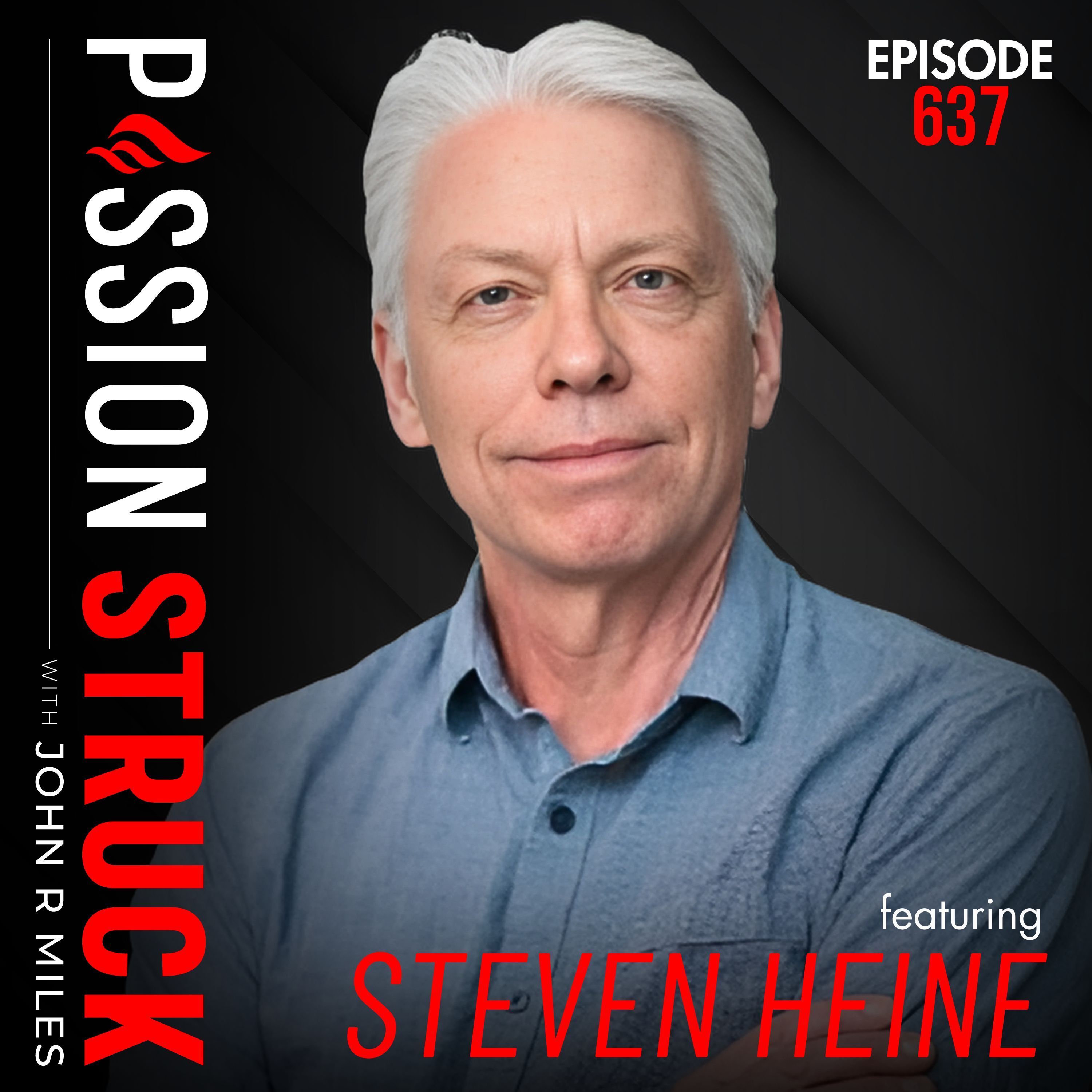
Passion Struck with John R. Miles
Steven Heine on How Culture Shapes Who You Think You Are | EP 637
00:53:22
Loading summary
Transcript67 lines
- [00:00]
Regain Couples Therapy
This is an ad by Regain Couples Therapy and features real testimonials. This was our first time trying therapy and honestly, it was long overdue. Looking back, we just wish we had started sooner. Regain's qualified therapists help couples when they can't get there on their own. We thought it was intimacy issues, but Andrea helped us uncover a deeper root cause we hadn't even realized was there. Visit regain.com couplespod to get 10% off your first month couples therapy. That works.
- [00:31]
John R. Miles
Coming up next on Passion Struck.
- [00:33]
Dr. Steven Heine
We've just been increasing the number of things that people need to figure out on their own and it's during their youth in particular, I think being made worse by various technologies that kids now are always online and are always comparing themselves not just to the few kids who live in their neighborhood as it was in the past, but now comparing their lives to these carefully curated better than reality could possibly be the kind of lives that they're seeing on Instagram and whatnot and sizing their lives up in those ways I think are just adding to the tensions of being young these days.
- [01:07]
John R. Miles
Welcome to Passion Struck. Hi, I'm your host, John R. Miles, and on the show we decipher the secrets, tips and guidance of the world's most inspiring people and turn their wisdom into practical advice for you and those around you. Our mission is to help you unlock the power of intentionality so so that you can become the best version of yourself. If you're new to the show, I offer advice and answer listener questions on Fridays. We have long form interviews the rest of the week with guests ranging from astronauts to authors, CEOs, creators, innovators, scientists, military leaders, visionaries and athletes. Now let's go out there and become Passion Struck.
- [01:50]
Welcome to episode 637. If you're new to the show, welcome. I'm your host John Miles and this is the podcast where we ignite change from the inside out, helping you live with greater intention, deeper purpose, and a life that truly matters. And if you've been with us on this journey, thank you. Your presence is what powers this movement. We're currently in the heart of our newest series, the Power to Change. An exploration of what it really takes to evolve not just your habits, but your identity, your beliefs and your personal story. Last week on Tuesday, we heard from Kayla Shaheen, the best selling author of the Shadow Work Journal, about the hidden gifts of our emotional wounds and how healing in public can unlock authenticity. On Thursday, Christopher Connors, executive Coach to Fortune 100 leaders, top LinkedIn learning instructor, joined me to discuss his book the Champion Leader. Then on Friday, I released a solo episode exploring the rare method and how doing the inner work reshapes your outer world, from self leadership to emotional literacy.
- [02:57]
To the courage to meet your shadow.
- [02:59]
But today we expand the lens, because if inner change is real, we have to ask what forces are shaping us from the outside in. My guest today is Dr. Steven Heine, one of the world's leading experts in cultural psychology. The conversation is eye opening. We explore why most psychological research is based on weird populations and why that skews our understanding of what it means to be human, how culture quietly shapes our motivation, sense of self and resilience, what the Japanese concept of MA teaches us about presence and meaning, and why self improvement without cultural context may leave us stuck in invisible constraints. Today's conversation isn't just about psychology. It's about reclaiming authorship over your story by learning the systems that have been writing it for you. And if you want to take this conversation even deeper, check out our curated starter packs@theignitedlife.net playlists. They're handpicked collections on themes like identity, resilience, emotional mastery, and the psychology of success. Your perfect launch pad into the passion Struck universe. For full episodes, video shorts and behind the scenes wisdom, head over to our YouTube channels, John R. Miles and Passionstruck clips. Now let's get into it. Here's my conversation with the brilliant and thought provoking Dr. Steven Hyna. Thank you for choosing Passionstruck and choosing me to be your host and guide on your journey to creating an intentional life. Now let that journey begin.
- [04:32]
Regain Couples Therapy
This is an ad by Regain Couples Therapy. Lets be honest, loving your partner doesn't mean you always like them. And guess what? That's normal. Regain offers couples therapy that's flexible, affordable and 100% online. Whether you're reconnecting or working through conflict, Regain is here to support you both. See why people wish they'd try couples therapy sooner? Visit regain.com couplespod to get 10% off your first month. That's regain.com couplespod.
- [05:06]
John R. Miles
I am absolutely thrilled today to welcome Steve Hyna to Passion Struck. Welcome Steve.
- [05:12]
Dr. Steven Heine
Hi John. Thanks so much for having me on.
- [05:15]
John R. Miles
Well, I am so glad that you're here and I'm really excited to dive into your new book, start making sense in a little bit. But I always like to introduce my audience to the guest and I thought I would do it through a series of questions for you. Steve. You've played such a formative role in the field of cultural psychology, not just through your research, but through your textbook, which actually sparked my interest in the field. Looking back, what first pulled you into this work? Was there a moment that shifted your curiosity from mainstream psychology to cultural psychology specifically?
- [05:52]
Dr. Steven Heine
Well, so I got an undergrad in psychology, and there was no coverage of the topic of culture at all. And right after I graduated, I moved to Japan and I taught English for a couple years in a very small town in Nagasaki prefecture. Town was called Obama, of all things. Never thought I'd hear that word again. And what was really striking in this town, this very rural town, was just how all the stuff I learned in my psychology classes just didn't seem to apply at all. Like I was making all these new friends have to take on these new responsibilities. And I was just struck, yeah, by how, especially in the small town of Japan, where I was actually the first foreigner to ever live there, just how. How different surrounding culture was there to what. I grew up in Canada and just realizing that our psychology, what we've been studying, it explains how North Americans, Westerners think quite well. It's not very good at explaining the rest of the world. And that really became evident there.
- [06:52]
John R. Miles
Steve, I know you spent time as a schoolteacher in Japan before your academic career took off. How did that cultural immersion shape the way you think about psychology today? And was there a moment that made you think assumptions that we have back here might not hold up? I know it's something that I feel when I travel around the world.
- [07:12]
Dr. Steven Heine
It was really quite evident all the time. It was just one big cultural misunderstanding was how I recall that experience. But one there. There was one event in particular which kind of launched some of my early research. And so I was teaching in a junior high school, and this one day, it was the last day of classes, and the Japanese teacher who I co taught with, thought it'd be an interesting lesson if I would give the class a graduation speech, and then they would try to translate it and understand it. So I thought, great. And I gave the kind of graduation speech that I've heard growing up in Canada. And I said to the class things like, oh, I'm so impressed with how well you've learned your English. You're all doing so well here. And I just wanted to remind you that there isn't anything that you can't accomplish if you put your mind to it, and you can all go on to accomplish great things along that line. And first of all, not surprisingly, the class didn't understand a word of my speech. They never did. And so the Japanese teacher then went to translate what I had just said. And I'm listening to his translation and looking on the class and they're all looking progressively more and more uncomfortable. And then they finally break out in this huge nervous laughter at the end. And then the Japanese teacher started saying things that weren't in my speech at all. And he said, if you think junior high school English is hard, just wait until you get to high school. It's going to be so, so much harder. He goes, you couldn't even understand a single word of Mr. Heine's simple speech here. You're going to have to work so much harder. You're going to have to persist and never give up. And then looking out of the class, I saw that they started standing up straight and they had this beaming look on their face and they gave this height when they looked ready to take on the world, which of course is what I was trying to achieve, that effect. But my whole point about, oh, you're all great, you can do whatever you want, that really fell flat. And that sort of made me realize this idea that, you know, that it's good to focus on what. On your strengths and what is positive about yourself, which is a core idea in Western psychology. That we are motivated to be thinking positively about ourselves. That this wasn't shared to the same extent in Japan. And it made me realize that a kind of motivation that better captures a Japanese sense situation is a motivation for self improvement. To always be attentive to where you're not doing well enough and focus on your weaknesses and elaborate on these weaknesses and work towards correcting those. And so, yeah, we've subsequently did a lot of studies where we find. Yeah. That where North Americans work harder when you give them positive feedback. Our Japanese participants, they quit when you give them this positive feedback and they work harder in the face of critical feedback. So, yeah, and that idea all started from. Yeah. Teaching English in Japan.
- [10:07]
John R. Miles
Well, one of the other cultural things that I learned about the Asian culture many years ago is just because they're nodding their head yes doesn't mean that they agree with you.
- [10:16]
Dr. Steven Heine
That's right.
- [10:17]
John R. Miles
It means they acknowledge that they've heard what you said. It does not mean that means they accept what you said to be what they're going to do. And I found that out the hard way.
- [10:28]
Dr. Steven Heine
Yes, exactly. There's a big difference between what is publicly communicated and what is privately felt. And yeah, I still struggle with that one in Japan.
- [10:38]
John R. Miles
One of the things I found interesting is that you research sleep and how culture shapes even the Deeply physical process like sleep. And you've once said that culture shapes the way our bodies operate, too. Can you tell us how that perspective expands our understanding of perhaps our human experience?
- [10:58]
Dr. Steven Heine
This is some very recent research that you're referring to, which is actually just in press, isn't even in public yet, and something I'm quite excited about. And yeah, what many studies have pointed out that different places around the world sleep different lengths at night. And Japan actually consistently anchors the low end of sleep. And. And they sleep about an hour and a half less than people in the highest sleeping countries, which are usually in Western Europe, like France, Netherlands, or maybe New Zealand and Australia too. And this is really curious because what the bulk of research on sleep shows is that sleep duration is importantly linked to health outcomes. When you're having too little sleep, there's a lot of health costs that are associated with it. And so we've been puzzling over, well, how is it that Japanese people, people in other East Asian countries, get by with so much less sleep than what we see elsewhere? We were looking at doing in our most recent research was we collected data on sleep duration in 20 different countries. And we also collected data on health in those same 20 countries. And we find that in every country, yes, sleep duration, low sleep duration, is associated with worse health. And that actually around the world, everyone would be better off probably with getting about an hour's more sleep on average around the world. However, in different countries, that threshold is different. And Japanese seem to need less sleep than many Western nations do. And so that they're getting their health needs met with sleep duration. Yeah, it's about an hour and a half shorter than the most extreme countries. It's about an hour shorter than Canadian norms. And so I think this shows just how much our culture shapes not. I think a lot of people, when they think about culture, they think of it as like a thin layer on people. Like. So we're all universally the same with our biology. I think we're born with the same biology, but they think of this culture as it affects what food you like, what accent you might speak to, and what. I think this research and a lot of other research shows that no culture shapes us deep down, that we are a cultural species, and that we come into this world prepared to learn the culture that's around us. And that culture shapes how we think, shapes how we feel, and shapes some aspects of our body, too, and such as how much sleep that we need.
- [13:21]
John R. Miles
Yeah, there have been a couple stints of my life where I lived overseas for A number of years. I'll have to start thinking back to did my sleep patterns change during those periods of time? I can tell you they did a bunch in Spain because the way of life in Spain was so different from what I was accustomed to in the States. Meaning they don't typically eat dinner until 10 or 11 o' clock at night at times. And when you're trying to be on their schedule and working in the military, on the base, it was two different things. We had to be at work at 6am and I can understand why they take their siestas when they're up till as late as they are.
- [14:03]
Dr. Steven Heine
So you didn't get a military siesta that wasn't part of the schedule?
- [14:08]
John R. Miles
No, but interestingly, the Spaniards always used to say, you Americans live to work and we work to live.
- [14:15]
Dr. Steven Heine
Yeah, I think that's a key distinction. I think so.
- [14:18]
John R. Miles
I want to get into your great book, start Making Sense. The subtitle is How Existential Psychology Can Help Us Build Meaningful Lives in Absurd Times. And I love the absurd times. What made you use that subtitle?
- [14:34]
Dr. Steven Heine
Well, certainly these times are absurd. At least absurd in. Well, I think one way of operationalizing this is just the amount of uncertainty that there exists in the world. And in 1990 some economists created this index, an uncertainty index, which was a reflection of how much uncertainty there was in the news. And just to give you an idea of how bad things are right now, is that this index, when they first created in 1990, hovered around 10,000 points and it was, it didn't rarely departed much from that. 9, 11 was a big departure and it jumped up into the 20th of thousands and it got a little higher during the debt crisis and the crisis in the euro. But in 2020, May of 2020, it hit a peak of, I think it was 55,000 and we just surpassed that peak again. So we're at record levels of uncertainty and uncertainty is really problematic for us psychologically. This is one thing that we don't seem to be able to adjust to. Like we can adjust to bad times and good times quite well, which is. We call it the hedonic treadmill. So when something good happens to you or your expectations rise and then you get disappointed by something that isn't so bad, but your expectations have changed. But with uncertainty, it's really hard to come to terms with uncertainty. And so we're left in this state where we're trying to predict and control our lives. That's a sort of key psychological motivations. We want to be Able to understand what's happening to us, and so that we can make predictions, try to achieve our goals, and uncertainty messes with that. And why I use the word absurd in particular was because I thought the work of the existential philosopher Albert Camus captures a lot about our psychology, how we respond to these times when things don't make sense. And in Camus terms, he thought that what people are always trying to do is that they're always trying to find meaning in their lives, that they're driven to find meaning. And Camus, an atheist, he thought, though, that there actually was no meaning in the universe. And so he thought this absurd. The absurd state that. That he thought was just a human condition was that we're. We're trying to make meaning out of something that's meaningless. Every now and then we would have that insight that what we're doing right now is meaningless, and that would lead to this sort of crisis and we would need to regain our bearings before. Before we could go forward again. And, yeah, that's why I call these absurd times.
- [17:10]
John R. Miles
Thank you for sharing that. And they are some pretty absurd times. I like how you started out the book with the quote from Eric Fromm. Man does not suffer so much from poverty today as he suffers from the fact that he's become a cog in a large machine and automation, that his life has become empty and lost its meaning. And then you go on to say, everyone seems on edge now. It seems that everywhere one turns, people are awash with uncertainty and anxiety, and so many people are struggling as they worry about the future. So what do you say to someone in this world that can feel so con. Confusing and where so many people seem to not agree on so many of the basic things that we've taken for granted for so long that now seem to be dividing us more than ever?
- [18:03]
Dr. Steven Heine
I think that the problem we have with uncertainty and the polarization that you're talking about really contributes to this uncertainty. Just the whole idea that my understanding of the world is completely at odds with people on the opposite side of the political spectrum. We don't agree on. On basic facts, and we generally rely on consensus a lot to give us the sense that my view of things is accurate, that. That there's no need to question it. And here with this polarization right now, at this point where, yeah, we don't agree on basic facts, and it can be very debilitating. But what I would say is that I think that these kinds of uncertain times create all of this anxiety. And that's. I Think what would that's the immediate harms that we're suffering from is the anxiety because we don't know how to cope with uncertainty. But there is one kind of mindset that that's been found that really does help people to confront anxiety better and to confront uncertainty. And that is having the sense that one's leading a meaningful life, that people who feel that they are leading a meaningful life, that they stand strong in the face of the challenges of their life, that they are better able to cope with anxiety. And so I think the challenge that we face right now is figuring out, well, how can people come to lead more meaningful lives?
- [19:24]
John R. Miles
Well, that is the whole basis of this podcast. So it's very profound for you to be here and for us to talk about this. And one of the things I always refer back to is the quote from Henry David Thoreau that the mass of men lead lives of quiet desperation. And I always turn back to self discrepancy theory on how so many people today are living the life they feel they should be leaving living, but they're not leading the lives that they could be leading, which is the ideal self that they want to have, but so many people fail to ever pursue. And it reminded me of the abyss metaphor that you had in the book and similar to what you write about. I think our choices dictate the path of our lives. And a lot of people think it's the large choices. I tend to think it's something I call the microchoices and they're. And how they accumulate over time. But I think those microchoices as you write about for a lot of people can turn the freedom that we have of making these choices into a source of psychological distress rather than empowerment. Can you give your thoughts on that?
- [20:39]
Dr. Steven Heine
Well, I think this is a very sort of curious, paradoxical element about choices because we celebrate choices. Choices are amazing. And it's hard to imagine situations where people might give up a choice that they have that, that we love our choices. And however, despite that, our choices provide us with so much freedom, allow us to determine the course of our own lives. One thing I think that is underappreciated is the recognition that our choices come with a cost. They're a double edged sword. And the cost is that we are ultimately responsible for the choices that make that we make. And this responsibility comes with a great deal of anxiety. Soren Kierkegaard said that anxiety is the dizziness of freedom. And I think he's onto something important here, that whenever we make a choice in Our life. We are, this is his metaphor. We're standing at the edge of an abyss that we have to move forward. But. But there's no set path to follow because we are making the choices of what we are going to do. And so we lack that reassurance, that feeling of certainty that what we're doing is the right thing. And so we're just making the choices of what we want and we're hoping they're going to work out. But that means that we are responsible for those choices that we make if our life doesn't work out. Well, if we have issues in our life and because of our choices, they, then we're responsible for those choices. And I think the fact that we have so many choices to make now that cultures vary in the amount of choices that people are offered, and the US is, I think, the world leader in the amount of choices that people have and the amount of freedoms that people have and those freedoms have been increasing over time that there's few set paths to follow. Just to give an illustration of this, if we compare the situation now in the 21st century to what it was like much earlier in history, going back to Western history in medieval times, you think, well, then people really didn't choose their careers so much. People tended to inherit their careers from their parents. Daughters did what their mothers did and sons often did what their fathers did. They took on their surnames reflected this, whether they're a miller or Cooper or carpenter. This is reflected in their names. People also didn't have all that much choice in their romantic partners that marriages were often arranged at that time and families played a big role in that. And they're still arranged in some parts of the world. People didn't have much choice in their religion that you were born into a religion and you often weren't really exposed to much other than that. And people had, didn't really have opportunities to change the status of the, of their lives. That as St. Augustine said, that a finger cannot hope to become an eye. Just the idea that you're born into your status and, and that's a constant. And comparing that with how people. The situation that people are facing now where there are so many different career possibilities for people to pursue and for young people, many of the careers that they're going to end up pursuing don't even exist yet. Right. That we don't even know what they're going to be. And students have more and more freedom in choosing what they're going to study. Many universities offer a customized major where the Students decide which sets of courses that they're going to choose. We have endless opportunities of choice when it comes to romantic partners. People are on their apps and they're seeing, like thousands of potential partners, and somehow they're supposed to choose the right one. People are also now presented well. Many people ultimately change the religion that they're born with. Over 40% of Americans end up with a different religion than what they were born with. And so they're. And people are often making choices such that they're merging elements of different faiths, like they might have some pagan rituals, some Zen meditation, maybe some yogic exercises, some. Some astrology. People are piecing things together and taking responsibility for the whole hereafter. And I think that all of these choices, as exciting as they may be, are making us anxious and that we're responsible for all these different aspects of our lives, and we're not sure that we're doing things the right way.
- [24:43]
John R. Miles
So I recently had a conversation with Gordon Flett, who is one of the largest researchers on the science and psychology of mattering, and he came out with a new book that's all about mattering and its importance for children. And this is something that you talk a lot about in the book as well, is adolescence and what's happening. And you write that adolescents today are standing at the edge of the deepest and widest of abysses. And I think it's true. How does this explain the spike in anxiety and identity crisis that are especially affecting not only young adults, but now even gen Alpha kids who are growing up?
- [25:27]
Dr. Steven Heine
Well, I think you're right that. So we are seeing record levels of anxiety, and especially in young people and adolescents. And in terms of linking with what I was just saying before, I think it is during adolescence is when people are making many of their key life choices. This is when you're supposed to figure out what kind of person you're going to be, what kind of career you're going to have, and so on. So it's having all this responsibility on your shoulders at a time, given all this freedom and needing to figure it out. And one way that we can see that the choices here are linked with this anxiety is comparing the experience of adolescents around the world. And it's accepted as truism that adolescence is a difficult time. It's called a period of storm. And stress is how it's been referred to in psychology for more than a century. And that's often attributed to changes in hormones, which are just leading to mood swings and whatnot. And I agree that Hormones certainly make things worse here, but I don't think they're telling the whole story because if you look in small scale societies around the world, like subsistence societies, foraging societies, for instance, they don't share the idea that adolescence is expected to be a difficult time. That's most small scale societies don't see adolescence as being a time of difficulty, violence, or many things that we link with adolescents. And where you find adolescents to be struggling the most is in societies in Western industrialized societies where people have a great deal of different possible roles they can choose. Imagine if you're from a culture where everybody farms, then you don't have to figure out what you're going to do for a living. You're going to be a farmer. It's all figured out for you. And that that's one less responsibility that you need to bear in figuring out what you're going to do with your life. And we've just been increasing the number of things that people need to figure out on their own. And it's during their youth in particular that they're doing. And it's certainly, I think, being made worse by various technologies that kids now are always online and are always comparing themselves not just to the few kids who live in their neighborhood, as it was in the past, but now comparing their lives to these carefully curated, better than reality could possibly be the kind of lives that they're seeing on Instagram and whatnot and sizing their lives up in that. In those ways, I think are just adding to the, to the tensions of being young these days.
- [27:54]
John R. Miles
Steve, Edward Deasy and Richard Ryan came up with self determination theory and determined that autonomy, mastery and relatedness were key elements to intrinsic motivation and really our meaning. And one of the things that you suggest is that freedom requires us to become the authors of our own lives. And we were talking about choices earlier and how it relates to our autonomy. But what do you think distinguishes authentic choices in choices that are shaped by unconscious social conditioning or trauma?
- [28:32]
Dr. Steven Heine
That's an interesting idea. I don't think I have a great answer for you for this one, John. Yeah, I'm thinking about this. This is actually I haven't ever considered. I haven't ever thought about that before. And yeah, I don't think I have a great answer for you for that one.
- [28:44]
John R. Miles
Just as I have thought about it, I think so often we get this conditioning that gets in the way of us trusting that authentic voice that we have inside. And so we end up, in my opinion, deferring to what we've been Conditioned to think are the choices that we make instead of the ones that really we really want to make. And I think, at least in my case, that's what led me down this path of becoming who I thought I should be, a business executive following in the footsteps of my father and grandfather. Because of some of this conditioning that I got there and in the military. And when I really started to break free from that and the mask that I had found myself wearing, I found that when I started to make authentic choices, it really started to direct me towards more of the problems that I felt were impacting people and wanting to be the solution to those problems. That's just a way I think about it when I think of that question.
- [29:43]
Dr. Steven Heine
Interesting.
- [29:45]
John R. Miles
Okay, so you write that people's freedoms lie at the root of their anxieties, yet most self help help assumes today that freedom is inherently empowering. Are we underestimating the psychological cost of living in a society that doesn't have clear scripts?
- [30:04]
Dr. Steven Heine
I think we are. And this is one thing that I came to appreciate living in Japan too, is that in Japan on average you have far fewer choices available to you, at least that you can make as an individual, because so much of action there is, it's a collectivistic society. Meaning so much of what you are doing at your work or even in your social life is shaped by all those people around you. It's not up to you to figure out what you're going to do. You're trying to reach a consensus with others. And so there's many situations where you just need to go along with what others are doing. And I think just a very simple example of how you often see this is many Japan's full of these many really small restaurants where there might only be like tables for six people or something in, in the restaurant and at lunchtime. Often these places only offer a single choice. They have a daily special and it's always a good meal. It comes with a little salad and a main course and a dessert and a coffee. But you don't get to choose. And this is something I've come to feel is really quite liberating, knowing that it's going to be a good meal. It might not include my favorite foods, but that, that it's going to be good. I'm just surrendering my choice here to the chef. It's called omakase in Japan to leave it up to someone else. And I find this to be really quite empowering in an odd way, knowing that I'm on a path that is going to take me to a good meal. And I don't need to figure out exactly where that path is going. It's I'm going to just trust the chef who knows what foods are in season, knows what their strengths are, and knows how to make a really tasty meat meal. And so I take that as an attitude more generally in life that when I can, I like to surrender my choices and not worry about making these little choices that really don't matter that much. And people, I think, worry a lot about how much if they make the wrong choice, how bad things are going to be. And one point that I emphasize this in my cultural psychology course quite a bit because I students find this very striking. And I think it is a telling example. In many cultures in the world today, the most common form of marriage still is an arranged marriage. And where they vary in their details, place to place, how much role that the individuals have. But in many cases, the individual doesn't have much choice at all. It's the parents doing this. And there's been a lot of studies comparing these arranged marriages to love marriages. And in the vast majority of these studies, they find that the arranged marriages are doing at least as well, if not better than the love marriages in terms of how much love people have for their partners. And as time goes on, and I think this sort of just highlights that we feel so strongly that unless I make this choice, it's going to be a disaster, right? Unless I make the right choice, I choose which job I'm going to take, which school I'm going to go to, all these choices that we make. And we're convinced that if we get this wrong, it's going to be a disaster. And most of the time these things will continue to work out. And it's just that we're still following this path in life and sometimes we don't have as much say as we where that path is going. That doesn't mean that the path is heading for disaster.
- [33:18]
John R. Miles
I have spent a lot of time in India. I've probably been there 20 plus times. And I got to be really good friends with a number of folks there. And one of my really good friends was in his late 30s, early 40s at the time. And he was getting tremendous pressure from his parents that he needed to get married, but they wanted him to get into an arranged marriage marriage, which he did not want to do. And it was interesting because I got to know him so well that he started to share with me, like, how the process went. And he was given this book of different profiles. It was almost like you were on a dating app where it had, like, information about their family, the person, a picture of them, their, Their likes, their dislikes, their education. And then he was supposed to go through it and pick one or two, and then he would get to meet them, and then he would have to make a decision shortly thereafter. And his view of it was more, I want to fall in love because I love someone. I don't want to it to be because of how much money the family make, has, or they think it's a good pairing between the two of us. And the person doesn't even necessarily need to be Indian for me to love them. But I know how hard it was for him to deal with it because his parents really were upset that he wasn't following the family tradition. But.
- [34:38]
Dr. Steven Heine
Well, yeah, I, I was just gonna.
- [34:41]
John R. Miles
Say he, he did rightly point out the same thing that you did, that sometimes these arranged marriages are even more successful than. And I remember eventually meeting his parents, and his mom told me that at first she didn't love her husband, but now she's deeply in love with them. And it came with them getting to know each other over time. But it is interesting how many of them are successful.
- [35:06]
Dr. Steven Heine
Yeah, I do recognize that it's not for everyone there, but I have an Indian friend who's been in a successful arranged marriage for many years, and I like the way she described it to me. She said, getting a new husband, an arranged marriage is like getting a new puppy. And at first you don't really have any feelings for this puppy.
- [35:23]
John R. Miles
It's just.
- [35:23]
Dr. Steven Heine
It could be any dog, but you're expecting to love your puppy, and invariably you do. You end up coming to have this loving relationship with your dog. And that marriage can be quite similar to that, at least in an arranged setting.
- [35:39]
John R. Miles
Steve One of the parts of the book that I thought was really interesting is you explore how people use supernatural beliefs, whether it's God, karma, even aliens, to regain a sense of order. What does that tell us about our need to see our lives as part of something bigger, even if that something is unverifiable?
- [35:58]
Dr. Steven Heine
I find this some of the more surprising but encouraging aspects of our research on this topic. But one of the most reliable predictors of whether people feel that they have a meaningful life is their spiritual beliefs, their religious beliefs as well. And it's not. It used to be thought that, well, formal religion provides a spaces for meaning, largely because it gives you a sense of community. And community is also very important to having a meaningful Life. And organized religion obviously does that. But what our research has been revealing is that we've also been looking at people who categorize themselves as spiritual but not religious. And these are people who take that sort of buffet approach to spirituality and choosing different sets of beliefs and practices. Just whenever they see some practice that they think is interesting, that they try to incorporate that in their own lives. And yeah, and what our research shows is that it didn't seem to matter really which spiritual beliefs people had. Just having any of these things predicted more sense of meaning in life. And I think what this points to is that having these connections with the transcendent, having these sort of spiritual connections here highlights to us that there's more to the world than meets the eye. That we're part of something much grander than what we can see from our everyday lives. One other just sort of illustration of this in another one of our papers is we looked at scientists that was our sample, and we explored their attitudes towards science and how meaningful they found their lives to be. And we found that scientists who had a really endorsed, we call like a scientific reductionist attitude towards life, that the idea that there is nothing more to the world than just atoms and molecules, that, you know, that this can explain everything that happens is it all comes down to the material exploitation explanations. That those scientists who more strongly had those sort of reductions attitudes reported less meaning in life than did those who agreed with that lesson and thought that science has its limits in what it can explain. That there's some kinds of questions that maybe go beyond what science is able to tell us. And so I think that, yeah, just recognizing that there's more than this material world harder, something much, much larger here enables people to feel that they're mattering. That this is actually the aspect of a meaningful life that the spiritual beliefs are most strongly connected with. So in general, when we talk about meaningful lives, we usually talk about them having three separate facets. One of these is having a sense of purpose, which is very important. Another of these is having the sense that your life makes. That your life makes sense, that it's coherent. And the third component is that your life matters. And this mattering component is the most strongly linked to feelings that life is meaningful. And it's also the one that's most strongly linked to feeling that there's something beyond the material world.
- [38:56]
John R. Miles
We'll go into some of those a little bit more here in a second. But I just wanted to reiterate a couple of the things you said. And I'll just Quote it from the book because it's basically saying what you just stated. You found that it didn't seem to matter what people believed in any kind of super natural, natural belief was associated with greater meaning in life and that atheists often struggle with meaning more than believers, but that spiritual but not religious individuals fall in the middle. So it almost seems we're witnessing a rise of a new existential coping system in modern spirituality is what I was grasping.
- [39:35]
Dr. Steven Heine
And that's the thing. I think what may on the surface look like a very discouraging trend is that around the world, in most industrialized societies, the world is secularizing, that people are leaving religion. And given how strongly religion is linked to these existential benefits and feelings that one leads a meaningful life, that would seem to suggest that we're heading for an existential crisis. Yet the most common way that people leave religions, I think interestingly, is that they don't just abandon everything that they usually most people keep these sort of mystical attitudes. That in the U.S. for instance, there are more people who identify as spiritual but not relig religious than there are people who identify as atheists. So that even though they don't belong to a religion, they still have this sense that there's more to this universe than meets the eye. And I think that perhaps this reflects how much we do have this need to feel that there's forces beyond us. And I think it suggests that we should really be given these strong links with being spiritual and feeling that life is meaningful, that we should really try to be open minded as we go with the day that there's many questions science hasn't been able to answer, probably never can answer. So we don't know why the universe exists. And I think it's useful just to be open minded and if there are any kinds of beliefs or spiritual practices that fit well with you, be open minded to them. Because on average those who do have those views seem to be faring quite better.
- [41:07]
John R. Miles
It's interesting, I'm not sure if you saw it, but a couple weeks ago there was an article on the front page of the New York Times that said that their research is finding for the first time in a while that they're seeing a trend where people are coming back to organized religion across all major religious orders in the United States. And they said it was a pretty significant rise, not just a subtle one.
- [41:32]
Dr. Steven Heine
That's interesting. I didn't see that. But I do think that fits with what we know about religion, that every society on earth has some kinds of religious Beliefs. There aren't that many true cultural universals that you see in clear form everywhere, but this is one of them. That all societies have some kind of belief system that goes beyond what you can see that involves some. Some sort of transcendent beliefs and explanations. So I think this is something that's really quite core to being human, but maybe it reveals that we are detecting that's something that's real, that's beyond us. I don't know. But it is something that we see everywhere. So the idea that humans could easily abandon this and just be able to go on with their lives without any costs, I think may not be so accurate. The fact that we have these beliefs everywhere suggests that they are serving an important function.
- [42:26]
John R. Miles
One of the things you brought up is that meaning is ultimately about connection. And I brought up this whole area of religion or some transcendent belief because a lot of times what I'm finding people are missing most of is the community that they were once part of. And we see this in work settings. My grandfather worked for craft for almost 50 years, knew the people that he worked with inside and out. They were his support, support system, his friends. Most people today are changing jobs every few years, if not sooner than that. And so our work environments are no longer the same as they were for decades. And then you put on that what we were talking about before with people leaving church communities, Rotary clubs, Lions clubs, you name it. Why do you think society has been abandoning so many of these community structures that for I think it's millennia, were at the core of what brought people meaning in their lives?
- [43:35]
Dr. Steven Heine
That's a great question. Well, I would say, on the one hand, worldwide, you do see that most countries in the world have become more individualistic over the past few decades. So this does seem to be a worldwide trend where in becoming more individualistic, that means that they're prioritizing their needs and desires as an individual over the obligations that they have towards their groups, towards a collective. We're seeing this general change. Part of this usually comes with greater wealth, that it's a loose correlate. It's not a particularly strong correlation. But on average, when most societies get wealthier, they tend to become more individualistic. So I think that's part of it. I think more, though, that explains this, is these new technologies that seem very satisfying while we use them, like being online, on our phone, it feels satisfying enough that it distracts us and we turn to our devices to pass the time. And these devices really are entertaining ourselves that we no longer are dependent upon our interpersonal community to entertain ourselves. And I think this first started off with the emergence of television, where you could entertain yourself at home. And then this is just accelerated over time as there's so many ways to pass the time without involving our neighbors. And the Harvard political scientist Robert Putnam, that's what he found to be the largest explanation of why Americans were less tied to their communities in the 1990s than they were in the 1950s, was that they were really exchanging time with other people for watching television. And I think that is just accelerated now, and I suffer from this as much as anyone. And just realizing now that whenever there's a couple minutes where you're out for dinner with someone and they step out to use the washroom or something, what do I do with those couple minutes? Well, turn on the phone. And then automatically, it's almost like a reflex, this bad habit of always turning on the phone to entertain myself and just realizing that this has become such a habit that it's taking us away from real relationships. And this is what a growing amount of research is showing, that these real relationships really seem to matter. And One of my PhD students, Dungan Folk, he's been looking at how this new growing trend, which I think is a disturbing trend, where people turning to their phones not just as a means to connect with others, but as a means to connect with these AI chatbots, where you have a virtual friend. And what his research is suggesting, while this may be satisfying in the short term, in the long term, it seems to just along with everything else, seems to be making people lonelier. These virtual things that our devices can do, this the kind of entertainment, it's not a good imitation. It's not a good substitute for real people that we grew up, we're a social species. We need to be connected with others. And being connected with your phone isn't a good enough substitute.
- [46:31]
John R. Miles
Now, interestingly enough, earlier today, as I was listening to npr, I heard them make a statement that I think it was the. The. The national association of Psychology put out a warning for parents to watch their kids and to not use AI tools where they're picking a companion on them to be their emotional partner, so to speak, because it's screwing with how they cope with the real life. Having an imaginary friend that can be so lifelike. It's so interesting what AI is going to do in the future and the unintended consequences, especially in our relationships, that are going to come from it.
- [47:13]
Dr. Steven Heine
I think it's good that there's growing recognition that these are poor substitutes. And I'm hoping this helps to motivate people to return to communities that realize how much being part of a social group here that can't be substituted. And it's so important for leading a meaningful life. And that as you're saying, that our work doesn't seem to provide the sense of communities much anymore. Especially, especially post Covid. I think Covid was really disruptive for this where it gave people the option, the opportunity, many jobs to do some of their work remotely. And when hearing about that, it seems like who wouldn't choose to work remotely instead of having a commute and all the frustrations that might come with being at work. But I think we're not fully appreciating just the costs to this, that we need to be social and with our work too, that people are changing jobs more than before. People rely on a lot of side hustles to make a go at it that yeah, this means that we're really not belonging as much to an organization as people used to in the past. And I think one way to. To counter that is for people to make the efforts to. To join some kinds of groups and especially groups where you're volunteering for a cause that you believe in. There there's research points to this is an especially good way of getting a meaning boost in your life to try to replace both that sense of community and interpersonal relationships and giving you a sense of purpose for something that matters to you.
- [48:40]
John R. Miles
Given the research I've done, I tend to agree with everything that you're saying and really think that this is the existential crisis that is going to define the next two or three generations and how they're able to cope with this going forward. Because if this continues, we're going to keep perpetuating this cycle where generation after generation is passing this on to their offspring. And it's a scary transition because kids look to their parents to be the ones who are giving them a sense of meaning and mattering. And yet if the parents are checked out, if they themselves don't feel those things, then it's almost impossible for them to show up and make their children feel that way. And so it just propagates this gap that's growing and growing. So it's one of the reasons I'm so committed to try to take a bigger role here. And I actually have a children's book coming out later this year to help try to focus on this called you Matter Luma, where I'm going to write 10 different books on this Exploring different areas to give kids a visual of what it means to matter and why it's so important.
- [49:51]
Dr. Steven Heine
Oh, what a great book topic. I think that's just as you said, that's so important, especially for kids to be provide them with that sense. And I do worry with. There's lots of talk about one of the challenges with AI taking people's jobs in terms of financially is there how can we, you know, if more and more people are losing jobs to AI, how, how can we distribute money? Is it with a universal basic income or whatnot? Some way that to provide people ability to take care of themselves. But I worry about that the bigger cost to this is not just not having a source of money, that yeah, maybe something like universal basic income could help with that, but that we need something, some kind of purpose. Imagine if AI gets to the point that you don't need to work because the robots are doing all the work, making all the profit for you, that we need something else, that we need to find our own sense of purpose, our own way of mattering. And I think that's the. A big problem that we need to figure out.
- [50:50]
John R. Miles
Absolutely. Steve, it was such an honor to have you today. If the listeners are interested in where they can find out more about you, where's the best place for them to go?
- [51:01]
Dr. Steven Heine
Well, I would say Google my name, Stephen Heine. Don't go to the Florida professor of that same name who studies Japanese Buddhism. We get mixed up all the time. But you will find my web page, you'll find my Amazon page and that's where you'll find my book, Start Making Sense. And on my webpage you'll find a list of all the different projects that we're working on and links to our papers as well.
- [51:25]
John R. Miles
Thank you so much again for joining us. It was really an honor to have you.
- [51:29]
Dr. Steven Heine
Thanks so much for having me, John. This is a great conversation. Really enjoyed it.
- [51:33]
John R. Miles
And that's a wrap on today's Mind. Expanding conversation with Dr. Stephen Heine. From the dangers of universalizing Western psychology, to how culture subtly rewires our motivations and beliefs, to the hidden assumptions embedded in phrases like be yourself or follow your passion, today's episode reminded us that transformation doesn't happen in a vacuum. Change requires context. Growth requires awareness and self. Leadership means understanding not just who you are, but where your sense of self was shaped. Here are a few key takeaways I.
- [52:06]
Hope you walk away with.
- [52:07]
We are all cultural beings and your environment plays a powerful role in how you think, feel and behave. Weird psychology is useful but limited. Expanding your lens creates deeper empathy and insight. And true transformation starts with asking better questions not just of yourself, but of the systems around you. If this episode sparked curiosity, I highly Recommend Checking out Dr. Heine's book. It's a must read for anyone seeking to understand the cultural foundations of personal growth. As always, links are in the shownotes@passionstruck.com new here. Head to theignitedlife.net and and subscribe to our newsletter for Episode Deep Dives, Tools for Intentional Living, and my behind the Scenes Reflections. You'll also find access to the Ignition Room, our private community for leaders and change makers. Want to wear the mission? Check out the new Passion Struck Merch Collection reminders to live boldly, love fully, and lead with purpose. And don't forget to subscribe on YouTube for bonus clips, video episodes and exclusive content. Coming up next on Passion Struck, I I'm joined by Michelle Chalfont, therapist, coach, and creator of the Adult Chair Model. We explore how to heal your inner child, build emotional resilience, and finally stop abandoning yourself.
- [53:21]
Michelle Chalfont
Most humans have an emotion, call it sadness, overwhelm, comparison, whatever it is. And then we build a story around why we're having that emotion or we want to give it meaning. And to truly feel an emotion is just to let it flow through you. When I have worked with people over 20 some years of doing this work and I teach people how to feel their emotions, that's when anxiety starts to shift, depression starts to shift. We need to learn how to get comfortable in the uncomfortableness of some of these emotions that we're actually feeling. We're not great at that. We are great at numbing out, but we're not great at feeling our emotions. And we need to get better at it because it's actually our superpower. It's very healing to feel our emotions.
- [54:06]
John R. Miles
Until then, live boldly, lead with intention, and as always, live life.
- [54:11]
Passion struck.
- [54:24]
Regain Couples Therapy
This is an ad by Regain Couples Therapy and features real testimonials. This was our first time trying therapy and honestly, it was long overdue. Looking back, we just wish we had started sooner. Regain's qualified therapists help couples when they can't get there on their own. We thought it was intimacy issues, but Andrea helped us uncover a deeper root cause we hadn't even realized was there. Visit regain.com couplespod to get 10% off your first month. Regain powered by BetterHelp.