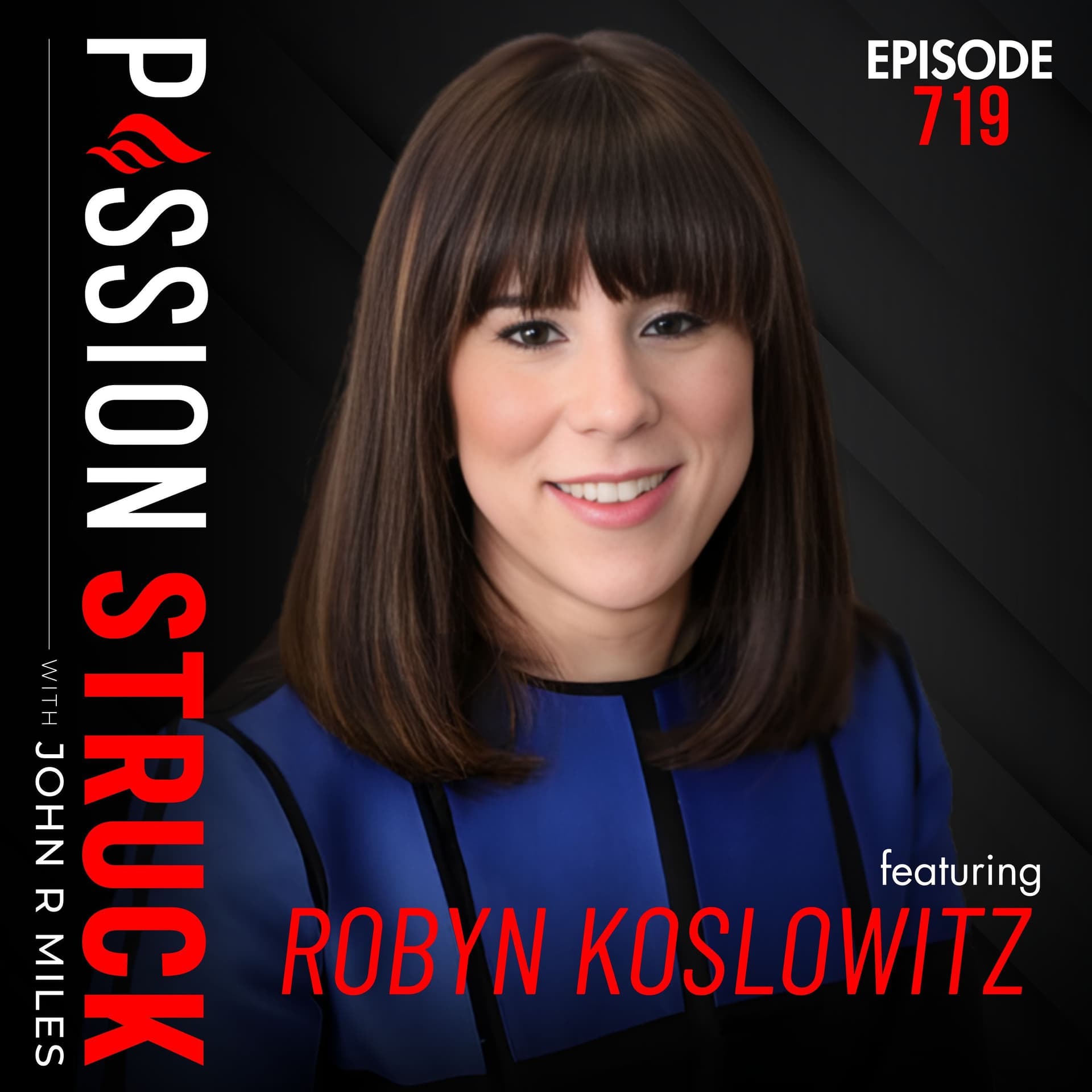
Passion Struck with John R. Miles
Episode 719: The Hidden Reality of Post-Traumatic Parenting: Breaking the Cycle
Guest: Dr. Robyn Koslowitz
Date: January 22, 2026
Overview
In this powerful and heartfelt episode, John R. Miles sits down with Dr. Robyn Koslowitz—clinical psychologist, parenting expert, and author of Post Traumatic Parenting: Turning Surviving into Secure Connection. They explore the realities of parenting after trauma, how our early experiences shape parenting instincts, and, most importantly, how breaking these cycles is not only possible but a unique parenting strength. Dr. Koslowitz shares practical strategies and personal stories, offering hope for any parent concerned their own "damage" might impact their kids. The conversation is rooted in empathy, actionable insight, and the belief that meaning begins with aware, intentional relationships—especially within the family.
Key Discussion Points & Insights
The Catalyst: Personal Trauma as Parenting Insight
-
Opening Quote (00:02):
"Only will your damage not damage your kids, but your damage can be the catalyst for you to break the cycle. Right? Your damage can actually make you into a better parent... you're uniquely qualified to parent because you know what your values are."
— Dr. Robyn Koslowitz -
Dr. Koslowitz shares her personal journey, recounting a pivotal moment when her 10-year-old's tears revealed how her dissociative coping (a trauma response) impacted their connection (10:38).
-
She candidly admits thinking she had trauma "handled" and realizing, thanks to her child, that dissociation was a barrier to true presence:
"All of those yucky feelings inside me go away, but I'm not present. A piece of me goes away. Until my son said that to me, I thought…I've got this covered. And then he asked that of me, and it broke my heart." (10:38)
Understanding & Naming Trauma in Parenting
- Dr. Koslowitz’s definition of post-traumatic parenting:
"Parenting after trauma...If you had an experience you'd cross a continent to spare your child from, congratulations, you're traumatized. And that experience shapes how you parent." (24:37) - Many traumas do not fit standard clinical checklists (abuse, extreme neglect); subtler wounds like chronic criticism, bullying, or emotional unpredictability are also impactful (25:56).
- The “copy-paste” effect: Brains default to parenting models inherited from our own upbringing (26:38). Changing defaults requires conscious effort and ongoing self-awareness.
Three Blunt Questions for Self-Assessment (42:30)
- Did something happen that changed how safe the world feels to you?
- Do you still live as if that event could happen again at any moment?
- Do your relationships, especially with your children, trigger that sense of danger?
"Any experience that makes your brain develop a trauma app is traumatic...it’s the impact on you that matters."
— Dr. Robyn Koslowitz (42:30)
The Trauma App: Rewriting Automatic Patterns
-
Trauma creates "if-then" rules in the brain—instinctual reactions that were logical for survival, but may be maladaptive as adults (33:34). For example:
- If stressed, then dissociate.
- If criticized, then people-please or lash out.
-
To break cycles: "Before you take down a fence, you want to know what it’s protecting." (15:30) Identify the purpose your coping style serves before making changes.
-
Practical Strategy:
- Identify when you act contrary to your intentions (“When you meant to do X but Y happened…”)
- Use pattern disruptions (e.g., sing criticisms rather than yell, name present sensory details to stay grounded) to rewire responses.
- "You have to tell your brain, 'Yeah, that's it. That's what we want to be doing from now on.'" (33:34)
Processing Trauma: The AIM Model
- AIM = Acceptance, Integration, Meaning
- Acceptance: Acknowledge what happened—you can’t undo it.
- Integration: Fold it into your identity (not all of who you are, but part of who you are).
- Meaning: Turn pain into purpose—a mission for macro (community) or micro (family) change (18:22).
“Your inner child can't raise a child, but in raising your real-world child, you can heal your inner child.”
— Dr. Robyn Koslowitz (50:53)
Types of Post-Traumatic Parenting Defaults
Dr. Koslowitz describes five archetypes, not as rigid labels but as helpful frameworks:
- Perfectionist: Must do everything “right”—reads all the books, dreads making mistakes.
- Paralyzed: Frenetically busy but unable to complete or prioritize, lacks self-trust.
- Entangled: Resources consumed by other obligations (ex-spouse, family of origin, toxic workplaces).
- Disengaged: Avoids involvement, outsources parenting, fears their “damage” will harm child.
- Survivor: In ongoing acute stress/trauma, stuck in survival mode (45:42).
“This is not a diagnosis. This is just 'Oh yeah, I tend to do that.'”
— Dr. Robyn Koslowitz (45:42)
Earned Security: Repairing Attachment in Adulthood
- Earned security means adults can rewire their attachment style by intentionally parenting with presence, attunement, and aligning with their values—even if their own childhood was insecure (50:53).
“Parenting is the most opportune time for healing yourself and rewiring your own brain...In raising our kids, we can heal ourselves too.” (50:53)
R² Parenting: Responsive and Responsible
- The ideal is a both/and, not either/or:
- Responsive: Validate feelings, empathize with your child.
- Responsible: Set appropriate limits and boundaries.
- Litmus test for connection-over-correction: Acknowledge the child’s feelings and stand firm in boundaries; “I see this is hard—you wish I would say yes, but my no is going to stand.” (54:55)
Notable Quotes & Memorable Moments
-
On Patterns and Healing:
“You did something amazing today. 14 times today I wanted to yell and didn't. I deserve a medal. I just rewired a neural connection. Maybe you say it to your significant other, your friend, or therapist. Your brain, like anybody else, needs that feedback or it won’t change.” (33:34) -
On the Impact of Parental Trauma:
“If you had an experience you'd cross a continent to keep from your kids, that's trauma, even if it doesn't make the checklist.” (24:37) -
On Parenting as a Path of Healing:
"Your inner child can't raise a child, but raising your real world child, you can heal your inner child." (50:53) -
On Permission to Be Both Responsive and Responsible:
"You absolutely have permission to do both. There are corners of the Internet that make you feel you must pick, but you can say, 'I get this is hard' AND 'my no stands.'” (54:55) -
Takeaway Line for Parents:
“Not only will your damage not damage your kids, but your damage can be the catalyst for you to break the cycle. In some ways, you're uniquely qualified.” (57:37)
Timestamps for Key Segments
- TEDx Reflections and Rejection Therapy (06:02–09:18)
- Defining Dissociation & Trauma Responses (10:38–13:37)
- The "Copy-Paste" Parenting Model (26:38–30:23)
- How to Start Breaking the Cycle (30:35–33:34)
- Interrupting Trauma Patterns - Practical Examples (33:34–37:21)
- Why Control Feels Like Safety for Trauma Survivors (38:13–41:06)
- Three Blunt Questions for Trauma Awareness (42:30)
- Parenting Defaults: Perfectionist, Paralyzed, Entangled, Disengaged, Survivor (45:42–50:30)
- Earned Secure Attachment & Parenting as Healing (50:53)
- Responsive + Responsible Parenting (R²) (54:55)
- Most Important Takeaway (57:37)
Resources & Further Connection
- Dr. Robyn Koslowitz’s podcast: Post Traumatic Parenting
- Guests include trauma & child psychology experts and real-life stories for hope and connection (58:03)
- Website: posttraumaticparenting.com
- Instagram: @DoctorKoslowitPsychology
Closing Reflection
Dr. Koslowitz reframes parenting after trauma as a source of unique strength. Through acceptance of personal history, mindful pattern-breaking, and value-driven intentionality, parents can transform generational legacies. Parenting isn't about perfection—it's about presence, and the courageous work of choosing new paths.
"Parenting is the vehicle and the venue with which I heal." — Dr. Robyn Koslowitz (50:53)
For more on generational meaning-making, reflection prompts, and intentional living, visit theignitedlife.net or watch the full interview on YouTube at Passion Struck.
